Blog & Articles
Tues 13 October

Does your body have an old label that is still stuck to it?
Maybe you’ve tried to remove it but the residue won’t come off.
We tend to consider Posture from a physical perspective when working with tight muscles, restricted fascia and biomechanics.
Yet the key can be seeing that the physical restrictions we’re trying to change are also influenced by our body’s somatic response to life.
This is my working experience in Pilates, Fascial Bodywork and now with clients as a placement Integration Psychotherapist.
Our body isn’t independent of our psyche – our nervous system is always responding to our environment, relationships and our perception of ourselves within them.
‘Difficult’, Quiet’, ‘Too Much’, ‘Sensitive’
Labels can influence more than thoughts and behaviour. They subconsciously influence our habitual responses our environment – how we breathe, move, brace, protect ourselves and occupy space.
I meet people in my Pilates studio who have worked diligently yet have struggled to unwind postural patterns.
In Fascial Bodywork, I see holding patterns that don’t respond as we might expect with physical intervention alone.
In Somatic and Integration Psychotherapy, I witness how patterns and labels shape the way people relate to their bodies.
What connects these for me is the somatic dimension.
We may choose to stop wearing a label, yet our system continues to respond according to the old patterns.
Our body doesn’t always change because our mind has recognised something.
I believe working with posture requires looking beyond our physical structure. I use physical practices, but also considering what may be contributing to our body holding itself in a particular way can encourage our nervous system to return to balanced regulation.
I weave movement, bodywork, and somatic integration to help clients connect with their physical bodies, including the energetic parts that influences posture.
For me Posture is never just physical. It’s created in response to the lens with which we’ve experienced the world.
And often, removing a stubborn label needs something other than peeling, scraping or soapy water
Mon 5 October
Something that often comes up with my clients is resilience. And I feel we’ve been led to have a slightly skewed impression of what it is.
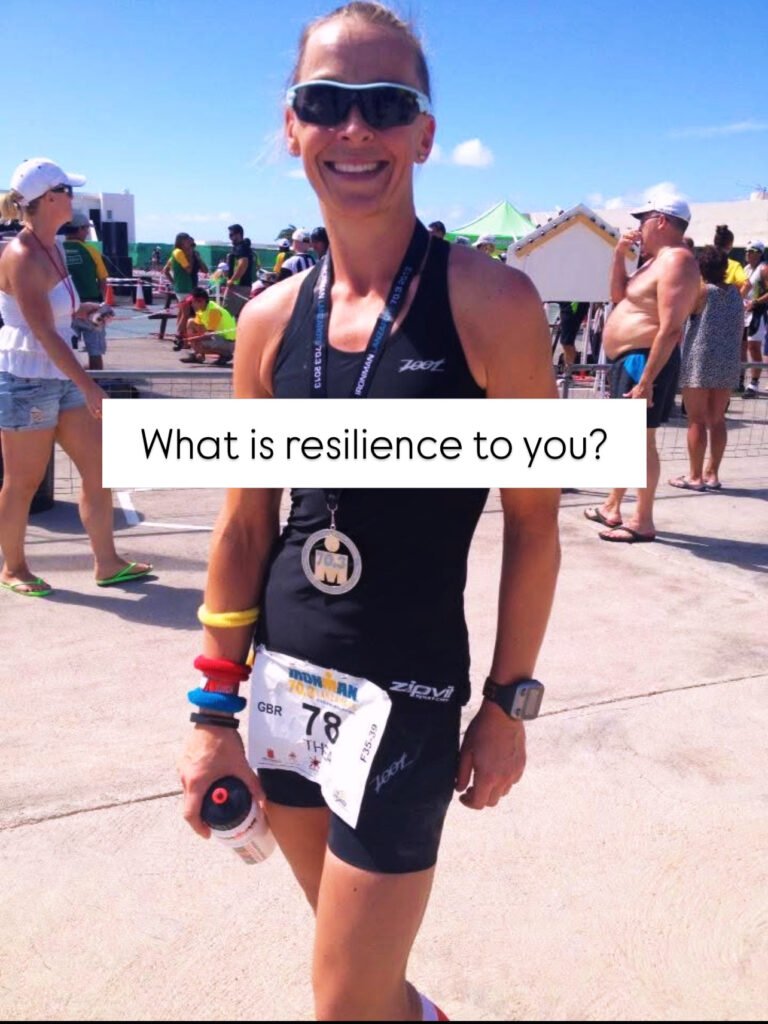
This photo from 13 years ago popped up in my memories this morning. I’d surprised myself by winning my age group at the Ironman 70.3 in Lanzarote, and even more so placing in the top 10 women including the pros, getting my first qualification to the 70.3 World Championships.
Earlier that year I’d raced my first full Ironman in Lanzarote, missing a chance to go to the iconic World Championship in Kona, Hawaii by one place. I tried again at Ironman UK in August – but a nasty bike crash 4 weeks out wasn’t ideal, and I missed qualifying by one place.
Berlin Marathon was booked for October, but my heart wasn’t in it. So I’d entered the Ironman 70.3 in Lanzarote ‘just for fun’ and for some sunshine before winter arrived.
This is not a brag post 😅. I had an innate ability to push myself – no matter what. I did for years – and it was heaps of fun. But also training and racing for me was a great way to block out other things that weren’t so fun.
I, and therefore things, have changed a lot in the years since.
My relationship with sport had to became more sustainable when my body finally told me in no uncertain terms that it was not going to continue in that manner. And with that I had to look at some of the things I’d been avoiding.
I’ve been a racing hiatus for two years – I’d found myself in Portugal at a European Championship event that I had no enthusiasm for. We moved, and I had to build a new business from nothing. I decided to study. I love to train, but don’t want to be out for hours and hours, and currently there is no fire to race. I’m hoping that returns – but if it doesn’t that will be okay too.
For me resilience is about knowing when to push for something, and knowing when it’s right not to. And that looks different for all of us. It’s something I help my clients to explore in their own lives.
Weds 30 September
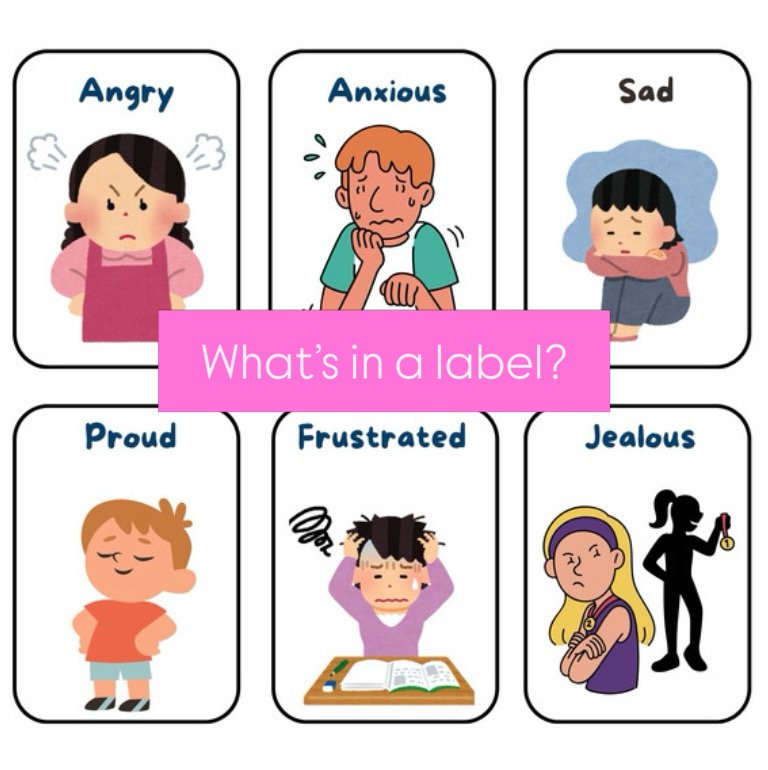
Over the last few days I’ve been thinking about labels – the ones we give ourselves, and the ones other people give us.
When I mentioned this to a friend on my psychotherapy training she replied ‘ I do not like labels – they are sticky and hard to remove’
Difficult. Strong. Sensitive. Intimidating. Quiet. Angry. Confident. Selfish. Too much. Not enough.
Maybe they fit – or maybe they might have been true in the past, or perhaps in a single moment. And sometimes they tell us more about the person doing the labelling than the person being labelled.
People experience us through the lens of their own history and beliefs and can interpret what we say through that lens too.
You might set a boundary and be labelled difficult or be direct and be called aggressive.
If you often make changes, you might be perceived as inconsistent.
You can stop playing a role that suited others, and realise you barely recognise the person in their telling of you.
If we hear a label often enough, particularly from people who matter or have influence in our lives, we can start wearing it and organising ourselves around somebody else’s interpretation of us.
An interesting part of knowing ourselves is becoming a little more curious about the labels we’ve collected along the way.
Who gave me this one? When? Why did I believe them? Does it actually fit who I am?
And entire groups of people can acquire labels remarkably quickly.
Yesterday I heard that warm ale, country pubs and black Labradors symbolise a “far-Right nostalgic vision of Britain.”
I live in the countryside and I like country pubs.
Not so keen on warm ale. And I have a French bulldog.
So frankly, I’m have no idea what label that gives me!
Weds 22 July 2026
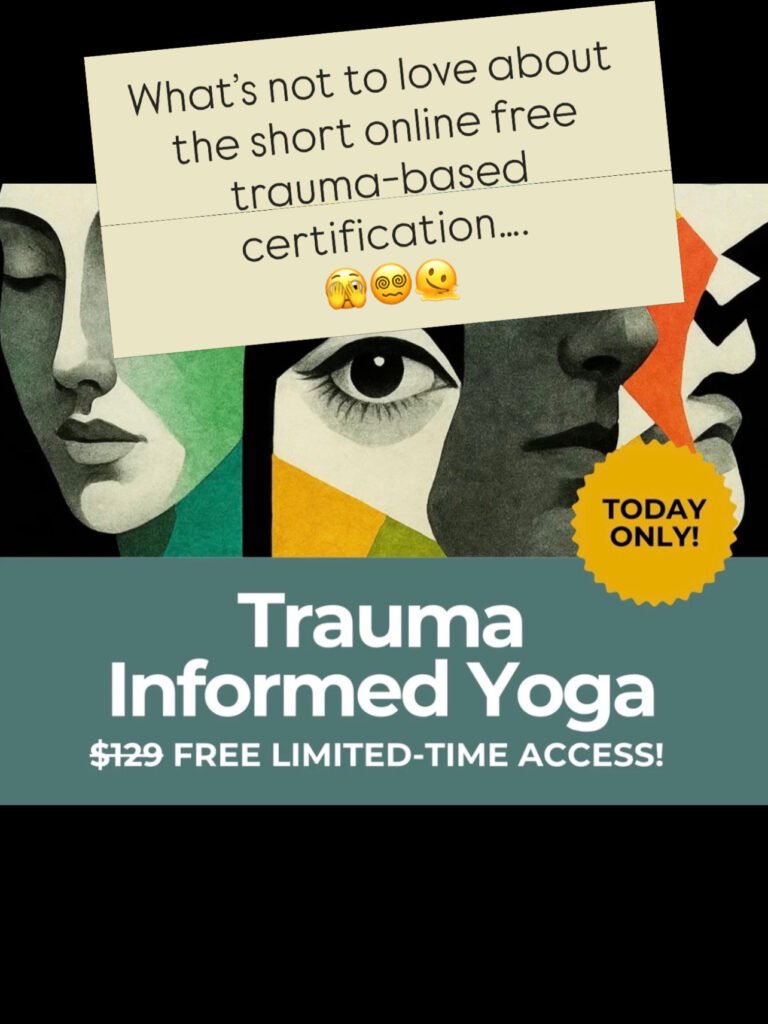
A few days ago an email landed offering me free access to an online ‘trauma informed’ yoga course – complete with certification.
Scroll online and you’ll be inundated with people promising to release trauma, unlock emotions stored in fascia, regulate your nervous system, or facilitate profound healing. Many have huge followings and exceptionally good marketing
Words like trauma-informed, somatic and nervous system regulation have moved into mainstream, yet with their root in psychotherapy they aren’t trends – they describe work that carries real responsibility.
They also equal billions of £s to the wellness industry
And this marketing attracts people who may be vulnerable, desperate, grieving, traumatised or living with chronic pain.
What happens when something goes wrong?
If someone begins to dissociate, experiences overwhelming emotion, uncovers traumatic memories, or leaves a session feeling destabilised?
Learning to guide an emotional release is one thing. Building trust, knowing when not to, knowing what is too much, knowing how to keep someone psychologically safe, understanding trauma, attachment, ethics, safeguarding, contraindications, and the limits of your own competence and when to refer —that is the work.
And often, the people who do have the training, experience and integrity to do this work don’t want to do loads of social media and aren’t great at marketing.
As someone who has spent decades working, studying and experiencing – and is currently undertaking the demands of of psychotherapy training alongside that – the more I witness, the more discerning I become.
The short certification seems to be the trend of our times (hello Pilates industry…)
Combined with a greater than average dose of self-belief, good marketing and an aesthetic Instagram account you can convince people you are qualified to work with their deepest wounds.
If you are looking for support, don’t be afraid to ask questions:
What training have they completed and who insures them?
Who supervises their work?
What happens if a client becomes overwhelmed?
How do they know when to refer on?
Fri 17 July 2026
People often come to Pilates hoping to fix pain and change posture.
Posture is influenced by injury, strength, mobility, and daily habits – and these things absolutely matter, but they’re not the whole story.
When I’m with someone I can begin to sense if life has involved moulding into a shape that doesn’t fit, or trying to go unnoticed. I see where there is too much being tolerated or responsibility being carried. It shows up in how we stand, breathe, the words we use, and how much space we allow ourselves.
Cueing someone to relax their shoulders or stop holding their breath can bring awareness in the moment, but isn’t always enough.
That’s why I don’t see posture as something to fix. I’m more interested in understanding why a body has organised itself this way. And helping someone to explore that (if they want to).
Sometimes what limits movement isn’t just tight muscles or injury. Beneath that is a lifetime of adapting to circumstances, relationships, or beliefs we might not have questioned.
The movement side of my work isn’t just about teaching a set of exercises. They matter, as do the small adjustments and reasons behind how I teach them. But change often increases with a curiosity to look at the life we live inside the body we’re trying to help.
Weds 8 July 2026
The Mind – Body (and Spiritual) Connection – and how it shows up in life (and your Pilates class or Treatment)
Having regular therapy is a requirement of psychotherapy training – to work through your own patterns, mechanisms and triggers – so they don’t take over when working with clients!
When asked what I wanted from therapy, my flippant response was to reach my 50th birthday in a place where I ‘no longer gave a s**t about anything that didn’t warrant it’. And that was pretty true – I didn’t want to waste energy on things that weren’t mine, weren’t necessary, or about what other people think.
How many of us are held back, tripping over ourselves – restrained by things we’ve been told, ways we’ve moulded ourselves to fit it, bound by rules that have told us how things should be. It’s so tiring.
And I see how that shows up in our bodies and our nervous system.
If you come for Pilates or for Massage/Myofascial treatment you might wonder if this is relevant. Yet those beliefs and patterns are showing up:
The tight shoulders that pull you forward – no matter how hard you try to correct your posture.
The gripping hips that cause your lower back to complain when you lift your legs in Pilates.
The face tension as you clench your jaw and unknowingly hold your breath through an exercise.
And when those can let go (even for a moment), you realise you’ve been living with a discomfort that has become so normal you didn’t even realise it was there.
We might pick up an injury running – a repetitive movement pattern has caused a physical injury. But beneath that physical chain of events is deeper information.
The way we subconsciously hold our experiences, beliefs and how we feel about ourselves in our bodies is always there. When we start to bring this stuff into the room it can begin to change the way our body holds itself, and it can change how we experience just being – or doing an activity.
Integration Psychotherapy (which places the body at the centre of our parts) supports what I’ve been seeing for years. And sits perfectly with my holistic approach to movement and bodywork (which I will continue to do).
And my approach supports the part of us that can always connect to who we are, and can always bring us into the present moment – our body.