Buy New
-60%
$44.90$44.90
FREE delivery Wednesday, September 9
Ships from: Amazon Sold by: Chiya Group
Used - Good
$8.04$8.04
FREE delivery September 9 - 11
Ships from: ThriftBooks-Baltimore Sold by: ThriftBooks-Baltimore
Download the free Kindle app and start reading Kindle books instantly on your smartphone, tablet, or computer - no Kindle device required.
Read instantly on your browser with Kindle for Web.
Using your mobile phone camera - scan the code below and download the Kindle app.

Follow the author
OK
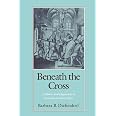
Beneath the Cross: Catholics and Huguenots in Sixteenth-Century Paris
Purchase options and add-ons
- ISBN-100195070135
- ISBN-13978-0195070132
- EditionUK ed.
- PublisherOxford University Press
- Publication dateOctober 31, 1991
- LanguageEnglish
- Dimensions6.3 x 0.84 x 9.1 inches
- Print length288 pages
Frequently bought together

Customers who viewed this item also viewed
- Fires of Faith: Catholic England under Mary TudorPaperbackFREE Shipping on orders over $35 shipped by AmazonGet it as soon as Sunday, Sep 6Only 10 left in stock (more on the way).
- The French Huguenots and Wars of Religion: Three Centuries of Resistance for Freedom of ConsciencePaperbackFREE Shipping on orders over $35 shipped by AmazonGet it as soon as Sunday, Sep 6
- The French Wars of Religion, 1562–1629 (New Approaches to European History, Series Number 36)PaperbackFREE Shipping by AmazonGet it as soon as Wednesday, Sep 9Only 4 left in stock - order soon.
- Beggars, Iconoclasts, and Civic Patriots: The Political Culture of the Dutch RevoltPaperbackFREE Shipping by AmazonGet it as soon as Sunday, Sep 6Only 3 left in stock (more on the way).
- The St. Bartholomew's Day Massacre: A Brief History with Documents (Bedford Series in History and Culture)PaperbackFREE ShippingGet it Sep 25 - 30Usually ships within 11 to 12 days
Customers also bought or read
- Mad Blood Stirring: Vendetta and Factions in Friuli during the Renaissance
Paperback$30.29$30.29Delivery Sun, Sep 6 - Knight: The Warrior and World of Chivalry (General Military)
Hardcover$45.58$45.58$5.43 delivery Fri, Sep 11 - The French Wars of Religion, 1562–1629 (New Approaches to European History, Series Number 36)
Paperback$46.09$46.09FREE delivery Wed, Sep 9 - Beggars, Iconoclasts, and Civic Patriots: The Political Culture of the Dutch Revolt
Paperback$42.95$42.95FREE delivery Sun, Sep 6 - Mass Violence and the Self: From the French Wars of Religion to the Paris Commune
Hardcover$32.77$32.77Delivery Mon, Sep 7 - A Catholic Introduction to the Bible: The Old Testament
Hardcover$44.61$44.61FREE delivery Sep 14 - 22 - Sir Gawain And The Green Knight, Pearl, And Sir Orfeo: A Collection of Medieval Poems Translated by the Beloved Fantasy Author
Paperback$10.25$10.25Delivery Sun, Sep 6 - The French Huguenots and Wars of Religion: Three Centuries of Resistance for Freedom of Conscience
Paperback$22.65$22.65Delivery Sun, Sep 6 - Leviathan: With selected variants from the Latin edition of 1668 (Hackett Classics)
Paperback$18.00$18.00Delivery Sun, Sep 6 - House of Lilies: The Dynasty That Made Medieval France#1 Best SellerFrench History
Hardcover$24.50$24.50Delivery Sun, Sep 6 - Inferno (The Divine Comedy)#1 Best SellerItalian Dramas & Plays
Paperback$17.00$17.00Delivery Sep 20 - Oct 9
Editorial Reviews
Review
About the Author
Product details
- Publisher : Oxford University Press
- Publication date : October 31, 1991
- Edition : UK ed.
- Language : English
- Print length : 288 pages
- ISBN-10 : 0195070135
- ISBN-13 : 978-0195070132
- Item Weight : 1 pounds
- Dimensions : 6.3 x 0.84 x 9.1 inches
- Best Sellers Rank: #935,479 in Books (See Top 100 in Books)
- #161 in Botany (Books)
- #586 in Christianity (Books)
- #1,415 in European History (Books)
- Customer Reviews:
About the author

Discover more of the author’s books, see similar authors, read book recommendations and more.
Customer reviews
- 5 star4 star3 star2 star1 star3 star82%18%0%0%0%0%
- 5 star4 star3 star2 star1 star2 star82%18%0%0%0%0%
- 5 star4 star3 star2 star1 star1 star82%18%0%0%0%0%
Customer Reviews, including Product Star Ratings help customers to learn more about the product and decide whether it is the right product for them.
To calculate the overall star rating and percentage breakdown by star, we don’t use a simple average. Instead, our system considers things like how recent a review is and if the reviewer bought the item on Amazon. It also analyzed reviews to verify trustworthiness.
Learn more how customers reviews work on AmazonTop reviews from the United States
- 5 out of 5 stars
St. Bartholomew's Day not an isolated event
Reviewed in the United States on November 3, 2005In Beneath the Cross, Barbara Diefendorf clearly, eloquently, and persuasively argues that the St. Bartholomew's Day massacre must be examined not as an isolated incident, rather through the illuminating lens of the religious wars of the preceding 15 years to more completely understand the horrific events of 24 August 1572 and to properly place them within France's complex political, social, and religious sixteenth-century history.
Traditional histories of the event fail to appreciate the city of Paris (and the larger French population) as inextricably bound together in "the body social, the body politic, and the body of Christ"-each corps mutually affirmed through "civic, monarchial, and Catholic symbols."
Diefendorf's broader scope illuminates the gradual weakening of the societal triad under the strains of deepened resilience of Calvinists that encouraged their increasing number; radical preaching that steered (a portion of) the predominantly Catholic population toward salvific violence; extremist militia members that exploited civic authority to carry out religious retribution; and royal efforts at moderation that fueled fanaticism.
Beneath the Cross also argues that the massacre, despite the orthodox depiction as a calculated consequence, resulted from the limited call by the king for the assassination of Huguenot leaders that mixed with (at least15) years of Catholic fear of a Protestant takeover; disparate views of heresy between commoners and magistrates; and a faithful response to calls to manifest God's justice upon heretics that culminated in the slaughter of Protestants.
Paris-site of the royal court, a strong judicial apparatus, the University, predominant Catholic parishes, the Reformed Church, plagues, and famines-grabs and maintains center stage throughout the book.
Beneath the Cross is a must-read for the novice, scholar, or admirer of French religious history. Diefendorf's work is an exemplar for clarity of argument, integrity of narrative, and precision of analysis.
10 people found this helpfulSending feedback...Sending feedback...HelpfulThank you for your feedback.Sorry, we failed to record your vote. Please try againThanks, we'll investigate in the next few days.Sorry, We failed to report this review. Please try again - 4 out of 5 stars
Paris as microcosm for Reformation France
Reviewed in the United States on April 7, 2005Almost entirely a narrative history, Barbara Diefendorf's monograph Beneath the Cross studies the dynamic between Parisian Catholics and Protestants from around 1557 to 1572, the year of the St. Bartholomew's Day Massacre. Taking cues from more recent scholarship (including an admitted debt to Natalie Davis), Diefendorf states in her introduction that she is specifically writing to refute an earlier analysis of the French Wars of Religion. Previously seen through the lens of political history, the Wars of Religion had been examined as the violent manifestation of political conflicts among the French nobility, with religion being used merely as a convenient "cover story" as nobles attempted to buck the authority of the monarchy. In contrast, five of Diefendorf's ten chapters deal with explicitly religious themes, almost to the exclusion of the politics of the high court. Although she states that she feels she has tried to walk the middle ground between the traditionalist political history and a too-radical confessional narrative, there can be no doubt that Diefendorf sees the conflicts in mid-sixteenth century Paris as almost entirely religious.
The book's organization is straight forward and the writing is lively. Chapters are devoted to descriptions of the physical and social milieu of Paris, the public practice of Catholicism, clear narratives of the civil wars of religion that wracked France from 1557 to 1572, and the events of the massacre itself. Diefendorf devotes the last third of the book to analysis of her central themes: the structure of the Reformed church within Paris; the most powerful (if not the most openly advertised) beliefs and practices of the Protestants; the venomous preaching of fire-brand Catholic priests against the heretics (and also against those who would tolerate heresy, including the king!); and the culpability of the civil militias and the citizens of Paris in the massacre.
Diefendorf's main thesis is that the actions of all sides in the conflict, from the viciousness of Catholic massacre participants to the almost bovine stoicism of Protestants who simply refused to renounce their religion or home city, were the result of religious faith. The inextricably linked fusion of municipal, monarchical, and ecclesiastical authority that was the chief attribute of Parisian Catholicism convinced faithful Catholics of the rightness of their cause, supported by their community, their king, and their God. At the same time, Protestant devotion to particular aspects of their confession, especially a fascination with the Davidic Psalms and the message encoded therein, bolstered the faith of this extremely persecuted minority, to the point that one marvels that there were still Protestants left in Paris to massacre in August of 1572. Diefendorf argues that religious principles were "real" enough to serve as the primary impetus for Catholic and Protestant actions, against the conventional perspective of the animating power of politics. Careful to illustrate the political consequences of religiously-inspired actions, Diefendorf does indeed manage to tread the middle ground and provides her readers with a successful portrait of Catholic and Protestant clashes in sixteenth century Paris.
16 people found this helpfulSending feedback...Sending feedback...HelpfulThank you for your feedback.Sorry, we failed to record your vote. Please try againThanks, we'll investigate in the next few days.Sorry, We failed to report this review. Please try again - 4 out of 5 stars
Was the monarchy an independent actor in the SBD massacre?
Reviewed in the United States on March 18, 2004What was the role of popular religious sentiment in the infamous massacre of Huguenots on St. Bartholomew's Day in 1572? According to Barbara Diefendorf, traditional historiography has focused almost exclusively on the political dimension which framed this tragedy (Barbara B. Diefendorf, Beneath the Cross: Catholics and Huguenots in Sixteenth-Century Paris (New York, Ny.: Oxford University Press, 1991), p. 4). In her view, this exclusive focus on the political dynamic fails to adequately take into account the popular pressures that were exerted on the king and court during this period. In fact, Diefendorf's chief contention in this book is that the period prior to and extending through the massacre of Huguenots in Paris on 24 August 1572 can only be properly understood when one factors in both the political and religious aspects of this turbulent era. In other words, Diefendorf hopes to steer a middle course through the historiographical landscape of the "Wars of Religion" during this period, and she hopes to avoid both the purely political or the purely religious interpretation of the motivation that shaped these conflicts.
Because Diefendorf attempts to approach the religious conflicts of sixteenth-century France from a variety of perspectives, the book alternates between narrative and analytic modes of presentation. In the opening chapters of the book, she analyzes what preexisting social, economic, political and religious tensions contributed to the conflicts. Diefendorf argues that Paris in the mid-sixteenth century was a city that was substantially weakened by the internal strains of 1) the increasing poverty among the working class and the poor, 2) a growing indebtedness among the population along with the concomitant possibility of losing one's property, 3) the price inflation of essential commodities, and 4) an increasing indigent population that was dependent on public support (Diefendorf, Beneath the Cross, pp. 21-22). She also argues that maintaining order in the Capitol city was becoming increasingly difficult due to the overlapping jurisdiction of the various authorities. Further, the social equilibrium between the governing elite and the masses was demonstrating its increasingly fragile character. From a religious perspective, Diefendorf analyzes the complexities of Parisian Catholicism during this era. She argues that Catholic piety demanded religious unity (both personal and public) as a vital condition for individual and collective salvation since society was perceived an organic whole (Diefendorf, Beneath the Cross, p. 38). Additionally, Diefendorf analyzes the religious processions of the era and argues that they vividly reinforced the perception in the minds of the people of the inseparable relationship between the civic authority, the monarchy, and the Catholic faith (Diefendorf, Beneath the Cross, p. 48). To the Catholics of mid-sixteenth century Paris, Diefendorf argues that unity in the body of Christ demanded a unified city and State under the aegis of Catholicism. She asserts that all of these factors (social, economic, political, and religious) contributed to an increasingly volatile environment that provides the crucial framework for understanding the religious conflicts of this era.
Diefendorf then provides a vivid narrative account of the cycle of religious malice and violence, beginning in 1557, that finally culminated in the massacre of the Protestants in Paris in 1572 (Diefendorf, Beneath the Cross, pp. 49-106). It was during this cycle of war and peace, Diefendorf argues, that religious hatred intensified to such a degree that the murderous events of St. Bartholomew's Day can be legitimately conceived of as a natural extension of the trajectory begun years earlier. What fueled this extreme animus? In answer to this question, Diefendorf examines the Reformed Christianity of Paris and the militant Catholicism (which she labels "extremist" and contrasts with moderate Catholicism) of the day. Examining the extant sermon manuscripts from the Catholic pulpits of the day, Diefendorf paints a seditious picture of Catholic preachers, whom inflamed the masses in their religious hatred of the practitioners of the new religion. She implicates these inflammatory Catholic preachers in ultimately exerting the pressure upon the civic authorities and monarchy that eventually led to the massacre of Saint Bartholomew's Day.
In the final analysis, Diefendorf argues that the massacre of the Parisian Protestants was not pursued by all Catholics equally, but rather was primarily engineered by the radical and extremist faction of Parisian Catholics who exerted important pressure upon the king and civic authorities and who took the city to the brink of anarchy in their murderous enterprise.
This book paints a complex portrait of the religious wars of mid-sixteenth century France, and it is made all the more interesting by the engaging narrative the author provides of the religious conflicts of the era. The author demonstrates her point well concerning the militant influence of extremist Catholic preachers by citing the extant sermons available which seem to substantiate her point. Although the author is probably correct in noting the dual influence of politics and religion in the conflicts of the period, the book suffers from a few weaknesses. First, her use and interpretation of the Catholic processions seems tenuous at best. Would the average Catholic observing these processions have made the same conclusion regarding the inseparable nature of Catholic faith and crown as a result of merely observing these processions as Diefendorf alleges? Additionally, this reviewer truly wonders how independently the masses actually acted in the St. Bartholomew's day massacre. In spite of Diefendorf's valiant efforts, the suspicion of a higher level of monarchical involvement lingers in the mind of this reviewer. Perhaps the greatest weakness, however, is the author's failure to adequately substantiate the existence of a "moderate faction" within Parisian Catholicism. Surely there were Catholics who were more militant in their faith than others, but was there a sizable moderate faction in existence who would have actively opposed their militant brethren in any substantive way? This reviewer doesn't find any conclusive proof in Diefendorf's book to establish such a premise. It is true that later historical developments in France (which Diefendorf does not address in this work) would seem to support this thesis. On the other hand, the history of the massacre and the triumphant procession of the king and court before the approving masses after the slaughter suggest perhaps the opposite conclusion.
9 people found this helpfulSending feedback...Sending feedback...HelpfulThank you for your feedback.Sorry, we failed to record your vote. Please try againThanks, we'll investigate in the next few days.Sorry, We failed to report this review. Please try again