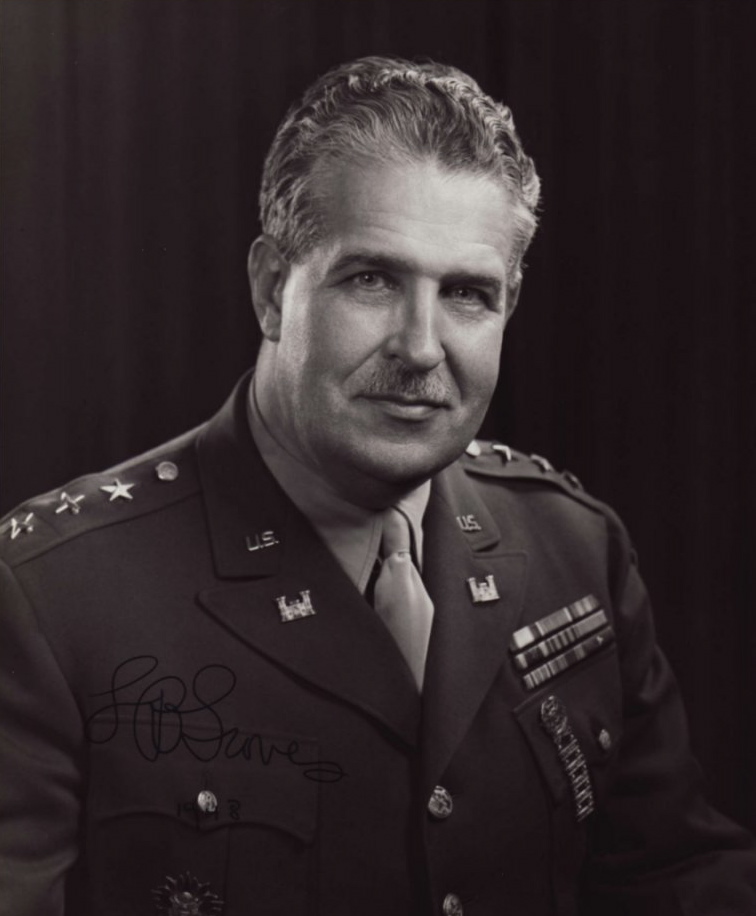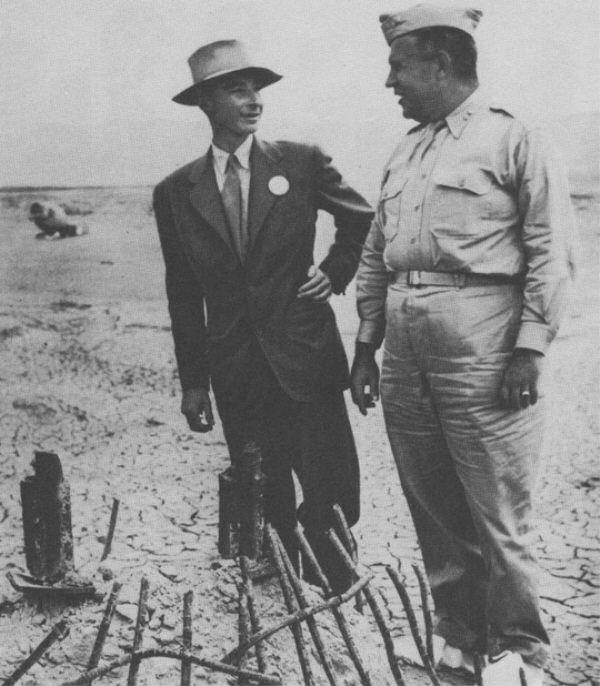
United States World War II Army General. A General in the United States Army Corps of Engineers, he was in overall command of the mission and directive to develop an atomic bomb during World War II (WWII) that became known as "The Manhattan Project" alongside scientist J. Robert Oppenheimer. Previous to this assignment, he oversaw the construction of the Pentagon Building in Arlington, Virginia. Constructed in 16 months, from September 11, 1941 through January 15, 1943. As spaces were completed, military personnel were moved in, and as construction continued around them, it was necessary to centralize all branches of the War Department. A 1918 graduate of the United States Military Academy in West Point, New York, he retired in 1948 with the rank of Lieutenant General, having received the Distinguished Service Medal and the Legion of Merit.
United States World War II Army General. A General in the United States Army Corps of Engineers, he was in overall command of the mission and directive to develop an atomic bomb during World War II (WWII) that became known as "The Manhattan Project" alongside scientist J. Robert Oppenheimer. Previous to this assignment, he oversaw the construction of the Pentagon Building in Arlington, Virginia. Constructed in 16 months, from September 11, 1941 through January 15, 1943. As spaces were completed, military personnel were moved in, and as construction continued around them, it was necessary to centralize all branches of the War Department. A 1918 graduate of the United States Military Academy in West Point, New York, he retired in 1948 with the rank of Lieutenant General, having received the Distinguished Service Medal and the Legion of Merit.
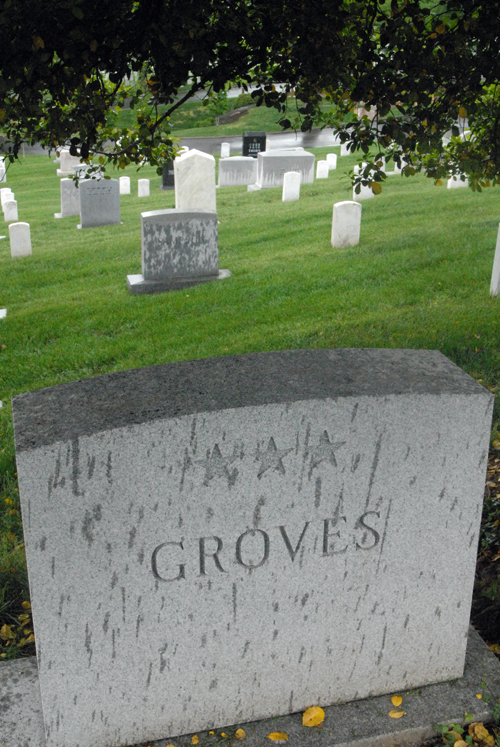
Inscription
Lieutenant General, United States Army
Commanding General, Manhattan Project