
Interphase is the longest phase of the cell cycle, during which the cell remains highly active and prepares itself for cell division. During this phase, the cell grows, carries out normal metabolic activities, replicates its DNA, and synthesises the proteins and organelles required for the successful completion of mitosis or meiosis.
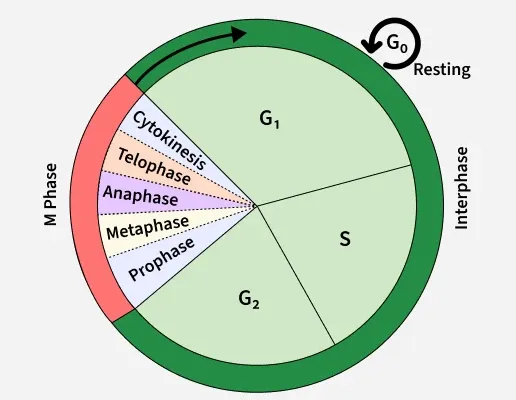
General Characteristics of Interphase
Interphase possesses several important characteristics that distinguish it from the stages of mitosis and meiosis.
- It is the longest phase of the cell cycle.
- The cell remains metabolically active throughout this phase.
- DNA replication takes place during interphase.
- The nucleus remains intact and clearly visible.
- The nucleolus remains prominent within the nucleus.
- Chromosomes are not distinctly visible because they exist as thin chromatin fibres.
- Proteins, RNA, and enzymes are actively synthesized.
- Cell organelles increase in number.
- The cell grows in size and accumulates nutrients.
- It prepares the cell for mitosis or meiosis.
Phases of Interphase
Interphase is divided into three successive phases known as the G₁ phase, S phase, and G₂ phase. Each phase performs specific functions that contribute to the preparation of the cell for division.
1. G₁ Phase (First Gap Phase)
- The G₁ phase is the first stage of interphase and begins immediately after the completion of the previous cell division. During this phase, the newly formed daughter cell undergoes rapid growth and becomes highly metabolically active.
- The cell increases in size by synthesizing large amounts of proteins, enzymes, RNA molecules, lipids, and carbohydrates that are required for cellular activities.
- Numerous cellular organelles such as mitochondria, ribosomes, endoplasmic reticulum, plastids, and Golgi bodies are either produced or increased in number during this phase.
- The cell also absorbs nutrients from its surroundings and stores energy-rich molecules that will be required during DNA replication and cell division.
- The G₁ phase is therefore regarded as a period of intense growth and metabolic activity during which the cell prepares itself for DNA synthesis.
2. S Phase (Synthesis Phase)
- The S phase is the most important phase of interphase because it is during this stage that DNA replication occurs. During the synthesis phase, each DNA molecule duplicates itself so that two identical copies of the genetic material are produced.
- As a result, every chromosome forms two identical sister chromatids that remain attached to each other at the centromere.
- Although the amount of DNA within the cell doubles during this phase, the number of chromosomes remains unchanged because the chromatids remain joined together.
- In addition to DNA replication, histone proteins associated with DNA are also synthesized in large quantities to facilitate chromosome formation.
- The accurate replication of DNA during the S phase ensures that each daughter cell receives a complete and identical set of genetic information after cell division.
- This process is essential for maintaining genetic continuity and stability from one generation of cells to the next.
3. G₂ Phase (Second Gap Phase)
- The G₂ phase is the final stage of interphase and occurs after the completion of DNA replication. During this phase, the cell continues to grow and undergoes extensive preparation for mitosis or meiosis.
- Various proteins required for chromosome condensation, spindle fibre formation, and cell division are synthesized.
- The cell also checks the newly replicated DNA for errors and repairs any damage that may have occurred during replication. This quality-control mechanism ensures that accurate genetic information is transmitted to the daughter cells.
- Organelles continue to multiply, and additional energy reserves are accumulated to support the demanding process of cell division.
- By the end of the G₂ phase, the cell has completed all necessary preparations and is fully ready to enter the mitotic or meiotic phase.
Significance of Interphase
Interphase plays an extremely important role in the life cycle of a cell because it ensures that all essential preparations for cell division are completed successfully.
- Cell Growth: One of the primary functions of interphase is to promote cell growth. During this period, the cell increases in size and accumulates sufficient cytoplasmic material to support both itself and the future daughter cells.
- DNA Replication: The duplication of DNA during the S phase ensures that each daughter cell receives a complete and identical set of chromosomes after cell division. This maintains genetic continuity and stability within the organism.
- Synthesis of Biomolecules: Large quantities of proteins, enzymes, RNA molecules, and other biochemical substances are synthesized during interphase. These molecules are necessary for cellular metabolism, growth, and division.
- Duplication of Organelles: Interphase ensures that important organelles such as mitochondria, plastids, ribosomes, and Golgi bodies are duplicated so that each daughter cell receives adequate cellular machinery.
- Preparation for Cell Division: All the structural and biochemical requirements necessary for mitosis or meiosis are fulfilled during interphase, making successful cell division possible.
- Maintenance of Genetic Stability: By ensuring accurate DNA replication and repair, interphase helps prevent genetic errors and maintains the stability of hereditary information across generations of cells.
Importance of Interphase
- Interphase is essential for the growth, development, repair, and maintenance of living organisms.
- Without interphase, cells would not be able to replicate their DNA, synthesize necessary proteins, duplicate organelles, or accumulate sufficient energy for division.
- Consequently, cell division would be incomplete or defective, leading to impaired growth and survival of the organism.
- The proper functioning of interphase is therefore critical for tissue growth, wound healing, reproduction, and the maintenance of normal physiological activities.
