

Cybersecurity policy has become one of the most critical concerns in today’s digital world. With the rapid rise in cybercrimes, Organizations must take proactive measures to protect their data, systems and networks from both external attacks and internal vulnerabilities.
- A well-defined cybersecurity policy helps ensure better security and risk management.
- Focuses on maintaining the confidentiality, integrity and availability of information.
Key Components of a Cyber Security Policy
Each policy addresses specific risks and defines guidelines to protect systems and data.
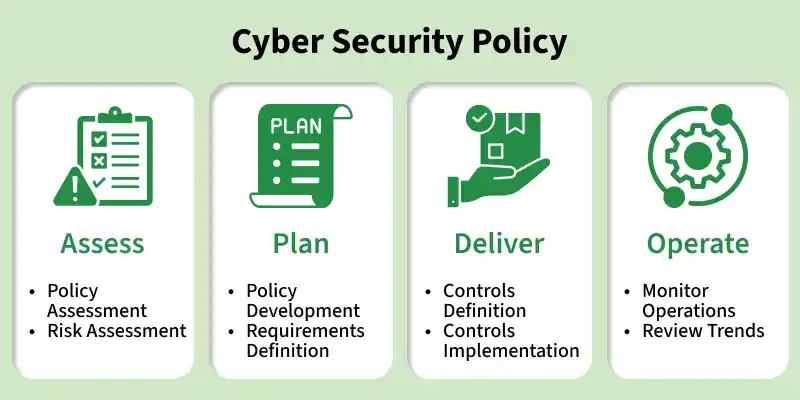
- Purpose and Scope: Defines the objectives of the policy and the systems, users and resources it applies to.
- Roles and Responsibilities: Assigns cybersecurity duties and accountability to all relevant personnel and stakeholders.
- Access Control Policy: Establishes rules for granting, managing and restricting access to organizational resources.
- Password Security Requirements: Specifies standards for creating, managing and protecting user passwords.
- Data Protection Guidelines: Outlines measures for securing sensitive data throughout its lifecycle.
- Network Security Controls: Defines safeguards used to protect network infrastructure from cyber threats.
- Incident Response Procedures: Provides a framework for detecting, responding to and recovering from security incidents.
- Security Awareness and Training: Ensures users receive regular training to recognize and prevent cybersecurity risks.
- Compliance and Auditing: Establishes processes for verifying adherence to security policies and regulatory requirements.
Steps to Create a Cybersecurity Policy
Developing a cybersecurity policy involves a structured approach to identifying risks, defining controls and ensuring compliance with standards.
- Identify Security Requirements: Assess organizational assets, risks, threats and compliance obligations.
- Define Security Objectives: Establish clear goals aligned with business operations and risk management strategies.
- Create Security Rules: Develop policies covering access control, data protection, incident management and acceptable use.
- Review and Approve: Obtain approval from management and relevant stakeholders.
- Communicate the Policy: Distribute the policy to all users and ensure they understand their responsibilities.
- Implement Security Controls: Deploy technical and administrative safeguards that support policy requirements.
- Monitor and Update: Regularly review the policy to address emerging threats and organizational changes.
Types of Cyber Security Policies
- Enterprise Information Security Policy (EISP): Provides high-level security direction and organizational security objectives.
- Issue-Specific Security Policy (ISSP): Addresses specific security concerns such as email usage, remote access or mobile device security.
- System-Specific Security Policy (SysSP): Focuses on security requirements for particular systems, applications or technologies.
Stakeholders in Cybersecurity Policy Development
Each stakeholder contributes a unique perspective to strengthen policy design and implementation.
- IT Teams: Provide technical expertise and implement security controls.
- Legal Departments: Ensure compliance with laws and regulations.
- HR Teams: Enforce policies through employee guidelines and training.
- Management: Define strategy, allocate resources and ensure enforcement.
Best Practices for Effective Cyber Security Policies
- Keep policies clear and easy to understand.
- Align policies with business objectives.
- Enforce the principle of least privilege.
- Implement multi-factor authentication.
- Conduct regular security audits.
- Update policies periodically.
