


 Loading...
| Nicholaus (Kopernik) Copernicus Jr. is managed by the Poland Project. Join: Poland Project Discuss: poland |

Biography

Son of Mikołaj Kopernikand Barbara Watzenrode, Nicolaus Copernicus is the renowned Polish mathematician/astrophysicist who transformed the scientific world with his then controversial theory of the solar system. Much to the chagrin of the Catholic Church, he proposed that the sun is the center of the solar system around which the planets revolve. Ironically, today he is honored, together with Johannes Kepler, in the liturgical calendar of the Episcopal Church (USA), with a feast day on 23 May. His theories revolutionized the science & today he is considered to be the father of modern astronomy.
Nicolaus Copernicus was born on 19 February 1473 in the city of Toruń (Thorn) in Royal Prussia, part of the Kingdom of Poland. Nicolaus was the youngest of four children. His brother Andreas (Andrew) became an Augustinian canon at Frombork (Frauenburg). His sister Barbara, named after her mother, became a Benedictine nun and in her final years (she died after 1517) prioress of a convent in Chełmno (Culm, Kulm). His younger sister Katharina married the businessman and Toruń city councilor Barthel Gertner and left five children, whom Copernicus looked after to the end of his life.
Copernicus never married or had children.
His father’s family can be traced to a village in Silesia near Nysa (Neiße). The village's name has been variously spelled Kopernik, Köppernig, Köppernick, and today Koperniki. In the 14th century, members of the family began moving to various other Silesian cities, to the Polish capital, Kraków (Cracow, 1367), and to Toruń (1400). The father, likely the son of Jan, came from the Kraków line.The father married Barbara Watzenrode, the astronomer's mother, between 1461 and 1464. He died sometime between 1483 and 1485. Upon the father’s death, young Nicolaus’ maternal uncle, Lucas Watzenrode the Younger (1447–1512), took the boy under his protection and saw to his education and career.
Toruń, situated on the Vistula River, was at that time embroiled in the Thirteen Years' War (1454–66), in which the Kingdom of Poland and the Prussian Confederation, an alliance of Prussian cities, gentry and clergy, fought the Teutonic Order over control of the region. His father was actively engaged in the politics of the day, and supported Poland and the cities against the Teutonic Order. In 1454 he mediated negotiations between Poland’s Cardinal Zbigniew Oleśnicki and the Prussian cities for repayment of war loans. In the Second Peace of Thorn (1466), the Teutonic Order formally relinquished all claims to its western provinces, which as Royal Prussia remained a region of Poland for the next 300 years.
Nicolaus’ mother, Barbara Watzenrode, was the daughter of Lucas Watzenrode the Elder and his wife Katherine (née Modlibóg). Not much is known about her life, but she is believed to have died when Nicolaus was a small boy. The Watzenrodes, who were Roman Catholic, had come from the Świdnica region of Silesia and had settled in Toruń after 1360, becoming prominent members of the city’s patrician class. Through the Watzenrodes' extensive family relationships by marriage, they were related to wealthy families of Toruń, Danzig and Elbląg (Elbing), and to the prominent Czapski, Działyński, Konopacki and Kościelecki noble families. The Modlibógs (literally, in Polish, "Pray to God") were a prominent Roman Catholic Polish family who had been well known in Poland's history since 1271. Lucas and Katherine had three children: Lucas Watzenrode the Younger, who would become Copernicus' patron; Barbara, the astronomer's mother; and Christina, who in 1459 married the merchant and mayor of Toruń, Tiedeman von Allen.
Nicolaus was named after his father, who appears in records for the first time as a well-to-do Roman Catholic merchant who dealt in copper, selling it mostly in Danzig (Gdańsk).
In Copernicus’ time, people were often called after the places where they lived. Like the Silesian village that inspired it, Copernicus’ family name has been spelled variously. Today the world primarily knows the astronomer by the Latinized version "Nicolaus Copernicus." In Poland he is called Mikołaj Kopernik. In Germany, the preferred version is Nikolaus Kopernikus. The name likely had something to do with the local Silesian copper-mining industry, though some Polish scholars assert that it may have been inspired by the dill plant (in Polish, "koperek" or "kopernik") that grows wild in Silesia.
Copernicus was an inhabitant of a German-speaking territory belonging to Poland since 1466 and of mixed German-Polish extraction. Encyclopædia Britannica, Encyclopedia Americana, The Columbia Encyclopedia, The Oxford World Encyclopedia, and the Microsoft Encarta Online Encyclopedia identify Copernicus as Polish, the Stanford Encyclopedia of Philosophy states: "Thus the child of a German family was a subject of the Polish crown."
Copernicus died in Frauenburg (Frombork) on 24 May 1543.
Copernicus was reportedly buried in Frombork Cathedral, where archeologists for over two centuries searched in vain for his remains. In 2008, scientists announced the discovery of Copernicus's remains in an unmarked grave at St. John's Cathedral in Frombork. The DNA from the bones found in the grave matched hair samples taken from a book owned by Copernicus which was kept at the library of the University of Uppsala in Sweden. The astronomer was reinterred there with religious ceremony on May 22, 2010, and a black granite marker was placed at the site.
DNA
Eupedia.com (genetics) recently announced that the remains of Nicolaus Copernicus were tested for Y-DNA and mtDNA in 2009. According to the results, "They established that he belonged to mt-haplogroup H27 (defined by the mutations 16129A and 16316G)." as one who also shares mtDNA Haplogroup H27. https://www.eupedia.com/genetics/famous_mtdna_by_haplogroup.shtml
Genetic identification of putative remains of the famous astronomer Nicolaus Copernicus[1]
The Copernicus grave mystery [2]
Sources
- ↑ Edited by Alan Walker, Pennsylvania State University, University Park, PA, and approved June 16, 2009 July 28, 2009, 106 (30) 12279-12282 https://doi.org/10.1073/pnas.0901848106
- ↑ Owen Gingerich. Authors Info & Affiliations July 28, 2009. 106 (30) 12215-12216. https://doi.org/10.1073/pnas.0907491106
- http://en.wikipedia.org/wiki/Copernicus
- http://www.findagrave.com/cgi-bin/fg.cgi?page=gr&GRid=10340
- http://www.geni.com/people/Nicolaus-Copernicus/6000000001389309978 has a very extensive biography and sources.
- The Life of Copernicus (1473-1543) By Pierre Gassendi, Oliver Thill http://books.google.com/books?id=9r0RfQtpU6AC&pg=PA18 has excerpts
- http://forum.polishorigins.com/viewtopic.php?t=171 DNA Testing and facial reconstruction.
- http://www.visittorun.pl/232,l2.html
- http://en.wikipedia.org/wiki/Nicolaus_Copernicus
- http://scienceworld.wolfram.com/biography/Copernicus.html
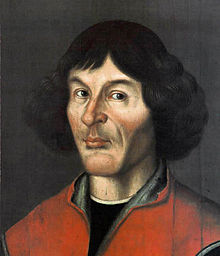
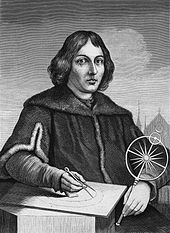


![John Field [[Field-488]] 1530-1587.](https://www.wikitree.com/photo.php/thumb/4/40/Kopernik-1-1.jpg/300px-Kopernik-1-1.jpg)
![John Field [[Field-488]] 1530-1587.](https://www.wikitree.com/photo.php/4/40/Kopernik-1-1.jpg)


