


As gamers, many of us have chased native 4K gaming at some point. In fact, enthusiasts have been trying to game at native 4K ever since the GTX 1080 launched in 2016 because its performance finally made that resolution feel somewhat attainable on a high-end PC. Fast-forward to 2026, and native 4K gaming is still pretty demanding on a flagship GPU like the RTX 5090, especially with many titles now supporting ray tracing. At the same time, upscaling technologies like DLSS, FSR, and XeSS have made native 4K much harder to justify.
Although upscaling has been around since 2019 and most people had mixed opinions when it first came out, the technology has improved significantly in recent years. Many gamers avoided it altogether early on because the image looked noticeably softer compared to native 4K, but that's not really an issue today. Both DLSS 4.5 and FSR 4 can reconstruct detail well enough that the difference is often hard to notice during normal gameplay. And the FPS gains end up mattering far more than any visual advantage native 4K might still have.
Upscaled 4K doesn't look "soft" anymore
You'll struggle to tell the difference without a side-by-side comparison


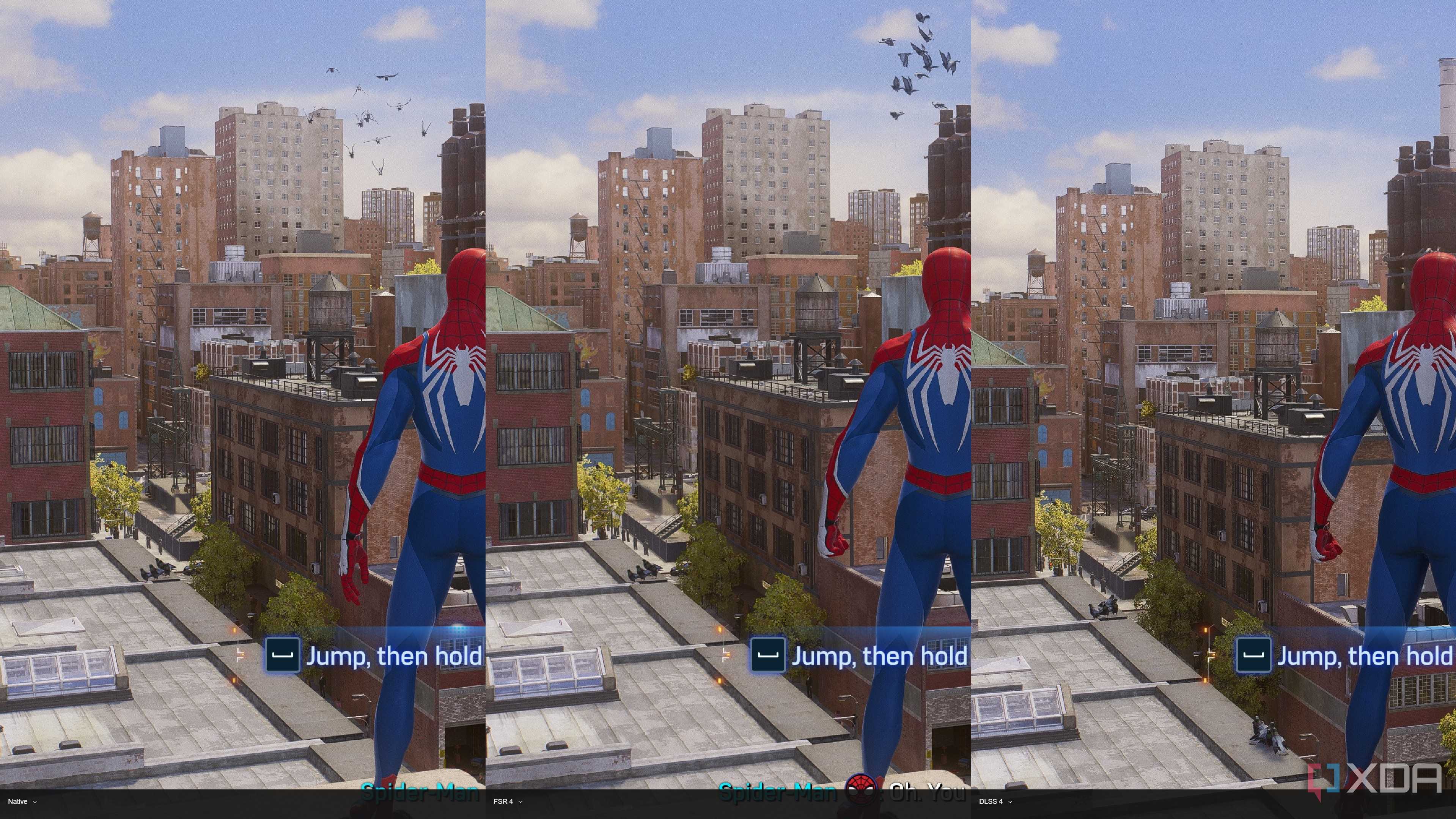
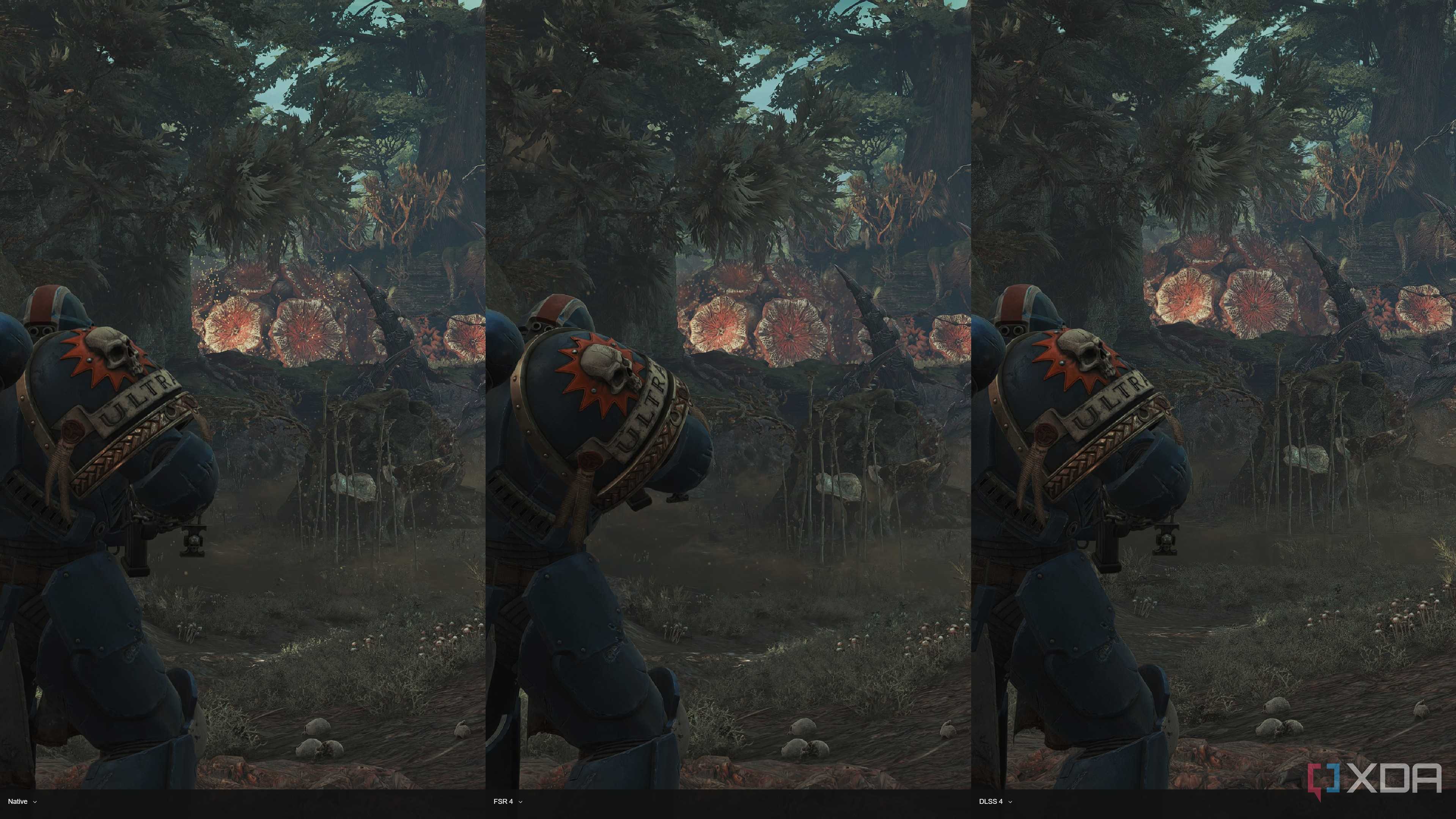
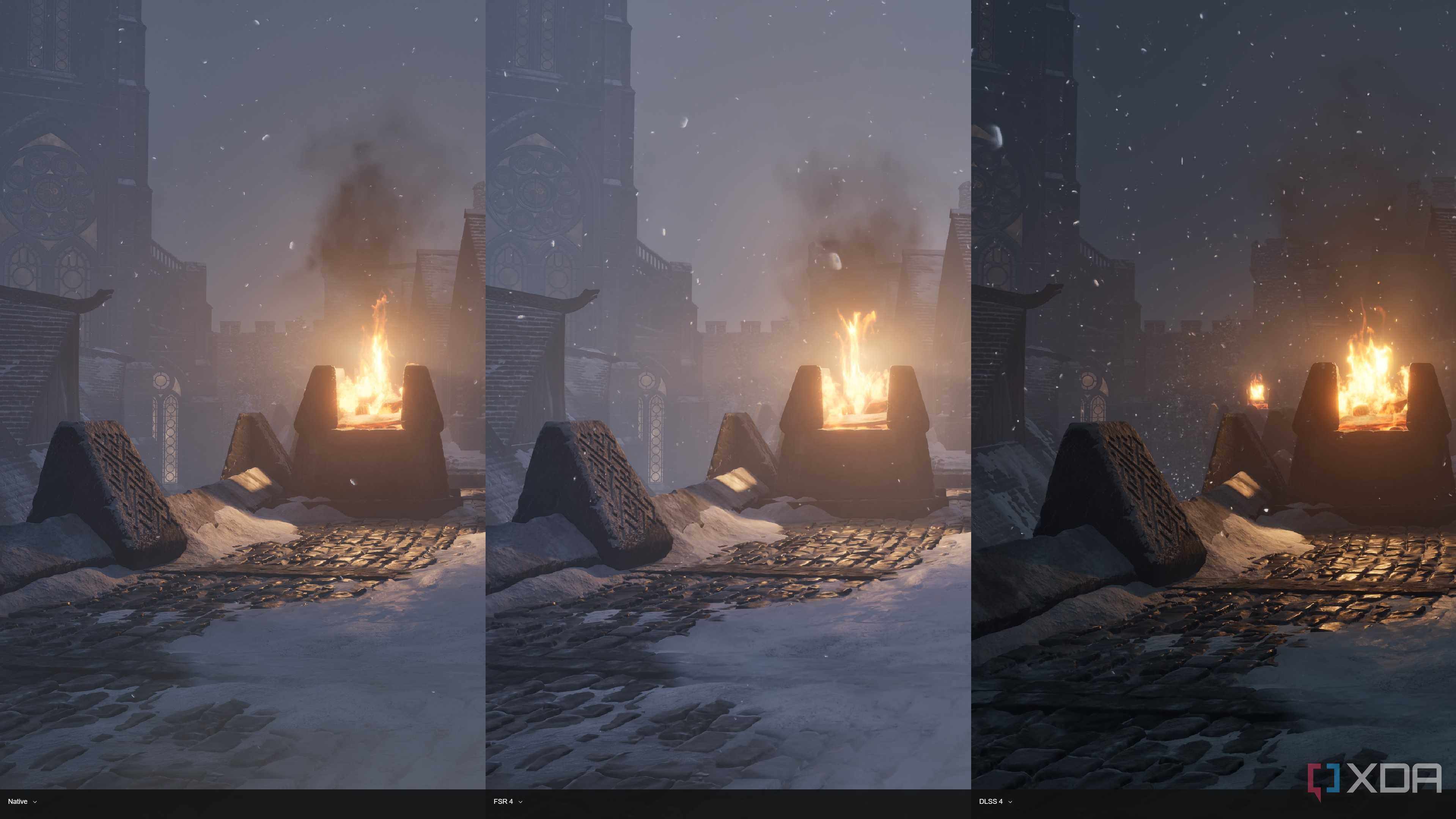
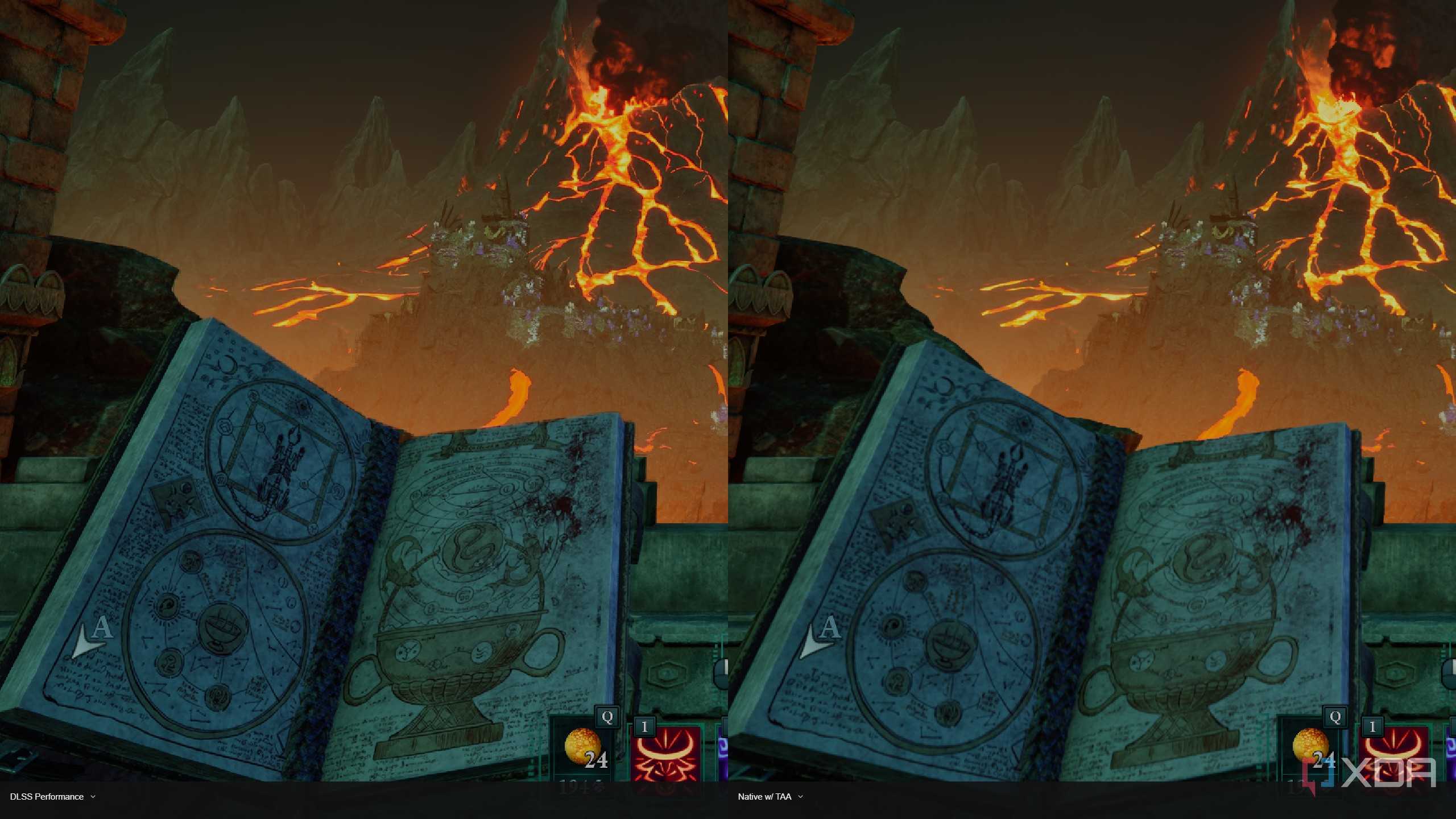
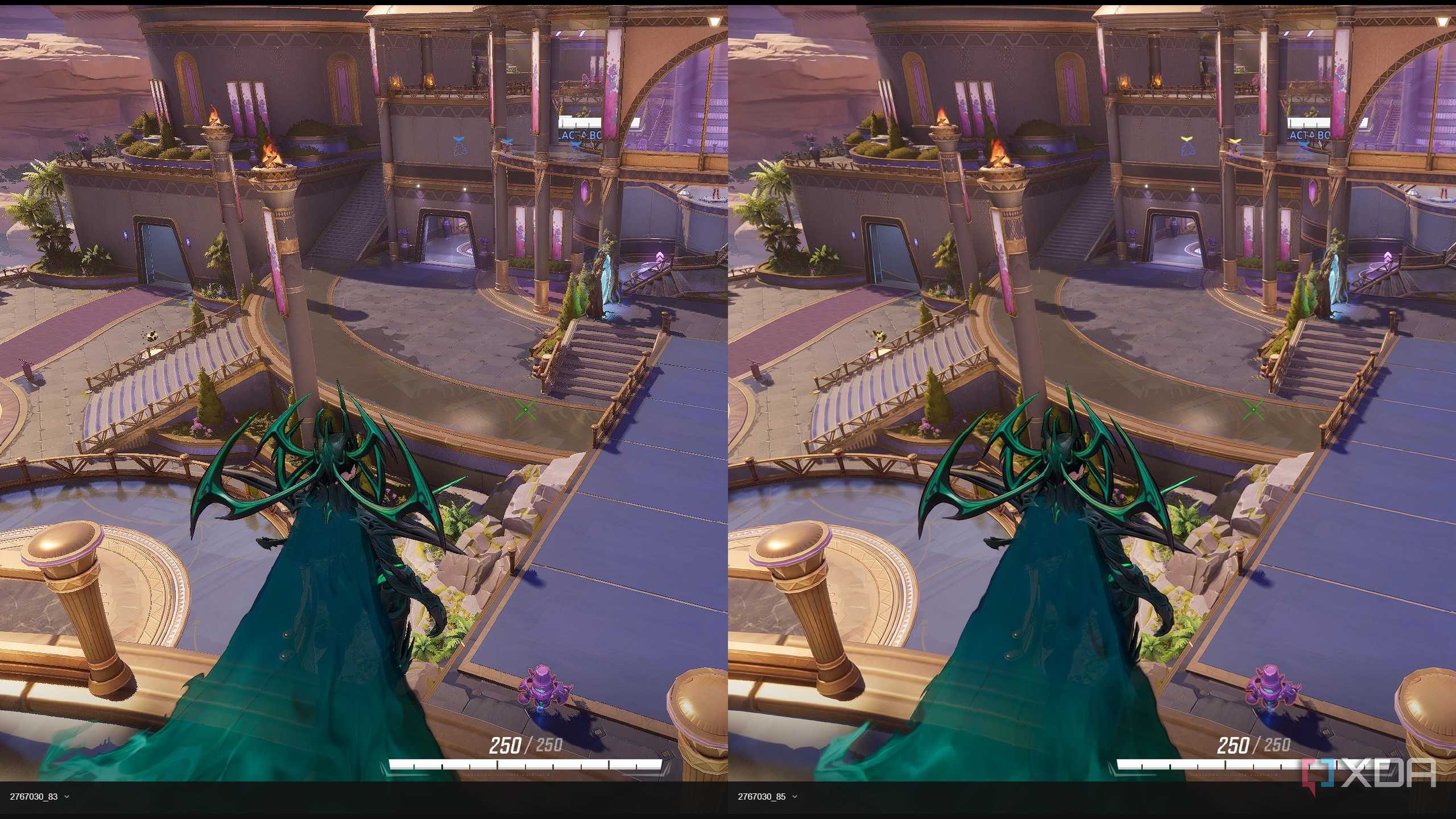



The softer overall look is the main reason why many of us completely avoided DLSS and FSR in the past. Early implementations struggled to preserve fine detail, especially in scenes with thin geometry, distant textures, or foliage. For instance, trees in the distance ended up looking slightly blurred, and some textures on buildings just appeared less defined compared to native 4K rendering. If you already had a high-end GPU like the RTX 3090, upscaling just felt like a clear downgrade in image quality.
In recent years, though, upscaling technologies have improved significantly in that department. Reconstruction techniques now rely on temporal data and motion vectors to rebuild detail across multiple frames rather than simply stretching a lower-resolution image. DLSS 4/4.5's transformer model is a prime example of this. Even during motion, it maintains image stability and fine detail much better than older iterations. And that's exactly why the visual gap between native 4K and upscaled 4K is almost non-existent most of the time.
Native 4K still brings flagship GPUs to its knees
Even the RTX 5090 can't max out every game at native 4K and maintain 60FPS

The RTX 5090 is the fastest consumer graphics card you can buy in 2026, but that's still not enough to get 4K/60FPS in every new AAA title with all settings maxed out. With newer titles supporting ray tracing and highly detailed open world environments, the GPU workload has increased significantly in recent years. For instance, games like Assassin's Creed: Shadows and Black Myth: Wukong can still force you to rely on DLSS, since running them at native 4K often means settling for sub-60 FPS performance.
As much as that sucks for someone who spent over $2,000 on a flagship GPU, relying on upscaling technologies for smooth frame rates also makes mid-range cards far more desirable than they used to be. By rendering the game internally at a lower resolution and reconstructing the final image to 4K, you can avoid the performance penalty that comes with native 4K. And if you're still not satisfied with your frame rates, you can always enable frame generation on top of it to double or even triple your average FPS.
Pixel peepers will still prefer native 4K
But is that minuscule improvement really worth the massive FPS hit?

Of course, if you look closely enough, which is inevitable if you sit close to the monitor like I do, native 4K can still look slightly cleaner in many situations. Since there's no reconstruction involved, textures, edges, and fine detail appear exactly as the developer intended. Any difference that I notice with DLSS enabled has to do with how it handles motion. In some scenes, foliage can occasionally look slightly less stable compared to native rendering. Sure, the differences are subtle, but they can still stand out to a trained eye.
The real question, though, is whether that tiny improvement you get from native 4K actually matters when you're cruising through a game. At that point, I'd be more distracted by occasional FPS dips or micro-stutters than by small differences in foliage stability or fine texture detail. Smoother frame rates make games feel more responsive and fluid, which is something any gamer can appreciate immediately. When upscaling can deliver nearly the same image quality while maintaining higher frame rates, it's hard to justify paying the massive performance tax that comes with running everything at native 4K.
Upscaling has changed 4K gaming for the better
Native 4K rendering has always been treated as the endgame for PC gaming, but modern upscaling tech has changed that mindset quite a bit. When you can get 95% of the way there without sacrificing nearly as much FPS, you have to take a step back and ask whether native rendering is really worth chasing anymore. Sure, if a game isn't too demanding, and you're happy with the performance, there's nothing wrong with sticking to native 4K. But more often than not, performance is still a problem for the vast majority of gamers who don't own a flagship GPU, and for them, upscaled 4K is still the smarter way to experience high-fidelity gaming.
