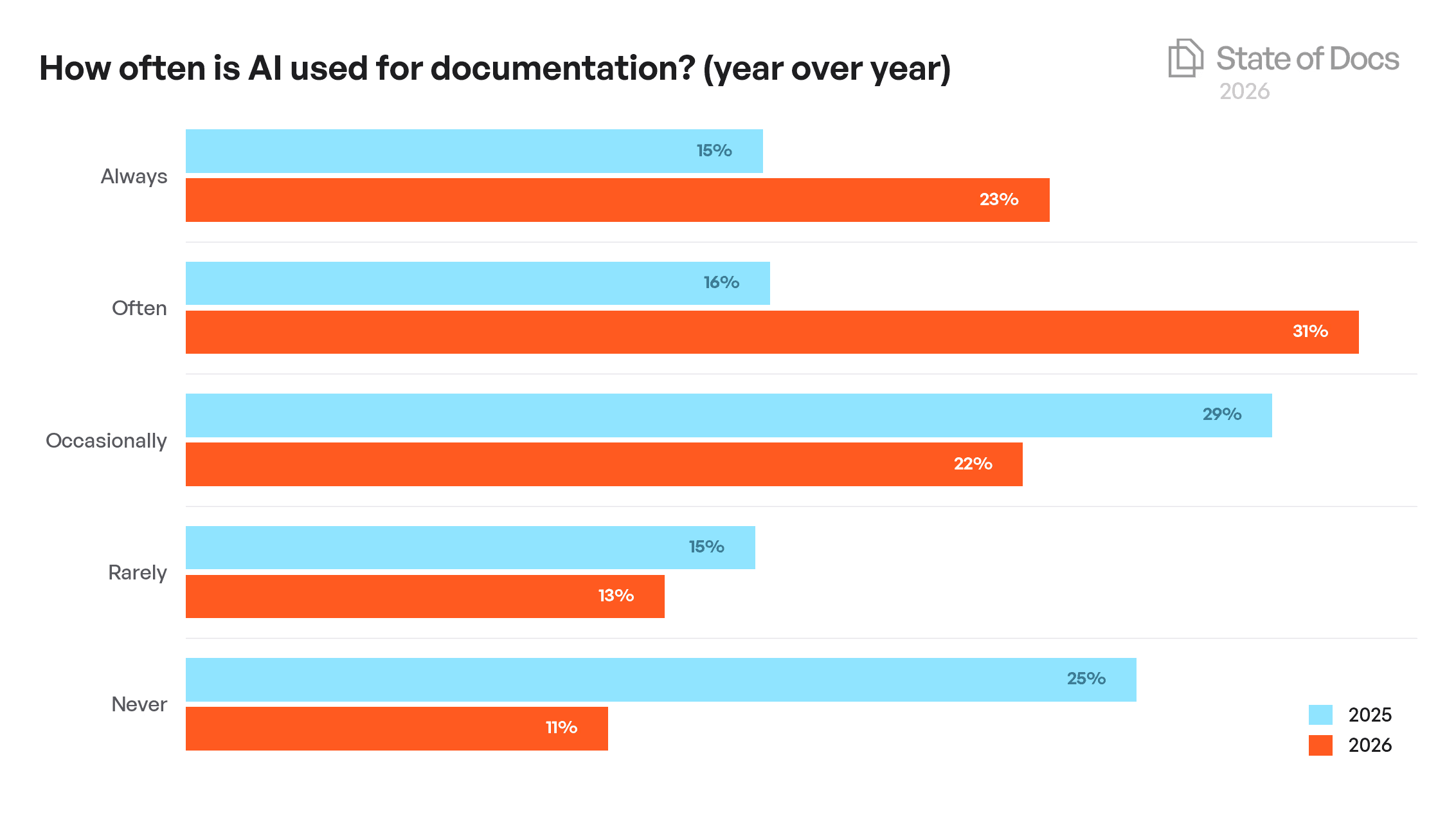
Are you one of the 76% of documentation experts who use AI regularly in your docs workflow? That percentage has risen 16 points in the past year, clearly showing that using AI for docs creation has become mainstream.
The data comes from the State of Docs Report 2026 — our latest glimpse at the documentation landscape, featuring insights and input from more than 1,100 industry experts and docs practitioners.
You can read the full report now, with fantastic data that doesn’t just demonstrate the true value of documentation — but also shows how the industry, and the job roles within it, are changing.
For now, here are a few standout insights.
This year’s State of Docs survey added more questions about AI in documentation, as well as a new section focused on how the role of documentation contributors has changed in the past 12 months.
As we mentioned above, 76% of respondents now use AI regularly in their docs workflows — with 56% of those users saying they spend less time writing and more time editing and reviewing their docs content.
And AI isn’t just changing the way we create documentation. It’s also changing how our end-users access and consume that knowledge — which is in turn affecting how teams approach their docs work.
70% of teams now factor AI into their information architecture decisions. That’s an increase of almost 40% since last year. With AI assistants becoming commonplace and more of us turning to ChatGPT and Claude when we hit blockers, it’s not surprising that teams are considering AI bots and LLM citations when creating their docs.
One metric that has held steady from last year is the importance of docs when purchasing a product. 88% of respondents said a product’s documentation is important when they’re making a purchase.
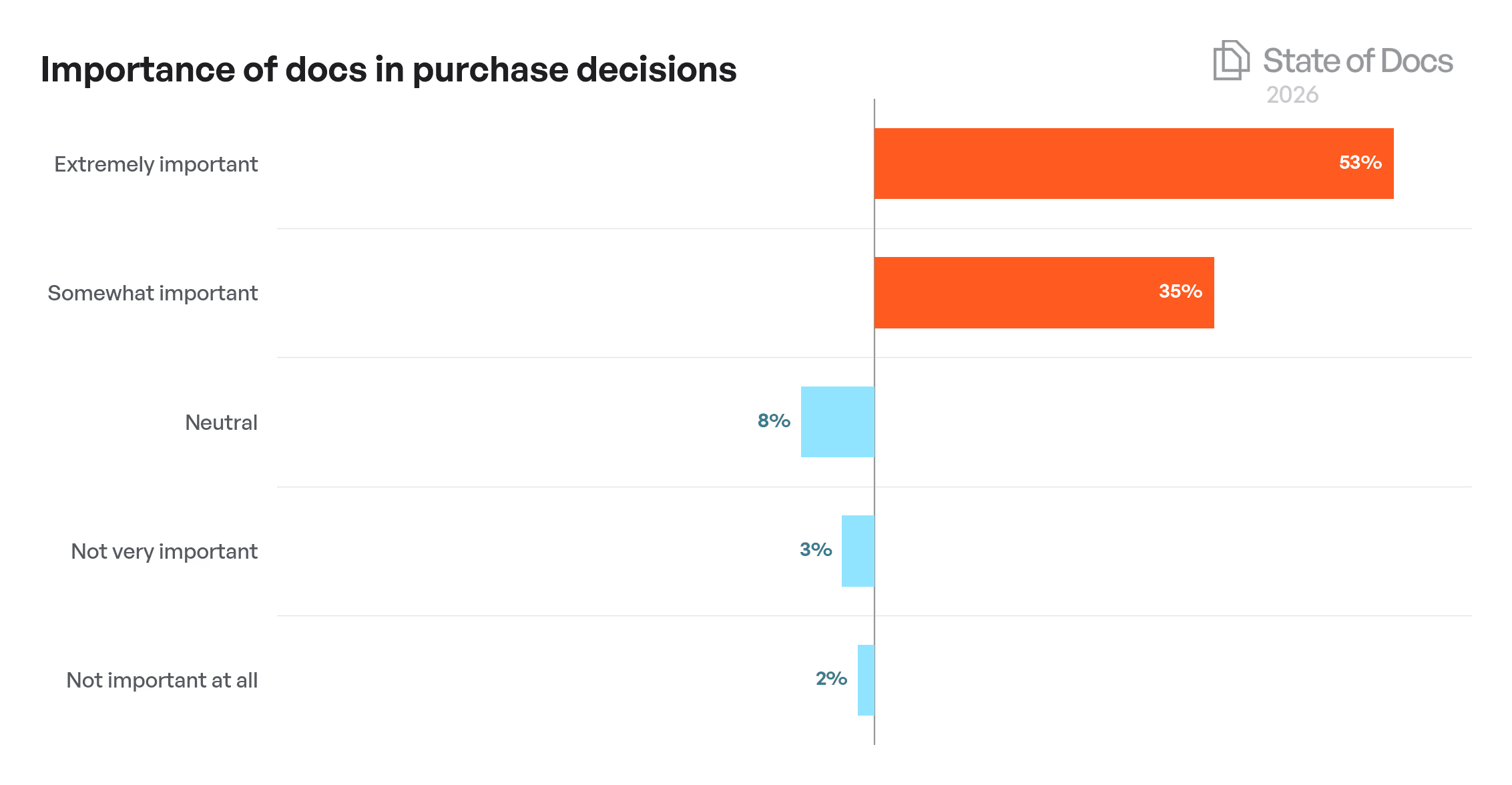
And while docs teams also see the value of their own docs — with 51% of respondents saying their own docs are important or essential for closing deals — 57% don’t track leads from their documentation.
It’s clear that there’s a conversion gap, and the teams that figure out this measurement — linking documentation to sign-ups, trials, and revenue — will have a significant strategic advantage.
This year’s new Docs and professional development section of the report shows the real role transformation happening across the industry.
Writers are spending less time drafting and more time proofreading and validating content. And 50% of respondents said AI/prompt engineering is the top new skill needed by documentation professionals in 2026.
The report also includes interviews and quotes from industry experts who are experiencing this shift in real-time, and captures some of the anxiety — and opportunity — that it brings. For example:
“You need to learn how to advocate for your value. The information architecture, the advocating for the user, the making decisions — with AI, we’re more editors, but we’re also more information architects.”
— Larry Ullman, Stellar Docs, formerly @ Stripe
Check out the ‘Featured voices’ section to read the fascinating insights.
This year's report shows that the docs sector — like the entire tech industry — is changing fast in the face of a constantly-evolving AI landscape. And it captures some of the worry felt by technical writers and docs contributors who feel the ground shifting beneath them.
But there’s also plenty to feel positive about in the 2026 report. Tools are getting smarter. Teams are employing new skills to streamline processes. And the importance of documentation is only growing clearer in the face of LLMs needing citable sources.
We’ll dive into some of these areas in the coming weeks. For now, check out the report and let us know what you think on our social channels.
→ Read the State of Docs Report 2026
→ How to optimize your documentation for AI (without breaking it for humans)
→ 7 ways teams are using GitBook Agent to streamline their docs workflows (with prompt examples)