
Corium
An artificial material
This page is currently not sponsored. Click here to sponsor this page.

About Corium
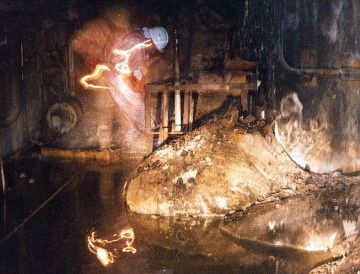
A lava-like material created during meltdown of a nuclear reactor. "It consists of a mixture of nuclear fuel, fission products, control rods, structural materials from the affected parts of the reactor, products of their chemical reaction with air, water, and steam and, in the event that the reactor vessel is breached, molten concrete from the floor of the reactor room." (Wikipedia)
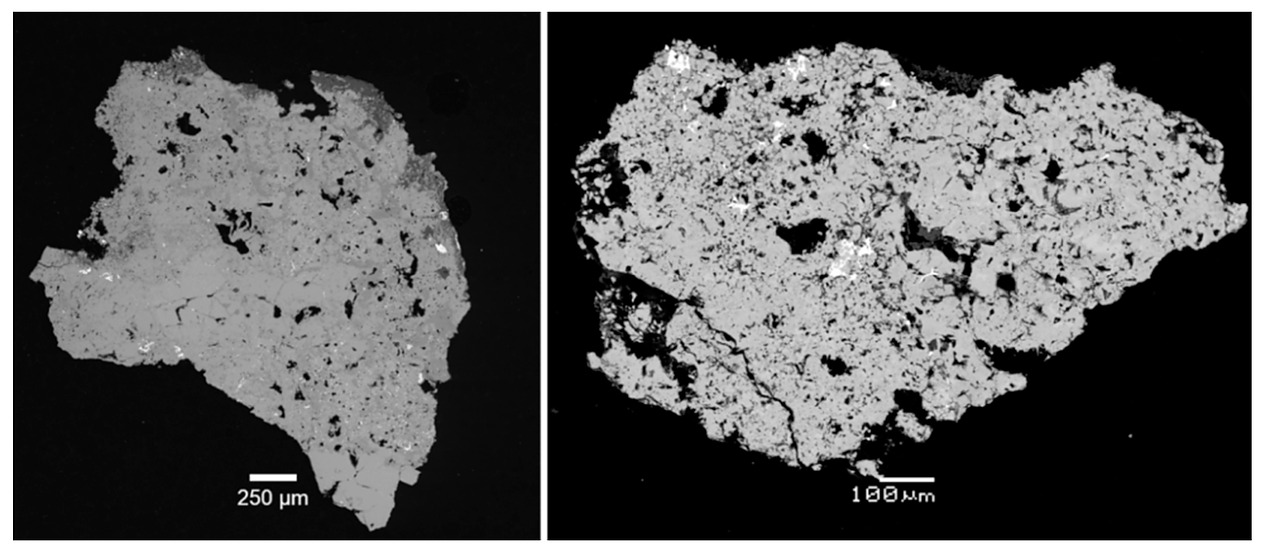
Composed primarily of uranium and zirconium oxide phases, but if silica is introduced from structural materials such as sand and concrete silicates of Zr and U can form.
Three incidents worldwide, as of January 2025, are known to have generated corium:
Three Mile Island, Pennsylvania, USA - March 1979
Chernobyl, Ukrainian SSR (now Ukraine) - April 1986
Fukushima, Japan - March 2011
Composed primarily of uranium and zirconium oxide phases, but if silica is introduced from structural materials such as sand and concrete silicates of Zr and U can form.
Three incidents worldwide, as of January 2025, are known to have generated corium:
Three Mile Island, Pennsylvania, USA - March 1979
Chernobyl, Ukrainian SSR (now Ukraine) - April 1986
Fukushima, Japan - March 2011
Unique Identifiers
Mindat ID:
53658
Long-form identifier:
mindat:1:1:53658:3
Similar Names
| Cerium | A synonym of 'Native Cerium' |
| Crom | A synonym of Native Chromium |
Classification of Corium
- Artificial material
- Corium
Other Language Names for Corium
Russian:Кориум
Internet Links for Corium
mindat.org URL:
https://www.mindat.org/min-53658.html
Please feel free to link to this page.
Please feel free to link to this page.
References for Corium
Localities for Corium
Showing 3 localities.
 symbol to view information about a locality.
The
symbol to view information about a locality.
The Locality List
 - This locality has map coordinates listed.
- This locality has estimated coordinates.
ⓘ - Click for references and further information on this occurrence.
? - Indicates mineral may be doubtful at this locality.
- This locality has map coordinates listed.
- This locality has estimated coordinates.
ⓘ - Click for references and further information on this occurrence.
? - Indicates mineral may be doubtful at this locality.
 - Good crystals or important locality for species.
 - World class for species or very significant.
(TL) - Type Locality for a valid mineral species.
(FRL) - First Recorded Locality for everything else (eg varieties).
- World class for species or very significant.
(TL) - Type Locality for a valid mineral species.
(FRL) - First Recorded Locality for everything else (eg varieties).
All localities listed without proper references should be considered as questionable.
Japan | |
| Badawi et al. (2022) |
Ukraine | |
| en.wikipedia.org (n.d.) |
USA | |
| Akers et al. (1994) |

Chornobyl Nuclear Power Plant, Ivankiv Raion, Kyiv Oblast, Ukraine