Home - Search - Browse - Alphabetic Index: 0- 1- 2- 3- 4- 5- 6- 7- 8- 9
A- B- C- D- E- F- G- H- I- J- K- L- M- N- O- P- Q- R- S- T- U- V- W- X- Y- Z
Communications
Category of spacecraft.
Subtopics
| GNB Nanosatellite built by the University of Toronto's UTIAS group, part of the exactEarth AIS constellation to monitor ship movements. |
 | 4M LuxSpace Manfred Memorial Moon Mission, an amateur radio payload attached to the third stage of the CZ-3C that launched the Chang'e-5 flight test vehicle. Following lunar flyby on October 27, the stage was in a 141,090 km x 416,326 km x 54.2 deg orbit. Lunar fly-by, amateur communications satellite for LuxSpace, Luxembourg. Launched 2014. |
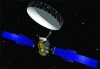 | Alphabus Testbed communications satellite, a joint project between the European Space Agency and Inmarsat. |
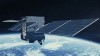 | ARSAT-3K Argentina's first domestic geosynchronous communications satellite. Communication satellite built by INVAP (prime); Thales Alenia Space (payload) for AR-SAT SA, Argentina. Launched 2014. Used the ARSAT-3K bus bus. |
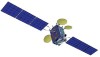 | Ekspress-1000 Russian satellite bus by Reshetnev for small to medium satellites. Supported geosynchronous satellites with a total mass from 1200 kg to 2200 kg, power capability from 3 kW to 8 kW, and an operational life of 15 years. |
 | Ekspress-2000 Russian satellite bus by Reshetnev and Thales Alenia for large satellites. Supported spacecraft with a mass of up to 3500 kg, with a 1000 kg payload and 14 kW of power. Design life of 15 years |
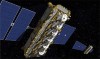 | ELiTeBus O3b satellites launched as part of a constellation for broadband internet distribution. |
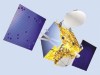 | I-1K Indian 1000-kg class satellite bus for use in geostationary or planetary missions. Dimensions 1.505 m × 1.476 m × 1.530 m, dry mass 500 kg, payload 100 kg, power system up to 1000 watts, design life 7 years. |
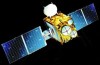 | I-2K Indian 2000-kg class satellite bus for use in geostationary or planetary missions. Dimensions 1.65 m × 1.53 m × 3.0 m, dry mass 600 kg, payload 200 kg, power system 2800 watts, design life 12 years. |
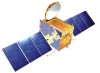 | I-3K Indian 3000-kg class satellite bus for use in geostationary missions. Power system 6500 watts. |
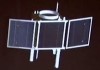 | Ling Qiao Smart Communications Test Satellite, a joint venture of Tsinghua University and Xinwei Telecom, for tests of multimedia data transmission, in a sun syncronous orbit with 06:30 local time of descending node. |
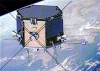 | MAC-200 Canadian Space Agency satellite with two payloads: the CASCADE high bandwith Ka-band communications relay package and the ePOP suite of instruments to study the polar ionosphere. The satellite was built by MacDonald, Dettwiler and Associates (MDA Ltd.) using a Bristol Aerospace spacecraft bus. |
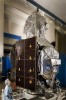 | PAN Classified communications satellite, perhaps providing services for the CIA to replace channels hosted on the US Navy's UHF Follow-On series. Stationed in geostationary orbit at 34 deg E. |
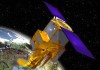 | Proteus The Proteus (Plateforme Reconfigurable pour l'Observation, les Telecommunications Et les Usages Scientifiques) bus was developed by Thales Alenia Space in partnership with the French Space Agency CNES from 1996 to 2000. The result was design and qualification of a small and versatile satellite bus as well as a generic ground segment that could accomodate a variety of payloads. These included all types of Earth environmental and science missions; surveillance, and communications applications. |
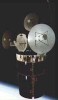 | Quasar Classified communications and data relay satellite for the National Reconnaissance Office. |
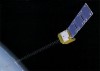 | SN-100 VHF messaging relay satellites for Orbcomm. |
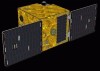 | SOCRATES Microsatellite for the Japanese communications research lab NICT, with a laser communications experiment. Earth observation and techology satellite built by AES for NICT, Japan. Launched 2014. |
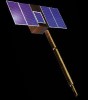 | Sterkh Dedicated COSPAS-SARSAT search-and-rescue satellite. Total mass 170 kg, including 55 kg payload. |
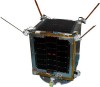 | Vesselsat OHB LuxSpace of Luxembourg satellite to provide AIS (ship tracking) services for Orbcomm. Technology satellite for LuxSpace, Luxembourg. Launched 2011-2012. |
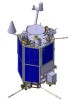 | Yubeleiniy Technology testbed built by Reshetnev with the Siberian State Aerospace University, Krasnoyarsk. Amateur communication, technology satellite built by ISS Reshetnev (ex NPO Prikladnoi Mekhaniki, NPO PM), SibSAU, Russia. Launched 2008. Used Yubileyniy-bus, gradient boom. |
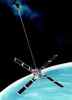 | Transit Spin-stabilized Transit satellites were developed by the US Navy beginning in 1958 for the first operational navigation satellite system. Transit provided continuous navigation satellite service from 1964, initially for Polaris submarines and later for civilian use. The use of the satellites for navigation was discontinued at the end of 1996 (replaced by GPS/Navstar), but the seemingly-indestructible satellites continued transmitting and became the Navy Ionospheric Monitoring System (NIMS). 46 launches, 1959.09.17 (Transit 1A) to 1988.08.25 (Transit O-31). Navigation satellite built by Naval Avionics Facility (#1-3, 5, 7); Johns Hopkins University Applied Physics Laboratory (APL) (#4, 6, 8-17); RCA (#18 - 32) for USN, USA. Launched 1964 - 1988. Used Transit-Bus, Gravity Stabilized. |
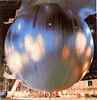 | Echo American passive communications satellite. The Echo satellites were NASA's first experimental communications satellite project. |
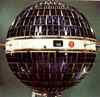 | Courier American communications technology satellite. Experimental communications. Communication satellite built by Philco Western Development Labs (WDL) (formerly Army Fort Monmouth Laboratories) for USAF, USA. Launched 1960. |
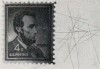 | Westford Needles American passive communications satellite. In an attempt to lay a radio-reflective ring around the world, small metal dipole needles were allowed to sublimate out of a matrix. Experimental, communication, passice satellite for MIT Lincoln Laboratory, USA. Launched 1961-1963. |
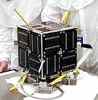 | Oscar Orbiting Satellite Carrying Amateur Radio, USA. Amateur radio satellite network. For over a half of a century a series of OSCAR satellites have been launched in a variety of configurations and by many nations. |
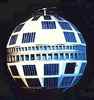 | Telstar American communications satellite. Communication satellite built by Bell Telephone Laboratories for AT&T, USA. Launched 1962 - 1963. |
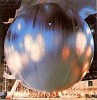 | Echo 2 American passive communications satellite. Passive communications satellite; balloon; 1st joint US/USSR space mission. |
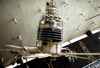 | Molniya-1 Russia's first military communications satellite. Built by OKB-1 (#1L-7L); NPO Prikladnoi Mekhaniki (NPO PM) (#8L-35L). Launched 1967 - 1975. Used KAUR-2 bus. |
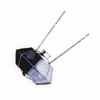 | Strela-1 Russian military store-dump communications satellite. Military Communication satellite, Russia. Launched 1964 - 1965. |
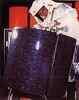 | Intelsat 1 American communications satellite. Intelsat 1, also called Early Bird, was the world's first commercial communications satellite. It provided the first scheduled transoceanic TV service and was operational for 3.5 years. Built by Hughes for Intelsat, International. Launched 1965. Used the HS-303 bus. |
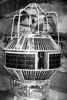 | Strela-2 Russian military store-dump communications satellite. Military Communication, store dump satellite, Russia. Launched 1965 - 1968. |
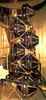 | IDCSP American military communications satellite. Communication satellite built by Philco-Ford for USAF, USA. Launched 1966 - 1968. |
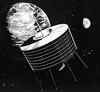 | Intelsat 2 American communications satellite. The Intelsat 2 series expanded ITSO coverage to include 2/3 of the Earth's surface. Built by Hughes for Intelsat, International. Launched 1966 - 1967. Used the HS-303A bus. |
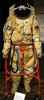 | Orlan Russian space suit. The Orlan spacesuit was used for Russian EVA's on Salyut, Mir, and the International Space Station. It was designed by the Zvezda OKB, and derived from the Kretchet suit intended for use on the lunar surface. |
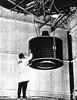 | Intelsat 3 American communications satellite. Intelsat 3 spacecraft were used to relay commercial global telecommunications including live TV. Built by TRW for Intelsat, International. Launched 1968 - 1970. |
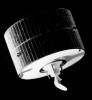 | NATO 1 British military communications satellite. Military communications. Military communication satellite built by Philco Ford Space & Reentry Systems Division for NATO, USA. Launched 1970-1971. Used Skynet-1 Bus. |
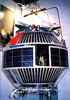 | Strela-1M Russian military store-dump communications satellite. 3 Military Communication satellite, Russia. Launched 1970 - 1992. |
| Strela-2M Russian military store-dump communications satellite. Military Communication, store dump satellite, Russia. Launched 1970 - 1994. |
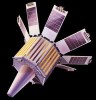 | Peole French communications satellite. Gathered data from meteorological balloon system. Data relay satellite, France. Launched 1970. |
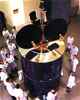 | Intelsat 4 American communications satellite. The Intelsat 4 series continued the growth of the Intelsat communications network. Built by Hughes for Intelsat, International. Launched 1971 - 1975. Used the HS-312 bus. |
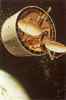 | DSCS II American military communications satellite. DSCS provided secure voice and data communications for the US military. Satellite bus built by Northrop Grumman Space Technology, USA. |
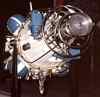 | Molniya-2 Russian communications satellite. Molniya-2 was the elliptical orbit component of the Soviet YeSSS communications satellite system. Communication satellite built by NPO Prikladnoi Mekhaniki (NPO PM), Russia. Launched 1971 - 1977. Used KAUR-2 bus. |
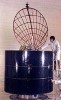 | HS 333 American communications satellite. The satellites, act as space repeaters capable of receiving transmissions from earth stations and retransmitting them to other earth stations in Canada. |
| Skynet British military communications satellite network. Military communication satellite built by Marconi Space and Defence Systems for MoD, UK. Launched 1974. Used Skynet-2 Bus. |
 | Raduga First Soviet geosynchronous communications satellite. A single orbital group of two Radugas could handle all communications of the Russian eastern regions. Communication satellite built by NPO Prikladnoi Mekhaniki (NPO PM), Russia. Launched 1975 - 1999. Used KAUR-3 bus. |
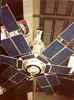 | Molniya-3 Russian communications satellite. Development of the Molniya-2M communications satellite, later called Molniya-3, began in 1972. Flight trials began in November 1974. Communication satellite built by NPO Prikladnoi Mekhaniki (NPO PM), Russia. Launched 1974 - 2003. Used KAUR-2 bus. |
 | Spacebus 100 French communications satellite. 3-axis stabilized using bipropellant thrusters (750 kg propellant - unified with apogee insertion and maneuvering propulsion) and momentum wheels. |
 | Intelsat 4A American communications satellite. Intelsat 4A satellites increased satellite capacity to 7250 voice circuits or 2 TV channels. Built by Hughes for Intelsat, International. Launched 1975 - 1978. Used the HS-353 bus. |
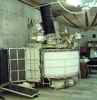 | Prognoz SPRN Russian military early warning satellite. Development began of the Soviet Union's Prognoz geosynchronous ballistic missile early warning satellite in 1980. |
 | AS 1000 American communications satellite. |
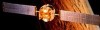 | CTS Canadian communications satellite. Canadian Telecommunications Satellite project. Only one spacecraft launched. Communication, Experimental satellite built by Canadian Communications Research Center (CRC) for NASA, CSA, Canada. Launched 1976. |
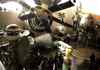 | Molniya-1T Russian military communications satellite. This was a modernized Molniya-1 communications satellite with the 'Beta' retransmitter which began flight tests in 1970. Communication satellite built by NPO Prikladnoi Mekhaniki (NPO PM), Russia. Launched 1983 - 2004. Used KAUR-2 bus. |
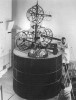 | Marisat American communications satellite. Maritime communications. Communication satellite built by Hughes for Marisat => Inmarsat, International. Launched 1976. Used the HS-356 bus. |
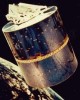 | NATO 3 British military communications satellite. Military communications. Military communication satellite built by Philco Ford Space & Reentry Systems Division for NATO, International. Launched 1976 - 1984. Used NATO-3 Bus. |
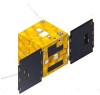 | SDS American military communications satellite. SDS satellites, put into Molniya-type orbits, provided data relay services for optical reconnaissance and other military spacecraft. Communication satellite built by Hughes for USAF, USA. Launched 1976 - 1987. Used the HS-350 bus bus. |
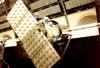 | Ekran Russian communications satellite. Ekran was the Soviet Union's first geosynchronous satellite. Communication, direct broadcasting satellite built by NPO Prikladnoi Mekhaniki (NPO PM), Russia. Launched 1976 - 1988. Used KAUR-3 bus. |
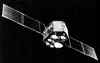 | ECS/OTS European communications satellite. |
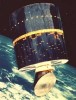 | CS-1 Japanese communications satellite. Sakura. This Medium-capacity Communications Satellite for Experimental Purposes was a spin stabilized geostationary communications satellite. Communication satellite built by NASDA, later TSCJ for Mitsubishi Electric (MELCO) (prime); Ford Aerospace (bus), Japan. Launched 1977. |
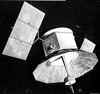 | FLTSATCOM American military communications satellite. Communication satellite built by TRW for US Navy, USA. Launched 1978 - 1981. |
 | Radio Russian amateur radio communications satellite. Amateur radio communication satellite for NPO Prikladnoi Mekhaniki, Mozhaisky military academy, Russia. Launched 1994. Used Strela-1 Bus. |
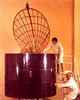 | Anik satellite Canadian communications satellite. Function - telecommunications. Operating entity - Telesat Canada. Communication satellite built by RCA Astro for Telesat Canada, Canada. Launched 1978. Used the AS-3000 bus. |
 | Gorizont Russian communications satellite. Gorizont-1 was designed specifically to support broadcast of the 1980 Olympic Games from Russia. Communication satellite built by NPO Prikladnoi Mekhaniki (NPO PM) for RSCC (Kosmicheskiya Svyaz), Russia. Launched 1978 - 2000. Used KAUR-3 bus. |
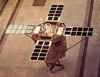 | SJ Chinese communications technology satellite. SJ (Shijian; 'Practice') series were Chinese scientific research, technological experiment and military operational satellites of a variety of configurations. |
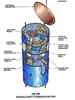 | HS 376 American communications satellite. Mass 654 kg at beginning-of-life in geosynchronous orbit. Spin stabilized at 50 rpm by 4 hydrazine thrusters with 136 kg propellant. |
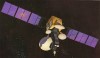 | Intelsat 5 American communications satellite. The last five of the nine spacecraft in this block carry a maritime mobile payload (seven additional transponders) for lease by Inmarsat. Built by Ford Aerospace for Intelsat, International. Launched 1980 - 1984. Used Intelsat-5 bus. |
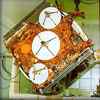 | Insat 1 Indian communications satellite. Experimental communications satellite. Communication / Meteorology satellite built by Ford Aerospace for Insat, India. Launched 1982 - 1990. Used Insat-1 Bus. |
 | Iskra Russian amateur radio communications satellite. Launched from Salyut 7 airlock. Conduct of experiments in the field of amateur radio communications. |
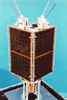 | SSTL-70 British microsatellite bus. 1 Basic Surrey Microsat bus. |
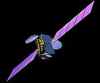 | AS 3000 American communications satellite. |
| Estafeta Russian military communications satellite. Study 1982. Military nuclear powered communications satellite. Development approved by the Soviet VPK Military-Industrial Commission on 8 January 1982. |
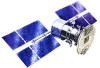 | Potok Russian military communications satellite. Potok was one element of the second generation global command and control system (GKKRS) developed according to a decree of 17 February 1976. Military relay satellite built by NPO Prikladnoi Mekhaniki (NPO PM), Russia. Launched 1982 - 2000. |
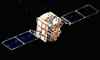 | DSCS III American military communications satellite. DSCS satellites provided secure voice and data communications for the US military. |
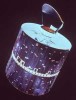 | CS-2 Japanese communications satellite. Business communications. Launching organization NASDA (National Space Development Agency of Japan). Communication satellite built by Mitsubishi Electric (MELCO) (prime); Ford Aerospace (bus) for NASDA, later TSCJ, Japan. Launched 1983. |
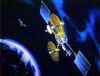 | TDRS American military communications satellite. Satellite communications network, for use by Shuttle and US military satellites. Communication satellite built by TRW for NASA, USA. Launched 1983 - 1993. |
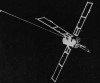 | HILAT American communications satellite. One launch, 1983.06.27. Communications technology tests. Spacecraft engaged in practical applications and uses of space technology such as weather or communication. Experimental satellite built by JHU/APL for USAF STP (Space Test Program), USA. Launched 1983. Used Transit-Bus. |
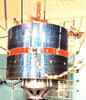 | DFH-2 Chinese military communications satellite. The DFH-2 was a spin-stabilized, drum-shaped military communications satellite with a despun antenna, a diameter of 2.1 m, and a height of 3.1 m. |
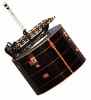 | HS 381 American military communications satellite. The Leasat HS 381 series was developed as a commercial venture to provide dedicated communications services to the U. S. military. |
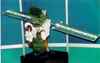 | Globis Russian communications satellite. Studied 1984-1994. LOx/LH2 upper stages launched by Energia would put 21 metric ton communications satellites into geosynchronous orbit. |
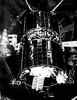 | Strela-3 Russian military store-dump communications satellite. Said to have initially been developed for the GRU. Military Communication satellite built by NPO Prikladnoi Mekhaniki (NPO PM) for VKS, Russia. Launched 1985 - 2012. |
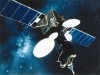 | Intelsat 5A American communications satellite. The Intelsat 5A series was derived from the Intelsat 5. Communication satellite built by Ford Aerospace for Intelsat / New Skies (NSS) / Columbia, International. Launched 1985 - 1989. Used Intelsat-5 bus. |
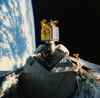 | ASC Spacecraft bus used for commercial satellites and a British military communications satellite. Communication satellite built by RCA Astro => GE Astro for Contel => GTE, USA. Launched 1985 - 1991. Used the AS-3000 bus. |
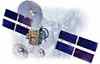 | Luch Russian military communications satellite. Communication, data relay satellite built by NPO Prikladnoi Mekhaniki (NPO PM), Russia. Launched 1985 - 1994. Used KAUR-4 bus. |
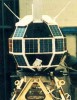 | GLOMR American military store-dump communications satellite. Experimental communication satellite built by DSI, Rockwell for DARPA, USAF STP (Space Test Program), USA. Launched 1985. Used GLOMR Bus (62-sided polyhedron, unstabilized, body mounted solar cells). |
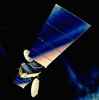 | AS 4000 American communications satellite. 3-axis stabilization with momentum wheels, magnetic torquers, Earth sensors and 16 blowdown monopropellant hydrazine thrusters. |
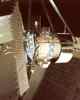 | Ekran-M Russian communications satellite. Ekran-M provided unique direct television broadcasting service to community users in the central Russian Federation region (Zone 3). Communication, direct broadcasting satellite built by NPO Prikladnoi Mekhaniki (NPO PM) for RSCC (Kosmicheskiya Svyaz), Russia. Launched 1987 - 2001. Used KAUR-3 bus. |
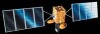 | Spacebus 300 French communications satellite. 3-axis stabilized using bipropellant thrusters (1220 kg propellant - unified with apogee insertion and maneuvering propulsion) and momentum wheels. |
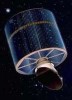 | CS-3 Japanese communications satellite. To continue communications services provided by the communications satellite 2 (CS-2). To meet increasing and diversifying demands for communications. Communication satellite built by Mitsubishi Electric (MELCO), NEC, Ford Aerospace for NASDA, later TSCJ, Japan. Launched 1988. |
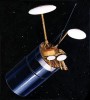 | HS 393 American communications satellite. Domestic communication. Launching states: Japan, France, USA. At the time, these were the largest commercial spacecraft ever built. |
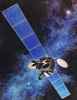 | FS-1300 American communications satellite bus. The 1300 was Space Systems/Loral's space-proven platform for a wide range of services, although its primary use was for geosynchronous communications satellites. From its first flight in 1989, it underwent constant evolutionary development to deliver greater power, communications capability, and longer useful life. Sales continued brisk well into the 21st Century. |
 | Raduga-1 Russian communications satellite. The Raduga-1 geosynchronous communications satellite was to have been the basis for the YeSSS-2 second generation Unified Satellite Communication System. Military Communication satellite built by NPO Prikladnoi Mekhaniki (NPO PM), Russia. Launched 1989 - 2009. Used KAUR-3 bus. |
| SDS-2 American military communications satellite. Comsat / Relay satellite built by Hughes for USAF, USA. Launched 1989 - 1996. Used the HS-386 bus. |
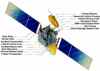 | HS 601 American communications satellite bus. 3-axis unified ARC 22 N and one Marquardt 490 N bipropellant thrusters, Sun and Barnes Earth sensors and two 61 Nms 2-axis gimbaled momentum bias wheels. |
 | MACSAT American military communications satellite. Experimental communication (store and forward) satellite built by DSI for DARPA, USA. Launched 1990. Used MAESTRO Bus. |
 | Badr Pakistani communications technology satellite. Pakistani experimental series with a variety of payloads. Technology satellite for SUPARCO, Pakistan. Launched 1990. |
 | Eurostar 1000 French communications satellite. The Eurostar 1000 platform was the first generation of Matra Marconi Space GEO satellite platforms serving mainly commercial telecoms applications. |
 | Mayak satellite Russian communications satellite. Study 1990. In 1990 the Applied Mechanics NPO announced that it was developing a successor to the Molniya series of spacecraft. |
 | SovCanStar Russian communications satellite. Study 1990. One of the early Russian-Western satellite programs was SovCanStar, a 1990 joint venture with Canada. |
 | Italsat Italian communications satellite.talian communications satellite. |
 | Informator Russian communications satellite. Oscar 21. Informator was the spacecraft component of the planned Koskon medium earth-orbit communications satellite system. Communication, Amateur communication satellite built by Polyot Production Association, Elas Scientific Production Association for Koskon, Russia. Launched 1991. Used KAUR-1 Bus. |
 | AS 5000 American communications satellite. 3-axis stabilization with momentum wheels, magnetic torquers, Earth sensors and 20 blowdown monopropellant hydrazine thrusters. |
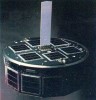 | Microsat American military communications satellite. Satellites used in a DARPA test of an LEO quick-reaction network for global communications. Built by DSI, USA. Launched 1991. |
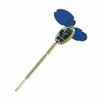 | Orbcomm Orbital Communications Corp, Dulles, USA. Orbcomm was a commercial venture to provide global messaging services using a constellation of 26 low-Earth orbiting satellites. Communication (Data) satellite built by Orbital Sciences Corporation (OSC) for Orbcomm, USA. Launched 1995 - 1999. Used the MicroStar bus. |
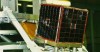 | Tubsat Germany's Technical University of Berlin (TUB) built a successful series of 40 kg 'Tubsat' experimental technology satellites. Germany's Technical University of Berlin (TUB) built a successful series of 40 kg 'Tubsat' experimental technology satellites. |
| Radiobook Russian communications satellite. Study 1991. The Radiobook network would utilize from 24 to 36 micro-satellites (10 kg or less) in a packet radio network, which could be launched with small boosters, including air-launched missiles. |
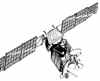 | Zerkalo Russian communications satellite. In 1991 Lavochkin NPO teamed up with NOOS Space Technologies Ltd. Of Moscow to develop the Zerkalo spacecraft and telecommunications system. |
 | Insat 2 Indian communications satellite. Communication / Meteorology satellite built by ISRO for Insat, India. Launched 1992 - 1993. Used the Insat-2/-3 Bus bus. |
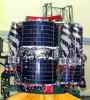 | Gonets-D1 Russian civilian store-dump communications satellite. Commercial version of GRU Strela-3 military store-dump satellite. Communication, Store-Dump satellite built by NPO Prikladnoi Mekhaniki (NPO PM) for RKA, Russia. Launched 2005 - 2015. |
| Forpost Russian military communications satellite. Study 1992. Communications satellite - Soviet Ministry of Defense. No other details available. |
| Nord satellite Russian communications satellite. Study 1992. The Lavochkin NPO proposed the Nord highly elliptical communications systems in 1992. Nord was described as a 4-satellite network of 2,300-kg spacecraft launched by the Rus booster. |
| CDS American communications technology satellite. Orbcomm OXP-1. Experimental spacecraft. |
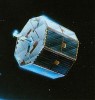 | SCD Brazilian communications technology satellite. Environmental data relay. Data collection and relay satellite for INPE, Brazil. Launched 1997-1998. |
| Start satellite Russian communications technology satellite. Experimental satellite carried on test flight of the Start-1 carrier rocket, a new booster based on SS-25 ICBM. |
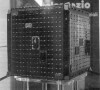 | Temisat Italian communications technology satellite. Temisat's primary mission was demonstration of a data relay system. Environmental data collection and relay satellite built by Kayser-Threde GmbH for Telespazio SpA, Italy. Launched 1993. Used the Blackbird-350 bus. |
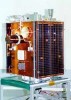 | Kitsat South Korean technology satellite. South Korean indigenous 50-kg-class small satellite series, developed originally with technology transfer from Surrey Satellite Technology Ltd. |
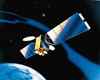 | AS 7000 American communications satellite. 3-axis stabilized. Two large solar panels with 1-axis articulation. |
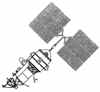 | Elekon Russian communications satellite. Study 1993. |
| Globsat Russian communications satellite. Study 1993. The Salyut Design Bureau proposed the least ambitious of all Russian low earth orbit communications systems. |
| Pallada Russian communications satellite. Study 1993. The Pallada network was devised by the Moscow Radio Communications Research Institute for Commonwealth of Independent States communications services, including voice, telegraph, fax, and data transmissions. |
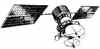 | Gals Russian communications satellite. Direct broadcasting satellite (new generation of satellites) intended for development of the Russian television system and international cooperation. Communication satellite built by NPO Prikladnoi Mekhaniki (NPO PM), Russia. Launched 1994 - 1995. |
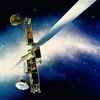 | Milstar American military communications satellite. Milstar was a series of advanced US military communications satellites designed to provide global jam-resistant communications for military users. |
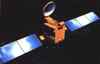 | DFH-3 Chinese satellite bus used for geosynchronous communications and navigation satellites and deep space probes. Total mass, payload mass, and payload power improved through three versions from 2320 kg to 3800 kg; 230 kg to 450 kg; and 1000 W to 4000 W. |
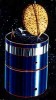 | HS 376W American communications satellite. Based on Hughes HS-376, single antenna on despun platform, spin stabilized, hydrazine thrusters, body mounted solar cells provide 982 W BOL. |
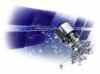 | Ekspress Russian communications satellite. The Ekspress series communications satellite closely resembled the Gals spacecraft and shared a similar spacecraft bus. Communication satellite built by NPO Prikladnoi Mekhaniki (NPO PM) for RSCC (Kosmicheskiya Svyaz), Russia. Launched 1994 - 1996. |
| Geostar-MSS Russian communications satellite. Study 1994. The Lavochkin Geostar-MSS communications system was designed in association with Moscow NII Radio-communications. |
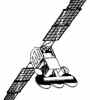 | Tyulpan Comsat Russian communications satellite. By 1994 Lavochkin's Tyulpan system was promoted more heavily than its earlier Nord system. |
 | FAISAT American military communications satellite. Store/forward communications. |
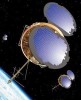 | Microstar American communications technology satellite. Small satellite bus, specially designed for multiple launch by Pegasus or Taurus family launch vehicles. |
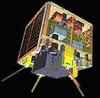 | MicroSat-100 British microsatellite bus. Enlarged version of the basic Surrey Microsat-70 bus. |
 | GemStar American communications satellite. Global Electronic Messaging Satellite. |
 | Gelikon Russian communications satellite. Study 1995. An early Applied Mechanics NPO plan to replace Gorizont and Ekran spacecraft revolved around the Gelikon project. |
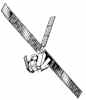 | Konvert Russian communications satellite. Study 1995. The Elas Scientific Production Association was a principal participant in the proposed Kuryer communications system of Konvert spacecraft. |
| SPS-Sputnik Russian communications satellite. Study 1995. |
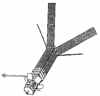 | Signal Russian communications satellite. Study 1995. The RKK Energia and Polyot PO teamed up with other industries to propose the Signal constellation of low earth orbit communications satellites. |
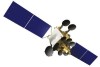 | AMOS Israeli communications satellite. 7 Ku-band transponders. Israeli indigenous communications satellite program. |
| Fuji Japanese amateur radio communications satellite. JAS-2. Japanese amateur radio satellite. |
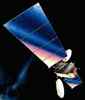 | AS 2100 American communications satellite. Cost per satellite $100 million for the spacecraft including ground support equipment, but not including launch costs. 3-axis stabilized. |
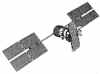 | Arkos Russian communications satellite. Study 1996. Applied Mechanics' Arkos satellite was to have served as the geosynchronous anchor of the Marathon telecommunications network, while the highly elliptical Mayak spacecraft completed the system. |
| Zeya Russian earth geodetic satellite. The Zeya satellite was used for navigation and geodesy tests from a sun-synchronous orbit. |
 | LM 700 American communications satellite. The LM 700 had its first use in the Iridium system, a commercial communications network comprised of a minimum of 66 LEO spacecraft. |
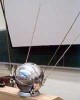 | PS Model Russian amateur radio communications satellite. Two subscale models of Sputnik 1, were built by students for hand-launch from Mir on fortieth anniversary of Sputnik 1. |
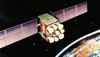 | Kupon Russian military communications satellite. Kupon was originally developed by Lavochkin for the third generation GKKRS (Global Space Command and Communications System). Other satellites in the network included Potok and Geizer. Communication satellite built by Lavochkin (prime), NPO Elas (transponders) for Central Bank of the Russian Federation, Russia. Launched 1997. Used US-KMO-Bus. |
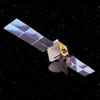 | Star bus American communications satellite bus. The Orbital Star bus was designed for reliable and robust performance in a variety of LEO and GEO missions. |
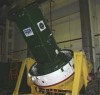 | Kondor Russian communications satellite. Study 1997. The Khrunichev State Space Research and Production Center (including the Salyut Design Bureau), proposed the Kondor communications system for mobile users. |
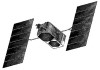 | Odyssey Odyssey Worldwide Services, American commercial communications satellite network. Operations were planned in 1997 to begin by the end of 1998. However in the event the entire enterprise was cancelled when the dot-com / MEO satellite bubble burst. Communicationsatellite built by TRW for Odyssey Telecommunications International. Used TRW AB940 bus. |
| CAPRICORN American military communications satellite. One launch, 1998.01.29, USA 137. There was no firm information on this classified satellite for the National Reconnaissance Office. |
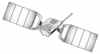 | Globalstar The Globalstar constellation was a Medium Earth Orbit system for mobile voice and data communications developed and operated by Globalstar Communications Corporation, San Jose, California, USA. Communication satellite built by Alenia Spazio, Space Systems/Loral (Bus) for Globalstar, USA. Launched 1998 - 2007. |
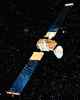 | Kakehashi Japanese communications satellite. Name means 'Bridge', was called Communications and Broadcasting Experimental Test Satellite (COMETS) before launch. It contained Ka-band communications and inter-satellite data relay payloads. |
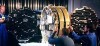 | Teledesic The Teledesic Corporation system was announced in 1994, and was to have provided global communication links via a constellation of 288 LEO spacecraft. However by the time the first satellite was launched in 1998, the medium-earth orbit satellite bubble had burst and the project was abandoned. |
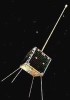 | Safir satellite German civilian store-dump communications satellite. Relay satellite built by OHB System of Bremen. |
 | Yamal Russian communications satellite. The Yamal communications satellite bus was developed by RKK Energia for Gazprom. Communication satellite built by RKK Energiya for Gazkom > Gazprom Space Systems, Russia. Launched 1999. Used the USP Bus bus. |
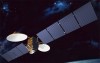 | LMI Russian communications satellite. Lockheed Martin Intersputnik's LMI-1 satellite was a joint Russian-American venture. LMI-1 provided communications services to Eastern Europe and Central Asia. Communication satellite built by Lockheed Martin for Lockheed Martin Intersputnik (LMI) > Asia Broadcast Satellite (ABS), Russia. Launched 1999. Used the A2100AX bus. |
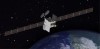 | HS 702 American communications satellite bus. In October 1995 Hughes Space and Communications Company announced a new communications satellite bus, the HS 702, evolved from the HS 601 and HS 601HP (high-power). The HS 702 could carry up to 118 high-power transponders, of which 94 were active and 24 were spares, and deliver any communications frequencies that customers requested. The company was later acquired by Boeing, which redesignated the bus BSS 702. |
| Gonets Russian civilian store-dump communications satellite. Study 1999. The first generation store-dump communications Gonets-D system was to have been followed by an advanced Gonets-R design equipped with satellite-to-satellite links. Communication, Store-Dump satellite built by NPO Prikladnoi Mekhaniki (NPO PM) for RKA, Russia. Launched 1992 - 2001. |
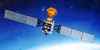 | FH-1 Chinese military communications satellite. 2 launches, 2000.01.25 (Zhongxing-22) to 2006.09.12 (Zhongxing 22A). In May 1999 Aviation Week reported that a new communication satellite, Fenghuo-1 (FH-1), would be launched by a CZ-3A by the end of 1999. Communication satellite built by CAST for People's Liberation Army (PLA), China. Launched 2000 - 2006. Used the DFH-3 Bus bus. |
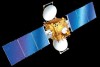 | Insat 3 Indian communications satellite bus. The multipurpose satellite design provided telecommunications, television broadcasting, meteorological and search and rescue services. Communication, Meteorology satellite built by ISRO for Insat, India. Launched 2003. Used the Insat-2/-3 Bus bus. |
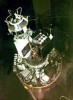 | Rubin German technology microsatellite. Rubin was developed by OHB and students of the Hochschule Bremen. Technology satellite for OHB-System, Germany. Launched 2000. Used the Kosmos-3M second stage bus. |
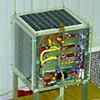 | Saudisat Saudi amateur radio communications satellite. Technology satellite built by KACST Space Research Institute, Space Quest for KACST Space Research Institute, Saudi Arabia. Launched 2000 - 2002. |
| SDS-3 American military communications satellite, provided data relay services for optical reconnaissance and other military spacecraft. Operational, first launch 2000.12.06. Comsat / Relay, early warning satellite built by for USAF, USA. Launched 1998 - 2014. |
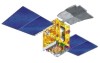 | GSat Indian communications satellite bus. First launch 2001.04.18. |
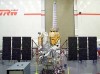 | GeoLITE American military communications satellite. USA 158. GeoLITE was a TRW T-310 class satellite with a mass of about 1800 kg, including a solid apogee motor. Communication (Experimental) satellite built by TRW for NRO, USA. Launched 2001. Used the T310 bus. |
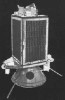 | UoSAT British amateur radio communications satellite. One launch, 2001.09.30, Picosat. Radio science; also carried amateur radio package. Communication and geophysics research satellite. |
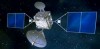 | DRTS Japanese geostationary communications satellite. One launch, 2002.09.10. DRTS (Data Relay Transponder Satellite) relayed images and data procured by the ADEOS 2 and ALOS satellites, and the KIBO module on ISS. Communication satellite built by Mitsubishi Electric (MELCO) for NASDA, Japan. Launched 2002. Used the DRTS bus bus. |
 | FedSat Australian science satellite. FedSat contained high-tech communication, space science, navigation and computing equipment and was intended to help bring broadband Internet services to remote parts of Australia. Science, magnetosphere satellite built by Space Innovations Limited (bus) for Technology, Australia. Launched 2002. Used MicroSIL bus. |
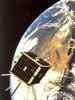 | AprizeSat American-built civilian store-dump communications satellite. Aprize's satellites were miniature spacecraft designed and optimized for data relay with very low power consumption. Communication satellite built by SpaceQuest for LatinSat (Aprize Argentina) (LatinSat A-D); AprizeSat (AprizeSat 1-6); exactEarth (AprizeSat 5, 6, 7), Argentina. Launched 2002 - 2014. |
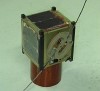 | Cubesat American low-cost nanosatellite bus. Used in dozens of launches. |
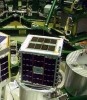 | Amsat Echo Amateur radio communication satellite built by Space Quest Ltd. for AMSAT-NA, USA. Launched 2004. |
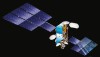 | Spacebus 4000 European communications satellite bus.The Spacebus 4000 represented a new larger platform to meet customer demand. |
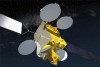 | Eurostar 3000 French communications satellite bus. Operational. Third generation of Matra Marconi Space GEO satellite platforms serving mainly commercial telecommunications applications. |
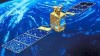 | Kirari Japanese communications satellite. Optical Inter-Orbit Communications Engineering Test Satellite. Its laser communications experiment was be used in with ESA's Artemis geostationary satellite. |
| Mesbah-2 Iranian civilian store-dump communications satellite. One launch, 2005.10.27, Sinah-1. Prototype of a store-forward communications system satellite for survivable communications. To be launched by a foreign launch vehicle, originally slated for 2005. |
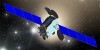 | DS2000 Japanese communications satellite bus. Mitsubishi Electric developed the DS2000 standard satellite platform based on a design originally created for the DRTS and ETS-8 platforms for NASDA. |
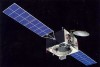 | Yakhta Russian communications satellite. RKK Energia-developed communications satellite, believed to be a larger development of the Yamal. Satellite bus built by Khrunichev Space Center, Russia. |
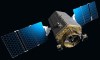 | KOMPSAT-2 South Korean civilian surveillance satellite. Kompsat 2. Earth Observing satellite built by KARI, Astrium for KARI, Korea South. Launched 2006. |
 | DFH-4 Large Chinese communications satellite bus using a blend of Chinese and subcontracted European technologies. The DFH-4 was 3-axis stabilized and designed for use in high capacity communications and broadcasting, direct broadcasting, and regional mobile communications satellites.Payloads of up to 600 kg requiring 8,000 W power could be accomodated in the initial version; the DFH-4E enhanced version increased this to 1,000 kg / 10,000 W and introduced electric propulsion. The DFH-4S could accommodate smaller requirements with 450 kg /4000 W requirements. |
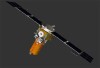 | Tacsat ORS American military surveillance satellite. The Tactical Satellite / Operationally Responsive Satellite program's objective was to demonstrate techniques to dramatically shorten the development time for small satellites. Technology, imaging satellite built by Air Force Research Laboratory (AFRL); MicroSat Systems (bus) for Air Force Research Laboratory (AFRL), USA. Launched 2006. Used the Road Runner Bus (NGMB, Next Generation Multifunctional Bus). Launched 2006. |
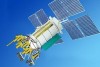 | Meridian Russian new-generation military 12-hour elliptical orbit communications satellite designed to replace the Molniya series. Communication satellite built by ISS Reshetnev (ex NPO Prikladnoi Mekhaniki, NPO PM), Russia. Launched 2006 - 2014. Used 3-Axis stabilized Uragan-M bus. |
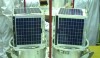 | SaudiComsat Saudi military communications satellite. Technology satellite for KACST Space Research Institute, Saudi Arabia. Launched 2004-2007. |
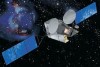 | Kizuna Japanese communications satellite. |
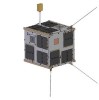 | Can X Canadian technology satellite. 2 launched, 2008.04.28 (Can X-6 ) and (Can X-2 ). |
 | Skynet 5 British military communications satellite. One launch, 2008.06.12. The Skynet 5 program contract was signed by the EADS subsidiary Paradigm Secure Communications Ltd and the UK MOD in October 2003. |
 | 20.20 comsat American Loral communications satellite. Design of 2008, provided greater digital communications capacity by integrating next-generation technologies with the proven reliability of traditional concepts and products of the FS 1300 series. |
| Zohreh Iranian communications satellite. In development, 2008. Iranian geosynchronous communications satellite that was to be built with Russian assistance, containing an Alcatel communications payload. |
| Garpun Military communications and data relay satellite. Replacement for the Potok series for relay of data from military surveillance satellites. Originally planned for deployment from 2001, the delayed until 2011.09.20. Military relay satellite built by ISS Reshetnev, Russia. Launched 2011 - 2015. |
| Svetoch Russian military communications satellite. Communications satellite - KGB. No other details available. |
Projects:
ATS,
BS.
1960 May 13 - .
09:16 GMT - .
Launch Site:
Cape Canaveral.
Launch Complex:
Cape Canaveral LC17A.
LV Family:
Thor.
Launch Vehicle:
Thor Delta.
FAILURE: Second stage attitude control failure..
Failed Stage: U.
- Echo 1 - .
Payload: A-10. Mass: 56 kg (123 lb). Nation: USA.
Agency: NASA.
Class: Communications.
Type: Civilian communications satellite. Spacecraft: Echo.
Decay Date: 1960-05-13 .
The first three-stage, NASA-developed Thor/Delta space booster was launched from Cape Canaveral, but the Echo passive communications satellite failed to achieve orbit due to a second stage malfunction. This booster was for NASA programs and used the basic Thor first stage with a modified Vanguard second stage as its upper stage configuration.
1960 August 18 - .
19:58 GMT - .
Launch Site:
Cape Canaveral.
Launch Complex:
Cape Canaveral LC17B.
LV Family:
Thor.
Launch Vehicle:
Thor Ablestar.
FAILURE: Exploded 2.5 minutes after launch..
Failed Stage: U.
- Courier 1A - .
Mass: 225 kg (496 lb). Nation: USA.
Agency: DARPA.
Class: Communications.
Type: Military communications satellite. Spacecraft: Courier.
Decay Date: 1960-08-18 . Discoverer XIV was launched from Vandenberg AFB aboard a Thor/Agena A booster.' Experimental communications sattelite..
1961 December 12 - .
20:40 GMT - .
Launch Site:
Vandenberg.
Launch Complex:
Vandenberg SLC1W.
LV Family:
Thor.
Launch Vehicle:
Thor Agena B.
- Oscar 1 - .
Mass: 5.00 kg (11.00 lb). Nation: USA.
Agency: USAF.
Program: Oscar.
Class: Communications.
Type: Amateur radio communications satellite. Spacecraft: Oscar.
Decay Date: 1962-01-31 . USAF Sat Cat: 214 . COSPAR: 1961-A-Kappa-2. Apogee: 474 km (294 mi). Perigee: 245 km (152 mi). Inclination: 81.20 deg. Period: 91.80 min.
The first Oscar Phase I amateur satellite was launched piggyback with Discover 36. A group of enthusiasts in California formed Project OSCAR and persuaded the United States Air Force to replace ballast on the Agena upper stage with the 4.5 kg OSCAR I package. The satellite was box shaped with a single monopole antenna and battery powered. The 140 mW transmitter onboard discharged its batteries after three weeks. 570 Amateurs in 28 countries reported receiving its simple 'HI-HI' morse code signals on the VHF 2 meter band (144.983 MHz) until January 1, 1962. The speed of the HI-HI message was controlled by a temperature sensor inside the spacecraft. OSCAR I re-entered the atmosphere January 31, 1962 after 312 revolutions. Additional Details: here....
1962 June 2 - .
00:31 GMT - .
Launch Site:
Vandenberg.
Launch Complex:
Vandenberg SLC1W.
LV Family:
Thor.
Launch Vehicle:
Thor Agena B.
- Oscar 2 - .
Mass: 10 kg (22 lb). Nation: USA.
Agency: USAF.
Program: Oscar.
Class: Communications.
Type: Amateur radio communications satellite. Spacecraft: Oscar.
Decay Date: 1962-06-21 . USAF Sat Cat: 305 . COSPAR: 1962-Chi-2. Apogee: 339 km (210 mi). Perigee: 188 km (116 mi). Inclination: 74.20 deg. Period: 89.80 min.
OSCAR II was launched piggyback with a United States Air Force satellite. OSCAR II was very similar to OSCAR I. Differences included (1) changing the surface thermal coatings to achieve a cooler internal spacecraft environment, (2) modifying the sensing system so the satellite temperature could be measured accurately as the batteries decayed, and (3) lowering the transmitter power output to 100 mW to extend the life of the onboard battery. OSCAR II lasted 18 days ceasing operation on June 20, 1962 and re-entered June 21, 1962.
1962 July 10 - .
08:35 GMT - .
Launch Site:
Cape Canaveral.
Launch Complex:
Cape Canaveral LC17B.
LV Family:
Thor.
Launch Vehicle:
Thor Delta.
- Telstar 1 - .
Mass: 77 kg (169 lb). Nation: USA.
Agency: ATT.
Class: Communications.
Type: Civilian communications satellite. Spacecraft: Telstar.
USAF Sat Cat: 340 . COSPAR: 1962-A-Epsilon-1. Apogee: 5,643 km (3,506 mi). Perigee: 945 km (587 mi). Inclination: 44.80 deg. Period: 157.80 min.
A NASA Thor/Delta boosted Telstar, the first commercially developed international communications satellite, into orbit. First commercial comsat; active repeater. Spacecraft engaged in practical applications and uses of space technology such as weather or communication (US Cat C).
1963 May 7 - .
11:38 GMT - .
Launch Site:
Cape Canaveral.
Launch Complex:
Cape Canaveral LC17B.
LV Family:
Thor.
Launch Vehicle:
Thor Delta B.
- Telstar 2 - .
Mass: 79 kg (174 lb). Nation: USA.
Agency: ATT.
Class: Communications.
Type: Civilian communications satellite. Spacecraft: Telstar.
USAF Sat Cat: 573 . COSPAR: 1963-013A. Apogee: 10,802 km (6,712 mi). Perigee: 972 km (603 mi). Inclination: 42.70 deg. Period: 225.30 min. Active repeater. Spacecraft engaged in practical applications and uses of space technology such as weather or communication (US Cat C). .
1963 May 9 - .
20:06 GMT - .
Launch Site:
Vandenberg.
Launch Complex:
Vandenberg SLC3E.
LV Family:
Atlas.
Launch Vehicle:
Atlas Agena B.
1964 June 4 - .
Launch Site:
Baikonur.
Launch Complex:
Baikonur LC1.
LV Family:
R-7.
Launch Vehicle:
Molniya 8K78.
FAILURE: At T+104 sec the tank draining of core Block A failed due to jamming of the servo-motored throttle and break down of the motor's circuit The launcher was destroyed on impact downrange from the pad..
Failed Stage: 0.
- Molniya-1 s/n 2 Failure - .
Payload: Molniya-1 s/n 2. Mass: 1,600 kg (3,500 lb). Nation: Russia.
Agency: RVSN.
Program: Molniya.
Class: Communications.
Type: Military communications satellite. Spacecraft Bus: KAUR-2.
Spacecraft: Molniya-1.
Unsuccessful first attempt to launch Molniya communications satellite..
1964 August 18 - .
09:15 GMT - .
Launch Site:
Baikonur.
Launch Complex:
Baikonur LC41/15.
LV Family:
R-14.
Launch Vehicle:
Kosmos 65S3.
- Cosmos 38 - .
Mass: 50 kg (110 lb). Nation: Russia.
Agency: MO.
Program: Strela.
Class: Communications.
Type: Military store-dump communications satellite. Spacecraft Bus: Strela.
Spacecraft: Strela-1.
Decay Date: 1964-11-08 . USAF Sat Cat: 853 . COSPAR: 1964-046A. Apogee: 766 km (475 mi). Perigee: 203 km (126 mi). Inclination: 56.10 deg. Period: 94.30 min.
- Cosmos 40 - .
Mass: 50 kg (110 lb). Nation: Russia.
Agency: MO.
Program: Strela.
Class: Communications.
Type: Military store-dump communications satellite. Spacecraft Bus: Strela.
Spacecraft: Strela-1.
Decay Date: 1964-11-18 . USAF Sat Cat: 855 . COSPAR: 1964-046C. Apogee: 737 km (457 mi). Perigee: 206 km (128 mi). Inclination: 56.10 deg. Period: 94.10 min.
- Cosmos 39 - .
Mass: 50 kg (110 lb). Nation: Russia.
Agency: MO.
Program: Strela.
Class: Communications.
Type: Military store-dump communications satellite. Spacecraft Bus: Strela.
Spacecraft: Strela-1.
Decay Date: 1964-11-17 . USAF Sat Cat: 854 . COSPAR: 1964-046B. Apogee: 792 km (492 mi). Perigee: 205 km (127 mi). Inclination: 56.10 deg. Period: 94.60 min.
1964 August 22 - .
07:12 GMT - .
Launch Site:
Baikonur.
Launch Complex:
Baikonur LC1.
LV Family:
R-7.
Launch Vehicle:
Molniya 8K78.
1964 August 22 - .
11:02 GMT - .
Launch Site:
Kapustin Yar.
Launch Complex:
Kapustin Yar Mayak-2.
LV Family:
R-12.
Launch Vehicle:
Kosmos 63S1.
- Cosmos 42 - .
Mass: 100 kg (220 lb). Nation: Russia.
Agency: MO.
Program: Strela.
Class: Communications.
Type: Military store-dump communications satellite. Spacecraft Bus: Strela.
Spacecraft: Strela-1.
Decay Date: 1965-12-19 . USAF Sat Cat: 864 . COSPAR: 1964-050A. Apogee: 1,105 km (686 mi). Perigee: 228 km (141 mi). Inclination: 48.90 deg. Period: 98.10 min.
- Cosmos 43 - .
Mass: 100 kg (220 lb). Nation: Russia.
Agency: MO.
Program: Strela.
Class: Communications.
Type: Military store-dump communications satellite. Spacecraft Bus: Strela.
Spacecraft: Strela-1.
Decay Date: 1965-12-27 . USAF Sat Cat: 867 . COSPAR: 1964-050C. Apogee: 1,093 km (679 mi). Perigee: 227 km (141 mi). Inclination: 48.90 deg. Period: 98.00 min.
1964 October 23 - .
Launch Site:
Baikonur.
Launch Complex:
Baikonur LC41/15.
LV Family:
R-14.
Launch Vehicle:
Kosmos 65S3.
FAILURE: Launch vehicle failed to orbit - unknown cause..
Failed Stage: U.
1965 February 21 - .
11:00 GMT - .
Launch Site:
Baikonur.
Launch Complex:
Baikonur LC41/15.
LV Family:
R-14.
Launch Vehicle:
Kosmos 65S3.
- Cosmos 54 - .
Mass: 50 kg (110 lb). Nation: Russia.
Agency: MO.
Program: Strela.
Class: Communications.
Type: Military store-dump communications satellite. Spacecraft Bus: Strela.
Spacecraft: Strela-1.
Decay Date: 1968-09-15 . USAF Sat Cat: 1089 . COSPAR: 1965-011A. Apogee: 1,839 km (1,142 mi). Perigee: 269 km (167 mi). Inclination: 56.10 deg. Period: 106.30 min.
- Cosmos 55 - .
Mass: 50 kg (110 lb). Nation: Russia.
Agency: MO.
Program: Strela.
Class: Communications.
Type: Military store-dump communications satellite. Spacecraft Bus: Strela.
Spacecraft: Strela-1.
Decay Date: 1968-02-02 . USAF Sat Cat: 1090 . COSPAR: 1965-011B. Apogee: 1,752 km (1,088 mi). Perigee: 261 km (162 mi). Inclination: 56.00 deg. Period: 105.30 min.
- Cosmos 56 - .
Mass: 50 kg (110 lb). Nation: Russia.
Agency: MO.
Program: Strela.
Class: Communications.
Type: Military store-dump communications satellite. Spacecraft Bus: Strela.
Spacecraft: Strela-1.
Decay Date: 1967-11-02 . USAF Sat Cat: 1091 . COSPAR: 1965-011C. Apogee: 1,687 km (1,048 mi). Perigee: 259 km (160 mi). Inclination: 56.00 deg. Period: 104.60 min.
1965 March 9 - .
18:29 GMT - .
Launch Site:
Vandenberg.
Launch Complex:
Vandenberg SLC2W.
LV Family:
Thor.
Launch Vehicle:
Thor SLV-2 Agena D.
- Oscar 3 - .
Mass: 14 kg (30 lb). Nation: USA.
Agency: OSCAR.
Program: Oscar.
Class: Communications.
Type: Amateur radio communications satellite. Spacecraft: Oscar.
USAF Sat Cat: 1293 . COSPAR: 1965-016F. Apogee: 900 km (550 mi). Perigee: 876 km (544 mi). Inclination: 70.10 deg. Period: 102.80 min.
OSCAR III was launched piggyback with seven United States Air Force satellites. Weight 16.3 kg. It was the first amateur satellite to operate from solar power and relay signals from Earth. OSCAR III was the first true amateur satellite relaying voice contacts in the VHF 2 meter band through a 1 W 50 kHz wide linear transponder (146 MHz uplink and 144 MHz downlink). OSCAR III's transponder lasted 18 days. More than 1000 amateurs in 22 countries communicated through the linear transponder. The two beacon transmitters continued operating for several months.
Note: Designed, built, and tested, a predecssor, OSCAR* was never launched. Similar in design to OSCAR I and II, OSCAR* contained a 250 mW beacon with phase-coherent keying. OSCAR* was never launched as the workers decided to focus their efforts on the first relay satellite -- OSCAR III.
1965 March 15 - .
11:00 GMT - .
Launch Site:
Baikonur.
Launch Complex:
Baikonur LC41/15.
LV Family:
R-14.
Launch Vehicle:
Kosmos 65S3.
- Cosmos 61 - .
Mass: 50 kg (110 lb). Nation: Russia.
Agency: MO.
Program: Strela.
Class: Communications.
Type: Military store-dump communications satellite. Spacecraft Bus: Strela.
Spacecraft: Strela-1.
Decay Date: 1968-01-15 . USAF Sat Cat: 1267 . COSPAR: 1965-020A. Apogee: 1,737 km (1,079 mi). Perigee: 262 km (162 mi). Inclination: 56.00 deg. Period: 105.10 min.
- Cosmos 63 - .
Mass: 50 kg (110 lb). Nation: Russia.
Agency: MO.
Program: Strela.
Class: Communications.
Type: Military store-dump communications satellite. Spacecraft Bus: Strela.
Spacecraft: Strela-1.
Decay Date: 1967-11-04 . USAF Sat Cat: 1269 . COSPAR: 1965-020C. Apogee: 1,673 km (1,039 mi). Perigee: 259 km (160 mi). Inclination: 56.00 deg. Period: 104.40 min.
- Cosmos 62 - .
Mass: 50 kg (110 lb). Nation: Russia.
Agency: MO.
Program: Strela.
Class: Communications.
Type: Military store-dump communications satellite. Spacecraft Bus: Strela.
Spacecraft: Strela-1.
Decay Date: 1968-09-24 . USAF Sat Cat: 1268 . COSPAR: 1965-020B. Apogee: 1,712 km (1,063 mi). Perigee: 259 km (160 mi). Inclination: 56.00 deg. Period: 104.80 min.
1965 April 6 - .
23:47 GMT - .
Launch Site:
Cape Canaveral.
Launch Complex:
Cape Canaveral LC17A.
LV Family:
Thor.
Launch Vehicle:
Thor Delta D.
1965 April 23 - .
01:55 GMT - .
Launch Site:
Baikonur.
Launch Complex:
Baikonur LC1.
LV Family:
R-7.
Launch Vehicle:
Molniya 8K78.
- Molniya 1-01 - .
Payload: Molniya-1. Mass: 1,600 kg (3,500 lb). Nation: Russia.
Agency: MOM.
Program: Molniya.
Class: Communications.
Type: Military communications satellite. Spacecraft Bus: KAUR-2.
Spacecraft: Molniya-1.
Decay Date: 1979-08-16 . USAF Sat Cat: 1324 . COSPAR: 1965-030A. Apogee: 39,300 km (24,400 mi). Perigee: 538 km (334 mi). Inclination: 65.50 deg. Period: 707.30 min. First announced launch of Soviet communications satellite. Television programme transmission and long range two way multi channel telephone and telegraph communications. Orbital characteristics after correction of 2 May 1965..
1965 July 16 - .
03:31 GMT - .
Launch Site:
Baikonur.
Launch Complex:
Baikonur LC41/15.
LV Family:
R-14.
Launch Vehicle:
Kosmos 65S3.
- Cosmos 71 - .
Mass: 50 kg (110 lb). Nation: Russia.
Agency: MO.
Program: Strela.
Class: Communications.
Type: Military store-dump communications satellite. Spacecraft Bus: Strela.
Spacecraft: Strela-1.
Decay Date: 1970-08-11 . USAF Sat Cat: 1441 . COSPAR: 1965-053A. Apogee: 542 km (336 mi). Perigee: 522 km (324 mi). Inclination: 56.00 deg. Period: 95.20 min.
- Cosmos 72 - .
Mass: 50 kg (110 lb). Nation: Russia.
Agency: MO.
Program: Strela.
Class: Communications.
Type: Military store-dump communications satellite. Spacecraft Bus: Strela.
Spacecraft: Strela-1.
Decay Date: 1979-08-24 . USAF Sat Cat: 1442 . COSPAR: 1965-053B. Apogee: 588 km (365 mi). Perigee: 538 km (334 mi). Inclination: 56.10 deg. Period: 95.90 min.
- Cosmos 73 - .
Mass: 50 kg (110 lb). Nation: Russia.
Agency: MO.
Program: Strela.
Class: Communications.
Type: Military store-dump communications satellite. Spacecraft Bus: Strela.
Spacecraft: Strela-1.
Decay Date: 1974-03-20 . USAF Sat Cat: 1443 . COSPAR: 1965-053C. Apogee: 556 km (345 mi). Perigee: 538 km (334 mi). Inclination: 56.10 deg. Period: 95.50 min.
- Cosmos 74 - .
Mass: 50 kg (110 lb). Nation: Russia.
Agency: MO.
Program: Strela.
Class: Communications.
Type: Military store-dump communications satellite. Spacecraft Bus: Strela.
Spacecraft: Strela-1.
Decay Date: 1979-12-13 . USAF Sat Cat: 1444 . COSPAR: 1965-053D. Apogee: 616 km (382 mi). Perigee: 539 km (334 mi). Inclination: 56.00 deg. Period: 96.20 min.
- Cosmos 75 - .
Mass: 50 kg (110 lb). Nation: Russia.
Agency: MO.
Program: Strela.
Class: Communications.
Type: Military store-dump communications satellite. Spacecraft Bus: Strela.
Spacecraft: Strela-1.
Decay Date: 1979-09-28 . USAF Sat Cat: 1445 . COSPAR: 1965-053E. Apogee: 644 km (400 mi). Perigee: 540 km (330 mi). Inclination: 56.00 deg. Period: 96.50 min.
1965 September 3 - .
14:00 GMT - .
Launch Site:
Baikonur.
Launch Complex:
Baikonur LC41/15.
LV Family:
R-14.
Launch Vehicle:
Kosmos 65S3.
- Cosmos 80 - .
Mass: 50 kg (110 lb). Nation: Russia.
Agency: MO.
Program: Strela.
Class: Communications.
Type: Military store-dump communications satellite. Spacecraft Bus: Strela.
Spacecraft: Strela-1.
USAF Sat Cat: 1570 . COSPAR: 1965-070A. Apogee: 1,536 km (954 mi). Perigee: 1,370 km (850 mi). Inclination: 56.10 deg. Period: 115.00 min.
- Cosmos 83 - .
Mass: 50 kg (110 lb). Nation: Russia.
Agency: MO.
Program: Strela.
Class: Communications.
Type: Military store-dump communications satellite. Spacecraft Bus: Strela.
Spacecraft: Strela-1.
USAF Sat Cat: 1573 . COSPAR: 1965-070D. Apogee: 1,558 km (968 mi). Perigee: 1,447 km (899 mi). Inclination: 56.10 deg. Period: 116.00 min.
- Cosmos 84 - .
Mass: 50 kg (110 lb). Nation: Russia.
Agency: MO.
Program: Strela.
Class: Communications.
Type: Military store-dump communications satellite. Spacecraft Bus: Strela.
Spacecraft: Strela-1.
USAF Sat Cat: 1574 . COSPAR: 1965-070E. Apogee: 1,569 km (974 mi). Perigee: 1,470 km (910 mi). Inclination: 56.10 deg. Period: 116.40 min.
- Cosmos 82 - .
Mass: 50 kg (110 lb). Nation: Russia.
Agency: MO.
Program: Strela.
Class: Communications.
Type: Military store-dump communications satellite. Spacecraft Bus: Strela.
Spacecraft: Strela-1.
USAF Sat Cat: 1572 . COSPAR: 1965-070C. Apogee: 1,549 km (962 mi). Perigee: 1,421 km (882 mi). Inclination: 56.10 deg. Period: 115.70 min.
- Cosmos 81 - .
Mass: 50 kg (110 lb). Nation: Russia.
Agency: MO.
Program: Strela.
Class: Communications.
Type: Military store-dump communications satellite. Spacecraft Bus: Strela.
Spacecraft: Strela-1.
USAF Sat Cat: 1571 . COSPAR: 1965-070B. Apogee: 1,542 km (958 mi). Perigee: 1,398 km (868 mi). Inclination: 56.10 deg. Period: 115.30 min.
1965 September 18 - .
07:59 GMT - .
Launch Site:
Baikonur.
Launch Complex:
Baikonur LC41/15.
LV Family:
R-14.
Launch Vehicle:
Kosmos 65S3.
- Cosmos 86 - .
Mass: 50 kg (110 lb). Nation: Russia.
Agency: MO.
Program: Strela.
Class: Communications.
Type: Military store-dump communications satellite. Spacecraft Bus: Strela.
Spacecraft: Strela-1.
USAF Sat Cat: 1584 . COSPAR: 1965-073A. Apogee: 1,623 km (1,008 mi). Perigee: 1,291 km (802 mi). Inclination: 56.10 deg. Period: 115.00 min.
- Cosmos 88 - .
Mass: 50 kg (110 lb). Nation: Russia.
Agency: MO.
Program: Strela.
Class: Communications.
Type: Military store-dump communications satellite. Spacecraft Bus: Strela.
Spacecraft: Strela-1.
USAF Sat Cat: 1586 . COSPAR: 1965-073C. Apogee: 1,645 km (1,022 mi). Perigee: 1,341 km (833 mi). Inclination: 56.10 deg. Period: 115.80 min.
- Cosmos 89 - .
Mass: 50 kg (110 lb). Nation: Russia.
Agency: MO.
Program: Strela.
Class: Communications.
Type: Military store-dump communications satellite. Spacecraft Bus: Strela.
Spacecraft: Strela-1.
USAF Sat Cat: 1587 . COSPAR: 1965-073D. Apogee: 1,652 km (1,026 mi). Perigee: 1,371 km (851 mi). Inclination: 56.10 deg. Period: 116.20 min.
- Cosmos 90 - .
Mass: 50 kg (110 lb). Nation: Russia.
Agency: MO.
Program: Strela.
Class: Communications.
Type: Military store-dump communications satellite. Spacecraft Bus: Strela.
Spacecraft: Strela-1.
USAF Sat Cat: 1588 . COSPAR: 1965-073E. Apogee: 1,666 km (1,035 mi). Perigee: 1,394 km (866 mi). Inclination: 56.10 deg. Period: 116.70 min.
- Cosmos 87 - .
Mass: 50 kg (110 lb). Nation: Russia.
Agency: MO.
Program: Strela.
Class: Communications.
Type: Military store-dump communications satellite. Spacecraft Bus: Strela.
Spacecraft: Strela-1.
USAF Sat Cat: 1585 . COSPAR: 1965-073B. Apogee: 1,633 km (1,014 mi). Perigee: 1,317 km (818 mi). Inclination: 56.10 deg. Period: 115.40 min.
1965 October 14 - .
19:40 GMT - .
Launch Site:
Baikonur.
Launch Complex:
Baikonur LC1.
LV Family:
R-7.
Launch Vehicle:
Molniya 8K78.
- Molniya 1-02 - .
Payload: Molniya-1. Mass: 1,600 kg (3,500 lb). Nation: Russia.
Agency: MOM.
Program: Molniya.
Class: Communications.
Type: Military communications satellite. Spacecraft Bus: KAUR-2.
Spacecraft: Molniya-1.
Decay Date: 1967-03-17 . USAF Sat Cat: 1621 . COSPAR: 1965-080A. Apogee: 39,921 km (24,805 mi). Perigee: 487 km (302 mi). Inclination: 65.20 deg. Period: 718.80 min. France - USSR communications link. Second communications satellite 'Molniya-1'. Television programme transmission and long-range, two-way multi-channel telephone, phototelegraph and telegraph communications..
1965 December 21 - .
14:00 GMT - .
Launch Site:
Cape Canaveral.
Launch Complex:
Cape Canaveral LC41.
LV Family:
Titan.
Launch Vehicle:
Titan IIIC.
- Oscar 4 - .
Mass: 13 kg (28 lb). Nation: USA.
Agency: OSCAR.
Program: Oscar.
Class: Communications.
Type: Amateur radio communications satellite. Spacecraft: Oscar.
Decay Date: 1976-04-12 . USAF Sat Cat: 1902 . COSPAR: 1965-108C. Apogee: 33,549 km (20,846 mi). Perigee: 162 km (100 mi). Inclination: 26.80 deg. Period: 587.50 min.
OSCAR IV was launched piggyback with three United States Air Force satellites. The launch vehicle had a partial failure and placed the spacecraft in a low orbit preventing widespread amateur use. Orbit 29120 x 168 km. Inclination 26.8 degrees. Period 587.5 minutes. Weight 18.1 kg. Four monopole antennas. OSCAR IV was built by the TRW Radio Club of Redondo Beach, California. It had a 3 Watt 10 kHz wide linear transponder (144 MHz uplink and 432 MHz downlink). In operation until March 16, 1966. Re-entry April 12, 1976. Total operation 85 days. OSCAR IV provided the first US-Soviet amateur link.
1965 December 28 - .
12:30 GMT - .
Launch Site:
Baikonur.
Launch Complex:
Baikonur LC41/15.
LV Family:
R-14.
Launch Vehicle:
Kosmos 65S3.
- Cosmos 103 - .
Mass: 875 kg (1,929 lb). Nation: Russia.
Agency: MO.
Program: Strela.
Class: Communications.
Type: Military store-dump communications satellite. Spacecraft Bus: KAUR-1.
Spacecraft: Strela-2.
Decay Date: 1990-01-02 . USAF Sat Cat: 1868 . COSPAR: 1965-112A. Apogee: 179 km (111 mi). Perigee: 176 km (109 mi). Inclination: 56.00 deg. Period: 88.00 min. Possible test flight..
1966 March 27 - .
Launch Site:
Baikonur.
Launch Complex:
Baikonur LC31.
LV Family:
R-7.
Launch Vehicle:
Molniya 8K78.
FAILURE: The booster failed during ascent. The launcher and payload broke up on impact with the ground..
Failed Stage: 1.
- Molniya-1 s/n 5 Failure - .
Payload: Molniya-1 s/n 5. Mass: 1,600 kg (3,500 lb). Nation: Russia.
Agency: RVSN.
Program: Molniya.
Class: Communications.
Type: Military communications satellite. Spacecraft Bus: KAUR-2.
Spacecraft: Molniya-1.
1966 April 25 - .
07:12 GMT - .
Launch Site:
Baikonur.
Launch Complex:
Baikonur LC31.
LV Family:
R-7.
Launch Vehicle:
Molniya 8K78.
- Molniya 1-03 - .
Payload: Molniya-1. Mass: 1,600 kg (3,500 lb). Nation: Russia.
Agency: MOM.
Program: Molniya.
Class: Communications.
Type: Military communications satellite. Spacecraft Bus: KAUR-2.
Spacecraft: Molniya-1.
Decay Date: 1973-06-11 . USAF Sat Cat: 2151 . COSPAR: 1966-035A. Apogee: 39,414 km (24,490 mi). Perigee: 546 km (339 mi). Inclination: 65.00 deg. Period: 709.80 min. Also transmitted cloud cover images. Television programme transmission and long-range two-way multi-channel telephone, phototelegraph and telegraph communicaitons. .
1966 June 16 - .
14:00 GMT - .
Launch Site:
Cape Canaveral.
Launch Complex:
Cape Canaveral LC41.
LV Family:
Titan.
Launch Vehicle:
Titan IIIC.
- IDCSP 1-1 - .
Payload: IDCSP 1 / OPS 9311. Mass: 45 kg (99 lb). Nation: USA.
Agency: USAF.
Class: Communications.
Type: Military communications satellite. Spacecraft: IDCSP.
USAF Sat Cat: 2215 . COSPAR: 1966-053B. Apogee: 33,888 km (21,056 mi). Perigee: 33,656 km (20,912 mi). Inclination: 8.30 deg. Period: 1,334.40 min.
A Titan IIIC (Vehicle #11) successfully supported a record-setting mission by placing eight satellites into near-synchronous orbits 18,200 miles above the equator. Seven communication satellites and one gravity gradient experimental satellite were included in this first launch in a series designed to establish a ring of experimental communications satellites dispersed around the equator. When completed, this satellite system would provide the Defense Department with a global military communication system designated the Initial Defense Satellite Communication System (IDSCS). Each of the seven satellites could relay 600 voice or 6,000 teletype channels. Space Systems Division was responsible for the development and launch of the spaceborne elements of the IDSCS as well as the Titan IIIC booster and launch services. Space craft engaged in investigation of spaceflight techniques and technology (US Cat A).
- IDCSP 1-7 - .
Payload: IDCSP 7 / OPS 9317. Mass: 45 kg (99 lb). Nation: USA.
Agency: USAF.
Class: Communications.
Type: Military communications satellite. Spacecraft: IDCSP.
USAF Sat Cat: 2221 . COSPAR: 1966-053H. Apogee: 34,359 km (21,349 mi). Perigee: 33,711 km (20,947 mi). Inclination: 5.00 deg. Period: 1,347.60 min.
A Titan IIIC (Vehicle #11) successfully supported a record-setting mission by placing eight satellites into near-synchronous orbits 18,200 miles above the equator. Seven communication satellites and one gravity gradient experimental satellite were included in this first launch in a series designed to establish a ring of experimental communications satellites dispersed around the equator. When completed, this satellite system would provide the Defense Department with a global military communication system designated the Initial Defense Satellite Communication System (IDSCS). Each of the seven satellites could relay 600 voice or 6,000 teletype channels. Space Systems Division was responsible for the development and launch of the spaceborne elements of the IDSCS as well as the Titan IIIC booster and launch services. Space craft engaged in investigation of spaceflight techniques and technology (US Cat A).
- IDCSP 1-6 - .
Payload: IDCSP 6 / OPS 9316. Mass: 45 kg (99 lb). Nation: USA.
Agency: USAF.
Class: Communications.
Type: Military communications satellite. Spacecraft: IDCSP.
USAF Sat Cat: 2220 . COSPAR: 1966-053G. Apogee: 34,215 km (21,260 mi). Perigee: 33,707 km (20,944 mi). Inclination: 8.70 deg. Period: 1,343.90 min. Space craft engaged in investigation of spaceflight techniques and technology (US Cat A)..
- IDCSP 1-5 - .
Payload: IDCSP 5 / OPS 9315. Mass: 45 kg (99 lb). Nation: USA.
Agency: USAF.
Class: Communications.
Type: Military communications satellite. Spacecraft: IDCSP.
USAF Sat Cat: 2219 . COSPAR: 1966-053F. Apogee: 34,093 km (21,184 mi). Perigee: 33,712 km (20,947 mi). Inclination: 8.90 deg. Period: 1,340.90 min. Space craft engaged in investigation of spaceflight techniques and technology (US Cat A)..
- IDCSP 1-4 - .
Payload: IDCSP 4 / OPS 9314. Mass: 45 kg (99 lb). Nation: USA.
Agency: USAF.
Class: Communications.
Type: Military communications satellite. Spacecraft: IDCSP.
USAF Sat Cat: 2218 . COSPAR: 1966-053E. Apogee: 34,017 km (21,137 mi). Perigee: 33,694 km (20,936 mi). Inclination: 8.00 deg. Period: 1,338.60 min. Space craft engaged in investigation of spaceflight techniques and technology (US Cat A)..
- IDCSP 1-2 - .
Payload: IDCSP 2 / OPS 9312. Mass: 45 kg (99 lb). Nation: USA.
Agency: USAF.
Class: Communications.
Type: Military communications satellite. Spacecraft: IDCSP.
USAF Sat Cat: 2216 . COSPAR: 1966-053C. Apogee: 33,923 km (21,078 mi). Perigee: 33,657 km (20,913 mi). Inclination: 4.90 deg. Period: 1,335.30 min. Space craft engaged in investigation of spaceflight techniques and technology (US Cat A)..
- IDCSP 1-3 - .
Payload: IDCSP 3 / OPS 9313. Mass: 45 kg (99 lb). Nation: USA.
Agency: USAF.
Class: Communications.
Type: Military communications satellite. Spacecraft: IDCSP.
USAF Sat Cat: 2217 . COSPAR: 1966-053D. Apogee: 33,955 km (21,098 mi). Perigee: 33,669 km (20,920 mi). Inclination: 8.30 deg. Period: 1,336.40 min. Space craft engaged in investigation of spaceflight techniques and technology (US Cat A)..
1966 August 26 - .
13:59 GMT - .
Launch Site:
Cape Canaveral.
Launch Complex:
Cape Canaveral LC41.
LV Family:
Titan.
Launch Vehicle:
Titan IIIC.
FAILURE: Payload fairing broke up 78 seconds after launch..
Failed Stage: S.
- IDCSP (8) ... IDCSP (14) - .
Mass: 45 kg (99 lb). Nation: USA.
Agency: USAF.
Class: Communications.
Type: Military communications satellite. Spacecraft: IDCSP.
Decay Date: 1966-08-26 . 8 satellites, each weighing 45 kg..
1966 October 20 - .
07:55 GMT - .
Launch Site:
Baikonur.
Launch Complex:
Baikonur LC1.
LV Family:
R-7.
Launch Vehicle:
Molniya 8K78.
- Molniya 1-04 - .
Payload: Molniya-1. Mass: 1,600 kg (3,500 lb). Nation: Russia.
Agency: MOM.
Program: Molniya.
Class: Communications.
Type: Military communications satellite. Spacecraft Bus: KAUR-2.
Spacecraft: Molniya-1.
Decay Date: 1968-09-11 . USAF Sat Cat: 2501 . COSPAR: 1966-092A. Apogee: 39,689 km (24,661 mi). Perigee: 500 km (310 mi). Inclination: 65.30 deg. Period: 714.40 min. Television programme transmission and long-range two-way multi-channel telephone, phototelegraph and telegraph communicaitons..
1966 October 26 - .
23:05 GMT - .
Launch Site:
Cape Canaveral.
Launch Complex:
Cape Canaveral LC17B.
LV Family:
Thor.
Launch Vehicle:
Thor Delta E1.
FAILURE: Partial Failure..
Failed Stage: U.
- Intelsat 2 F-1 - .
Mass: 140 kg (300 lb). Nation: International.
Agency: Intelsat.
Program: Intelsat.
Class: Communications.
Type: Civilian communications satellite. Spacecraft Bus: HS 303.
Spacecraft: Intelsat 2.
Decay Date: 1982-09-07 . USAF Sat Cat: 2514 . COSPAR: 1966-096A. Apogee: 37,070 km (23,030 mi). Perigee: 3,328 km (2,067 mi). Inclination: 17.30 deg. Period: 718.70 min. Unusable orbit due to AKM failure. Spacecraft engaged in practical applications and uses of space technology such as weather or communication (US Cat C)..
1966 November 16 - .
Launch Site:
Baikonur.
Launch Complex:
Baikonur LC41/15.
LV Family:
R-14.
Launch Vehicle:
Kosmos 11K65.
FAILURE: Launch vehicle failed to orbit - unknown cause..
Failed Stage: U.
1967 January 11 - .
10:55 GMT - .
Launch Site:
Cape Canaveral.
Launch Complex:
Cape Canaveral LC17B.
LV Family:
Thor.
Launch Vehicle:
Thor Delta E1.
1967 January 18 - .
14:19 GMT - .
Launch Site:
Cape Canaveral.
Launch Complex:
Cape Canaveral LC41.
LV Family:
Titan.
Launch Vehicle:
Titan IIIC.
- IDCSP 2-1 - .
Payload: IDCSP 8 / OPS 9321. Mass: 45 kg (99 lb). Nation: USA.
Agency: USAF.
Class: Communications.
Type: Military communications satellite. Spacecraft: IDCSP.
USAF Sat Cat: 2645 . COSPAR: 1967-003A. Apogee: 33,829 km (21,020 mi). Perigee: 33,518 km (20,827 mi). Inclination: 8.70 deg. Period: 1,329.50 min.
Launched from Cape Canaveral, a Titan IIIC (Vehicle #13) space booster lifted eight 100-pound military communications satellites into synchronous orbits 21,000 miles above the equator. The satellites, together with the seven placed in orbit on 16 June 1966, formed the Initial Defense Satellite Communication System (IDSCS). Space craft engaged in investigation of spaceflight techniques and technology (US Cat A).
- IDCSP 2-2 - .
Payload: IDCSP 9 / OPS 9322. Mass: 45 kg (99 lb). Nation: USA.
Agency: USAF.
Class: Communications.
Type: Military communications satellite. Spacecraft: IDCSP.
USAF Sat Cat: 2649 . COSPAR: 1967-003B. Apogee: 33,830 km (21,020 mi). Perigee: 33,533 km (20,836 mi). Inclination: 8.50 deg. Period: 1,329.90 min. Space craft engaged in investigation of spaceflight techniques and technology (US Cat A)..
- IDCSP 2-6 - .
Payload: IDCSP 13 / OPS 9326. Mass: 45 kg (99 lb). Nation: USA.
Agency: USAF.
Class: Communications.
Type: Military communications satellite. Spacecraft: IDCSP.
USAF Sat Cat: 2653 . COSPAR: 1967-003F. Apogee: 33,995 km (21,123 mi). Perigee: 33,631 km (20,897 mi). Inclination: 11.80 deg. Period: 1,336.50 min. Space craft engaged in investigation of spaceflight techniques and technology (US Cat A)..
- IDCSP 2-8 - .
Payload: IDCSP 15 / OPS 9328. Mass: 45 kg (99 lb). Nation: USA.
Agency: USAF.
Class: Communications.
Type: Military communications satellite. Spacecraft: IDCSP.
USAF Sat Cat: 2655 . COSPAR: 1967-003H. Apogee: 34,224 km (21,265 mi). Perigee: 33,666 km (20,919 mi). Inclination: 8.60 deg. Period: 1,343.10 min.
Launched from Cape Canaveral, a Titan IIIC (Vehicle #13) space booster lifted eight 100-pound military communications satellites into synchronous orbits 21,000 miles above the equator. The satellites, together with the seven placed in orbit on 16 June 1966, formed the Initial Defense Satellite Communication System (IDSCS). Space craft engaged in investigation of spaceflight techniques and technology (US Cat A).
- IDCSP 2-5 - .
Payload: IDCSP 12 / OPS 9325. Mass: 45 kg (99 lb). Nation: USA.
Agency: USAF.
Class: Communications.
Type: Military communications satellite. Spacecraft: IDCSP.
USAF Sat Cat: 2652 . COSPAR: 1967-003E. Apogee: 33,935 km (21,086 mi). Perigee: 33,599 km (20,877 mi). Inclination: 8.50 deg. Period: 1,334.20 min. Space craft engaged in investigation of spaceflight techniques and technology (US Cat A)..
- IDCSP 2-4 - .
Payload: IDCSP 11 / OPS 9324. Mass: 45 kg (99 lb). Nation: USA.
Agency: USAF.
Class: Communications.
Type: Military communications satellite. Spacecraft: IDCSP.
USAF Sat Cat: 2651 . COSPAR: 1967-003D. Apogee: 33,873 km (21,047 mi). Perigee: 33,579 km (20,864 mi). Inclination: 8.50 deg. Period: 1,332.10 min. Space craft engaged in investigation of spaceflight techniques and technology (US Cat A)..
- IDCSP 2-7 - .
Payload: IDCSP 14 / OPS 9327. Mass: 45 kg (99 lb). Nation: USA.
Agency: USAF.
Class: Communications.
Type: Military communications satellite. Spacecraft: IDCSP.
USAF Sat Cat: 2654 . COSPAR: 1967-003G. Apogee: 34,127 km (21,205 mi). Perigee: 33,622 km (20,891 mi). Inclination: 8.60 deg. Period: 1,339.50 min. Space craft engaged in investigation of spaceflight techniques and technology (US Cat A)..
- IDCSP 2-3 - .
Payload: IDCSP 10 / OPS 9323. Mass: 45 kg (99 lb). Nation: USA.
Agency: USAF.
Class: Communications.
Type: Military communications satellite. Spacecraft: IDCSP.
USAF Sat Cat: 2650 . COSPAR: 1967-003C. Apogee: 33,843 km (21,029 mi). Perigee: 33,549 km (20,846 mi). Inclination: 8.30 deg. Period: 1,330.70 min. Space craft engaged in investigation of spaceflight techniques and technology (US Cat A)..
1967 March 23 - .
01:30 GMT - .
Launch Site:
Cape Canaveral.
Launch Complex:
Cape Canaveral LC17B.
LV Family:
Thor.
Launch Vehicle:
Thor Delta E1.
1967 March 24 - .
11:50 GMT - .
Launch Site:
Baikonur.
Launch Complex:
Baikonur LC41/15.
LV Family:
R-14.
Launch Vehicle:
Kosmos 11K65.
- Cosmos 151 - .
Mass: 875 kg (1,929 lb). Nation: Russia.
Agency: MO.
Program: Strela.
Class: Communications.
Type: Military store-dump communications satellite. Spacecraft Bus: KAUR-1.
Spacecraft: Strela-2.
Decay Date: 1991-05-06 . USAF Sat Cat: 2720 . COSPAR: 1967-027A. Apogee: 399 km (247 mi). Perigee: 384 km (238 mi). Inclination: 56.00 deg. Period: 92.40 min. Possible test flight..
1967 May 24 - .
22:50 GMT - .
Launch Site:
Baikonur.
Launch Complex:
Baikonur LC1.
LV Family:
R-7.
Launch Vehicle:
Molniya 8K78.
- Molniya 1-05 - .
Payload: Molniya-1. Mass: 1,600 kg (3,500 lb). Nation: Russia.
Agency: MOM.
Program: Molniya.
Class: Communications.
Type: Military communications satellite. Spacecraft Bus: KAUR-2.
Spacecraft: Molniya-1.
Decay Date: 1971-11-26 . USAF Sat Cat: 2822 . COSPAR: 1967-052A. Apogee: 35,690 km (22,170 mi). Perigee: 90 km (55 mi). Inclination: 64.60 deg. Period: 627.00 min. Further development and experimental operation of long-range two-way television and telephone-telegraph radio-communication..
1967 July 1 - .
13:15 GMT - .
Launch Site:
Cape Canaveral.
Launch Complex:
Cape Canaveral LC41.
LV Family:
Titan.
Launch Vehicle:
Titan IIIC.
- IDCSP 3-1 - .
Payload: IDCSP 16 / OPS 9331. Mass: 45 kg (99 lb). Nation: USA.
Agency: USAF.
Class: Communications.
Type: Military communications satellite. Spacecraft: IDCSP.
USAF Sat Cat: 2862 . COSPAR: 1967-066A. Apogee: 33,515 km (20,825 mi). Perigee: 33,030 km (20,520 mi). Inclination: 11.90 deg. Period: 1,309.60 min.
A Titan IIIC booster (Vehicle #14) launched from Cape Canaveral placed a multiple payload of six satellites into orbit. Three of the satellites completed the Pacific link of the Initial Defense Satellite Communication System (IDSCS) program between Washington D.C., and South Vietnam. A fourth was a special communications satellite, the Despun Antenna Test Satellite (DATS), designed to test a despun antenna system for possible use on future communications satellites. DATS was designed to transmit 75 percent of radio signal strength to earth stations compared to the 15 percent for previous systems. Also included in the payload were a Defense Department Gravity Gradient Experiment (DODGE) satellite and a Lincoln Experimental Satellite, LES-5, the first all solid-state Ultra-high Frequency (UHF) band communication satellite intended to test communications with frontline troops. Space craft engaged in investigation of spaceflight techniques and technology (US Cat A).
- IDCSP 3-4 - .
Payload: IDCSP 19/DATS / OPS 9334. Mass: 68 kg (149 lb). Nation: USA.
Agency: USAF.
Class: Communications.
Type: Military communications satellite. Spacecraft: IDCSP.
USAF Sat Cat: 2865 . COSPAR: 1967-066D. Apogee: 33,560 km (20,850 mi). Perigee: 33,145 km (20,595 mi). Inclination: 11.90 deg. Period: 1,313.50 min. Antenna tests. Space craft engaged in investigation of spaceflight techniques and technology (US Cat A). .
- IDCSP 3-3 - .
Payload: IDCSP 18 / OPS 9333. Mass: 45 kg (99 lb). Nation: USA.
Agency: USAF.
Class: Communications.
Type: Military communications satellite. Spacecraft: IDCSP.
USAF Sat Cat: 2864 . COSPAR: 1967-066C. Apogee: 33,547 km (20,845 mi). Perigee: 33,079 km (20,554 mi). Inclination: 11.90 deg. Period: 1,311.60 min. Space craft engaged in investigation of spaceflight techniques and technology (US Cat A)..
- IDCSP 3-2 - .
Payload: IDCSP 17 / OPS 9332. Mass: 45 kg (99 lb). Nation: USA.
Agency: USAF.
Class: Communications.
Type: Military communications satellite. Spacecraft: IDCSP.
USAF Sat Cat: 2863 . COSPAR: 1967-066B. Apogee: 33,517 km (20,826 mi). Perigee: 33,046 km (20,533 mi). Inclination: 11.90 deg. Period: 1,310.00 min. Space craft engaged in investigation of spaceflight techniques and technology (US Cat A)..
1967 August 31 - .
08:00 GMT - .
Launch Site:
Baikonur.
Launch Complex:
Baikonur LC1.
Launch Pad: LC1/LC31?.
LV Family:
R-7.
Launch Vehicle:
Molniya 8K78.
- Cosmos 174 - .
Payload: Molniya-1. Mass: 1,600 kg (3,500 lb). Nation: Russia.
Agency: MOM.
Program: Molniya.
Class: Communications.
Type: Military communications satellite. Spacecraft Bus: KAUR-2.
Spacecraft: Molniya-1.
Decay Date: 1968-12-30 . USAF Sat Cat: 2925 . COSPAR: 1967-082A. Apogee: 39,796 km (24,728 mi). Perigee: 430 km (260 mi). Inclination: 64.90 deg. Period: 715.00 min. Probable commsat failure. Investigation of the upper atmosphere and outer space..
1967 September 28 - .
00:45 GMT - .
Launch Site:
Cape Canaveral.
Launch Complex:
Cape Canaveral LC17B.
LV Family:
Thor.
Launch Vehicle:
Thor Delta E1.
1967 October 3 - .
05:00 GMT - .
Launch Site:
Baikonur.
Launch Complex:
Baikonur LC1.
Launch Pad: LC1 or LC31.
LV Family:
R-7.
Launch Vehicle:
Molniya 8K78.
- Molniya 1-06 - .
Payload: Molniya-1. Mass: 1,600 kg (3,500 lb). Nation: Russia.
Agency: MOM.
Program: Molniya.
Class: Communications.
Type: Military communications satellite. Spacecraft Bus: KAUR-2.
Spacecraft: Molniya-1.
Decay Date: 1969-03-04 . USAF Sat Cat: 2973 . COSPAR: 1967-095A. Apogee: 39,709 km (24,673 mi). Perigee: 508 km (315 mi). Inclination: 64.70 deg. Period: 714.90 min. Operation of a system of long range telephone-telegraph radiocommunication, and transmission of USSR Central Television programmes to the stations of the Orbita network..
1967 October 22 - .
08:40 GMT - .
Launch Site:
Baikonur.
Launch Complex:
Baikonur LC1.
Launch Pad: LC1 or LC31.
LV Family:
R-7.
Launch Vehicle:
Molniya 8K78.
- Molniya 1-07 - .
Payload: Molniya-1. Mass: 1,600 kg (3,500 lb). Nation: Russia.
Agency: MOM.
Program: Molniya.
Class: Communications.
Type: Military communications satellite. Spacecraft Bus: KAUR-2.
Spacecraft: Molniya-1.
Decay Date: 1969-12-31 . USAF Sat Cat: 3008 . COSPAR: 1967-101A. Apogee: 39,709 km (24,673 mi). Perigee: 508 km (315 mi). Inclination: 64.80 deg. Period: 714.90 min. Operation of a system of long range telephone-telegraph radiocommunication, and transmission of USSR Central Television programmes to the stations of the Orbita network..
1968 April 21 - .
04:20 GMT - .
Launch Site:
Baikonur.
Launch Complex:
Baikonur LC1.
Launch Pad: LC1 or LC31.
LV Family:
R-7.
Launch Vehicle:
Molniya 8K78M.
- Molniya 1-08 - .
Payload: Molniya-1. Mass: 1,600 kg (3,500 lb). Nation: Russia.
Agency: MOM.
Program: Molniya.
Class: Communications.
Type: Military communications satellite. Spacecraft Bus: KAUR-2.
Spacecraft: Molniya-1.
Decay Date: 1974-01-29 . USAF Sat Cat: 3209 . COSPAR: 1968-035A. Apogee: 40,099 km (24,916 mi). Perigee: 405 km (251 mi). Inclination: 64.00 deg. Period: 720.80 min. Operation of a system of long range telephone-telegraph radiocommunication, and transmission of USSR Central Television programmes to the stations of the Orbita network..
1968 June 13 - .
14:03 GMT - .
Launch Site:
Cape Canaveral.
Launch Complex:
Cape Canaveral LC41.
LV Family:
Titan.
Launch Vehicle:
Titan IIIC.
- IDCSP 4-1 - .
Payload: IDCSP 20 / OPS 9341. Mass: 45 kg (99 lb). Nation: USA.
Agency: USAF.
Class: Communications.
Type: Military communications satellite. Spacecraft: IDCSP.
USAF Sat Cat: 3284 . COSPAR: 1968-050A. Apogee: 33,850 km (21,030 mi). Perigee: 33,725 km (20,955 mi). Inclination: 11.90 deg. Period: 1,335.20 min.
An Air Force Titan IIIC, Vehicle #16, was launched from Cape Canaveral and successfully inserted eight 100-pound communications satellites into near-synchronous orbits. These satellites augmented and completed the deployment of the Initial Defense Satellite Communications System (IDSCS) which now consisted of 26 operational satellites Space craft engaged in investigation of spaceflight techniques and technology (US Cat A).
- IDCSP 4-3 - .
Payload: IDCSP 22 / OPS 9343. Mass: 45 kg (99 lb). Nation: USA.
Agency: USAF.
Class: Communications.
Type: Military communications satellite. Spacecraft: IDCSP.
USAF Sat Cat: 3286 . COSPAR: 1968-050C. Apogee: 33,901 km (21,065 mi). Perigee: 33,722 km (20,953 mi). Inclination: 9.40 deg. Period: 1,336.40 min. Space craft engaged in investigation of spaceflight techniques and technology (US Cat A)..
- IDCSP 4-8 - .
Payload: IDCSP 27 / OPS 9348. Mass: 45 kg (99 lb). Nation: USA.
Agency: USAF.
Class: Communications.
Type: Military communications satellite. Spacecraft: IDCSP.
USAF Sat Cat: 3291 . COSPAR: 1968-050H. Apogee: 34,442 km (21,401 mi). Perigee: 33,752 km (20,972 mi). Inclination: 7.70 deg. Period: 1,350.60 min.
An Air Force Titan IIIC, Vehicle #16, was launched from Cape Canaveral and successfully inserted eight 100-pound communications satellites into near-synchronous orbits. These satellites augmented and completed the deployment of the Initial Defense Satellite Communications System (IDSCS) which now consisted of 26 operational satellites Space craft engaged in investigation of spaceflight techniques and technology (US Cat A).
- IDCSP 4-7 - .
Payload: IDCSP 26 / OPS 9347. Mass: 45 kg (99 lb). Nation: USA.
Agency: USAF.
Class: Communications.
Type: Military communications satellite. Spacecraft: IDCSP.
USAF Sat Cat: 3290 . COSPAR: 1968-050G. Apogee: 34,256 km (21,285 mi). Perigee: 33,721 km (20,953 mi). Inclination: 7.50 deg. Period: 1,345.20 min. Space craft engaged in investigation of spaceflight techniques and technology (US Cat A)..
- IDCSP 4-6 - .
Payload: IDCSP 25 / OPS 9346. Mass: 45 kg (99 lb). Nation: USA.
Agency: USAF.
Class: Communications.
Type: Military communications satellite. Spacecraft: IDCSP.
USAF Sat Cat: 3289 . COSPAR: 1968-050F. Apogee: 34,118 km (21,199 mi). Perigee: 33,739 km (20,964 mi). Inclination: 9.40 deg. Period: 1,342.20 min. Space craft engaged in investigation of spaceflight techniques and technology (US Cat A)..
- IDCSP 4-4 - .
Payload: IDCSP 23 / OPS 9344. Mass: 45 kg (99 lb). Nation: USA.
Agency: USAF.
Class: Communications.
Type: Military communications satellite. Spacecraft: IDCSP.
USAF Sat Cat: 3287 . COSPAR: 1968-050D. Apogee: 33,939 km (21,088 mi). Perigee: 33,743 km (20,966 mi). Inclination: 9.20 deg. Period: 1,337.90 min. Space craft engaged in investigation of spaceflight techniques and technology (US Cat A)..
- IDCSP 4-2 - .
Payload: IDCSP 21 / OPS 9342. Mass: 45 kg (99 lb). Nation: USA.
Agency: USAF.
Class: Communications.
Type: Military communications satellite. Spacecraft: IDCSP.
USAF Sat Cat: 3285 . COSPAR: 1968-050B. Apogee: 33,863 km (21,041 mi). Perigee: 33,724 km (20,955 mi). Inclination: 7.40 deg. Period: 1,335.50 min. Space craft engaged in investigation of spaceflight techniques and technology (US Cat A)..
- IDCSP 4-5 - .
Payload: IDCSP 24 / OPS 9345. Mass: 45 kg (99 lb). Nation: USA.
Agency: USAF.
Class: Communications.
Type: Military communications satellite. Spacecraft: IDCSP.
USAF Sat Cat: 3288 . COSPAR: 1968-050E. Apogee: 34,035 km (21,148 mi). Perigee: 33,721 km (20,953 mi). Inclination: 7.40 deg. Period: 1,339.60 min. Space craft engaged in investigation of spaceflight techniques and technology (US Cat A)..
1968 June 15 - .
Launch Site:
Baikonur.
Launch Complex:
Baikonur LC41/15.
LV Family:
R-14.
Launch Vehicle:
Kosmos 11K65.
FAILURE: Launch vehicle failed to orbit - unknown cause..
Failed Stage: U.
1968 July 5 - .
15:25 GMT - .
Launch Site:
Baikonur.
Launch Complex:
Baikonur LC1.
Launch Pad: LC1 or LC31.
LV Family:
R-7.
Launch Vehicle:
Molniya 8K78M.
- Molniya 1-09 - .
Payload: Molniya-1. Mass: 1,600 kg (3,500 lb). Nation: Russia.
Agency: MOM.
Program: Molniya.
Class: Communications.
Type: Military communications satellite. Spacecraft Bus: KAUR-2.
Spacecraft: Molniya-1.
Decay Date: 1971-05-15 . USAF Sat Cat: 3310 . COSPAR: 1968-057A. Apogee: 39,806 km (24,734 mi). Perigee: 396 km (246 mi). Inclination: 65.10 deg. Period: 714.70 min. Operation of a system of long range telephone-telegraph radiocommunication, and transmission of USSR Central Television programmes to the stations of the Orbita network..
1968 August 27 - .
11:29 GMT - .
Launch Site:
Baikonur.
Launch Complex:
Baikonur LC41/15.
LV Family:
R-14.
Launch Vehicle:
Kosmos 11K65.
- Cosmos 236 - .
Mass: 875 kg (1,929 lb). Nation: Russia.
Agency: MO.
Program: Strela.
Class: Communications.
Type: Military store-dump communications satellite. Spacecraft Bus: KAUR-1.
Spacecraft: Strela-2.
Decay Date: 1990-03-04 . USAF Sat Cat: 3347 . COSPAR: 1968-070A. Apogee: 348 km (216 mi). Perigee: 340 km (210 mi). Inclination: 56.10 deg. Period: 91.40 min. Investigation of the upper atmosphere and outer space..
1968 September 19 - .
00:09 GMT - .
Launch Site:
Cape Canaveral.
Launch Complex:
Cape Canaveral LC17A.
LV Family:
Thor.
Launch Vehicle:
Thor Delta M.
FAILURE: Control system failure; destroyed by range safety..
Failed Stage: G.
1968 October 5 - .
00:32 GMT - .
Launch Site:
Baikonur.
Launch Complex:
Baikonur LC1.
Launch Pad: LC1 or LC31.
LV Family:
R-7.
Launch Vehicle:
Molniya 8K78M.
- Molniya 1-10 - .
Payload: Molniya-1. Mass: 1,600 kg (3,500 lb). Nation: Russia.
Agency: MOM.
Program: Molniya.
Class: Communications.
Type: Military communications satellite. Spacecraft Bus: KAUR-2.
Spacecraft: Molniya-1.
Decay Date: 1976-07-16 . USAF Sat Cat: 3469 . COSPAR: 1968-085A. Apogee: 39,596 km (24,603 mi). Perigee: 498 km (309 mi). Inclination: 64.90 deg. Period: 712.50 min. Operation of a system of long range telephone-telegraph radiocommunication, and transmission of USSR Central Television programmes to the stations of the Orbita network..
1968 December 16 - .
09:15 GMT - .
Launch Site:
Baikonur.
Launch Complex:
Baikonur LC1.
Launch Pad: LC1 or LC31.
LV Family:
R-7.
Launch Vehicle:
Molniya 8K78M.
- Cosmos 260 - .
Payload: Molniya-1. Mass: 1,600 kg (3,500 lb). Nation: Russia.
Agency: MOM.
Program: Molniya.
Class: Communications.
Type: Military communications satellite. Spacecraft Bus: KAUR-2.
Spacecraft: Molniya-1.
Decay Date: 1973-07-09 . USAF Sat Cat: 3619 . COSPAR: 1968-115A. Apogee: 39,573 km (24,589 mi). Perigee: 506 km (314 mi). Inclination: 65.00 deg. Period: 712.20 min. Investigation of the upper atmosphere and outer space..
1968 December 19 - .
00:32 GMT - .
Launch Site:
Cape Canaveral.
Launch Complex:
Cape Canaveral LC17A.
LV Family:
Thor.
Launch Vehicle:
Thor Delta M.
1969 February 6 - .
00:39 GMT - .
Launch Site:
Cape Canaveral.
Launch Complex:
Cape Canaveral LC17A.
LV Family:
Thor.
Launch Vehicle:
Thor Delta M.
1969 April 11 - .
02:30 GMT - .
Launch Site:
Baikonur.
Launch Complex:
Baikonur LC1.
Launch Pad: LC1 or LC31.
LV Family:
R-7.
Launch Vehicle:
Molniya 8K78M.
- Molniya 1-11 - .
Payload: Molniya-1. Mass: 1,600 kg (3,500 lb). Nation: Russia.
Agency: MOM.
Program: Molniya.
Class: Communications.
Type: Military communications satellite. Spacecraft Bus: KAUR-2.
Spacecraft: Molniya-1.
Decay Date: 1974-04-17 . USAF Sat Cat: 3885 . COSPAR: 1969-035A. Apogee: 39,595 km (24,603 mi). Perigee: 483 km (300 mi). Inclination: 64.90 deg. Period: 712.10 min. Operation of a system of long range telephone-telegraph radiocommunication, and transmission of USSR Central Television programmes to the stations of the Orbita network..
1969 May 22 - .
02:00 GMT - .
Launch Site:
Cape Canaveral.
Launch Complex:
Cape Canaveral LC17A.
LV Family:
Thor.
Launch Vehicle:
Thor Delta M.
1969 July 22 - .
12:55 GMT - .
Launch Site:
Baikonur.
Launch Complex:
Baikonur LC1.
Launch Pad: LC1 or LC31.
LV Family:
R-7.
Launch Vehicle:
Molniya 8K78M.
- Molniya 1-12 - .
Payload: Molniya-1. Mass: 1,600 kg (3,500 lb). Nation: Russia.
Agency: MOM.
Program: Molniya.
Class: Communications.
Type: Military communications satellite. Spacecraft Bus: KAUR-2.
Spacecraft: Molniya-1.
Decay Date: 1971-06-18 . USAF Sat Cat: 4043 . COSPAR: 1969-061A. Apogee: 39,526 km (24,560 mi). Perigee: 496 km (308 mi). Inclination: 64.90 deg. Period: 711.00 min. Operation of a system of long range telephone-telegraph radiocommunication, and transmission of USSR Central Television programmes to the stations of the Orbita network..
1969 July 26 - .
02:06 GMT - .
Launch Site:
Cape Canaveral.
Launch Complex:
Cape Canaveral LC17A.
LV Family:
Thor.
Launch Vehicle:
Thor Delta M.
FAILURE: Third stage failure; left in unusable orbit..
Failed Stage: 3.
- Intelsat 3 F-5 - .
Mass: 269 kg (593 lb). Nation: International.
Agency: INTELSAT.
Program: Intelsat.
Class: Communications.
Type: Civilian communications satellite. Spacecraft: Intelsat 3.
Decay Date: 1988-10-14 . USAF Sat Cat: 4051 . COSPAR: 1969-064A. Apogee: 433 km (269 mi). Perigee: 211 km (131 mi). Inclination: 30.20 deg. Period: 91.00 min. Third stage failure; left in unusable orbit. Spacecraft engaged in practical applications and uses of space technology such as weather or communication (US Cat C)..
1969 November 22 - .
00:37 GMT - .
Launch Site:
Cape Canaveral.
Launch Complex:
Cape Canaveral LC17A.
LV Family:
Thor.
Launch Vehicle:
Thor Delta M.
- Skynet 1A - .
Mass: 243 kg (535 lb). Nation: UK.
Agency: MoD.
Program: Skynet.
Class: Communications.
Type: Military communications satellite. Spacecraft Bus: Skynet.
Spacecraft: NATO 1.
Completed Operations Date: 1980-01-01 . USAF Sat Cat: 4250 . COSPAR: 1969-101A. Apogee: 35,894 km (22,303 mi). Perigee: 35,682 km (22,171 mi). Inclination: 13.90 deg. Period: 1,436.20 min.
Skynet IA, the first of two Skynet military communications satellite built for the United Kingdom by the Philco-Ford Corporation, was launched from Cape Canaveral aboard a NASA Long Tank Thrust Augmented Thor/Delta (DSV-3L). The satellite was turned over to the United Kingdom on 30 January 1970, providing the United Kingdom with its first operational military communications satellite system. The Skynet satellites were designed to be usable with the Initial Defense Satellite Communication System (IDSCS) satellites of the United States. Over Indian Ocean. Military communications. Previously registered by the United States in A/AC.105/INF.220: 1969-101A, orbital data 276 x 36716 km x 28.0 deg, category C. Positioned in geosynchronous orbit over the Indian Ocean at 41 deg E in 1969-1972?; ??? 1972-1977; over the Americas at 100-110 deg W in 1977-1998 As of 26 August 2001 located at 104.51 deg W drifting at 0.015 deg W per day. As of 2007 Mar 9 located at 106.94W drifting at 0.015W degrees per day.
1970 January 15 - .
00:16 GMT - .
Launch Site:
Cape Canaveral.
Launch Complex:
Cape Canaveral LC17A.
LV Family:
Thor.
Launch Vehicle:
Thor Delta M.
1970 January 23 - .
11:31 GMT - .
Launch Site:
Vandenberg.
Launch Complex:
Vandenberg SLC2W.
LV Family:
Thor.
Launch Vehicle:
Thor Delta N6.
- Oscar 5 - .
Payload: Australis-Oscar 5. Mass: 18 kg (39 lb). Nation: Australia.
Agency: Clemson.
Program: Oscar.
Class: Communications.
Type: Amateur radio communications satellite. Spacecraft: Oscar.
USAF Sat Cat: 4321 . COSPAR: 1970-008B. Apogee: 1,478 km (918 mi). Perigee: 1,434 km (891 mi). Inclination: 101.80 deg. Period: 115.00 min.
Australis-OSCAR 5 was launched piggyback with ITOS-1 (TIROS-M weather satellite. Weight 17.7 kg (9 kg of which was battery mass). Box shaped 304 x 431 x 152 mm. 2 meter monopole and 10 meter dipole antennas. It was the first amateur satellite to be remotely controlled. Built by students at The University of Melbourne, Melbourne, Victoria, Australia. Battery powered, Australis-OSCAR 5 transmitted telemetry on both 2 meter (144.050 MHz at 50 mW) and 10 meter (29.450 MHz at 250 mW) bands that operated for 23 and 46 days respectively. Passive magnetic attitude stabilization was performed by carrying two bar magnets to align with the Earth's magnetic field in order to provide a favorable antenna footprint. The University of Melbourne compiled tracking reports from hundreds of stations in 27 countries.
1970 February 19 - .
18:57 GMT - .
Launch Site:
Plesetsk.
Launch Complex:
Plesetsk LC43/4.
LV Family:
R-7.
Launch Vehicle:
Molniya 8K78M.
- Molniya 1-13 - .
Payload: Molniya-1. Mass: 1,600 kg (3,500 lb). Nation: Russia.
Agency: MOM.
Program: Molniya.
Class: Communications.
Type: Military communications satellite. Spacecraft Bus: KAUR-2.
Spacecraft: Molniya-1.
Decay Date: 1975-09-29 . USAF Sat Cat: 4336 . COSPAR: 1970-013A. Apogee: 39,170 km (24,330 mi). Perigee: 461 km (286 mi). Inclination: 65.40 deg. Period: 703.10 min. The first launch of the 8K78M vehicle from the Plesetsk launch site. Operation of a system of long range telephone-telegraph radiocommunication, and transmission of USSR Central Television programmes to the stations of the Orbita network..
1970 March 20 - .
23:52 GMT - .
Launch Site:
Cape Canaveral.
Launch Complex:
Cape Canaveral LC17A.
LV Family:
Thor.
Launch Vehicle:
Thor Delta M.
- NATO 1 - .
Payload: NATO IIA. Mass: 243 kg (535 lb). Nation: NATO.
Agency: NATO.
Program: NATO.
Class: Communications.
Type: Military communications satellite. Spacecraft Bus: Skynet.
Spacecraft: NATO 1.
Completed Operations Date: 1977-01-01 . USAF Sat Cat: 4353 . COSPAR: 1970-021A. Apogee: 35,801 km (22,245 mi). Perigee: 35,768 km (22,225 mi). Inclination: 13.40 deg. Period: 1,436.00 min.
The first of two communications satellites built for the North Atlantic Treaty Organization (NATO) by the Philco-Ford Corporation under a SAMSO contract was launched from Cape Canaveral aboard a NASA Long Tank Thrust Augmented Thor/ Delta booster. Inserted into synchronous orbit on 23 March, the satellite was turned over to the Supreme Headquarters Allied Forces Europe (SHAFE) on 19 May. Spacecraft engaged in practical applications and uses of space technology such as weather or communication (US Cat C). Positioned in geosynchronous orbit over the Atlantic Ocean at 18 deg W in 1970-1972; over the Americas at 100-110 deg W in 1977-1998 As of 3 September 2001 located at 101.97 deg W drifting at 0.023 deg E per day. As of 2007 Mar 9 located at 100.55W drifting at 0.016W degrees per day.
1970 April 23 - .
00:46 GMT - .
Launch Site:
Cape Canaveral.
Launch Complex:
Cape Canaveral LC17A.
LV Family:
Thor.
Launch Vehicle:
Thor Delta M.
1970 April 25 - .
17:09 GMT - .
Launch Site:
Plesetsk.
Launch Complex:
Plesetsk LC132/1.
Launch Pad: LC132/2.
LV Family:
R-14.
Launch Vehicle:
Kosmos 11K65M.
- Cosmos 336 - .
Payload: Strela-1M no. 1. Mass: 50 kg (110 lb). Nation: Russia.
Agency: MO.
Program: