Home - Search - Browse - Alphabetic Index: 0- 1- 2- 3- 4- 5- 6- 7- 8- 9
A- B- C- D- E- F- G- H- I- J- K- L- M- N- O- P- Q- R- S- T- U- V- W- X- Y- Z
Earth
Category of spacecraft.
Subtopics
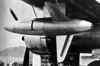 | JB-3 Chinese sun synchronous orbit military reconnaisance satellite. Built by CAST, it used a BISME (Beijing Institute of Space Mechanics and Electronics) optical sensor. |
| ANDE Pair of passive and active satellites ejected from the Endeavour on 30 July at 12:33 GMT. Upper atmosphere studies. |
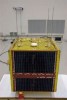 | Anusat 40 kg imaging satellite from Anna University, Chennai, India. Communication (Amateur), Technology satellite for Anna University, India. Launched 2009. |
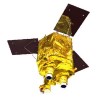 | Astrobus The Airbus-M medium satellite bus used for the 712 kg Spot-6 and Spot-7 earth resource satellites. Other Airbus satellite platforms received retroactive Astrobus designations. Satellite bus built by Astrium (ex Dornier), Europe. |
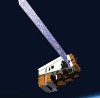 | BCP-2000 American Ball satellite bus in the 1000-kg class to accommodate high-precision optical surveillance payloads. |
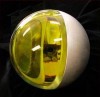 | BLITS Spherical glass lens for laser geodesy, built by the NII for Precision Instruments (NIIPP), Moscow. Technology, geodesy satellite for NII Pretsizionnogo Priborostroeniya (NIIPP), Russia. Launched 2009. |
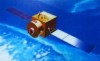 | CAST1000 The CAST1000 bus was a microsatellite class (30-200 kg) platform designed to satisfy missions including earth observation, atmospheric exploration, electromagnetic exploration, technological demonstration, on-orbit service, and LEO communication, while supporting use in satellite constellations
and formation flying. |
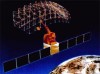 | CAST2000 The CAST2000 bus was in the minisatellite class (200-400 kg bus mass; 300-600 kg payload capacity). It was designed for diverse missions, including earth observation, technological demonstration, scientific exploration, earth environmental exploration, formation flight and networking, meteorological research and application, communications, and navigation. |
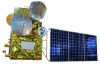 | CAST968 Chinese spacecraft bus of around 500 kg and 1000 W power capability designed for use by Earth observation, communications, and technology demonstration satellites in sun synchronous orbit. Satellite bus built by CAST, China. |
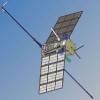 | Chibis-M Released in low earth orbit from Progress M-13M after separation from ISS. Carried plasma wave experiment. Scientific, ionosphere satellite for Space Research Institute (IKI), Russia. Launched 2011. |
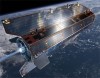 | GOCE The Gravity Field and Steady-State Ocean Circulation Explorer was an ion-engine-powered European satellite equipped with a highly sensitive gravity gradiometer to detect fine density differences in the crust and oceans of the Earth. Earth Science satellite built by Alenia Spazio (Prime), Astrium (platform), Alcatel Space (Gradiometer instrument) for ESA, Europe. Launched 2009. |
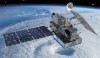 | GPM Joint US-Japanese Global Precipitation Measurement satellite; carried the JAXA/NICT/NEC Toshiba Dual-frequency Precipitation Radar and the GSFC/Ball GPM Microwave Imager. The satellite was built by NASA's Goddard Space Flight Center and registered as a US satellite. |
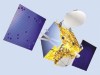 | I-1K Indian 1000-kg class satellite bus for use in geostationary or planetary missions. Dimensions 1.505 m × 1.476 m × 1.530 m, dry mass 500 kg, payload 100 kg, power system up to 1000 watts, design life 7 years. |
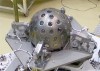 | LARES Laser Relativity Satellite, a 390 kg, 0.38 m diameter tungsten sphere covered with 92 laser retroreflectors. Used to probe relativistic effects in the Earth's gravitational field. The satellite had the lowest ballistic coefficient of any satellite ever launched. Italian Vega launch vehicle. Basic research, Geodesy satellite built by Carlo Gavazzi Space SpA for ASI, Italy. Launched 2012. |
| Leostar American OSC-built satellite bus designed for launch by the company's Pegasus or Taurus launch vehicles, originally designed for the USAF Standard Technology Experiment Program (STEP) technology missions. |
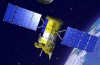 | Leostar-1 Version of the Leostar bus for the failed NASA Glory climate mission. |
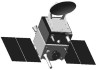 | Minisatellite-SSB Joint project between the French space agency CNES and the Indian Space Research Organization (ISRO) for ocean studies. Carried the Altika Ka-band altimeter. |
| MKA-FKI Equipped with L-band UHF panoramic radiometer to map soil moisture and water salinity, studying the land-ocean-atmosphere energy system; and a multi-spectral Pribor EK camera. |
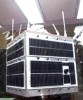 | Navid Earth observation satellite with 400 m resolution built by Iran University of Science and Technology in Tehran. |
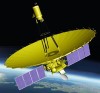 | Navigator bus Satellite bus developed by Lavochkin 2000-2010 for use by a variety of earth-resource and scientific satellites. Operational, Dry mass 850 kg, propellant up to 540 kg, and payload up to 2600 kg. Solar panels provided 600-1100 watts maximum over a five-year designed operational life. Stabilized to within 2.5 deg by a hydrazine monopropellant system. |
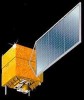 | Phoenix Eye The Phoenix Eye bus was designed for sun synchronous orbits and used in the ZY-2 and CBERS earth observation satellites. |
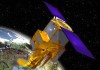 | Proteus The Proteus (Plateforme Reconfigurable pour l'Observation, les Telecommunications Et les Usages Scientifiques) bus was developed by Thales Alenia Space in partnership with the French Space Agency CNES from 1996 to 2000. The result was design and qualification of a small and versatile satellite bus as well as a generic ground segment that could accomodate a variety of payloads. These included all types of Earth environmental and science missions; surveillance, and communications applications. |
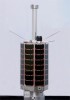 | Rasad Satellite with an imaging payload. Technology satellite for Malek Ashtar University, Tehran, Iran. Launched 2011. |
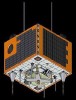 | RASAT Turkish Earth observation satellite with a Korean-built imager, built for TUBITAK, the Turkish science research council and UZAY, the Space Technology Research Insitute in Ankara. Earth Observation satellite operated by T_BITAK-UZAY, Turkey. Launched 2011. |
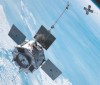 | RBSP NASA's Radiation Belt Storm Probes deployed a series of booms include electric field antennae spanning 100 meters. The instruments studied energetic particles, thermal plasma, ionospheric composition and electromagnetic fields and waves. Magnetospheric Research satellite for NASA JHU/APL, USA. Launched 2012. |
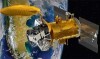 | SAC-D Argentinian Satelite de Aplicaciones Cientificas-D'satellite. Carried a NASA Aquarius L-band radiometer/scatterometer map sea salinity; a Ka-band microwave radiometer; an infrared scanner to measure sea surface temperature; a high sensitivity camera to study light sources at night; and an Italian experiment which measured atmospheric deflection of GPS signals to determine air temperature and humidity. Earth Science (Ocean salinity) satellite built by NASA (payload), INVAP (bus) for NASA, CONAE, Argentina. Launched 2011. |
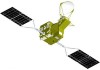 | Shizuku Global Change Observation Mission. Primary instrument was the AMS-4 microwave scanning radiometer. |
 | Sich Ukrainian remote sensing satellite built by Yuzhnoye. |
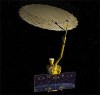 | SMAP The Soil Moisture Active Passive satellite, carried a 6-m L-band antenna for synthetic aperture radar and radiometry measurements to map microwave emissions from water molecules in the soil. Earth Science satellite for NASA Jet Propulsion Laboratory, USA. Launched 2015. |
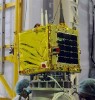 | SRMSAT SRM University in Chennai satellite for greenhouse gas monitoring. Technology, Earth observation satellite for SRM University, India. Launched 2011. |
| Streak Delayed from May, June, July, 2005. Classified research satellite, said to carry instruments to characterise the space environment in a sun-synchronous orbit. Experimental satellite built by General Dynamics C4 Systems/Spectrum Astro Space Systems for Defense Advanced Research Projects Agency (DARPA), USA. Launched 2005. Used the SA-200HP bus. |
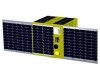 | UNIFORM Microsatellite for Wakayama University, carrying a 10-12 micron IR microbolometer array for wildfire monitoring. |
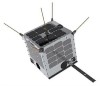 | WNISAT 30 cm cube for Weather News Inc. and Axelspace, to monitor northern sea routes and atmospheric CO2. |
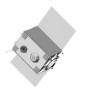 | X-Sat Nanyang Technological University Singapore satellite; carried a 10-meter-resolution multispectral imager. Earth Observation, Technology satellite built by Satrec Initiative for CREST (Centre for Research in Satellite Technologies), Singapore. Launched 2011. Used SI-100 bus. |
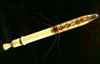 | Explorer A American earth magnetosphere satellite. Discovered Van Allen radiation belts. Spacecraft engaged in research and exploration of the upper atmosphere or outer space. |
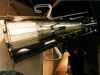 | Sputnik 3 Russian earth magnetosphere satellite. In July 1956 OKB-1 completed the draft project for the first earth satellite, designated ISZ (Artificial Earth Satellite). Scientific satellite, Russia. Launched 1958. |
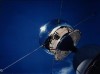 | Vanguard 2 American earth magnetosphere satellite. The actual operational satellite that was to be launched by the Vanguard launcher. |
| Explorer B American earth magnetosphere satellite. Explorer 4. Mapped project Argus radiation. |
| Explorer C American earth magnetosphere satellite. Explorer 5. |
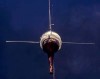 | Vanguard 3 American earth magnetosphere satellite. Radiation, micrometeoroid data. |
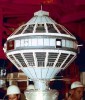 | S-1 American earth magnetosphere satellite. Magnetic field, solar flare data. Research satellite built by Army Ballistic Missile Agency for NASA, USA. Launched 1959. |
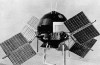 | S-2 American earth magnetosphere satellite. Explorer 6. First Earth photo; radiation data. Research, Ionosphere, Magnetosphere satellite built by TRW Space Technology Laboratory (STL) for NASA, USA. Launched 1959. |
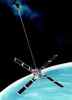 | Transit Spin-stabilized Transit satellites were developed by the US Navy beginning in 1958 for the first operational navigation satellite system. Transit provided continuous navigation satellite service from 1964, initially for Polaris submarines and later for civilian use. The use of the satellites for navigation was discontinued at the end of 1996 (replaced by GPS/Navstar), but the seemingly-indestructible satellites continued transmitting and became the Navy Ionospheric Monitoring System (NIMS). 46 launches, 1959.09.17 (Transit 1A) to 1988.08.25 (Transit O-31). Navigation satellite built by Naval Avionics Facility (#1-3, 5, 7); Johns Hopkins University Applied Physics Laboratory (APL) (#4, 6, 8-17); RCA (#18 - 32) for USN, USA. Launched 1964 - 1988. Used Transit-Bus, Gravity Stabilized. |
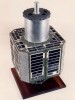 | S-46 American earth magnetosphere satellite. Explorer. Research, ionospheric satellite operated by NASA, USA. Launched 1960. |
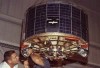 | TIROS TIROS spacecraft were the beginning of a long series of American polar-orbiting meteorological satellites. The objective was to establish a global weather satellite system. Meteorology satellite operated by NASA, ESSA, USA. Launched 1960 - 1965. |
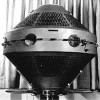 | S-30 American earth ionosphere satellite. Explorer 8. Ionospheric research. Research, ionospheric satellite built by NASA, Marshall Space Flight Center for NASA, USA. Launched 1960. |
| S-56 American earth atmosphere satellite. 12 foot diameter. balloon; atmospheric density studies. |
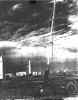 | HARP 5-1 Canadian earth atmosphere probe. Launched from 1960. The HARP 5-1 gun probe was a dart-shaped, sub-caliber vehicle with a major diameter of 66 mm, a length of 116 cm and a flight weight of 10.4 kg. |
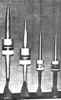 | HARP 5-3 Canadian earth atmosphere satellite. Study 1960. The HARP 5-3 probe was developed during HARP to reduce the complexity of the 5 inch vehicles and in particular the nose eject system used by the HARP 5-1 probe. |
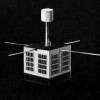 | Injun American earth magnetosphere satellite. Radiation decay data satellite. May also have been a cover for some NRL ELINT satellites. |
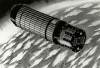 | S-55 American earth micrometeoroid satellite. Micrometeoroid research. |
 | HARP 7-1 Canadian earth atmosphere suborbital probe. Flights from 1961. The original HARP 7-1 gun probe was fundamentally a scaled up version of the 5-1 gun probe and was used for similar payloads. |
| HARP 7-2 Canadian earth atmosphere probe. Study 1961. The Harp 7-2 vehicle was an optimized version of the 7-1 vehicle. The 7-2 had a body diameter of 76 mm a length of 1410 mm a flight weight of 18.2 kg and a payload volume of 2048 cc. |
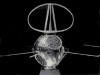 | Lofti 2 American earth magnetosphere satellite. Carried 5 satellites. |
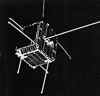 | SECOR American earth geodetic satellite. Geodesy satellite operated by US Army, USA. Launched 1962 - 1965. |
| Highwater American earth atmosphere satellite. 2 launches, 1962.04.25 (Highwater 1) and 1962.11.16 (Highwater 2). Release of large quantities of chemicals at high altitudes during suborbital tests of Saturn I. |
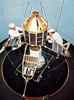 | Ariel American earth magnetosphere satellite. Ionospheric studies; returned X-ray, ionospheric, cosmic ray data. Science satellite built by Westinghouse Electric (Spacecraft), UK. Launched 1962 - 1964. |
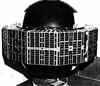 | Anna American earth geodetic satellite. Geodesy satellite built by Johns Hopkins University Applied Physics Laboratory (APL) for USAF, US Navy, US Army, NASA, USA. Launched 1962. |
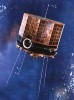 | Program 35 American earth weather satellite. First US weather satellite, classified for many years. Predecessor to the DMSP series of military satellites. |
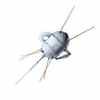 | DS-K-8 Ukrainian earth micrometeoroid satellite. Cosmos 8. Detected meteoroid flux in near-earth space and carried unspecified military research equipment. Astronomy, Micrometeroids satellite built by Yuzhnoye, Russia. Launched 1962. Used DS Bus. |
 | ERS American earth magnetosphere satellite. Environmental Research Satellites were especially designed for piggyback launching from large primary mission vehicles. |
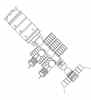 | OS-1 (1965) Russian manned space station. Reached mock-up stage, 1965. |
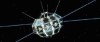 | Alouette Canadian earth magnetosphere satellite. Ionospheric research. Science satellite, Canada. Launched 1962 - 1965. |
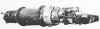 | Starfish American earth magnetosphere satellite. Satellite collected artificial radiation data (resulting from atmospheric and exoatmospheric nuclear explosions). |
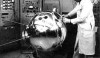 | AE American earth atmosphere satellite. Atmospheric research. Atmospheric Research satellite built by NASA, Goddard Space Flight Center for NASA, USA. Launched 1963. |
| RADOSE American earth magnetosphere satellite. One launch, 1963.06.15. Radiation dosimeter measurements. |
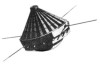 | GRS American earth magnetosphere satellite. Space gas data. Science, geophysics satellite for US Air Force Cambridge Research Lab (AFCRL), USA. Launched 1963. |
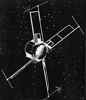 | APL satellite American earth magnetosphere satellite. 3 launches, 1963.09.28 (APL SN 39) to 1964.12.13 (APL SN 43). Johns Hopkins University Applied Physics Laboratory built several satellites for the Air Force in the 1960's. |
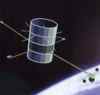 | IMP American earth magnetosphere satellite. Research, Magnetosphere satellite built by NASA, Goddard Space Flight Center for NASA, USA. Launched 1963 - 1965. |
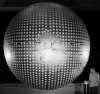 | ADE American earth atmosphere satellite. 12 foot diameter balloon, identical to Explorer 9, for atmospheric density studies. |
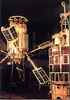 | Elektron-A Russian earth magnetosphere satellite. The Elektron mission was one of the earliest Soviet satellites to be authorized following the initial Sputnik series. Magnetospheric research satellite, Russia. Launched 1964. |
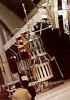 | Elektron-B Russian earth magnetosphere satellite. The Elektron mission was one of the earliest Soviet satellites to be authorized following the initial Sputnik series. Magnetospheric research satellite, Russia. Launched 1964. |
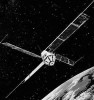 | BE American earth magnetosphere satellite. Explorer (20). Also known as Explorer S-66. |
| Starflash American earth magnetosphere satellite. Sub-satellite of unknown purpose, released from KH-5 photo reconnaissance satellites on two missions. |
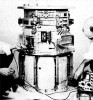 | ESRS American earth magnetosphere satellite. Environmental Sciences Research Satellite. Science, magnetosphere satellite for US Air Force Cambridge Research Lab (AFCRL), USA. Launched 1964. |
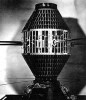 | IE American earth ionosphere satellite. Explorer 20. Ionospheric research. Research satellite operated by NASA, USA. Launched 1964. |
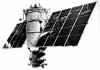 | Meteor Russian earth weather satellite. The first Soviet weather satellite. Development began with a decree of 30 October 1960. The bus was the basis for a series of Russian earth weather satellites flown in three generations 1964-2009. The first generation bus was adapted for earth resource payloads and flown under the Resurs and Priroda designations as well. |
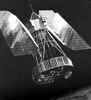 | Nimbus American earth weather satellite. Meteorology, experimental satellite built by RCA Astrospace for NASA, NOAA, USA. Launched 1964 - 1966. Used Nimbus Bus. |
 | OGO American earth magnetosphere satellite. Research satellite built by TRW for NASA, USA. Launched 1964 - 1969. Used 3-axis stabilized box-shaped satellite bus. |
| Beacon American earth ionosphere satellite. Early technology satellite. None reached orbit. Atmosphere density satellite built by NASA Langley Research Center for US Army, USA. Launched 1958 - 1959. |
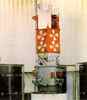 | DMSP Block 4A American earth weather satellite. Defense Meteorological Satellite Program. Meteorology satellite built by RCA Astro for USAF, NRO, USA. Launched 1966 - 1967. |
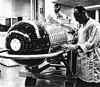 | OV1 American earth magnetosphere satellite. Experimental satellite built by Convair for USAF, USA. Launched 1965 - 1969. |
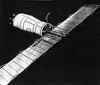 | Pegasus satellite American earth micrometeoroid satellite. Pegasus satellites consisted of vast detector panels deployed from Saturn IV stages on Saturn I test flights. Micrometeroite Research satellite built by Fairchild Hiller for NASA, USA. Launched 1965. |
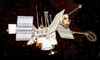 | OV2 American earth magnetosphere satellite. OV2 satellites were built for the USAF Office of Aerospace Research, and flew as secondary payloads on Titan IIIC test flights. Experimental satellite built by Northrop Systems Laboratories for USAF, USA. Launched 1965 - 1968. |
 | DME American earth ionosphere satellite. Explorer 31. Explorer 31, the Direct Measurement Explorer, was launched with a Canadian Alouette II on November 28, 1965, on a Thor-Agena rocket from Vandenberg Air Force Base, California. Ionosphere Research satellite built by Applied Physics Laboratory of The Johns Hopkins University (APL) for NASA Goddard Space Flight Center, Greenbelt, Maryland, USA. Launched 1965. |
 | FRANCE satellite French earth ionosphere satellite. Investigated the properties of the ionized layers of the atmosphere by observation of the propagation of very low frequency waves in the ionosphere. |
 | DS-U1-G Ukrainian earth ionosphere satellite. Studied the relationship between variations in the upper atmosphere and solar activity. Science, upper athmosphere satellite built by Yuzhnoye, Russia. Launched 1966 - 1967. Used DS Bus. |
 | D French earth geodetic satellite. Small French science and technology satellites used on early Diamant launch vehicle tests. Science satellite, France. Launched 1966. |
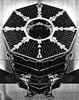 | OV3 American earth magnetosphere satellite. The OV3 GUS General Utility Satellite were built for the Air Force as part of the OV3 satellite series. Experimental satellite built by Aerojet (#1 - 4); AFCRL (#5 - 6) for USAF, USA. Launched 1966 - 1967. |
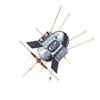 | DS-U2-I Ukrainian earth ionosphere satellite. Studied the influence of the ionosphere on passing VLF radio waves. Astronomy, Ionosphere satellite built by Yuzhnoye, Russia. Launched 1966 - 1968. Used DS Bus. |
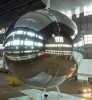 | Pageos American earth geodetic satellite. 100 foot diameter. balloon. Geodesy satellite built by G. T. Schjeldahl Co. (Balloon) for NASA, USA. Launched 1966. |
| TOS American earth weather satellite. TOS spacecraft marked the first operational system of US polar-orbiting meteorological satellites. |
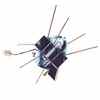 | DS-U2-MP Ukrainian earth micrometeoroid satellite. Studied cosmic dust particles in near-Earth space. Astronomy, Micrometeroids satellite built by Yuzhnoye, Russia. Launched 1966 - 1967. Used DS Bus. |
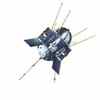 | DS-U2-D Ukrainian earth magnetosphere satellite. Studied charged particle flows. Science satellite built by Yuzhnoye, Russia. Launched 1966 - 1968. Used DS Bus. |
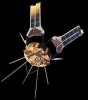 | Diadem French earth geodetic satellite. French geodetic satellites. Geodesy satellite for CNES, France. Launched 1967. |
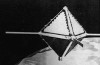 | OV5 American earth magnetosphere satellite. OV5 was a version of the USAF Environmental Research Satellites dedicated to radiation research and VLF plasma wave detection. Experimental satellite built by TRW Systems Group (#1 - 5, 8); AFRCL (#6, 7); Northrop (#9) for USAF, USA. Launched 1967 - 1969. |
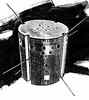 | Owl American earth ionosphere satellite. 2 launches, 1967.05.18 (Transit 16) to 1967.09.25 (Transit 17). |
 | Aurora American earth magnetosphere satellite. Investigated aurora borealis. Research satellite built by Rice University for Rice University for USAF STP (Space Test Program), USA. Launched 1967. |
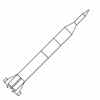 | Wresat Australian earth atmosphere satellite. Australian Weapons Research Establishment Satellite, launched using surplus US Army Redstone missile, that obtained solar radiation, upper atmosphere data. Built for Australian Weapons Research Establishment (WRE), Australia. Launched 1967. |
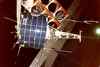 | Sfera Russian earth geodetic satellite. The Sfera geodetic system covered a broad development for solving problems in geodetics, continental drift, and precise location of cartographic points. Geodesy satellite built by NPO Prikladnoi Mekhaniki (NPO PM), Russia. Launched 1968 - 1978. Used KAUR-1 bus. |
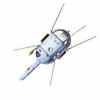 | DS-U1-Ya Ukrainian earth magnetosphere satellite. Studied charged particle flows and cosmic rays. Astronomy, Magnetosphere satellite built by Yuzhnoye, Russia. Launched 1968. Used DS Bus. |
 | Nauka Russian earth magnetosphere satellite. The Nauka containers were flown as piggy-back payloads aboard Zenit reconnaissance satellites. They served a dual purpose. |
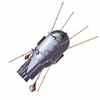 | DS-U1-A Ukrainian earth ionosphere satellite. Cosmos 215. Studied the optical characteristics of the atmosphere. Radiation observatory; 8 telescopes. Science, upper atmosphere satellite built by Yuzhnoye, Russia. Launched 1968. Used DS Bus. |
 | Orbiscal American earth ionosphere satellite. Investigate effects of ionosphere on radio signals. |
 | RM American earth micrometeoroid satellite. Spacecraft engaged in research and exploration of the upper atmosphere or outer space. Research, meteoroids and radiation satellite operated by NASA, USA. Launched 1970. Used the Scout-B stage 4 bus. |
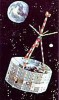 | HEOS European earth magnetosphere satellite. Highly Eccentric Orbiting Satellite; examined magnetic fields outside of Earth's magnetosphere. Research satellite built by Junkers Flugzeug- und Motorenwerke GmbH (prime) for ESRO, Europe. Launched 1968 - 1972. |
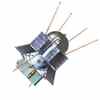 | DS-U2-GK Ukrainian earth magnetosphere satellite. Conducted complex geophysical studies of the upper atmosphere. Air density, auroral investigations. Astronomy, Magnetosphere satellite built by Yuzhnoye, Russia. Launched 1968 - 1970. Used DS Bus. |
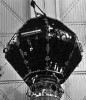 | Isis Canadian earth magnetosphere satellite. Ionospheric measurements; data correlated with measurements from Alouette 1. Science satellite built by CA Victor Co., Montreal for CSA, Canada. Launched 1969 - 1971. |
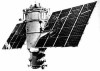 | Meteor M 11F614 Russian earth weather satellite. Acquisition of meteorological information needed for use by the weather service. Meteorology satellite built by VNIIEM, Russia. Launched 1964 - 1977. |
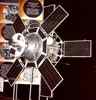 | DS-U3-IK Ukrainian earth magnetosphere satellite. Measurements of the sun; used for Interkosmos launches. |
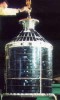 | AZUR German earth magnetosphere satellite. German Research Satellite A; examined Van Allen belts, solar particles, aurora. Research, ionosphere satellite built by Gesellschaft fnr Weltraumforschung mbH for BMWF, NASA, Germany. Launched 1969. |
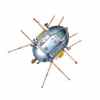 | DS-U1-IK Ukrainian earth ionosphere satellite. Studies ionosphere of the earth; version used for Intercosmos international launches. |
| Ionosfernaya Russian earth ionosphere satellite. Ionospheric studies. Used the basic KAUR-1 bus, consisting of a 2. Science, ionosphere satellite built by OKB-10 (NPO Prikladnoi Mekhaniki, NPO PM), Russia. Launched 1969 - 1970. Used KAUR-1 bus. |
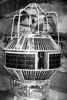 | Altitude Sounder Russian earth atmosphere satellite. Study 1969. Used the KAUR-1 bus, which consisted of a 2.035 m diameter cylindrical spacecraft body, with solar cells and radiators of the thermostatic temperature regulating system mounted on the exterior. |
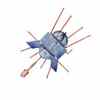 | DS-U2-MG Ukrainian earth magnetosphere satellite. Studied the Earth's magnetic poles. Astronomy, Magnetosphere satellite built by Yuzhnoye, Russia. Launched 1970. Used DS Bus. |
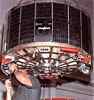 | ITOS American earth weather satellite. ITOS was the follow-on to the TIROS series of polar-orbiting US weather satellites, and marked the beginning of the use of the NOAA designator. Meteorology satellite built by RCA Astro for NOAA, USA. Launched 1970 - 1971. Used TIROS-M Bus. |
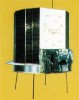 | DMSP Block 5A American earth weather satellite. Defense Meteorological Satellite Program. Meteorology satellite built by RCA Astro, USA. Launched 1970 - 1971. |
 | TOPO American earth geodetic satellite. US Army topographic / geodesic satellite built by Cubic Corporation for U.S. Army Topographic Command, USA. Launched 1970. |
| DS-U1-R Ukrainian earth atmosphere satellite. Cosmos 335. Studied spectral range of the UF. Atmospheric research satellite built by Yuzhnoye, Russia. Launched 1970. Used DS Bus. |
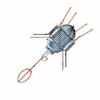 | DS-U2-IK Ukrainian earth ionosphere satellite. Studied charged particle flows and the ionosphere; version used for Intercosmos international launches. |
 | Prospero British earth micrometeoroid satellite. Tested space equipment for future satellites and conducted a scientific experiment to measure the incidence of micro-meteoroids. Technology satellite for Royal Aircraft Establishment (RAE), U.K.. Launched 1971. |
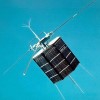 | SS Japanese earth magnetosphere satellite. Scientific observations in outer space. Research satellite operated by ISAS, Japan. Launched 1970 - 1971. |
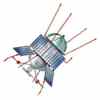 | DS-U2-IP Ukrainian earth ionosphere satellite. Cosmos 378. Studied the ionosphere and charged particle flows. Astronomy, Ionosphere satellite built by Yuzhnoye, Russia. Launched 1970. Used DS Bus. |
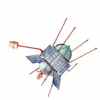 | DS-U2-K Ukrainian earth magnetosphere satellite. Cosmos 426. Studied charged particle flows and cosmic radiation. Astronomy, Magnetosphere satellite built by Yuzhnoye, Russia. Launched 1971. Used DS Bus. |
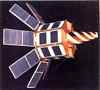 | Eole satellite French earth weather satellite. Experimental weather satellite; received meteorological data from balloon network. Data relay satellite, France. Launched 1971. |
 | DMSP Block 5B American earth weather satellite. Defense Meteorological Satellite Program. Meteorology satellite built by RCA Astro, USA. Launched 1971 - 1974. |
 | SSS American earth magnetosphere satellite. Explorer 45. Studies magnetosphere, energetic particles. Research, Magntosphere satellite operated by NASA, USA. Launched 1971. |
 | DS-U2-GKA Soviet-French earth magnetosphere satellite. Upper atmosphere, auroral studies. Investigation of physical phenomena in the Earth's upper atmosphere at high latitudes and study of the nature of auroras. |
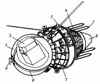 | Energia satellite Russian earth magnetosphere satellite. Adaptation of recoverable Vostok spacecraft for investigation of primary cosmic radiation and meteoritic particles in near-earth outer space. Cosmic radiation satellite built by TsSKB, Russia. Launched 1972 - 1978. Used Zenit Bus. |
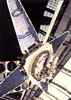 | Prognoz Russian earth magnetosphere satellite. This spacecraft, built by Lavochkin, was for study of geomagnetic fields, radiation, and solar physics. Science, magnetosphere satellite built by Lavochkin, Russia. Launched 1972 - 1973. |
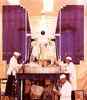 | Landsat 1-2-3 American earth land resources satellite. The first 3 Landsat missions were also known as the Earth Resources Technology Satellite (ERTS) series. Earth Observing satellite built by RCA Astro Space for NASA, USA. Launched 1972 - 1978. Used Nimbus Bus. |
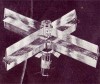 | MTS American earth micrometeoroid satellite. Explorer 46. Micrometeoroid tests. Research satellite operated by NASA, USA. Launched 1972. |
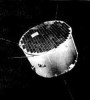 | AEROS German earth magnetosphere satellite. Spacecraft engaged in research and exploration of the upper atmosphere or outer space. Research satellite built by Dornier for Bundesministerium fnr Bildung und Wissenschaft, NASA, Germany. Launched 1972 - 1974. |
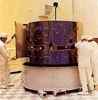 | SMS American earth weather satellite. Synchronous Meteorological Satellite. Satellite bus built by Space Systems Loral (ex Ford), USA. |
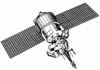 | Meteor-Priroda Russian earth land resources satellite. Meteorology, earth observation satellite built by VNIIEM, Russia. Launched 1974 - 1981. Used SP-1 bus. |
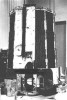 | DMSP Block 5C American earth weather satellite. Defense Meteorological Satellite Program. Meteorology satellite built by RCA Astro, USA. Launched 1974 - 1976. |
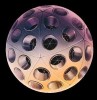 | Starlette French earth geodetic satellite. Geodesic satellite. Geodesy satellite for CNES, France. Launched 1975-1993. |
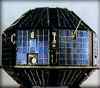 | Aryabhata Indian earth atmosphere satellite. The Soviet Union assisted India in development of Aryabhata, its first satellite, named for the Indian astronomer. The satellite conducted scientific experiments on atmospheric research. Science satellite for ISRO, India. Launched 1975. |
 | Meteor-2 Russian earth weather satellite. Successor to the Meteor-1 weather satellite. Meteorology satellite built by VNIIEM, Russia. Launched 1975 - 1993. Used SP-1 bus. |
 | Prognoz SPRN Russian military early warning satellite. Development began of the Soviet Union's Prognoz geosynchronous ballistic missile early warning satellite in 1980. |
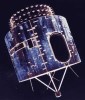 | GOES American earth weather satellite. Geostationary Operational Environmental Satellite. Meteorology satellite built by Philco-Ford for NASA (SMS) / NOAA (GOES), USA. Launched 1974 - 1978. |
 | DAD American earth atmosphere satellite. Dual Air Density; air density experiments. |
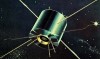 | JISS Japanese earth ionosphere satellite. JISS - national name "Ume". Spin-stabilized; Ionospheric Sounder, Radio Noise Receiver, Plasma Measuring Equipment, Ion Mass Spectrometer, and other instruments. |
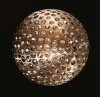 | LAGEOS American earth geodetic satellite. The LAGEOS satellites were passive vehicles covered with retroreflectors designed to reflect laser beams transmitted from ground stations. Geodesy satellite built by Bendix Corp. (body), Perkin ELmer (reflectors)(#1), ASI (#2) for NASA, ASI, USA. Launched 1976 - 1992. |
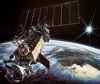 | DMSP Block 5D American earth weather satellite. Defense Meteorological Satellite Program. USA satellite built by RCA Astro for Meteorology, USA. Launched 1976 - 1980. |
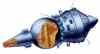 | Zenit-6U Russian military surveillance satellite. A universal variant of the Zenit spacecraft, used in two altitude ranges, for both observation and high resolution missions. Reconnaissance, photo (film return type) satellite built by TsSKB for GRU, Russia. Launched 1976 - 1984. Used Zenit bus. |
| GVM DS-U2-IK Ukrainian earth ionosphere satellite. Cosmos 893. Designation indicates a mass model of the DS-U2-IK (which studied charged particle flows and the ionosphere). However flown after the functional spacecraft's flights were completed. |
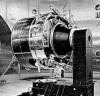 | ESA-Geos European earth magnetosphere satellite. Magnetospheric research. European Space Agency satellite. Research satellite built by British Aircraft Corp. for ESA, Europe. Launched 1977 - 1978. |
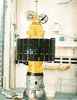 | Himawari Japanese earth weather satellite. 5 launches, 1977.07.14 (Himawari 1) to 1995.03.18 (Himawari 5). The Geostationary Meteorological Satellite series were spin-stabilized satellites. |
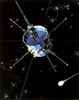 | ISEE American earth magnetosphere satellite. These Explorer-class heliocentric spacecraft were part of the mother/daughter/heliocentric mission (ISEE 1, 2, and 3). Research satellite operated by NASA / ESA, USA. Launched 1977. |
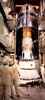 | Meteosat European earth weather satellite. Meteorology satellite built by Aerospatiale for ESA => EUMETSAT, Europe. Launched 1977 - 1997. |
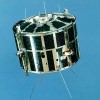 | EXOS Japanese earth ionosphere satellite. Optical investigations of ionosphere. EXOS-C (OHZORA). Research, upper atmosphere, plasma satellite operated by ISAS, Japan. Launched 1978. |
 | AEM American earth atmosphere satellite. HCMM. Heat Capacity Mapping Mission; produced thermal maps of atmosphere. Studied dust, liquid droplets in upper atmosphere. |
 | Seasat American earth resources radar satellite. Seasat was the first satellite designed for remote sensing of the Earth's oceans with synthetic aperture radar (SAR). Earth Observing Radar satellite built by Lockheed Missiles and Space Co., Ball Space Systems, Jet Propulsion Laboratory (JPL) for NASA, USA. Launched 1978. |
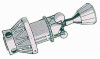 | CAMEO American earth magnetosphere satellite. Released barium cloud. Research satellite for NASA Goddard Space Flight Center, USA. Launched 1978. |
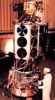 | Tiros N American earth weather satellite. Tiros N was part of the ongoing US series of polar-orbiting weather satellites. These were preceded by the TIROS series and the ITOS (Improved TIROS) series. |
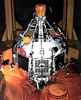 | Magion Czech earth magnetosphere satellite. The Czechoslovak satellite MAGION researched the magnetosphere and ionosphere of the earth. Science, magnetosphere satellite, Czechoslovakia. Launched 1978. |
 | Okean-E Ukrainian earth resources radar satellite. First prototype of Okean series. Development of methods for obtaining operational information on the Pacific Ocean. Ocean Observation satellite built by KB Yuzhnoye, Russia. Launched 1979 - 1980. |
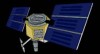 | SAGE American earth atmosphere satellite. Studied dust, liquid droplets in upper atmosphere. Research satellite operated by NASA, USA. Launched 1979. |
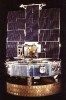 | Solwind American earth magnetosphere satellite. Ionosphere and magnetosphere studies; destroyed 9/13/85 (while still functioning) as part of ASAT test. Experimental satellite built by Ball Aerospace for USAF STP (Space Test Program), USA. Launched 1979. |
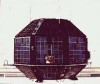 | Bhaskara Indian earth land resources satellite. Experimental satellite for conducting earth resources survey over India. Earth Observing, technology satellite for ISRO, India. Launched 1979-1981. |
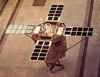 | SJ Chinese communications technology satellite. SJ (Shijian; 'Practice') series were Chinese scientific research, technological experiment and military operational satellites of a variety of configurations. |
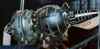 | Resurs F1-17F41 Russian earth land resources satellite. The 17F41 was the first of 4 models of the Resurs-F to fly. Earth Observation (film return) satellite built by TsSKB, Russia. Launched 1979 - 1986. |
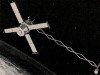 | Magsat American earth magnetosphere satellite. Measured near-Earth magnetic field and crustal anomalies. Research satellite built by Johns Hopkins University Applied Physics Laboratory (APL) for NASA, USGS, USA. Launched 1979. |
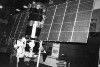 | Resurs-OE Russian earth land resources satellite. Modified Meteor; prototype for Resurs-O1. Earth Observation satellite built by VNIIEM, Russia. Launched 1983. Used SP-1 bus. |
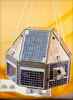 | Rohini Series of Indian technology test and earth land resources satellite. Technology satellite for ISRO, India. Launched 1979-1980. |
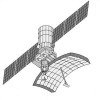 | Resurs-O2 Ukrainian earth land resources satellite. Study 1980. Earth Observation satellite built by NPP VNIIEM, USSR / Russia. Used SP-2 bus. |
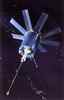 | Geo-IK Russian earth geodetic satellite. Development of a second generation geodetic satellite system began in 1977. Geodesy satellite built by NPO Prikladnoi Mekhaniki (NPO PM), Russia. Launched 1981 - 1994. Used KAUR-1 bus. |
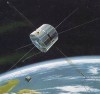 | Dynamics Explorer American earth magnetosphere satellite. Spacecraft engaged in research and exploration of the upper atmosphere or outer space. |
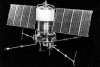 | IK-B-1300 Ukrainian earth magnetosphere satellite. Intercosmos 22. Intercosmos-Bulgaria 1300. Comprehensive investigation of physical processes in the earth's ionosphere and magnetosphere. |
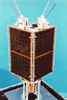 | SSTL-70 British microsatellite bus. 1 Basic Surrey Microsat bus. |
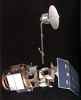 | Landsat 4-5 American earth land resources satellite. Earth Observing satellite built by Fairchild for NASA, NOAA, USA. Launched 1982 - 1984. Used the MMS bus. |
| Astrozond Russian earth magnetosphere satellite. |
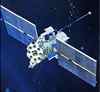 | Glonass Russian navigation satellite. Glonass was a Soviet space-based navigation system comparable to the American GPS system. |
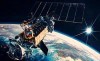 | DMSP Block 5D-2 American earth weather satellite. DMSP 5D-2 was the military's sixth generation of weather satellites. Meteorology satellite built by RCA Astro → GE Astro → Martin Marietta → Lockheed Martin Astro, USA. Launched 1982 - 1997. Used the TIROS-N Bus bus. |
 | Yantar-4KS1 Russian military electro-optical surveillance satellite. Reconnaissance, photo (data transmitting) satellite built by TsSKB for GRU, Russia. Launched 1982 - 1990. Used Yantar Bus. |
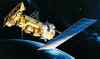 | Advanced Tiros N American earth weather satellite. merican earth weather satellite. |
 | SPAS American military strategic defense satellite. |
 | Okean-OE Ukrainian earth resources radar satellite. Ocean Observation satellite built by KB Yuzhnoye, Russia. Launched 1983 - 1984. |
| Multipurpose Satellite Gals Russian earth resources radar satellite. Study 1983. Heavy radar satellite based on the DOS 17K space station bus and using a KRT-30, a 30 m diameter radio telescope. |
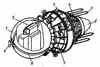 | Efir Russian earth magnetosphere satellite. Science. Adaptation of the Vostok spacecraft. Cosmic radiation satellite built by TsSKB, Russia. Launched 1984 - 1985. Used Zenit Bus. |
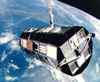 | LDEF American earth micrometeoroid satellite. Micro gravity (Shuttle retrievable) satellite operated by NASA, USA. Launched 1984. |
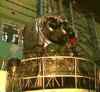 | Zenit-8 Russian military surveillance satellite. 1 Reconnaissance, photo (film return type) satellite built by TsSKB for GRU, Russia. Launched 1984 - 1994. Used Zenit bus. |
 | AMPTE American earth magnetosphere satellite. Charge Composition Explorer; detected tracer ions released into magnetosphere by IRM. |
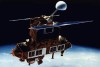 | ERBS American earth magnetosphere satellite. ERBS was part of the NASA's three-satellite Earth Radiation Budget Experiment (ERBE), designed to investigate how energy from the Sun is absorbed and re-emitted by the Earth. Earth Observing satellite built by Ball Aerospace for NASA, USA. Launched 1984. |
| Meteor-3 Russian earth weather satellite. Meteor-3 began in 1972 as an improved replacement for the Meteor-2 weather satellite. Meteorology satellite built by VNIIEM, Russia. Launched 1984 - 1994. Used SP-2 bus. |
| Energia Ozone Replenishment Satellite Russian earth environment satellite. Study 1984. The eroding ozone layer of the earth would be replenished using a constellation of space-based lasers that would bombard the stratosphere at 30 km altitude for 30 years. |
| Energia Geostationary Platform Russian earth land resources satellite. Study 1984. Energia could place observation platforms of 18 to 21 metric tons in geostationary orbit. |
| Energia Orbital Debris Remover Russian earth environment satellite. Study 1984. A 15 metric ton maneuverable satellite, consisting of an engine unit and a satellite collection mechanism, would maneuver at geosynchronous altitude in orbits with inclinations of between 0 and 14 degrees. |
| Energia Polar City Illuminator Russian earth environment satellite. Study 1984. The Energia launch vehicle could be used to launch 100 orbital reflectors to provide light to cities located in the polar regions. |
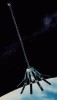 | Geosat American Navy satellite designed to measure sea surface heights to within 5 cm. Altimetry satellite built by Johns Hopkins University Applied Physics Laboratory (APL) for US Navy, USA. Launched 1985. |
 | PDP American earth magnetosphere satellite. Plasma Diagnostics Package; released by STS 51F 8/1/85, retrieved 8/2/85. Technology satellite operated by NASA, USA. Launched 1985. |
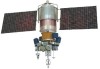 | Resurs-O1 Russian earth land resources satellite. A decree of 5 May 1977 authorized development of three earth resource satellites. Earth Observation satellite built by VNIIEM > NPP VNIIEM for NPO Planeta, Russia. Launched 1985 - 1988. Used SP-1 bus. |
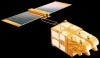 | SPOT-1-2-3 French earth land resources satellite. SPOT was the French government-sponsored civil earth observation program, with support from Belgium and Sweden. Earth Observing satellite for Spot Image, France. Launched 1986 - 1993. Used the SPOT Mk.1 bus. |
 | Viking (Sweden) Swedish earth magnetosphere satellite. Viking. Sweden's first satellite, Viking, was originally initiated as a means of providing experience in satellite system development and management. Built by SAAB (prime), Boeing (bus) for SSC, Sweden. Launched 1986. |
| Resurs F1-14F40 Russian earth land resources satellite. The Resurs-F earth resource satellite was based on the recoverable Zenit-4 spy satellite. Earth Observation (film return) satellite built by TsSKB, Russia. Launched 1986 - 1988. |
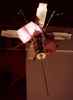 | Okean-O1 Ukrainian earth resources radar satellite. Third generation Soviet oceanographic research satellite, equipped with a side-looking radar, radiometer, and multi-spectral scanner. Ocean Observation satellite built by KB Yuzhnoye, Russia. Launched 1986 - 1995. |
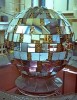 | EGS Japanese earth geodetic satellite. Experimental Geophysical Payload; new launch vehicle test flight. EGS (Ajisai). Improvement of the accuracy of domestic geodetic triangulation network. Geodesy satellite operated by NASDA, Japan. Launched 1986. |
| Polar Bear American earth magnetosphere satellite built by JHU/APL for USAF STP (Space Test Program), USA. Used Transit-Bus. One launch, 1986. Also known as STP P87-1, a military mission designed to study communications interference caused by solar flares and increased auroral activity. |
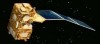 | Marine Observation Satellite Japanese earth sea satellite. The MOS 1A and 1B satellites, also known as Momo 1A and 1B, were Japan's first Earth resources satellites. |
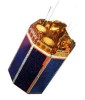 | SROSS Indian earth magnetosphere satellite. Technology, science satellite for ISRO, India. Launched 1992-1994. |
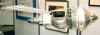 | Resurs F2 Russian earth land resources satellite. Adaptation of recoverable Vostok spacecraft for remote sensing. Earth Observation (film return) satellite built by TsSKB, Russia. Launched 1987 - 1995. |
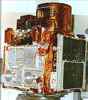 | IRS Indian Remote Sensing Satellite. Remote sensing of the Earth for natural resources management applications. Earth Observing satellite for ISRO, India. Launched 1988-1991. Used IRS-1 Bus. |
| Resurs F1-14F43 Russian earth land resources satellite. A decree of 5 May 1977 authorized development of three earth resource satellites. Earth Observation (film return) satellite built by TsSKB, Russia. Launched 1988 - 1993. |
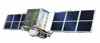 | FY-1 Chinese earth weather satellite. The Feng Yun 1 meteorological satellites were launched into sun-synchronous 900 km, 99 deg inclination orbits by CZ-4 boosters from Taiyuan. Meteorology satellite built by SAST for National Satellite Meteorological Centre, China. Launched 1988 - 2002. |
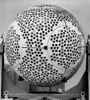 | Etalon Russian earth geodetic satellite. Passive geodetic satellites, 1415 kg, 1.294 m in diameter, covered with 306 antenna arrays, each with 14 corner cubes for laser reflection. Geodesy satellite, Russia. Launched 1989. |
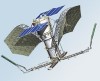 | Pion Russian earth atmosphere satellite. Deployed from Resurs F1, which carried two passive separable "Pion" probes to investigate upper atmospheric density. Atmosphere density satellite, Russia. Launched 1989 - 1992. |
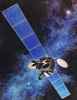 | FS-1300 American communications satellite bus. The 1300 was Space Systems/Loral's space-proven platform for a wide range of services, although its primary use was for geosynchronous communications satellites. From its first flight in 1989, it underwent constant evolutionary development to deliver greater power, communications capability, and longer useful life. Sales continued brisk well into the 21st Century. |
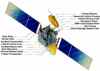 | HS 601 American communications satellite bus. 3-axis unified ARC 22 N and one Marquardt 490 N bipropellant thrusters, Sun and Barnes Earth sensors and two 61 Nms 2-axis gimbaled momentum bias wheels. |
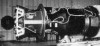 | Pegsat American earth magnetosphere satellite. Chemical release experiment. R&D satellite NASA, Orbital Sciences Corporation (OSC), USA. Launched 1990. |
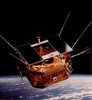 | CRRES American earth magnetosphere satellite. Combined Release and Radiation Effects Satellite. Chemical release experiment. Reseach, Magnetosphere satellite built by Ball Aerospace for USAF STP (Space Test Program), NASA, USA. Launched 1990. |
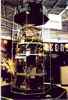 | Greensat South African earth land resources satellite. Cancelled 1990. The South African RSA-3 launch vehicle was designed to place a small surveillance satellite of 330 kg mass into a 41 degree, 212 x 460 km orbit around the earth. Experimental satellite built by Houwteq, Denel, South Africa. |
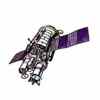 | Tellura Russian earth land resources satellite. Study 1990. In 1990 KB Salyut proposed an unmanned derivative of the TKS manned ferry to conduct earth resources experiments. |
| Mak Russian earth atmosphere satellite. Launched from Mir airlock. Investigation of features of the Earth's atmosphere. |
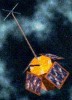 | REX American earth ionosphere satellite. The REX satellites were designed to study scintillation effects of the Earth's atmosphere on RF transmissions. Experimental satellite built by DSI (#1), CTA (#2) for USAF STP (Space Test Program), USA. Launched 1991 - 1996. Used the GemStar Bus bus. |
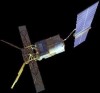 | ERS 1-2 European earth resources radar satellite. The primary mission of Europe's ERS-1 and -2 was to perform remote sensing of the Earth's oceans, ice caps, and coastal regions. |
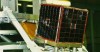 | Tubsat Germany's Technical University of Berlin (TUB) built a successful series of 40 kg 'Tubsat' experimental technology satellites. Germany's Technical University of Berlin (TUB) built a successful series of 40 kg 'Tubsat' experimental technology satellites. |
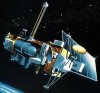 | UARS American earth ionosphere satellite. The Upper Atmospheric Research Satellite was designed to study the physical and chemical processes occurring in the Earth's upper atmosphere (between 15 and 100 km). Earth Observing satellite built by GE Astro Space, Fairchild (Bus) for NASA, USA. Launched 1991. Used the MMS bus. |
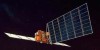 | JERS Japanese earth land resources satellite. JERS-1 (Japanese Research Satellite-1; FUYO-1) was Japan's second Earth observation satellite. Earth Observation, radar & optical satellite built by Mitsubishi Electric (MELCO) for NASDA, Japan. Launched 1992. |
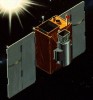 | SAMPEX American earth magnetosphere satellite. Research, magnetosphere satellite built by NASA Goddard Space Flight Center for NASA, USA. Launched 1992. |
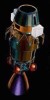 | DUVE Diffuse Ultraviolet Explorer package bolted to Delta 2 2nd stage. Built by University of California, USA. Launched 1992. |
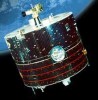 | Geotail Japanese earth magnetosphere satellite. Measured magnetosphere and Earth's geomagnetic tail; Diffuse Ultraviolet Explorer package bolted to Delta 2 second stage. Magnetosphere satellite ISAS, NASA, Japan. Launched 1992. |
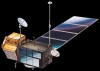 | Topex/Poseidon American earth sea satellite. TOPEX/Poseidon was a co-operative mission between the United States and France designed to provide high-accuracy global sea level measurements. Earth Observing satellite built by Fairchild for NASA, CNES, France. Launched 1992. Used the MMS bus. |
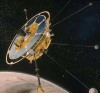 | Freja Swedish earth magnetosphere satellite. Freja was designed to image the aurora and measure particles and fields in the upper ionosphere and lower magnetosphere. Research, magnetospheric satellite for SSC, Sweden. Launched 1992. |
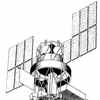 | Ekol Russian earth atmosphere satellite. Study 1992. The Lavochkin NPO designed a variety of remote sensing spacecraft based on a new 3-axis controlled satellite bus. |
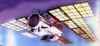 | Obzor Russian earth resources radar satellite. Study 1992. The Arsenal Design Bureau proposed converting its military ocean reconnaissance spacecraft bus (EORSAT) into a civil remote sensing platform. |
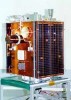 | Kitsat South Korean technology satellite. South Korean indigenous 50-kg-class small satellite series, developed originally with technology transfer from Surrey Satellite Technology Ltd. |
| STELLA French earth geodetic satellite. Laser reflectors. |
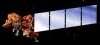 | Landsat 6 American earth land resources satellite. Landsat 6 was designed to continue the Landsat program and carried an improved suite of instruments. |
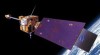 | GOES-Next American earth weather satellite. Geostationary Environmental Satellite. Meteorology satellite built by Space Systems/Loral (SS/L) for NOAA, USA. Launched 1994 - 2001. Used the SSL-1300 bus. |
 | Clark satellite American earth atmosphere satellite. Cancelled in 1998 when overruns had reached 20% of original price and no end to development was in sight. |
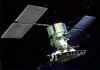 | Elektro Russian earth weather satellite. Elektro was to be the geostationary component of a third generation Soviet meteorological system. Following extended development, it flew only once, in 1994. Meteorology satellite built by NPP VNIIEM, Russia. Launched 1994. |
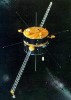 | Wind American earth magnetosphere satellite. Wind was designed to provide continuous measurement of the solar wind, particularly charged particles and magnetic field data. Scientific satellite built by Lockheed Martin Astro for NASA, USA. Launched 1994. |
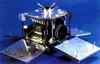 | Astrid Swedish earth magnetosphere satellite. Sweden's third scientific satellite and first microsatellite. |
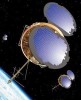 | Microstar American communications technology satellite. Small satellite bus, specially designed for multiple launch by Pegasus or Taurus family launch vehicles. |
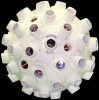 | GFZ-1 German earth geodetic satellite. GFZ-1 was a geodetic satellite designed to improve the current knowledge of the Earth's gravity field. Geodesy satellite built by Kayser-Threde, Institute of Space Device Engineering - Moscow for GFZ, Germany. Launched 1995. |
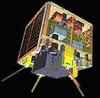 | MicroSat-100 British microsatellite bus. Enlarged version of the basic Surrey Microsat-70 bus. |
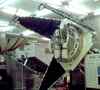 | Prognoz-M Russian earth magnetosphere satellite. Interbol was originally an Intercosmos project with a launch planned for the late 1980's. |
| Meteor (USA) American earth weather satellite. One launch, 1995.10.23, Meteor RV. Meteor commercial microgravity recoverable spacecraft built by EER Systems. Destroyed in failure of first test flight of Conestoga commercial launch vehicle. |
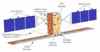 | Radarsat Canadian earth resources radar satellite. T Canada's Radarsat was a radar satellite featuring variable resolution, and different view angles at a number of preset positions. Earth Observing (Radar) satellite built by Spar Aerospace (Prime), Ball Aerospace (Bus) for CSA, Canada. Launched 1995. Used the BCP-4000 bus. |
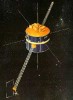 | Polar American earth magnetosphere satellite. Polar was designed to measure the entry, energization, and transport of plasma into the magnetosphere as part of the International Solar Terrestrial Program (ISTP). Scientific satellite built by Lockheed Martin Astro for NASA, USA. Launched 1996. |
 | Cluster European earth magnetosphere satellite. The Cluster satellites were a series of sophisticated earth-observation platforms that were to be launched aboard the first Ariane 5. Magnetospheric Research satellite built by Dornier (#1 - 4), Astrium (#5 - 8) for ESA, Europe. Launched 1996 - 2000. |
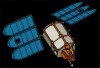 | TOMS-EP American earth atmosphere satellite. Earth Observing satellite built by TRW for NASA Goddard Space Flight Center (GSFC), USA. Launched 1996. Used the T100 bus. |
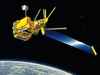 | ADEOS Japanese earth atmosphere satellite. The polar orbiting ADEOS spacecraft was to perform Earth, atmospheric, and oceanographic remote sensing. Earth Observation satellite built by Mitsubishi Electric (MELCO) for NASDA, Japan. Launched 1996. |
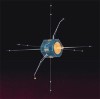 | FAST American earth magnetosphere satellite. FAST was designed to observe and measure rapidly varying electric and magnetic fields and the flow of electrons and ions above the aurora. Research satellite built by NASA Goddard Space Flight Center for NASA, USA. Launched 1996. |
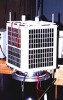 | MuSat Argentinian earth magnetosphere satellite. Microsat. MuSat-1 Victor was the first Argentine-built satellite. |
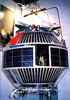 | Zeya Russian earth geodetic satellite. The Zeya satellite was used for navigation and geodesy tests from a sun-synchronous orbit. |
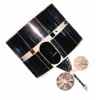 | FY-2 Chinese earth weather satellite. The Feng Yun 2 spin-stabilized geosynchronous meteorological spacecraft was slightly more massive than China's DFH-2 communications satellite. Meteorology satellite operated by National Satellite Meteorological Centre, China. Launched 1997 - 2014. |
 | Lewis satellite American earth land resources satellite. Lewis was selected in the NASA SSTI (Small Spacecraft Technology Initiative) program, along with Clark, to demonstrate advanced spacecraft technologies. Earth observing satellite built by TRW for NASA, USA. Launched 1997. Used the T200B bus. |
 | ACE American solar satellite. Research satellite built by Johns Hopkins University Applied Physics Laboratory (APL) for NASA, USA. Launched 1997. |
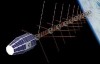 | FORTE American earth magnetosphere satellite. FORTE - 'Fast On-orbit Recording of Transient Events' - was a US Los Alamos National Laboratory satellite designed to study natural and artificial radio emissions from the ionosphere. Experimental satellite built by Composite Optics Inc. (structure) for USAF STP (Space Test Program), USA. Launched 1997. |
| Resurs F1M Russian earth land resources satellite. Variant of the Resurs-F recoverable earth resources satellite. See Resurs F1-17F40 for a full technical description. Earth Observation (film return) satellite built by TsSKB-Progress, Russia. Launched 1997 - 1999. |
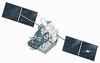 | TRMM American earth atmosphere satellite. TRMM was an international mission dedicated to measuring tropical and subtropical rainfall. Earth Observing satellite built by NASA Goddard Space Flight Center for NASA, NASDA, Japan. Launched 1997. |
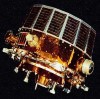 | Equator-S German earth magnetosphere satellite. German geophysics satellite. Science, magnetosphere satellite built by Max-Planck-Institut fur Extraterrestrische Physik (MPE) for DARA, Germany. Launched 1997. |
 | Kondor Russian communications satellite. Study 1997. The Khrunichev State Space Research and Production Center (including the Salyut Design Bureau), proposed the Kondor communications system for mobile users. |
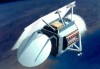 | GFO American oceanorgraphic radar satellite. GFO was a follow-on to the successful GEOSAT program which flew between 1985 and 1990. GFO was to provide real-time ocean topography data to 65 Navy users at sea and on shore. Altimetry satellite built by Ball Aerospace for US Navy, USA. Launched 1998. Used the BCP-600 (formerly called Techstar) bus. |
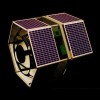 | SNOE American technology satellite. Atmospheric science satellite operated by NASA, USA. Launched 1998. |
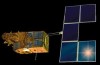 | SPOT-4 French earth land resources satellite. SPOT 4. SPOT was the French government-sponsored civil earth observation program. A single SPOT satellite provides complete coverage of the Earth every 26 days. Earth Observing satellite for Spot Image, France. Launched 1998. Used the SPOT Mk.2 bus. |
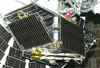 | Astrid-2 Swedish earth magnetosphere satellite. Swedish Space Corporation's second microsatellite (based on Astrid-1) was slated to perform high resolution E-field and B-filed measurements in the Earth's auroral regions. Science satellite for SSC, Sweden. Launched 1995-1998. Used Freja-C bus. |
| Earthquake Monitoring Satellite Chinese earth seismology satellite. Study 1998. Chinese scientists announced on 18 May 1998 that they were designing an earthquake early warning satellite system, including a constellation of 10 small satellites in low earth orbit. |
| Kolibor Russian earth seismology satellite. Study 1998. The Kolibor microsatellite platform of KB Arsenal was a universal development of that designed for the Predvestnik earthquake monitoring system. |
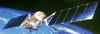 | ROCSAT Taiwanese earth sea satellite. Taiwan's ROCSAT (Republic of China Satellites) were built for Taiwan's National Space Program Office. Earth Observing satellite built by TRW for NSPO, Taiwan. Launched 1999. Used the T200A bus. |
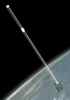 | Orsted Danish earth magnetosphere satellite. |
| Landsat 7 American earth land resources satellite. Earth Observing satellite built by Lockheed Martin for NASA, USA. Launched 1993 - 1999. Used the TIROS-N Bus bus. |
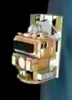 | TERRIERS American earth ionosphere satellite. Atmospheric Research satellite built by AeroAstro for NASA, USA. Launched 1999. Used HETE-Bus, spin stabilized. |
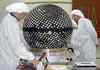 | Starshine American technology satellite. The small Starshine satellite, built by NRL, was to be observed by students as part of an educational exercise. Research (Atmospheric density) satellite operated by NASA, USA. Launched 1999 - 2001. |
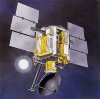 | QuikScat American earth sea satellite. One launch, 1999.06.20. Built under a NASA rapid delivery contract. Carried the SeaWinds scatterometer for remote sensing of ocean winds. Earth observing satellite built by Ball Aerospace for NASA, USA. Launched 1999. Used the BCP-2000 bus. |
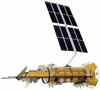 | Okean-O Ukrainian earth resources radar satellite. Ocean Observation satellite built by KB Yuzhnoye for NKAU, RKA, Russia. Launched 1999. |
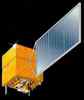 | ZY Chinese earth land resources satellite. 6 launches, 1999.10.14 (ZY-1) to 2007.09.19 (ZY-2C). From 1985 China and Brazil jointly developed a sun synchronous imaging satellite bus, the Zi Yuan-1 (Resouce-1) based on the Shi Jian 3 design. |
| DMSP Block 5D-3 American earth weather satellite.merican earth weather satellite. Military spacecraft similar in design to the civilian NOAA weather satellites. Meteorology satellite built by Lockheed Martin for US Air Force, USA. Launched 1999 - 2014. Used the TIROS-N Bus bus. |
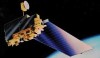 | Terra American earth land resources satellite. NASA's Terra satellite (originally known as Earth Observing System EOS AM-1) was the first spacecraft in the EOS program. |
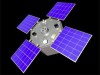 | ACRIMSAT American solar satellite. The NASA ACRIMSAT satellite was managed by JPL, and measured the integrated solar energy output from 0.2 to 2 microns. ACRIMSAT was built by Orbital Sciences. Solar observing satellite built by Orbital Sciences Corporation (OSC) for NASA, USA. Launched 1999. Used the MiniStar bus. |
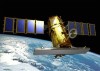 | KOMPSAT South Korean technology satellite. KOMPSAT was the first joint spacecraft development project for the South Korean aerospace agency KARI (Korea Aerospace Research Institute). Earth Observing satellite built by KARI, TRW (Bus) for KARI, Korea South. Launched 1999. Used the T200B bus. |
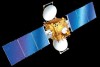 | Insat 3 Indian communications satellite bus. The multipurpose satellite design provided telecommunications, television broadcasting, meteorological and search and rescue services. Communication, Meteorology satellite built by ISRO for Insat, India. Launched 2003. Used the Insat-2/-3 Bus bus. |
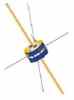 | IMAGE American solar satellite. The IMAGE spacecraft imaged remote particle populations in the magnetosphere. Research satellite built by Lockheed Martin Missiles & Space (Sunnyvale) for NASA, USA. Launched 2000. |
 | CHAMP German earth magnetosphere satellite. CHAMP was a geophysics research satellite operated by GFZ, Potsdam, to study the earth's magnetic and gravitational field. Earth Observation satellite built by Astrium for GFZ, Germany. Launched 2000. Used the Flexbus bus. |
 | Cluster 2 European earth magnetosphere satellite. |
 | SA-200 The Spectrum Astro SA-200 satellite bus provided a flexible platform for satellites launched by the Pegasus booster.he Spectrum Astro SA-200 satellite bus provided a flexible platform for satellites launched by the Pegasus booster. |
 | EO-1 American earth land resources satellite. The Earth Orbiter 1 satellite was part of NASA's New Millennium Program. Earth Observation satellite built by Swales Aerospace for NASA, USA. Launched 2000. |
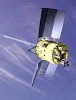 | SAC-C Argentinian earth land resources satellite. The SAC-C Satelite de Aplicaciones Cientificas C was developed by the Argentine space agency CONAE and built by the Argentine company INVAP. Scientific satellite built by INVAP for CONAE, Argentina. Launched 2000. |
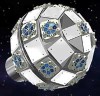 | LRE Japanese earth geodetic satellite. The 87 kg Laser Ranging Experiment was a passive mirror ball of diameter 51 cm and carried 24 glass sheets and 126 prisms on its surface. Geodesy satellite for NASDA, Japan. Launched 2001. |
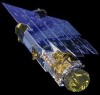 | Orbview American civilian surveillance satellite. Earth observing satellite built by Orbital Sciences Corporation (OSC) for OrbImage => GeoEye, USA. Launched 2003. Used the LEOStar bus. |
 | BIRD German earth land resources satellite. |
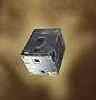 | PROBA Project for On-Board Autonomy, spearheaded by ESA and CNES, was a small satellite bus to accommodate instruments previously flown on larger spacecraft. Qinetiq Space Belgium built the satellite, designed to be compatible with the Vega, Soyuz and Falcon-1e launch vehicles. Technology satellite built by Qinetiq Space Belgium (prime); OIP Space Systems (payload) for ESA, Europe. Launched 2013. |
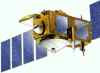 | Jason French earth sea satellite. Jason was a joint mission between CNES (the French space agency) and NASA/JPL, carrying the same type of sea surface altimeter used on NASA's Topex satellite. Altimetry, Radar satellite built by Alcatel Space for NASA, CNES, France. Launched 2001. Used the Proteus Bus bus. |
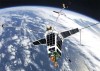 | Kompas Russian earth seismology satellite. Earth Sciences satellite built by GRTsKB Makeyev for Izmiran, Russia. Launched 2001 - 2006. |
 | Meteor-3M Russian earth weather satellite. The Meteor-3 weather satellite was to be followed in 1996 by the first of the Meteor-3M class, which was finally put into orbit in 2001. No furthussian earth weather satellite. The Meteor-3 weather satellite was to be followed in 1996 by the first of the Meteor-3M class, which was finally put into orbit in 2001. No further launches, and succeeded by the Meteor-M in 2010. Meteorology satellite built by NPP VNIIEM for Roskosmos, Russia. Launched 2001. Used SP-2 bus. |
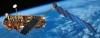 | Envisat European earth resources radar satellite. The European Space Agency's Envisat polar platform was originally envisaged as an automated polar orbiting segment of the Space Station. Earth observation satellite built by Astrium for ESA, Europe. Launched 2002. Used the PPF/SPOT Mk.2 bus. |
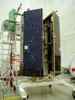 | GRACE American earth geodetic satellite. 2 launched, 2002.03.17 (GRACE 1 ) and (GRACE 2 ). The GRACE mission was to accurately map variations in the Earth's gravity field over its 5-year lifetime. Earth Science, Gravity field mapping satellite built by Astrium, Space Systems/Loral (SS/L) for NASA, DLR, Germany. Launched 2002. Used the Flexbus bus. |
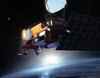 | Aqua American earth sea satellite. Aqua was also designated the EOS-PM Earth Observing System satellite, joining EOS-AM/Terra. The CERES and MODIS instruments aboard Aqua were also carried on the Terra satellite. |
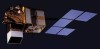 | SPOT-5A-5B French earth land resources satellite. Trench earth land resources satellite. SPOT was the French government sponsored civil Earth observation program. A single SPOT satellite provided complete coverage of the Earth every 26 days. Earth Observing satellite built by Astrium for Spot Image, France. Launched 2002. Used the SPOT Mk.3 bus. |
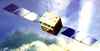 | HY-1 Chinese earth land resources satellite. Operational, launched from 2002.05.15 (Hai Yang 1). Oceanograpy satellite built by DFH Satellite Co. Ltd of CAST for CAST, China. Launched 2002 - 2007. Used CAST968B Bus. |
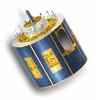 | MSG European earth weather satellite. MSG (Meteosat Second Generation 1) was a European (EUMETSAT consortium) geostationary weather satellite. Meteorology satellite built by Alcatel Space for ESA, EUMETSAT, Europe. Launched 2002 - 2015. |
| METSAT Indian earth weather satellite. One launch, 2002.09.12. METSAT was an Indian (ISRO) meteorological, geostationary satellite designed to simultaneously obtain atmospheric cloud cover, water vapor, and temperature data. |
 | Coriolis American earth sea satellite. Experimental satellite built by Spectrum Astro for USAF STP (Space Test Program), USA. Launched 2003. Used the SA-200HP bus. |
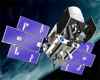 | ICESat American earth land resources satellite. One launch, 2003.01.13. Laser Altimetry Mission satellite built by Ball Aerospace for NASA, USA. Launched 2003. Used the BCP-2000 bus. |
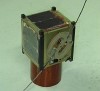 | Cubesat American low-cost nanosatellite bus. Used in dozens of launches. |
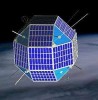 | Mimosa Czech earth atmosphere satellite. Satellite by the Czech Astronomical Institute for study of the density of the upper atmosphere using the sensitive Macek accelerometer. Atmosphere density satellite built by Space Devices Ltd. of Praha for Astronomical Insitute of the Czech Academy of Sciences (Astronomicky ustav AV CR), Czechoslovakia. Launched 2003. |
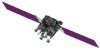 | Monitor Russian earth land resources satellite. Earth Observation satellite built by Khrunichev, Russia. Launched 2005. Used Yachta-Bus. |
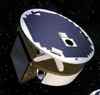 | SCISAT Canadian earth atmosphere satellite. Atmospheric science satellite built by Bristol Aerospace for CSA, Canada. Launched 2003. |
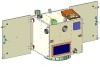 | STSat South Korean technology satellite, built by KAIST. Technology, astronomy satellite for KAIST, South Korea. Launched 2003. |
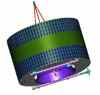 | Double Star Chinese earth magnetosphere satellite. 2 launches, 2003.12.29 (Tan Ce 1) to 2004.07.25 (Tan Ce 2). Double Star was a joint ESA - China project to supplement ESA's Cluster satellites in characterizing the earth's magnetosphere. |
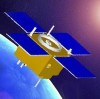 | Shiyan Chinese civilian surveillance satellite. The first 'Experiment Satellite', with a mass of 204 kg, was China's first transmission-type small satellite capable of stereo mapping. |
 | Gravity Probe-B American earth geodetic satellite. Gravity Probe B. Gravity Probe B was an experiment developed by NASA and Stanford University to test two unverified predictions of Albert Einstein's general theory of relativity. |
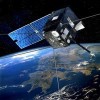 | Demeter French earth seismology satellite. Demeter studied disturbances of the ionosphere due to seismic electromagnetic effects and human activities (power lines, VLF transmitters, HF broadcasting stations). Science, Ionospheic, earth science satellite for CNES, France. Launched 2004. Used the Myriade bus. |
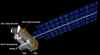 | Aura American earth atmosphere satellite. Earth Observing System (EOS) Aura was a NASA mission to study the Earth's ozone, air quality and climate. |
| Shiyan Weixing Chinese resources. One launch, 2004.11.18. Remote Sensing Technology. |
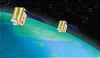 | Myriade Micro-satellite product line developed jointly by EADS Astrium and the French Space Agency CNES beginning in 1998. |
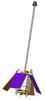 | MS-1 Ukrainian earth land resources satellite. Ukrainian microsatellite bus that could be equipped with imaging or other scientific or technical equipment. |
| USA 185 American earth magnetosphere satellite. One launch, 2005.09.23. Classified research satellite, said to carry instruments to characterize the space environment in a sun-synchronous orbit. |
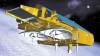 | CryoSat European earth resources radar satellite. CryoSat carried a radar altimeter to acquire accurate measurements of the thickness of floating sea ice so that annual variations could be detected. Radar Altimetry Mission satellite built by Astrium for ESA, Europe. Launched 2005 - 2010. |
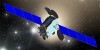 | DS2000 Japanese communications satellite bus. Mitsubishi Electric developed the DS2000 standard satellite platform based on a design originally created for the DRTS and ETS-8 platforms for NASDA. |
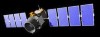 | Calipso American earth weather satellite. Earth Observation, Lidar satellite built by Alcatel Space for NASA, CNES, France. Launched 2006. Used the Proteus Bus bus. |
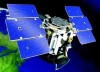 | Cloudsat American earth weather satellite. One launch, 2006.04.28. Earth Observation satellite built by Ball Aerospace for NASA, USAF STP (Space Test Program), USA. Launched 2006. Used the BCP-2000 bus. |
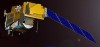 | Metop European earth weather satellite. MetOp was Europe's first polar-orbiting satellite dedicated to operational meteorology. Meteorology satellite built by Astrium for ESA, EUMETSAT, Europe. Launched 2006 - 2012. Used the PPF/SPOT Mk.3 bus. |
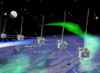 | Themis American earth magnetosphere satellite. Research satellite built by Swales Aerospace (Probe) for University of California, Berkeley (for NASA), USA. Launched 2007. |
| C/NOFS American earth seismology satellite. The C/NOFS (Communication/Navigation Outage Forecasting System) satellite flew the US Defense Department's Space Test Program P00-3 space weather forecasting mission. Built by General Dynamics (formerly Spectrum Astro) for USAF STP (Space Test Program), USA. Launched 2008. Used the SA-200B (modified) bus. |
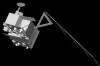 | FY-3 Chinese new generation polar orbit weather satellite. The FY-3 was equipped with new global, all-weather, multi-spectral, three-dimensional sensors. Meteorology satellite built by SAST for National Satellite Meteorological Centre, China. Launched 2008 - 2013. |
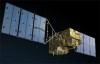 | Ibuki Japanese earth atmosphere satellite. Greenhouse Gas Observing Satellite, renamed Ibuki after launch. |
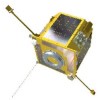 | SOHLA Japanese satellite built by the Space Oriented Higashi-osaka Leading Association, Osaka, carrying a cloud cover imager. |
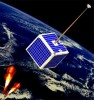 | SpriteSat Japanese science. Microsatellite stabilized by a gravity gradient boom to study atmospheric sprites, built by Tohoku University, Sendai. Earth observation satellite for Tohoku University, Japan. Launched 2009-2014. |
| Meteor-M New-generation Russian weather satellite, successor to the Meteor-3M, with new electronics and designed for launch by the Soyuz ST launch vehicle rather than the discontinued Tsiklon-3 and non-Russian Zenit-2. Meteorology satellite built by NPP VNIIEM, Russia. Launched 2009 - 2014. |
| Gaia Astrometry satellite operated by ESA, Europe. Launched 2013. |
Agency:
GMS.
1954 August 15 - .
LV Family:
Redstone.
Launch Vehicle:
Jupiter C.
- Von Braun proposes launch of US satellite. - .
Payload: Explorer A. Nation: USA.
Related Persons: von Braun.
Program: Explorer.
Class: Earth.
Type: Magnetosphere satellite. Spacecraft Bus: Explorer.
Spacecraft: Explorer A.
Von Braun report 'A Minimum Satellite Vehicle Based on Components Available from Developments of the Army Ordnance Corps' in response to June Pentagon meeting proposes $ 100,000 to launch satellite by Redstone..
1955 August 24 - .
LV Family:
Redstone.
Launch Vehicle:
Jupiter C.
1957 October 5 - .
LV Family:
Redstone.
Launch Vehicle:
Jupiter C.
- Von Braun promises first US satellite in 60 days. - .
Payload: Explorer A. Nation: USA.
Related Persons: McElroy,
Medaris,
von Braun.
Program: Explorer.
Class: Earth.
Type: Magnetosphere satellite. Spacecraft Bus: Explorer.
Spacecraft: Explorer A.
Von Braun briefs Secretary of Defence McElroy on Jupiter-C/Redstone for immediate US satellite launch. Promises launch in 60 days. Medaris says 90..
1958 February 1 - .
03:47 GMT - .
Launch Site:
Cape Canaveral.
Launch Complex:
Cape Canaveral LC26A.
LV Family:
Redstone.
Launch Vehicle:
Jupiter C.
- Explorer 1 - .
Payload: Explorer A. Mass: 5.00 kg (11.00 lb). Nation: USA.
Related Persons: von Braun.
Agency: US Army.
Program: Explorer.
Class: Earth.
Type: Magnetosphere satellite. Spacecraft Bus: Explorer.
Spacecraft: Explorer A.
Decay Date: 1970-03-31 . USAF Sat Cat: 4 . COSPAR: 1958-Alpha-1. Apogee: 1,859 km (1,155 mi). Perigee: 347 km (215 mi). Inclination: 33.20 deg. Period: 107.20 min.
Explorer I, the first U.S. earth satellite, was launched by a modified Army Ballistic Missile Agency Jupiter-C. Explorer I, developed by the Jet Propulsion Laboratory, carried the U.S.-IGY (International Geophysical Year) experiment of James A. Van Allen and resulted in the discovery of the radiation belt around the earth.
1958 March 5 - .
18:27 GMT - .
Launch Site:
Cape Canaveral.
Launch Complex:
Cape Canaveral LC26A.
LV Family:
Redstone.
Launch Vehicle:
Jupiter C.
FAILURE: Fourth Stage failed to ignite..
Failed Stage: 4.
- Explorer 2 - .
Payload: Explorer A. Mass: 5.00 kg (11.00 lb). Nation: USA.
Related Persons: von Braun.
Agency: US Army.
Program: Explorer.
Class: Earth.
Type: Magnetosphere satellite. Spacecraft Bus: Explorer.
Spacecraft: Explorer A.
Decay Date: 1958-03-05 .
1958 March 26 - .
17:38 GMT - .
Launch Site:
Cape Canaveral.
Launch Complex:
Cape Canaveral LC5.
LV Family:
Redstone.
Launch Vehicle:
Jupiter C.
- Explorer 3 - .
Payload: Explorer A. Mass: 5.00 kg (11.00 lb). Nation: USA.
Related Persons: von Braun.
Agency: US Army.
Program: Explorer.
Class: Earth.
Type: Magnetosphere satellite. Spacecraft Bus: Explorer.
Spacecraft: Explorer A.
Decay Date: 1958-06-28 . USAF Sat Cat: 6 . COSPAR: 1958-Gamma-1. Apogee: 2,799 km (1,739 mi). Perigee: 186 km (115 mi). Inclination: 33.40 deg. Period: 115.70 min. Radiation, micrometeoroid data. .
1958 April 27 - .
Launch Site:
Baikonur.
Launch Complex:
Baikonur LC1.
LV Family:
R-7.
Launch Vehicle:
Sputnik 8A91.
FAILURE: Launch vehicle disintegrated 88 seconds after liftoff..
Failed Stage: 0.
- Sputnik failure - .
Payload: D-1 s/n 1. Mass: 1,327 kg (2,925 lb). Nation: Russia.
Agency: MVS.
Class: Earth.
Type: Magnetosphere satellite. Spacecraft: Sputnik 3.
Decay Date: 1958-04-01 .
1958 May 15 - .
07:00 GMT - .
Launch Site:
Baikonur.
Launch Complex:
Baikonur LC1.
LV Family:
R-7.
Launch Vehicle:
Sputnik 8A91.
- Sputnik 3 - .
Payload: D-1 s/n 2. Mass: 1,327 kg (2,925 lb). Nation: Russia.
Agency: MVS.
Class: Earth.
Type: Magnetosphere satellite. Spacecraft: Sputnik 3.
Decay Date: 1960-04-06 . USAF Sat Cat: 8 . COSPAR: 1958-Delta-2. Apogee: 1,864 km (1,158 mi). Perigee: 217 km (134 mi). Inclination: 65.20 deg. Period: 106.00 min. Variety of scientific data. Research in the upper atmosphere and outer space.
1958 May 28 - .
03:46 GMT - .
Launch Site:
Cape Canaveral.
Launch Complex:
Cape Canaveral LC18A.
Launch Pad: LC18A.
Launch Vehicle:
Vanguard.
FAILURE: Improper third stage trajectory - unknown cause..
Failed Stage: 3.
- Vanguard 2B - .
Payload: Lyman Alpha satellite. Mass: 10 kg (22 lb). Nation: USA.
Agency: USN.
Program: Vanguard.
Class: Earth.
Type: Magnetosphere satellite. Spacecraft: Vanguard 2.
Decay Date: 1958-05-27 . Apogee: 3,500 km (2,100 mi).
1958 June 26 - .
05:00 GMT - .
Launch Site:
Cape Canaveral.
Launch Complex:
Cape Canaveral LC18A.
Launch Pad: LC18A.
Launch Vehicle:
Vanguard.
FAILURE: Premature second stage cutoff. Unknown cause..
Failed Stage: 2.
- Vanguard 2C - .
Payload: Lyman Alpha satellite. Mass: 10 kg (22 lb). Nation: USA.
Agency: USN.
Program: Vanguard.
Class: Earth.
Type: Magnetosphere satellite. Spacecraft: Vanguard 2.
Decay Date: 1958-06-26 . Apogee: 165 km (102 mi).
1958 July 26 - .
15:00 GMT - .
Launch Site:
Cape Canaveral.
Launch Complex:
Cape Canaveral LC5.
LV Family:
Redstone.
Launch Vehicle:
Jupiter C.
- Explorer 4 - .
Payload: Explorer B. Mass: 8.00 kg (17.60 lb). Nation: USA.
Related Persons: von Braun.
Agency: DARPA.
Program: Explorer.
Class: Earth.
Type: Magnetosphere satellite. Spacecraft Bus: Explorer.
Spacecraft: Explorer B.
Decay Date: 1959-10-23 . USAF Sat Cat: 9 . COSPAR: 1958-Epsilon-1. Apogee: 1,352 km (840 mi). Perigee: 257 km (159 mi). Inclination: 50.20 deg. Period: 100.90 min. Mapped project Argus radiation. .
1958 August 24 - .
06:17 GMT - .
Launch Site:
Cape Canaveral.
Launch Complex:
Cape Canaveral LC5.
LV Family:
Redstone.
Launch Vehicle:
Jupiter C.
FAILURE: First Stage collided with upper stages. Second Stage ignited in wrong direction..
Failed Stage: 2.
- Explorer 5 - .
Payload: Explorer C. Mass: 17 kg (37 lb). Nation: USA.
Related Persons: von Braun.
Agency: DARPA.
Program: Explorer.
Class: Earth.
Type: Magnetosphere satellite. Spacecraft Bus: Explorer.
Spacecraft: Explorer C.
Decay Date: 1958-08-24 .
1958 September 26 - .
15:38 GMT - .
Launch Site:
Cape Canaveral.
Launch Complex:
Cape Canaveral LC18A.
Launch Pad: LC18A.
Launch Vehicle:
Vanguard.
FAILURE: Insufficient 2nd stage thrust - unknown cause..
Failed Stage: 2.
- Vanguard 2D - .
Payload: Cloud cover satellite. Mass: 10 kg (22 lb). Nation: USA.
Agency: USN.
Program: Vanguard.
Class: Earth.
Type: Magnetosphere satellite. Spacecraft: Vanguard 2.
Decay Date: 1958-09-26 . COSPAR: F580926A. Apogee: 426 km (264 mi).
1959 February 17 - .
15:55 GMT - .
Launch Site:
Cape Canaveral.
Launch Complex:
Cape Canaveral LC18A.
Launch Pad: LC18A.
Launch Vehicle:
Vanguard.
- Vanguard 2 - .
Payload: Vanguard 2E / Cloud cover satellite. Mass: 10 kg (22 lb). Nation: USA.
Agency: NASA.
Program: Vanguard.
Class: Earth.
Type: Magnetosphere satellite. Spacecraft: Vanguard 2.
USAF Sat Cat: 11 . COSPAR: 1959-Alpha-1. Apogee: 3,049 km (1,894 mi). Perigee: 557 km (346 mi). Inclination: 32.90 deg. Period: 122.80 min. Operated for 18 days; satellite wobble degraded data..
1959 April 14 - .
02:49 GMT - .
Launch Site:
Cape Canaveral.
Launch Complex:
Cape Canaveral LC18A.
Launch Pad: LC18A.
Launch Vehicle:
Vanguard.
FAILURE: Stage 2 damaged at separation..
Failed Stage: 2.
- Vanguard 3A - .
Payload: Magnetometer satellite. Mass: 10 kg (22 lb). Nation: USA.
Agency: NASA.
Program: Vanguard.
Class: Earth.
Type: Magnetosphere satellite. Spacecraft: Vanguard 3.
Decay Date: 1959-04-13 . Apogee: 100 km (60 mi).
1959 June 22 - .
20:16 GMT - .
Launch Site:
Cape Canaveral.
Launch Complex:
Cape Canaveral LC18A.
Launch Pad: LC18A.
Launch Vehicle:
Vanguard.
FAILURE: Stage 2 propulsion malfunction..
Failed Stage: 2.
- Vanguard 3B - .
Payload: Radiation Balance satellite. Mass: 10 kg (22 lb). Nation: USA.
Agency: NASA.
Program: Vanguard.
Class: Earth.
Type: Magnetosphere satellite. Spacecraft: Vanguard 3.
Decay Date: 1959-06-22 . Apogee: 140 km (80 mi).
1959 July 16 - .
17:37 GMT - .
Launch Site:
Cape Canaveral.
Launch Complex:
Cape Canaveral LC5.
LV Family:
Jupiter.
Launch Vehicle:
Juno II.
FAILURE: Control lost after 5.5 sec. Destroyed by range safety..
Failed Stage: 1.
- Explorer S-1 - .
Payload: S-1. Mass: 41 kg (90 lb). Nation: USA.
Agency: NASA.
Program: Explorer.
Class: Earth.
Type: Magnetosphere satellite. Spacecraft: S-1.
Decay Date: 1959-07-16 .
1959 August 7 - .
14:24 GMT - .
Launch Site:
Cape Canaveral.
Launch Complex:
Cape Canaveral LC17A.
LV Family:
Thor.
Launch Vehicle:
Thor Able III.
- Explorer 6 - .
Payload: S-2. Mass: 64 kg (141 lb). Nation: USA.
Agency: NASA.
Program: Explorer.
Class: Earth.
Type: Magnetosphere satellite. Spacecraft: S-2.
Decay Date: 1961-06-30 . USAF Sat Cat: 15 . COSPAR: 1959-Delta-1. Apogee: 42,400 km (26,300 mi). Perigee: 245 km (152 mi). Inclination: 47.00 deg. Period: 765.00 min. First Earth photo; radiation data..
1959 September 18 - .
05:20 GMT - .
Launch Site:
Cape Canaveral.
Launch Complex:
Cape Canaveral LC18A.
Launch Pad: LC18A.
Launch Vehicle:
Vanguard.
- Vanguard 3 - .
Payload: Vanguard 3C / Magne-Ray satellite. Mass: 23 kg (50 lb). Nation: USA.
Agency: USN.
Program: Vanguard.
Class: Earth.
Type: Magnetosphere satellite. Spacecraft: Vanguard 3.
USAF Sat Cat: 20 . COSPAR: 1959-Eta-1. Apogee: 3,413 km (2,120 mi). Perigee: 512 km (318 mi). Inclination: 33.40 deg. Period: 126.40 min. Radiation, micrometeoroid data. Third stage failed to separate from payload. The TV-4BU burned-out third stage was left attached to the payload since the fiberglas case did not adversely affect the experiments..
1959 October 13 - .
15:30 GMT - .
Launch Site:
Cape Canaveral.
Launch Complex:
Cape Canaveral LC5.
LV Family:
Jupiter.
Launch Vehicle:
Juno II.
- Explorer 7 - .
Payload: S-1A. Mass: 42 kg (92 lb). Nation: USA.
Agency: NASA.
Program: Explorer.
Class: Earth.
Type: Magnetosphere satellite. Spacecraft: S-1.
USAF Sat Cat: 22 . COSPAR: 1959-Iota-1. Apogee: 857 km (532 mi). Perigee: 523 km (324 mi). Inclination: 50.30 deg. Period: 98.60 min. Spacecraft engaged in research and exploration of the upper atmosphere or outer space. Returned magnetic field and solar flare data..
1960 March 23 - .
13:35 GMT - .
Launch Site:
Cape Canaveral.
Launch Complex:
Cape Canaveral LC26B.
LV Family:
Jupiter.
Launch Vehicle:
Juno II.
FAILURE: Upper stage failed to ignite. Third stage failed to ignite due to loss of radio contact..
Failed Stage: 3.
- Explorer S-46 - .
Payload: S-46. Mass: 16 kg (35 lb). Nation: USA.
Agency: NASA.
Program: Explorer.
Class: Earth.
Type: Magnetosphere satellite. Spacecraft: S-46.
Decay Date: 1960-03-23 .
1960 April 1 - .
11:40 GMT - .
Launch Site:
Cape Canaveral.
Launch Complex:
Cape Canaveral LC17A.
LV Family:
Thor.
Launch Vehicle:
Thor Able II.
- Tiros 1 - .
Payload: Tiros A (A-1). Mass: 120 kg (260 lb). Nation: USA.
Agency: NASA.
Program: Tiros.
Class: Earth.
Type: Weather satellite. Spacecraft: Tiros.
USAF Sat Cat: 29 . COSPAR: 1960-Beta-2. Apogee: 696 km (432 mi). Perigee: 656 km (407 mi). Inclination: 48.40 deg. Period: 98.30 min.
A Thor/Able II booster placed NASA's Television and Infrared Observation Satellite (TIROS) weather satellite into the most accurate orbit yet achieved by any U.S. satellite. TIROS I opened a new era in meteorology by transmitting nearly 23,000 pictures of global cloud cover from 450 miles in space and providing the first glimpse of global cloud structure data. TIROS I completed 1,302 orbits before its operational life ceased on 29 June 1960. TV and Infrared Observation Satellite; returned 22952 cloud cover photos. Spacecraft engaged in practical applications and uses of space technology such as weather or communication (US Cat C).
1960 November 3 - .
05:23 GMT - .
Launch Site:
Cape Canaveral.
Launch Complex:
Cape Canaveral LC26B.
LV Family:
Jupiter.
Launch Vehicle:
Juno II.
- Explorer 8 - .
Payload: S-30. Mass: 41 kg (90 lb). Nation: USA.
Agency: NASA.
Program: Explorer.
Class: Earth.
Type: Ionosphere satellite. Spacecraft: S-30.
Decay Date: 2012-03-28 . USAF Sat Cat: 60 . COSPAR: 1960-Xi-1. Apogee: 1,331 km (827 mi). Perigee: 394 km (244 mi). Inclination: 49.90 deg. Period: 102.20 min. Ionospheric research. Spacecraft engaged in research and exploration of the upper atmosphere or outer space (US Cat B). .
1960 November 23 - .
11:13 GMT - .
Launch Site:
Cape Canaveral.
Launch Complex:
Cape Canaveral LC17A.
LV Family:
Thor.
Launch Vehicle:
Thor Delta.
- Tiros 2 - .
Payload: Tiros B (A-2). Mass: 130 kg (280 lb). Nation: USA.
Agency: NASA.
Program: Tiros.
Class: Earth.
Type: Weather satellite. Spacecraft: Tiros.
Decay Date: 2014-05-18 . USAF Sat Cat: 63 . COSPAR: 1960-Pi-1. Apogee: 610 km (370 mi). Perigee: 547 km (339 mi). Inclination: 48.50 deg. Period: 96.30 min. Spacecraft engaged in practical applications and uses of space technology such as weather or communication (US Cat C)..
1960 December 4 - .
21:14 GMT - .
Launch Site:
Wallops Island.
Launch Complex:
Wallops Island LA3.
LV Family:
Scout.
Launch Vehicle:
Scout X-1.
FAILURE: Second stage malfunction..
Failed Stage: 2.
- Explorer (9) S 56 - .
Payload: S-56. Mass: 6.00 kg (13.20 lb). Nation: USA.
Agency: NASA.
Program: Explorer.
Class: Earth.
Type: Atmosphere satellite. Spacecraft: S-56.
Decay Date: 1960-12-04 .
1961 February 16 - .
13:05 GMT - .
Launch Site:
Wallops Island.
Launch Complex:
Wallops Island LA3.
LV Family:
Scout.
Launch Vehicle:
Scout X-1.
- Explorer 9 - .
Payload: S-56A. Mass: 7.00 kg (15.40 lb). Nation: USA.
Agency: USAF.
Program: Explorer.
Class: Earth.
Type: Atmosphere satellite. Spacecraft: S-56.
Decay Date: 1964-04-09 . USAF Sat Cat: 81 . COSPAR: 1961-Delta-1. Apogee: 2,433 km (1,511 mi). Perigee: 757 km (470 mi). Inclination: 38.80 deg. Period: 118.00 min. 12 foot dia. balloon; atmospheric density studies. Spacecraft engaged in research and exploration of the upper atmosphere or outer space (US Cat B). .
1961 June 29 - .
04:22 GMT - .
Launch Site:
Cape Canaveral.
Launch Complex:
Cape Canaveral LC17B.
LV Family:
Thor.
Launch Vehicle:
Thor Ablestar.
- Injun 1 - .
Mass: 25 kg (55 lb). Nation: USA.
Agency: USN.
Class: Earth.
Type: Magnetosphere satellite. Spacecraft: Injun.
USAF Sat Cat: 117 . COSPAR: 1961-Omicron-2. Apogee: 992 km (616 mi). Perigee: 869 km (539 mi). Inclination: 66.80 deg. Period: 103.60 min. Dual launch; failed to separate from Solrad 3; still returned radiation data. Space craft engaged in investigation of spaceflight techniques and technology (US Cat A). .
1961 June 30 - .
17:09 GMT - .
Launch Site:
Wallops Island.
Launch Complex:
Wallops Island LA3.
LV Family:
Scout.
Launch Vehicle:
Scout X-1.
FAILURE: Third stage did not ignite, and the vehicle was destroyed..
Failed Stage: 3.
- Explorer (13) S 55 - .
Payload: S-55. Mass: 84 kg (185 lb). Nation: USA.
Agency: NASA.
Program: Explorer.
Class: Earth.
Type: Micrometeoroid satellite. Spacecraft: S-55.
Decay Date: 1961-06-30 . Apogee: 172 km (106 mi). Micrometeorite counter satellite (S-55)..
1961 July 12 - .
10:25 GMT - .
Launch Site:
Cape Canaveral.
Launch Complex:
Cape Canaveral LC17A.
LV Family:
Thor.
Launch Vehicle:
Thor Delta.
- Tiros 3 - .
Payload: Tiros C (A-3). Mass: 129 kg (284 lb). Nation: USA.
Agency: NASA.
Program: Tiros.
Class: Earth.
Type: Weather satellite. Spacecraft: Tiros.
USAF Sat Cat: 162 . COSPAR: 1961-Rho-1. Apogee: 790 km (490 mi). Perigee: 723 km (449 mi). Inclination: 47.90 deg. Period: 100.00 min. Spacecraft engaged in practical applications and uses of space technology such as weather or communication (US Cat C)..
1961 August 17 - .
14:29 GMT - .
Launch Site:
Cape Canaveral.
Launch Complex:
Cape Canaveral LC18A.
Launch Pad: LC18A.
LV Family:
Scout.
Launch Vehicle:
Blue Scout Jr.
- HETS Magnetosphere mission - .
Nation: USA.
Agency: USAF.
Class: Earth.
Type: Magnetosphere satellite. Apogee: 225,000 km (139,000 mi).
1961 August 25 - .
18:29 GMT - .
Launch Site:
Wallops Island.
Launch Complex:
Wallops Island LA3.
LV Family:
Scout.
Launch Vehicle:
Scout X-1.
FAILURE: Partial Failure..
Failed Stage: 4.
- Explorer 13 - .
Payload: S-55A. Mass: 86 kg (189 lb). Nation: USA.
Agency: NASA.
Program: Explorer.
Class: Earth.
Type: Micrometeoroid satellite. Spacecraft: S-55.
Decay Date: 1961-08-28 . USAF Sat Cat: 180 . COSPAR: 1961-Chi-1. Apogee: 1,164 km (723 mi). Perigee: 125 km (77 mi). Inclination: 37.70 deg. Period: 97.50 min. Useless orbit; micrometeoroid research. Partial Failure..
1962 January 24 - .
09:30 GMT - .
Launch Site:
Cape Canaveral.
Launch Complex:
Cape Canaveral LC17B.
LV Family:
Thor.
Launch Vehicle:
Thor Ablestar.
FAILURE: Failure.
Failed Stage: U.
- Lofti 2 - .
Mass: 99 kg (218 lb). Nation: USA.
Agency: USN.
Class: Earth.
Type: Magnetosphere satellite. Spacecraft: Lofti 2.
Decay Date: 1962-01-24 . Carried 5 satellites..
1962 February 8 - .
12:43 GMT - .
Launch Site:
Cape Canaveral.
Launch Complex:
Cape Canaveral LC17A.
LV Family:
Thor.
Launch Vehicle:
Thor Delta.
- Tiros 4 - .
Payload: Tiros D (A-9). Mass: 129 kg (284 lb). Nation: USA.
Agency: NASA.
Program: Tiros.
Class: Earth.
Type: Weather satellite. Spacecraft: Tiros.
USAF Sat Cat: 226 . COSPAR: 1962-Beta-1. Apogee: 812 km (504 mi). Perigee: 693 km (430 mi). Inclination: 48.30 deg. Period: 99.90 min. Returned 32593 cloud cover photos. Spacecraft engaged in practical applications and uses of space technology such as weather or communication (US Cat C)..
1962 April 26 - .
18:00 GMT - .
Launch Site:
Cape Canaveral.
Launch Complex:
Cape Canaveral LC17A.
LV Family:
Thor.
Launch Vehicle:
Thor Delta.
- Ariel 1 - .
Payload: UK 1 (S-51). Mass: 60 kg (132 lb). Nation: UK.
Agency: NASA.
Class: Earth.
Type: Magnetosphere satellite. Spacecraft: Ariel.
Decay Date: 1976-03-31 . USAF Sat Cat: 285 . COSPAR: 1962-Omicron-1. Apogee: 1,203 km (747 mi). Perigee: 398 km (247 mi). Inclination: 53.80 deg. Period: 100.80 min. Ionospheric studies; returned X-ray, ionospheric, cosmic ray data. Spacecraft engaged in research and exploration of the upper atmosphere or outer space (US Cat B). .
1962 May 10 - .
12:07 GMT - .
Launch Site:
Cape Canaveral.
Launch Complex:
Cape Canaveral LC17B.
LV Family:
Thor.
Launch Vehicle:
Thor Ablestar.
FAILURE: Able-Star failed to ignite..
Failed Stage: U.
- Anna 1A - .
Payload: Anna 1A. Mass: 160 kg (350 lb). Nation: USA.
Agency: US Army.
Class: Earth.
Type: Geodetic satellite. Spacecraft: Anna.
Decay Date: 1962-05-10 . USN, USAF, US Army, NASA joint program..
1962 May 24 - .
Launch Site:
Vandenberg.
Launch Complex:
Vandenberg SLC5.
LV Family:
Scout.
Launch Vehicle:
Scout X-2M.
FAILURE: Failure..
Failed Stage: U.
- P 35-1 - .
Payload: FTV 3501. Nation: USA.
Agency: USAF AFSC.
Program: DMSP.
Class: Earth.
Type: Weather satellite. Spacecraft: Program 35.
Decay Date: 1962-05-24 . Military weather satellite to provide targetting information for reconnaisance satellites..
1962 June 19 - .
12:19 GMT - .
Launch Site:
Cape Canaveral.
Launch Complex:
Cape Canaveral LC17A.
LV Family:
Thor.
Launch Vehicle:
Thor Delta.
- Tiros 5 - .
Payload: Tiros E (A-50). Mass: 129 kg (284 lb). Nation: USA.
Agency: NASA.
Program: Tiros.
Class: Earth.
Type: Weather satellite. Spacecraft: Tiros.
USAF Sat Cat: 309 . COSPAR: 1962-A-Alpha-1. Apogee: 880 km (540 mi). Perigee: 580 km (360 mi). Inclination: 58.10 deg. Period: 99.40 min. Returned 58226 cloud cover images. Spacecraft engaged in practical applications and uses of space technology such as weather or communication (US Cat C)..
1962 August 18 - .
15:00 GMT - .
Launch Site:
Kapustin Yar.
Launch Complex:
Kapustin Yar Mayak-2.
LV Family:
R-12.
Launch Vehicle:
Kosmos 63S1.
- Cosmos 8 - .
Payload: DS-K-8 s/n 1. Mass: 337 kg (742 lb). Nation: Russia.
Agency: RVSN.
Program: DS.
Class: Earth.
Type: Micrometeoroid satellite. Spacecraft Bus: DS.
Spacecraft: DS-K-8.
Completed Operations Date: 1962-08-23 . Decay Date: 1963-08-17 . USAF Sat Cat: 367 . COSPAR: 1962-A-Xi-1. Apogee: 598 km (371 mi). Perigee: 244 km (151 mi). Inclination: 49.00 deg. Period: 92.90 min. Detected meteoroid flux in near-earth space and carried unspecified military research equipment..
1962 August 23 - .
11:44 GMT - .
Launch Site:
Vandenberg.
Launch Complex:
Vandenberg SLC5.
LV Family:
Scout.
Launch Vehicle:
Scout X-2M.
- P 35-2 - .
Mass: 91 kg (200 lb). Nation: USA.
Agency: USAF.
Program: DMSP.
Class: Earth.
Type: Weather satellite. Spacecraft: Program 35.
USAF Sat Cat: 369 . COSPAR: 1962-A-Omicron-1. Apogee: 752 km (467 mi). Perigee: 578 km (359 mi). Inclination: 98.50 deg. Period: 98.10 min. Military weather satellite to provide targetting information for reconnaisance satellites..
1962 September 17 - .
23:46 GMT - .
Launch Site:
Vandenberg.
Launch Complex:
Vandenberg SLC1W.
LV Family:
Thor.
Launch Vehicle:
Thor Agena B.
- TRS - .
Payload: ERS 2. Mass: 45 kg (99 lb). Nation: USA.
Agency: USAF.
Class: Earth.
Type: Magnetosphere satellite. Spacecraft: ERS.
COSPAR: 1962-A-Chi-xx.
1962 September 18 - .
08:53 GMT - .
Launch Site:
Cape Canaveral.
Launch Complex:
Cape Canaveral LC17A.
LV Family:
Thor.
Launch Vehicle:
Thor Delta.
- Tiros 6 - .
Payload: Tiros F2 (A-51). Mass: 127 kg (279 lb). Nation: USA.
Agency: NASA.
Program: Tiros.
Class: Earth.
Type: Weather satellite. Spacecraft: Tiros.
USAF Sat Cat: 397 . COSPAR: 1962-A-Psi-1. Apogee: 654 km (406 mi). Perigee: 631 km (392 mi). Inclination: 58.30 deg. Period: 97.60 min. Returned 66674 cloud cover images. Spacecraft engaged in practical applications and uses of space technology such as weather or communication (US Cat C)..
1962 September 25 - .
Launch Vehicle:
N1.
1962 September 29 - .
06:05 GMT - .
Launch Site:
Vandenberg.
Launch Complex:
Vandenberg SLC2E.
LV Family:
Thor.
Launch Vehicle:
Thor Agena B.
- Alouette 1 - .
Payload: Alouette 1 / TAVE. Mass: 145 kg (319 lb). Nation: Canada.
Agency: Clemson.
Class: Earth.
Type: Magnetosphere satellite. Spacecraft: Alouette.
USAF Sat Cat: 424 . COSPAR: 1962-B-Alpha-1. Apogee: 1,022 km (635 mi). Perigee: 987 km (613 mi). Inclination: 80.50 deg. Period: 105.20 min. Ionospheric research. Spacecraft engaged in research and exploration of the upper atmosphere or outer space (US Cat B). .
1962 October 26 - .
16:14 GMT - .
Launch Site:
Vandenberg.
Launch Complex:
Vandenberg SLC2W.
LV Family:
Thor.
Launch Vehicle:
Thor Agena D.
- Starfish Radiation 1 - .
Payload: Star-Rad 1 / Agena D 1401. Mass: 1,100 kg (2,400 lb). Nation: USA.
Agency: USAF.
Class: Earth.
Type: Magnetosphere satellite. Spacecraft: Starfish.
Decay Date: 1967-10-05 . USAF Sat Cat: 444 . COSPAR: 1962-B-Kappa-1. Apogee: 5,458 km (3,391 mi). Perigee: 197 km (122 mi). Inclination: 71.40 deg. Period: 146.50 min. Artificial radiation data..
1962 October 31 - .
08:03 GMT - .
Launch Site:
Cape Canaveral.
Launch Complex:
Cape Canaveral LC17A.
LV Family:
Thor.
Launch Vehicle:
Thor Ablestar.
- Anna 1B - .
Mass: 161 kg (354 lb). Nation: USA.
Agency: USN.
Class: Earth.
Type: Geodetic satellite. Spacecraft: Anna.
USAF Sat Cat: 446 . COSPAR: 1962-B-Mu-1. Apogee: 1,181 km (733 mi). Perigee: 1,075 km (667 mi). Inclination: 50.10 deg. Period: 107.90 min. Spacecraft engaged in research and exploration of the upper atmosphere or outer space (US Cat B). .
1962 November 11 - .
20:17 GMT - .
Launch Site:
Vandenberg.
Launch Complex:
Vandenberg SLC3W.
LV Family:
Atlas.
Launch Vehicle:
Atlas Agena B.
- TRS 1 - .
Payload: ERS 1. Mass: 45 kg (99 lb). Nation: USA.
Agency: USAF AFSC.
Class: Earth.
Type: Magnetosphere satellite. Spacecraft: ERS.
COSPAR: 1962-B-Pi-xx.
1962 December 13 - .
04:07 GMT - .
Launch Site:
Vandenberg.
Launch Complex:
Vandenberg SLC2E.
LV Family:
Thor.
Launch Vehicle:
Thor Agena D.
- Injun 3 - .
Mass: 52 kg (114 lb). Nation: USA.
Agency: USAF,
USN.
Class: Earth.
Type: Magnetosphere satellite. Spacecraft: Injun.
Decay Date: 1968-08-25 . USAF Sat Cat: 504 . COSPAR: 1962-B-Tau-2. Apogee: 2,406 km (1,495 mi). Perigee: 240 km (140 mi). Inclination: 70.30 deg. Period: 112.10 min. Radiation decay data. Space craft engaged in investigation of spaceflight techniques and technology (US Cat A). .
1962 December 16 - .
14:33 GMT - .
Launch Site:
Wallops Island.
Launch Complex:
Wallops Island LA3.
LV Family:
Scout.
Launch Vehicle:
Scout X-3.
- Explorer 16 - .
Payload: S-55B. Mass: 100 kg (220 lb). Nation: USA.
Agency: NASA.
Program: Explorer.
Class: Earth.
Type: Micrometeoroid satellite. Spacecraft: S-55.
USAF Sat Cat: 506 . COSPAR: 1962-B-Chi-1. Apogee: 1,159 km (720 mi). Perigee: 744 km (462 mi). Inclination: 52.00 deg. Period: 104.10 min. Micrometeoroid data. Spacecraft engaged in research and exploration of the upper atmosphere or outer space (US Cat B). .
1963 February 19 - .
16:33 GMT - .
Launch Site:
Vandenberg.
Launch Complex:
Vandenberg SLC5.
LV Family:
Scout.
Launch Vehicle:
Scout X-3M.
- P 35-3 - .
Mass: 40 kg (88 lb). Nation: USA.
Agency: USAF.
Program: DMSP.
Class: Earth.
Type: Weather satellite. Spacecraft: Program 35.
Decay Date: 1979-12-26 . USAF Sat Cat: 533 . COSPAR: 1963-005A. Apogee: 810 km (500 mi). Perigee: 488 km (303 mi). Inclination: 100.50 deg. Period: 97.80 min. Military weather satellite to provide targetting information for reconnaisance satellites..
1963 April 3 - .
02:00 GMT - .
Launch Site:
Cape Canaveral.
Launch Complex:
Cape Canaveral LC17A.
LV Family:
Thor.
Launch Vehicle:
Thor Delta B.
- Explorer 17 - .
Payload: AE A (S-6). Mass: 185 kg (407 lb). Nation: USA.
Agency: NASA Greenbelt.
Program: Explorer.
Class: Earth.
Type: Atmosphere satellite. Spacecraft: AE.
Decay Date: 1966-11-24 . USAF Sat Cat: 564 . COSPAR: 1963-009A. Apogee: 891 km (553 mi). Perigee: 254 km (157 mi). Inclination: 57.60 deg. Period: 96.10 min. Atmospheric research. Spacecraft engaged in research and exploration of the upper atmosphere or outer space (US Cat B). .
1963 April 26 - .
Launch Site:
Vandenberg.
Launch Complex:
Vandenberg SLC5.
LV Family:
Scout.
Launch Vehicle:
Scout X-2M.
FAILURE: Failure..
Failed Stage: U.
- P 35-4 - .
Payload: OPS 1298. Nation: USA.
Agency: USAF.
Program: DMSP.
Class: Earth.
Type: Weather satellite. Spacecraft: Program 35.
Decay Date: 1963-04-26 . Military weather satellite to provide targetting information for reconnaisance satellites..
1963 June 19 - .
09:50 GMT - .
Launch Site:
Cape Canaveral.
Launch Complex:
Cape Canaveral LC17B.
LV Family:
Thor.
Launch Vehicle:
Thor Delta B.
- Tiros 7 - .
Payload: Tiros G (A-52). Mass: 135 kg (297 lb). Nation: USA.
Agency: NASA Greenbelt.
Program: Tiros.
Class: Earth.
Type: Weather satellite. Spacecraft: Tiros.
Decay Date: 1994-06-03 . USAF Sat Cat: 604 . COSPAR: 1963-024A. Apogee: 349 km (216 mi). Perigee: 338 km (210 mi). Inclination: 58.20 deg. Period: 91.40 min. Returned over 150000 cloud cover images. Spacecraft engaged in practical applications and uses of space technology such as weather or communication (US Cat C)..
1963 June 28 - .
21:19 GMT - .
Launch Site:
Wallops Island.
Launch Complex:
Wallops Island LA3.
LV Family:
Scout.
Launch Vehicle:
Scout X-4.
- GRS - .
Payload: CRL 1. Mass: 99 kg (218 lb). Nation: USA.
Agency: USAF AFC.
Class: Earth.
Type: Magnetosphere satellite. Spacecraft: GRS.
Decay Date: 1983-12-14 . USAF Sat Cat: 612 . COSPAR: 1963-026A. Apogee: 1,306 km (811 mi). Perigee: 413 km (256 mi). Inclination: 49.70 deg. Period: 102.10 min. Geophysical Research Satellite; space gas data. Space craft engaged in investigation of spaceflight techniques and technology (US Cat A). .
1963 July 19 - .
03:51 GMT - .
Launch Site:
Vandenberg.
Launch Complex:
Vandenberg SLC3E.
LV Family:
Atlas.
Launch Vehicle:
Atlas Agena B.
- TRS 10 - .
Payload: ERS 10. Mass: 45 kg (99 lb). Nation: USA.
Agency: USAF AFSC.
Class: Earth.
Type: Magnetosphere satellite. Spacecraft: ERS.
COSPAR: 1963-030xx.
1963 September 27 - .
11:17 GMT - .
Launch Site:
Vandenberg.
Launch Complex:
Vandenberg SLC5.
LV Family:
Scout.
Launch Vehicle:
Scout X-2B.
FAILURE: Failure..
Failed Stage: U.
- P 35-5 - .
Payload: OPS 1610. Mass: 40 kg (88 lb). Nation: USA.
Agency: USAF.
Program: DMSP.
Class: Earth.
Type: Weather satellite. Spacecraft: Program 35.
Decay Date: 1963-09-27 . Military weather satellite to provide targetting information for reconnaisance satellites..
1963 September 28 - .
20:22 GMT - .
Launch Site:
Vandenberg.
Launch Complex:
Vandenberg SLC2E.
LV Family:
Thor.
Launch Vehicle:
Thor Ablestar.
- Transit 5E-1 - .
Payload: APL SN 39. Mass: 61 kg (134 lb). Nation: USA.
Agency: USN.
Program: Transit.
Class: Earth.
Type: Magnetosphere satellite. Spacecraft: Transit.
USAF Sat Cat: 671 . COSPAR: 1963-038C. Apogee: 1,123 km (697 mi). Perigee: 1,065 km (661 mi). Inclination: 90.10 deg. Period: 107.10 min.
The first Thor/Ablestar launch from Vandenberg carried a Navy payload that became the first satellite to be operated completely with nuclear power. A SNAP-9A satellite nuclear power supply, built by the Martin Company and the Atomic Energy Commission, was used to power the satellite. The missions of Satellite 1963-038C were to measure omnidirectional flux of protons and electrons at various energy levels, radiation effects on transistors, and the effectiveness of thermal coatings. The satellite was launched together with a classified Department of Defense spacecraft on September 28, 1963. Its planned orbit was apogee 1120 kilometres, perigee 1070 kilometres, inclination 88.9 degrees. The satellite weighed 62 kg; its body was in the shape of an 0.46 m x 0.25 m octagonal prism. It was powered by four solar blades and transmited on 136, 162, and 324 mcs. The spacecraft was built for the Bureau of Naval Weapons. In 1967 it was still sending usable data from all systems.
1963 November 27 - .
02:30 GMT - .
Launch Site:
Cape Canaveral.
Launch Complex:
Cape Canaveral LC17B.
LV Family:
Thor.
Launch Vehicle:
Thor Delta C.
- Explorer 18 - .
Payload: IMP A. Mass: 62 kg (136 lb). Nation: USA.
Agency: NASA Greenbelt.
Program: Explorer.
Class: Earth.
Type: Magnetosphere satellite. Spacecraft: IMP.
Decay Date: 1965-11-30 . USAF Sat Cat: 693 . COSPAR: 1963-046A. Apogee: 197,616 km (122,792 mi). Perigee: 192 km (119 mi). Inclination: 33.30 deg. Period: 5,666.20 min. Radiation data; Interplanetary Monitoring Program. Spacecraft engaged in research and exploration of the upper atmosphere or outer space (US Cat B). .
1963 December 5 - .
21:51 GMT - .
Launch Site:
Vandenberg.
Launch Complex:
Vandenberg SLC2E.
LV Family:
Thor.
Launch Vehicle:
Thor Ablestar.
- Transit 5E-3 - .
Mass: 53 kg (116 lb). Nation: USA.
Agency: USN.
Program: Transit.
Class: Earth.
Type: Magnetosphere satellite. Spacecraft: Transit.
USAF Sat Cat: 705 . COSPAR: 1963-049C. Apogee: 1,108 km (688 mi). Perigee: 1,060 km (650 mi). Inclination: 90.10 deg. Period: 106.90 min. Radiation monitoring..
1963 December 19 - .
18:49 GMT - .
Launch Site:
Vandenberg.
Launch Complex:
Vandenberg SLC5.
LV Family:
Scout.
Launch Vehicle:
Scout X-4.
1963 December 21 - .
09:30 GMT - .
Launch Site:
Cape Canaveral.
Launch Complex:
Cape Canaveral LC17B.
LV Family:
Thor.
Launch Vehicle:
Thor Delta B.
- Tiros 8 - .
Payload: Tiros H (A-53). Mass: 119 kg (262 lb). Nation: USA.
Agency: NASA Greenbelt.
Program: Tiros.
Class: Earth.
Type: Weather satellite. Spacecraft: Tiros.
USAF Sat Cat: 716 . COSPAR: 1963-054A. Apogee: 705 km (438 mi). Perigee: 667 km (414 mi). Inclination: 58.50 deg. Period: 98.50 min. Returned more than 100,000 cloud cover images. Spacecraft engaged in practical applications and uses of space technology such as weather or communication (US Cat C)..
1964 January 11 - .
20:07 GMT - .
Launch Site:
Vandenberg.
Launch Complex:
Vandenberg SLC1E.
LV Family:
Thor.
Launch Vehicle:
Thor SLV-2A Agena D.
- SECOR 1 - .
Payload: EGRS 1. Mass: 18 kg (39 lb). Nation: USA.
Agency: US Army.
Class: Earth.
Type: Geodetic satellite. Spacecraft: SECOR.
USAF Sat Cat: 729 . COSPAR: 1964-001C. Apogee: 922 km (572 mi). Perigee: 904 km (561 mi). Inclination: 69.90 deg. Period: 103.30 min. Located Pacific islands. Space craft engaged in investigation of spaceflight techniques and technology (US Cat A). .
1964 January 30 - .
09:45 GMT - .
Launch Site:
Baikonur.
Launch Complex:
Baikonur LC1.
LV Family:
R-7.
Launch Vehicle:
Vostok 8K72K.
- Elektron 1 - .
Payload: 2D s/n 1. Mass: 329 kg (725 lb). Nation: Russia.
Agency: Korolev bureau.
Program: Elektron.
Class: Earth.
Type: Magnetosphere satellite. Spacecraft: Elektron-A.
USAF Sat Cat: 746 . COSPAR: 1964-006A. Apogee: 6,439 km (4,001 mi). Perigee: 413 km (256 mi). Inclination: 60.90 deg. Period: 161.00 min.
Studied inner Van Allen belt. Electron I and II launched by a single carrier rocket. Electron I: simultaneous study of the Earth's inner and outer radiation belts, cosmic rays and upper atmosphere. Electron II: simultaneous study of the Earth's inner and outer radiation belts, cosmic rays and outer space.
- Elektron 2 - .
Payload: 2D s/n 2. Mass: 444 kg (978 lb). Nation: Russia.
Agency: Korolev bureau.
Program: Elektron.
Class: Earth.
Type: Magnetosphere satellite. Spacecraft: Elektron-B.
Decay Date: 1997-04-22 . USAF Sat Cat: 748 . COSPAR: 1964-006B. Apogee: 62,811 km (39,028 mi). Perigee: 5,611 km (3,486 mi). Inclination: 60.20 deg. Period: 1,356.40 min.
Studied outer Van Allen belt. Electron I and II launched by a single carrier rocket. Electron I: simultaneous study of the Earth's inner and outer radiation belts, cosmic rays and upper atmosphere. Electron II: simultaneous study of the Earth's inner and outer radiation belts, cosmic rays and outer space.
1964 March 19 - .
11:13 GMT - .
Launch Site:
Cape Canaveral.
Launch Complex:
Cape Canaveral LC17A.
LV Family:
Thor.
Launch Vehicle:
Thor Delta B.
FAILURE: Insufficient third stage thrust..
Failed Stage: 3.
- Explorer (20) - .
Payload: Beacon Explorer A. Mass: 54 kg (119 lb). Nation: USA.
Agency: NASA.
Program: Explorer.
Class: Earth.
Type: Magnetosphere satellite. Spacecraft: BE.
Decay Date: 1964-03-19 . Also known as Explorer S-66..
1964 March 27 - .
17:25 GMT - .
Launch Site:
Wallops Island.
Launch Complex:
Wallops Island LA3.
LV Family:
Scout.
Launch Vehicle:
Scout X-3.
- Ariel 2 - .
Payload: UK 2 (UK-C). Mass: 68 kg (149 lb). Nation: UK.
Agency: DSIR.
Class: Earth.
Type: Magnetosphere satellite. Spacecraft: Ariel.
Decay Date: 1967-11-18 . USAF Sat Cat: 771 . COSPAR: 1964-015A. Apogee: 1,349 km (838 mi). Perigee: 287 km (178 mi). Inclination: 51.70 deg. Period: 101.30 min. Spacecraft engaged in research and exploration of the upper atmosphere or outer space (US Cat B). .
1964 April 21 - .
18:50 GMT - .
Launch Site:
Vandenberg.
Launch Complex:
Vandenberg SLC2E.
LV Family:
Thor.
Launch Vehicle:
Thor Ablestar.
FAILURE: Failure.
- Transit 5E-4 - .
Mass: 55 kg (121 lb). Nation: USA.
Agency: USN.
Program: Transit.
Class: Earth.
Type: Magnetosphere satellite. Spacecraft: Transit.
COSPAR: F640421B. Radiation monitoring..
1964 June 25 - .
01:40 GMT - .
Launch Site:
Vandenberg.
Launch Complex:
Vandenberg SLC5.
LV Family:
Scout.
Launch Vehicle:
Scout X-4.
FAILURE: Second stage exploded..
Failed Stage: 2.
- ESRS - .
Payload: CRL 2. Mass: 79 kg (174 lb). Nation: USA.
Agency: USAF.
Class: Earth.
Type: Magnetosphere satellite. Spacecraft: ESRS.
Decay Date: 1964-06-25 . Environmental Sciences Research Satellite..
1964 July 10 - .
21:51 GMT - .
Launch Site:
Baikonur.
Launch Complex:
Baikonur LC1.
LV Family:
R-7.
Launch Vehicle:
Vostok 8K72K.
- Elektron 3 - .
Payload: 2D s/n 3. Mass: 350 kg (770 lb). Nation: Russia.
Agency: Korolev bureau.
Program: Elektron.
Class: Earth.
Type: Magnetosphere satellite. Spacecraft: Elektron-A.
USAF Sat Cat: 829 . COSPAR: 1964-038A. Apogee: 6,302 km (3,915 mi). Perigee: 408 km (253 mi). Inclination: 60.90 deg. Period: 159.30 min. Studied inner Van Allen belt. Electron 3 and 4 launched by a single carrier rocket. Simultaneous study of the inner and outer radiation belts of the earth, cosmic rays and the upper atmosphere. .
- Elektron 4 - .
Payload: 2D s/n 4. Mass: 444 kg (978 lb). Nation: Russia.
Agency: Korolev bureau.
Program: Elektron.
Class: Earth.
Type: Magnetosphere satellite. Spacecraft: Elektron-B.
Decay Date: 1983-10-12 . USAF Sat Cat: 830 . COSPAR: 1964-038B. Apogee: 66,269 km (41,177 mi). Perigee: 447 km (277 mi). Inclination: 60.80 deg. Period: 1,313.80 min. Studied outer Van Allen belt. Electron 3 and 4 launched by a single carrier rocket. Simultaneous study of the inner and outer radiation belts of the earth, cosmic rays and the upper atmosphere. .
1964 August 25 - .
13:43 GMT - .
Launch Site:
Vandenberg.
Launch Complex:
Vandenberg SLC5.
LV Family:
Scout.
Launch Vehicle:
Scout X-4.
- Explorer 20 - .
Payload: IE A (S-48 Ionosphere Explorer). Mass: 44 kg (97 lb). Nation: USA.
Agency: NASA Greenbelt.
Program: Explorer.
Class: Earth.
Type: Ionosphere satellite. Spacecraft: IE.
USAF Sat Cat: 870 . COSPAR: 1964-051A. Apogee: 999 km (620 mi). Perigee: 857 km (532 mi). Inclination: 79.90 deg. Period: 103.60 min. Ionospheric research. Spacecraft engaged in research and exploration of the upper atmosphere or outer space (US Cat B)..
1964 August 28 - .
07:56 GMT - .
Launch Site:
Vandenberg.
Launch Complex:
Vandenberg SLC2E.
LV Family:
Thor.
Launch Vehicle:
Thor SLV-2 Agena B.
FAILURE: Agena-B cut off too early. Partial Failure..
Failed Stage: U.
- Nimbus 1 - .
Payload: Nimbus A. Mass: 376 kg (828 lb). Nation: USA.
Agency: NASA Greenbelt.
Class: Earth.
Type: Weather satellite. Spacecraft: Nimbus.
Decay Date: 1974-05-16 . USAF Sat Cat: 872 . COSPAR: 1964-052A. Apogee: 937 km (582 mi). Perigee: 429 km (266 mi). Inclination: 98.70 deg. Period: 98.40 min.
An Air Force Thor/Agena B was launched from Vandenberg and placed NASA's first Nimbus meteorological satellite into orbit. Returned 27,000 cloud cover images. The spacecraft carried an advanced vidicon camera system for recording and storing remote cloudcover pictures, an automatic picture transmission camera for providing real-time cloud cover pictures, and a high-resolution infrared radiometer to complement the daytime TV coverage and to measure nighttime radiative temperatures of cloud tops and surface terrain. A short second-stage burn resulted in an unplanned eccentric orbit. Otherwise, the spacecraft and its experiments operated successfully until September 22, 1964. The solar paddles became locked in position, resulting in inadequate electrical power to continue operations.
1964 August 28 - .
16:19 GMT - .
Launch Site:
Baikonur.
Launch Complex:
Baikonur LC31.
LV Family:
R-7.
Launch Vehicle:
Vostok 8A92M.
- Cosmos 44 - .
Payload: Meteor no. 1. Mass: 4,730 kg (10,420 lb). Nation: Russia.
Agency: Korolev bureau.
Class: Earth.
Type: Weather satellite. Spacecraft: Meteor.
USAF Sat Cat: 876 . COSPAR: 1964-053A. Apogee: 778 km (483 mi). Perigee: 599 km (372 mi). Inclination: 65.10 deg. Period: 98.50 min. Investigation of the upper atmosphere and outer space. .
1964 September 5 - .
01:23 GMT - .
Launch Site:
Cape Canaveral.
Launch Complex:
Cape Canaveral LC12.
LV Family:
Atlas.
Launch Vehicle:
Atlas Agena B.
- OGO 1 - .
Payload: OGO A. Mass: 487 kg (1,073 lb). Nation: USA.
Agency: NASA Greenbelt.
Class: Earth.
Type: Magnetosphere satellite. Spacecraft: OGO.
Decay Date: 1980-08-10 . USAF Sat Cat: 879 . COSPAR: 1964-054A. Apogee: 112,657 km (70,001 mi). Perigee: 36,262 km (22,532 mi). Inclination: 88.92 deg. Period: 3,812.21 min.
Two experiment booms failed to properly deploy, with one of the booms obscuring a horizon scanner's view of earth. As a result, the spacecraft attitude could not be earth oriented and OGO 1 remained spin stabilized at 5 rpm. Nevertheless, data from all 20 experiments on board was received, although at a 'less than expected capacity' from some of them. Twelve of the experiemnts were particle studies and two were magnetic field studies. In addition, there was one experiment for each of the following types of studies: interplanetary dust, VLF, Lyman-alpha, Gegenschein, atmospheric mass, and radio astronomy. During September 1964, acceptable data were received over 70% of the orbital path. By June 1969, data acquisition was limited to 10% of the orbital path. Spacecraft operation was restricted to Spring and Fall due to power supply limitations. There were 11 such 3-month periods prior to the spacecraft being put into stand-by mode on 25 November 1969. By April 1970 the spacecraft perigee had increased to 46,000 km and the inclination had increased to 58.8 deg. All support was terminated November 1, 1971.
1964 October 4 - .
03:45 GMT - .
Launch Site:
Cape Canaveral.
Launch Complex:
Cape Canaveral LC17A.
LV Family:
Thor.
Launch Vehicle:
Thor Delta C.
- Explorer 21 - .
Payload: IMP B. Mass: 62 kg (136 lb). Nation: USA.
Agency: NASA Greenbelt.
Program: Explorer.
Class: Earth.
Type: Magnetosphere satellite. Spacecraft: IMP.
Decay Date: 1965-12-31 . USAF Sat Cat: 889 . COSPAR: 1964-060A. Apogee: 95,590 km (59,390 mi). Perigee: 191 km (118 mi). Inclination: 33.50 deg. Period: 2,097.00 min. Lower than planned orbit. Spacecraft engaged in research and exploration of the upper atmosphere or outer space (US Cat B). .
1964 October 10 - .
03:00 GMT - .
Launch Site:
Vandenberg.
Launch Complex:
Vandenberg SLC5.
LV Family:
Scout.
Launch Vehicle:
Scout X-4.
- Explorer 22 - .
Payload: Beacon Explorer B. Mass: 52 kg (114 lb). Nation: USA.
Agency: NASA Greenbelt.
Program: Explorer.
Class: Earth.
Type: Ionosphere satellite. Spacecraft: Beacon.
USAF Sat Cat: 899 . COSPAR: 1964-064A. Apogee: 1,053 km (654 mi). Perigee: 872 km (541 mi). Inclination: 79.70 deg. Period: 104.30 min. Ionospheric and geodetic data. Spacecraft engaged in research and exploration of the upper atmosphere or outer space..
1964 November 6 - .
12:02 GMT - .
Launch Site:
Wallops Island.
Launch Complex:
Wallops Island LA3.
LV Family:
Scout.
Launch Vehicle:
Scout X-4.
- Explorer 23 - .
Payload: S-55C. Mass: 134 kg (295 lb). Nation: USA.
Agency: NASA Langley.
Program: Explorer.
Class: Earth.
Type: Micrometeoroid satellite. Spacecraft: S-55.
Decay Date: 1983-06-29 . USAF Sat Cat: 924 . COSPAR: 1964-074A. Apogee: 980 km (600 mi). Perigee: 463 km (287 mi). Inclination: 51.90 deg. Period: 99.20 min. Micrometeoroid data. Spacecraft engaged in research and exploration of the upper atmosphere or outer space (US Cat B). .
1964 November 21 - .
17:09 GMT - .
Launch Site:
Vandenberg.
Launch Complex:
Vandenberg SLC5.
LV Family:
Scout.
Launch Vehicle:
Scout X-4.
- Explorer 24 - .
Payload: ADE B. Mass: 9.00 kg (19.80 lb). Nation: USA.
Agency: NASA Langley.
Program: Explorer.
Class: Earth.
Type: Atmosphere satellite. Spacecraft: ADE.
Decay Date: 1968-10-18 . USAF Sat Cat: 931 . COSPAR: 1964-076A. Apogee: 2,498 km (1,552 mi). Perigee: 530 km (320 mi). Inclination: 81.40 deg. Period: 116.30 min. 12 foot dia. balloon; atmospheric density studies. Spacecraft engaged in research and exploration of the upper atmosphere or outer space (US Cat B). .
- Explorer 25 - .
Payload: Injun 4. Mass: 40 kg (88 lb). Nation: USA.
Agency: NASA Langley.
Program: Explorer.
Class: Earth.
Type: Magnetosphere satellite. Spacecraft: Injun.
USAF Sat Cat: 932 . COSPAR: 1964-076B. Apogee: 2,319 km (1,440 mi). Perigee: 526 km (326 mi). Inclination: 81.30 deg. Period: 114.30 min. Radiation data. Spacecraft engaged in research and exploration of the upper atmosphere or outer space (US Cat B). .
1964 December 13 - .
00:08 GMT - .
Launch Site:
Vandenberg.
Launch Complex:
Vandenberg SLC2W.
LV Family:
Thor.
Launch Vehicle:
Thor Ablestar.
- Transit 5E-5 - .
Payload: APL SN 43 / OPS 6582. Mass: 78 kg (171 lb). Nation: USA.
Agency: USN.
Program: Transit.
Class: Earth.
Type: Magnetosphere satellite. Spacecraft: Transit.
USAF Sat Cat: 959 . COSPAR: 1964-083C. Apogee: 1,064 km (661 mi). Perigee: 1,007 km (625 mi). Inclination: 89.80 deg. Period: 105.90 min. Celestial UV, magnetic field data..
1964 December 15 - .
20:20 GMT - .
Launch Site:
Wallops Island.
Launch Complex:
Wallops Island LA3A.
LV Family:
Scout.
Launch Vehicle:
Scout X-4.
- San Marco 1 - .
Mass: 254 kg (559 lb). Nation: Italy.
Agency: CRS.
Class: Earth.
Type: Atmosphere satellite. Spacecraft: San Marco satellite.
Decay Date: 1965-09-11 . USAF Sat Cat: 957 . COSPAR: 1964-084A. Apogee: 842 km (523 mi). Perigee: 200 km (120 mi). Inclination: 37.80 deg. Period: 95.10 min. Atmospheric density studies. Spacecraft engaged in research and exploration of the upper atmosphere or outer space (US Cat B). .
1965 January 19 - .
05:03 GMT - .
Launch Site:
Vandenberg.
Launch Complex:
Vandenberg SLC10W.
LV Family:
Thor.
Launch Vehicle:
Thor MG-18.
- DMSP-Block-4A F1 - .
Payload: DAPP 10 / OPS 7040. Mass: 150 kg (330 lb). Nation: USA.
Agency: USAF.
Program: DMSP.
Class: Earth.
Type: Weather satellite. Spacecraft Bus: DMSP.
Spacecraft: DMSP Block 4A.
Decay Date: 1979-07-13 . USAF Sat Cat: 973 . COSPAR: 1965-003A. Apogee: 833 km (517 mi). Perigee: 462 km (287 mi). Inclination: 98.80 deg. Period: 97.60 min.
The first Air Force Thor/Altair (Burner I) space booster was launched from Vandenberg AFB. The Altair upper stage was the fourth stage of the Scout rocket. Defense Meteorological Satellite Program. Launch date was January 18, 1965. The launch was successful and correct orbit was achieved. However, the heat shield on the second stage did not deploy correctly and the mission objectives were not fully realized. This first Burner I bird is distinguishable in photos by its black second stage.
1965 January 21 - .
21:34 GMT - .
Launch Site:
Vandenberg.
Launch Complex:
Vandenberg 576B3.
LV Family:
Atlas.
Launch Vehicle:
Atlas D.
FAILURE: Failure.
Failed Stage: 1.
- OV1-01 - .
Payload: ABRES MTV-1. Mass: 85 kg (187 lb). Nation: USA.
Agency: USAF.
Class: Earth.
Type: Magnetosphere satellite. Spacecraft: OV1.
Decay Date: 1965-01-21 . Failure..
1965 January 22 - .
07:52 GMT - .
Launch Site:
Cape Canaveral.
Launch Complex:
Cape Canaveral LC17A.
LV Family:
Thor.
Launch Vehicle:
Thor Delta C.
- Tiros 9 - .
Payload: Tiros I (A-54). Mass: 138 kg (304 lb). Nation: USA.
Agency: NASA Greenbelt.
Program: Tiros.
Class: Earth.
Type: Weather satellite. Spacecraft: Tiros.
USAF Sat Cat: 978 . COSPAR: 1965-004A. Apogee: 2,563 km (1,592 mi). Perigee: 705 km (438 mi). Inclination: 96.40 deg. Period: 119.00 min. Spacecraft engaged in practical applications and uses of space technology such as weather or communication (US Cat C)..
1965 February 16 - .
14:37 GMT - .
Launch Site:
Cape Canaveral.
Launch Complex:
Cape Canaveral LC37B.
Launch Vehicle:
Saturn I.
- Pegasus 1 - .
Payload: Pegasus 1. Mass: 10,400 kg (22,900 lb). Nation: USA.
Agency: NASA Huntsville.
Program: Apollo.
Class: Earth.
Type: Micrometeoroid satellite. Spacecraft: Pegasus satellite.
Decay Date: 1978-09-17 . USAF Sat Cat: 1085 . COSPAR: 1965-009A. Apogee: 726 km (451 mi). Perigee: 510 km (310 mi). Inclination: 31.70 deg. Period: 97.00 min.
A Saturn I vehicle SA-9 launched a multiple payload into a high 744 by 496 km (462 by 308 mi) earth orbit. The rocket carried a boilerplate (BP) CSM (BP-16) and, fitted inside the SM, the Pegasus I meteoroid detection satellite. This was the eighth successful Saturn flight in a row, and the first to carry an active payload. BP-16's launch escape tower was jettisoned following second-stage S-IV ignition. After attaining orbit, the spacecraft were separated from the S-IV. Thereupon the Pegasus I's panels were deployed and were ready to perform their task, i.e., registering meteoroid impact and relaying the information to the ground.
1965 February 26 - .
05:02 GMT - .
Launch Site:
Baikonur.
Launch Complex:
Baikonur LC31.
LV Family:
R-7.
Launch Vehicle:
Vostok 8A92M.
- Cosmos 58 - .
Payload: Meteor no. 2. Mass: 4,730 kg (10,420 lb). Nation: Russia.
Agency: Korolev bureau.
Class: Earth.
Type: Weather satellite. Spacecraft: Meteor.
Decay Date: 1990-02-25 . USAF Sat Cat: 1097 . COSPAR: 1965-014A. Apogee: 345 km (214 mi). Perigee: 333 km (206 mi). Inclination: 65.00 deg. Period: 91.30 min. Probable weather satellite. Investigation of the upper atmosphere and outer space. .
1965 March 9 - .
18:29 GMT - .
Launch Site:
Vandenberg.
Launch Complex:
Vandenberg SLC2W.
LV Family:
Thor.
Launch Vehicle:
Thor SLV-2 Agena D.
- SECOR 3 - .
Payload: EGRS 3. Mass: 18 kg (39 lb). Nation: USA.
Agency: USA ACE.
Class: Earth.
Type: Geodetic satellite. Spacecraft: SECOR.
USAF Sat Cat: 1208 . COSPAR: 1965-016E. Apogee: 925 km (574 mi). Perigee: 898 km (557 mi). Inclination: 70.10 deg. Period: 103.20 min. Space craft engaged in investigation of spaceflight techniques and technology (US Cat A). .
1965 March 11 - .
13:39 GMT - .
Launch Site:
Vandenberg.
Launch Complex:
Vandenberg SLC2E.
LV Family:
Thor.
Launch Vehicle:
Thor Ablestar.
- SECOR 2 - .
Payload: EGRS 2. Mass: 18 kg (39 lb). Nation: USA.
Agency: USA ACE.
Class: Earth.
Type: Geodetic satellite. Spacecraft: SECOR.
Decay Date: 1968-02-26 . USAF Sat Cat: 1250 . COSPAR: 1965-017B. Apogee: 1,014 km (630 mi). Perigee: 296 km (183 mi). Inclination: 90.00 deg. Period: 97.90 min. Failed. Space craft engaged in investigation of spaceflight techniques and technology (US Cat A). .
1965 March 18 - .
04:43 GMT - .
Launch Site:
Vandenberg.
Launch Complex:
Vandenberg SLC10W.
LV Family:
Thor.
Launch Vehicle:
Thor MG-18.
- DMSP-Block-4A F2 - .
Payload: DAPP 11 / OPS 7353. Mass: 130 kg (280 lb). Nation: USA.
Agency: USAF.
Program: DMSP.
Class: Earth.
Type: Weather satellite. Spacecraft Bus: DMSP.
Spacecraft: DMSP Block 4A.
Decay Date: 1989-12-31 . USAF Sat Cat: 1273 . COSPAR: 1965-021A. Apogee: 146 km (90 mi). Perigee: 139 km (86 mi). Inclination: 99.00 deg. Period: 87.30 min. Defense Meteorological Satellite Program. A fully successful launch with all objectives met. The night launch time of 2100 hrs Vandenberg time with a 5 minute launch window was the same for both the first and second Burner I launches..
1965 April 3 - .
21:24 GMT - .
Launch Site:
Vandenberg.
Launch Complex:
Vandenberg SLC4E.
LV Family:
Atlas.
Launch Vehicle:
Atlas SLV-3 Agena D.
- SECOR 4 - .
Payload: EGRS 4. Mass: 40 kg (88 lb). Nation: USA.
Agency: USA ACE.
Class: Earth.
Type: Geodetic satellite. Spacecraft: SECOR.
USAF Sat Cat: 1315 . COSPAR: 1965-027B. Apogee: 1,316 km (817 mi). Perigee: 1,267 km (787 mi). Inclination: 90.20 deg. Period: 111.40 min. Failed. Space craft engaged in investigation of spaceflight techniques and technology (US Cat A)..
1965 April 29 - .
14:17 GMT - .
Launch Site:
Wallops Island.
Launch Complex:
Wallops Island LA3A.
LV Family:
Scout.
Launch Vehicle:
Scout X-4.
- Explorer 27 - .
Payload: Beacon Explorer C. Mass: 60 kg (132 lb). Nation: USA.
Agency: NASA Greenbelt.
Program: Explorer.
Class: Earth.
Type: Ionosphere satellite. Spacecraft: Beacon.
USAF Sat Cat: 1328 . COSPAR: 1965-032A. Apogee: 1,309 km (813 mi). Perigee: 932 km (579 mi). Inclination: 41.20 deg. Period: 107.70 min. Battery failed in 1968; ionospheric research and geodetic data. Spacecraft engaged in research and exploration of the upper atmosphere or outer space..
1965 May 20 - .
16:30 GMT - .
Launch Site:
Vandenberg.
Launch Complex:
Vandenberg SLC10W.
LV Family:
Thor.
Launch Vehicle:
Thor Burner 1.
- DMSP-Block-4A F3 - .
Payload: DAPP 12 / OPS 8386. Mass: 130 kg (280 lb). Nation: USA.
Agency: USAF.
Program: DMSP.
Class: Earth.
Type: Weather satellite. Spacecraft Bus: DMSP.
Spacecraft: DMSP Block 4A.
Decay Date: 2012-03-09 . USAF Sat Cat: 1377 . COSPAR: 1965-038A. Apogee: 731 km (454 mi). Perigee: 503 km (312 mi). Inclination: 98.10 deg. Period: 97.10 min. Defense Meteorological Satellite Program..
1965 May 25 - .
07:35 GMT - .
Launch Site:
Cape Canaveral.
Launch Complex:
Cape Canaveral LC37B.
Launch Vehicle:
Saturn I.
- Pegasus 2 - .
Payload: Pegasus 2. Mass: 10,464 kg (23,069 lb). Nation: USA.
Agency: NASA Huntsville.
Program: Apollo.
Class: Earth.
Type: Micrometeoroid satellite. Spacecraft: Pegasus satellite.
Decay Date: 1979-11-03 . USAF Sat Cat: 1381 . COSPAR: 1965-039A. Apogee: 740 km (450 mi). Perigee: 502 km (311 mi). Inclination: 31.70 deg. Period: 97.00 min.
Pegasus 2 was a meteoroid detection satellite. The Saturn I launch vehicle (SA-8) placed the spacecraft, protected by a boilerplate CSM (BP-26), into a 740-by-509-km (460-by-316-mi) orbit. Once in orbit, the dummy CSM was jettisoned. Pegasus 2, still attached to the second stage of the launch vehicle, then deployed its 29-m (96-ft) winglike panels. Within several hours, the device began registering meteoroid hits.
1965 May 28 - .
02:54 GMT - .
Launch Site:
Vandenberg.
Launch Complex:
Vandenberg 576B3.
LV Family:
Atlas.
Launch Vehicle:
Atlas D.
FAILURE: Failure..
Failed Stage: 1.
- OV1-03 - .
Mass: 555 kg (1,223 lb). Nation: USA.
Agency: USAF AFSC.
Class: Earth.
Type: Magnetosphere satellite. Spacecraft: OV1.
Decay Date: 1965-05-28 .
1965 May 29 - .
12:00 GMT - .
Launch Site:
Cape Canaveral.
Launch Complex:
Cape Canaveral LC17B.
LV Family:
Thor.
Launch Vehicle:
Thor Delta C.
- Explorer 28 - .
Payload: IMP C. Mass: 58 kg (127 lb). Nation: USA.
Agency: NASA Greenbelt.
Program: Explorer.
Class: Earth.
Type: Magnetosphere satellite. Spacecraft: IMP.
Decay Date: 1968-07-04 . USAF Sat Cat: 1388 . COSPAR: 1965-042A. Apogee: 261,206 km (162,305 mi). Perigee: 229 km (142 mi). Inclination: 30.50 deg. Period: 8,419.70 min. Magnetic field, radiation data. Spacecraft engaged in research and exploration of the upper atmosphere or outer space (US Cat B). .
1965 July 2 - .
04:07 GMT - .
Launch Site:
Cape Canaveral.
Launch Complex:
Cape Canaveral LC17B.
LV Family:
Thor.
Launch Vehicle:
Thor Delta C.
- Tiros 10 - .
Payload: Tiros OT1. Mass: 127 kg (279 lb). Nation: