Title: Safe Harbor Author: Beatrice_Otter Fandom: Star Trek: The Original Series Pairing: Scotty/Uhura Length: 1397 words Written for:bardicraven in Classic Film Exchange 2026
After the fal-tor-pan was over, and they'd celebrated Spock's return to life and Doctor McCoy's recovery as best they could in a Vulcan monastery, Nyota had fallen into bed. The day had been long and difficult, scrambling to get things ready for the Bird of Prey to land on the mountain at Gol; the night had been long and anxious, as they had waited for word of whether or not it would work, if Spock could be saved, if McCoy could be healed.
She slept through the heat of the day and woke again in the late afternoon.
Admiral Kirk was in the courtyard outside the guest house. "Ah, Uhura, good!" he said when she emerged. "They want us to get the Bird of Prey off their sacred mountain as quickly as possible, said you'd know who to talk to to arrange our next berth?"
Every month or so the OTW will be doing a Q&A with one of its volunteers about their experiences in the organization. The posts express each volunteer’s personal views and do not necessarily reflect the views of the OTW or constitute OTW policy. Today’s post is with Linwëlin, who volunteers as a Tag Wrangler on the Tag Wrangling committee.
How does what you do as a volunteer fit into what the OTW does?
I wrangle tags for several smaller fandoms and I help with translating tags from Spanish to English so they can be wrangled. I mostly pick up fandoms to wrangle that have a majority of Spanish tags.
I think the most interesting part of translating tags is finding the different meanings of words in different regional dialects other than my own español rioplatense. It’s fascinating to me how within the same language a word can have a ton of different meanings, or the same concept can be named a ton of different ways. Look up all the ways you can say ‘popcorn’ in Spanish and you’ll see what I mean!
What is a typical week like for you as a volunteer?
It all depends on my energy and pain levels, but I usually break it up into smaller chunks of time (just an hour or two at a time) as often as possible because that’s what I can usually manage best.
Sometimes, though, I get in The Zone™ and I might only realise it’s been eight hours when my partner calls me for dinner!
What made you decide to volunteer?
I joined fandom later in life than most others I know, but I found the community just in time—it’s helped me through some of the roughest moments in my life. It’s provided an escape, a way to express my creativity when all my other hobbies were inaccessible to me.
I don’t have disposable income to donate, but I do have spare time, and I wanted to give back somehow to this community that has given me (and many others) so much. When I saw the call for Spanish-speaking volunteers back then, I decided to give it a shot!
What has been your biggest challenge doing work for the OTW?
Managing my own time and energy without burning myself out is the hardest part. I’m disabled, and my chronic pain (along with the medication I take and the side effects of it all) means that I have to be very careful about pacing myself if I don’t want to crash and burn.
I would like to spend a lot more time wrangling than what I can feasibly (and sustainably) do on an average week, but my health has highs and lows. Sometimes I can sit down for eight hours and have a blast translating and shovelling a ton of tags, and sometimes I can only sit for half an hour and only manage to do one or two tags. Sometimes I’ll only be able to do the bare minimum for a couple of weeks, and then I’ll bounce back.
The biggest challenge is accepting that not every day will be a satisfying marathon of productivity and efficiency, give myself some grace, and try to work with my limitations, not against them. I end up achieving a lot more when I manage that.
I mention all this because I was a bit afraid when I applied that my disability would make it impossible to keep up with the commitment of volunteering, but I’ve found that not only can I, but I enjoy it immensely. I’ve found community and support within the OTW, and personally I’ve never felt alone or lacking in help and resources. I hope this gives a new perspective to someone reading this who might be on the fence about it!
What fannish things do you like to do?
I read a lot of fic, and fandom is my main creative outlet, especially on hard days. I love writing, and lately I’ve been listening to and learning how to record podfic as well. I like to participate in drabble writing events, sprints, and other mostly-small challenges.
I’m also trying to learn how to draw! I have a lot of scenes I’ve pictured in my mind and I hope to someday be able to bring them out into the real world.
Now that our volunteer’s said five things about what they do, it’s your turn to ask one more thing! Feel free to ask about their work in the comments. Or if you’d like, you can check out previous Five Things posts.
A Little Age is described as a "cozy minimalist settlement builder about growing a network of settlements, each with its own little economy", so, needing time to breathe between adrenaline-fuelled landspeeder races last week, I decided to try it out.
Fair warning: for the price (AUD$15 where I live, something around USD$10-ish), there's not much here that isn't in the game's free demo. But if you do want to support the developer by buying the whole thing, what's here is a neat little take on city-building and resource management.
You start A Little Age with a simple little hamlet, from which you can build a few farms, woodcutters and a handful of other basic buildings. Once you've expanded that into a village, the plan is to then set forth and build a new hamlet, level that up and continue until your fledgling civilization has spread itself out across the game's cute, isometric map.
Each hamlet is its own self-contained economy, so everything you build and collect around it will only affect its own bottom line. You can, however, interact with other settlements, initially by sending some resources to help them out as they grow, before later in the game directing every hamlet's production towards the completion of a grand, civilization-defining temple.
A Little Age is basically a twee engine-builder, then, as you rack up a succession of self-sustaining villages before focusing all those numbers on a single goal. What this lacks in strategy--the only major decisions you need to make all game are where, exactly, to found your hamlets, since some areas will be blessed with more resources than others--it makes up for in the aforementioned coziness, as it feels more like a game I'm tending to, rather than one that's really challenging me.
Having your units build their own roads is a nice touch, and between construction, upgrades and expansion I always felt like I had something to tinker with, but A Little Age--which does not have an option to speed up its clock– could have done with a bit more going on. Some more buildings, maybe, or some religion, maybe some leisure pursuits for your tiny guys. It's not cozy enough to coast by just on its relaxing vibes, and there's not quite enough to challenge you to get by as a city-builder.
Which would be valid criticisms were this pitched as something you'd be expected to play for weeks or months at a time. To play it as I played it, settled in one night after dinner and just happy to watch some towns grow and relax with some happy little music (it costs less than a movie ticket, after all), I thought A Little Age was great.
Welcome to Edition 9.16 of the Rocket Report! Lots of SpaceX-related news this week including a couple of Thursday shockers. In one story, the company told the US Space Force thanks, but no thanks after being offered three military launch contracts. Then, on the civil space side of things, SpaceX's Starship may required up to 22 refuelings to support a lunar landing, a NASA safety panel said.
As always, we welcome reader submissions, and if you don't want to miss an issue, please subscribe using the box below (the form will not appear on AMP-enabled versions of the site). Each report will include information on small-, medium-, and heavy-lift rockets as well as a quick look ahead at the next three launches on the calendar.
Miura 5 getting closer to launch. PLD Space says its Miura 5 rocket, due to undertake its inaugural launch next year, is nearing final integration, Aviation Week reports. The rocket is one of three Miura 5s the company has already manufactured, with the other two designed to qualify key system elements, CEO Raúl Torres said in an October 19 program update. PLD Space now targets a first flight of the small-lift vehicle before mid-2027.
I used to like websites. I had my own—several, in fact—that accompanied a zine I sent out weekly. I had websites inside of websites, like Neopets, where I spent hours and hours perfecting my Starry Shoyru's pet page: custom graphics created in a bootleg version of PhotoShop, sparkly icons I animated myself, all tied together with the HTML I learned from other websites and pet pages. Most websites are awful now. (Not this one.) The website I used to work for freezes my browser almost instantly because of its invasive ads. Forget trying to read any website on my phone; if the page loads, I can hardly even see text. Looking at social media is a nightmare for too many different reasons.
It's rare to discover a new website that isn't filled with horrors. DogOnline.net is one of the few! I had not heard of Dog Online until I read a Kotaku story by writer Amelia Zollner. I had a feeling I would like Dog Online after Zollner described it as "bringing back 2000s internet culture." It's perfect.
Image: Dog Online
Dog Online is a virtual pet browser game, like Neopets, that’s been in open beta for a few months. Everything is charmingly drawn as if it was done in MS Paint, and the explore page, where the map is, is reminiscent of my beloved Neopets map. There is a bank, a farm, a dog pound, and a Dog Online version of Hot Topic: Hot Dog Topic.
I adopted a dog, a scruffy grey one, and called her Bruin. It is Pumpkin Week, which is a monthly event (lol) in which pumpkin baskets are handed out. Bruin found one, and is now wearing the adorable pumpkin costume that was inside. There are different biomes to explore, little ponds to fish in, and a fairly deep turn-based roleplaying game called the Lonely Tower. I have a toy box in which I can decorate the screen; currently I have a rainbow sparkle trail followed by a vintage cursor, and a tennis ball I can bounce around at the bottom of the browser window.
And, of course, you can make your own website for your dog. I haven't played around with this yet, but I am charmed by the people who have. What does the website say? I don't know! I can't read it over the busy rainbow ghost background. And it's just the way I like it.
I've spent just a little bit of time each day on Dog Online most days this week. Pop in, check on Bruin, and plod through the shops. Try to set a new record for bounces in keep-it-up with the browser tennis ball. Plot out what sorts of items I want to try to collect. It's just the way I like it, a simpler version of the dailies I used to do daily in Neopets.
One of the developers behind Dog Online told Kotaku the website was launched into public beta on April 1, but the game's had a bit of an increase in traffic in October, and now there are more than 10,000 users. I'm eager to see what Dog Online becomes as the developers continue to work on it and players continue to sign up.
Neopets, as you probably know, is not what it once was. For a long time, Adobe's Flash shutdown left Neopets almost entirely broken. Neopia Central looks familiar, but the insidious nature of the modern internet has not just creeped in, but flooded in. Everywhere Neopets is trying to sell stuff: Neopia Central now highlights, with two big ol' moving strobe lights, the real money marketplace. I opened Neopets this morning, the first time in a bit, and the first pop-up was reminding me to click the ad button in the top-left corner to watch an ad for "free" Neopoints. A real bummer!
Dog Online feels like what I remember of playing Neopets as a kid. Back to the good internet!
New Xbox head Asha Sharma might be laying waste to studios with decades of institutional knowledge under their belts, but don’t you want to know what kinds of jackets and sneakers she wears? That’s been the main thrust of recent pieces from The Wall Street Journal, Entertainment Weekly, The New York Times, and as of this week, Fortune, which lauded her for being “a decisive boardroom boss” with “swagger” and “a remarkable knack for marketing,” among other things. Why do legacy publications keep doing this with Sharma in particular? On the latest Aftermath Hours, we ponder the possibilities.
This time around, we’re joined by Chris Kerr, formerly of Game Developer—the publication, not the concept—who’s now heading up newly launched site Vertical Slice. We discuss why he decided to leave a relatively stable gig of nearly a decade for the choppy waters of independence, as well as the challenges of producing capital-J journalism while wearing a plethora of other hats (definitely not something we can relate to). We also reminisce about how Game Developer, one of the industry’s biggest trade publications, used to be called Gamasutra—a pun based on history’s most famous sex book.
Then we discuss a couple pieces of pertinent news: Fortune recently became the latest mainstream publication to print thousands of fawning words about how Asha Sharma is running Xbox, conveniently omitting the “into the ground” part. Why do journalists at places like Fortune, Entertainment Weekly, The New York Times, and The Wall Street Journal keep trying to help Microsoft rehabilitate its image? And who is any of this actually for? Next, we scrutinize the actual news buried in Fortune’s piece: The next Xbox might cost between $1,200 and $1,800. Again, who is any of this for?
(Note: The news that EA is closing BioWare dropped literally just as we were wrapping up recording this episode. Otherwise we absolutely would've discussed it.)
You can find this week's episode below and on Spotify, Apple, or wherever else you prefer to listen to podcasts. You can also watch it on our YouTube channel. If you like what you hear, leave a review so that we can someday grow so large and entrenched that bloodless robo-CEOs will offer interviews to us when they desperately want the public’s approval for whatever sad reason (ideally, we will not go easy on them, but you never know; money and podcast reviews change people).
Here’s an excerpt from our conversation (edited for length and clarity):
Nathan: The Fortune piece opens on “Asha Sharma returns from one of her walking meetings around Microsoft’s sprawling campus in Redmond, Wash., to her relatively new office in the Xbox building, reached via a 1,100-foot-long bridge from the main offices. It’s a brisk early September afternoon, and Sharma is wading through the next series of changes she’ll make at the legacy gaming business. There are more layoffs to complete and more studios to consolidate.”
Like, what?
Chris: Who writes that and thinks “That’s a solid opener”? Acting like the layoffs are some sort of inconvenience to her, as if she’s not the one making them as well? The framing is all so strange.
Riley: It’s hard to see [these pieces] as anything other than a press tour by her. On one hand, it’s her right; I get what she’s doing and why she’s doing it, and I get why the company would want her to do it. Fair enough. But we as journalists don’t have to help her do that.
Nathan: You look at some of these pieces, and it calls to mind the long history of journalists taking some of these very powerful figures and handling them with kid gloves. This goes back to how Elon Musk was treated when he was first coming up as a public figure—before everyone figured out that he’s a fucking monster—where they were like “Whoa, he’s real-life Tony Stark.”
It feels like the legacy press loves to do this thing with these people who step into new positions of power. They’re like “We’re gonna do this glitzy, glamorous profile of them and make them into this new and novel character” because actual reality is far less sexy. The reality is that a bunch of workers are being mistreated, and it sucks and is depressing to report on.
Chris: I think you aren't wrong in saying people obviously probably get a little bit fed up reading about the doom and gloom. I get fed up sometimes reporting on it. It's difficult. It's difficult to wake up at 9 AM and think, “Great, more layoffs to report on.” Obviously that's nothing compared to [what] the people who have been laid off [are going through].
But if Xbox or any company had something positive to announce, then at least have some substance behind it. … It's just companies trying to have their cake and eat it, right? They want positive press, but they aren't willing to do the legwork to accrue positive press. Is there a world in which Sharma in ten years maybe is seen as the person who saved Xbox? Maybe. I don't know. But at least let her earn it. At least let her earn the praise.
We shouldn’t [heap praise on her for no reason]. Because if she falls, what will she get? Presumably some sort of golden parachute.
Nathan: Right, she’ll be more than fine.
Chris: What does failure mean to her? A payout. What does failure mean for people who are underneath her? It means potentially more job losses. It means potentially the sale of Xbox based on reports we’re hearing. Does Xbox exist if she doesn't succeed? So her employees have a lot more riding on her success than she does.
And I think that's why I find it so maddening. It's just infuriating to read, isn't it? Like you say, particularly in the games industry when it's so difficult to get access to these execs now to even ask one difficult question, that when someone is given access to the point where they're trailing her around Redmond or ZeniMax, it's like, come on, at least don't do the work for her.
Nathan: Right, ask the difficult question so she can be like “I can't answer that right now. I have another layoff to contemplate.”
One of the most depressing (if not unexpected) topics of games industry discourse this weekhas been the explosion in AI-generated clone games, where unscrupulous assholes download an actual video game, scrape its codebase with AI then release a copy of it on a popular shopfront.
As a general trend, this is something that's only going to become increasingly common as the individual grifters (assholes with a Steam page) making use of the larger grift (AI) see a chance at making some quick money built on stealing the work of others.
But why does this burden fall solely on the shoulders of developers? In the case of Steam, this is a closed marketplace that charges a fee to list and, supposedly,has rules about content and conduct that are (when it comes to certain titles, at least) enforced. Valve makes billions of dollars a year from Steam, built on the fact that for decades now it's been a safe and reliable way to find and download video games (and that the company takes a whopping 30% cut from most transactions made on the platform).
Surely it's Valve's responsibility to moderate its own shopfront and enforce some basic level of standards? I know what you're about to say, that given the amount of shit shovelled onto the store daily, and the careless disregard so many developers have for the company's unenforced AI policies, that Valve gave up on most of its moderation responsibility years ago, but like...it doesn't have to be that way.
There's a point where--with over 8000 games featuring in the latest Steam Next Fest alone--Valve is going to need to spend a tiny fraction of those billions and take a more active role in policing its own shopfront, because if this trend of outright theft continues tracking upwards (atop the broader trend of more and more 'limited' games hitting the marketplace) and adds to the already-crushing weight of releases then it's going to make using Steam a frustrating and pointless experience for the user.
If I want to play City Builder 2000, for example, and log on to find 19 games all claiming to be some variation of City Builder 2000, I am not going to sit there doing detective work trying to find out which game is the one I actually want to play. I am going to close Steam down and do something else with my time,because that is not how you run a shopfront.
So if you're an indie developer currently in crisis mode over the prospect of having your work stolen wholesale, I totally understand the need for planning, but also: I'm sorry this all falls on you, because so much of this is Valve's problem to fix, not yours.
Dominique “SonicFox” McLean, the fursuit-wearing fighting game savant who once proclaimed that they were “gay, black, a furry; pretty much everything a Republican hates” on The Game Awards stage, has added another to their list of outside-the-arena accomplishments. Upon discovering that Nexcon—a gaming event taking place in Oklahoma next month at which McLean was set to be a special guest—had used AI art for promotional purposes, McLean promptly pulled out.
“Not sure who’s in charge of Nexcon, but I absolutely refuse to have my likeness be AI generated and my interest in attending as a special guest has dropped to 0,” McLean wrote on Twitter earlier this week. “Incredibly disrespectful.”
The same day, they added that they’d terminated their contract and would no longer be attending.
Ty Bailey of Ninjutsu Entertainment, the organization putting on Nexcon, ended up posting a video apologizing to McLean and clarifying that organizers meant no disrespect. He went on to explain that Ninjutsu only resorted to AI because it had run out of money to pay human artists and implored SonicFox to reconsider. “We’re not gonna stop the con,” Bailey said, “but we definitely need you, SonicFox.”
Despite the emotional appeal, McLean held firm.
“I’m a forgiving person, and I can hear the remorse in your voice so I forgive you,” McLean said in response to the video. “However, there are still consequences to said actions that will prompt me not to attend. Use the money you offered me in contract to hire artists, and maybe next year I’ll reconsider. Sorry.”
“Me showing up is not what you need,” they continued. “You need a grounded base to build up from there. If all goes well and you build a community with willing artists and talent and remove all AI, I may be more amenable to next year. You’d be surprised at how many folks would give you a shot.”
It seems like Nexcon’s organizers are taking McLean’s advice to heart. Actions, however, speak louder than words. Maybe this story will have a happy ending next year.
“Is this AI?” my girlfriend will ask me, pointing to a post on TikTok or Instagram. If you’re online, you ask this question every single day. As the years have gone on and the models have gotten deceptively better, the talent of discerning what is and is not AI has entered into an arms race with what the models are capable of. This learned suspicion is fatiguing, and being baited and switched is like going out to see a movie only to be confronted with a video of someone describing a boring dream instead. There is no baseline for the veracity of images; they start at suspicion now.
This has all become the most convoluted and exhausting when it comes to my hobbies. I am a man who cares deeply about open source software, particularly projects that destroy the barriers between existing platforms. I care about accuracy in retro gaming quite a bit; I wouldn’t have spent years restoring an arcade cabinet by hand if I didn’t. But I also care about passion and rigor, about a person making software because no viable alternative exists or because nobody did it correctly, and devoting a big portion of their life to maintaining that for strangers. (Perhaps I should not fetishize labor like that, as much of open source software can turn developers into janitors.) But what is happening now with AI has made it difficult to discern who cares and who doesn’t, who knows what they are doing and who cannot be bothered to check what code they shipped. I’m exhausted.
Over the last few months, we’ve seen an explosion of “decomps,” projects intended to take existing games, decompile the source code, and free them of their software ecosystem. Decomps as a concept have a long history before this current wave, and outside of making the games compatible with new hardware, the utility for communities that want to mod their games is clear. Historically this process has been deeply tedious work, with projects like Sonic Unleashed port UnleashedRecomp, the Ocarina of Time port Ship of Harkinian (which itself had an AI coding controversy) and Dusklight, the Twilight Princess port. Wes Fenlon, who runs the excellent Read Only Memo, keeps an ongoing list of active decompilation projects in progress and has to contend with this ongoing flood.
But with the release of models capable of replicating something resembling a finished project, the number of fly-by-night ports has increased dramatically. This is not magic, as these models are partially trained on the uncredited work of people who do actually put the tedious time in. And just because an AI assisted “decomp” runs, does not mean the finished product is accurate to the original code. This situation prompted one of the devs of Dusklight to sunset decomp.dev, a website dedicated to tracking decompilation projects.
“It is now clear that, with the right guidance, human input, and code reviews,” Luke Street, who goes by Encounter, wrote, “AI can expedite the decompilation process in a significant way. What is also now clear is that the community aspect of decompilation has been broken. Our projects have always been open source to encourage contributions and to benefit the community as a whole. Bad actors have been abusing this in increasingly troublesome ways.” Street goes on to describe the various ways that this baseline level of trust has been demolished, such as forking and “finishing” the work of people who have put the time in, as well as muddying the definition of a decomp to mean any port and thus devaluing extremely tedious and difficult work.
The results of this wave of decomps are often uneven, unserious, or debatably not even true decomps at all. People praised a recent Bloodborne port, but it is partially based on ShadPS4, an existing PS4 emulator, for the renderer. Since that version, there’s been an explosion in forks of the port. The sheer number of splinter projects makes the simple question of “how do I play this on PC?” more convoluted, and some of those ports have had unintended consequences. Recently a prominent piracy site started packaging a fork of a port by GitHub user Jgamrot. This caused The Hunter’s Dream, a community-run multiplayer server, to be flooded by people playing the game and slamming the server with repeated requests. The Hunter’s Dream was forced to ban the entire fork, for both the impact on its servers and its impact on people annoying them on Discord, and because they have a stated no-piracy policy and want people to just dump their own games manually. (I reached out to one of the mods of THD, but they politely declined to comment on this story.)
These same problems with fly-by-night slop development have also impacted the development of MiSTer cores. The MiSTer is an open-source project that uses FPGA technology to emulate old games on a hardware level, and I’ve talked about it extensively on this site. The aim is, supposedly, accuracy. But there’s been a slow creep of slopped-up cores over the last few months. Last week I saw someone had released a core for Cannon Dancer AKA Osman, one of my all time favorite arcade games. It is an almost psychedelic work, made by the director of Strider whose visuals I can only describe as cyberpunk by way of the Middle East. I’d hoped that someone would take the time to properly develop a core so that I could christen it when I finished my arcade cabinet, but unfortunately the core seems to be by a slop artists. Thankfully, a fantastic remaster of Cannon Dancer was released a few years back. I highly recommend that you buy that if you want to play it.
Jotego does many of the best MiSTer work. Credit: Jotego
Even when AI coding is technically employed on a seemingly well-made project, how one reports on these projects becomes murky and often throws you curveballs. Recently a port of P.T., perhaps the PS4’s biggest white whale outside of Bloodborne, not only shipped but was shared by its creator Hideo Kojima. The port itself appears to be technically competent, with hacker Lance McDonald co-signing it on X “writing, Unlike the previous decade of fan ‘recreations’ of P.T. for PC which always seemed to miss important but minor details, this is (as far as I can tell?) a 1:1 port of the entire codebase. It creates all of the undocumented behavior I know of perfectly.” Digital Foundry did a video on it, and I can confirm that it runs, adding both Raytracing and VR as options (although I did not extensively test the VR features for longer than 10 minutes because I did not want to have a heart attack.) The person who worked on it, Lorean Xavier, had been working on ShadPS4 projects for at least a year and seems like he had some familiarity with the code. Lorean also later disclosed that he had used AI for debugging and certain tasks. Following this disclosure, as well as the resurfacing of some old problematic posts praising Kanye West, Lorean apologized for past statements and announced he would no longer be working on the project.
I bring this up not to comment on the integrity of the project or its developer, but because the choice on how to cover a project like this frequently grinds to a halt in the presence of so many potential variables and red flags. The question of whether or not debugging is a valid use case for LLMs notwithstanding, verifying the extent to which AI was used on a project is getting increasingly difficult and uncanny as the tells become harder to spot. My default is now suspicion, and the field of potential projects to highlight widens immensely as countless repos spring up built on the unacknowledged work of others. This doesn’t just impact retro projects, but new games as well, as we reported some game creators fear putting demos out on Steam Next Fest for fear of being scooped up and cloned by poorly made imitators.
These technologies also put a significant strain on existing communities that do not want them. A fantastic example is the influx of GenAI proponents on ROM hacking. Shoujo, a developer and hack section lead for SMW Central (the primary hub for Super Mario World hacks) has a fantastic postmortem on the topic titled "Who Owns ROM Hacking?" And Other Questions AI Poisons Us With.”
"It angers me to see people use GenAi in communities focused on human creativity.It angers me to see such poor justifications for GenAi use. It angers me to see the entitlement that GenAi users feel when it comes to the art of other people. It angers me to see the victim mentality that GenAi supporters have adopted. It is difficult for me to comprehend why people would still choose to engage with GenAi despite the environmental impacts, the destruction of culture and communities, the harm it causes to those living around data centers, and the massive amount of plagiarism required for its function.”
The viral cycle of these projects, something almost bigger than their actual claimed utility, has clearly influenced people with power and money who regularly post on X. Xbox CEO Asha Sharma explicitly mentioned recomp projects in a recent announcement of the XBOX LABS initiative, and Epic is clearly comfortable enough with vibecoding to use it to make a new launcher that runs like garbage. If this is what we can expect from companies worth billions, the future is dire.
Discussions of the utility of LLMs, though valid to have, can also become an endlessly tiresome and circular trap. Nobody leaves convinced, and the stated usefulness or ubiquity of a technology does not absolve it of its consequences. Tetraethyl lead was a solid knock inhibitor, but that does not make the impact and global spread of leaded gasoline less real (to borrow a metaphor originally made by Glyph). Similarly, the potential utility of LLMs does not make their impact on the environment, labor, technical debt, their reliance on outright plagiarism, the basic cost of computing, and the deskilling of engineers any less real. I have heard from many friends who have been forced, either implicitly or explicitly, to use LLMs for work. You should not be reading Hacker News headlines titled “Ask HN: How to deal with shipping AI-written code you don't understand?” The phrase digital asbestos was used in a fantastic rundown of the many retro projects that have turned out to be vibe coded, including broken fan translations. I quite like that as a metaphor, and like many technologies that prove to have negative environmental consequences, once it’s in there it’s difficult to get it out. AI code is in everything, it’s in the Linux Kernel, and sometimes that ubiquity makes the job of assessing a piece of software more akin to being a building inspector.
The first time I remember a vibecoded project going comically south was about eight months ago with Huntarr. Huntarr was a piece of software meant to unify the *Arr ecosystem of programs, namely Sonarr, Radarr, Lidarr, Readarr (now discontinued), and Whisparr. These programs are typically used to monitor bitorrent and usenet RSS feeds and automatically download content in each of their categories, often illegally. Huntarr, it turns out, was not just vibecoded but comically insecure. In a post on the r/selfhosted subreddit titled “Huntarr - Your passwords and your entire arr stack's API keys are exposed to anyone on your network, or worse, the internet.”, user exe_CUTOR laid out the various security flaws in the software. “Anyone who can reach your Huntarr instance can rewrite your entire configuration and the response comes back with every setting for every integrated application in cleartext,” exe_CUTOR wrote. Eventually, the Huntarr github repo was taken down and the subreddit was locked.
The lack of rigor in vibecoded projects and associated security risks is a huge ongoing concern. Recently 404 Media ran a piece about people hacking otherwise closed or bricked devices using AI. It’s a solid rundown of some recent examples as well as potential perils, and the topic of hacking otherwise proprietary hardware is near and dear to my heart. I regularly check and have reported on the XDA forums in the past when it comes to turning closed devices like the Echo Show inside out. The 404 piece mentions smart picture frames, bricked Lululemon smart mirrors, and smart TVs specifically. Jason Koebler was quite apt to point out that this is something that you can already do in the case of the Smart Mirror.
But in the case of the viral TV debloat post on X by user gathint, the magic wasn’t in the AI and it wasn’t magic, it was Claude running a bunch of ADB commands over wifi. A lot of TVs are just big Android devices and the ADB command (Android Debug Bridge) is what you use to send commands over USB or WiFi. When I hacked multiple Amazon Echo Shows I used the ADB sideload command to do it. The original tweet also claimed to clean up the interface with a new launcher, but that’s not new either, and cleaner launchers that more closely mimic the Apple TV already exist for that ecosystem.
Another viral repo that the piece pointed out was Reverse Engineer Anything, a piece of software that tasks AI agents to reverse engineer features in software. However, if you look at what powers REA it’s software like Hopper, Ghidra and IDA among other things. Ghidra is an incredibly powerful tool created by the NSA and released in 2019. Hopper and IDA are not particularly new either. Though it did not make it into my final piece, it’s also the tool that user Rortiz2 used to reverse engineer the hack for the Amazon Echo Show.
The github repo for Ghidra.
I bring this all up only to deflate, if only a little, the X virality of some of the more recent claims. It’s valid to take software like this seriously, particularly when it brings together multiple pieces of software into something that’s convenient to use, but the important part is what the software is built on. Though still dangerous, saying that a piece of software can reverse engineer anything is slightly less impressive when you add “you simply need a chatbot and a powerful piece of reverse engineering software made by the government.” That’s also not a particularly new concept itself. Many of these claims are more banal than what their proponents loudly post, like the headline-grabbing attempt to functionally recreate (but not decompile) Adobe’s software suite. I hate Adobe more than most people, but the resulting software suite was unserious, didn’t really work, and only superficially looked like what Adobe had spent years constructing. Any attempt to reconcile what these technologies are capable of must start with being honest of what they are incapable of, such as magic.
Alienating long time contributors, slopping up jailbreaks
These fly-by-night projects can also have serious consequences on people who have been pillars of existing hacking scenes. I’ve thought a lot about the recent controversy involving Andy Nguyen, also known as TheFlow, a long time PlayStation modder and hacker. TheFlow is a legend in the hardware hacking scene, and Vita hacking only exists in the state that it’s in part because of him. Earlier this year, he announced a jailbreak for the PS5 that allowed it to run Linux. When I was reviewing the Steam Machine and making my BC250 build for Aftermath, I also reached out to TheFlow in the hopes of writing a second companion piece about Linux on PS5 for the Steam Machine’s launch. The BC250 is functionally quite similar to a PS5, and with hardware getting expensive due to data centers, liberating otherwise closed hardware is becoming wildly important.
I ported Linux to the PS5 and turned it into a Steam Machine. Running GTA 5 Enhanced with Ray Tracing. 🤯 pic.twitter.com/aMbT0PQ1dS
That piece never materialized. Though we did briefly talk, he didn’t get a chance to respond to questions in time and I didn’t have the budget or time to track down a PS5 with the correct firmware. But last month he announced that he was stopping all work on PS5 Linux. “I am stepping away from the ps5 scene and stopping all my work on ps5 linux. After pouring my heart and months of my life into it, including plans to finish ps5 pro support and release in 2027, it's all down the sink,” Nguyen wrote. “The scene used to be a group of highly talented researchers, but now it is just a bunch of noobs using LLMs and writing hacks they don't even understand. Slop kiddies found the only hypervisor bug left, which I had also found a while ago, and decided to report to Sony. I asked them to at least wait for GTA 6 to come out so that people would have the opportunity to legally purchase the game and also enjoy linux. They agreed to wait, but not a day passed and they decided to waste it instead.”
Kotaku has a fairly decent rundown of the full story, the details of which are messy. A second hacker found the same hypervisor exploit with AI and reported it for money after a third found it. You can debate the ethics of the situation all you like, but alienating a long time contributor to the scene is genuinely heartbreaking to me.
Jailbreaking the PS5 has still continued without him, but like many communities it’s become increasingly vibey and slightly annoying to follow the progress ever since. I hope he comes back some day.
Between submitting this piece as a draft and its publication, video of a claimed Switch 2 jailbreak surfaced. The hack as described appears a bit convoluted; finding it involved throwing Codex at the problem, and running it relies on running the hack every single time at bootup. The part that I do think is amusing is the video showing an automated lightswitch clicker robot the hacker got on Amazon to press the Switch 2 power button in a Pee-Wee Herman Breakfast Machine manner. If valid, it seems significant. The hacker showed it off by showing a video claiming he slop modded Cinnamoroll and an Angry Bird into Mario Kart, which I find tedious and corny. Unfortunately when it comes to finding jailbreaks and pentesting, AI appears to be here for good, it just feels increasingly artless.
On top of all these many specific examples there are all the countless times I’ve looked for a solution only to find an entirely vibe coded answer, countless tiny github repos with ugly, samey interfaces that never get maintained. This stuff has seeped into the soil like a crude oil spill. There is so much viral hyperbole about what these things are capable of that is often followed by a sobering and less sexy reality. What I mourn is the loss of trust, the alienation of people with institutional knowledge and the chaotic disruption of real communities by strangers walking in like a toddler with a Glock.
What I always valued about these projects most was the care, and my heart is filled with joy when I see people that still do. But it’s getting harder to parse that part out, and I grow tired of weighing the hearts of strangers against a feather. There is so much noise now that the signal can often be barely perceived, and projects I’d normally be excited about are getting crowded out by the loud and the careless. I don’t really have a solution to any of this (it would be pretty funny if I did); I just know that constantly having to dig through the muck is dragging me down.
In his opinion Wednesday, US district court judge Francis J. Mathew said there was no “bright line rule” for determining the appropriate penalty for Meta's repeated and willful deception of users since 2010 about their “control of data, third-party data misuse, misinformation, hate speech, and equal enforcement.”
AO3 Tag Wranglers continue our processes for wrangling canonical additional tags (tags that appear in the auto-complete) which don’t belong to any particular fandom (also known as “No Fandom” tags). This post overviews some of these upcoming changes.
In this round of updates, we continued to adjust existing canonical “No Fandom” tags to add or remove new subtag and metatag relationships. We also continued to streamline creating new canonical tags, prioritizing more straightforward updates which would have less discussion compared to renaming current canonical tags or creating new canonical tags which touch on more complex topics. This method also reviews new tags on a regular basis, so check back on AO3 News for periodic “No Fandom” tag announcements.
None of these updates change the tags users have added to works. If a user-created tag is considered to have the same meaning as a new canonical, it will be made a synonym of one of these newly created canonical tags, and works with that user-created tag will appear when the canonical tag is selected.
In short, these changes only affect which tags appear in AO3’s auto-complete and filters. You can and should continue to tag your works however you prefer.
New Canonicals
The following concepts have been made new canonical tags:
Additionally, we continued to adjust existing canonical tags to add or remove new subtag and metatag relationships, which help users find related content and filter in/out content as they browse works on AO3.
While some of these tags may be tags and concepts you’re intimately familiar with, others may be concepts you’ve never heard of before. Fortunately, our fellow OTW volunteers at Fanlore may be able to help! As you may have seen in the comments sections of previous posts, Fanlore is a fantastic resource for learning more about these common fandom concepts, and about the history and lore of fandom in general. For the curious, here’s a quick look at a few articles about concepts related to this month’s new canonical tags:
While we won’t be announcing every change we make to No Fandom canonical tags, you can expect similar updates in the future about tags we believe will most affect users. If you’re interested in the changes we’ll be making, you can continue to check AO3 News or follow us on Bluesky @wranglers.archiveofourown.org or Tumblr @ao3org for future announcements.
You can also read previous updates on “No Fandom” tags as well as other wrangling updates, linked below:
For more information about AO3’s tag system, check out our Tags FAQ.
In addition to providing technical help, AO3 Support also handles requests related to how tags are sorted and connected. If you have questions about specific tags, which were first used over a month ago and are unrelated to any of the new canonical tags listed above, please contact Support instead of leaving a comment on this post.
Please keep in mind that discussions about what tags to canonize and what format they should take are ongoing. As a result, not all related concepts will be canonized at the same time. This does not mean that related or similar concepts will not be canonized in the future or that we have chosen to canonize one specific concept in lieu of another, simply that we likely either haven’t gotten to that related concept yet or that it needs further discussion and will take a bit longer for us to canonize it as a result. We appreciate your patience and understanding.
Lastly, we’re still working on implementing changes and connecting relevant user-created tags to these new canonicals, so it’ll be some time before these updates are complete. If you have questions about specific tags which should be connected to these new canonicals, please refrain from contacting Support about them until at least three months from now to give us adequate time to do so.
Did you know video games are magic? Video games are magic. They can defy your expectations and invert sensations in so many ways, but today I want to talk about Star Wars Galactic Racer in particular, and how it turns the simple act of pushing some buttons--that thing you do in every video game all the time forever--and makes it feel like something else entirely.
At two points in Galactic Racer you're asked to press buttons in a certain way. Firstly, before every race, in a simulation of a Star Wars pilot flipping a bunch of clicky, 1970s-ass buttons, you're given a chance to complete a bunch of QTEs to activate your various special abilities before a timer runs out, after which you need to press another button to turn your engines on. And secondly, when it's time to activate your ramjet--the game's fast but also extremely dangerous second level of afterburner--you need to perform a little controller gymnastics.
The former doesn't sound like much fun, but through a combination of hearing the buttons THUNK as you press them, your on-screen character flipping switches as you do and the required combos having the cadence of a pilot toggling a whole bunch of buttons in a row and then seeing/hearing the engines fire up as you pull a trigger, it really does feel like you're sitting in a cockpit smacking springy, steel switches.
What this video looks like is what using a regular controller actually feels like. If that makes sense.
The latter is even more magical. Picture this: while you're warming up the ramjet during a race (it can only be turned on when a meter is full) your right index finger will be holding down the trigger and your thumb will be resting on the A (Xbox, PC) or X (PlayStation) button. Got that? When it's time to activate the ramjet, you need to take your thumb off the A/X button, click down on the right thumbstick to open up your vents then get right back down to press the A/X button to actually fire the jets.
Combined with the heavy CACHUNK sound of the jets roaring to life and the whooshing visual effects you see on the screen, the precise sequence and design of those button presses feels exactly like opening up one of these bad boys then getting the tactile pleasure of slamming down on the button.
While these sound like incredibly weird and niche things to point out, they play a huge part in my enjoyment of the game. Even hours into this thing, having just wound up the third and final act of the story, I have never once got tired of the pre-race button presses, nor has the act of activating the ramjets failed to put a huge smile on my face as, for a second, my humble Elite controller passes for some kind of thousand-dollar flight sim setup. Both these simple acts add massively to the feeling that instead of sitting at a desk in the suburbs I wasstrapped into an intergalactic death machine.
I don't want to sound like I'm selling anything else in this surprisingly remarkable video game short;it's a triumph of everything from voice acting to art design to lighting and camera direction. I just for a second wanted to say thank you to whoever worked out that–with a little thought put into it, a few basic button presses can turn the most mundane and repeated video game interaction imaginable into something transformative.
It’s Steam Next Fest, a wonderful time of the year if you’re either a regular person who’s really into game demos or a developer whose game manages to get some shine from the Steam algorithm. With the number of participating games on a rapid, AI-powered rise, Next Fest had already, as of earlier this year, devolved into less-than-useful chaos for some. But now developers are facing a new dilemma: If AI vibecoders can copy their games based on a demo and beat them to market with slopped-up trash, is participating in Next Fest—or releasing a demo at all—worth the risk?
Some developers have already decided that, no, it’s not. Late last week, publisher Alliance Arts announced that it was cancelling a public demo of demonic Russian roulette game Drunken Goddess Reflux (which would have coincided with Next Fest) due in part to the prospect of AI vibeclones.
“We're concerned that the demo's content could be used to quickly imitate or replicate the game's presentation and gameplay with AI or other tools, and that such works could be released before our launch,” Alliance Arts wrote on Twitter, noting that it will instead be holding closed play sessions for “a limited number of participants.”
This week, Moonlighter developer Digital Sun made a similar announcement concerning its next game, ReVamp, cancelling a playtest in favor of “something more contained” on its Discord server.
“We've been concerned by recent news of games being reverse-engineered, cloned, and published before the original is even out,” Digital Sun wrote on Bluesky. “With launch still months away, a large public build of ReVamp felt like too big a risk. … Showing games early is how indies get seen and find the fans who keep us going, so we hope platforms keep strengthening protections for original work.”
“We've been concerned by recent news of games being reverse-engineered, cloned, and published before the original is even out.”
They are likely hoping to avoid the fate suffered by Needle In A Haystack, which its developers claim was the victim of code theft by a copycat, A Game About Needle In A Haystack, possibly with the assistance of gen AI. The twist is that Needle In A Haystack was already functionally a handmade copy of a still-unreleased game, Needle In A Haystack Simulator, that both benefited and suffered from a viral tweet back in August.
With recent months bringing us a Biblical flood of vibecoded decomps and ill-considered mashups of Mario and Halo that exist not because they’re fun to play but because some hack wanted Twitter clout, many developers face a shifting landscape. Getting noticed was already a titanically tall order, especially as the number of games populating events like Next Fest began to skyrocket into the thousands upon thousands (another problem gen AI has exacerbated, though Steam’s algorithm does a better job of separating wheat from slop than many realize). But now developers who release demos run the risk of sinking into a morass of overcrowded obscurity and torpedoing future efforts to make an impression on potential buyers.
“For new devs there [used to be] two ways of making games and getting some attention,” games industry veteran Rami Ismail—whose game, Ridiculous Fishing, was infamously cloned way back in 2013—told Aftermath. “You either make a big game that takes years, build a community around it by painstakingly and consistently building community around it, and then hope that by the time you launch your Next Fest demo you have the wishlists and momentum to not just disappear into the quicksand; or you build something ‘hook-y’ fast, post [quickly], and have it ready to launch if it goes viral. If it doesn't, you just move on.”
“Both of those models are now incredibly risky,” he explained. “The slow one because sloppers can literally see what is gaining momentum and copy the aesthetic and gameplay, launch fast and simply dupe a lot of players with an inferior and cynical game. The original will remain a superior game, but the winds will be out of [its] sails, and countless people will believe they're playing the original that they've seen a few times on the internet. The faster one is risky because ultimately, the development speed and hook-y nature of the game makes the idea and basic implementation the ‘golden’ part, but they're also very fast to clone. So as soon as something [gains] momentum, anyone with resources can burn a few grand stealing it, launching it, and making sure the actual creator never sees any opportunity.”
This new status quo has left many developers in a bind.
“We're working on a small music game that's pretty far along, and we'd love to start sharing screenshots/videos/demos online,” Dan Vecchitto of Trombone Champ studio Holy Wow told Aftermath. “But the game is small enough in scope, and with a specific-enough subject, that we're pretty certain people could make AI clones pretty easily if we were to start sharing media online. So even though we probably are at the stage where we could release screenshots and videos, we're just holding onto everything until god knows when.”
"As soon as something [gains] momentum, anyone with resources can burn a few grand stealing it, launching it, and making sure the actual creator never sees any opportunity."
Would a potential clone be worse than what Vecchitto and co are handcrafting? Almost certainly. But it could still mimic the superficial appearance of their game ably enough to cause real damage.
“I'm certain the clones would be garbage—it seems like most of the stuff AI spits out is actually unplayable—but it's still annoying as hell to consider! Nobody wants to see their stuff stolen!” Vecchitto said. “In particular, our game-in-progress has a very strong color palette with a few strong (and unexpected) primary colors, as well as a few distinctive fonts, visual cues, and iconography. It feels like someone with bad intentions could easily prompt an AI with those specific style/art direction choices … which is much much more annoying than if someone were to simply rip off the gameplay mechanics but changed the style. Ripoffs have been a risk since forever, but historically ripoffs don't have anywhere near the same level of visual polish as originals because the people making the ripoffs don't have the skills, time, or interest in quality.”
Many developers believe the style of game in question matters a lot here. Simpler mechanics and art styles lend themselves more readily to imitation, whether AI or people do the dirty deed. But again, AI lowers the barrier to entry, raising the risk honest developers face simply by trying to promote their games.
“Because we’re working on a narrative adventure game, it would be difficult for someone to prompt-engineer their way through a complex branching narrative with our particular framing and style,” Ellie Zygmunt, whose studio is developing a painterly adventure game called Project Baltic Sea, told Aftermath. “That doesn’t stop someone from trying to mimic the concept and dropping a slop version on Steam. The slop version isn’t direct competition in terms of quality, but it pollutes an already thin atmosphere.”
“To manage the ripoff risk, our studio is selective about what we choose to share about the game and the platforms we post on,” Zygmunt added. “We’re not going anywhere near X, for example, because that’s like posting a sign that says ‘LOOT ME’ on your unlocked front door. We posted our new game announcement on our own website as an old-fashioned blog post. The accompanying images are largely inspiration and moodboard rather than in-game images because, again, I don’t want someone to feed our visuals into a model and reverse engineer the look. I suspect we’re not alone in this approach.”
Others are experimenting with timing relative to release date and events like Next Fest, though they fear that even if they play their cards just close enough to their chests, the end result will still hurt their games’ chances.
“We planned to go up early with a trailer and Steam page, of course, but [we’re] reconsidering now,” Martin Fieber, a senior UI dev at Remedy who’s also working on an indie game with his friends, told Aftermath. “Even though we think we have more to this than can be easily copied—story, art, etc—we still fear a potential damage if one or more copies are perceived as the game we’re making. Current sentiment now is to keep everything secret until ‘shortly’ before release, but [we] have concerns about the ability to then build a fan base/interest.”
“We have basically decided our next game will need to be a shadow drop,” Joel Auterson of Irish indie studio Bearwaves told Aftermath. “Next Fest wasn't great for us anyway—nothing of value has been lost there for a studio of our size—but not being able to develop our games in the open has been a real blow, and it's very dispiriting.”
“We have basically decided our next game will need to be a shadow drop.”
The knock-on effects of these decisions could seal a game’s fate in an industry where, increasingly, publishers choose which games to bring into the fold based on preexisting interest and community.
The sky hasn’t completely fallen yet, though, and game discovery expert Simon Carless isn’t entirely convinced that the end is nigh. In a recent edition of his newsletter, he pointed to Needle In A Haystack Simulator as an example, noting that the original has far more wishlists than all except one clone and that, ultimately, if your game hasn’t struck viral gold, there’s not a great reason for thieves to pilfer it.
“When your game is complex, already semi-popular, and is called something else—like ReVamp, or Drunken Goddess Reflux—we don’t think you should delay demos,” Carless wrote. “There’s nothing in either of these games that indicates people could search and find similar games to them and be interested. (They’re not ‘one single idea’-y—and they have a lot of personality, design decisions, and players already bought in. And trailers have already been out there, if people want to hand-copy ‘em).”
Still, perception matters, and even if an individual developer’s game is relatively safe, many are concerned about the teetering house of cards around them.
"While the conversation of 'Do we think a vibecoded clone will arise?' was not one we were particularly concerned with due to the niche nature of our game, the main concern was the shifting sentiment around [Steam Next Fest]," Birdup, a developer on football match-3 game Intergalactic Puzzle Touchdown, told Aftermath. "Many of the folks we had reached out to about demoing our game seemed to express publicly that they were spending less time engaging with the event because of how hard it was to browse the listings. To see public sentiment skewed towards 'There's too much slop and thus I am not going to bother' was disheartening as a developer, even though I cannot blame them."
Sentences that immediately precede financial ruin: so a friend of mine has been getting me into Magic: The Gathering lately. Unfortunately, since I am trying to finish a novel in around two weeks, I haven’t had much time to play or explore the mechanics. Instead, I have taken to exploring the fandom and its history through YouTube. This is what brought me to the Rhystic Studies video Red Deck Wins, which reactivated my dormant obsession with skateboarding.
During the lockdown for the COVID-19 pandemic in New York, I bought a skateboard. Like a lot of people, I had grown up with Tony Hawk Pro Skater, wishing I knew how to ride like Hawk or Rodney Mullen. But what had really invigorated my love of skateboarding—and would ultimately be the reason why I could never be a great or even good skater—were the antics of skateboarder Ali Boulala.
The Flip skateboarding tape Sorry was something I watched over and over and over in high school, and the highlight for me was always Boulala’s part. He skated around France as if the entire country was his, often doing reckless, dangerous stunts on various pieces of public architecture. The most famous was his failed attempt to jump 25 stairs in Lyon, which ended when he kicked his board away mid attempt and landed on both of his feet. He couldn’t skate for two months after that. In order to be a good skateboarder, you just can’t be afraid of getting hurt, even hurt badly. I am not that kind of person—I do fear physical pain.
Red Deck Wins is all about the dominance of classic mono-red Magic decks. The conceit is simple—as long as you can last until the fourth turn, you can just dominate your opponent with cheap cards. It’s high risk and high reward, relying on perseverance and stamina to hurtle you towards an explosive ending. You can see where the comparison to skateboarding comes in, and the video also namedrops one of my favorite bands, PUP, whose vocalist Stefan Babcock famously blew out his vocal chords in the lead up to their second album The Dream Is Over. But what it makes me think about is the delusional level of self confidence one needs to have to get anything creative done, ever.
Red Deck Wins opens with a clip of skateboarder Aaron Homoki successfully completing the 25 stair jump in 2015 that Boulala failed to complete in 2002. I ended up watching the video from Thrasher that documented his attempts. It’s fascinating—what I keep lingering on is his second to last attempt.
After tearing his MCL on his first attempt, Homoki went back the following year to try again, only to be kicked out by the police. They allowed him one hour to attempt the trick the next morning, and Homoki puts everything into it. He breaks a couple boards, he hurts himself a little bit, and on the second to last attempt he successfully lands at the bottom—he just doesn’t roll away.
“Oh my god, I can do it though,” he says to himself as gets back on his board and climbs back up the stairs. “I can do it.”
I think this is the only way you can ever achieve anything—to commit so hard that even under the risk of incredible injury, to just know, in your gut, that you can do this. It has been the only thing that has motivated me to keep writing, even after losing my job and trying to build myself back up from that. I just know I can do it. There’s no rational belief system behind that, it’s just something I have to believe, because if I didn’t I would just completely fall apart. It’s not that I’m not afraid of the pain. I just can’t let it stop me.
Starting Aftermath was also something I’d consider high risk, high reward, as is writing a novel on as tight of a deadline as I am. You’re probably not going to break any bones doing these things, but you can still absolutely eat shit, fall flat on your face, fail utterly. But as Rhystic Studies says in Red Deck Wins, it’s the risk that makes it an utter thrill.
“I used to think the red deck was cheap, dumb and simplistic. But the older I get the more I understand the attitude of those who play with mountains and a grip full of fire,” he says. “This one’s for those who go all in.”
This is a four year old YouTube video with 940k views—I know I’m late to the party. But it’s also been a long time since I’ve felt so moved by a YouTube video, and I’ve certainly never thought Magic: The Gathering would be a topic that could make me feel so utterly affirmed for the often downright stupid choices I’ve made in this life. Right now I’m freefalling, in the air between the first and 25th step. I don’t know if I’ll land. The impact could really hurt me. But I’m not afraid. I know I can do it.
It's October in the Midwest, which means it's time for the pinball world to descend on a convention center in Chicagoland for the annual Pinball Expo. Once thought to be an entertainment sector slowly bleeding out, pinball has come back in a big way in recent years. I visited one of Chicago's last old-school manufacturers before heading down the road to see what's new in the silver-ball universe.
Behind the silver ball
Hundreds gathered on a brisk fall Friday morning outside Stern Pinball's headquarters in Elk Grove, Illinois, waiting to enter a Wonka-like wonder factory where piles of raw parts become licensed creations from Jaws to the brand-new Fallout. Stern invited me to tour its offices and factory floor before heading off to the convention in nearby Schaumburg, Illinois.
An early-morning line begins to form outside of Stern HQ as buses of Pinball Expo attendees arrive for tours.
As I stood with my tour group in Stern Pinball's HQ lobby, mouth agape at the dozens of machines lining the walls, we were greeted by the man himself, Gary Stern, who gave us some background on the company's 40-year history. After a stop at Gary's podium, we were ushered to the factory floor entrance, where Stern employee and legendary game designer George Gomez briefed us on the tour rules and answered questions. According to Gomez, "at any given time, Stern controls 90 percent of the current pinball market, and everybody else splits the rest."
Electronic Arts is shutting down renowned Canadian studio BioWare, Bloomberg reported Wednesday. Four hundred jobs will be cut, which is around 3% of Electronic Arts' staff; fifty of those jobs were from BioWare alone, per the report. BioWare was reportedly working on the next Mass Effect game, which has been canceled, Bloomberg reported, citing an interal memo to staff from Electronic Arts chief operating officer David Tinson and chief studios officer Cam Weber.
BioWare confirmed the studio closure in a post on X shortly after Bloomberg's report was published.
"Now, after more than three decades of shared adventures, BioWare is closing and early development on the next Mass Effect project is ending," BioWare wrote in the post. "There is nothing easy about writing those words. Our focus riht now is on our incredibly talented team who put their hearts into these games, and supporting one another through this transition."
Electronic Arts is also canceling a The Sims game called Project Lotus, instead pivoting toward another game currently called Project Evergreen. Electronic Arts will focus on its sports games, Apex Legends, and its licensed IP projects like Iron Man and the next iteration of Star Wars Jedi. Bloomberg reported that Electronic Arts will also pursue the Battlefield franchise, and that Respawn and DICE are working on a new project, "which is likely to be another entry in the Star Wars: Battlefront series."
Electronic Arts was taken private in August in a $55 billion buyout; the Saudi Arabian government's investment fund led that purchase. The deal left $18 billion in debt on the company's books. Electronic Arts told its investors earlier this year it would cut costs, saving up to $700 million, per Bloomberg, by slashing its research and development budget.
BioWare was once one of the industry's most iconic studios, known for the Mass Effect and Dragon Age series, as well as Star Wars: Knights of the Old Republic and Baldur's Gate. It was founded more than three decades ago, in 1995, by Ray Muzyka, Greg Zeschuk, and Augustine Yip. The company was acquired by Electronic Arts, along with Pandemic Studios, in 2007 for $775 million. BioWare has struggled in recent years to match the success of its earlier games. Anthem, its multiplayer shooter released in 2019, failed to meet expectations and was ultimately shut down in 2025. Dragon Age: Veilguard, released in 2024, similarly struggled to meet Electronic Arts' expectations. It was after that game's release where Electronic Arts started to pull apart BioWare, shuffling employees to other studios and laying off others. By 2025, fewer than 100 employees remained at the company.
Electronic Arts' big, public struggles were confirmed in 2023 when Electronic Arts began rapidly cancelling projects and closing studios. Apex Legends Mobile and Battlefield Mobile were canceled, and developer Industrial Toys was shuttered. Hundreds of quality assurance testers were laid off that year, too, shortly before Electronic Arts announced a massive 6% layoff, cutting 775 employees. Fifty BioWare employees were laid off in 2023, too; they ended up suing the company for better severance pay. The results of that lawsuit have not been made public. Layoffs and cancellations continued from there: in February 2024, Electronic Arts laid off 5% of its workers, or roughly 670 people. An early in development Star Wars game was canceled at that time. In 2025, Electronic Arts laid off several hundred people, canceled Cliffhanger Games' Black Panther, and closed the studio. Though Electronic Arts laid off hundreds of people, in March 2025, the studio was up 800 more people than the same time the prior year. The studio has roughly 14,000 employees currently.
The grim reality is that this is not an uncommon course of action in the video game industry. An absurd amount of people are still being laid off each year. Just this year, Microsoft laid of 1,600 people and is expected to cut 1,600 more. The layoffs span companies big and small: Sony Interactive Entertainment, PowerWash Simulator's FuturLab, and Ubisoft are among others who've laid off staff, while Netflix shuttered Oxenfree maker Night School Games.
Last year I briefly flirted with the ambition to learn to watercolor paint, after too many social media videos made it look cute and appealing. For me, it was neither of those things: I produced some muddy bits of paper and one child's drawing of a sun before stashing my paints and brushes away in shame. Sloppy Forgeries is that experience in video game form.
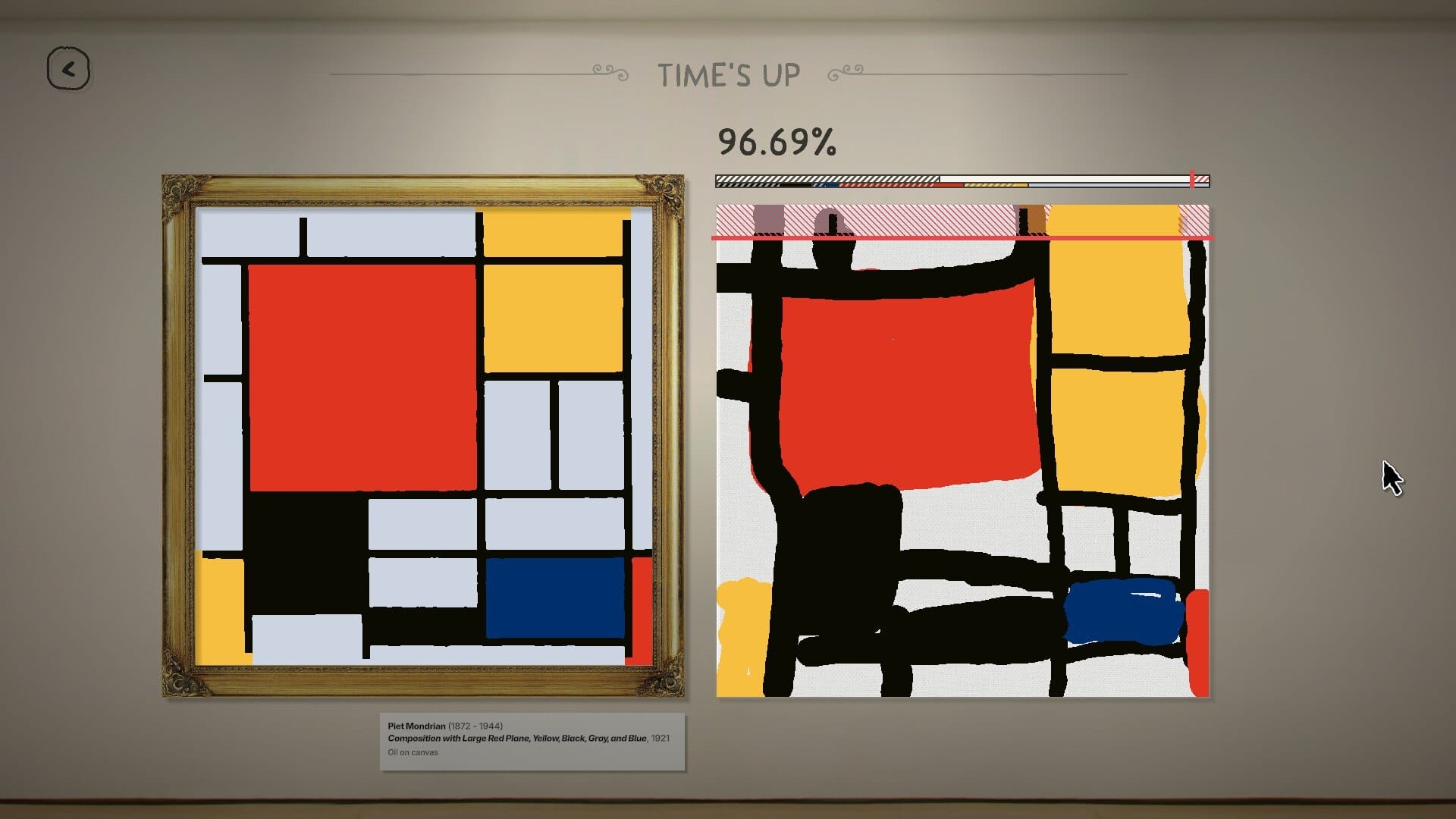
Sloppy Forgeriescomes out in November, and has a demo live now on Steam. It's a competitive painting game that can be played single-player, local multiplayer, or online with friends, where you have a set amount of time to copy famous paintings. At the end, you're scored on how accurately you recreated your target.
You unlock new paintings as you play, but I have yet to unlock anything beyond the entry level ones available in single-player, both of which I didn't just fail but failed spectacularly. I failed them so hard you'd think I was trying to fail them, but I wasn't: I really did try my best to match what seemed like the easy swatches of color and lines before me. But it's hard to paint with a mouse (especially for me because I'm left-handed), and while the game has some helpful tools like a time-limited grid that can help you match sections, the pressure to be accurate block-by-block was way too stressful for me. So I employed the losing strategy of just eyeballing things and then winging it, with predictably disastrous results.
Look, I don't want to talk about it (Playful Systems/Aftermath)
The game is probably delightful in multiplayer, where you could laugh along with a friend as you both fumble along; played alone, I couldn't help but shout "What are you doing?" at myself in exasperation. It doesn't help that you can't undo your mistakes, though you have the ability to slap white paint over them. The combined requirements of speed and accuracy, set against the limits of how much you can do (or, well, I can do) in a knockoff MS Paint, especially if you aren't naturally an artist, makes the game challenging but also a kind of ridiculous fun.
I seriously debated not writing this blog because I'm so embarrassed by what I've done here, but if I can't be praised for my artistic abilities, I can at least be praised for my courage in the face of public humiliation. Sloppy Forgeries has a release date of November 13.
For many years, our coders and translation volunteers have been working to internationalize AO3. Today, we are excited to announce that registered users will now be able to receive notification emails from us in another language! If you are logged in to your AO3 account, you can go to your Preferences page and choose the locale that we will use when sending you emails, such as kudos or subscription notifications.
We are starting off by enabling the option to receive notification emails in Simplified Chinese (中文(简体)). After we are sure that the new preference is working correctly and the translated emails are going out smoothly, other languages will be enabled – hopefully very soon!
Note that we are not translating user-created content, such as fanworks or comments. For example, in a translated kudos email, the subject “You’ve got kudos!” and the number of guests who left kudos will be translated. However, the list of usernames and the titles of your works will remain in their original languages.
When will my language be available?
Simplified Chinese (中文(简体)) is currently the only available language, because we wanted to focus on enabling the locale preference. More languages will be made available once we’ve confirmed that the new preference is working correctly. This staggered rollout allows us to get the completed translations to you as soon as possible, instead of delaying them until everything is fully coded, tested, and translated.
Why are some emails still in English after I select a locale?
AO3 has over 30 different types of emails, but not all of them are translated yet. Instead, we are focusing on the most common emails, as well as some emails that are needed for technical or security reasons. As translations for more emails become available over time, we will start sending out the translated versions based on the locale you’ve chosen instead of the default, English text. This means that some emails may remain in English for some time, or be partially in English, even after you select a different locale in your preferences. Enabling a language as soon as the most used emails are translated helps get translations to you faster.
Additionally, we can’t send translated emails to guests, such as notifications for replies to comments you left without logging in.
Can I volunteer to translate emails in my language?
Yes! The Translation committee accepts translator applications year-round, and would love to hear from you, whether you’d like to join an existing language team, or pioneer a team for a language we don’t cover yet! Please note that our translators work on a variety of content, including AO3 email localization, FAQs, news posts, and other documents, and if you pass our selection process, you’ll receive several different types of tasks to work on. If you enjoy working in a team and would like to help make even more content available in your language, please get in touch with Translation!
Why isn’t the rest of the site translated?
We chose to translate notification emails first, because they are relatively self-contained and thus simpler to translate and technically implement compared to the full website interface. This has allowed us to use the emails to develop coding standards and translation processes which we can now utilize for the interface. We’re already making progress on this, but we can’t promise anything yet.
If you have experience with web application development, especially in Ruby on Rails and internationalization, you can become a code contributor to help us further this and other initiatives.
I spotted an incorrect translation, how can I tell you about it?
Please contact Translation with the following information, and they will review your suggestion.
the subject line of the email notification
a full quote of the text that you believe is incorrect
and an explanation of what you think it should be changed to and why
We’re excited to move forward with this important work to make AO3 more accessible to our international user base, and we look forward to adding more languages, as well as internationalizing the main website interface, in the future!
The world hastoday been subjected toyet another oddball Asha Sharma profile in a mainstream outlet, and while there's nothing left to say about how pointlessly fawning these pieces are (though this one does at least raise some critical questions), there is something to say about some reporting on Microsoft's next console (codenamed 'Helix') tucked away within Fortune's piece.
It's not pretty:
As it stands, the price of the Helix console has internally been projected to cost consumers between $1,200 and $1,800, unless Microsoft decides to subsidize the cost.
There is no timeline or universe where, given the economy and industry that we're operating within, that a $1200-1800 console is anything but a historic disaster. Even a "subsidized" $1000 machine (and it’s important to note many consoles have been subsidized by manufacturers previously) would cost twice what the current Xbox console launched at.
Having watched their individual works, I can say with my whole chest that Nathan Fielder and Lance Oppenheim’s A24 documentary, You Can See Everything, isn’t just their magnum opus. As a journalist, I found the film’s relentless, cathartic interrogation of integrity as documentarians to be why it might genuinely be the year’s best film.
Once you’ve shot a documentary yourself, you can’t help but sniff out the kayfabe in other creative works. Having shot my own humble little documentary in college about cosplayers, where I filmed a friend and a colleague they recommended to me, I watch documentaries with a nagging feeling about what was staged and what was candid. Like journalism, there are levels of closeness and trust that bring out candidness in folks. If you’re too polite, you risk getting safe answers instead of interesting ones. If your subjects are too used to being on camera, it's obvious when they’re trying too hard to look their best. Likewise, if they’re too camera-shy, filmmakers have to work overtime as documentarians to stage them in an interesting way or coax them out of their shell. In many ways, documentaries are like fishing: the story of not catching the fish can be more interesting than catching what you were throwing your line out for.
Both Fielder and Oppenheim have very specific approaches to the form, which complement each other in You Can See Everything. Oppenheim’s “thing” is capturing candor that shouldn’t be possible. As a documentarian, he has the uncanny ability to hover right at the boundary where performance slips and masks fall. Whether it’s the 2024 HBO Max documentary Ren Faire, charting a Renaissance fair’s succession drama, or his Hulu film Spermworld, documenting the shadow economy of backdoor sperm donors, he consistently pulls a level of closeness and forthcomingness from his subjects that feels, at times, like it should be impossible. Where any other documentarian would stagger the truth for a big reveal, nothing in Oppenheim’s work arrives with the shock, awe, and prestige of a magic trick. Instead, he instills a sense that the story was always going to unfold exactly as its first frames suggest. You’re just along for the ride.
The unsettling yet strangely wholesome vibes I got from Spermworld’s donors and the women who sought them out online never felt like they existed across a binary. Oppenheim never deigns to moralize his subject. He just lays out their stories for viewers to absorb. Likewise, the level of candor he wrings out of Ren Faire’s sunsetting king, whom I can best describe as an Evil David Lynch, malding over fake breasts while on dates with goth baddies 70 years his junior in his crusade to die with a boner is a level of transparency Batman couldn’t beat out of me. As a documentarian, Oppenheim’s body of work always provokes the same follow‑up question: how the hell did he manage to film any of this, much less get his subjects to agree to it?
Fielder’s whole deal can be summed up as a comedian who commits so hard to the bit that reality breaks. In his business-tycoon farce, Nathan For You, he miraculously pulls off a series of IRL Ed Edd n Eddy schemes like Dumb Starbucks, with the effect of mild-mannered Sacha Barron Cohen if he wasn’t annoying. In The Rehearsal, buddy takes his Russian Nesting Doll staging and re-planning events to an absurd extreme, hiring stunt actors and piloting a commercial airplane to make a point about pilot mental health. Fielder has made a career of being the “off guy,” lowering subjects’ guard until they slip up, reveal real things about themselves, and look weirder by comparison.
Fielder and Oppenheim’s “don’t think, feel” styles mesh so seamlessly that you stop questioning the Rube Goldberg-esque maneuvers likely happening behind the camera. Whether you like Fielder’s slightly egocentric method of committing to the bit until reality folds in on itself or not, both filmmakers are masters of emotional immersion. And honestly, the less you fret over how they pulled any of this off, the more you sink into what it reveals. It’s a lot like kayfabe in professional wrestling: even when the seams show, the thrill of human theater, when done well, won’t break your suspension of disbelief. You Can See Everything is the first time that curtain actually lifts for Fielder and Oppenheim.
Why on God’s blue earth would Holmes, a serial liar, agree to having them film inside her house days before she’s bound for a federal prison for 11 years for defrauding investors with her snake oil ass medical contraption? Fielder repeatedly brings up the question, asking her if she knows what he’s known for. It’s also a question I had rattling in my head long before I hunkered down for a nearly three-hour out-of-body cinematic experience. Maybe, in her hubris, she didn’t do her research. She’s dumb enough to be in this situation in the first place, so that wouldn’t be too far-fetched a scenario. I walked into the film, as I assume many familiar with Fielder’s work as a professional liar did, expecting a face-off between a fake demon and a real one. Instead, Holmes becomes the first to fight back, turning what I expected to be light work for a man with jester’s privilege and a director capable of capturing everything, only to find an imperfect, though aggressive, victim.
A24
Holmes’s inauthenticity is performed so sincerely that she flips the creator’s usual dynamic on its head. Now I’m thinking about everything I saw and didn’t see from either party. Instead of being unmasked, she and her husband attempt to unmask them—challenging their methods, authority, and objectivity. And for a moment, it works. The glossy, saturated sheen of Oppenheim’s filmmaking drops away, revealing camera operators and grips squeezed in a cramped house alongside Evans and Holmes. Fielder’s facade as the weirdest guy in the room is also stripped away. Instead of exposing Holmes as a liar, it exposes Holmes as someone who maybe, might genuinely be confused at how things got so bad. Fielder’s own confusion—staged or otherwise—about autistic audiences feeling a kinship with him in The Rehearsal season two loops back around here, almost garnering the same sympathy for Holmes.
It feels like Oppenheim and Fielder are within a breath of seeing or hearing a real truth; the politeness imposed on them as guests in Holmes and Evans’ home instead jilts them. Even Fielder’s presence in You Can See Everything—waltzing into frame, sheepishly slinking around corners, and staring in porous extreme close-ups—lacks the jovial buffoonery of his past work and takes on a Robert Pattinson-level imposing stage presence from Primetime. I know he isn’t barking up the wrong tree, but somehow the documentary morphs into a Death Note-style battle of wills where Holmes and Nathan duke it out to expose each other as phony throughout every predictable, absurd, and revealing turn.
A24
There’s a line early in YouCan See Everything that aphoristically explains why I loved every minute of the nearly three-hour out-of-body experience it put me through. In the scene, Fielder is visibly at his wits' end, argues semantics over the word “can” with Holmes and her daffy husband, Billy Evans. Just as Fielder and my theater audience felt a fleck of empathy for the serial liar, Evans opens his big fucking mouth, nods gently, and tells us, “I know how you feel.” Uncharacteristically, Fielder snaps back: “No, you don’t.”
Oppenheim and Fielder complement each other like 2010s LeBron James and Dwayne Wade as filmmakers with elite bullshit detectors. Sure, Oppenheim had to compromise his mystique as a documentarian to stoop to Holmes' level on the whole culpable-deniability front, but as far as Fielder is concerned, You Can See Everything is his magnum opus, and I look forward to it upsetting Christopher Nolan's The Odyssey come award season.
 beatrice_otter


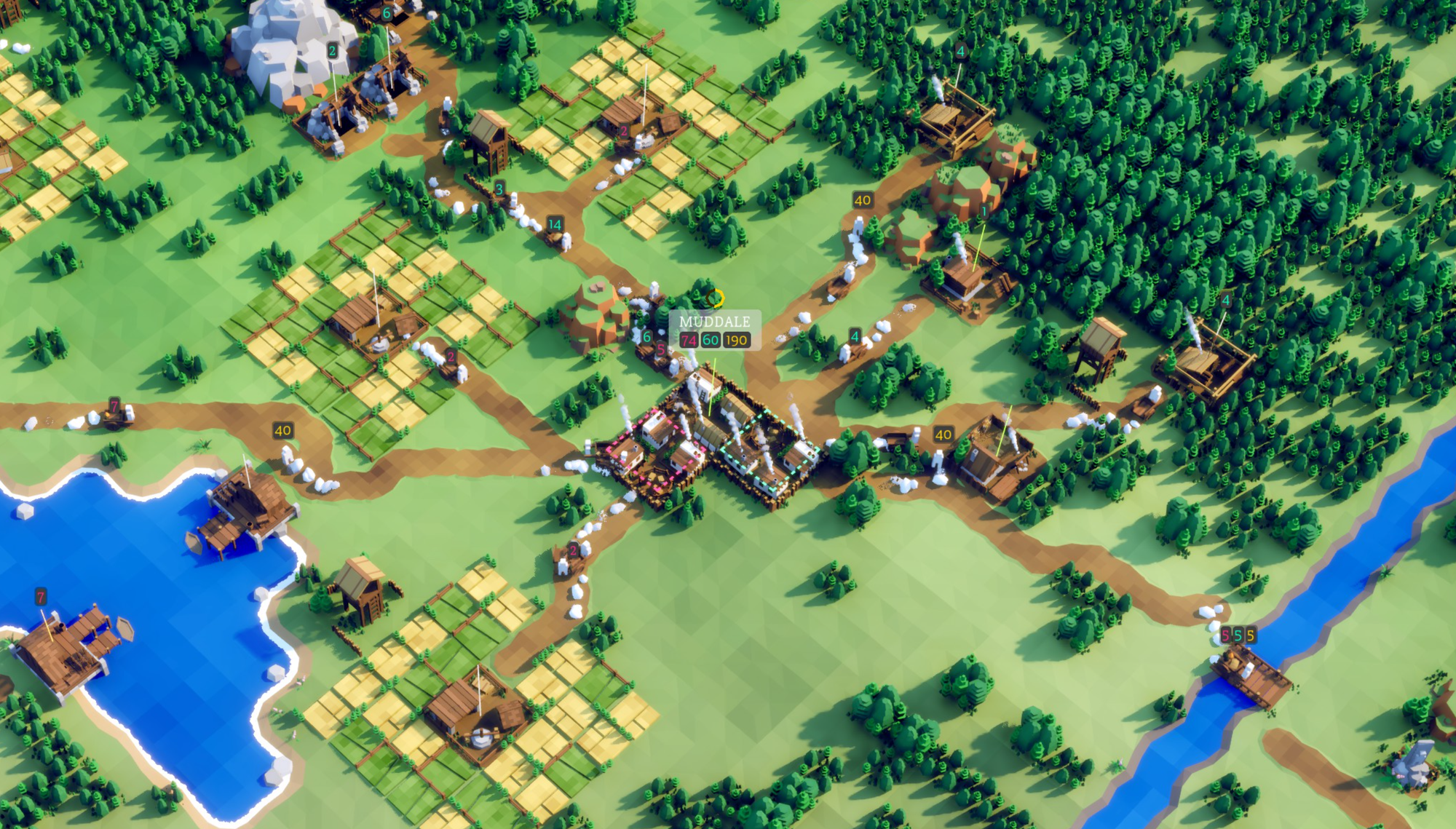
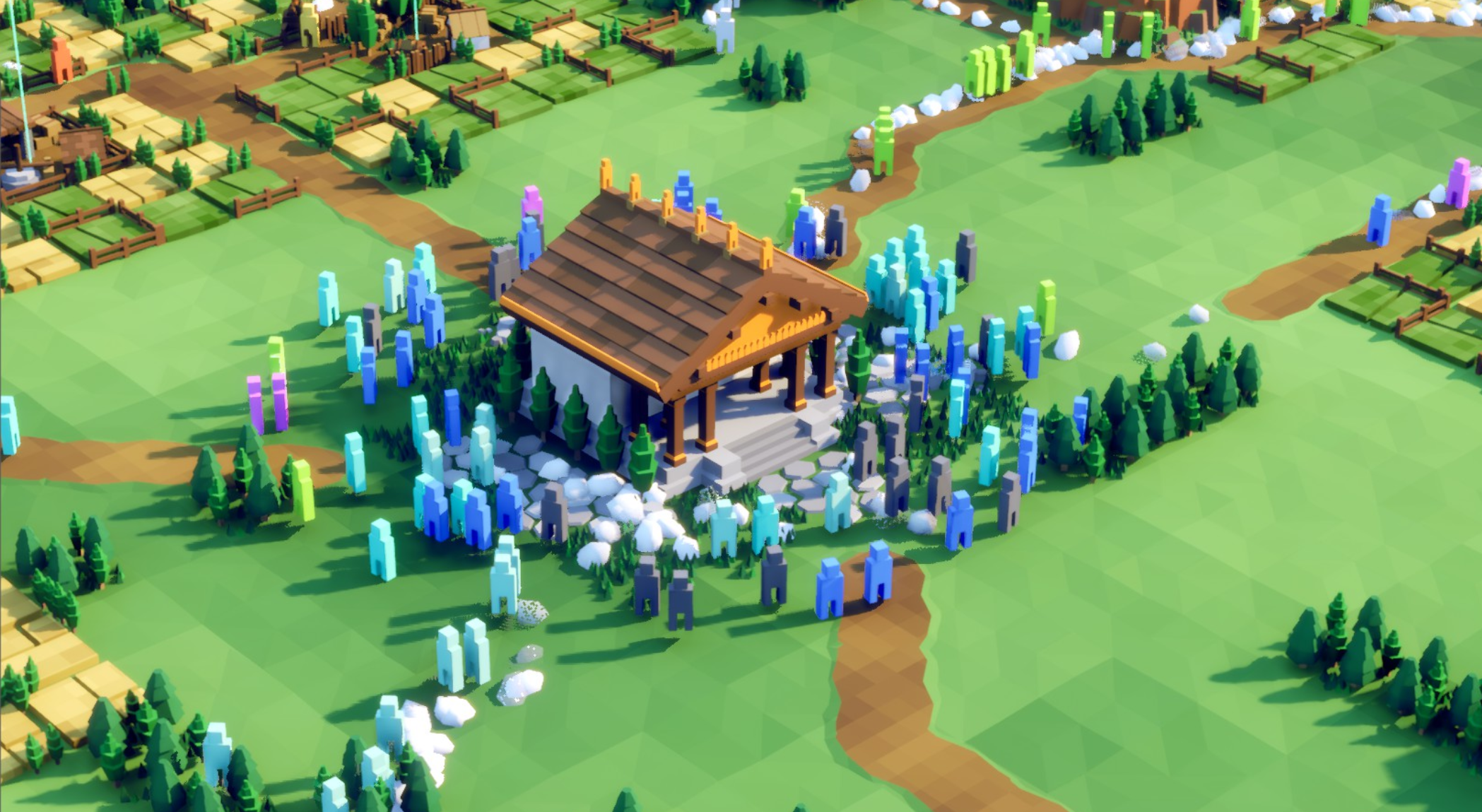


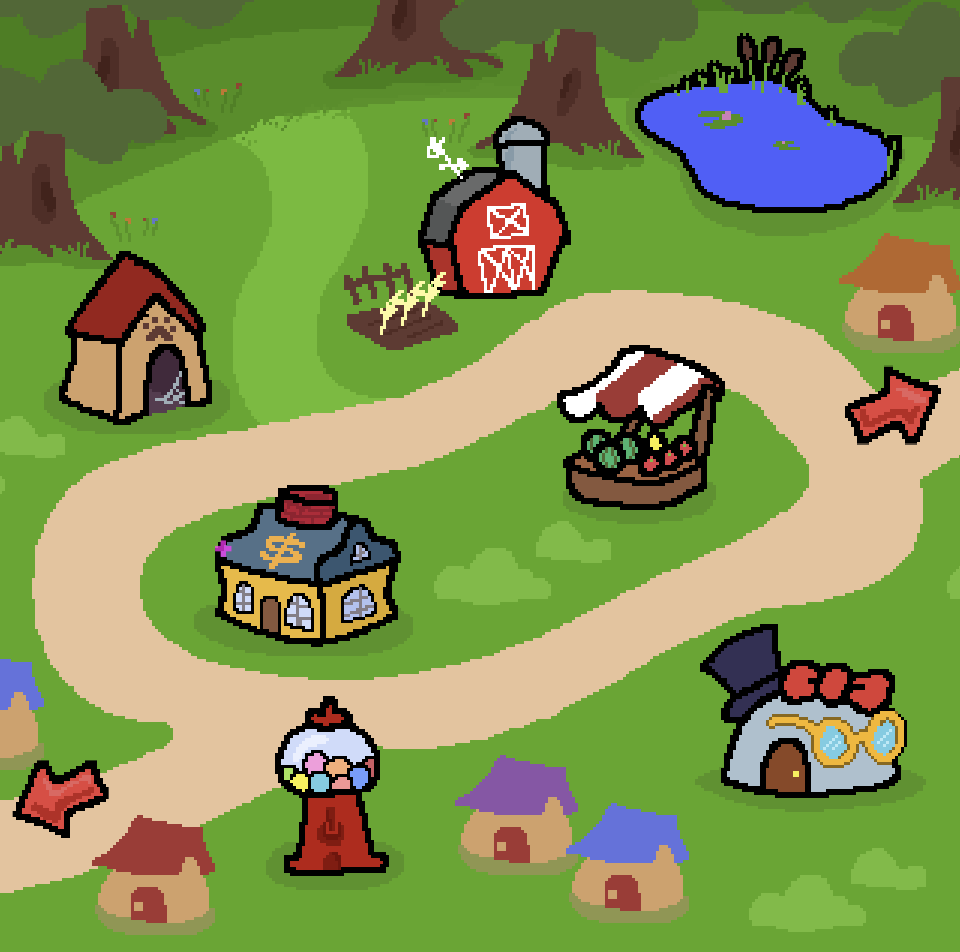




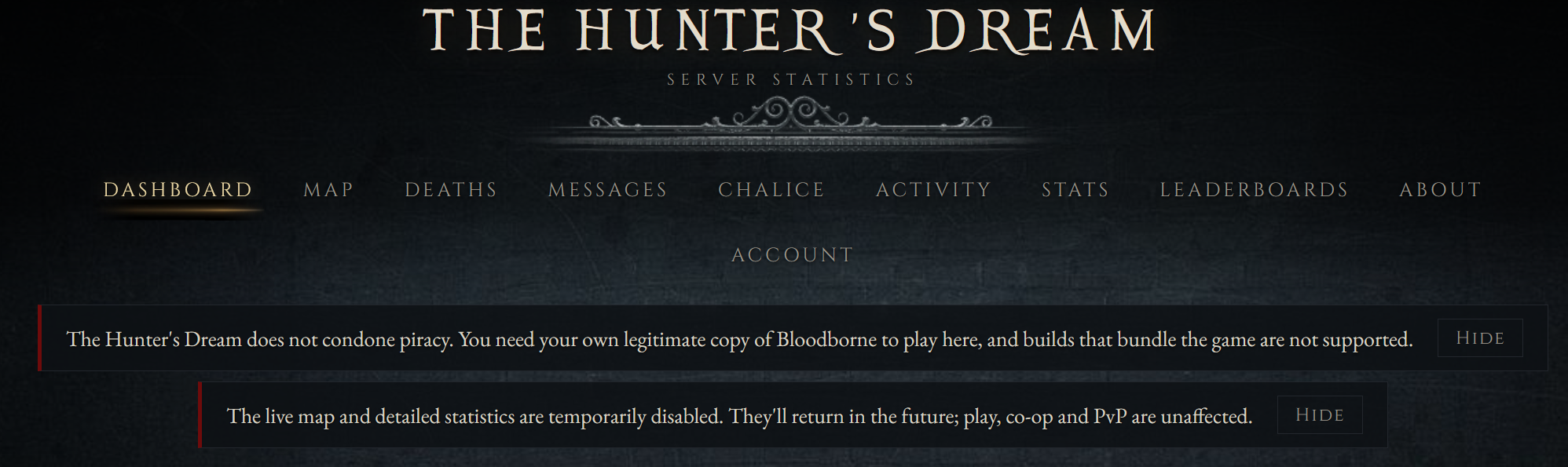
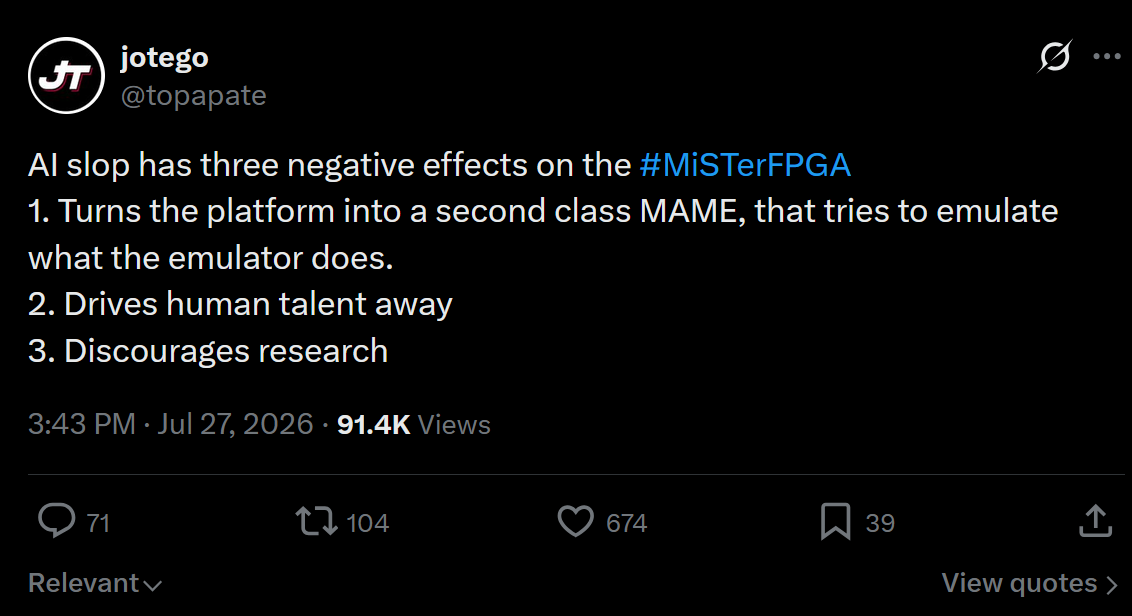



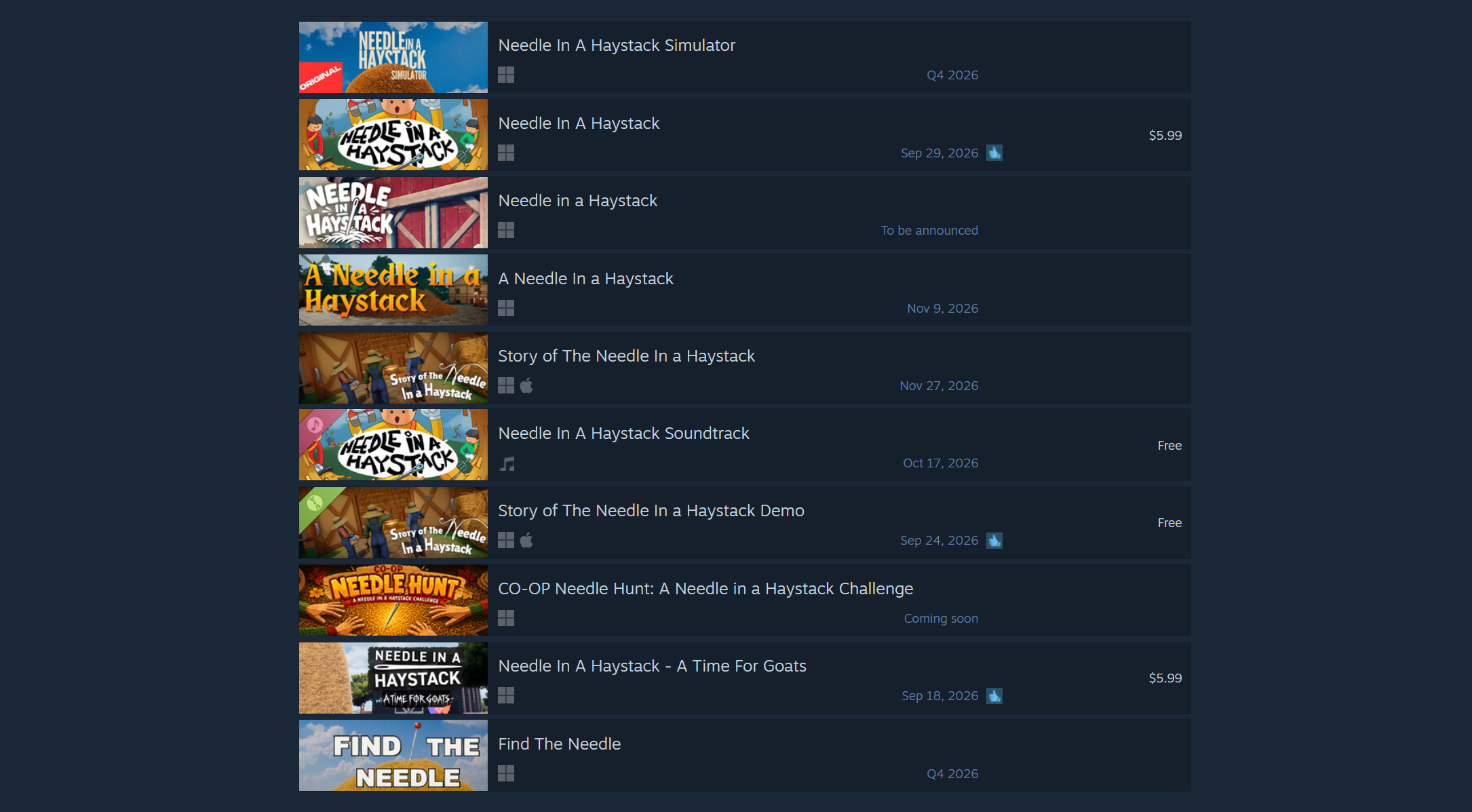

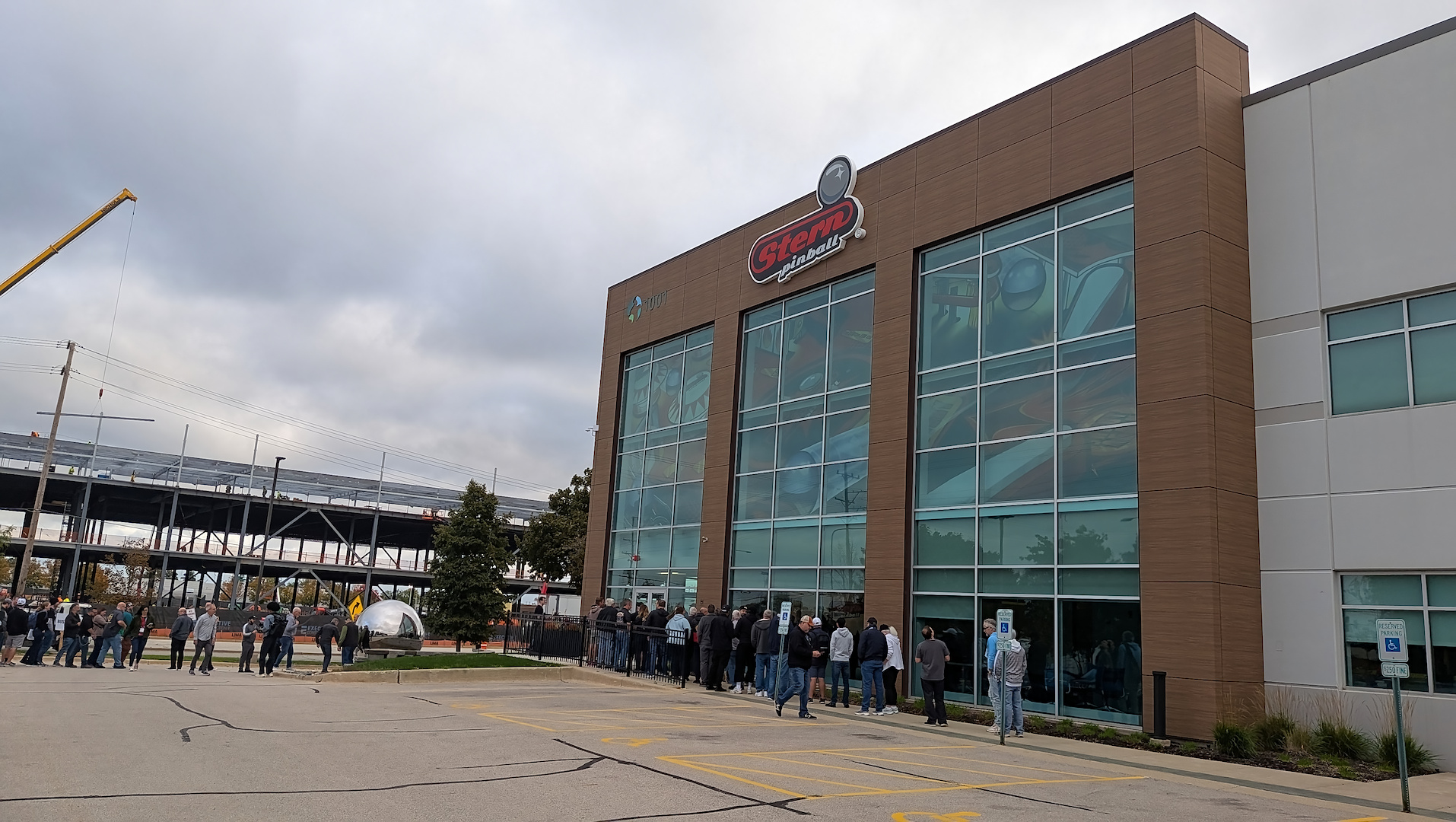 An early-morning line begins to form outside of Stern HQ as buses of Pinball Expo attendees arrive for tours.