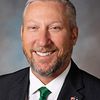
Andy Hopper
Candidate, Texas House of Representatives District 64
Texas House of Representatives District 64
Tenure
2025 - Present
Term ends
2027
Years in position
1
Compensation
Elections and appointments
Education
Personal
Contact
Andy Hopper (Republican Party) is a member of the Texas House of Representatives, representing District 64. He assumed office on January 14, 2025. His current term ends on January 12, 2027.
Hopper (Republican Party) is running for re-election to the Texas House of Representatives to represent District 64. He is on the ballot in the general election on November 3, 2026. He advanced from the Republican primary on March 3, 2026.
Biography
Andy Hopper was born in Kansas City, Missouri. He earned a bachelor’s degree from Ohio University in 1997 and a graduate degree from the University of North Texas in 2000. Hopper’s career experience includes working as a software engineer, owner of a software consulting firm, and small farmer. He has also worked as a chief warrant officer in the Texas State Guard and as an adjunct professor at the University of North Texas.[1][2][3]
Hopper has been affiliated with the following organizations:[2][3]
- Decatur Rotary
- Grassroots America
- Republican Party of Texas; SD 12 Caucus Chair at 2022 State Convention
- Texas State Guard
- Trinity Conservative Coalition, co-founder
- We the People PAC
- Wise County Republican Party
- Wise County Conservatives; co-founder
The following table lists bills this person sponsored as a legislator, according to BillTrack50 and sorted by action history. Bills are sorted by the date of their last action. The following list may not be comprehensive. To see all bills this legislator sponsored, click on the legislator's name in the title of the table.
Elections
2026
Campaign finance
Endorsements
2024
See also: Texas House of Representatives elections, 2024
General election
Republican primary runoff election
Democratic primary election
Republican primary election
Campaign finance
Endorsements
- See also: Our approach to covering endorsements
Andy Hopper received the following endorsements and voter guide recommendations. To view a full list of Hopper's endorsements as published by their campaign, click here.
Pledges
Hopper signed the following pledges.
2022
See also: Texas House of Representatives elections, 2022
General election
The general election was canceled. Incumbent Lynn Stucky won election in the general election for Texas House of Representatives District 64.
Republican primary election
Campaign finance
Endorsements
To view Hopper's endorsements in the 2022 election, please click here.
2020
See also: Texas state legislative special elections, 2020
General runoff election
General election
2026
Ballotpedia survey responses
See also: Ballotpedia's Candidate Connection
Andy Hopper has not yet completed Ballotpedia's 2026 Candidate Connection survey.If you are Andy Hopper, click here to fill out Ballotpedia's 2026 Candidate Connection survey.
Who fills out Ballotpedia's Candidate Connection survey?
Any candidate running for elected office, at any level, can complete Ballotpedia's Candidate Survey. Completing the survey will update the candidate's Ballotpedia profile, letting voters know who they are and what they stand for. More than 24,000 candidates have taken Ballotpedia's candidate survey since we launched it in 2015. Learn more about the survey here.
Help improve Ballotpedia - send us candidate contact info.
2024
Ballotpedia survey responses
See also: Ballotpedia's Candidate Connection
Andy Hopper completed Ballotpedia's Candidate Connection survey in 2023. The survey questions appear in bold and are followed by Hopper's responses.
Who are you? Tell us about yourself.
Andy Hopper owns a small farm in Wise County and serves as a Chief Warrant Officer in the Texas State Guard. He has a Master's degree in Computer Science and has worked in the private sector and defense industry as a software engineer for the last twenty-six years as well as owning his own software consulting firm. Andy and his wife, Amanda, along with their three sons love to spend their weekends camping in state parks and visiting small-town museums around Texas. Andy is running for Texas House District 64 because he believes Texans deserve real solutions and less government.
Please list below 3 key messages of your campaign. What are the main points you want voters to remember about your goals for your time in office?
- I believe that Texans should decide what is best for Texas, not unelected federal judges or millions of bureaucrats in Washington, D.C. I will fight to preserve our way of life here in Texas.
- We are in the midst of an outright invasion of the southern border of Texas, in every way facilitated by our own federal government. Texas must secure its entire southern border.
- Our "Republican" legislators are unwilling to fight for our RPT priorities, and empower Democrats to promote their agenda by putting them into positions of power in the Texas House. I will fight for our conservative priorities, and will vote to ensure that Republicans lead committees.
What areas of public policy are you personally passionate about?
The federal government has grown too big, and Texas is enabling them to do so. At the end of each legislative session, Texas cedes more and more power to Washington bureaucrats than they do to the people of Texas.
Texas should not merely be a reflection of the federal government, but should oppose the unconstitutional and invasive abridgements of our natural and constitutional rights by Washington, D.C. We Texans must fight to reassert our sovereignty.
Additionally, the border crisis is being facilitated by the federal government. Texas Military Forces must change to meet the demands of protecting an extensive border with Mexico. The Texas Legislature must meet the challenge of establishing a much larger and more capable state force which can stop the flow of illegal aliens, drugs, and human slaves. Most importantly - we MUST stop the invasion by using Article 1 Section 10 of the U.S. Constitution.
Finally, Texans are losing their homes to skyrocketing property taxes. The Texas Legislature must pass landmark legislation which will begin moving Texas away from the property tax, and towards a consumption tax.Who do you look up to? Whose example would you like to follow, and why?
Thomas Paine. As a world-famous author, he enlisted in the Contiental Army. His sense of duty was so strong that he took on the yoke of a common soldier to fight for his beliefs.
Is there a book, essay, film, or something else you would recommend to someone who wants to understand your political philosophy?
I think that "The 5000 Year Leap: A Miracle That Changed the World," by W. Cleon Skousen is an excellent starting place to understand conservative principles. "The Law" by Frédéric Bastiat, "Common Sense" by Thomas Paine, and "Confrontational Politics" by Senator H.L. Richardson are also among my favorites.
What characteristics or principles are most important for an elected official?
A sense of duty: recognizing that service to Texas by representing Texans is the job.
Loyalty: if elected, you are in the position because people believed in you and gave you their trust. Stay true to what you said you would do, what you believe, and don't ever compromise your principles for politics.
Honesty/Integrity: the only way you get to maintain your integrity is being honest with your constituents about your beliefs and your intentions.
Major General "Jake" Betty, a great Texan, always said (and I will always remember):
Do your duty. Take care of your people. Go home with your honor.
That's my philosophy in a nutshell.What qualities do you possess that you believe would make you a successful officeholder?
I am an ardent patriot and believe that is our duty as Texans to stand up for the ideals and the country that our ancestors died for. I believe in my family and my countrymen, and I will stand up for our rights and our conservative values, even if I stand alone.
What do you believe are the core responsibilities for someone elected to this office?
The central function of government, and every representative, is to safeguard the liberties of the people. In order to accomplish this, a Texas representative must be well versed in liberty principles as understood by our American and Texan forebears, including the concept of natural rights and sovereignty, the function of law and the role and authority of government. A Texas representative should be intimately familiar with the Texas and US Constitutions. Finally, they should be able to read and comprehend bills and understand whether language expands or contracts liberty and expands or contracts government.
What legacy would you like to leave?
I want my posterity to live free.
What is the first historical event that happened in your lifetime that you remember? How old were you at the time?
I remember when Iran released 52 American hostages as Regan took office in 1981.
What was your very first job? How long did you have it?
Besides mowing lawns for neighbors, my very first commercial job was working at McDonalds during the summer between my Junior and Senior year of high school.
What is your favorite book? Why?
I can't narrow it down:
Fiction: "Foundation and Empire," by Isaac Asimov "The Hunt for Red October," by Tom Clancy
Non-Fiction: "1776," by David McCullough, "The 5000 Year Leap," by W. Cleon Skousen "Empires of Trust," by Thomas F. Madden
I like books pertaining to the broad sweeps of history and the idea that one man can make a difference for good.If you could be any fictional character, who would you want to be?
What was the last song that got stuck in your head?
"Our God's Alive" by Andy Cherry
What is something that has been a struggle in your life?
It has been hard for me to see our country slide down the slope of open Marxism, and not feeling as though I could do anything about it.
What do you believe is the ideal relationship between the governor and state legislature?
I think that ideally all members of the legislature and the governor should be focused on "governing as little as possible," as Sam Houston put it. They would all have the best interest of Texans at heart, and the relationship would be smooth and not characterized by political grandstanding by those seeking higher office or seeking to enrich themselves or their districts at the expense of Texas. The governor would rarely veto legislation, as he would be working closely with the Lieutenant Governor on helping move the priorities for the session forward, and thus bills that come across the Governor's desk would generally be a cooperative effort. Texas's brief legislative session, conducted generally only every other year, provides little room for wasting time on legislation that stops at the Governor's desk.
What do you perceive to be your state's greatest challenges over the next decade?
Texas has lost virtually all internal sovereignty to the federal government by a century of rogue federal courts who assert principles in the constitution that is entirely divergent from the intent of that language. Obvious examples included regulation of interstate commerce being used to justify the creation of the Department of Education (note that "regulate" meant "promote" or "equip" rather than the "control" as it is understood today). Thus, the agreement and understanding of the mutually beneficial relationship that the nation of Texas made with the United States in 1845 is nothing like the oppressive relationship that exists today. The taxes that Texans are forced to pay to the Federal government are used to kill babies, against the overwhelming will of Texans, even though no "few and enumerated" power was ever assigned by the people to give Washington D.C. any such jurisdiction. Worse, efforts of Texans to end this barbarous practice have been systematically undone by federal courts, absent of any constitutional language that gives them jurisdiction, and completely ignoring the Tenth Amendment, which assigns all powers not explicitly delegated to the Federal Government to the states or the people. The greatest challenge that will face the Texas Legislature over the next ten years, then, will be to stand in the gap and redefine the working relationship between Texas and Washington.
Do you believe that it’s beneficial for state legislators to have previous experience in government or politics?
I am of the belief that we have moved away from the original intent of the framers, where principled citizens would serve their neighbors for a time, and then go back to their profession. This service should be borne out of a sense of duty, rather than being a basis for another step in a political career. In other words, I believe that any principled citizen can be as or even more effective than a politician, because they still see what "must be done" rather than being blinded by future political career goals and beholden to lobby money to get re-elected.
Do you believe it’s beneficial to build relationships with other legislators? Please explain your answer.
I believe it is beneficial to endeavor to build relationships with everyone to whom God connects you. Forging personal and working relationships is always beneficial, and can reduce our natural inclinations to disconnect or become hardened at the first hint of conflict. Recognizing the motives, personalities, and background of those in your life is key to making a difference in anything.
That said, becoming too close with "colleagues" raises the risk that a legislator eventually answers to them rather than his constituents. I think there is real risk that Texas Legislators begin to center their worldview in Austin rather than focus on their home district.
Is there a particular legislator, past or present, whom you want to model yourself after?
Matt Rinaldi was one of the most conservative legislators that we've yet had in the Texas House, and he exhibited a unique mixture of optimism, grit, and determination while being smart and vocal regarding our values.
Are you interested in running for a different political office (for example, the U.S. Congress or governor) in the future?
No, I have no interest in a political career, and have even less interest in spending any significant amount of time in Washington D.C. At most, I will serve at most 2-4 terms (House has 2-year terms).
Both sitting legislators and candidates for office hear many personal stories from the residents of their district. Is there a story that you’ve heard that you found particularly touching, memorable, or impactful?
Running for office can be humbling as well as very encouraging in the sense that you have first-hand experience with the high quality of human beings that inhabit Texas in general, and our corner in particular. While blockwalking, we've had many folks come out of their homes, lay hands and pray for us. This is always very emotional and fulfilling--it happens just when you need it to!
Perhaps the most touching stories I've heard recently are the many Texans who have been losing their homes or moving due to property taxes. It's staggering to realize how many lives are being turned upside down at this moment, but also encouraging to see how many proud Texans are willing to stand for their beliefs.
Tell us your favorite joke.
I know a man with a wooden leg named Smith.
Should the legislature oversee or grant the use of emergency powers?
No powers can be granted by any branch of government which defy the Texas Bill of Rights: this is clearly stated in the Disaster Act of 1975. Any power that is granted by any statute to the governor or any agency should absolutely be approved by the legislature. To facilitate this, the legislature should immediately be brought into session when an emergency is declared.
Do you believe that compromise is necessary or desirable for policymaking?
JoAnn Fleming wisely stated that "freedom is murdered not in one fatal blow, but by a thousand disloyal cuts." We now live in a post-constitutional Republic because of thousands of compromises on our core principles.
What is the first bill you would introduce if elected?
1) Re-introducing trigger bill to split federal and state elections upon the takeover of election procedures by the federal government.
2) Make all child human trafficking crimes a capital offense.
3) Introduce a variation of 88R/HB20 creating the Texas Border Guard, a full-time 4th branch of the Texas Military Forces permanently operating on the southern border.
4) Tax remittances sent to foreign nations ($>56B, largely from illegals).
5) End in-state tuition for illegals.
6) Mandate E-Verify (or Texas-run substitute) for all employers.
7) Introduce statutory language and companion constitutional amendment that will forever protect parents’ rights to raise and educate their children, with whatever funds at their disposal by whatever means, is forever protected, and that there is a presumption that parents act in the best interest of their children.
8) Introduce statutory language and companion constitutional amendment that will recognizing the unalienable natural right of the people to refuse vaccination. Because this right is unalienable, it cannot be bargained away, and therefore vaccination shall not be made a condition of employment, travel, attending educational institutions, doing business, receiving governmental services, or any other action.
9) Create Texas gold-backed currency to protect Texas against rise of BRICS and CBDCs.
10) End indemnification from liability for employers who require medical procedures of their employees.
11) Term limits for every partisan elected office.
12) Actual second amendment sanctuary bill that will require local and state law enforcement to arrest and prosecute individuals attempting to enforce unconstitutional gun laws in Texas.
.... and so many moreWhat organizations or individuals have endorsed your campaign?
I am honored to have received over 100 endorsements from local and grassroots leaders, as well as the endorsements of LTC Allen West, Kyle Rittenhouse, Chad Prather, Debra Medina, Fmr Rep. Kyle Biedermann, and Fmr Rep. Jeff Cason as well as Grassroots America, Texas Freedom Coalition, and West Texas for Life.
What committees interest you?
State Affairs
Defense & Veterans' Affairs
Energy Resources
Land & Resource Management
Agriculture & LivestockNote: Ballotpedia reserves the right to edit Candidate Connection survey responses. Any edits made by Ballotpedia will be clearly marked with [brackets] for the public. If the candidate disagrees with an edit, he or she may request the full removal of the survey response from Ballotpedia.org. Ballotpedia does not edit or correct typographical errors unless the candidate's campaign requests it.
2022
Ballotpedia survey responses
See also: Ballotpedia's Candidate Connection
Andy Hopper completed Ballotpedia's Candidate Connection survey in 2022. The survey questions appear in bold and are followed by Hopper's responses.
Who are you? Tell us about yourself.
Andy Hopper owns a small farm in Wise County and serves as a Warrant Officer in the Texas State Guard. He has a master’s degree in Computer Science, has taught as an adjunct professor at UNT, and holds a US patent. Andy has worked in the private sector and defense industry as a software engineer for the last twenty-four years and currently owns a software consulting firm. Andy and his wife, Amanda, have homeschooled their three sons and co-founded Wise County Conservatives.
Please list below 3 key messages of your campaign. What are the main points you want voters to remember about your goals for your time in office?
- I believe that Texans should decide what is best for Texas, not unelected federal judges or millions of bureaucrats in Washington, D.C. I will fight to preserve our way of life here in Texas.
- We are in the midst of an outright invasion of the southern border of Texas, in every way facilitated by our own federal government. Texas must secure its entire southern border.
- Our "Republican" legislators are unwilling to fight for our RPT priorities, and empower Democrats to promote their agenda by putting them into positions of power in the Texas House. I will fight for our conservative priorities, and will vote to ensure that Republicans lead committees.
What areas of public policy are you personally passionate about?
Over 600 bills were passed by the 87th Legislature, and a large percentage of the language merely moved federal laws and regulations into Texas statute. Texas should not merely be a reflection of the federal government, but should oppose the unconstitutional and invasive abridgements of our natural and constitutional rights by Washington, D.C. We Texans must fight to reassert our sovereignty as expressed by Article 1, Section 1 of the Texas Constitution.
As well, in the midst of a border invasion facilitated by the federal government, the Texas Military Forces must change to meet the demands of protecting an extensive border with Mexico. The Texas Legislature must meet the challenge of establishing a much larger and more capable state force which can stop the flow of illegal aliens, drugs, and human slaves.
Texans by the thousands are losing their jobs due to medical mandates. The Texas Legislature must protect the rights of Texans against being forced to undergo a medical procedure that they do not want. At the same time, Texans are losing their homes to skyrocketing property taxes. The Texas Legislature must pass landmark legislation which will begin moving Texas away from the property tax, and towards a consumption tax. Who do you look up to? Whose example would you like to follow, and why?
Thomas Paine. As a world-famous author, he enlisted in the Contiental Army. His sense of duty was so strong that he took on the yoke of a common soldier to fight for his beliefs.
Is there a book, essay, film, or something else you would recommend to someone who wants to understand your political philosophy?
I think that "The 5000 Year Leap: A Miracle That Changed the World," by W. Cleon Skousen is an excellent starting place to understand conservative principles. "The Law" by Frédéric Bastiat, "Common Sense" by Thomas Paine, and "Confrontational Politics" by Senator H.L. Richardson are also among my favorites.
What characteristics or principles are most important for an elected official?
A sense of duty: recognizing that service to Texas by representing Texans is the job.
Loyalty: if elected, you are in the position because people believed in you and gave you their trust. Stay true to what you said you would do, what you believe, and don't ever compromise your principles for politics.
Honesty/Integrity: the only way you get to maintain your integrity is being honest with your constituents about your beliefs and your intentions.
Major General "Jake" Betty, a great Texan, always said (and I will always remember):
"Do your duty. Take care of your people. Go home with your honor."
That's my philosophy in a nutshell.
What qualities do you possess that you believe would make you a successful officeholder?
I am an ardent patriot and believe that is our duty as Texans to stand up for the ideals and the country that our ancestors died for. I believe in my family and my countrymen, and I will stand up for our rights and our conservative values, even if I stand alone.
What do you believe are the core responsibilities for someone elected to this office?
The central function of government, and every representative, is to safeguard the liberties of the people. In order to accomplish this, a Texas representative must be well versed in liberty principles as understood by our American and Texan forebears, including the concept of natural rights and sovereignty, the function of law and the role and authority of government. A Texas representative should be intimately familiar with the Texas and US Constitutions. Finally, they should be able to read and comprehend bills and understand whether language expands or contracts liberty and expands or contracts government.
What legacy would you like to leave?
I want my posterity to live free.
What is the first historical event that happened in your lifetime that you remember? How old were you at the time?
I remember when The Empire Strikes Back came out in theaters. I was three.
What was your very first job? How long did you have it?
Besides mowing lawns for neighbors, my very first commercial job was working at McDonalds during the summer between my Junior and Senior year of high school.
What is your favorite book? Why?
I can't narrow it down:
Fiction: "Foundation and Empire," by Isaac Asimov "The Hunt for Red October," by Tom Clancy
Non-Fiction: "1776," by David McCullough, "The 5000 Year Leap," by W. Cleon Skousen "Empires of Trust," by Thomas F. Madden
I like books pertaining to the broad sweeps of history and the idea that one man can make a difference for good.If you could be any fictional character, who would you want to be?
What was the last song that got stuck in your head?
Lead Me to the Cross by Francesca Battistelli
What is something that has been a struggle in your life?
It has been hard for me to see our country slide down the slope of open Marxism, and not feeling as though I could do anything about it.
What do you believe is the ideal relationship between the governor and state legislature?
I think that ideally all members of the legislature and the governor should be focused on "governing as little as possible," as Sam Houston put it. They would all have the best interest of Texans at heart, and the relationship would be smooth and not characterized by political grandstanding by those seeking higher office or seeking to enrich themselves or their districts at the expense of Texas. The governor would rarely veto legislation, as he would be working closely with the Lieutenant Governor on helping move the priorities for the session forward, and thus bills that come across the Governor's desk would generally be a cooperative effort. Texas's brief legislative session, conducted generally only every other year, provides little room for wasting time on legislation that stops at the Governor's desk.
What do you perceive to be your state's greatest challenges over the next decade?
Texas has lost virtually all internal sovereignty to the federal government by a century of rogue federal courts who assert principles in the constitution that is entirely divergent from the intent of that language. Obvious examples included regulation of interstate commerce being used to justify the creation of the Department of Education (note that "regulate" meant "promote" or "equip" rather than the "control" as it is understood today). Thus, the agreement and understanding of the mutually beneficial relationship that the nation of Texas made with the United States in 1845 is nothing like the oppressive relationship that exists today. The taxes that Texans are forced to pay to the Federal government are used to kill babies, against the overwhelming will of Texans, even though no "few and enumerated" power was ever assigned by the people to give Washington D.C. any such jurisdiction. Worse, efforts of Texans to end this barbarous practice have been systematically undone by federal courts, absent of any constitutional language that gives them jurisdiction, and completely ignoring the Tenth Amendment, which assigns all powers not explicitly delegated to the Federal Government to the states or the people. The greatest challenge that will face the Texas Legislature over the next ten years, then, will be to stand in the gap and redefine the working relationship between Texas and Washington.
What are the benefits and drawbacks of a unicameral state legislature, in your opinion?
I do not believe that a unicameral legislature would be suitable for a state as large as Texas, with deeply rural and urban voice. As well, one of the great challenges to representation for Texans is the ratio of legislators to represented Texans. Currently, one member of the Texas House represents over 200K Texans, and getting the attention of your representative may seem daunting to Texans that are not steeped in politics. It is imperative that we keep districts as small as possible to allow proper representation.
At the same time, Texas is a unique state in that it has a very profound rural and urban population. While Texas has a half-dozen large urban centers, it has scores of medium-sized cities in rural areas. Each house district may represent a fairly small cross-section of Texas, and thus the rural vs urban interests may be lost in various districts. Having large Senate Districts that reach out into rural areas has the effect balancing rural vs urban interests.
Do you believe that it’s beneficial for state legislators to have previous experience in government or politics?
I am of the belief that we have moved away from the original intent of the framers, where principled citizens would serve their neighbors for a time, and then go back to their profession. This service should be borne out of a sense of duty, rather than being a basis for another step in a political career. In other words, I believe that any principled citizen can be as or even more effective than a politician, because they still see what "must be done" rather than being blinded by future political career goals.
Do you believe it’s beneficial to build relationships with other legislators? Please explain your answer.
I believe it is beneficial to endeavor to build relationships with everyone to whom God connects you. Forging personal and working relationships is always beneficial, and can reduce our natural inclinations to disconnect or become hardened at the first hint of conflict. Recognizing the motives, personalities, and background of those in your life is key to making a difference in anything.
That said, becoming too close with "colleagues" raises the risk that a legislator eventually answers to them rather than his constituents. I think there is real risk that Texas Legislators begin to center their worldview in Austin rather than focus on their home district.
What process do you favor for redistricting?
As a software engineer, I believe that establishing districts that equalize populations and establish regularized geographic regions that align to political, geographic, or road boundaries when possible is a trivial geospatial algorithmic challenge. We should just agree on an algorithm and use it regardless of what party is in power. It would seem that the political fallout on the accusations of gerrymandering often outweighs the political benefits.
If you are not a current legislator, are there certain committees that you would want to be a part of?
State Affairs
Defense & Veterans' Affairs
Energy Resources
Land & Resource Management
Agriculture & Livestock
Is there a particular legislator, past or present, whom you want to model yourself after?
Matt Rinaldi was one of the most conservative legislators that we've yet had in the Texas House, and he exhibited a unique mixture of optimism, grit, and determination while being smart and vocal regarding our values.
Are you interested in running for a different political office (for example, the U.S. Congress or governor) in the future?
No, I have no interest in a political career, and have even less interest in spending any significant amount of time in Washington D.C. At most, I will serve at most 2-4 terms (House has 2-year terms) and then give someone else an opportunity to serve.
Both sitting legislators and candidates for office hear many personal stories from the residents of their district. Is there a story that you’ve heard that you found particularly touching, memorable, or impactful?
Running for office can be humbling as well as very encouraging in the sense that you have first-hand experience with the high quality of human beings that inhabit Texas in general, and our corner in particular. While blockwalking, we've had many folks come out of their homes, lay hands and pray for us. This is always very emotional and fulfilling--it happens just when you need it to!
Perhaps the most touching stories I've heard recently are the many Texans who have been losing their jobs due to vaccine mandates. It's staggering to realize how many lives are being turned upside down at this moment, but also encouraging to see how many proud Texans are willing to stand for their beliefs.
Tell us your favorite joke.
I know a man with a wooden leg named Smith.
Should the legislature oversee or grant the use of emergency powers?
No powers can be granted by any branch of government which defy the Texas Bill of Rights: this is clearly stated in the Disaster Act of 1975. Any power that is granted by any statute to the governor or any agency should absolutely be approved by the legislature. To facilitate this, the legislature should immediately be brought into session when an emergency is declared.
Do you believe that compromise is necessary or desirable for policymaking?
JoAnn Fleming wisely stated that "freedom is murdered not in one fatal blow, but by a thousand disloyal cuts." We now live in a post-constitutional Republic because of thousands of compromises on our core principles.
Note: Ballotpedia reserves the right to edit Candidate Connection survey responses. Any edits made by Ballotpedia will be clearly marked with [brackets] for the public. If the candidate disagrees with an edit, he or she may request the full removal of the survey response from Ballotpedia.org. Ballotpedia does not edit or correct typographical errors unless the candidate's campaign requests it.
2020
Ballotpedia survey responses
See also: Ballotpedia's Candidate Connection
Andy Hopper completed Ballotpedia's Candidate Connection survey in 2020. The survey questions appear in bold and are followed by Hopper's responses.
Who are you? Tell us about yourself.
Andy Hopper owns a small farm in Wise County and serves as a Warrant Officer in the Texas State Guard. He has a master's degree in Computer Science and has taught as an adjunct professor at UNT and holds a US patent. Andy has worked in the private sector and defense industry as a software engineer for the last twenty-two years and currently owns a software consulting firm. Andy and his wife, Amanda, along with their three sons love to spend their weekends camping in state parks and visiting small-town museums around District 30 and the state. Andy is running for Texas Senate District 30 because he believes Texans deserve real solutions and less government.
Please list below 3 key messages of your campaign. What are the main points you want voters to remember about your goals for your time in office?
- I believe that Texans should decide what is best for Texas, not unelected federal judges or millions of bureaucrats in Washington, D.C. I believe in the 10th Amendment and that the powers of the federal government are few and enumerated. I will fight to preserve our way of life.
- Texans see their property tax increasing at an unsustainable rate. We must take quick action to provide actual relief to cap the growth of residential property tax for owners, and to provide a standard exemption on all residential property.
- Texas must embrace policies that make farming and ranching an accessible and viable profession for young people. Converting non-agriculturally exempt land back into productive property is prohibitively expensive and provides an artificial barrier to entry. A large part of the character of Texas is its rich farming and ranching heritage that we must preserve in an attempt to honor the independent and self-reliant spirit of Texans.
What areas of public policy are you personally passionate about?
I am particularly passionate about a short-term plan to provide stronger property tax relief and a long-term plan to eliminate them in lieu of a consumption tax, reducing agricultural regulations, expanding the responsible use of Texas' natural resources, and fortifying Texas laws to prevent overreach by the federal government. I believe all of these issues are intertwined and must be addressed soon to keep Texas strong.
Who do you look up to? Whose example would you like to follow, and why?
Thomas Paine. As a world-famous author, he enlisted in the Contiental Army. His sense of duty was so strong that he took on the yoke of a common soldier to fight for his beliefs.
What characteristics or principles are most important for an elected official?
A sense of duty: recognizing that service to Texas by representing Texans is the job.
Loyalty: if elected, you are in the position because people believed in you and gave you their trust. Stay true to what you said you would do, what you believe, and don't ever compromise your principles for politics.
Honesty/Integrity: the only way you get to maintain your integrity is being honest with your constituents about your beliefs and your intentions.
Major General "Jake" Betty, a great Texan, always said (and I will always remember):
Do your duty. Take care of your people. Go home with your honor.
That's my philosophy in a nutshell.
What legacy would you like to leave?
Thomas Jefferson said that "There is a debt of service due from every man to his country, proportioned to the bounties which nature and fortune have measured to him." Texas has blessed me and my family, and I feel the weight of the debt that I owe to those brave Texans that came before me that bought the soil under our feet with their blood. I owe Texas and my countrymen whatever service I can render. I want it to be said, when I am gone from this earth, that I did my duty, and I went home with my honor.
What is the first historical event that happened in your lifetime that you remember? How old were you at the time?
I remember when The Empire Strikes Back came out in theaters. I was three.
What was your very first job? How long did you have it?
Besides mowing lawns for neighbors, my very first commercial job was working at McDonalds during the summer between my Junior and Senior year of high school.
What is your favorite book? Why?
I can't narrow it down:
Fiction:
"Foundation and Empire," by Isaac Asimov
"The Hunt for Red October," by Tom Clancy
Non-Fiction:
"1776," by David McCullough,
"The 5000 Year Leap," by W. Cleon Skousen
"Empires of Trust," by Thomas F. Madden
I like books pertaining to the broad sweeps of history and the idea that one man can make a difference for good.If you could be any fictional character, who would you want to be?
What was the last song that got stuck in your head?
King of my Heart by Love & the Outcome.
Every state besides Nebraska has two legislative chambers. What do you consider the most important differences between the legislative chambers in your state?
The Texas Senate consists of 31 members, representing districts of nearly a million people, whereas the Texas house, consisting of 150 members, each represent less than a fifth of that. Texas House members generally sit on one to three committees, whereas Senators typically sit on four to five committees. The Lieutenant Governor is also the President of the Texas Senate, while all bills pertaining to the raising of revenue must originate in the House.
Do you believe that it’s beneficial for state legislators to have previous experience in government or politics?
I am of the belief that we have moved away from the original intent of the framers, where principled citizens would serve their neighbors for a time, and then go back to their profession. This service should be borne out of a sense of duty, rather than being a basis for another step in a political career. In other words, I believe that any principled citizen can be as or even more effective than a politician, because they still see what "must be done" rather than being blinded by "what can be done."
What do you perceive to be your state’s greatest challenges over the next decade?
Texas has lost virtually all internal sovereignty to the federal government by a century of rogue federal courts who assert principles in the constitution that is entirely divergent from the intent of that language. Obvious examples included regulation of interstate commerce being used to justify the creation of the Department of Education (note that "regulate" meant "promote" or "equip" rather than the "control" as it is understood today). Thus, the agreement and understanding of the mutually beneficial relationship that the nation of Texas made with the United States in 1845 is nothing like the oppressive relationship that exists today. The taxes that Texans are forced to pay to the Federal government are used to kill babies, against the overwhelming will of Texans, even though no "few and enumerated" power was ever assigned by the people to give Washington D.C. any such jurisdiction. Worse, efforts of Texans to end this barbarous practice have been systematically undone by federal courts, absent of any constitutional language that gives them jurisdiction, and completely ignoring the Tenth Amendment, which assigns all powers not explicitly delegated to the Federal Government to the states or the people. The greatest challenge that will face the Texas Legislature over the next ten years, then, will be to stand in the gap and redefine the working relationship between Texas and Washington.
What do you believe is the ideal relationship between the governor and the state legislature?
The legislature is responsible for creating and maintaining the body of laws that affect Texas as a whole, and the Governor of Texas should generally always defer to the legislature when new law is needed. In recent years the Governor and legislature have been controlled by Republicans, and the friction has been seemingly low, though there have been exceptions in the case of passing property tax reform. However, often overlooked is the fact that in Texas the Lieutenant Governor is extremely powerful as the President of the Senate, and his ability to assign bills to committees and to act as a regular voting member can be a much more important factor in determining the relationship between the executive and legislative branches in Texas.
I think that ideally all members of the legislature and the governor should be focused on "governing as little as possible," as Sam Houston put it. They would all have the best interest of Texans at heart, and the relationship would be smooth and not characterized by political grandstanding by those seeking higher office or seeking to enrich themselves or their districts a the expense of Texas. The governor would rarely veto legislation, as he would be working closely with the Lieutenant Governor on helping to define the priorities and agenda for a session, and thus bills that come across the Governor's desk would generally be a cooperative effort by all parties. Texas's brief legislative session, conducted generally only every other year, provides little room for wasting time on legislation that stops at the Governor's desk.
Do you believe it’s beneficial to build relationships with other legislators? Please explain your answer.
I believe it is beneficial to endeavor to build relationships with everyone to whom God connects you. Forging personal and working relationships is always beneficial, and can reduce our natural inclinations to disconnect or become hardened at the first hint of conflict. Recognizing the motives, personalities, and background of those in your life is key to making a difference in anything.
What process do you favor for redistricting?
As a software engineer, I believe that establishing districts that equalize populations and establish regularized geographic regions that align to political, geographic, or road boundaries when possible is a trivial geospatial algorithmic challenge. We should just agree on an algorithm and use it regardless of what party is in power. It would seem that the political fallout on the accusations of gerrymandering often outweighs the political benefits.
If you are not a current legislator, are there certain committees that you would want to be a part of?
Yes: Security, Agriculture, Property Tax, Intergovernmental Relations, Education
If you are a current legislator, what appealed to you about your current committees?
If you are not currently a member of your party’s leadership in the legislature, would you be interested in joining the leadership? If so, in what role?
My primary focus would be fulfilling the duties of the office, but if a need arose for me to serve in other capacities and I believed at the time that I could contribute without impacting my responsibilities I would consider any role.
Is there a particular legislator, past or present, whom you want to model yourself after?
I have been extremely impressed with Representative Phil King. We've attended a committee hearing over which Representative King presided, and I was impressed with his ability to listen and achieve consensus with dignity and tenacity. I think Representative King is also a principled conservative with a sense of duty to Texas.
Are you interested in running for a different political office (for example, the U.S. Congress or governor) in the future?
No, I have no interest in a political career, and have even less interest in spending any significant amount of time in Washington D.C. At most, I will serve at most 2-3 terms and then give someone else an opportunity to serve.
Both sitting legislators and candidates for office hear many personal stories from the residents of their district. Is there a story that you’ve heard that you found particularly touching, memorable, or impactful?
The most surprising comment I hear over and over again is from Republicans in the district that feel that the Texas Republican Party has a tendency to choose the candidate they vote for, instead of local party members really getting a voice. They are frustrated that all the money goes behind one candidate that the party chooses at the state level.
Note: Ballotpedia reserves the right to edit Candidate Connection survey responses. Any edits made by Ballotpedia will be clearly marked with [brackets] for the public. If the candidate disagrees with an edit, he or she may request the full removal of the survey response from Ballotpedia.org. Ballotpedia does not edit or correct typographical errors unless the candidate's campaign requests it.
Campaign finance summary
 Note: The finance data shown here comes from the disclosures required of candidates and parties. Depending on the election or state, this may represent only a portion of all the funds spent on their behalf. Satellite spending groups may or may not have expended funds related to the candidate or politician on whose page you are reading this disclaimer. Campaign finance data from elections may be incomplete. For elections to federal offices, complete data can be found at the FEC website. Click here for more on federal campaign finance law and here for more on state campaign finance law.
Scorecards
- See also: State legislative scorecards, State legislative scorecards in Texas
A scorecard evaluates a legislator’s voting record. Its purpose is to inform voters about the legislator’s political positions. Because scorecards have varying purposes and methodologies, each report should be considered on its own merits. For example, an advocacy group’s scorecard may assess a legislator’s voting record on one issue while a state newspaper’s scorecard may evaluate the voting record in its entirety.
Ballotpedia is in the process of developing an encyclopedic list of published scorecards. Some states have a limited number of available scorecards or scorecards produced only by select groups. It is Ballotpedia’s goal to incorporate all available scorecards regardless of ideology or number.
Click here for an overview of legislative scorecards in all 50 states. To contribute to the list of scorecards, email suggestions to editor@ballotpedia.org.
See also
External links
- ↑ Information submitted to Ballotpedia through the Candidate Connection survey on September 6, 2020
- ↑ 2.0 2.1 Information submitted to Ballotpedia through the Candidate Connection survey on January 24, 2022.
- ↑ 3.0 3.1 Information submitted to Ballotpedia through the Candidate Connection survey on September 1, 2023.
Leadership
Speaker of the House:Dustin Burrows
Representatives
Republican Party (86)
Democratic Party (62)
Vacancies (2)





 (D)