John Crow
Candidate, Maricopa County Community College District At-large
Elections and appointments
Education
Personal
Contact
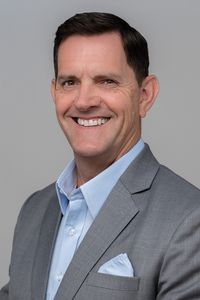
John Crow is running for election for an at-large seat of the Maricopa County Community College District in Arizona. Crow is on the ballot in the general election on November 3, 2026.[source]
Crow completed Ballotpedia's Candidate Connection survey in 2026. Click here to read the survey answers.
Biography
John Crow graduated from Tolleson Union High School. Crow earned a bachelor's degree from Northern Arizona University in 1992 and attended Phoenix College. Crow's career experience includes working as a CEO.[1]
Elections
2026
Endorsements
2026
Ballotpedia survey responses
See also: Ballotpedia's Candidate Connection
John Crow completed Ballotpedia's Candidate Connection survey in 2026. The survey questions appear in bold and are followed by Crow's responses.
Who are you? Tell us about yourself.
I'm John David Crow, a mulit-generation Arizonan running for the at-large seat on the Maricopa County Community College District Governing Board. Junior college changed my life. I played linebacker at Phoenix College in the late 1980s, and I know firsthand how a community college can open a path someone might never have found otherwise.
I'm the CEO of CENTURY 21 Northwest Realty and a family of companies, where I've spent my career managing budgets, building teams and serving families across the Valley. I serve as a Planning and Zoning Commissioner for the City of Glendale and Vice President of the DC Ranch Community Council. I'm a past president of the Glendale Rotary Club and a recipient of the Salvation Army's Others Award, its highest honor.
Maricopa Community Colleges manage a $1.7 billion budget. I'm running to make sure every dollar is spent carefully, tuition stays affordable, and our colleges train people for the jobs Arizona actually has, in health care, construction, advanced manufacturing and the trades. I'm also leading the effort to bring junior college football back to Glendale, Mesa, Phoenix and Scottsdale Community Colleges, through a public process led by the Board. Please list below 3 key messages of your campaign. What are the main points you want voters to remember about your goals for your time in office?
- Affordable, accountable colleges. Maricopa Community Colleges manage a $1.7 billion budget. I'll bring a CEO's discipline to it: clear budgets, plain-language public reporting, and major decisions made in the open, so tuition stays low and essential programs stay strong.
- Train the workforce Arizona needs. Arizona's hospitals, builders and manufacturers can't find enough skilled workers. Our colleges should be the region's premier training ground, with degrees, certificates and apprenticeships built alongside the employers who are hiring.
- Bring back JUCO football, the right way. Football was a path to college for hundreds of young men until it ended after the 2018 season, without a vote of the Governing Board. I've published a 25-season financial framework showing it can return responsibly on my campaign website, and I'll push for a public, Board-led process to bring it back.
What areas of public policy are you personally passionate about?
Workforce training and student opportunity. Too many people in Maricopa County don't see college as a path for them, and too many employers can't find trained workers. Community colleges close that gap. I'm passionate about expanding programs in nursing and health care, the skilled trades and advanced manufacturing, and about strengthening pathways from high school dual enrollment into full-time study.
I also care deeply about fiscal stewardship. Public institutions should spend taxpayer and student dollars as carefully as a well-run business spends its own, and report openly on how they did it.
Who do you look up to? Whose example would you like to follow, and why?
I look up to Joe Kersting, who coached football at Glendale Community College for 21 years and led the Gauchos to three national junior college championships. What I admire most isn't the trophies. It's the young men he coached, many of whom arrived with no clear path and left with a degree, a scholarship to a four-year university or a career. He expected a lot from his players, on the field and in the classroom, and they rose to it. When I started the effort to bring JUCO football back, he was one of the first people I called. That's the example I want to follow on the Board: set high expectations, measure success by how many students move forward in life, and never forget that behind every budget line is a student who deserves a chance.
What characteristics or principles are most important for an elected official?
Service before self. An elected official works for the people who elected them: students, families, employers and taxpayers. The job is to put their interests ahead of any personal agenda.
Honesty and transparency. Voters deserve the full picture, including the hard parts. Major decisions should be made in public, with the costs and alternatives on the table, and officials should be willing to explain their votes plainly.
Stewardship. Public money is a trust. It should be spent as carefully as a well-run business spends its own, and accounted for openly every year.
Listening before deciding. The best answers usually come from the people closest to the problem: faculty, staff, students and community partners. A good board member asks questions, listens and brings in real expertise before choosing a path.
Accountability for results. It's not enough to set goals; officials should measure whether students are actually finishing, transferring and getting good jobs, and change course when they aren't.
Respect. People can disagree strongly and still work together. Civility is how good decisions get made.What do you believe are the core responsibilities for someone elected to this office?
The Board sets direction for one of the largest community college systems in the country. Its core responsibilities are to hire and hold the chancellor accountable, adopt the budget and set tuition and fees, set policy, and make sure the colleges deliver for students, employers and taxpayers. Board members also represent the community: listening to students, faculty, families and employers, and bringing what they hear into the boardroom.
What legacy would you like to leave?
I'd like to leave a district where more students finish credentials that lead to good jobs, where taxpayers trust how their money is spent, and where young people who never pictured themselves in college have a reason to enroll, including the chance to play junior college football again.
What was your very first job? How long did you have it?
My first job was on the dairy farm where I was born. I was driving a tractor by the time I was five, and I honestly don't remember a time when I wasn't working. On a dairy farm, the work doesn't wait for weekends or holidays, and everyone pitches in. It taught me responsibility early, and I've been working ever since.
What is something that has been a struggle in your life?
I've faced three big struggles. The first was finding my path after high school. I didn't have it figured out, and junior college gave me the structure and direction I needed. That's a big part of why I'm running.
The second was the housing crash that began in 2006. As a real estate business owner, I had to make hard decisions to keep our company alive and take care of the people who depended on it.
The third was COVID, when the rules changed almost overnight and we had to adapt quickly.
Each taught me the same thing: in hard times, you face the facts, make tough decisions and protect the people counting on you.Are there any little-known powers or responsibilities held by this office that you believe more people should be aware of?
Many voters don't realize this Board sets tuition and fees for the whole district and adopts the property tax levy that helps fund it, so it directly affects both students' and homeowners' budgets. Voters may also be surprised that some major decisions, such as ending football at four colleges in 2018, can be made administratively without a Board vote. That's one reason who sits on this Board matters.
What qualities does this office possess that makes it a unique and important part of the local government?
The Maricopa County Community College District is one of the largest community college systems in the country: 10 colleges serving students in every part of a county of more than four million people. This Board is unique because it connects everything else in local education and the economy. It reaches high school students through dual enrollment, prepares students to transfer to universities, and trains the nurses, technicians and skilled tradespeople Arizona's employers need. It sets tuition and fees, adopts a budget of about $1.7 billion, and helps decide the property tax levy that funds it. And the at-large seat is elected by voters across the entire county, so it represents every community the colleges serve.
What organizations or individuals have endorsed your campaign?
The Maricopa County Colleges Police Officers Association & The Arizona Conference of Police and Sheriffs
What was the first historical event that happened in your lifetime that you remember?
The first historical event I remember is the "Miracle on Ice" in February 1980, when a team of American college players beat the heavily favored Soviet Union at the Winter Olympics in Lake Placid. I was 10 years old and watched it on TV with my dad. It taught me early that a group of young athletes nobody expected much from can accomplish something extraordinary when someone believes in them.
Note: Ballotpedia reserves the right to edit Candidate Connection survey responses. Any edits made by Ballotpedia will be clearly marked with [brackets] for the public. If the candidate disagrees with an edit, he or she may request the full removal of the survey response from Ballotpedia.org. Ballotpedia does not edit or correct typographical errors unless the candidate's campaign requests it.
See also
External links
- ↑ Information submitted to Ballotpedia through the Candidate Connection survey on October 2, 2026




 (Nonpartisan)