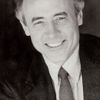
Steve Carlson
Elections and appointments
Military
Personal
Contact
Steve Carlson (Democratic Party) ran for election to the U.S. House to represent Minnesota's 7th Congressional District. He lost in the Democratic primary on August 11, 2026.
Biography
Steve Carlson was born in New Mexico. He served in the U.S. Air Force. Carlson attended the University of Minnesota. His career experience includes working in government. Previously, he worked for Asian American Press, Asian Business & Community News, Minnesota Minority Media Coalition, and Minnesotal Multicultural Media Consortium.[1]
Elections
2026
Endorsements
2024
See also: United States Senate election in Minnesota, 2024
General election
Democratic primary election
Withdrawn or disqualified candidates
Republican primary election
Withdrawn or disqualified candidates
Endorsements
2022
See also: Minnesota Secretary of State election, 2022
General election
Democratic primary election
Republican primary election
Withdrawn or disqualified candidates
Campaign finance
2020
See also: United States Senate election in Minnesota, 2020
United States Senate election in Minnesota, 2020 (August 11 Republican primary)
United States Senate election in Minnesota, 2020 (August 11 Democratic primary)
General election
Democratic primary election
Withdrawn or disqualified candidates
Republican primary election
Withdrawn or disqualified candidates
Grassroots-Legalize Cannabis Party of Minnesota primary election
Legal Marijuana Now Party primary election
2018
- See also: United States Senate election in Minnesota, 2018
General election
Democratic primary election
Republican primary election
Withdrawn or disqualified candidates
2016
- See also: Minnesota's 4th Congressional District election, 2016
Heading into the election, Ballotpedia rated this race as safely Democratic. Incumbent Betty McCollum (D) defeated Greg Ryan (R) and Susan Pendergast Sindt (Legal Marijuana Now) in the general election on November 8, 2016. McCollum defeated Steve Carlson in the Democratic primary, while Ryan defeated Nikolay Nikolayevich Bey and Gene Rechtzigel to win the Republican nomination. The primary elections took place on August 9, 2016.[2][3]
U.S. House, Minnesota District 4 General Election, 2016
| Party |
Candidate |
Vote % |
Votes |
| |
Democratic |
 Betty McCollum Incumbent |
57.8% |
203,299 |
| |
Republican |
Greg Ryan |
34.4% |
121,032 |
| |
Legal Marijuana Now |
Susan Pendergast Sindt |
7.7% |
27,152 |
| |
N/A |
Write-in |
0.1% |
461 |
| Total Votes |
351,944 |
| Source: Minnesota Secretary of State |
U.S. House, Minnesota District 4 Democratic Primary, 2016
| Candidate |
Vote % |
Votes |
|
Betty McCollum Incumbent |
94% |
33,336 |
| Steve Carlson |
6% |
2,128 |
| Total Votes |
35,464 |
Source: Minnesota Secretary of State
|
U.S. House, Minnesota District 4 Republican Primary, 2016
| Candidate |
Vote % |
Votes |
|
Greg Ryan |
82% |
5,618 |
| Gene Rechtzigel |
12.3% |
845 |
| Nikolay Bey |
5.7% |
390 |
| Total Votes |
6,853 |
Source: Minnesota Secretary of State
|
2014
- See also: United States Senate elections in Minnesota, 2014
Carlson ran in the 2014 election for the U.S. Senate, to represent Minnesota. Carlson won the Independence nomination in the primary on August 12, 2014.[4] He was defeated by incumbent Al Franken (D) in the general election on November 4, 2014.
U.S. Senate, Minnesota General Election, 2014
| Party |
Candidate |
Vote % |
Votes |
| |
Democratic |
Al Franken Incumbent |
53.2% |
1,053,205 |
| |
Republican |
Mike McFadden |
42.9% |
850,227 |
| |
Libertarian |
Heather Johnson |
1.5% |
29,685 |
| |
Independence |
Steve Carlson |
2.4% |
47,530 |
| |
N/A |
Write-in |
0% |
881 |
| Total Votes |
1,981,528 |
| Source: Minnesota Secretary of State |
U.S. Senate, Minnesota Independence Party Primary, 2014
| Candidate |
Vote % |
Votes |
|
Steve Carlson |
33.9% |
2,148 |
| Kevin Terrell |
21.7% |
1,376 |
| Jack Shepard |
17.8% |
1,130 |
| Stephen Williams |
13.6% |
862 |
| Tom Books |
12.9% |
820 |
| Total Votes |
6,336 |
Source: Minnesota Secretary of State
|
2012
- See also: Minnesota's 4th Congressional District elections, 2012
Carlson ran in the 2012 election for the U.S. House to represent Minnesota's 4th District. Carlson ran as the candidate for the Independence Party of America. He lost to Democratic incumbent Betty McCollum and Republican contender Tony Hernandez in the November general election.[5]
2026
Ballotpedia survey responses
See also: Ballotpedia's Candidate Connection
Steve Carlson did not complete Ballotpedia's 2026 Candidate Connection survey.
2024
Ballotpedia survey responses
See also: Ballotpedia's Candidate Connection
Steve Carlson did not complete Ballotpedia's 2024 Candidate Connection survey.
2022
Ballotpedia survey responses
See also: Ballotpedia's Candidate Connection
Steve Carlson completed Ballotpedia's Candidate Connection survey in 2022. The survey questions appear in bold and are followed by Carlson's responses.
Who are you? Tell us about yourself.
I am a man who has served many years in Minnesota government positions at the land-grant University of Minnessota and been nominated for the U.S. House and Senate by the Minnesota Independence Party winning the 2014 MN statewide primary for Senate. Independent campaign for President 2015-16 I have run with the DFL since the IP party lost its Minnesota major party status in 2014. Placed 2nd in 2018 U.S. Senate DFL primary. Always warned against duopoly extremism. Brought election litigation to U.S. and Minnesota Supreme Courts challenging election constitutionality (quotas, appropriation of voter emails et al) but was not granted certiorari.
At the U of M I served as chair of the elections commission and wrote the election rules including representation for minority student centers. I served as a military linguist in the USAFSS from 1971-75. Former managing editor including Asian American Press in St. Paul. Active in Minnesota Minority Media Coalition. Life-long learner including 40 languages. Compose and use music and rap videos to set out my values and positions for these campaigns.
Please list below 3 key messages of your campaign. What are the main points you want voters to remember about your goals for your time in office?
- MNDFL elections have always been limited by quotas rigging nominations and misuse of voter information, and expansive violations of election laws and principles. Now with voting machines like Dominion Voting our elections are dangerously flawed. Voter quotas resulted in highly unrepresentative officials especially in federal and constitutional offices. We must bring elections back to safety and fairness
- This nation is now at great risk, not because of Donald Trump but because the parties, especially Democrats, have engaged in no holds barred election violations and extra-electoral violence. This is because they have no accountability. Sec. Simon exemplifies this by willfully allowing unlawful voting practices and Keith Ellison by refusing to enforce Minnesota law and Constitutonal requrements. Mark Ritchie and others have degraded fair and safe election practices and Constitutional requirements I will restore.
- Technology can be a major asset in the effective leadership and regulation of election practices and acceptable conduct of parties and candidates in Minnesota elections. But as CISA recently reported machines like Dominion Voting have been unaccountable, creating unacceptable risk. A Voter ID card can be used to give the voter control over their vote and assure their vote can not be lost by misconduct of officials or use of unaccountable computerized machines. I have a plan to restore order and the right to vote.
What areas of public policy are you personally passionate about?
One is a war against cancer. Because of my work at the American Cancer Society and because in 2013 my wife was diagnosed under the federal low-income cancer detection and treatment program I have become passionate about protecting the rights of breast cancer patients from losing their coverage to politics and corruption and have brought the case to the Minnesota and U.S. Supreme courts. I have also identified resources for cancer patients.
Voting rights a effective participation in education, economic development and government is one of my first passions. My work as a linguist and member of the USAF have driven my work to expand rights and participation to build on the great, exceptional character of the freedos security for us by the American Revolution, our Constitution and our vibrant and different states, including Minnesota which is itself exceptional.
Because of my government work, educational leadership, journalism and consulting and language learning I have kindled a passion for Minnesota and American history. I hope to write the great American novel bringing alive the exceptional character and destiny of Minnesota, which is central.
While I was serving in the military two Minnesota judges wrote Roe v Wade, which shocked the world. I am passionately pro-life and Christian and my music (e.g. All Lives Matter, Fight Like A Girl) passionately express my values. Election excellent is necessary in a post-Dobbs society. Protect women and the unborn. What qualities does this office possess that makes it a unique and important part of the state government and legal system?
In addition to providing basic organization and regulation of Minnesota businesses, the office is key to organizing all government decisions on which the people of Minnesota vote (including amendments and charters and poitical parties), leading to the establishment of governments in the state and all its political subdivisions (cities, villages, townships, counties and territories). This office is fundamental and requires fairness, good will and judgment, as well as involvement and attentiveness.
Who do you look up to? Whose example would you like to follow, and why?
Donald J Trump, 45th President of the United States. I spotted him as a political leader when I was running for President in 2015. I immeditely recognized that he had a heart for the people of Arizona and the people of the United States, he had leadership and management skills to put together actions needed to lead the nation (though they did not always parallel my own) and that he, like the Founding Fathers, would commit his name, resources and life to perpetuating the Republic of the United States and our exceptional place in the world. This was what I was trying to do and still am. I also share his values, of liberality if not political lliberalism, conservatism and love of country, family and God; courage, resourcefulness, integrity and willingness to work with all Americans for the good of the nation and the planet.
What qualities do you possess that you believe would make you a successful officeholder?
Creativity, drive, wide experience, familiarty with many cultures in Minnesota, leadership training and experience, entrepreneurial talent and dedication, I like Minnesota and feel good about its future and all the people in it. I feel we are extremely blessed and feel dedicated to continuing that blessing. Musicial, athletic, teamwork, continually interested in that many aspects of the state and its destiny.
What is the first historical event that happened in your lifetime that you remember? How old were you at the time?
Nomination of Dwight D. Eisenhower and Adlai Stevenson for President and Vice-President of the United States 1956 on the black and white television of my grandfather Martin Carlson. I was five years old.
What was your very first job? How long did you have it?
Working at county fairs around Minnesota with my grandfather Douglas Henderson, a professional wrestler, bullfighter and carney. Three summers. Sold tickets, balloons, grab bags at Minnesota State Fair and many county fairs or carnival sites around the Twin Cities, Minnesota.
What is your favorite book? Why?
The Bible. It is an amazing source of all history and society, explaining the origins of everything an the existence of God. Like this nation it is not a fiction of the English language, but ancient and yet timely. Today I could listen to the Gospels of Matthew and John in Swedish. It is the foundation of the world.
What responsibilities of this office do you personally consider the most important?
Wise and careful leadership of state voting and decision making that is statewide wide and transcending political parties, which it authorizes and must regulate so that the people can meaningfully exercise their rights to participate and to vote in their government at all levels. Understanding the need for an optimal business climate that is attractive to employers that provide services and products needed to maintain Minnesota's quality of life.
What kind of skills or expertise do you believe would be the most helpful for the holders of this office to possess?
The holder of this office must be experienced and skilled in leading a statewide organization (like the University of Minnesota) that brings Minnesota into existence and involves meaningfully all the people of Minnesota, including the unborn. Wide-ranging experience and awareness like a news editor is very helpful, to know what the state is and how it fits into the region and the nation (and world). The ability to organize and lead a complex organization that is based on the liberty and democracy Minnesota needs to meaningfully exist. Education and judgment to understand how the government needs to function in a fimely, effective way that is broadly inclusive of all Minnesota's communities and cultures. Awareness of the importance of the colonies, the mother country and other countries which buillt the state, which has always been a Free State. Including but not limited to immigrants from Scanidinavia and Germany as well as European powers who laid claim to the area including England, France and Spain, and the various American Indian tribes to move through and to the state and have reservation land and who worked with settlers in trade ane exchange of ideas and values. As the Vikings were the first to do. And immigrants from the entire world, which enrich us and are indispensable.
Note: Ballotpedia reserves the right to edit Candidate Connection survey responses. Any edits made by Ballotpedia will be clearly marked with [brackets] for the public. If the candidate disagrees with an edit, he or she may request the full removal of the survey response from Ballotpedia.org. Ballotpedia does not edit or correct typographical errors unless the candidate's campaign requests it.
2020
Video for Ballotpedia
Video submitted to Ballotpedia
Released July 8, 2020
|
Ballotpedia survey responses
See also: Ballotpedia's Candidate Connection
Steve Carlson completed Ballotpedia's Candidate Connection survey in 2020. The survey questions appear in bold and are followed by Carlson's responses.
Who are you? Tell us about yourself.
I am very experienced in government and support true democratic principles-the choosing of representatives of the whole state to represent the interests of Minnesota, and the entire nation, at the U.S. Senate. Making some of the most important decisions the nation needs to make. My strong background is in education, particularly higher education. My webisite explains how the U.S. Senate can help, using the land grant model, to make tuition free as Minnesota's Constitution specifies, but to do this across the West, developing federal-owned land grants with higher education, and economic and community development, more jobs for teachers, better use of technology. I have also been party to litigation for my family to complete breast cancer treatment promised under the federal BCCPTA program. That started in 2016 and just ended June 15, 2020 at the U.S. Supreme Court. My work at the American Cancer Society alerted me to Minnesota's MA-BC so when my family was struck we went there. Minnesota is a key state in the nation and it's critical we develop and highlight our role as the last state settled by an immigration program from Europe. Yet our first MN born governor wasn't until 1916, 60 years after admission to the Union! Our media and political organizations need to lead out from Minnesota's important role, not just vote with Chuck Schumer. Pro-life, pro-2ndAm, pro-education, pro-jobs, pro-farming and mining. Journalist and life-long student, polyglot. Cultural Pluralism.
Please list below 3 key messages of your campaign. What are the main points you want voters to remember about your goals for your time in office?
Make America Great Again and expand that to all within our borders, all our citizens, many of whom have been left behind, many who have great contributions yet to make-great. I believe America has a destiny, and has liberated many people. We are founded on liberty, and our success lies in encouraing and giving access to education, personal development, economic development, equal opportunity. As the co-author of the University of Minnesota's Cultural Pluralism requirement, I stressed how we must glean knowledge not only from our diverse European background, but also African American, Chicano/Latino, American Indian and Asian American. I worked with newspapers owned by these groups to advance this. And now in the U.S. Senate we must do cont
We're in a public health crisis. I appreciate the leadership of President Trump to help guide us through this, and support him. But we still don't know how this will be resolved. Vaccines? Therapeutics? But we have had many vaccines and they are part of the problem. Covid19 is triggering many underlying conditions and we need to learn what those are. Right now we're maximiing testing, but we're not using those results beyond the primitive level of total avoidance of the virus. Which is good. But how do we understand the true cause of this and the threats to the susceptible in our population? There is a health disparity here, which combines all kinds fo health issues. Knowledge is needed, not crying "racism" and destroying cities..
- We need to transform our economy. This has always been the source of our greatness, because it reflects our liberty, our key founding principle. It's Biblical, " "Be fruitful and multiply and fill the earth and subdue it." And we include many nations in that principle. Now Covid19 has restricted us, but there is broad confidence that my making and carrying the right decisions, including educating our students, we will come back and continue to lead the world. We must lead in manufacturing, in technology, in agriculture, in urban development, and in human rights and human development. I have brought this principle to the Mexican border issue as well. We must work with Mexico to develop the border region. With border security, and community.
What areas of public policy are you personally passionate about?
As the reader can see, I'm passionate about everything. My website contains music and raps expressing my deep belief in our destiny and our basic goodness. I do carry on on social media contesting those who say we do not encourage opportunity, diversity, intelligence and basic goodness. Right now because of our partisan divide, by the national parties we were warned against, the factionalism, we are teetering on the edge of totalitarianism if we do not embrace our Constitution and our heritage, our common heritage even if marred by a Civil War, and strife. These must make us stronger and more united. Not against Republicans or Democrats. We must put the guard down and reach out and operate together. The public policy area is success. Succeeding in perfecting the principles on which we are founded, realizing them. As a journalist I'm deeply disappointed. In my work at the Asian American Press, we identified positive news, positive accomplishments within and around the diverse Asian community. And the same media who today are leading a virtual assault on our country, with deception, attacked us then too, as just covering positive news (we covered issues in need of solutions as well). We need media, and leaders who understand what our potential is, and lead the way. Not with socialism, nor with government programs using a centralized federal budget. We need to shift the resources and the power back to Minnesota and the 50 states. Economic transformation must continue.
Who do you look up to? Whose example would you like to follow, and why?
Well I do look up to my grandparents and parents, because it was they do led us to understand what was really right and good, and to love our country. Even if I went places they had not been, and I understood they had been places I have not, they set out a path, many paths leading from Minnesota to the nation, and through America, to world beyond. I look up to my pastors and my church, my teachers and my nation. And I want an America in which every child will be born and look up to exactly the same thing. And I know that we have that, we must trust our parents and our community, that's what America and our liberty are based on. And for that we must trust our government. And for that government must have it's proper role, not overweening or overbearing. I look up to Donald Trump because he has been able to, and continues to lead on the right road. We have much to do to reach that mountain top as one of my raps says, and for that I do look to the American, and have faith in them, and in God.
Is there a book, essay, film, or something else you would recommend to someone who wants to understand your political philosophy?
Yes, of course, the Bible. Also, the Library of America which gives us access to the lives and minds of great Americans. You know, don't read the whole thing, it's very extensive. But for instance the two-volume Debate on the Constitution is very good, it brings you back to reality. Also I would recommend Minnesota Place Names, a unique an amazing publication of the Minnesota History Society I've stumbled across in used book stores. The History of Minnesota by William Watts Fowell. Almanac of American History Ed. Schlesinger 1983. Read that four times. I have devised a highlighting system for these reference works which applies to all reading actually. I understand medical students call it the organ system, to mark and keep separate the functions and anatomy of each organ. Also I recommend duolingo.com an incredible free, advertising supporting language learning application put together by great teaching teams. The philosopohy there is seeing the world as other languages, cultures and human beings see it. Since my time at the Defense Language Institute getting steeped in the Vietnamese language I have become aware and active in different cultures. That extended to being a founding member of the Minnesota Minnesota Media Coalition meeting and writing for Asian American, Chicano/Latino, American Indian and African American publications-and marketing.
What characteristics or principles are most important for an elected official?
The oath of office first, to support and defend the Constitution of the United States against all enemies, foreign and domestic; and bear true faith and allegiance to the same. The same the original founders took. But communicating, compassion, capability. I think it is important for the U.S. Senator to inform and to listen to all the Minnesota constituents. I would be the Senator of all the people. Addressing the key issues and opportunities facing the U.S. Senate and the Congress, and the promise and potential of the U.S. President as a hope for the nation and the world, and a promise. Get to the business at hand in an orderly, effective way. Be informed, knowledgeable, create an effective staff, don't throw things at them or make silly demands on them. Instead, help them reach their full potential and contribution To plan, plan ahead and utilize the resources and capabilities of the full Senate. To work with the other chamber. To follow the functions of the government and its officials especially those the Senate appoints or confirms. To be as smart and interested in human advancement as America's founders and supporters in Europe. If possible. To be courageous, have integrity, forthrightness and productivity. Be optimistic and get people on the right road.
What qualities do you possess that you believe would make you a successful officeholder?
Friendliness, sincerity, tenacity, intelligence (modesty), hard-working, interested, tireless, informed.
What do you believe are the core responsibilities for someone elected to this office?
Work with all the constituents of Minnesota. Work with and encourage the formation and salutory activities of organizations and associations across the state, it's counties, cities and localities. To care for our environment and resources, all our people, and our proper place in the Union and as an international presence. To be fair, keep good energy, address disparities but not tear down the whole. Join the committees you can be effective at and be aware of the others. Show up and vote, debate, use all means, including skilled staff, to be aware of things. Be nice to the media and try to communicate to them what's important, uplifting, timely. To respect leaders of other countries while defending our nations secrets and interests. To understand and promote our economy, including our farmers and our industry, including services. Basically to be part of a body that presides over a successful nation that fulfills all our hopes and dreams envision in coming to the New World and founding on the continent that new nation. And yet to take on the hard issues, to address and correct discrimination, but also to inspire, to invite all Americans to participate, to expand our accomplishments and achievement. To recognize value contributions of all cultures. To work together to move on down that right road.
What legacy would you like to leave?
Helped to Make America Great Again, transcended national and state parties, good human being, helped put America in a helpful place among nations that represented liberty, conscience and hope for the destiny of humanity.
What is the first historical event that happened in your lifetime that you remember? How old were you at the time?
Probably Sputnik. Because my paternal grandfather gave my brother and I beautiful things-stamps for a stamp collectdion, and a series of books on sciences (with stamps to put in) and a space atlas. And all this was part of the Sputnik explosion, the idea that the United States might actually give up its leadership position in exploring space. So that's probably the first big one but it culminated when in 1969 after I had graduated from high school and was preparing for college, with the landing of U.S. astronauts on the Moon! That vastly expanded our world, you could say it blew my mind, as I understook to continue higher education. A fitting counter to the doom of Sputnik.
What was your very first job? How long did you have it?
Well, my very first job was working with my grandfather Douglas Henderson on caarnivals traveling to county fairs and the state fair, across Minnesota. He was in showbusiness, really, as a professional wrestler and Mexican matador, torreador. And so he put toagether a bullfighting exhibit he drove across the state (and we had other spots too, like selling balloons). And I helped him on weekends. For two or three years until my younger brothers took over. So I got to see the state and meet people. After that I still worked in high sdhool, as a janitor (part of my scholarship). First big job was at Prudential Life Insurance Home Office in data processing, then to the U.S. Air Force as a Vietnamese linguist.
What was the last song that got stuck in your head?
Fight Like a Girl, Can't You Feel the Rage. I wrote it and performed it with music from John Coltrane and Justin Timberlake (in the background)
What is something that has been a struggle in your life?
Life is struggle. Justice. Because of my alliance with the excluded, there was great work to be done, to include the knowledge of the different "racial" groups, hispanic, black, Asian and American Indian and others among the ivory tower of Western knowledge-and to actually get the people into the government, doing the university's business. There was a lot of blowback. I did not realize the man I worked with from the Chicano Movement had taken over the administration building the year before I came back from the Air Force to college, so that was that. Nonetheless, I persisted, and creating political parties which took over the government. At one point I was in the paper for having one five offices at once. And so I and we concentrated on bringing good, knowledge and justice into the University. We had to win a civil rights case in the H.E.W. Civil Rights division. Whereupon the attacks became even worse, my financial aid was cut off, illegally and I went into jazz, language learning and minority owned newspapers. For not much money with all due respecct. So there's that.
What do you perceive to be the United States' greatest challenges as a nation over the next decade?
First we must define ourselves. We get into these contests and then the contest becomes the thing. We want to "win" meaning to stop others or beat down others. So again, to see that we are in fact one and not to overlook anyone. Liberty frees every man and women and child to live with human dignity, and to fulfill, to grow toward and to realize those human activities we all cherish, to learn, to work, to produce, to live in a home and a community, in safety and security and this is something we all want and want share. And so in addition to leadership, those are our challenges-education, economy, family, community, safety and security. Health care, obviously is central. The covid pandemic is not understood,, not just its nation of origin, but what is it, where is the virus? It seems to be a triggering of many viruses within each of us, and it's thought a lot of dangerous endogenous viruses we have acccumulated pose a great threat to susceptible people. We need to calm down and get to the truth. And this is even beyond blaming officials who may have made mistakes in protecting our safety. And I mean the dangerous practices of cultivating these viruses while actually creating more people with more endogenous viruses, through the way our vaccines are produced, and just general recklessnes of experiementing irresponsibility. In addition, health disparities where one group doesn't have the same chance to live with a quality of life that medicine can make available to them-that is a major challenge. Obviously national security, war and peace, successful trade and prosperity and advancemente among nations, justice according to a correct principle (guarding of rights and entitlements), advancement of human knowledge so we can get ahead of perild and achieve that quality of life which is our destiny..
What qualities does the U.S. Senate possess that makes it unique as an institution?
The Senate came out of a great compromise, but the underlying principle was not compromise. It was the nation's key decisions on national security, national development of a federal government of member states, national finance as part of Congress, and a leader in the world in the cause of liberty. To see the qualities of the institution look at Article I of the Constitution. It's also to advise and consent to the president in key federal (national) posts like the U.S. Supreme Court and cabinet members and "lesser" posts. The character of the Senate reflects the inventive minds of the Framers: "To promote the Progress of Science and useful Arts, by securing for limited Times to Authors and Inventors the exclusive Right to their respective Writings and Discoveries;" Promoting science is in our DNA. And now that science faces a pandemic, which we must defeat. The Senate is uniquely qualified because of that long heritage, which reflects Western Europe's, of science inquiry and of courage. Of course it is the deliberative body of Congress, doesn't go off half-cocked like the U.S. House who always face re-election. The Senate must represent what is best in the nation, but not supplant our states, but rather help to nurture them as members of the federal government, having admitted Minnesota in 1858. So it's unique in that it has two Minnesota Senators. I would serve diligently and productively, so help me God.
Do you believe that it’s beneficial for senators to have previous experience in government or politics?
It depends what that previous experience is. For too many, it's learning "the ropes", how to exclude people from participation, how to follow or promote selfish interests. In fact it's unusual for senators to grow bigger than those special interests they serve. Yet that is what we must urge all senators to do. Our political system, especially the Democrats has been diminished by voter quotas, actually capping the votes of men, or whites, or for that matter non-white groups, by rules and laws. That kind of experience is to kowtow to the fractured activists of each race, each creed, each gender (of which there are two) coming together only as a kind of unholy alliance to compete for control of the government. The great benefit from the experience of senators is to acquire the art and practice of leadership. And that comes from many walks of life. Leadership is to ask precisely the questions Ballotpedia is asking here, and then to get the great, complete and inclusive answers to those questions and transform those questions into actions-in the case of the Senate on behalf of all 50 states, as a whole. So that the country does not crash on the rocks, but rather grows, beautifully, in the eyes of God. Leaders of all walks of life are aware of the Senate and our Constitution as a force for good, for all of us, not disregarding anybody. And the Senate acts through private actions by maintaining that beneficial canopy in which all good things can grow. We don't go there to fight, but to lead a vibrant nation, of diversity, and tolerance, enlightment and faith. That's the leadership experience we need, and that grows love for our nation and its principles.
What do you think of the filibuster?
It is a problem. At best the filibuster is a kind of brake. At worst, a wall. I believe Chuck Schumer has been wielding that filibuster as a weapon against reason, against the other side, and against America. Not to amble too far afield, but it's being used and abused in a way very similar to the Democrat's "impeachment" of the president in order to block him from carrying out his duties! If these Democrxats could have filibustered the decision not to "convict" President Trump I'm very sure they would have and left us in permanent limbo. My government experience has been collegial, in a univesity, and that's exactly what the Senate must be. A filibuster should really be a courtesy. So that people can all be heard, to make a better decision. It's been used to shut down the government! My predecessor (should I be elected) Al Franken abused the blue slip, another courtesy, so that judges from Minnesota simply could not be appointed. Leadership had to change the practice. I would be courteous and would not stand in the way of the chamber fulfilling its high purpose. That purpose to me, is far greater than the machinations of "leaders" of a particular national party. Filibusters should never partisan, or even regional, but related to the purpose of aborting quick thinking and providing clear, concise thought and language in all Senate actions.
What criteria would you apply when deciding whether to confirm presidential appointees?
First, it must be specific to the position. So I would inform myself of the nature of the institution the appointee was to lead, and the team of which they are to be a part. I will want to understand the president's reasons, and consider whether those are sufficient for the job to be done? Does he or she have the right knowledge and consideration to make the right choice? So obviously the U.S. Supreme Court is a key appointment. Taking Roe v. Wade as an example, it's of great consequence and not merely a matter of convenience or even lifestyle. And so, does the nominee believe Roe was rightly decided? Was it based on the Constitution, or was the Constitution magically transformed to find new constittuional rights that batter down the rights of others, including the right of human life itself? So what was the scope of the decision? If we believe the 14th Am. was superceded by a penumbra of privacy, was that key amendment so torn that a state could not protect women themselves of even an iota of health risk as in the Russo case? And so if the jurist avoided discussion because of "cases to come before me", I'd go straight to the president, and those who helped make the pick. In matters of the subject matter of the appointment I would want in these kind of cases to get that out in the open, to protect our Constitution. Similarly for other appointments, what is the principle that America must guard through that appointment or confirmation process. For all departments, too, we must protect the people and not defer to power alone. But not in a bitter way or partisan or evne a way that condemns America. We must give life to our nation in the eyes of God, not merely be ambitious.
Do you believe it’s beneficial to build relationships with other senators?
Well, of course. Members must be collegial. We can't manipulate events to insult, disparage, and basically impede evey senators' right to do their job. We may disagree and we expect people to disagree. But collegial means we stay on task and reach a collective decision that is best for the nation. So I want to know about each senator (over time), who they are, what are the concerns and contributions of their region, how can we collectively see what America we want for all Americans, as well as for the people of Minnesota. We need to learn to listen, to accept people for who they are, and value them. I am not going to raise old rivalries, attack the confederate flate or the American flag. If there is a senator of a racial identity, or a gender different than mine, again, I want to value that person, listen to them, but see only that they enrich our body, not that they stand for all Asian Americans, or all women, etc. It's only through talking and acting that we will reach a decision and ultimate action. I will respect people's leadership positions, meaning that they need to be part of the decision in their committee or committee position, so the process can work. I don't accept that they can bottle up or block action through sheer force of will or interest. And so I may challenge their positions on the floor, given that I have made myself aware of the valuable work they have already done on the matter, to conserve the value of that work.
If you are not a current senator, are there certain committees that you would want to be a part of?
I would want to be on the Agriculture Committee and on the Foreign Affairs Committee or Judiciary Committee. But beyond that I would serve where needed.
If you are not currently a member of your party’s leadership in the U.S. Senate, would you be interested in joining the leadership? If so, in what role?
I'm not a member so I would not presume to seek a leadership role at this point.
Is there a particular senator, past or present, whom you want to model yourself after?
Naturally I admire many Senators. But I think the model would be Daniel Webster. He served as a serious, intelligent man who engaged the key issues of that time, 1845-1850 (and also his time as Secretary of State 1850-52). The key issues were really the key issues of the nation as conceived in the Constitution itself. These issues remain with us. We're fortunate that all we need to do now is run a good, clean, efficient government. Yet the issues of trade policy, internaitonal relations, national finance and the role of the states still remain with us. In fact these issues are more important than ever in the sense that we are a world power and a world leader. The same interest and diligence, and passion, he brought to debate, the ability to capture the interest of the Senate in order to lead people through the issues and to persuade and to reach agreement, are things I would want to model my work after. I also learn from Paul Wellstone (passion and love for people), Hubert Huphrey (great concern for national and internaiatonal issues, all of which are upon us, and his sidekick Walter Mondale. Although Sen. Mondale and I disagree on the issue of elections and whether to exclude whites, men, etc. from fully participating and voting in nominating Senators from Minnesota and elsewhere, I admire his friendliness and his audacity, frankly, I do recognize that he probably means well. I have met him as a journalist. And I fondly remember and miss the kind of Minnesota Nice and openness which we all saw in the times they served. I've also met Senator and Prof. Wellstone.
Note: Ballotpedia reserves the right to edit Candidate Connection survey responses. Any edits made by Ballotpedia will be clearly marked with [brackets] for the public. If the candidate disagrees with an edit, he or she may request the full removal of the survey response from Ballotpedia.org. Ballotpedia does not edit or correct typographical errors unless the candidate's campaign requests it.
Note: Carlson submitted the above survey responses to Ballotpedia on July 27, 2020.
Ballotpedia survey responses
See also: Ballotpedia's Candidate Connection
Steve Carlson completed Ballotpedia's Candidate Connection survey in 2019. The survey questions appear in bold and are followed by Carlson's responses.
What would be your top three priorities, if elected?
1. Keep the economy growing, 2. Defend the United States including our borders and our people, and 3. Continue to provide real opportunity through freedom, education and the economy.
What areas of public policy are you personally passionate about?
Honesty about free, fair and constitutional elections in every state and states' rights.
Who do you look up to? Whose example would you like to follow, and why?
Is there a book, essay, film, or something else you would recommend to someone who wants to understand your political philosophy?
The Debate on the Constitution two volumes from Library of America
What characteristics or principles are most important for an elected official?
Competency, including communication and ability to work with others in government to solve problems.
What qualities do you possess that you believe would make you a successful officeholder?
A lot of experience in leadership including elected assemblies like the U.S. Senate, and a lot of information and understand of the complex issues facing the United States as a democracy and world power.
What do you believe are the core responsibilities for someone elected to this office?
To be an effective member of the full Senate and work on or with all its parts, and support the President to undertake key decisions on behalf of the nation and the people of the State of Minnesota.
What legacy would you like to leave?
Restored real democracy in the Democratic Party and Minnesota DFL, not abridging voting rights on account of sex, race or religion and living up to the Bill of Rights.
What is the first historical event that happened in your lifetime that you remember? How old were you at the time?
Watching the Republican national convention on my grandfather's black and white TV and talking with him about it. I was five years old.
What was your very first job? How long did you have it?
Shoveling sidewalks for the neighbors. Kept that up all the way through high school when I shoveled the church sidewalks.
What is your favorite holiday? Why?
Christmas. Birth of hope and peace on earth.
What is your favorite book? Why?
Holy Bible. Speaks of God's plan for humankind and all of his Creation, and of the Gospel.
What is your favorite thing in your home or apartment? Why?
Bookcases full of books, I continue to learn everyday.
What was the last song that got stuck in your head?
Fight Like A Girl - a rap song I composed
What is something that has been a struggle in your life?
To find common ground among all the people's of the United States and to build up knowledge that brings us all together.
What do you perceive to be the United States' greatest challenges as a nation over the next decade?
Restoring a sense of unity of purpose and acceptance in the basic goodness and fairness of our republic and its sovereign states.
What qualities does the U.S. Senate possess that makes it unique as an institution?
It is the branch of Congress that most closely works with the President and that identifies the most important issues the United States needs to act on.
Do you believe that it’s beneficial for senators to have previous experience in government or politics?
What do you think of the filibuster?
I think it is good to prevent extreme and precipitous action without adequate deliberation, but it should not be used as a weapon by parties and in fact parties should not even be involved in the process.
What criteria would you apply when deciding whether to confirm presidential appointees?
I would want to know the president's purpose in making the nomination and whether I believed that person really appeared to fulfill that purpose, or if not, whether I should defer to the president's judgment.
Do you believe it’s beneficial to build relationships with other senators?
Absolutely, it is essential, but our key relationship must be our mandate as Senators elected to fulfill our functions and duties, including upholding the Constitution and laws passed by the Congress, and supporting the president's work on behalf of the American people.
If you are not a current senator, are there certain committees that you would want to be a part of?
The committee of the whole Senate, Judiciary, Foreign Affairs, Intelligence, Agriculture, really any committee.
If you are not currently a member of your party’s leadership in the U.S. Senate, would you be interested in joining the leadership? If so, in what role?
At some point, yes, in the appropriate role.
Is there a particular senator, past or present, whom you want to model yourself after?
John F. Kennedy would be a good model.
Note: Ballotpedia reserves the right to edit Candidate Connection survey responses. Any edits made by Ballotpedia will be clearly marked with [brackets] for the public. If the candidate disagrees with an edit, he or she may request the full removal of the survey response from Ballotpedia.org. Ballotpedia does not edit or correct typographical errors unless the candidate's campaign requests it.
Note: Carlson submitted the above survey responses to Ballotpedia on June 2, 2019.
Campaign finance summary
 Note: The finance data shown here comes from the disclosures required of candidates and parties. Depending on the election or state, this may represent only a portion of all the funds spent on their behalf. Satellite spending groups may or may not have expended funds related to the candidate or politician on whose page you are reading this disclaimer. Campaign finance data from elections may be incomplete. For elections to federal offices, complete data can be found at the FEC website. Click here for more on federal campaign finance law and here for more on state campaign finance law.
See also
External links
- ↑ Information submitted to Ballotpedia through the Candidate Connection survey on July 4, 2022
- ↑ Minnesota Secretary of State, "Candidate Filings," accessed June 1, 2016
- ↑ Politico, "Minnesota House Primaries Results," August 9, 2016
- ↑ Associated Press, "Minnesota - 2014 Primary Results," accessed August 12, 2014
- ↑ ABC News, "General Election Results 2012-Minnesota," November 7, 2012
Senators
Representatives
Democratic Party (6)
Republican Party (4)





 = candidate completed the Ballotpedia Candidate Connection survey.