










Igneous Rocks
Formation, Types, Textures, and Classification
Igneous rocks are one of the three major rock groups on Earth, alongside sedimentary and metamorphic rocks. They form when molten rock cools and solidifies, creating materials that range from coarse-grained granite deep within the crust to fine-grained basalt erupted onto the surface.
These rocks are fundamental to understanding Earth’s geological processes. They form much of the oceanic crust, occur throughout continental mountain belts, and provide evidence of volcanic activity, magma evolution, and processes operating within Earth’s mantle.
Igneous rocks are rocks formed by the cooling and solidification of magma or lava. Their mineral composition, texture, and geological setting reveal important details about the conditions under which they formed.
Some develop slowly underground, allowing large mineral crystals to grow. Others cool rapidly at Earth’s surface, producing fine-grained, glassy, or vesicular textures.
This guide explains how igneous rocks form, their major types and classification, the role of minerals and crystallization, and how to identify them.
What Are Igneous Rocks?
The word igneous comes from the Latin word ignis, meaning fire.
Igneous rocks originate from molten or partially molten geological material. When this material cools and solidifies, mineral crystals may develop, producing a solid rock.
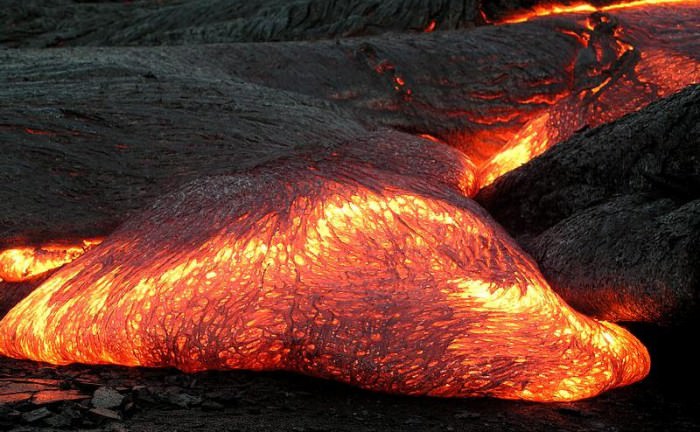
The molten material is called magma while it remains beneath Earth’s surface. Once it erupts onto the surface, it is called lava.
Magma generally consists of silicate melt, mineral crystals, and dissolved gases. Its chemical composition varies depending on its source and geological history.
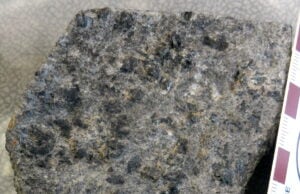
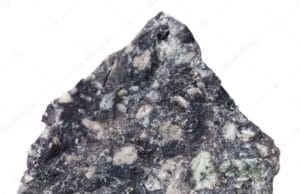
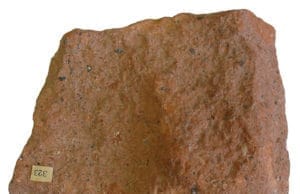
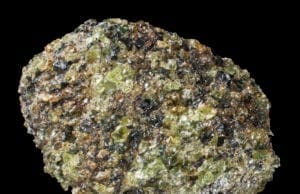
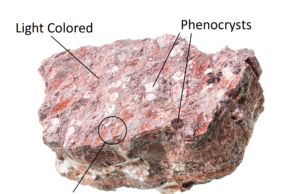
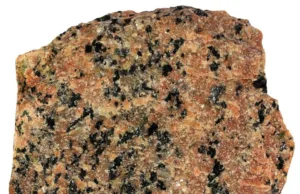
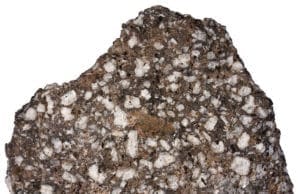
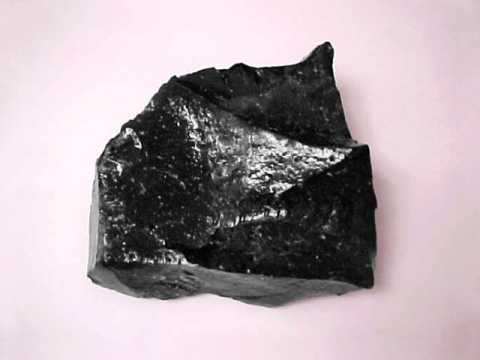
Igneous rocks can be recognized through several characteristics:
- Interlocking mineral crystals formed during cooling.
- Fine-grained or glassy textures resulting from rapid solidification.
- Gas cavities known as vesicles.
- Mineral assemblages reflecting magma composition.
- Geological relationships with volcanic deposits or intrusive bodies.
However, no single characteristic identifies every igneous rock. Geologists consider mineral composition, texture, and geological context together.


How Do Igneous Rocks Form?
Igneous rock formation begins with the generation of magma.
Although Earth’s mantle is extremely hot, most of it remains solid because pressure and mineral melting behavior prevent widespread melting.
Magma forms when geological conditions allow partial melting of mantle or crustal rocks.
Three important processes contribute to magma generation.
Decompression Melting

Decompression melting occurs when sufficiently hot mantle material rises and experiences decreasing pressure.
As pressure falls, partial melting may begin without a major increase in temperature.
This process is particularly important beneath mid-ocean ridges, continental rifts, and some hotspot regions.
It commonly produces basaltic magma.
Flux Melting

Flux melting is especially important at subduction zones.
As an oceanic tectonic plate descends into the mantle, minerals within the slab release water-rich fluids.
These fluids enter the overlying mantle and lower the temperature required for melting.
The resulting magma may rise through the crust and contribute to volcanic arcs.
Heat Transfer and Crustal Melting

Hot magma moving through the crust can transfer heat to surrounding rocks.
Under suitable conditions, parts of the crust may melt, producing magma with a different chemical composition.
Magma mixing, crystallization, and interactions with surrounding rock can further modify the magma.
Cooling and Crystallization

Once magma forms, it may remain underground, move into shallower parts of the crust, or erupt onto the surface.
As it cools, minerals crystallize from the melt.
The cooling history affects crystal size and texture, while magma chemistry influences which minerals form.
Slow cooling often allows larger crystals to grow. Rapid cooling commonly produces smaller crystals or volcanic glass.
The resulting rock records the combined effects of magma composition and crystallization conditions.
Intrusive and Extrusive Igneous Rocks

Igneous rocks are broadly divided into two groups according to where molten material solidifies.
Intrusive Igneous Rocks
Intrusive, or plutonic, igneous rocks form when magma cools beneath Earth’s surface.
Because surrounding rocks provide thermal insulation, large magma bodies may cool slowly.
This often allows visible mineral crystals to develop, producing a coarse-grained texture known as phaneritic.
Common intrusive rocks include:
- Granite: A felsic rock rich in quartz and feldspar.
- Diorite: An intermediate-composition rock containing abundant plagioclase and dark minerals.
- Gabbro: A coarse-grained mafic rock rich in plagioclase and pyroxene.
- Peridotite: An ultramafic rock composed mainly of olivine and pyroxene.
Intrusive igneous bodies may eventually become exposed when uplift and erosion remove overlying rocks.
Extrusive Igneous Rocks
Extrusive, or volcanic, igneous rocks form from material erupted at or near Earth’s surface.
Lava commonly cools relatively quickly, so individual mineral crystals may remain too small to see without magnification.
Rapid cooling may also produce volcanic glass.
Common extrusive rocks include:
- Basalt: A dark, fine-grained mafic volcanic rock.
- Andesite: An intermediate volcanic rock common in many volcanic arcs.
- Rhyolite: A felsic volcanic rock with relatively high silica content.
- Obsidian: Natural volcanic glass formed by rapid cooling.
- Pumice: A highly vesicular volcanic material commonly associated with gas-rich explosive eruptions.
- Scoria: A dark, vesicular volcanic rock commonly associated with basaltic or basaltic-andesitic magma.
Extrusive rocks also include consolidated fragmental materials produced by volcanic eruptions, such as certain tuffs.
Intrusive vs. Extrusive Igneous Rocks

| Feature | Intrusive | Extrusive |
|---|---|---|
| Formation | Magma solidifies underground | Lava or erupted material solidifies at or near the surface |
| Typical cooling | Relatively slow | Often rapid |
| Common texture | Coarse-grained | Fine-grained, glassy, or vesicular |
| Crystal visibility | Often visible to the naked eye | Commonly microscopic |
| Examples | Granite, diorite, gabbro | Basalt, andesite, rhyolite |
| Geological occurrence | Plutons, dikes, sills | Lava flows, domes, volcanic deposits |
These are general patterns rather than absolute rules. Shallow intrusions can cool relatively quickly, while thick lava flows may develop larger crystals within their interiors.
Major Types of Igneous Rocks
Igneous rocks are distinguished by mineral composition, chemical composition, and texture.
Many common intrusive and extrusive rocks have broadly comparable chemical compositions but different crystal sizes.
| Intrusive rock | Approximate extrusive counterpart | General composition |
|---|---|---|
| Granite | Rhyolite | Felsic |
| Granodiorite | Dacite | Felsic to intermediate |
| Diorite | Andesite | Intermediate |
| Gabbro | Basalt | Mafic |
| Peridotite | Komatiite | Ultramafic |
These are approximate compositional relationships, not exact mineralogical equivalents. Formal rock names depend on more specific classification criteria.
Granite
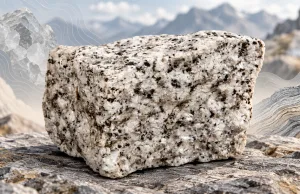
Granite is a coarse-grained intrusive igneous rock containing quartz and feldspar, commonly accompanied by mica and other minerals.
It forms through the crystallization of silica-rich magma beneath Earth’s surface.
Granite is widespread in continental crust and commonly forms large intrusive bodies.
Its interlocking crystals, durability, and appearance make it a popular building and decorative stone.
Basalt
Basalt is a fine-grained mafic volcanic rock composed mainly of plagioclase and pyroxene, sometimes with olivine.
It forms much of Earth’s oceanic crust and occurs in lava flows, volcanic islands, and continental flood-basalt provinces.
Basaltic lava is commonly less viscous than silica-rich lava, although its behavior also depends on temperature, crystals, and gases.
Gabbro
Gabbro is a coarse-grained mafic intrusive rock commonly composed of calcium-rich plagioclase and pyroxene.
It is compositionally related to basalt but generally forms through slower crystallization underground.
Gabbro is an important component of the lower oceanic crust.
Diorite
Diorite is an intermediate intrusive igneous rock composed mainly of plagioclase feldspar and mafic minerals such as amphibole, pyroxene, or biotite.
It commonly occurs in continental magmatic arcs and other intrusive settings.
Its contrasting light and dark minerals often give it a speckled appearance.
Andesite
Andesite is an intermediate volcanic rock commonly associated with subduction-related volcanic arcs.
It may contain plagioclase, amphibole, pyroxene, and other minerals.
Andesitic magmas can produce lava flows and explosive eruptions depending on their gas content and physical properties.
Rhyolite
Rhyolite is a felsic volcanic rock that is commonly rich in silica.
It may contain quartz and feldspar crystals within a fine-grained or glassy groundmass.
Rhyolitic magma is often relatively viscous and can produce lava domes, thick flows, or explosive volcanic deposits.
Obsidian, Pumice, and Scoria
These volcanic materials are especially distinguished by texture.
Obsidian is natural volcanic glass that forms when lava cools with limited crystal growth.
Pumice contains abundant gas cavities and commonly forms during the rapid expansion and fragmentation of gas-rich magma.
Scoria is also vesicular but is generally darker and denser than typical pumice, commonly reflecting a more mafic composition.
Classification of Igneous Rocks

Igneous rocks can be described using four broad compositional categories: felsic, intermediate, mafic, and ultramafic.
These terms reflect chemical and mineralogical differences.
| Composition | Approximate SiO₂ content | Typical minerals | Examples |
|---|---|---|---|
| Felsic | Generally above 63% | Quartz, feldspars, mica | Granite, rhyolite |
| Intermediate | Approximately 52–63% | Plagioclase, amphibole, pyroxene | Diorite, andesite |
| Mafic | Approximately 45–52% | Pyroxene, calcium-rich plagioclase, olivine | Gabbro, basalt |
| Ultramafic | Generally below 45% | Olivine, pyroxene | Peridotite, komatiite |
The silica ranges are approximate educational divisions and should not be treated as universal boundaries for formal rock names.
The QAPF Classification System

The QAPF system is used to classify many crystalline plutonic rocks according to the relative proportions of four mineral groups:
- Q: Quartz
- A: Alkali feldspar
- P: Plagioclase feldspar
- F: Feldspathoids
The proportions of these minerals help distinguish rocks such as granite, granodiorite, tonalite, syenite, and diorite.
The QAPF system is not suitable for every igneous rock. Additional classification schemes are required for certain rock types, including ultramafic rocks.
The TAS Classification System

The Total Alkali–Silica (TAS) diagram is commonly used to classify volcanic rocks when reliable chemical analyses are available.
It compares:
- Total alkalis (Na₂O + K₂O)
- Silica (SiO₂)
Both are expressed as weight percentages.
The TAS system is particularly useful when volcanic rocks are too fine-grained or glassy for reliable identification of their mineral proportions.
Textures of Igneous Rocks

Texture describes the size, shape, and arrangement of crystals, glass, and other components within a rock.
It provides valuable information about cooling and crystallization history.
| Texture | Characteristics | Example |
|---|---|---|
| Phaneritic | Visible, interlocking mineral crystals | Granite, gabbro |
| Aphanitic | Crystals too small to distinguish easily | Basalt, rhyolite |
| Porphyritic | Larger crystals embedded in a finer groundmass | Porphyritic andesite |
| Glassy | Predominantly noncrystalline material | Obsidian |
| Vesicular | Gas cavities preserved in solidified material | Scoria, pumice |
| Pegmatitic | Exceptionally large crystals | Granitic pegmatite |
| Pyroclastic | Volcanic fragments accumulated during eruptions | Tuff |
Porphyritic Texture
Porphyritic rocks contain relatively large crystals called phenocrysts within a finer-grained groundmass.
This texture commonly records changes in crystallization conditions.
For example, some crystals may grow while magma is stored underground, before the remaining melt cools rapidly after eruption.
However, porphyritic texture does not always require a simple two-stage cooling history.
Vesicular Texture
Vesicles form when gas bubbles become trapped as molten material solidifies.
Their size, shape, and distribution can provide clues about magma degassing and flow behavior.
Glassy Texture
Glassy texture develops when melt solidifies without forming an extensive crystalline structure.
Obsidian is the best-known example.
Rapid cooling is important, although composition and crystallization kinetics also influence glass formation.
Mineral Composition of Igneous Rocks
The minerals present in an igneous rock reflect its magma composition and crystallization history.
Common igneous minerals include:
Quartz: A silica mineral common in many felsic igneous rocks.
Feldspars: Major rock-forming minerals found in a wide range of igneous compositions.
Olivine: A magnesium–iron silicate common in ultramafic rocks and some mafic magmas.
Pyroxenes: Dark silicate minerals abundant in basalt, gabbro, and peridotite.
Amphiboles: Hydrous silicate minerals that can occur in intermediate and certain felsic igneous rocks.
Micas: Sheet silicates such as biotite and muscovite, found in suitable igneous compositions.
These minerals do not crystallize under identical conditions. Their stability changes as magma cools and evolves.
Bowen’s Reaction Series

Bowen’s reaction series describes important patterns in the crystallization of common silicate minerals as magma cools.
It consists of two principal branches.
Discontinuous Reaction Series
The discontinuous branch involves changes in the dominant ferromagnesian mineral assemblage as temperature decreases.
The idealized sequence is:
Olivine → Pyroxene → Amphibole → Biotite
These minerals have different crystal structures.
Under suitable conditions, earlier-formed minerals may react with the remaining melt to form new minerals.
Continuous Reaction Series
The continuous branch involves plagioclase feldspar.
As temperature decreases, plagioclase compositions typically evolve from calcium-rich toward sodium-rich varieties.
The crystal structure remains broadly similar while chemical composition changes.
At relatively lower temperatures in appropriate magma compositions, minerals such as potassium feldspar, muscovite, and quartz may crystallize.
Why Bowen’s Reaction Series Matters
The series helps explain how different minerals form during magma cooling and why igneous rocks have distinct compositions.
It also illustrates how fractional crystallization can change the chemistry of the remaining melt when early-formed crystals are separated from it.
Bowen’s reaction series is an idealized model. Actual crystallization sequences depend on magma composition, pressure, water content, and other geological conditions.
Igneous Rocks and Plate Tectonics
Igneous rocks form in several major tectonic settings.
Mid-Ocean Ridges
At divergent plate boundaries, decompression melting of the mantle produces basaltic magma.
As magma crystallizes, it contributes to the formation of new oceanic crust.
Basaltic lavas and gabbroic intrusions are major components of the oceanic crustal system.
Subduction Zones
At convergent plate boundaries, fluids released from descending oceanic plates promote mantle melting.
Magma may then rise and evolve within the crust.
These processes produce volcanic arcs and intrusive bodies with a wide range of compositions.
Andesite, dacite, diorite, granodiorite, and related rocks are common in these environments.
Hotspots
Hotspot-related magmatism occurs in regions of sustained volcanic activity, sometimes away from conventional plate boundaries.
Hawaii is a well-known example dominated by basaltic volcanism.
Other hotspot systems, including Yellowstone, have produced more silica-rich magmas and major explosive deposits.
Continental Rifts
When continental crust stretches, mantle upwelling and decompression melting can produce magma.
Rift environments may develop basaltic volcanic fields and other igneous systems.
How to Identify Igneous Rocks in the Field
Igneous rock identification begins with careful observation.
1. Examine Grain Size
Determine whether crystals are visible to the naked eye.
Coarse-grained rocks may indicate slower crystallization underground, while fine-grained rocks commonly form through more rapid cooling.
2. Identify the Main Minerals
Look for quartz, feldspar, mica, pyroxene, amphibole, and olivine.
A hand lens can help distinguish mineral grains and examine their relationships.
3. Examine Color and Composition
Light-colored rocks often contain abundant felsic minerals, while darker rocks frequently contain higher proportions of mafic minerals.
However, color alone is not a reliable classification method.
4. Look for Special Textures
Observe whether the rock contains large phenocrysts, gas cavities, glassy material, or volcanic fragments.
These features can provide valuable information about its formation.
5. Consider the Geological Setting
Examine nearby outcrops, geological maps, and relationships with surrounding rocks.
An exposed intrusive body may cut across older formations, while a volcanic lava flow may overlie sedimentary layers.
6. Use Laboratory Methods When Necessary
Some igneous rocks are difficult to classify accurately by visual examination.
Petrographic microscopy and whole-rock geochemical analysis may be required for formal identification.
Geological and Economic Importance of Igneous Rocks
Igneous rocks provide evidence of magma generation, mantle processes, and the development of Earth’s crust.
Their mineral composition and chemical signatures help scientists investigate tectonic settings and magma evolution.
They are also important in construction and industry.
Granite and certain other intrusive rocks are widely used as building and decorative stones.
Basalt can be used as crushed aggregate, road material, and in other industrial applications.
Magmatic and associated hydrothermal systems are involved in the formation of valuable mineral deposits containing copper, nickel, chromium, platinum-group elements, and other resources.
The engineering behavior of igneous rocks depends on their mineralogy, weathering, fractures, and rock-mass conditions.
Famous Igneous Rock Formations

Giant’s Causeway, Northern Ireland
Giant’s Causeway is famous for its closely packed polygonal basalt columns.
These columns formed as thick basaltic lava cooled, contracted, and developed systematic fractures known as columnar joints.
The formation provides a striking example of how cooling processes create geometric patterns in igneous rocks.
Devils Tower, United States
Devils Tower in Wyoming consists of phonolite porphyry, an igneous rock with prominent columnar jointing.
It formed from magma that solidified underground and was later exposed by erosion.
The exact geological setting of its original emplacement remains a subject of interpretation.
Shiprock, United States
Shiprock in New Mexico is an eroded volcanic structure composed mainly of minette, a potassium-rich igneous rock.
Its prominent central mass and associated dikes preserve evidence of magma movement through the crust.
Erosion removed much of the surrounding material, exposing the more resistant igneous structures.
Liesegang Rings in Rocks: Formation, Iron Oxide Bands, and Natural Patterns
Orbicular Granite

Basalt vs Granite – Key Differences
Rock Identification Guide: How to Identify Rocks Like a Geologist
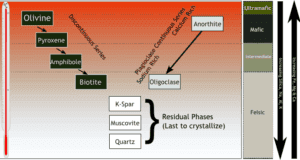


Plate Tectonics: How Earth’s Moving Plates Shape Continents, Mountains, and Oceans
Frequently Asked Questions About Igneous Rocks
What are igneous rocks?
Igneous rocks form when magma or lava cools and solidifies. They are one of the three major geological rock groups.
What are the two main types of igneous rocks?
Intrusive igneous rocks form when magma solidifies underground, while extrusive igneous rocks form from lava or volcanic material at or near Earth’s surface.
What are five examples of igneous rocks?
Granite, basalt, gabbro, diorite, and rhyolite are common examples.
Is granite an igneous rock?
Yes. Granite is a coarse-grained intrusive igneous rock commonly composed of quartz, feldspar, and mica.
Is basalt an igneous rock?
Yes. Basalt is a fine-grained mafic volcanic rock and is a major component of Earth’s oceanic crust.
What is the difference between granite and basalt?
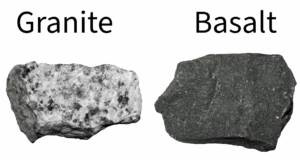
Granite is typically a coarse-grained, silica-rich intrusive rock, while basalt is generally a fine-grained, mafic volcanic rock.
Why do igneous rocks have different crystal sizes?
Crystal size depends on cooling and crystallization conditions. Slower cooling often allows crystals to grow larger, while rapid cooling commonly produces smaller crystals or glass.
Do all igneous rocks come from volcanoes?
No. Many igneous rocks form underground from magma that never reaches Earth’s surface.
Can igneous rocks contain fossils?
Fossils are generally not preserved within rocks crystallized from molten material because the high temperatures destroy most original biological remains. However, volcanic deposits may bury and preserve fossils in associated sedimentary or ash deposits.
What is Bowen’s reaction series?
It is an idealized model describing important mineral crystallization and reaction trends as silicate magma cools.
Conclusion
Igneous rocks reveal how molten material forms, moves, and solidifies within Earth.
Their composition and textures record the history of magma crystallization, while their distribution reflects tectonic processes operating at plate boundaries, hotspots, and continental rifts.
From granite crystallizing deep underground to basalt forming new oceanic crust, igneous rocks are essential to understanding Earth’s geological evolution.
By studying their minerals, textures, chemistry, and field relationships, geologists can reconstruct magmatic processes and interpret the geological history preserved in the rocks around us.
Scientific References and Further Reading
- U.S. Geological Survey. What Are Igneous Rocks? https://www.usgs.gov/faqs/what-are-igneous-rocks
- British Geological Survey. Rocks and Minerals. https://www.bgs.ac.uk/discovering-geology/rocks-and-minerals/
- British Geological Survey. Rock Classification Scheme – Volume 1: Igneous Rocks. https://www.bgs.ac.uk/download/bgs-rock-classification-scheme-igneous/
- Earle, S. Physical Geology, 2nd Edition — Crystallization of Magma. https://opentextbc.ca/physicalgeology2ed/chapter/3-3-crystallization-of-magma/
- U.S. National Park Service. Devils Tower: Frequently Asked Questions. https://www.nps.gov/deto/faqs.htm
- International Union of Geological Sciences (IUGS). Igneous Rock Classification Recommendations, as incorporated in the BGS Rock Classification Scheme.
