Japanese Tea, the Way Our Mother Didn't

(Translated from the original Japanese article => お茶、古くて新しい友)
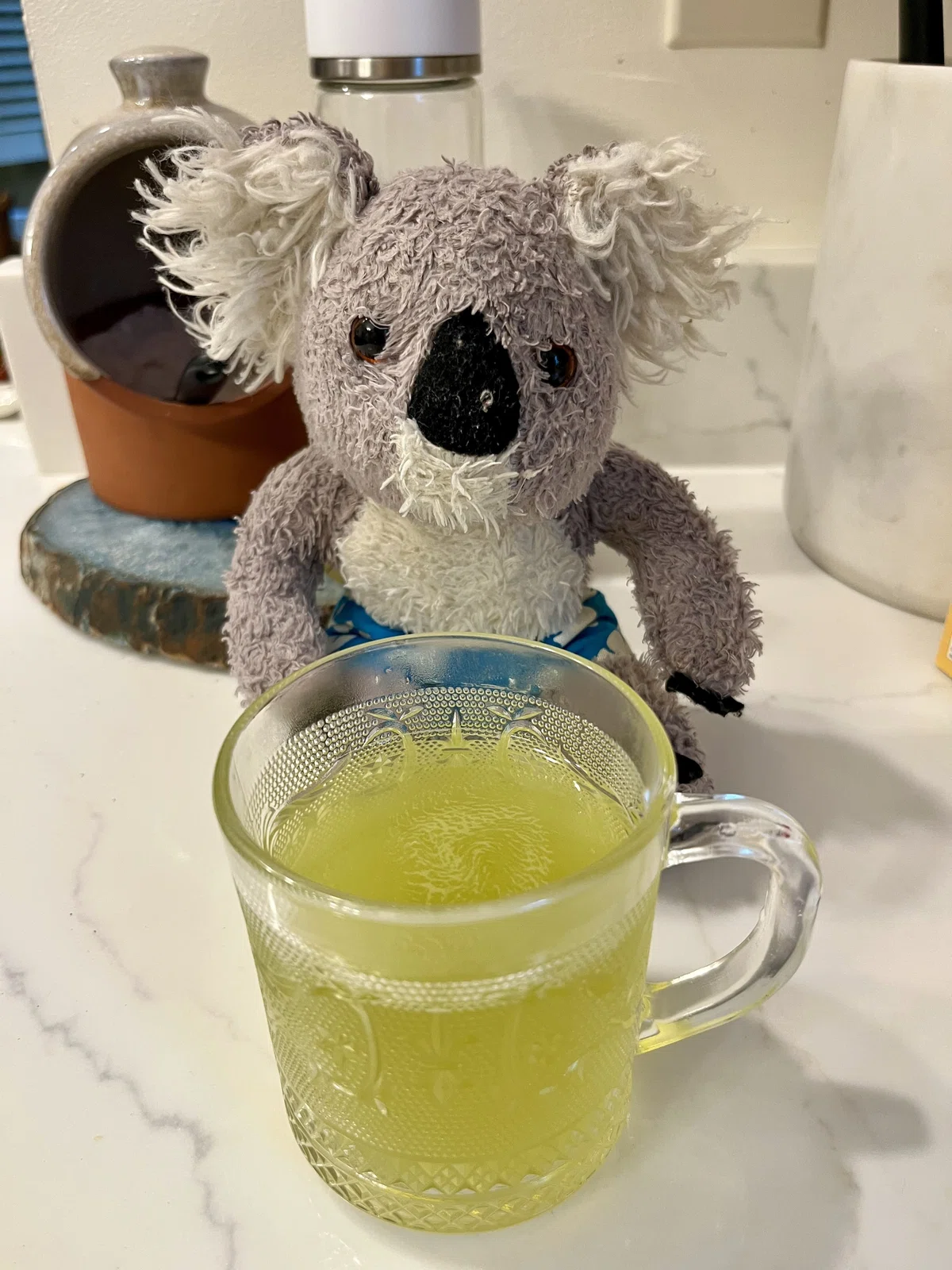
Hello. I'm Ken, a koala bear from Sydney. I love sleeping, and I love a comforting drink right before bed.
My friend Momo, a Siberian flying squirrel born in Shiretoko, has a birthday coming up. Japanese tea was sent to him by his family and a friend in Japan—two different kinds, no less! He should have been thrilled, but he looked a little worried.
"What's wrong?" I asked.
"Well, I guess I'm just not very good at brewing green tea," Momo said. "When I visit Japan, the tea my mother and sister make is so delicious. But when I come back to the US and brew it myself, it just doesn't taste right."
"Maybe the tea you drink in Japan is of higher quality?"
"Hmm. I actually do pick out pretty good tea leaves—well, by 'good' I mean more expensive ones. Maybe it's my brewing technique, or maybe I feel a bit lonely because I don't have that cozy atmosphere of my mother's or sister's home."
"We can't really recreate that home atmosphere, can we?"
"But since they went through the trouble of sending me this tea, I really want to enjoy it. What should I do?"
"I know! Let's brew it in a way neither your mother nor your sister ever did, so you can enjoy it to the fullest!"
I reassured him, even though I wasn't entirely confident.
"Really?!" Momo exclaimed with joy. He scampered up a tall pecan tree in the yard and zoomed around, swooping between the branches.
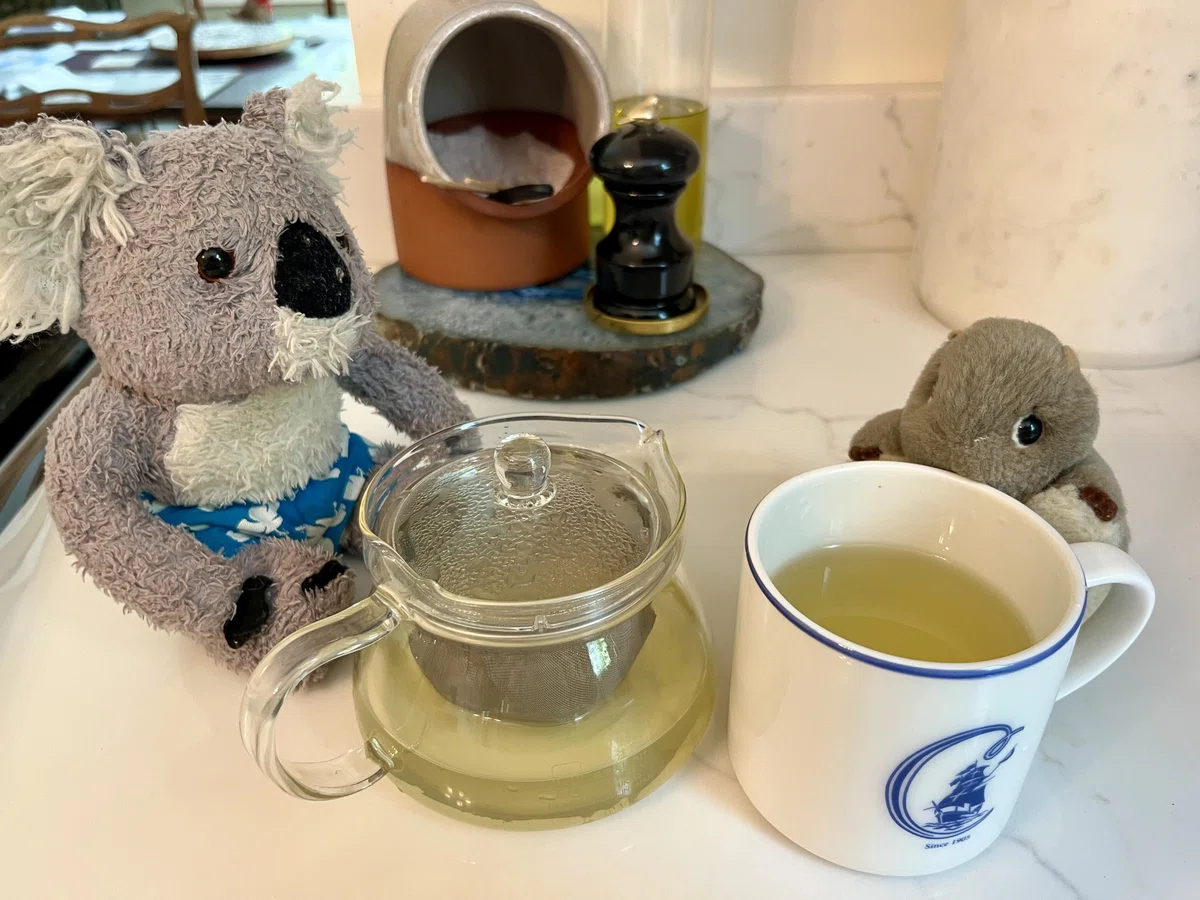
While he was flying around, I practiced brewing tea for Momo.
Momo's Cold-Brewed Japanese Tea Recipe
Ingredients (500ml, 2 servings)
Green tea leaves: 10g (tea bags work too)
Water: 500ml
Salt: a tiny pinch between your front paws
Equipment
Teapot
A pot or frying pan slightly larger than the teapot
Thermometer
How to Make
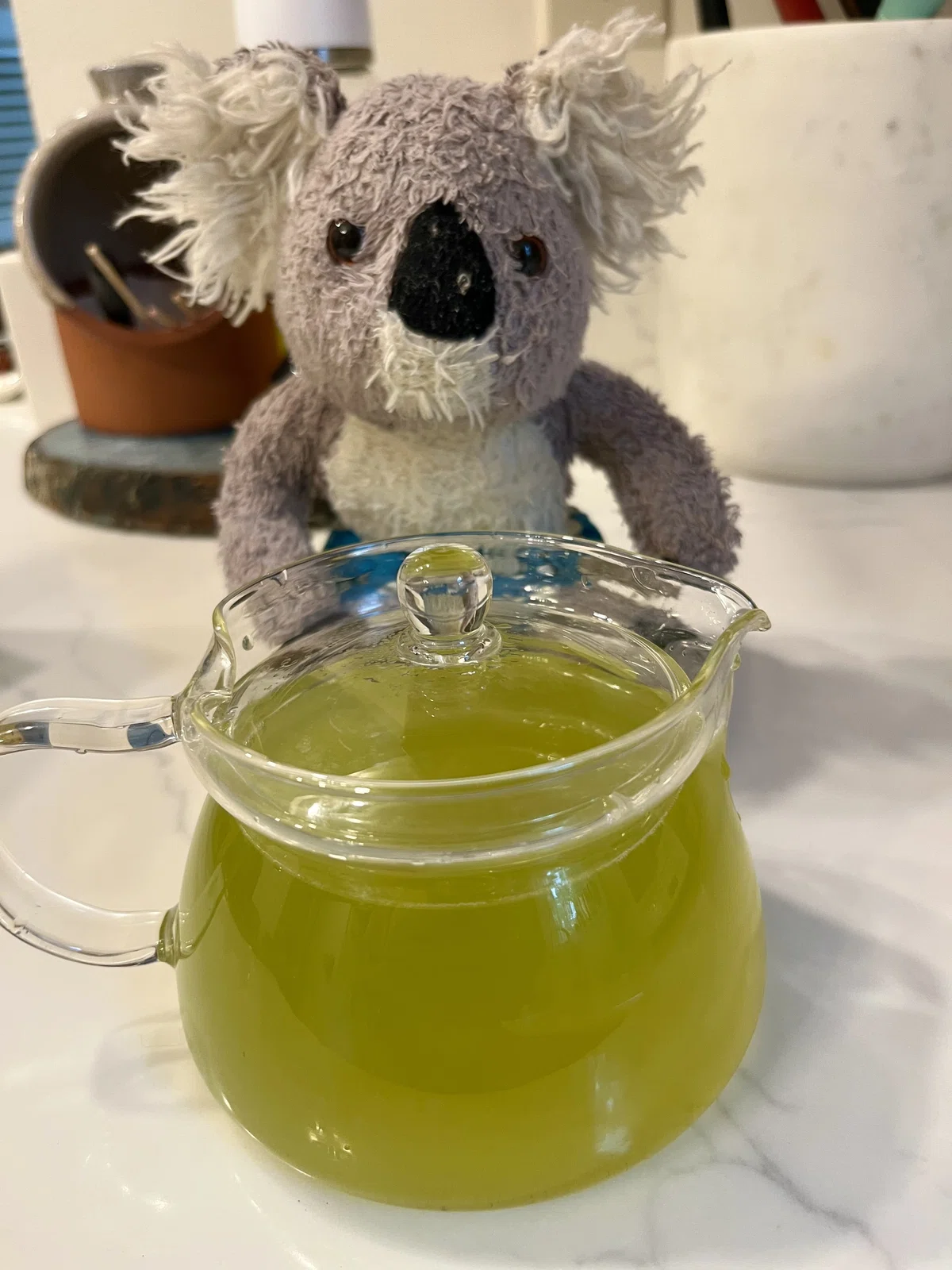
Put the water and tea leaves into the teapot.
Chill in the refrigerator for 2 hours. Remove the tea leaves.
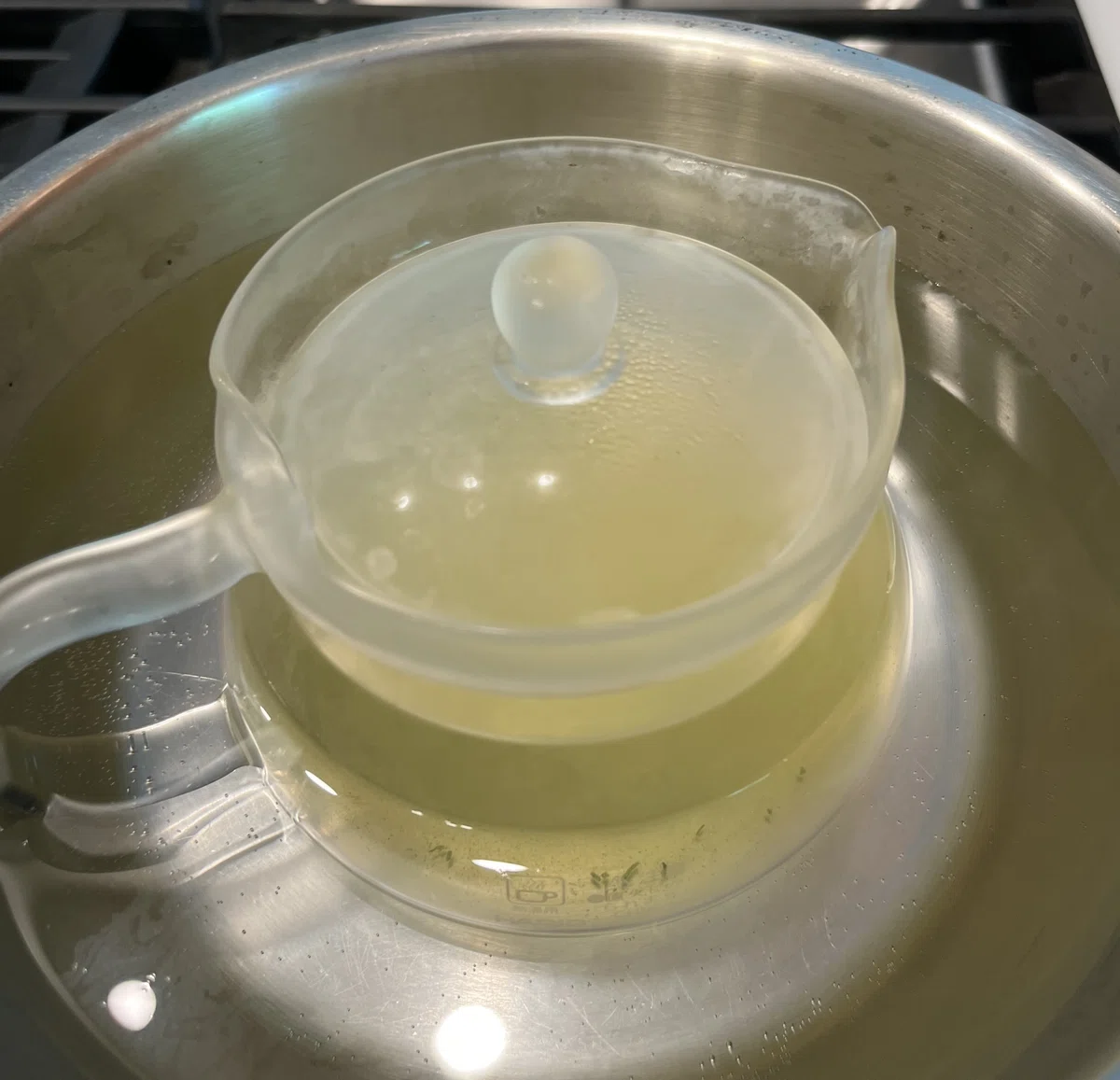
Pour 500ml of water into a pot slightly larger than the teapot, and heat it for about 5 minutes. Turn off the heat when it reaches around 50–60°C (122–140°F).
Gently place the teapot into the hot water bath and wait for about 10 minutes. Remove it when the tea temperature goes above 40°C (104°F) but stays below 50°C (122°F).
Pour the tea into tea bowls. Drink about half of it slowly.
Sprinkle a tiny pinch of salt into the remaining half. Do not stir, and drink slowly to the end.
(As told by Ken)
From Ken to Momo
A long time ago, when I visited a tea garden in Sayama, the store owner gently rocked a round teapot back and forth like a rocking horse. That extracted a rich umami taste, almost like kombu tea (kelp tea). Ever since then, I've always wanted to drink tea like that again.
Cold-brewing suppresses the astringency, making it easier to taste the umami. And I thought... if there's umami, why not give it a little boost with a touch of salt?
I mean, kombu tea exists, right? I used to wonder why such a drink even existed. But it seems that people have known for a long time that a tiny bit of kombu or salt enhances the umami of tea.
By the way, speaking of how umami spreads, when I mentioned this to Pika, the American pika, he said he had a similar experience while making ratatouille.
He used to put bay leaves in, wondering if they actually made a difference, just following the recipe. But when it was done and he tasted it straight from the pot, he noticed that only in the area right around the bay leaf, the flavor of the vegetable sauce suddenly became bright and vivid. That’s when he realized what bay leaves are for. Of course, once you ladle it into a plate and mix it, you can't tell anymore.
From Momo to Ken
Thank you, Ken. You remembered that I'm not very fond of cold drinks.
My mother and sister always brewed Japanese tea with hot water, and they never made cold-brewed tea for me—let alone something as elaborate as using a hot water bath.
Drinking tea that was cold-brewed, yet served warm, was a fresh experience. It had very little astringency and a refreshing green aroma. I could definitely taste a subtle hint of umami.
And when I added a pinch of salt near the end, something amazing happened!
As I kept drinking, there was a moment when the flavor of the tea brightened up, almost like a tiny spark going off.
What is this? An illusion? I thought as I took another sip, but by then it was back to being regular tea.
Oh well, I thought, tilting the tea bowl to finish the last drop, and right at the bottom, a slightly richer, bright umami flavor blossomed again!
It didn't taste salty at all, but this was the effect of the salt! The first moment happened as the salt grains fluttered down before completely sinking. And the salt that settled at the bottom only dissolved in that localized area.
This localized flavor gradation was shocking. It felt as though the umami of the tea suddenly burst into bloom when it met the salt.
I tried it 3 or 4 more times after that. The key is not to wait too long after adding the salt. If you wait too long, the salt dissolves completely and spreads throughout, making it hard to notice the enhanced umami.
Also, while I can always catch the umami at the bottom, I’ve only managed once to catch the flavor around the salt as it sinks. Still, it's delicious, and focusing so intently while drinking tea is really fun!
I doubt there are many Siberian flying squirrels who drink tea like this—certainly not my mother or sister—but I fell in love with it.
With this method, I can experiment with other teas and different cups. I can even try different kinds of salt. In fact, I have some salt with Rausu kombu that I got in Shiretoko!
Let's drink it together next time.
Not at night, or we won't be able to sleep—let's do it in the morning or early afternoon.
From Ken to Momo again: Tea Compounds, the Difference Between Hot and Cold Water
Oh, right! I know you only drink decaf coffee, Momo.
So I looked into caffeine a bit. Based on what I found, brewing tea this way likely results in less caffeine than traditional brewing!
Apparently, brewing tea with hot water around 80°C (176°F) makes it easier for caffeine and catechins to extract, which brings out a stronger bitterness and astringency.
On the other hand, using cold water makes it harder for caffeine and those harsh catechins to be extracted, resulting in less bitterness and a smoother, sweeter taste with more umami.
There’s even a theory that if you cold-brew it first, caffeine levels stay lower than hot-brewed tea even if you warm it up to around 40–50°C (104–122°F) afterward.
Momo to Ken:
I had no idea that how you brew tea could actually change what comes out of it!
I don't think there are many Siberian flying squirrels who drink tea like this—certainly not my mom or sister—but I really love it. Now I feel confident that I can actually enjoy the present teas.
Come to think of it, having you work out this brewing method for me felt like a present in itself.
This turned out to be a good birthday.