The Shin-Philosophy of Happiness: For Those Who Have Given Up on Self-Esteem ──Deconstructing the "Lies" of Modern Philosophy Through Evangelion, Attack on Titan, and Monster

・This is the English version of the Japanese text, translated by Gemini.
・A Kindle version is also available (the price is the same).
"Happiness is something anyone can have, otherwise it wouldn't be happiness at all."
── From the film "Monster" (2023), directed by Hirokazu Kore-eda
Introduction: What Brings Genuine Happiness to Human Beings?
One of my favorite manga is "MASTER Keaton" (by Naoki Urasawa, Hokusei Katsushika, and Takashi Nagasaki; published by Shogakukan). Inside Volume 3 of the original paper edition, there is a particular story titled "A Message from Alekseyev."
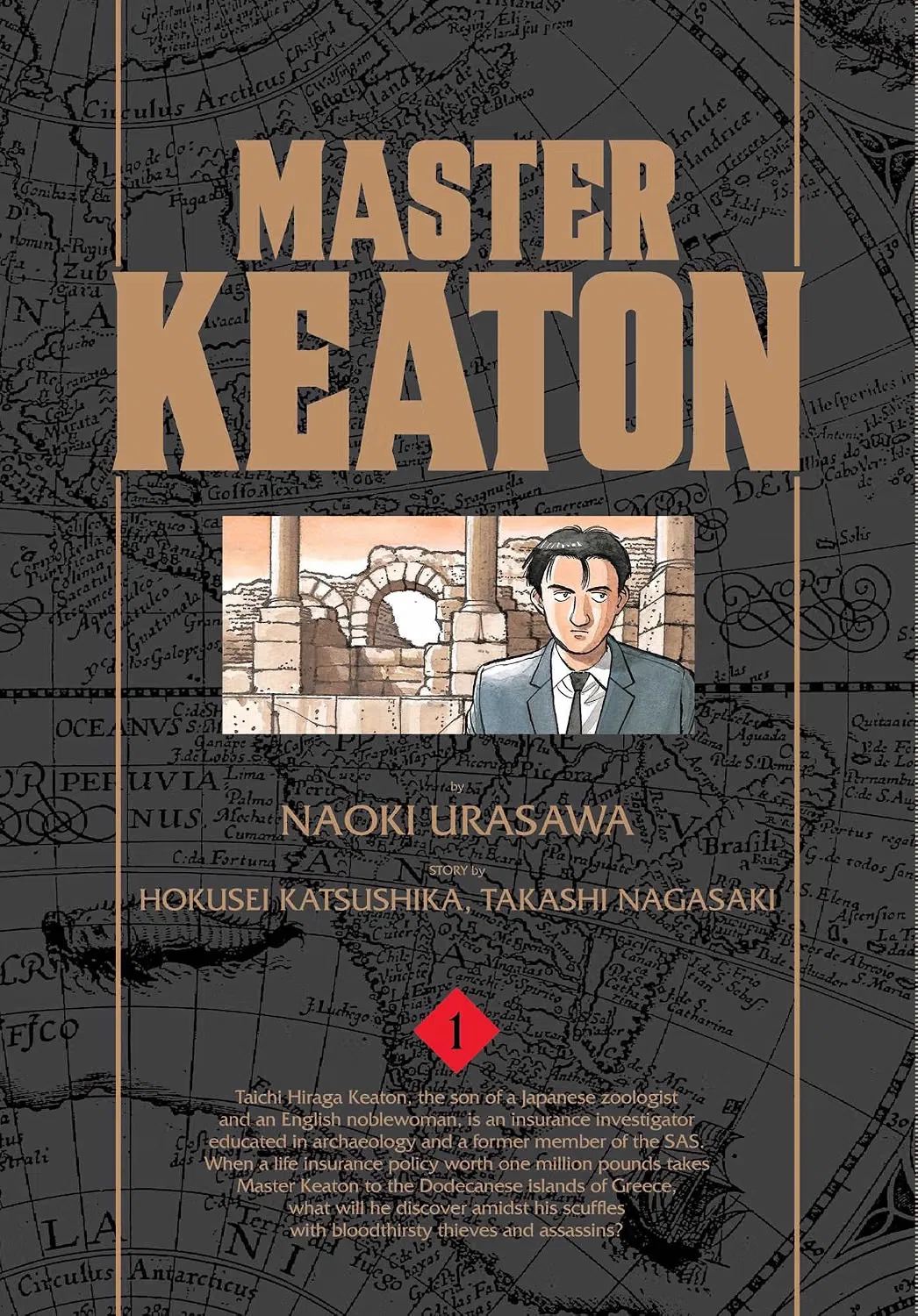
In this story, the protagonist, Taichi Keaton, is challenged to a "game" by a certain man.
"Mr. Keaton, there is someone I would like you to observe... I need to borrow your keen insight."
The man wants Keaton to observe a figure named Velasco, the most powerful and influential billionaire on the island where they are staying. The man praises Velasco, calling him:
"The happiest man in the world. He has a magnificent mansion, luxurious meals, fine wine, the respect of his wealthy peers, and an exquisite mistress..."
Yet, after observing him, Keaton calmly offers a starkly contrasting verdict:
"I thought he was a deeply unhappy man."
"He is utterly bored with luxury... he feels no emotion anymore. And... he is painfully aware of that fact."
*
This is where the citation from the story ends.
I first encountered "MASTER Keaton" when I was a high school student, about thirty years ago. As I turned the pages and read the story, I found myself daydreaming and pondering a vague yet profound question:
“I see... so it is entirely possible to be deeply unhappy, even when you possess more money than you could ever spend.”
“Then, what exactly makes a human being happy? Does the definition of happiness vary entirely from person to person?”
*
"What brings genuine happiness to human beings?"
This is a question that sounds deceptively simple, but in reality, it is an incredibly difficult and monumental inquiry.
Take money, for instance. Even for someone like me, who desires wealth more than anything, if you actually obtain it, you might eventually grow numb to the luxury (though, personally, I would love to experience that kind of numbness just once). If that adaptation happens, you end up just like Velasco: a "deeply unhappy person."
Let us consider another point.
The quote I placed at the very beginning—“Happiness is something anyone can have, otherwise it wouldn't be happiness at all.”—comes from a character in Hirokazu Kore-eda’s 2023 feature film, "Monster". But is there truly such a thing as a form of happiness that is accessible to absolutely anyone?
If such a thing does exist, then what is the precise boundary line that separates "happiness" from "unhappiness" for all human beings?
*
To jump straight to the conclusion: yes, a universal form of happiness—and a universal boundary line between happiness and unhappiness—does exist.
The small, seemingly mundane, yet staggeringly vast question that first sprouted in my mind all those years ago through "MASTER Keaton" has finally found its definitive answer at the end of a very long journey.
*
To put it in a single sentence: this book is a philosophy of happiness built entirely on the premise that "human existence is fundamentally and naturally lonely."
With the invaluable aid of masterpieces like "MASTER Keaton" and "Monster", which deeply shaped and catalyzed my thinking, I have attempted to articulate this concept as clearly as possible. The works I cite throughout this text span across various genres and eras, but I have written this in a way that requires absolutely no prior knowledge of them to be fully understood. At the very end of this text, I have also included direct links to Amazon for each work.
*
Now, I am certain there are readers thinking: “Wait a minute. What are you talking about? How can anyone possibly achieve true happiness while remaining lonely?”
I completely understand why you would think that. To explain the core reason right here would diminish the value of buying this book, so I cannot reveal everything just yet. However, it is precisely because you harbor that skepticism that I strongly encourage you to read on. The paradigm shift and the profound change in perspective that await you further ahead will undoubtedly be incredibly "interesting" and "enjoyable."
*
To broaden our scope slightly, let us look at the current global trend toward "division," which seems to be accelerating across every domain of society.
In my view, this clash is fundamentally between two groups: those who believe that "our happiness lies only beyond division," and those who counter that "our happiness can never be found beyond division."
While I firmly align myself with the latter, the reason we cannot stop the former—whose path seems destined to lead toward ultimate destruction—is because those of us who want to say "NO" have yet to possess a powerful, effective discourse to back up our stance. We have merely resigned ourselves to thinking, "Perhaps division is simply inevitable."
However, the new philosophy of happiness articulated in these pages will offer a completely new horizon to those who read it. In the end, I believe it will become an intellectual foundation strong enough to leap over even the most rigid divisions and the turbulent currents of our time.
I truly believe this.
[Notice regarding copyright and AI usage]
All rights reserved. No part of this text may be reproduced, copied, translated, broadcast, distributed, reprinted, altered, transmitted publicly (including posting on websites), or resold, in whole or in part, without prior written permission. Utilizing this text for the training or development of generative AI models is strictly prohibited, regardless of whether it is for commercial or non-commercial purposes.
*This text has been translated by Gemini.
01 A Universal Unhappiness
Now, I would first like to share the journey of how I ultimately arrived at the realization that "human existence is fundamentally and naturally lonely."
Since this "odyssey" traces back about thirty years, the works, manga, novels, and songs I will cite along the way are understandably dated. (I must extend an especially sincere apology to those reading this foreign language edition, as many of these referenced works have never been localized or released in your countries.) However, I ask that you bear with me through these opening sections.
*
The question that first sprouted in my mind while reading "Keaton"—the path to finding a form of "happiness that anyone can achieve"—began with a profound contemplation on "a form of unhappiness that applies to absolutely everyone."
Why this approach? As I touched upon in the introduction, while the shapes of happiness may appear to vary infinitely from person to person, analyzing them individually can be counterproductive. Instead, by identifying the universal root cause of human unhappiness and working backward from there, I believed we could reach our "goal" much faster.
In this section, "01," I will present the first material for examining this universal unhappiness.
*
When I think about "a universal unhappiness," my mind always returns to a certain line from a manga I read during its serialization, around the same time "MASTER Keaton" was running. That work is "F -Ef-" (by Noboru Rokuda; published by Shogakukan).
*
"...I, too, was once..."
"As perfect an existence as that unborn child in the womb..."
"Filled with absolute confidence, without a single grievance..."
"Believing the entire world moved exactly as I wished..."
"To be born into this world... is an unhappiness..."
── From Volume 27, spoken by Otoya Yamaguchi
*
"F -Ef-" is the story of the protagonist, Gunma Akagi, who aspires to become an F1 driver. If I leave the explanation at that, it might sound like a simple, conventional "racing manga." However, this work possesses a deeply philosophical dimension, constantly asking, "Why do human beings pursue speed?" In that regard, it is an incredibly profound and compelling piece of literature (though, of course, the racing scenes alone are thrilling enough).
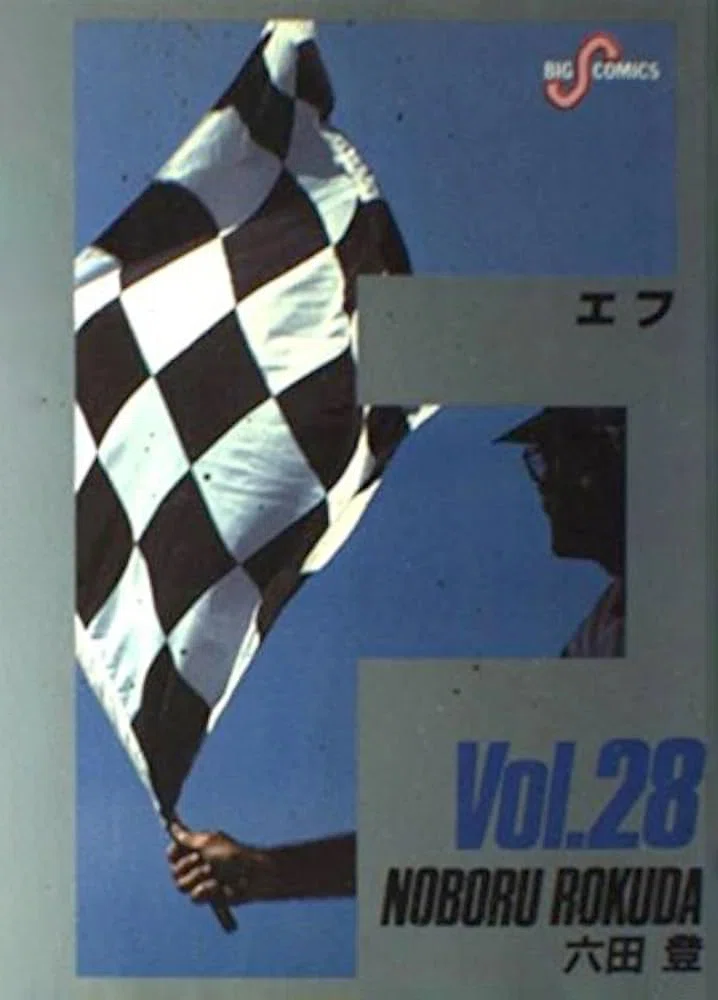
Although it began in the mid-1980s—smack in the middle of the hyper-conservative "Showa" era—it remains one of my personal favorites because it fully and dimensionalizes the life of every single character, including the female cast, rather than treating them as mere background accessories. (However, because it contains graphic depictions of sexuality and sexual violence, I might hesitate to recommend it to those who are sensitive to such themes.) The quote above is one of the many unforgettable lines spun from this narrative.
Let me lay out my own interpretation of this dialogue below.
*
When a human being is about to be born, the time spent inside the mother's womb is a state of absolute, uncompromised freedom—a state of "omnipresence and omnipotence," so to speak.
Without being enslaved even by the restriction of gravity, with no need to sustain oneself by eating, and with no obligation to exchange words with anyone, one is entirely protected by the mother, existing in constant, perfect unity with her.
Yet, the very moment we are cast down onto this earth, every single one of those privileges is violently stripped away.
We are forced to live under the crushing weight of gravity, compelled to feed ourselves, required to learn everything completely from zero, and eventually mandated to secure what we call the "means of survival" in whatever shape we can. To accomplish this, we have no choice but to interact and communicate with others as we navigate our lives.
"To be born into this world" means to be cast down from a state of total omnipotence into a state of absolute ignorance and helplessness. It is, in essence, nothing short of "unhappiness" itself.
*
Now, I have introduced the word "unhappiness," but this is still slightly different from the "universal unhappiness" I promised at the beginning.
The definitive answer to "a universal unhappiness" will emerge a little further down the road. What I want to pose to you right here is a different question: “If we were to rename the 'unhappiness' described here with another word entirely, what would that word be?”
We are pulled away from an existence with whom we were in constant, unbroken unity—an existence where "understanding each other" wasn't even necessary—and thrust into a reality where we must strive to understand one another. What is the precise emotion that is born into the world at that exact moment of severing?
This is our "Material No. 1."
※Note: Tragically, there are instances in this world of "unwanted births." However, that is an entirely separate issue from the existential event of birth itself. For the scope of this book, I wish to operate under the premise that the loss of omnipotence—the shattering of primal happiness caused by the physical separation from the mother's womb—is a transition that visits every human being with absolute equality.
※As a brief aside (and so I will touch upon it only lightly here), I suspect that the phenomenon of Hikikomori (social withdrawal) is, at its core, a manifestation of the desire to return to that pre-birth state. I cannot help but think of it as a desperate, subconscious ritual of "rebirth." Faced with an overwhelming world outside, the individual retreats to their room, transforming it into a makeshift "womb" in a quiet, resigned belief that they were not yet ready to be born.
02 The Theories of Innate Good and Innate Evil
For a moment, let us set aside the discussion of "Material No. 1." In this section, "02," I would like to introduce another piece of material that will help us contemplate "the universal unhappiness."
In section "03," we will intertwine the materials gathered from "01" and "02" to advance our journey even further.
*
Long before I encountered "MASTER Keaton" or "F -Ef-", back when I was in the upper grades of elementary school, a remarkably long-running legend-fantasy novel series began. It finally reached its conclusion recently, at the very end of 2020. In this work, "Sohryuden: Legend of the Dragon Kings" (by Yoshiki Tanaka; published by Kodansha), there is a scene where one of the protagonists, Tsuzuku Ryudo, brilliantly tears into an antagonist with his razor-sharp eloquence.

Since this is a work of fiction, I naturally cannot reproduce the text directly. To summarize it briefly: a character approaches Hajime, Tsuzuku’s older brother and fellow protagonist, with a bizarre, twisted interpretation of philosophy, saying, "I am a deep admirer of Xunzi, who championed 'Innate Evil.' Since human nature is inherently 'evil' at its core, it doesn't matter how many bad things we do." Tsuzuku proceeds to completely and utterly dismantle this individual's logic with his characteristically fierce tongue (Volume 3).
By the way, while the historical background of Sohryuden is admittedly dated, re-reading it reminds me just how incredibly entertaining it still is! I highly recommend giving it a read. (The author, Yoshiki Tanaka, might be more famous globally today as the original creator of the Legend of the Galactic Heroes series—which recently received a new anime adaptation—or The Heroic Legend of Arslan, which has been adapted into manga by Hiromu Arakawa, the creator of Fullmetal Alchemist.) But leaving that aside.
The core question I want to pose in this section is this:
"Is human nature inherently good, or is it inherently evil?"
"Is the fundamental essence of humanity good or bad?"
In other words: "What truly constitutes the fundamental nature of a human being?"
*
If you went through the high school education system in Japan, you most likely learned Mencius’s theory of "Innate Good" (Sei-zen-setu) and Xunzi’s theory of "Innate Evil" (Sei-aku-setu) as a set. Do you happen to remember them?
If they ring a bell, think back to how you felt at the time. Or perhaps, how do you view them now?
Do you lean toward "Innate Evil," which argues that "because the fundamental nature of human beings is unfortunately evil, it is vital to guide them toward goodness through education, propriety, and rituals"?
Or do you lean toward "Innate Good," which posits that "the fundamental nature of human beings is inherently good, and we can cultivate and expand that goodness further through education, propriety, and rituals"?
Which side did you choose back then? Or rather, what do you think about it today?
*
It might seem a bit unfair of me to throw out such a monumental question only to say this, but my own answer back then was: "Honestly, neither."
Now, if it’s neither, you might wonder, "Then what on earth is it?" At the time, my conclusion was essentially to hit the pause button: “I can intuitively tell that it’s neither of them, but this isn't a topic I have the capacity to judge right now, so I will put it on hold.”
I told myself that eventually, the answer would become clear.
(To deviate slightly from the main thread, both Xunzi and Mencius ultimately just wanted to communicate the supreme importance of "propriety, rituals, and education." Their fierce debate was, in a sense, merely the framework they used to drive that point home.)
*
Years passed, bringing me to the period when I was studying for my university entrance exams.
One of the vital clues to unlocking the answer I had put "on hold" came to me through the lyrics of a certain rock band. (If you're disappointed that this clue comes from a song rather than a manga, anime, or film, please forgive me.)
Just like the scene from Sohryuden, these lyrics are deeply tied to copyright, so I cannot print them here verbatim. However, the essence of the line goes something like: "You know, that famous inventor and that notorious criminal, they were both just innocent children once." (I’ve practically spelled it out, so I hope you'll understand why I can't name the track title directly!)
These lyrics instantly connected with the whole discussion of Innate Good and Innate Evil that I had placed on hold.
If "the inventor = good" and "the criminal = evil," then what exactly fills the question mark if we look at the lyric: "children = ?"
Right there, in that exact space, lies the true fundamental nature of a human being—something that is neither inherently good nor inherently evil. And it is that very core, I realized, that deeply shapes how a person chooses to conduct their life later on.
Instead of framing it as a choice between good or evil, I began to wonder: “What if both good and evil actually branch out from the exact same root?”
That was the perspective I began to develop.
This is our "Material No. 2."
03 What Lies Beyond "01 + 02"
In section "01," we explored the trauma everyone experiences when entering this world—the physical separation from the mother, which shatters our primal unity. What precise emotion, I asked, is born at that moment of severing? (Material No. 1).
In section "02," we contemplated the true fundamental nature of a human being—the universal core we carry within us that eventually branches out toward either good or evil (Material No. 2).
By intertwining these two threads, I began to realize that the answer to both questions converges upon a single, profound emotion: "Loneliness".
*
In the mega-hit manga "Attack on Titan" (by Hajime Isayama; published by Kodansha), a character named Kenny Ackerman leaves behind a hauntingly memorable line shortly before his death:

*
The free preview ends here. Unlock the full essay below.
Beyond this wall, we will dive into the absolute core of "Sei-jaku-ron" (The Theory of Innate Solitude), deconstructing the psychological and existential subtexts of our favorite modern masterpieces:
・Attack on Titan: The profound reality behind Kenny Ackerman’s haunting realization that everyone must be a "slave to something."
・Neon Genesis Evangelion: How the infamous "A.T. Field" acts as Director Hideaki Anno's radical counter-thesis to centuries of Western individualism.
・Dismantling Descartes: Exposing the hidden "lies" behind "I think, therefore I am," and forging a necessary new paradigm for our fragmented era.
・The Grand Loop: Witnessing a stunning conceptual circle that begins with Hirokazu Kore-eda's Monster, only to seamlessly journey toward the silent, powerful climax of a certain legendary manga masterpiece waiting for you at the final page.
If you are ready to let go of the toxic pressure of artificial self-esteem and discover a deeply comforting, alternative philosophy of happiness, I invite you to read on.
ここから先は
¥ 980
