


You can use this ONE pie crust recipe for any type of pie, whether it's a double crust, single crust, berry pie, pumpkin, or lemon meringue. This is the best pie crust recipe because you get the best of both worlds: butter for flavor and lard for an extra flaky crust! Tossing frozen grated butter in the flour and then cutting in the lard gives you perfect flaky layers, and the crust is still strong enough to use as a bottom crust or a top crust. Don't believe me? Just ask your grandma what she used for the best pie crusts. Trust me!
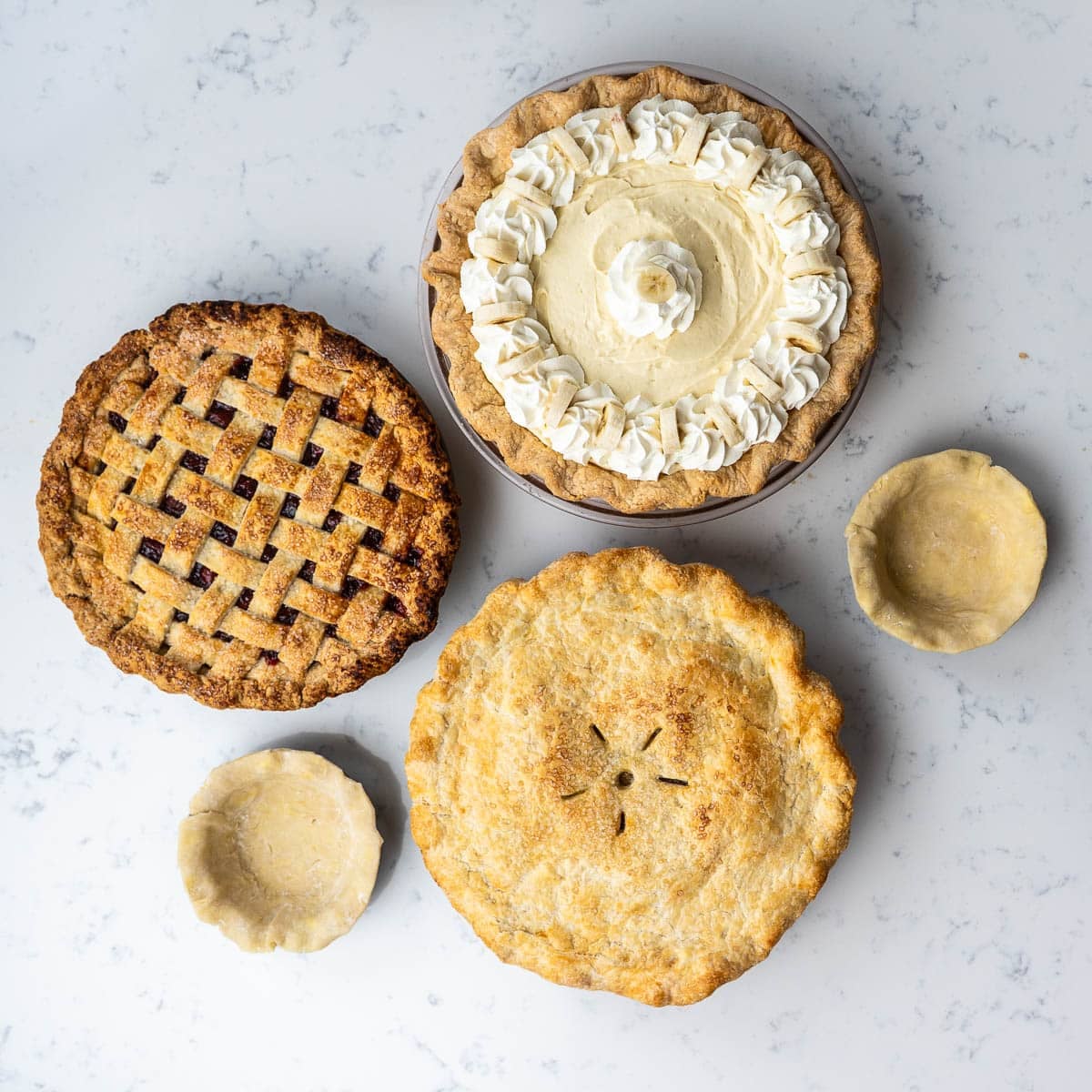
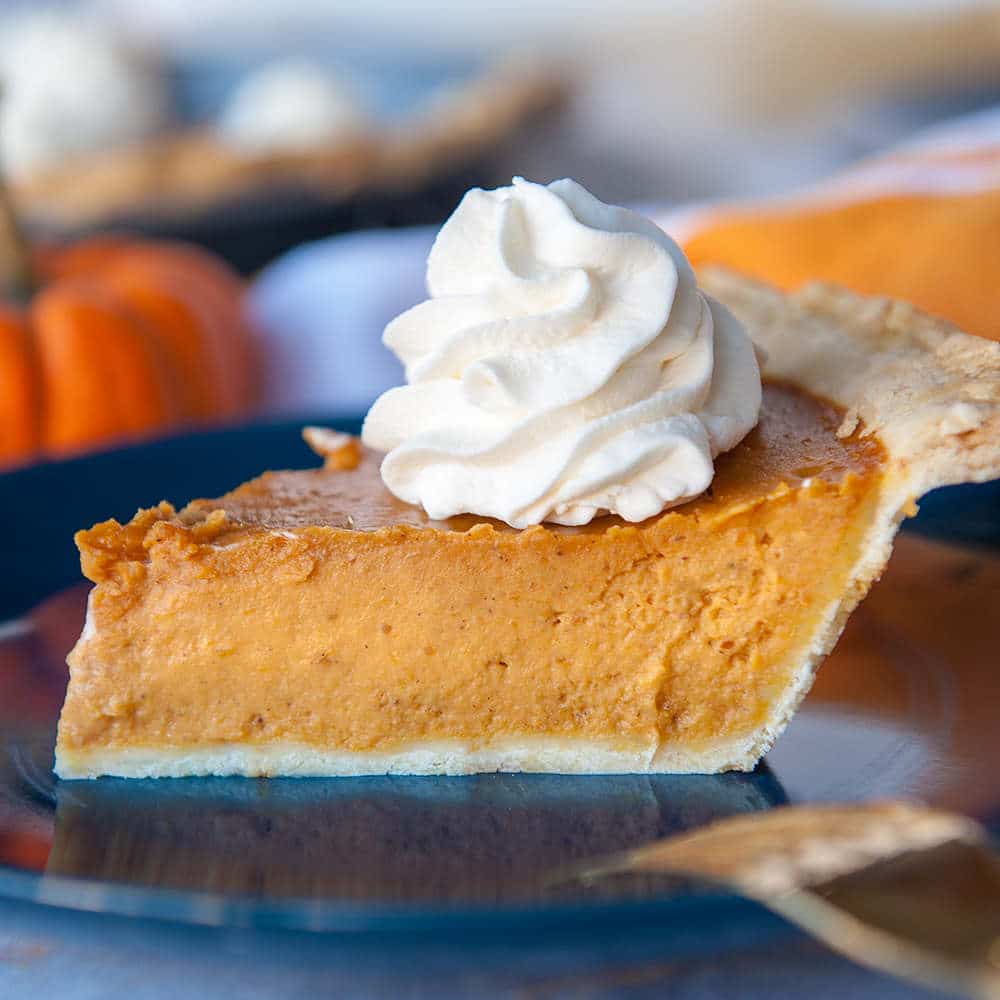
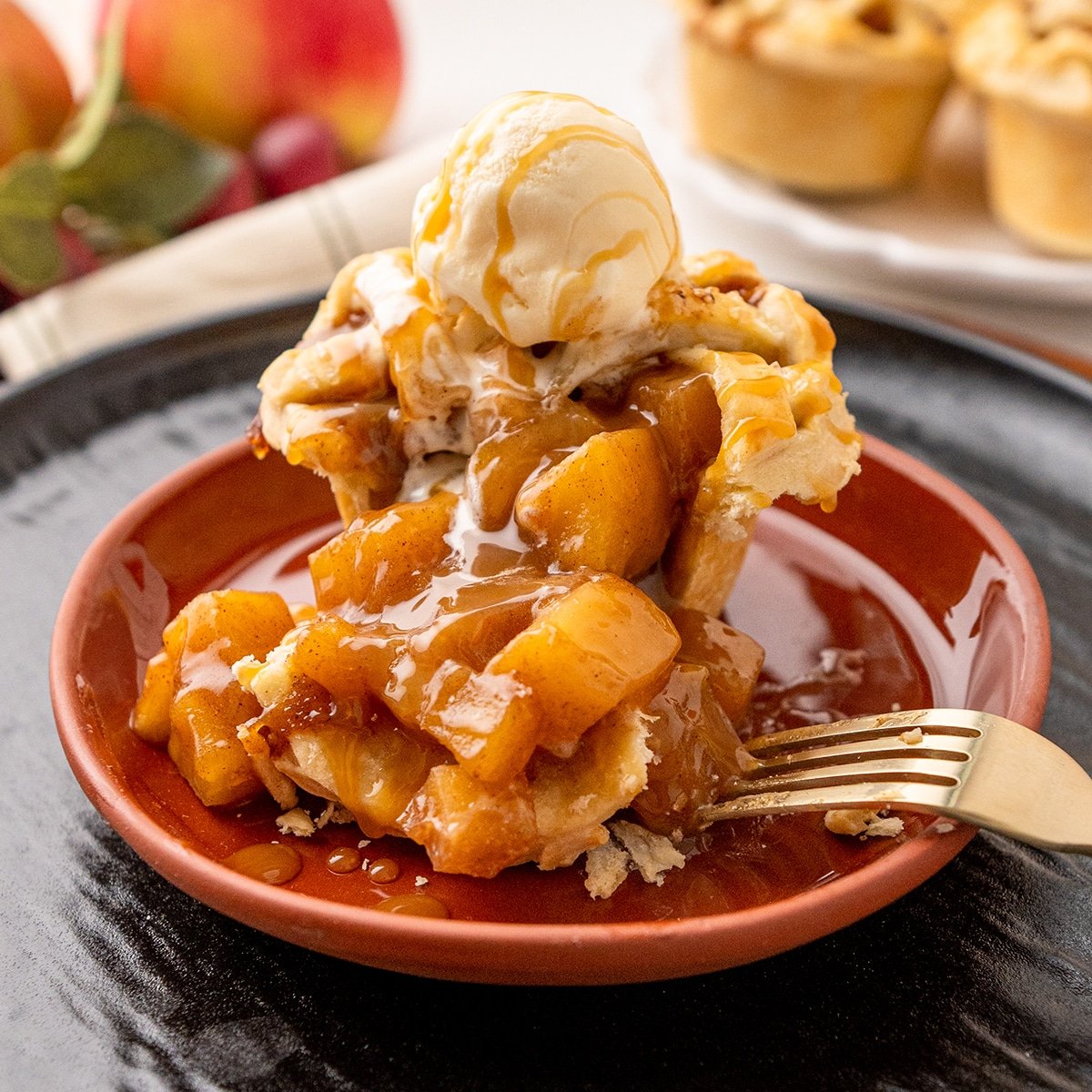
Depending on the pie I'm making, I might use a mealy pie dough for liquid fillings like my pumpkin pie, so the bottom crust doesn't get soggy. Sometimes I'll use my all-butter flaky pie crust for a crust that you bake ahead of time and then fill like my chocolate haupia pie, or for a double-crust pie like my apple pie, filled with my homemade apple pie filling.
With this pie crust, you only have to use ONE.
Quick Glance at the Recipe: The Best Pie Crust
- Recipe Name: The Best Pie Crust Recipe (Butter and Lard)
- Why You'll Love It: Buttery flavor and an extra flaky crust that works for any pie, from apple to pumpkin.
- Time and Difficulty: About 10 minutes hands-on plus at least 2 hours to chill. Easy.
- Main Ingredients: All-purpose flour, butter, lard, salt, and ice water.
- Method: Toss frozen grated butter in the flour, cut in the lard with a knife, add ice water, then chill and roll out.
- Texture and Flavor: Buttery, extra flaky, and tender.
- Quick Tip: Keep everything cold. Cold pie dough is happy pie dough.
Jump to:
- Quick Glance at the Recipe: The Best Pie Crust
- What Makes This The Best Pie Crust Recipe⭐⭐⭐⭐⭐
- Best Pie Crust Recipe Ingredients
- How To Make The Best Pie Crust Step-By-Step
- How To Roll Out Pie Crust
- How To Crimp Pie Crust
- How To Make A Lattice Pie Crust
- How To Blind Bake Pie Crust
- Common Pie Crust Problems To Avoid
- How do you prevent the pie crust from getting too brown?
- Best Pie Crust Recipe FAQs
- More Pie Recipes To Try
- Leave Me A Review⭐️⭐️⭐️⭐️⭐️
- Recipe
What Makes This The Best Pie Crust Recipe
⭐⭐⭐⭐⭐
This is the ONE pie crust I can use for any pie. Here's why it's the best.
- Butter for flavor. Nothing beats the rich flavor of butter in a pie crust.
- Lard for extra flakiness. Because lard doesn't have any water in it like butter, it creates the flakiest layers and adds even more flavor. Before there was shortening, everyone believed in lard and in my opinion, it's still the best for flavor and texture for pie crust.
- Perfect flaky layers. Tossing frozen grated butter in the flour and cutting in the lard with a knife keeps the fat cold and in little pieces, so it bakes into flaky layers.
- Flaky but strong. It is sturdy enough for a bottom crust and flaky enough for a top crust or lattice, so it works for any pie.
- Makes two crusts. Enough for a double-crust pie or two single-crust pies.
Best Pie Crust Recipe Ingredients
All you need for the best pie crust of your life is butter, lard, ice water, salt, and flour.
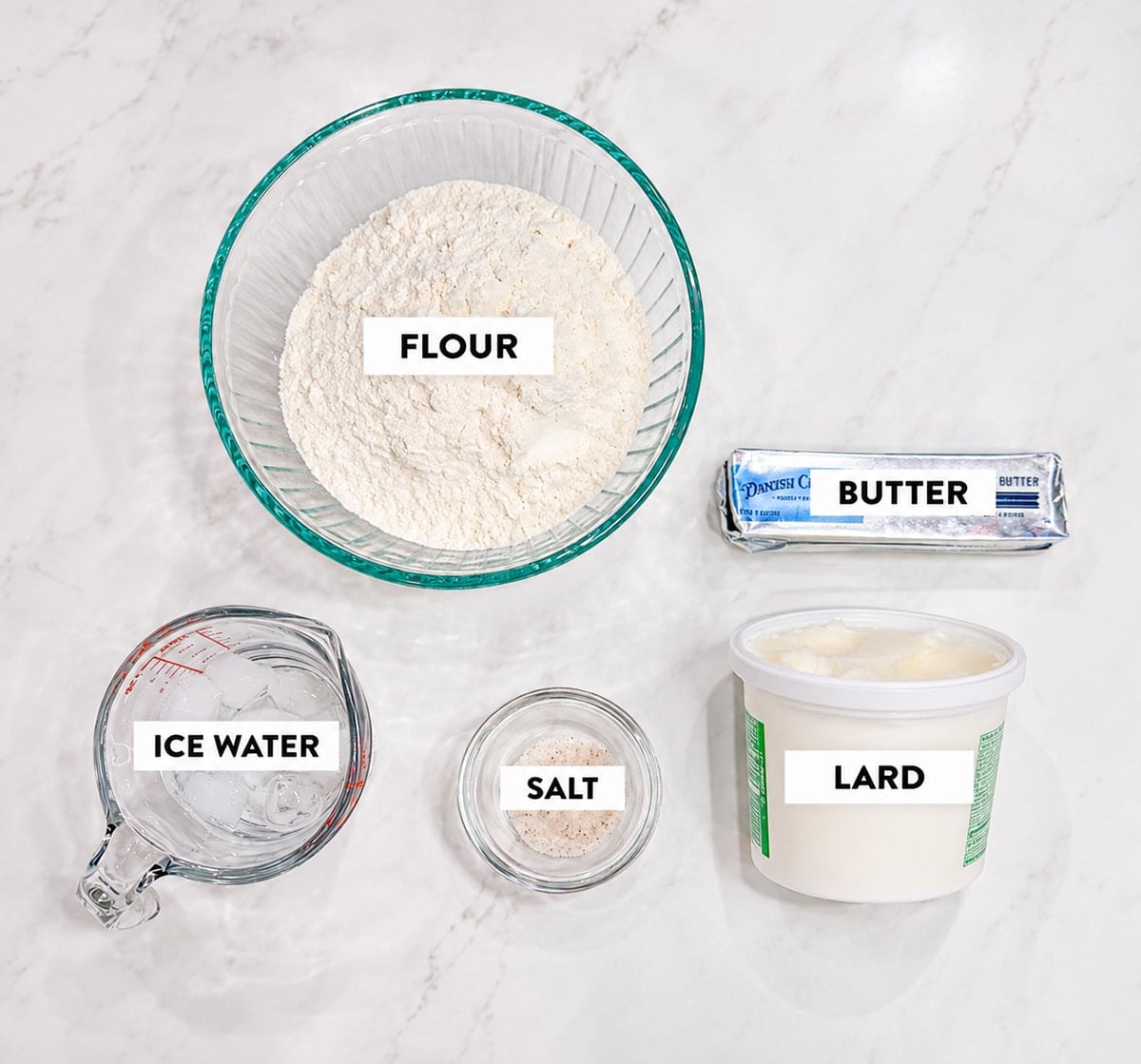
- All-purpose flour: The base of your crust. Weigh it with a digital kitchen scale for the most consistent results.
- Salt: Brings out the flavor of the butter and keeps the crust from tasting flat.
- Lard: This is what everyone used for the flakiest pie crusts and biscuits back in the day until vegetable shortening came along. Some people argue that seed oils found vegetable shortening are even worse for you than the fat in lard and I might be one of them. Also, the taste, totally incomparable! Just like my donut recipe, I think lard tastes the best!
- Frozen butter: Grating frozen butter into your pie crust allows you to work your butter in faster without it getting too melty. The butter adds flavor, and the moisture in the butter turns into steam, creating gorgeous layers in the pie crust without adding too much water.
- Ice cold water: Helps keep everything cold. Cold pie dough is happy pie dough. The warmer your pie dough gets, the stickier it gets and the harder it is to handle. Most problems with rolling out pie crust come from it being too warm.
How To Make The Best Pie Crust Step-By-Step
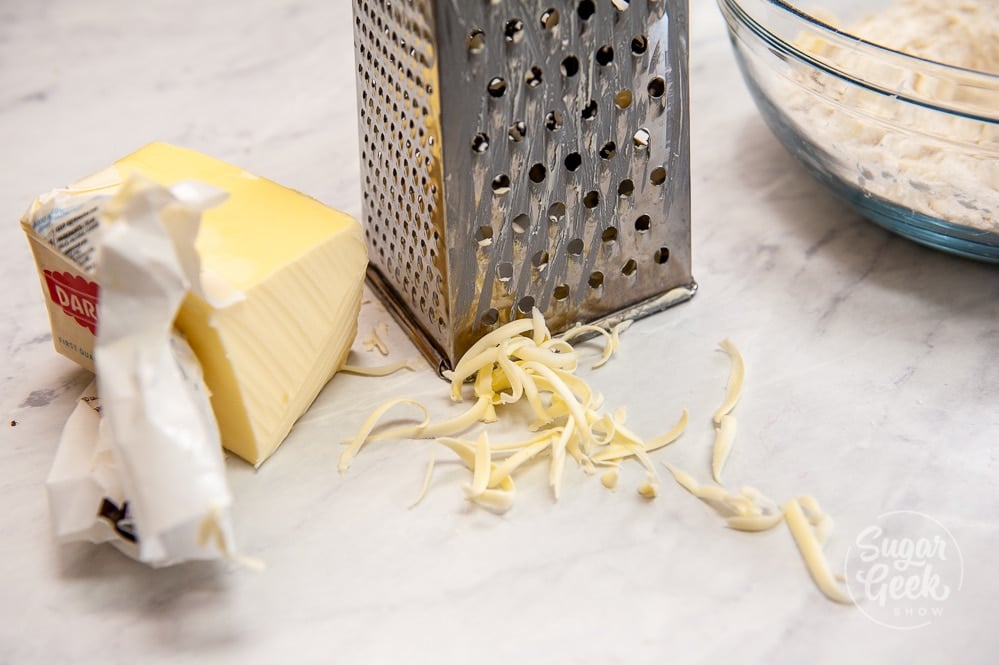
- Grate the butter. Grate your cold butter and place it into the freezer until you need it.
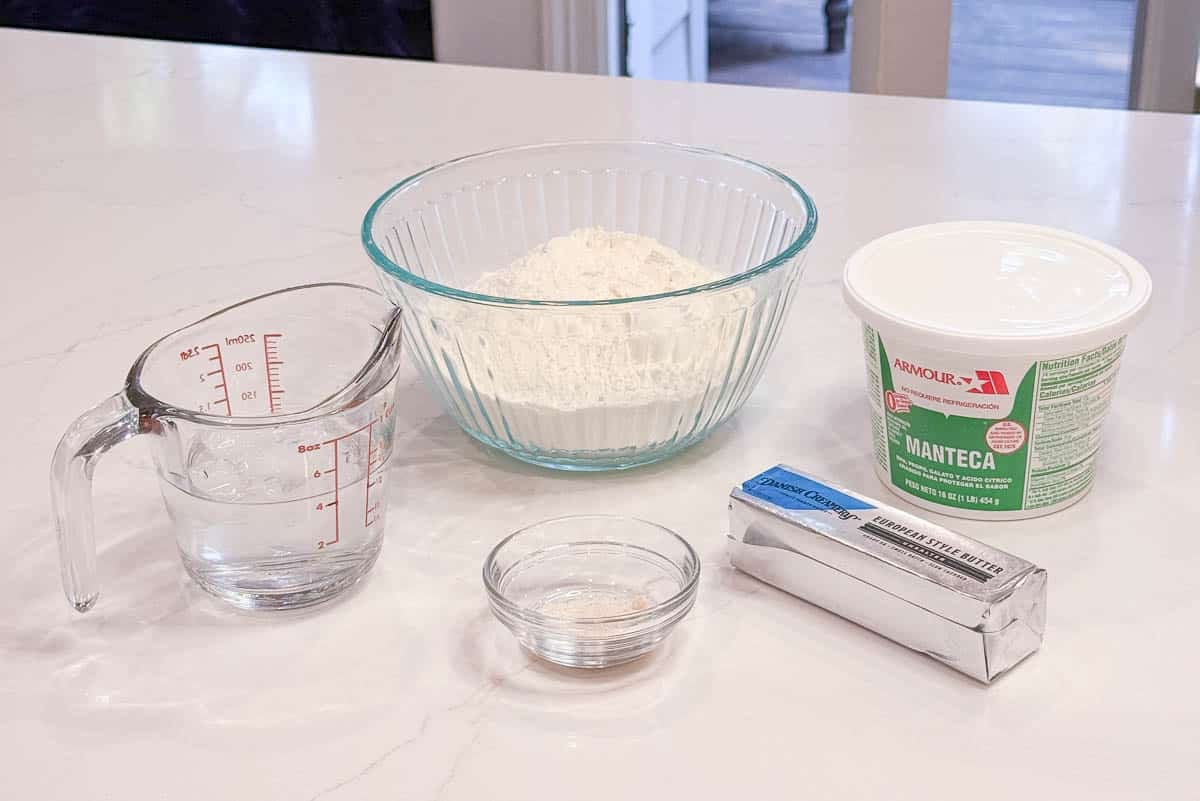
- Mix the flour and salt. Add your flour and salt into a medium-sized bowl.
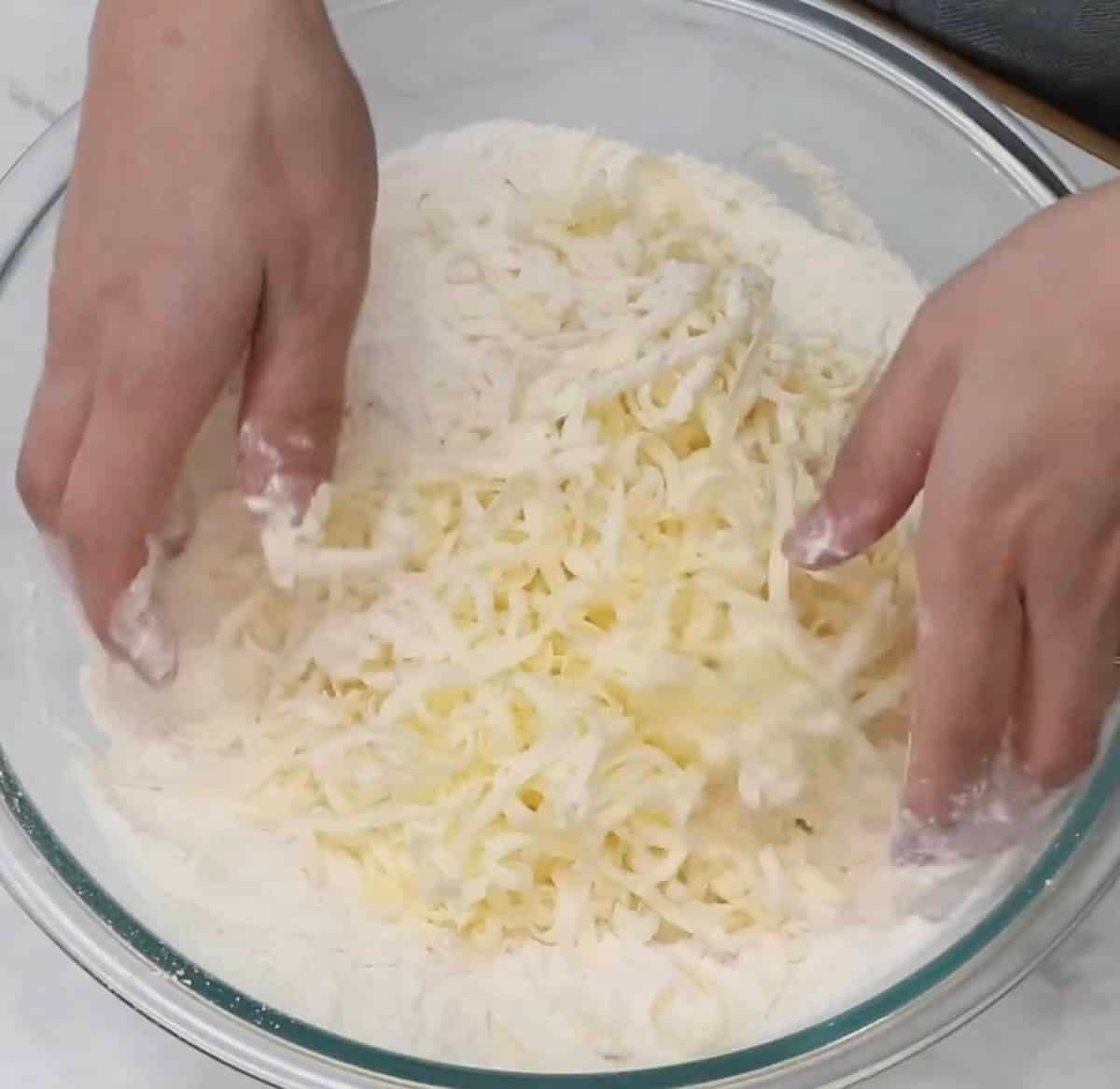
- Add the butter. Add your frozen grated butter and toss it with the flour and salt until all of the butter is coated.
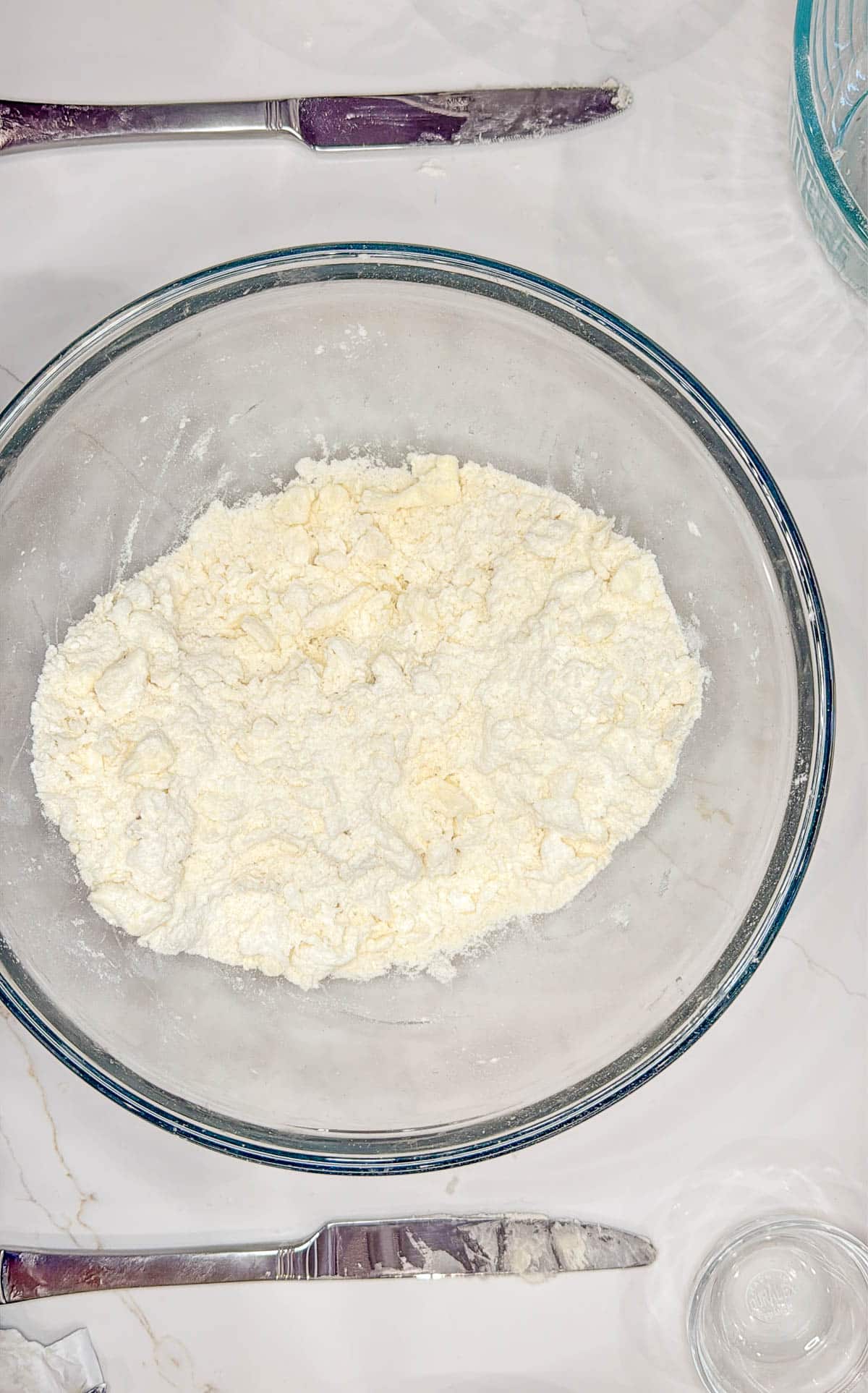
- Cut in the lard. Add the lard and cut it into the coated butter with a knife to distribute it evenly. Using a knife instead of your hands keeps the butter from melting.
PRO TIP: You can also make this dough in a food processor or in a stand mixer with the paddle attachment. Mix it just until the dough comes together. If you break the butter down too much, you lose all those flaky layers.
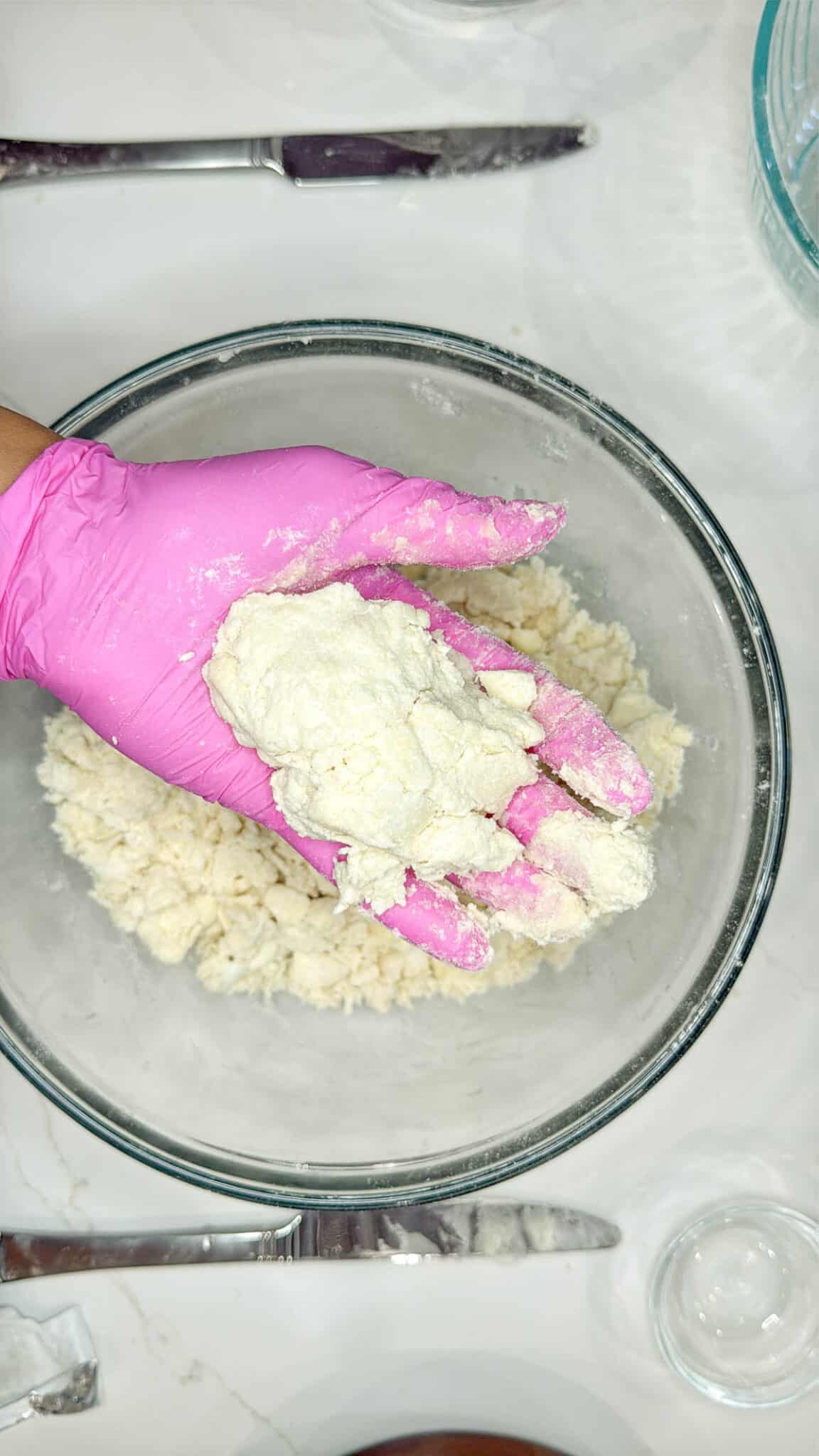
- Add the water. Add your ice-cold water in small amounts, tossing after each addition to coat and moisten the flour mixture. Then begin pressing the dough together. You may not need all the water.
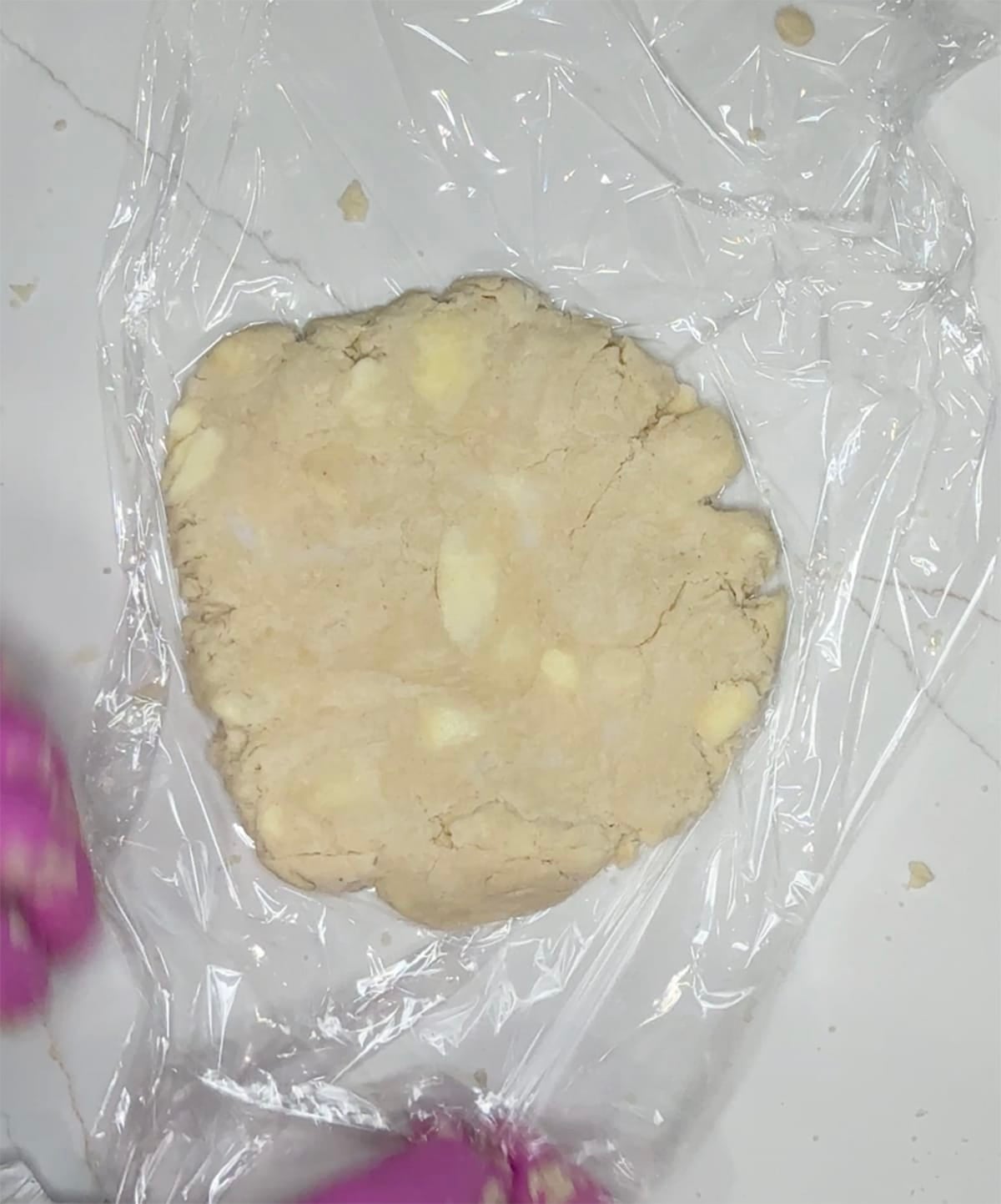
- Shape and chill. Press the dough into two disks that are about 1" thick. Wrap them in plastic wrap and refrigerate them for about 2 hours or up to 48 hours to allow the water to absorb into the flour.
How To Roll Out Pie Crust
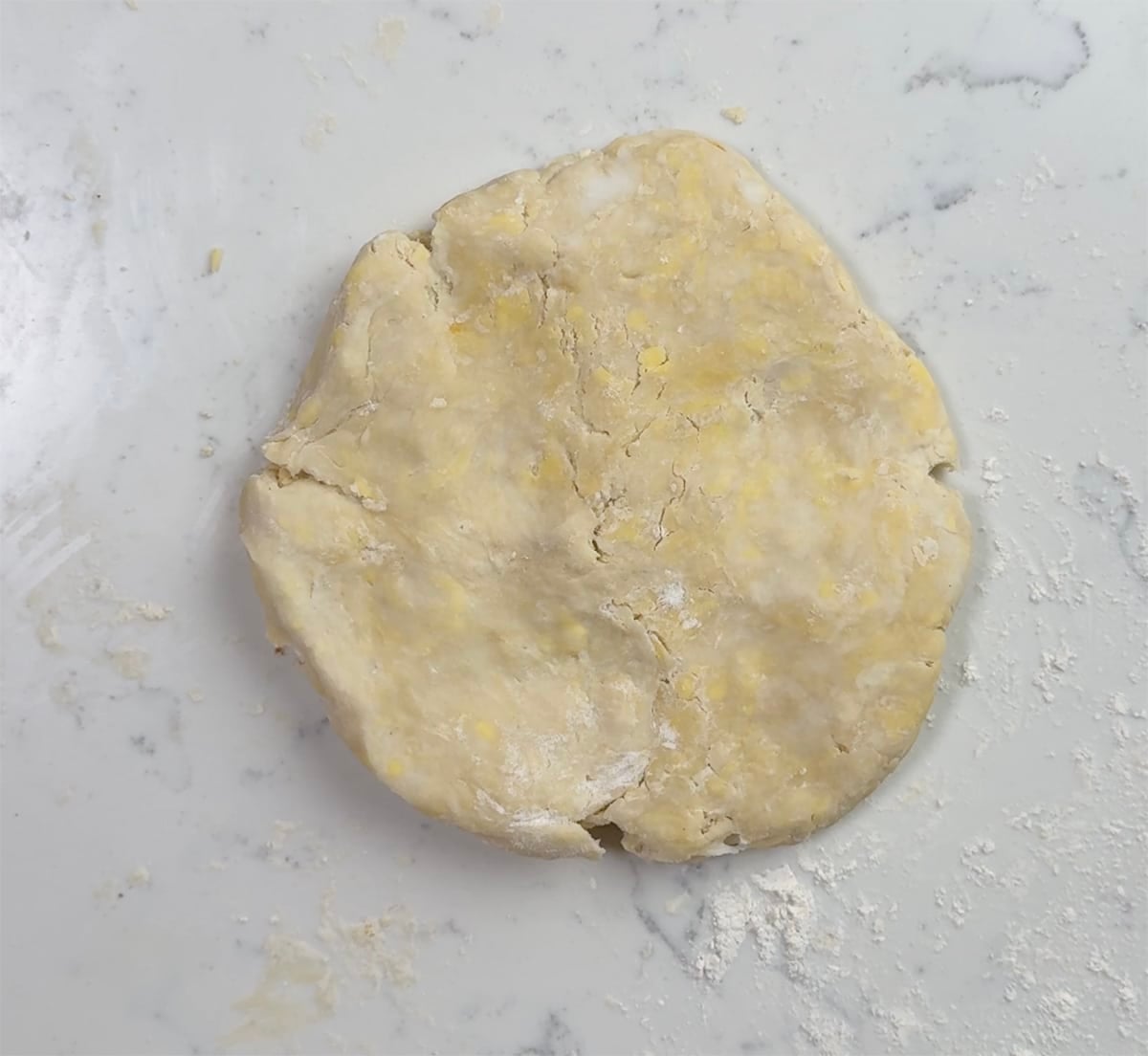
- Warm it slightly. Starting with your first disk. Allow it to sit at room temp for 10-15 minutes to begin warm up but you don't want it soft.
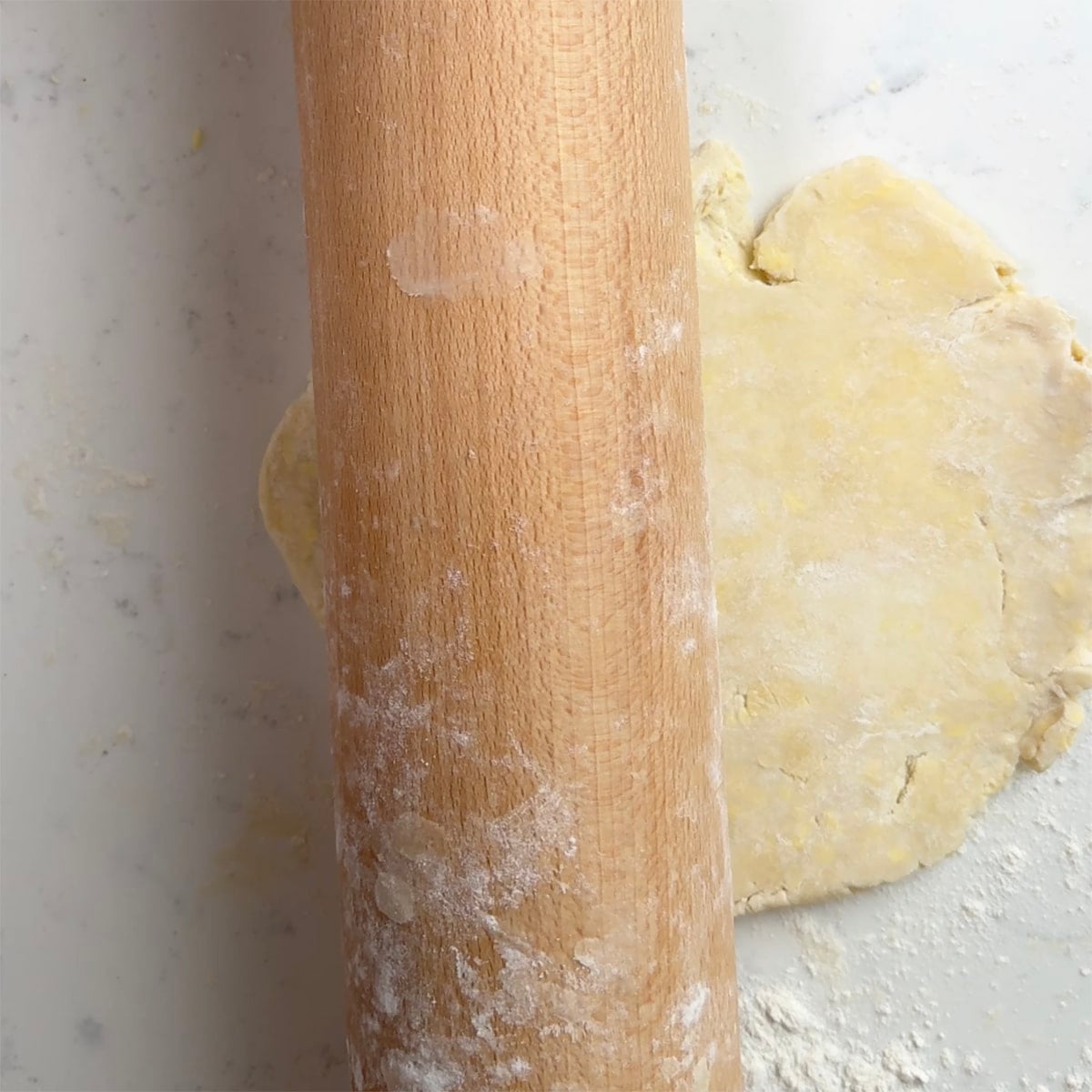
- Flour your surface and press. Dust your work surface with a little flour, not too much. Then press firmly onto the top of the dough evenly with your rolling pin to begin loosening the dough and making the butter elastic. Once it starts to move without cracking you can start rolling.
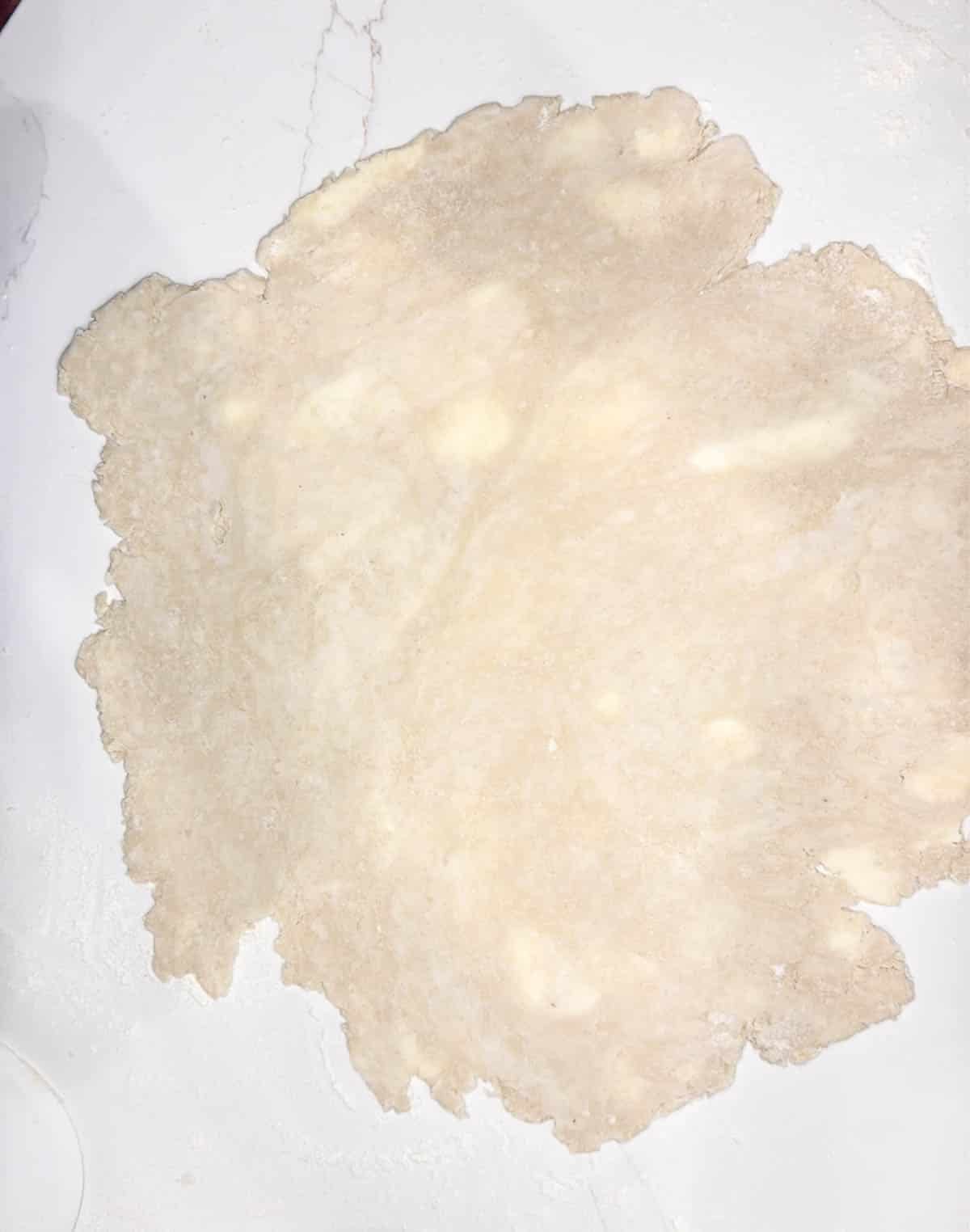
- Roll it out. Begin by rolling from the center outwards. Rotate your dough periodically to keep it in a circular shape. Keep your dough moving after every time you roll to prevent sticking. Once you have a 12" round circle of dough that is about ⅛" thick you are good to use your pie crust however your pie recipe instructs you to.
How To Crimp Pie Crust
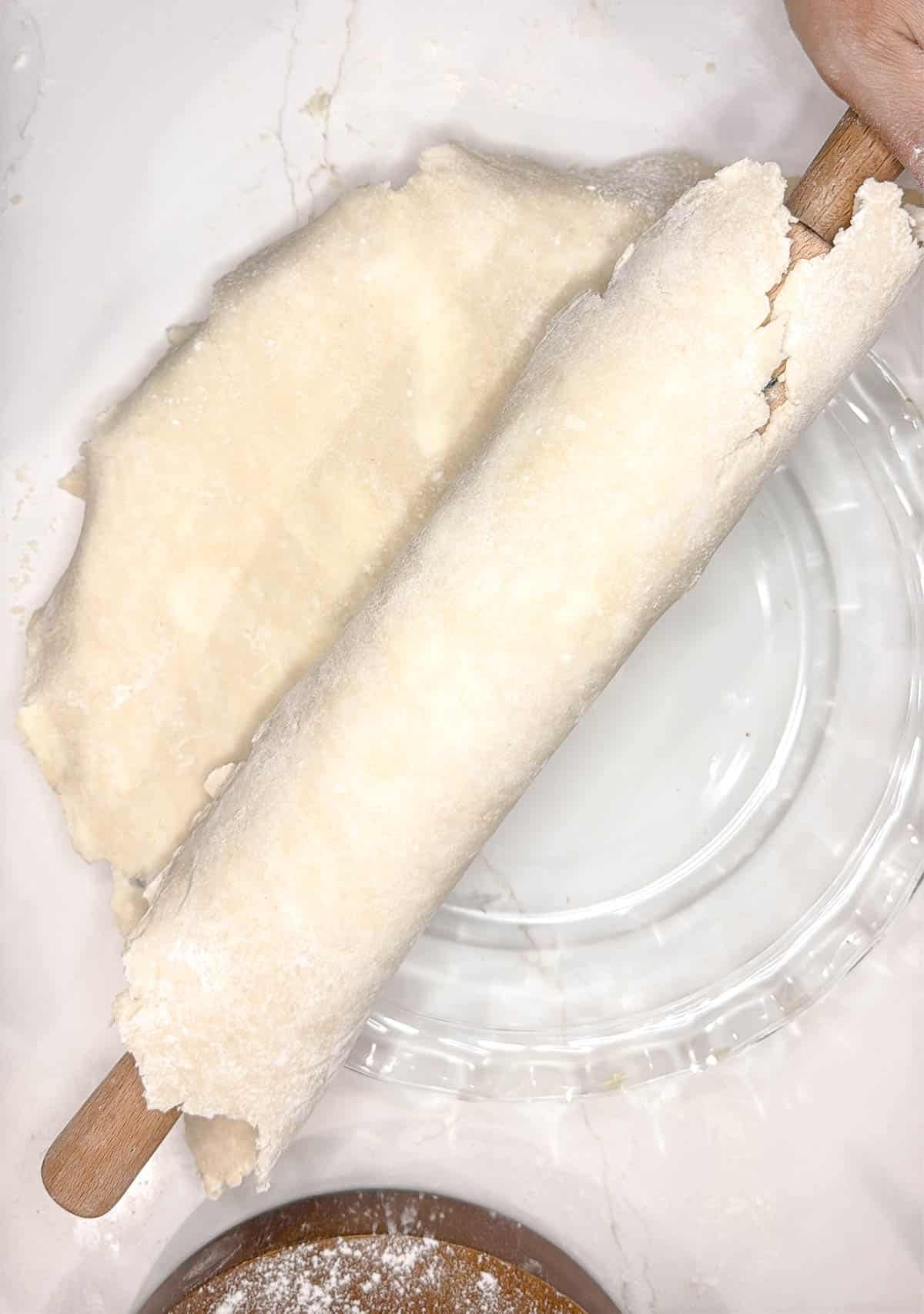
- Move the dough. Roll the dough loosely onto your rolling pin, then unroll it over your pie dish.
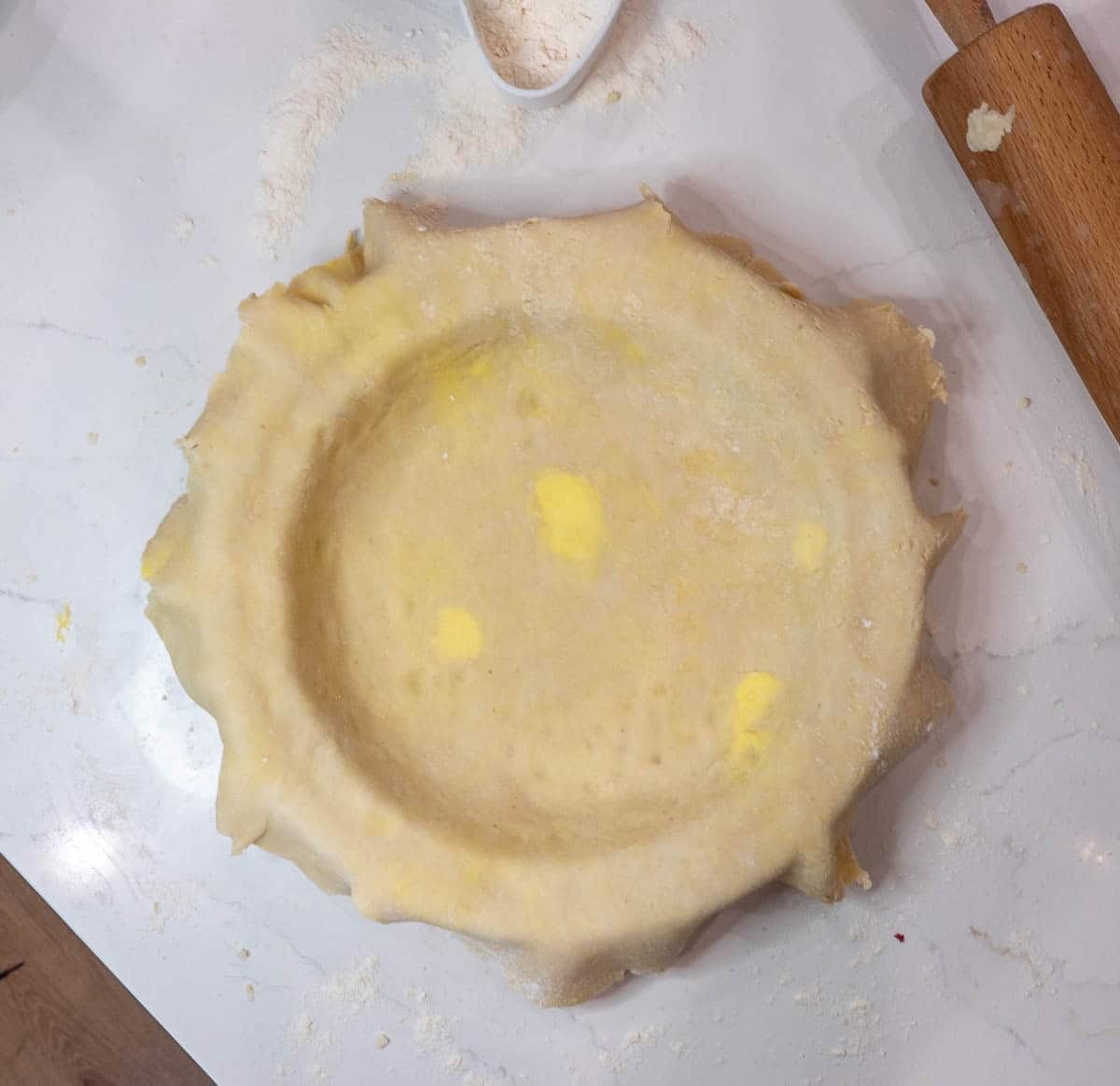
- Fit it into the dish. Gently press the dough into the bottom and sides of the dish without stretching it. Trim the extra dough so it hangs about 1" past the edge of the dish all the way around.
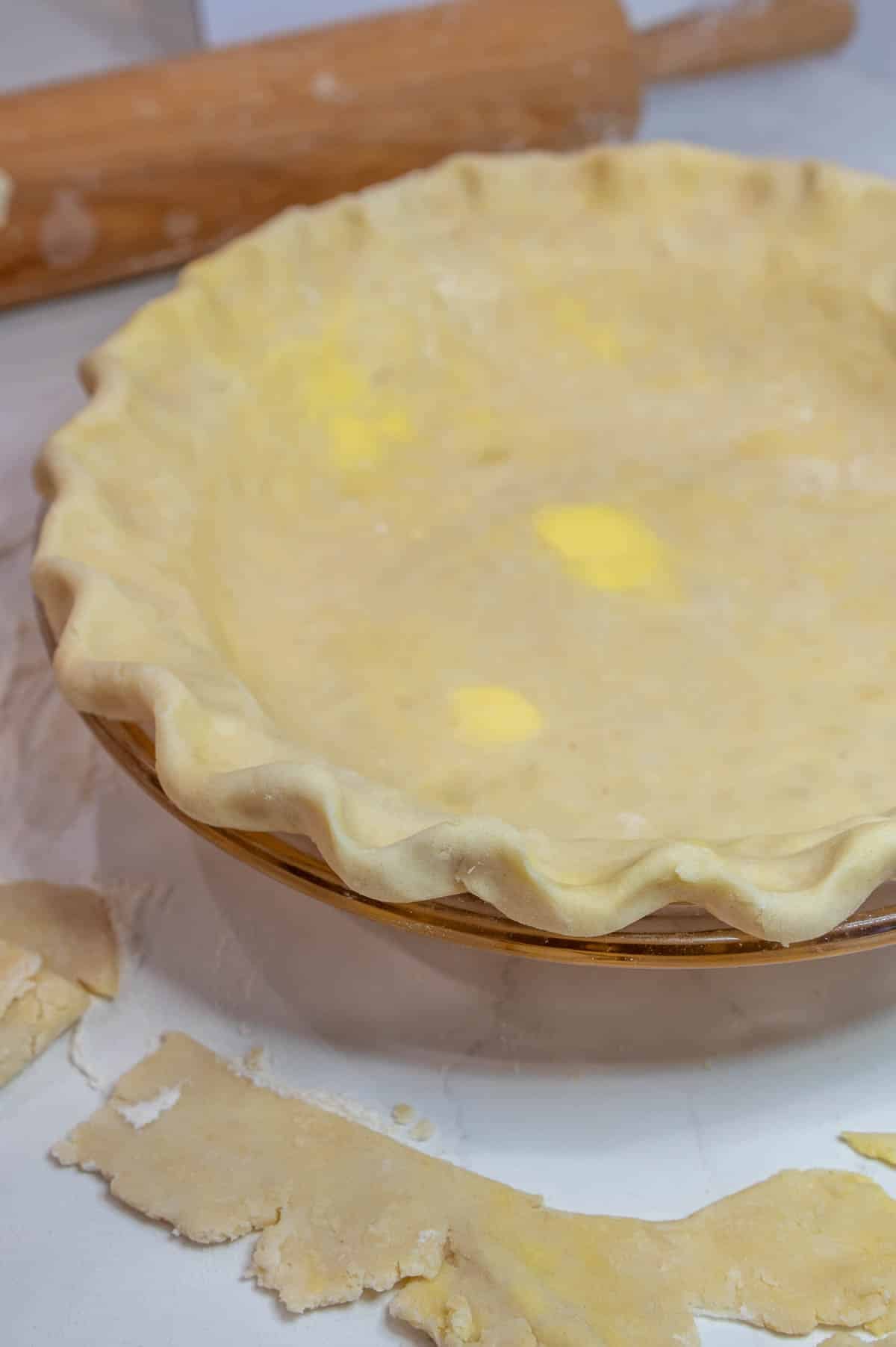
- Fold and crimp. Fold the extra dough under or up (either way works) so it sits on the rim of the dish. This makes the edge stronger. Then press the edge between your knuckle on one hand and two fingers on the other, working your way around the pie. For a double crust or lattice pie, leave both crusts about 1" bigger, brush a little water between them to seal, then fold them under or up together and crimp.
How To Make A Lattice Pie Crust
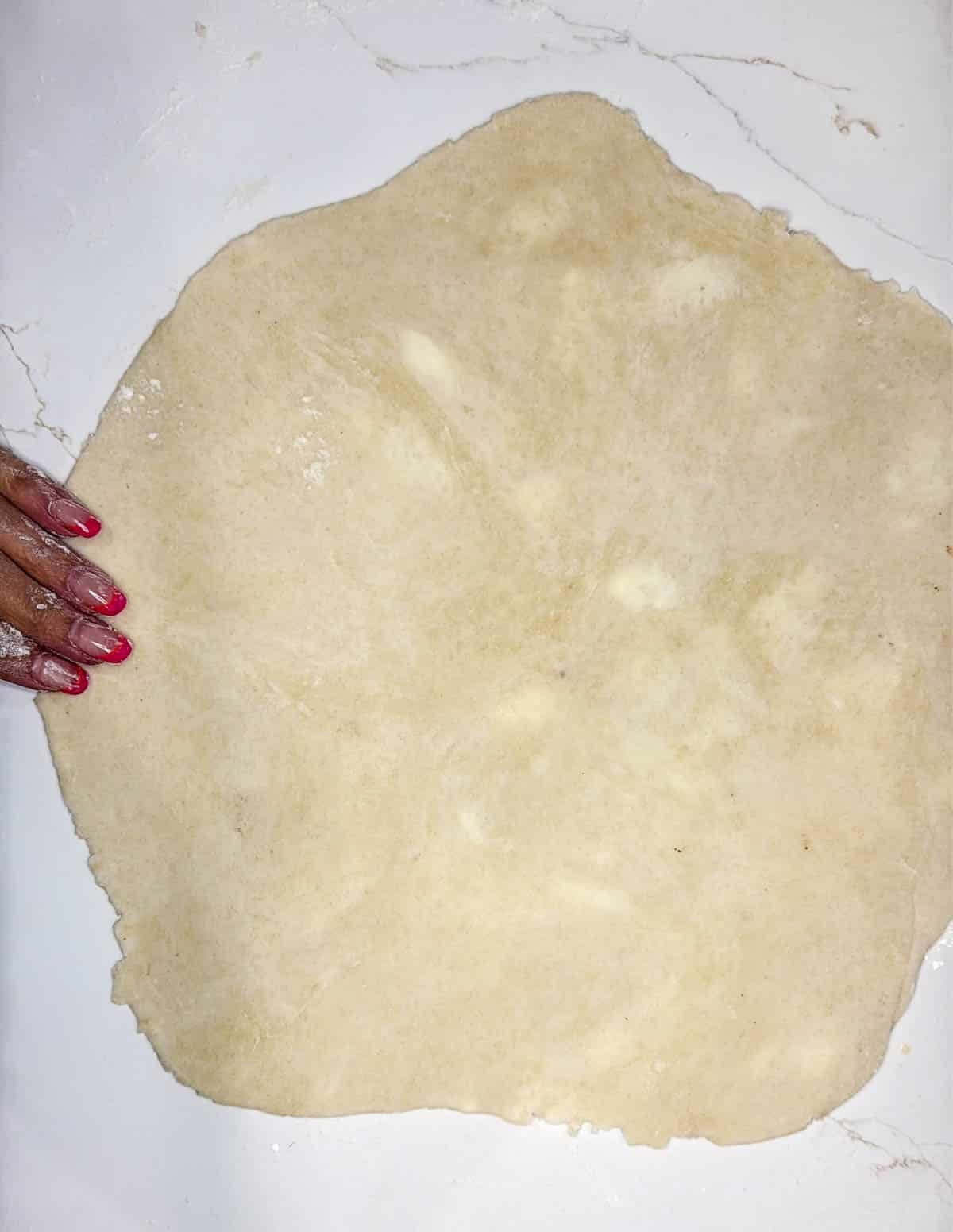
- Roll out the top crust. Roll out your second disk of dough the same way as the bottom crust.
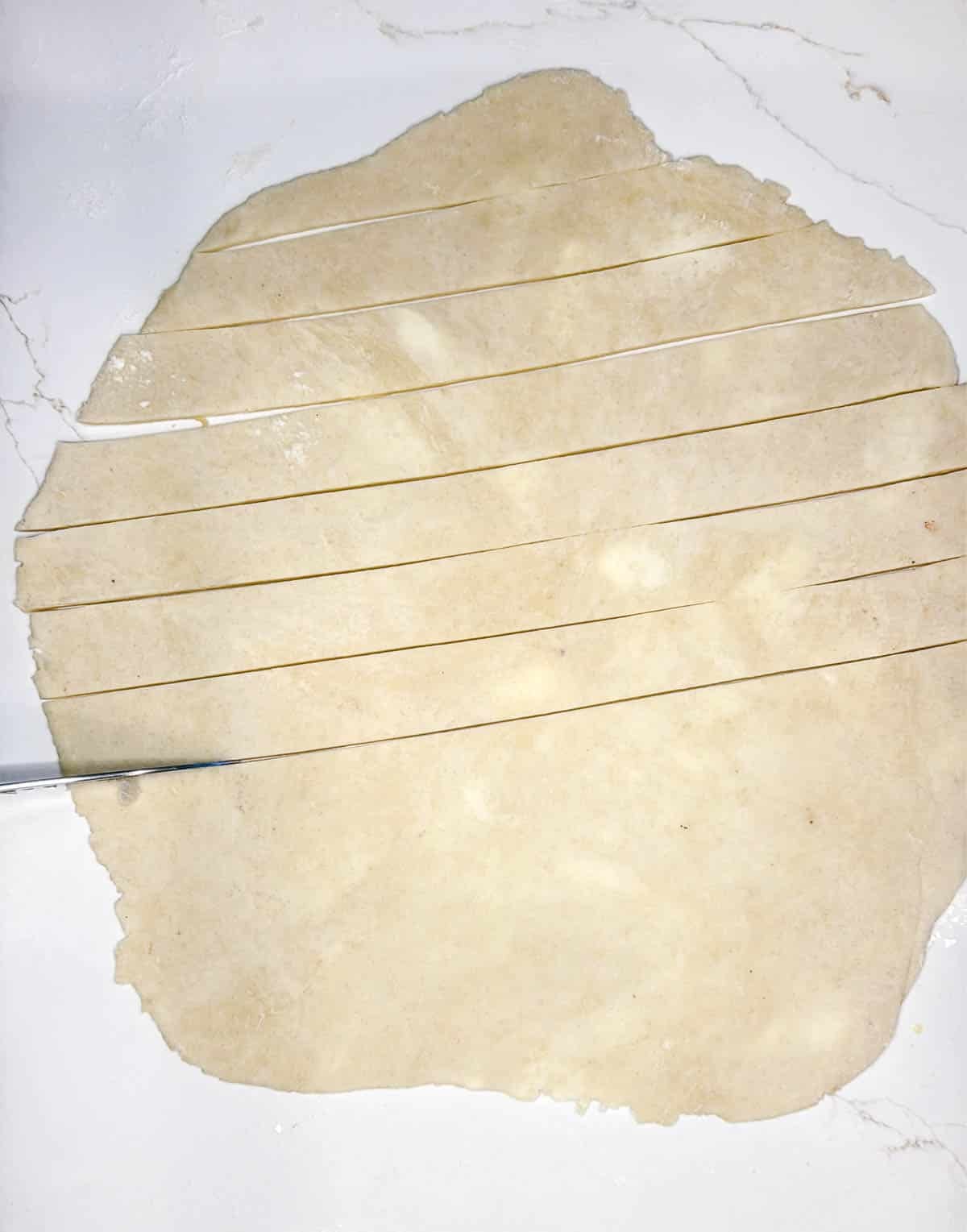
- Cut the strips. Cut the dough into even strips with a sharp knife.
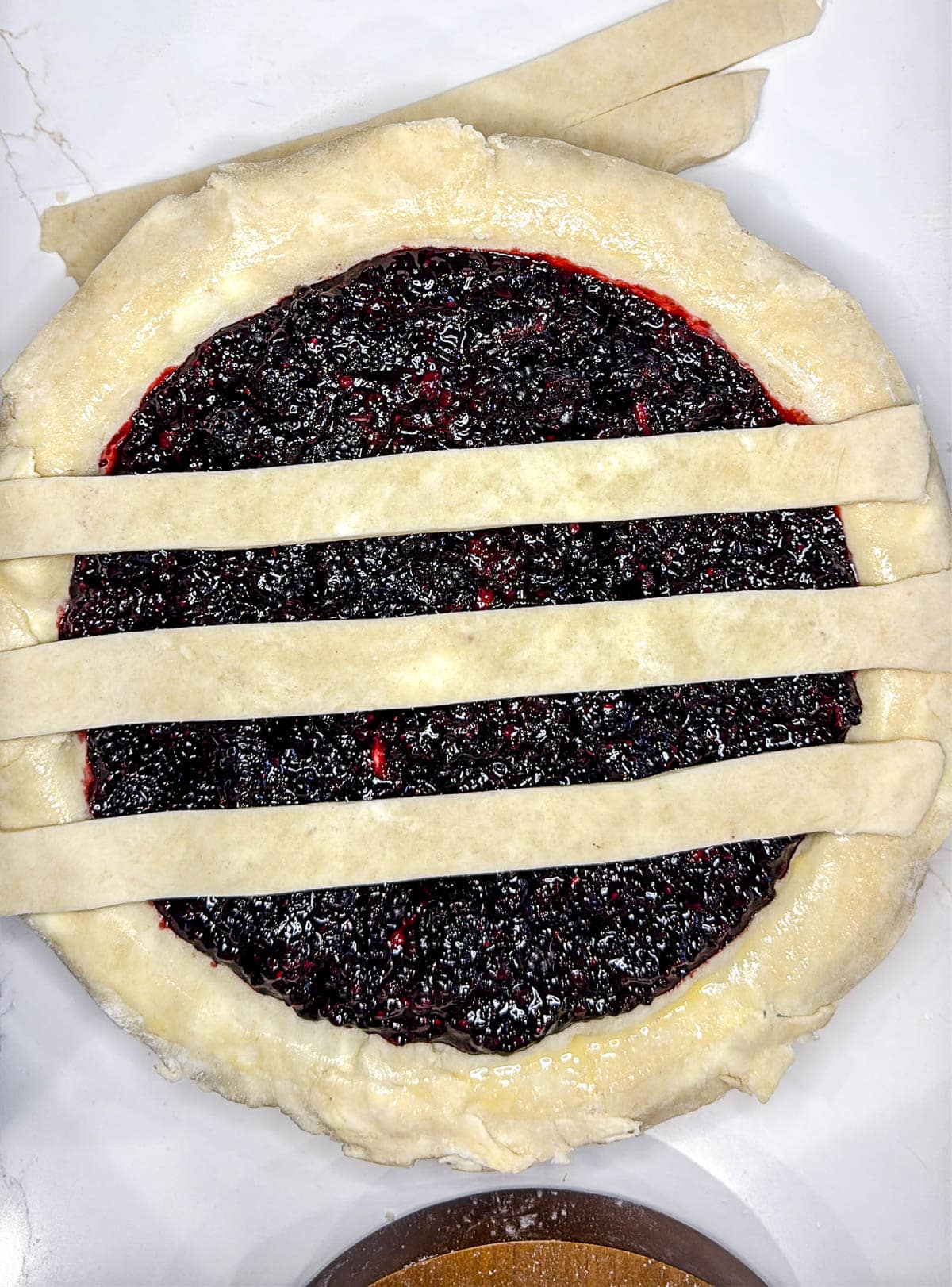
- Lay the first strips. Fill your pie, then lay strips across the top in one direction, leaving a little space between each one.
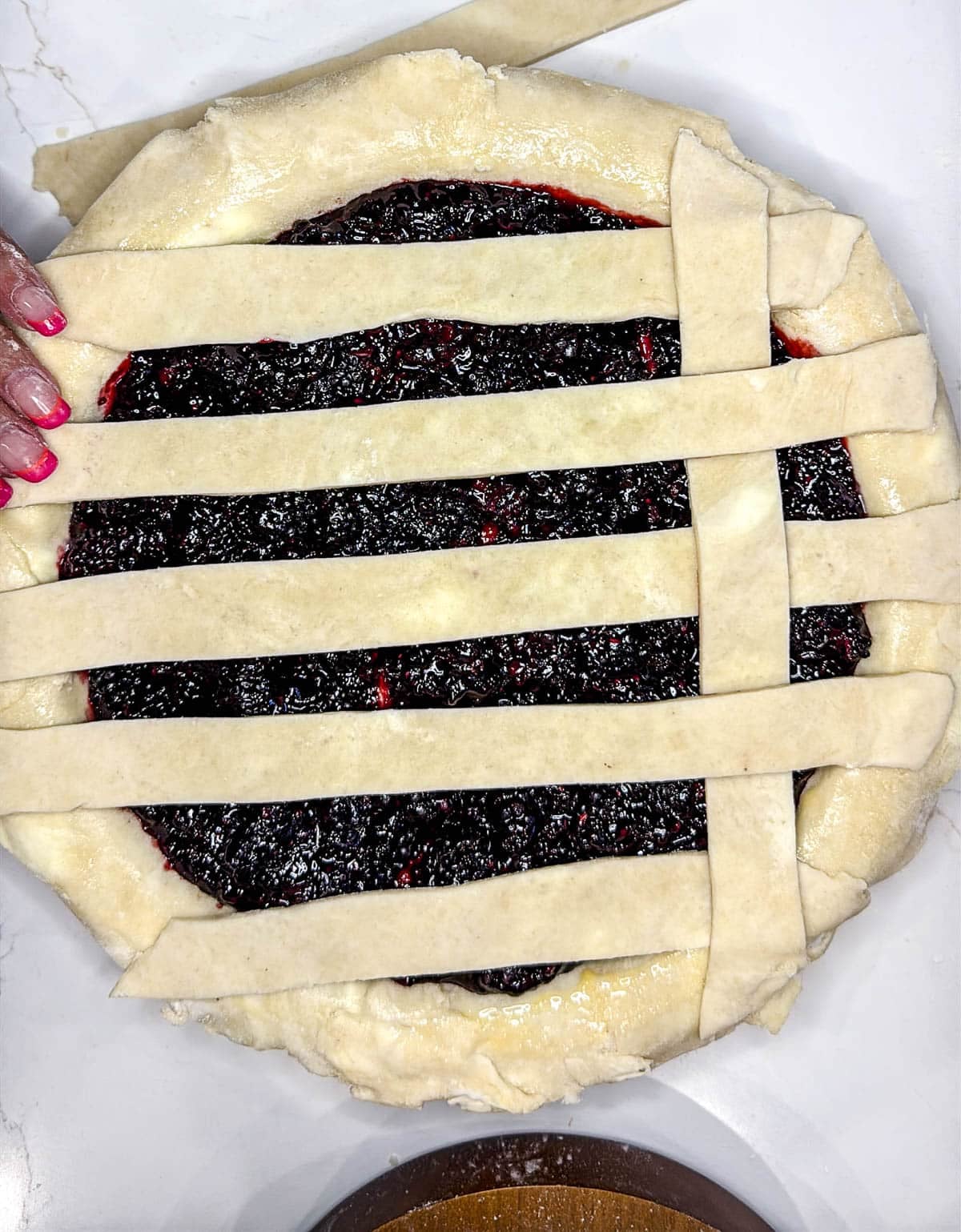
- Weave the lattice. Fold back every other strip, lay a new strip across in the other direction, then fold the strips back down. Repeat until the whole top is covered.
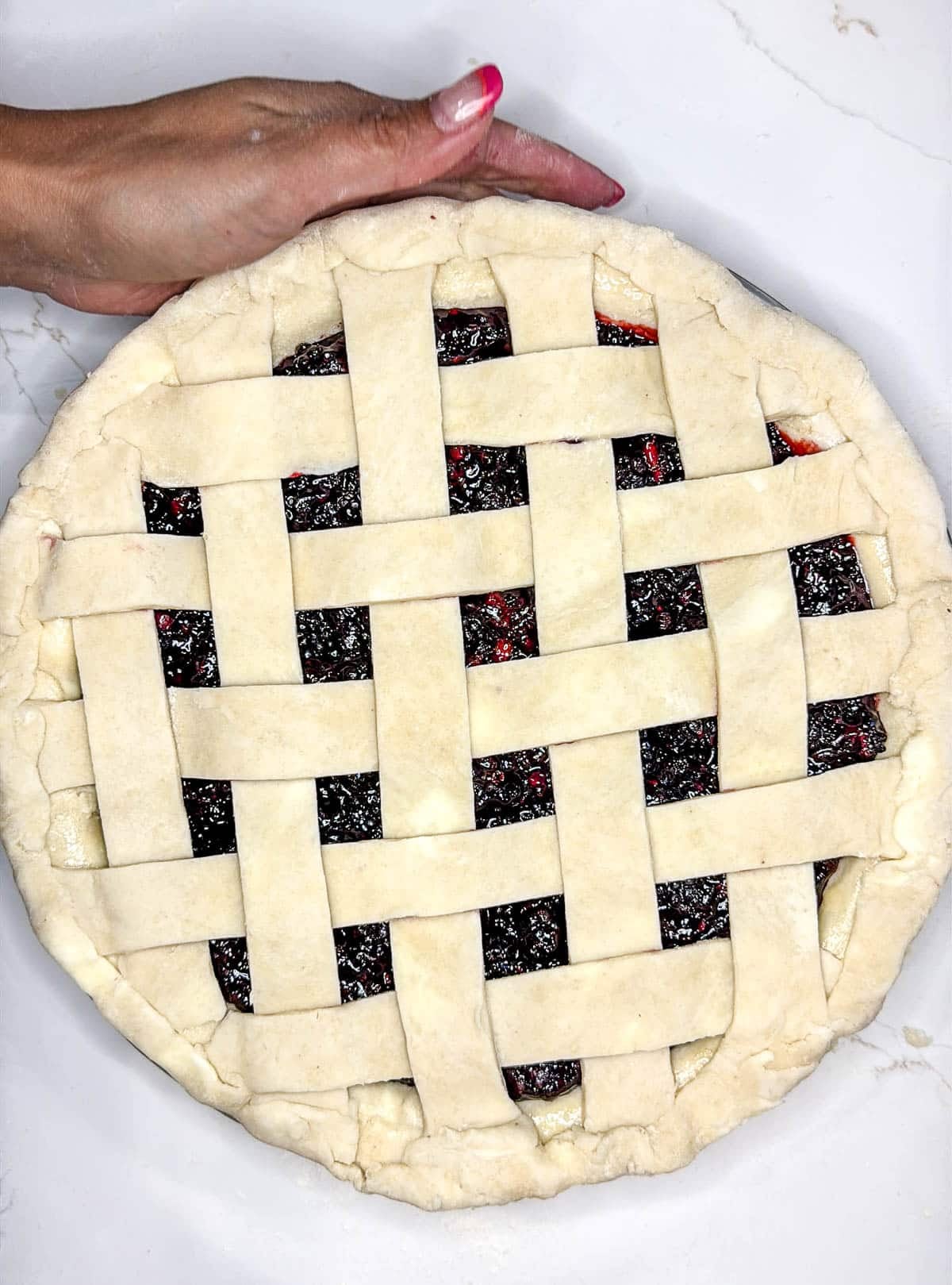
- Trim the strips. Trim the ends of the strips so they hang about 1" past the edge of the dish, the same as the bottom crust.
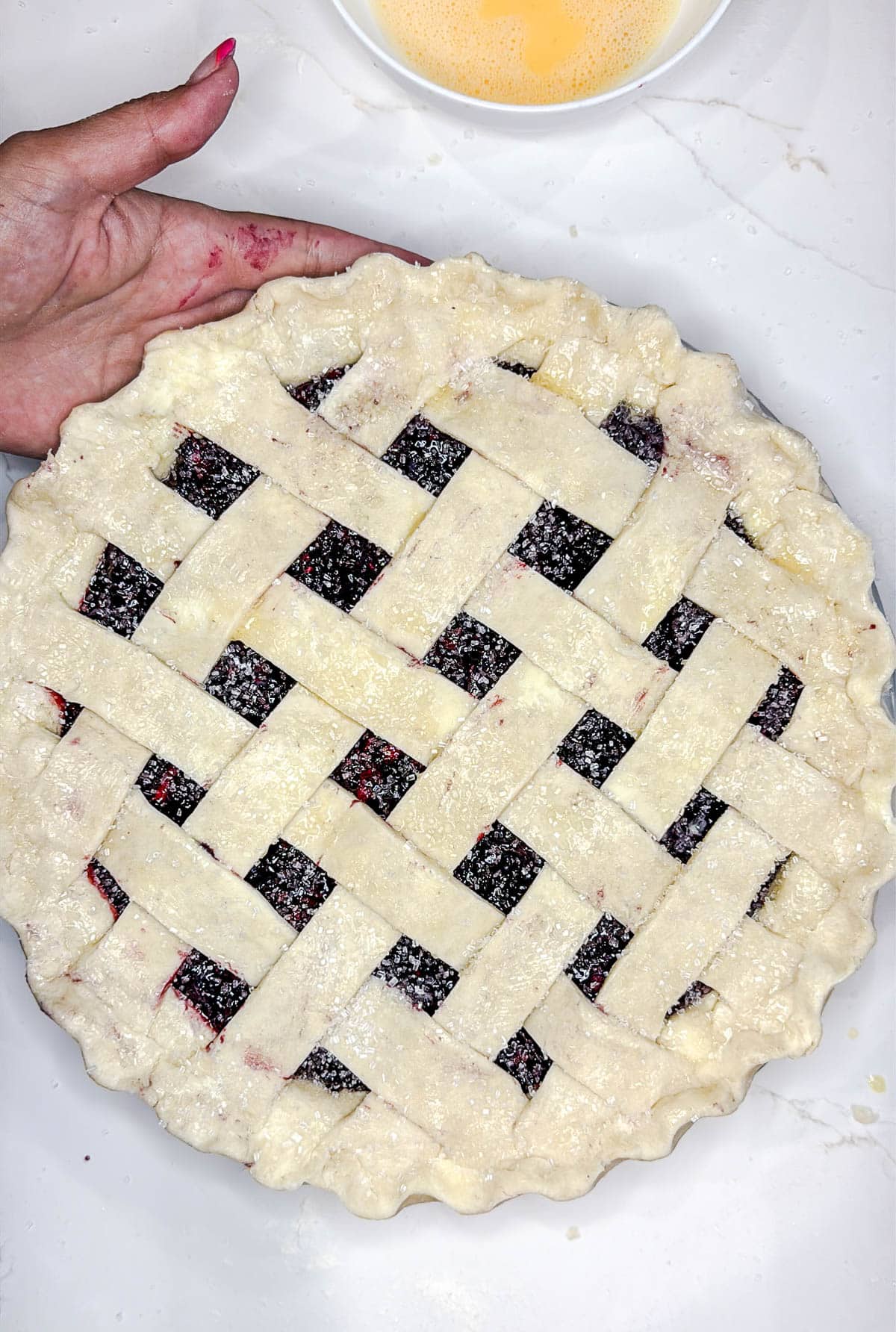
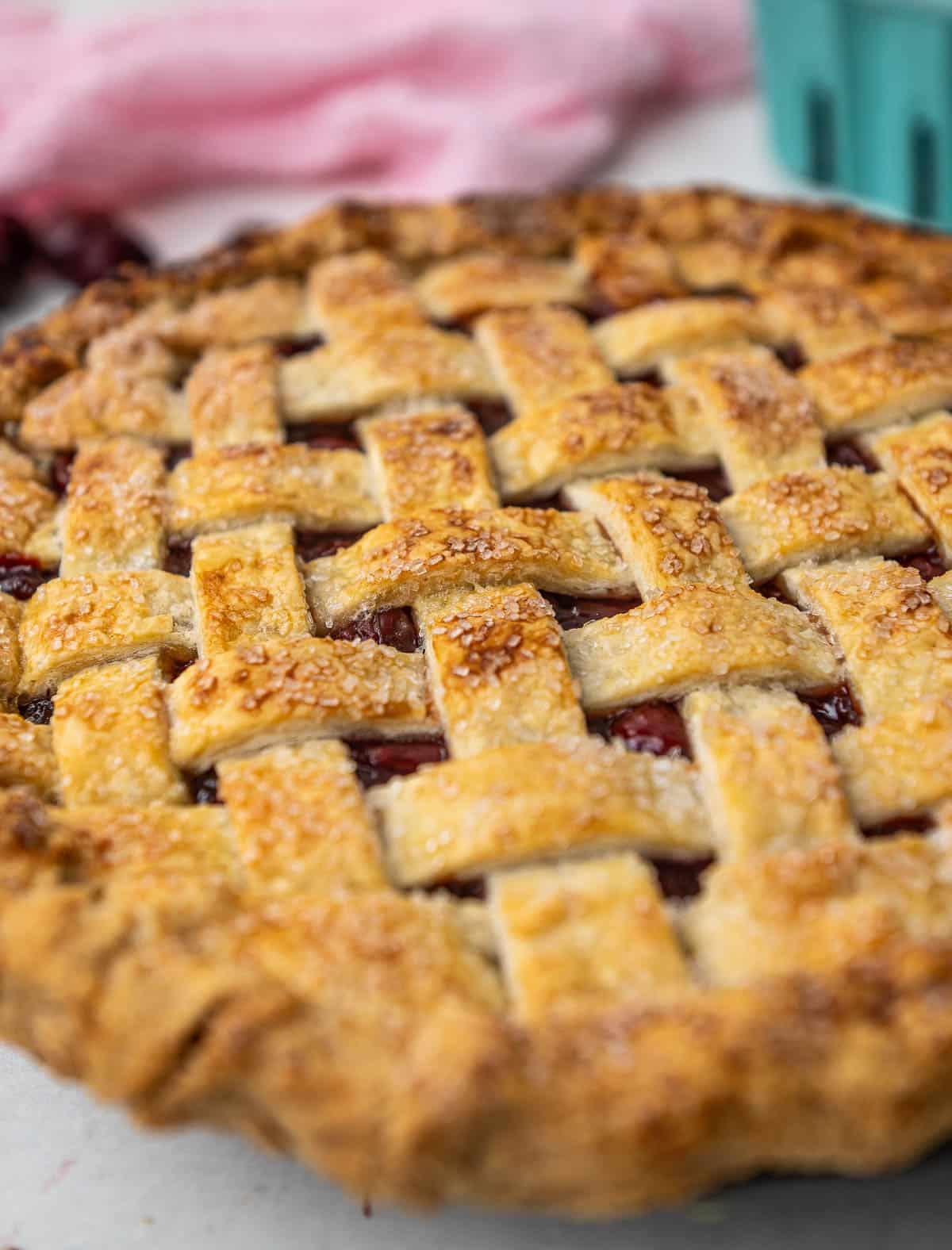
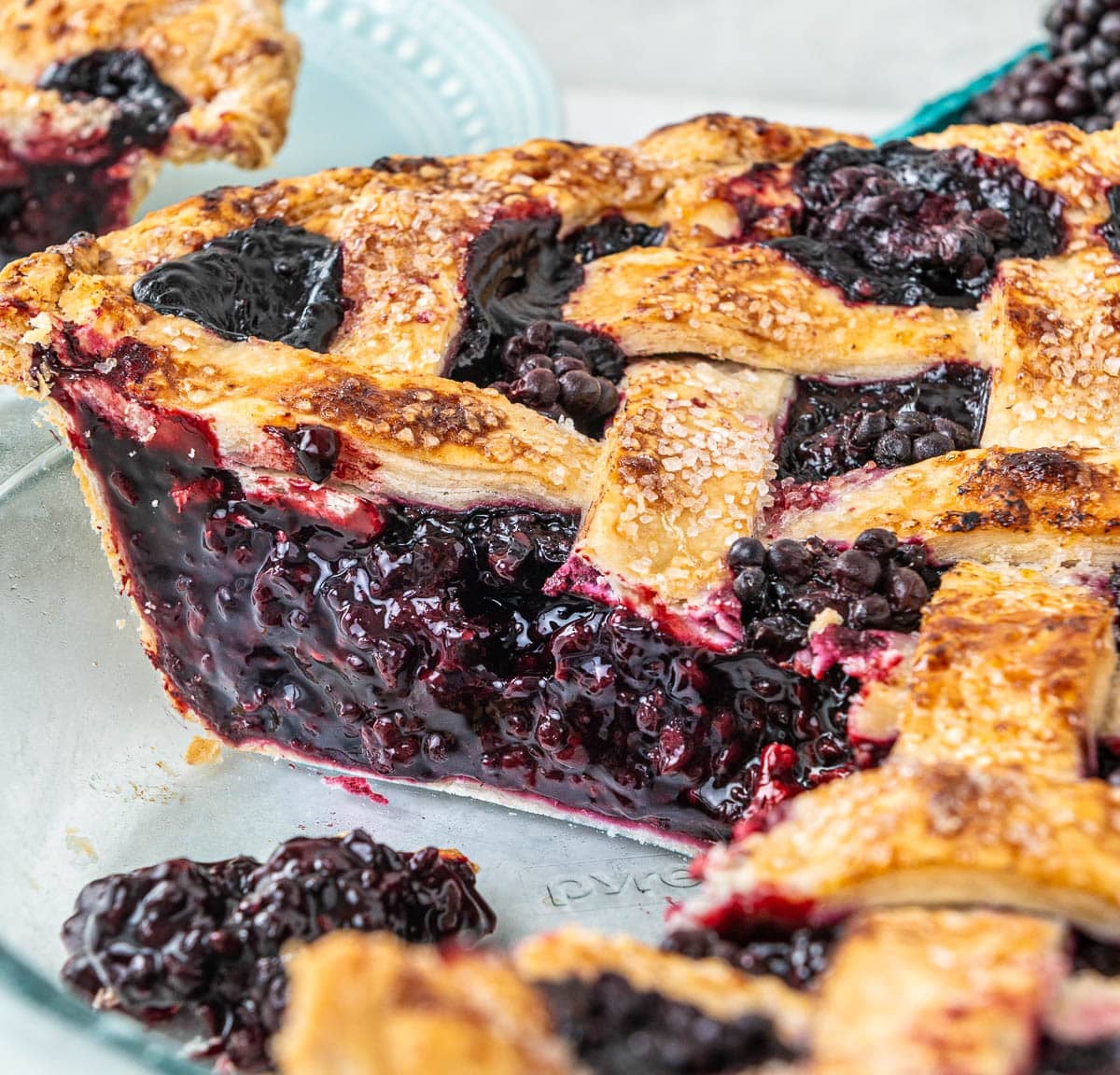
- Seal, crimp, and finish. Brush a little water between the strips and the bottom crust to seal them, then fold both under or up together and crimp the edges with your knuckle and two fingers. Brush the top with egg wash and sprinkle it with sanding sugar for texture, color, and flavor before baking.
PRO TIP: Add a pinch of salt to your egg wash. The salt breaks down the egg white so it isn't stringy when you brush it on your pie.
How To Blind Bake Pie Crust
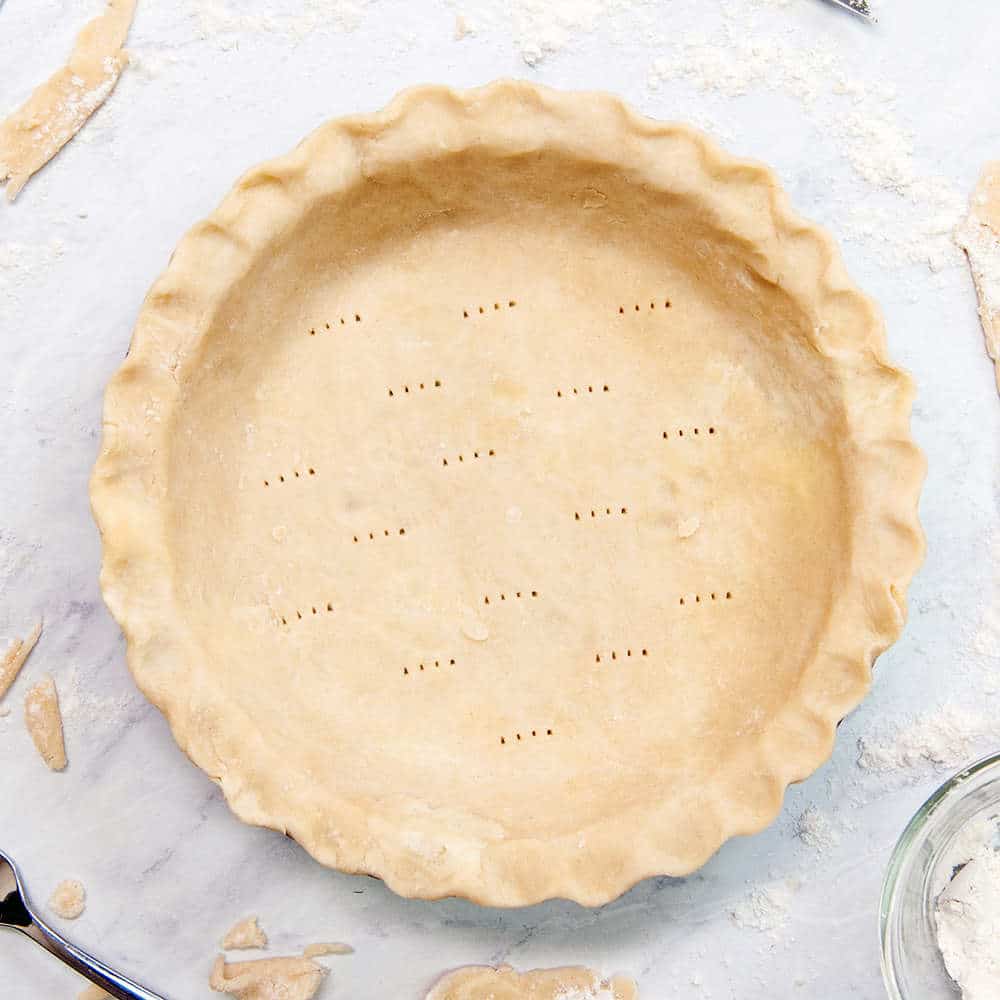
Blind baking means baking your pie crust before you fill it. You need a fully baked crust for cream pies and no-bake fillings, and a par-baked crust can help keep the bottom crisp under liquid fillings.
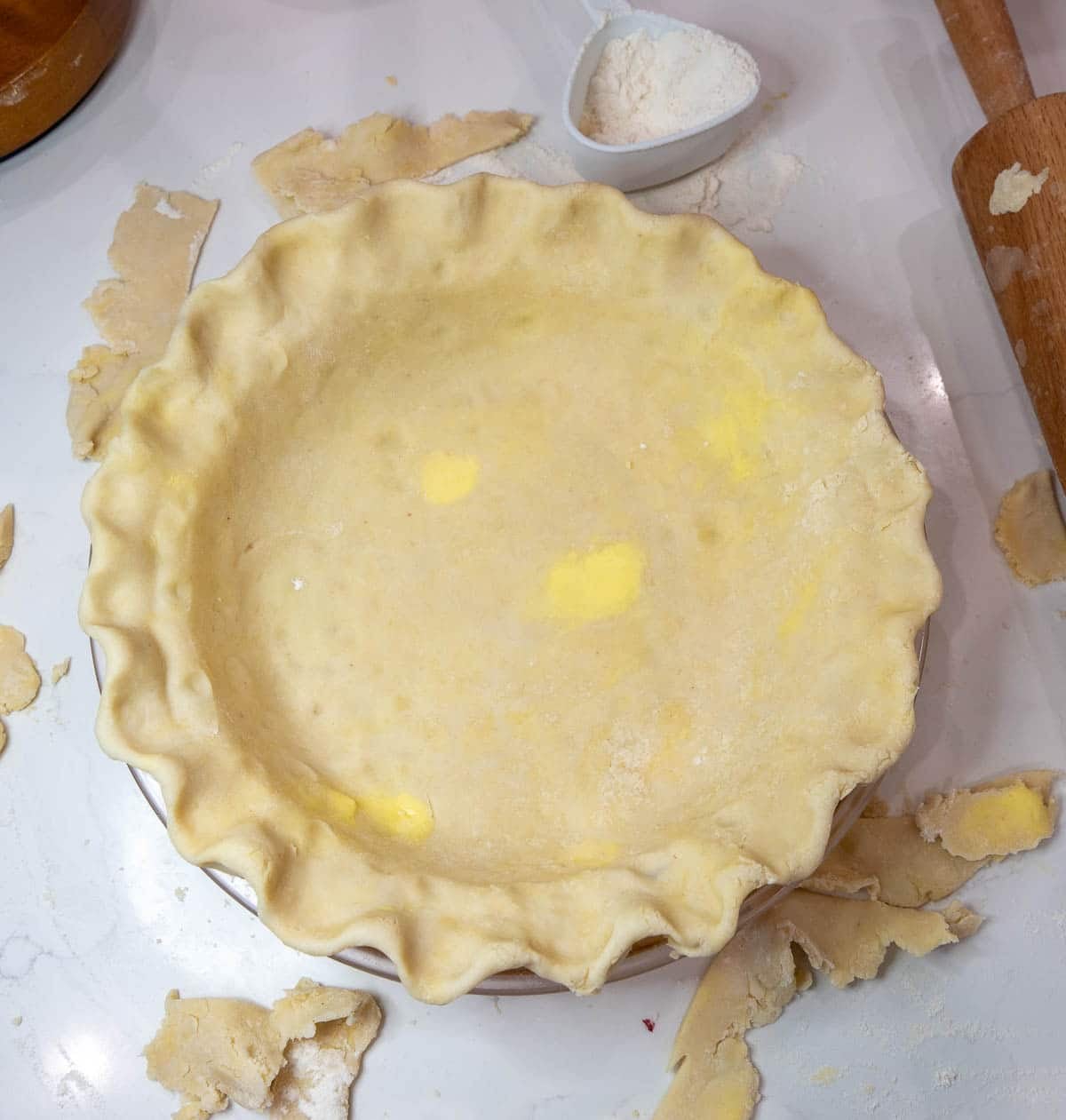
- Shape the crust. Fit the dough into your pie dish, fold the 1" overhang under or up, and crimp the edges.

- Dock and freeze. Poke holes in the bottom of the crust with a fork so it doesn't puff up, then freeze it for 20 minutes.
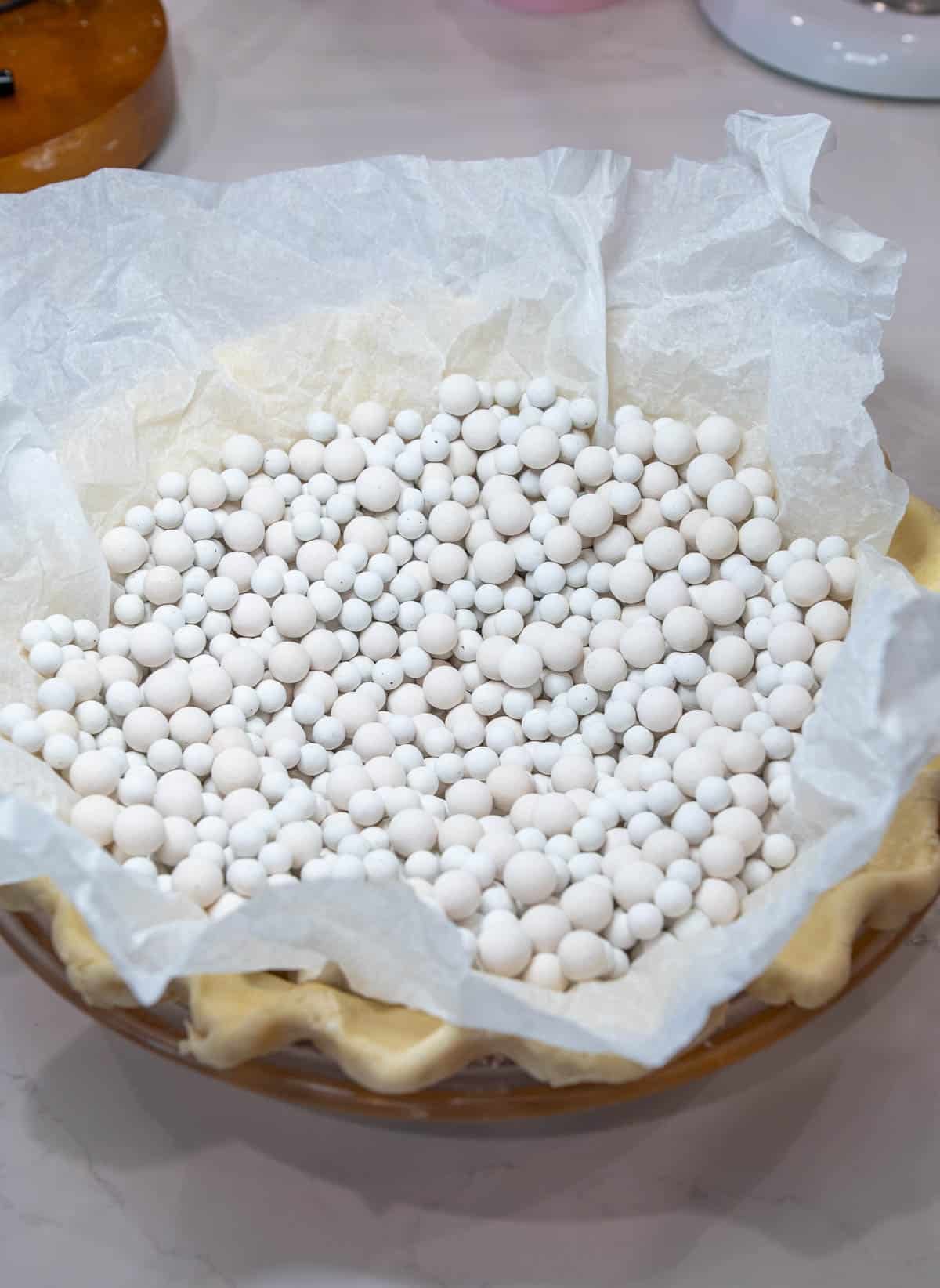
- Weigh it down. Line the crust with parchment paper or foil and fill it with pie weights or dried beans. Bake at 425º F for 10 minutes.
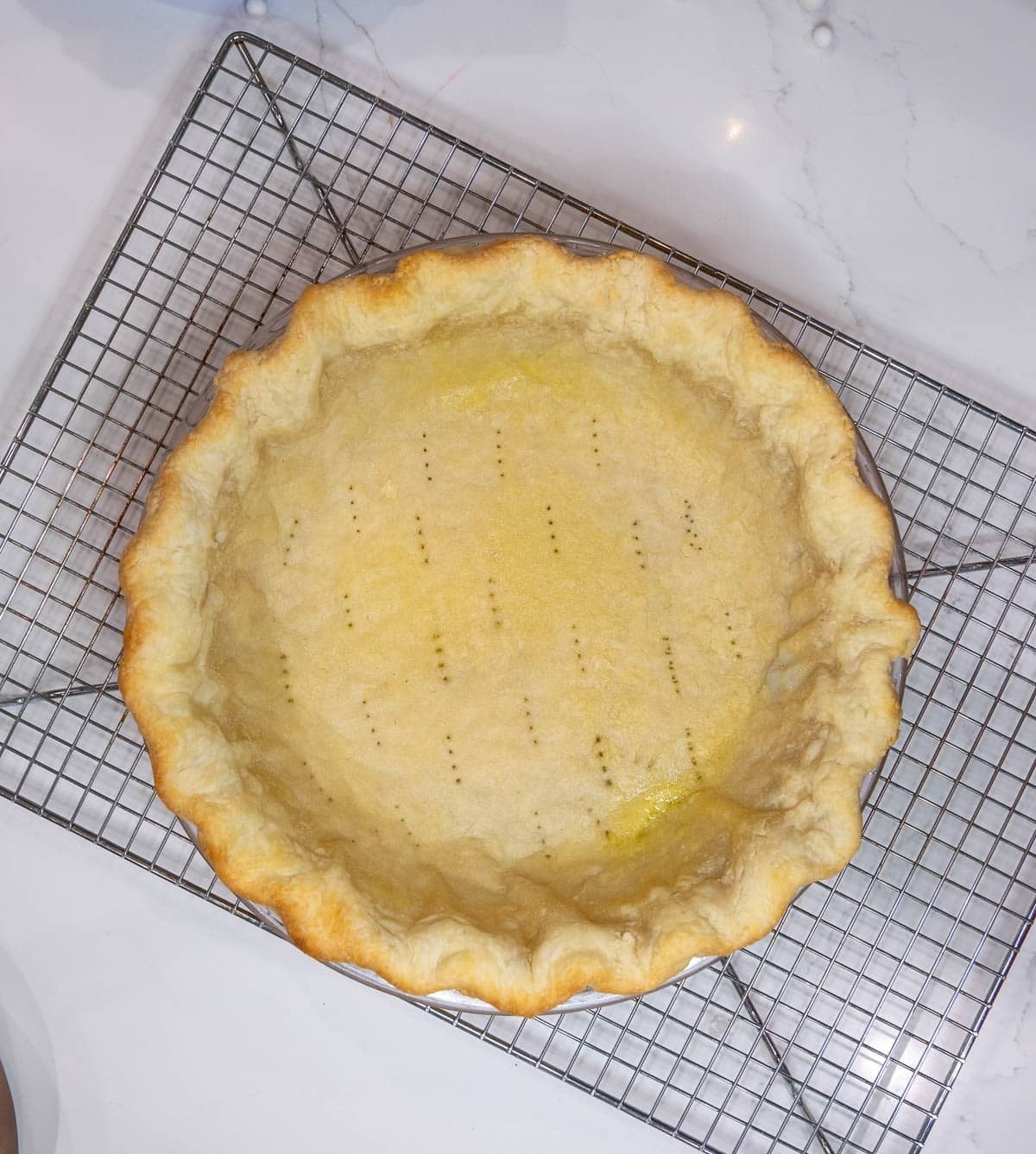
- Finish baking. Remove the parchment and weights and bake another 15 to 20 minutes, until golden brown and pulling away slightly from the sides. For a par-baked crust, like for pumpkin pie, take it out sooner, when the bottom just looks dry. Let it cool before filling.
Common Pie Crust Problems To Avoid
- Sticky dough that is hard to handle. The dough is too warm. Keep everything cold, use ice water, and put the dough back in the fridge if it starts to get soft.
- Dough that cracks when you roll it. The dough is too cold. Let the disk sit at room temperature for 10 to 15 minutes and press it with your rolling pin before you start rolling.
- A crust that shrinks in the oven. Chill the shaped crust for 30 minutes before you bake it.
- A tough crust. Too much water or overworking the dough makes it tough. Add the water in small amounts and stop as soon as the dough comes together.
- No flaky layers. The butter got too warm or was broken down too much. Keep the grated butter frozen and cut in the lard with a knife instead of your hands.
- A soggy bottom crust. For liquid fillings, par-bake the crust first or use my mealy pie dough.
How do you prevent the pie crust from getting too brown?
If your pie crust has not shrunk from the sides of the plate and is getting too brown, you can cover the top of the crust with some aluminum foil or you can move one of your oven racks to the top of the oven and put a sheet pan or piece of aluminum foil on the rack to prevent browning. I prefer to do it this way so that I don't accidentally damage my pie.
You can also purchase pie crust protectors that sit on top of the pie crust as it bakes to prevent browning.
So hopefully this has answered a lot of your questions on how to make the perfect pie crust. Get my recipes for mealy dough and flaky pie dough too.
Best Pie Crust Recipe FAQs
Can I use shortening or all butter instead of lard?
Yes! You can swap the lard for the same amount of shortening or more butter. Lard is what gives this crust its extra flakiness, so it will be a little less flaky, but it still makes a great pie crust.
Can I make pie crust ahead of time?
Yes! Wrap the dough disks tightly in plastic wrap and keep them in the fridge for up to 48 hours. You can also freeze the wrapped disks for up to 3 months. Thaw them overnight in the fridge before you roll them out.
What size pie dish does this recipe fit?
This recipe makes two crusts, which is enough for one 9 inch double crust pie or two 9 inch single crust pies. If you are using a deep dish pie plate, you may want a little extra dough so you have enough to crimp the edges.
Do I need to blind bake this crust for pumpkin pie?
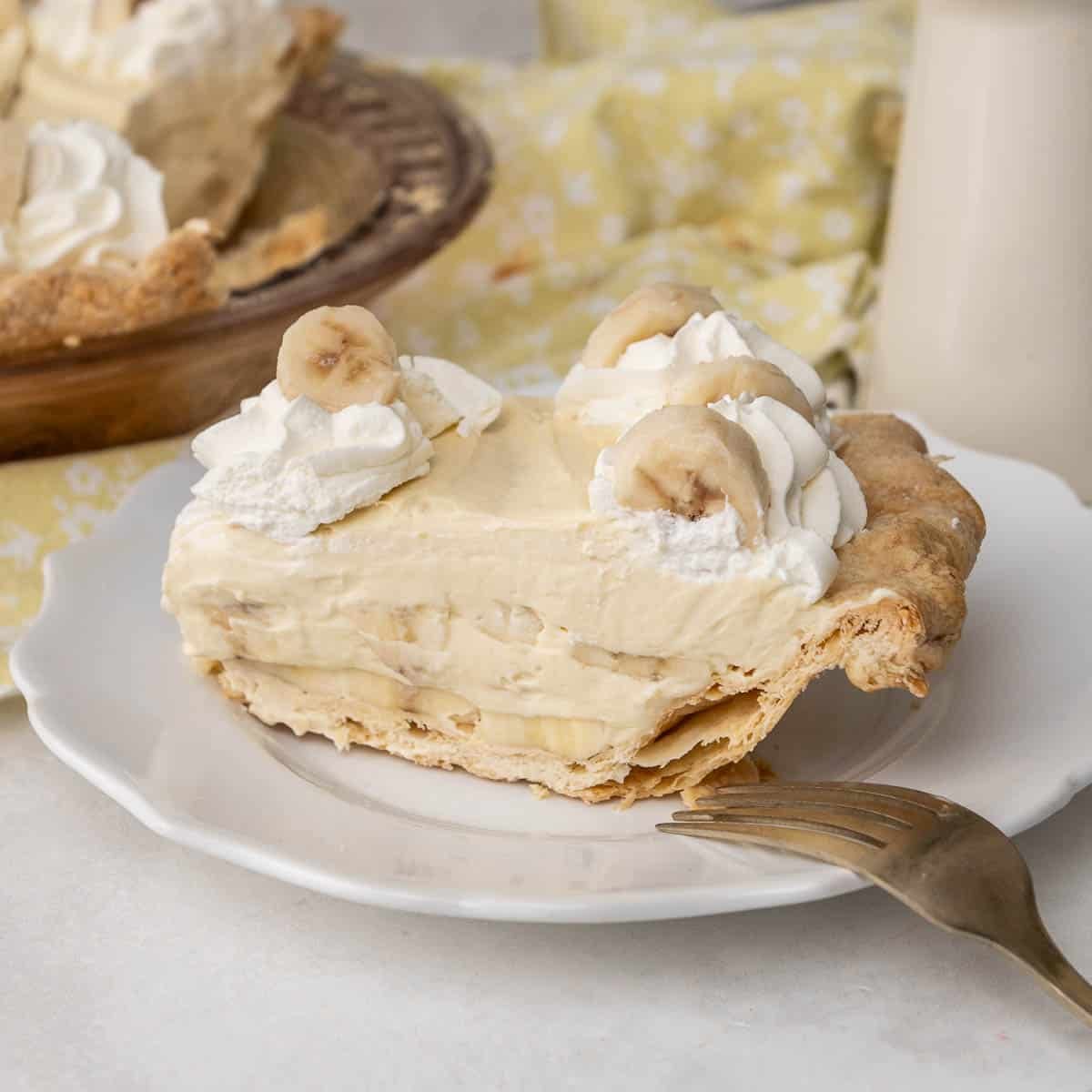
No, you can pour your pumpkin filling right into the unbaked crust and bake it all together. If you want an extra crisp bottom crust under a custard filling like pumpkin or pecan, you can par-bake the crust first.
Can I use this pie crust for savory pies?
Yes! There is no sugar in this pie crust, so it works just as well for savory pies like chicken pot pie and quiche as it does for sweet pies.
More Pie Recipes To Try
Leave Me A Review
⭐️⭐️⭐️⭐️⭐️
If you tried this Best Pie Crust Recipe or any other recipe on my blog, please leave a 🌟 star rating and let me know how it goes in the comments. I love hearing from you!
Recipe
Ingredients
- 15 oz all-purpose flour
- 1 teaspoon salt
- 7 Tablespoons unsalted butter frozen and grated
- 8 Tablespoons lard cold
- 4 oz ice cold water
Instructions
- Before you begin: Grate your cold butter and place it in the freezer until you need it.
For the pie dough
- Add the flour and salt to a medium-sized bowl.
- Add the frozen grated butter and toss it with the flour and salt until all of the butter is coated.
- Add the cold lard and cut it into the coated butter with a knife until it is evenly distributed. Using a knife instead of your hands keeps the butter from melting.
- Add the ice water in small amounts, tossing after each addition to coat and moisten the flour mixture. Then begin pressing the dough together.
- Press the dough into two equal sized disks about 1" thick. Wrap the dough in plastic wrap and refrigerate it for a minimum of two hours and up to two days. Or freeze and use it later!
To roll out the pie crust
- When you're ready to make your pie, remove one disk from the fridge and let it sit at room temperature for 10 to 15 minutes.
- Dust the surface of your counter with a little flour. Press down firmly with your rolling pin to begin flattening the pie dough.
- Roll the dough out to ⅛" thick, moving the dough often and adding more flour as needed. Place into your pie dish as directed in your pie recipe. Chill your dough for 30 minutes before you bake it.


Leave a Reply