
Blood is a specialised fluid connective tissue that circulates throughout the human body and is essential for life. It transports oxygen, nutrients, hormones, and other vital substances to body tissues while removing carbon dioxide and metabolic wastes. Blood also helps maintain body temperature, immunity, and internal balance.
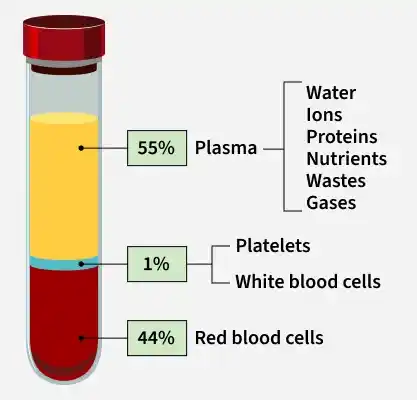
Blood consists of two major components: plasma and formed elements. Plasma forms the liquid portion of blood, while the formed elements include red blood cells, white blood cells, and platelets.
Plasma
- Plasma is a pale yellow-coloured fluid that constitutes about 55 per cent of the total blood volume.
- It is composed mainly of water, which accounts for approximately 90 to 92 per cent of its composition.
- The remaining portion consists of proteins, minerals, nutrients, hormones, enzymes, gases, and waste products dissolved in water.
- The major plasma proteins include albumin, globulins, and fibrinogen. Albumin helps maintain the osmotic balance of blood and prevents excessive loss of fluid from blood vessels.
- Globulins play an important role in immunity and defence against infections. Fibrinogen is involved in blood clotting and helps prevent excessive bleeding after injury.
- Plasma serves as a transport medium for nutrients absorbed from the digestive system, hormones secreted by endocrine glands, waste products generated by cellular metabolism, and gases exchanged during respiration.
Formed Elements
The formed elements constitute about 45 per cent of blood volume and include red blood cells, white blood cells, and platelets.
1. Red Blood Cells (Erythrocytes)
- Red blood cells, also known as erythrocytes, are the most abundant cells in human blood.
- They are small, circular, biconcave, and highly specialised cells that lack a nucleus in their mature state.
- Their unique shape increases the surface area available for the exchange of gases and allows them to pass easily through narrow blood capillaries.
- The primary function of red blood cells is the transport of oxygen from the lungs to body tissues and the transport of a portion of carbon dioxide from tissues back to the lungs.
- This function is performed by haemoglobin, a complex protein containing iron.
- Red blood cells are produced in the red bone marrow through a process known as erythropoiesis.
- Their production is regulated by the hormone erythropoietin, which is secreted mainly by the kidneys when oxygen levels in the blood decrease.
- The average lifespan of a red blood cell is approximately 120 days, after which it is destroyed in organs such as the spleen and liver.
2. White Blood Cells (Leukocytes)
White blood cells, also called leukocytes, are the defensive cells of the body. Although they are much fewer in number than red blood cells, they play a crucial role in protecting the body against infections, diseases, and foreign substances. Unlike red blood cells, white blood cells possess a nucleus and can move actively through blood vessel walls into tissues where they fight invading microorganisms.
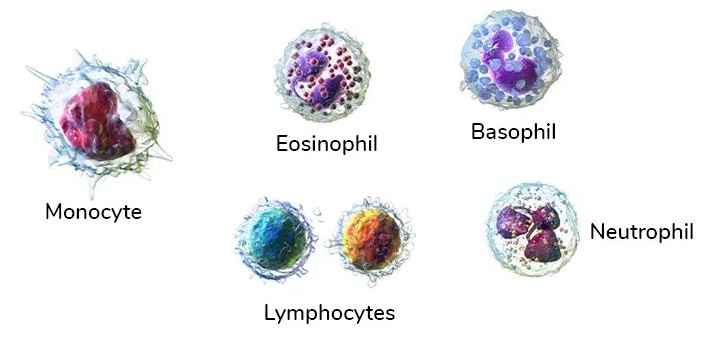
White blood cells form an important part of the immune system and help maintain the body's defence mechanisms. White blood cells are broadly classified into two categories:
A. Granulocytes
Granulocytes contain granules in their cytoplasm and include:
- Neutrophils: Neutrophils are the most abundant white blood cells and act as the first line of defence against bacterial infections.
- Eosinophils: Eosinophils are involved in allergic reactions and defence against parasites.
- Basophils: Basophils release histamine and other chemicals that participate in inflammatory responses.

B. Agranulocytes
Agranulocytes lack visible cytoplasmic granules and include:
- Lymphocytes: Lymphocytes play a central role in immune responses by producing antibodies and destroying infected cells.
- Monocytes: Monocytes develop into macrophages that engulf and digest pathogens, dead cells, and foreign particles.

3. Platelets (Thrombocytes)
Platelets are small, colourless, disc-shaped cell fragments present in blood. They are formed in the bone marrow from large cells called megakaryocytes. Although platelets are not complete cells, they are extremely important for blood clotting and wound healing.
- When a blood vessel is damaged, platelets accumulate at the site of injury and release chemicals that initiate the clotting process.
- This results in the formation of a blood clot that prevents excessive blood loss and promotes tissue repair.
- A deficiency of platelets can lead to excessive bleeding, while an abnormal increase may increase the risk of clot formation within blood vessels.
Importance of Blood
- Blood carries oxygen from the lungs to all body tissues and cells, which is essential for respiration and energy production.
- Blood transports carbon dioxide, a waste product of cellular respiration, from tissues to the lungs for exhalation.
- Blood delivers nutrients such as glucose, amino acids, vitamins, minerals, and fatty acids from the digestive system to body cells.
- Blood carries hormones from endocrine glands to their target organs, helping regulate various body functions.
- Blood transports waste products such as urea and uric acid to the kidneys and other excretory organs for elimination.
- White blood cells and antibodies present in the blood protect the body against infections, diseases, and harmful microorganisms.
- Platelets and clotting factors prevent excessive blood loss by forming clots at sites of injury.
- Blood distributes heat throughout the body and helps maintain a stable internal temperature.
- Blood acts as a buffer system and helps maintain the normal pH of body fluids.
- Blood helps regulate the distribution of water and essential minerals within the body.
- Blood transports nutrients, oxygen, and clotting factors necessary for healing damaged tissues.
- Blood helps maintain a stable internal environment by coordinating transport, regulation, and protection functions.
- Blood serves as a transport medium that links all organs and tissues, ensuring their proper functioning.
- Every cell in the body depends on blood for oxygen, nutrients, and waste removal, making blood indispensable for life.
