
Information System Life Cycle (ISLC) is a framework used to manage the development, maintenance, and retirement of an organisation's information systems.
- In large organizations, the database system is one part of the overall information system.
- ISLC provides a structured approach to develop and manage information systems based on organizational needs.
- Maintaining control becomes challenging as the organization's requirements change over time.
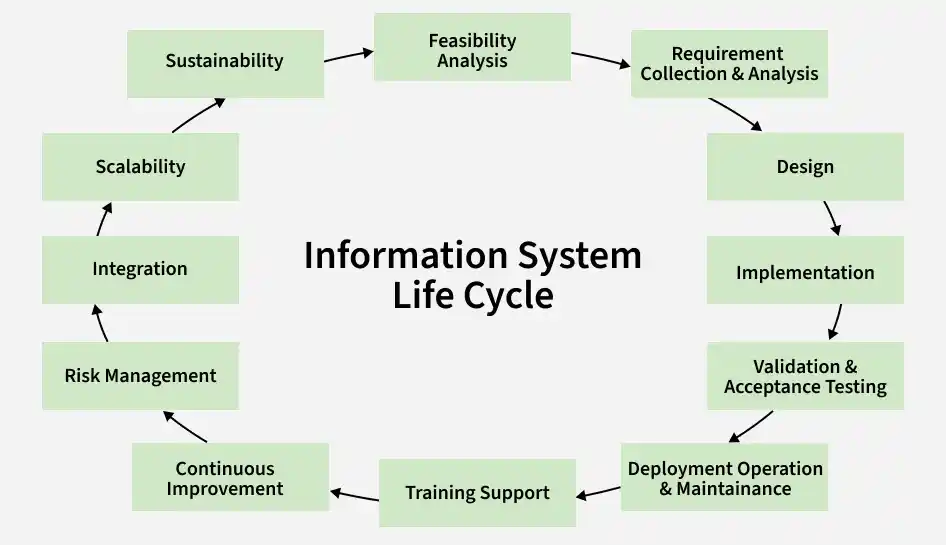
Phases of ISLC
The Information System Life Cycle is also known as the Macro Life Cycle. This cycle typically includes the following phases:
1. Feasibility Analysis
This phase is basically concerned with the following points:
- Analysing potential application areas.
- Identifying the economics of information gathering.
- Performing preliminary cost-benefit studies.
- Determining the complexity of data and processes.
- Setting up priorities among applications.
2. Requirements Collection and Analysis
In this phase we basically do the following points:
- Detailed requirements are collected by interacting with potential users and groups to identify their particular problems and needs.
- Inter application dependencies are identified.
- Communication and reporting procedures are identified.
3. System Design
This phase has following two aspects:
- Design of database.
- Design of application system that uses and process the database.
4. Implementation
In this phase following steps are implemented:
- The information system is implemented
- The database is loaded.
- The database transactions are implemented and tested.
5. Validation and Acceptance Testing
The system is validated to ensure that it meets user requirements and performance criteria. The system is tested against its functional and performance specifications.
6. Deployment and Installation
This phase may be preceded by the conversion of users from the old system to the new system, along with user training. The operational phase begins once all system functions are fully operational and have been tested and validated. Any new requirements or changes that arise during operation pass through the appropriate ISLC development phases before being incorporated into the system. Monitoring and system maintenance are important activities during this phase to ensure the system continues to operate efficiently.
7. Operations and Maintenance
The system is monitored daily. This phase involves fixing post-launch bugs, providing user support, and performing minor updates to keep the system running smoothly.
Benefits of Using the ISLC Framework
- Improved alignment with business goals: Ensures information systems support business goals.
- Better Project Management: Reduces risks through a structured development process.
- Improved Efficiency: Optimizes resource usage and system management.
- Better Data Management: Improves data quality and reduces data loss risks.
- Enhanced Security: Minimizes security threats and data breaches.
- Better Compliance: Ensures adherence to laws and industry standards.
- Cost Management: Reduces unnecessary costs by managing system lifecycle effectively.
