Log In


Madura Roadhouse, Dundas Shire, Western Australia, Australiai
| Regional Level Types | |
|---|---|
| Madura Roadhouse | Community |
| Dundas Shire | Shire |
| Western Australia | State |
| Australia | Country |
This page is currently not sponsored. Click here to sponsor this page.


Type:
Other Languages:
French:
Madura, Australie-Occidentale, Australie
German:
Madura, Western Australia, Australien
Russian:
Мадура , Западная Австралия, Австралия
Simplified Chinese:
馬都拉 , 西澳大利亚州, 澳大利亚
Asturian:
Madura, Australia Occidental
Dutch:
Madura, West-Australië, Australië
Farsi/Persian:
مادورا، استرالیای غربی, استرالیای غربی, استرالیا
Portuguese:
Madura, Austrália Ocidental, Austrália
Madura is a small roadhouse community located on the Eyre Highway in Western Australia, on the Roe Plains. It is 1,253 kilometres (778.58 mi) from Perth. It is at the foot of the escarpment next to the Madura Pass down from the Nullarbor Plain.
Madura was settled in 1876 as a place to breed quality cavalry horses for the British Indian Army for use in the Northwest Frontier region of India (now part of Pakistan). The horses were shipped from the coast at Eucla. (Cervantes, north of Perth, was also used for breeding.) The site was chosen as it was one of the few with free flowing bore water in the area.
The surrounding area is part of Madura Station, currently a sheep station, but previously used to graze cattle, horses, and camels.
Like other locations in the Nullarbor Plain area, the area consists of little more than a roadhouse, open 06:00 to 21:00 each day.
Two kilometres west of Madura is a scenic lookout with sweeping views of the Madura Pass across the escarpment and the Roe Plains. Natural blowholes may also be found nearby. The area is used for pastoral purposes, mainly sheep rearing.
Surrounding Madura is the Madura Shelf, 265,600 square kilometres (102,500 sq mi) of predominantly sedimentary rock, part of the Bight Basin, which has been found to contain crude oil and geothermal gradients.
Select Mineral List Type
Standard Detailed Gallery Strunz Chemical ElementsMineral List
Mineral list contains entries from the region specified including sub-localities18 valid minerals. 3 (TL) - type locality of valid minerals.
Rock Types Recorded
Rock list contains entries from the region specified including sub-localities
Select Rock List Type
Alphabetical List Tree DiagramDetailed Mineral List:
| ⓘ Aphthitalite Formula: K3Na(SO4)2 |
| ⓘ Arcanite Formula: K2SO4 References: |
| ⓘ Arcanite var. Taylorite (of Dana) Formula: (K,NH4)2SO4 References: |
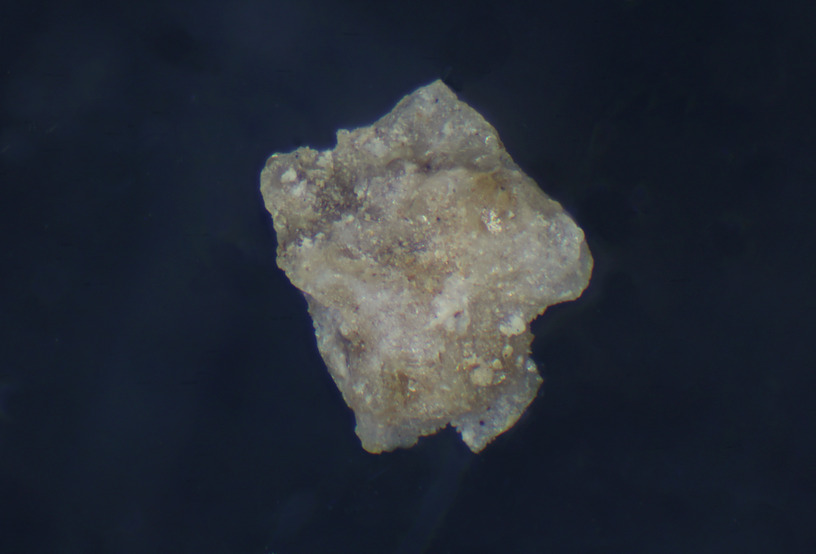
| ⓘ Archerite (TL) Formula: (K,NH4)(H2PO4) Type Locality: Habit: Archerite is tetragonal with second order prisms and pyramids. Colour: Buff to clear. Description: Type material is stored in the collections of the Mineral Division, Government Chemical
Laboratories, Perth, Western Australia.
Bridge states that "Archerite occurs on only a few samples in the form of small tetragonal crystals up to 2 mm in length and crusts of a buff to clear colour. The specimens containing archerite are stalactites, with minor amounts occurring in the convoluted wall crusts, which are mainly aphthitalite".
There is no distinct cleavage and the mineral is relatively soft with a white streak and is water-soluble. |
| ⓘ Biphosphammite Formula: NH4(H2PO4) |
| ⓘ Brushite Formula: Ca(PO3OH) · 2H2O |
| ⓘ Calcite Formula: CaCO3 |
| ⓘ 'Fayalite-Forsterite Series' |
| ⓘ Guanine Formula: C5H5N5O |
| ⓘ Halite Formula: NaCl |
| ⓘ 'Hypersthene' Formula: (Mg,Fe)SiO3 |
| ⓘ Mundrabillaite (TL) Formula: (NH4)2Ca(PO3OH)2 · H2O Type Locality: Colour: Colourless Description: Mundrabillaite is colourless with an earthy lustre and white streak. Its hardness is very low and it is fragile.
Type specimens of mundrabillaite are preserved in the Government Chemical Laboratories - Perth, mineral collection as MDC 5906. |
| ⓘ Native Iron Formula: Fe |
| ⓘ Newberyite Formula: Mg(PO3OH) · 3H2O |
| ⓘ Oxammite Formula: (NH4)2(C2O4) · H2O |
| ⓘ Phoxite Formula: (NH4)2Mg2(C2O4)(PO3OH)2(H2O)4 Description: Phoxite was first reported from here by Bridge (1977) but was listed as an unknown mineral at the time. |
| ⓘ Stercorite Formula: (NH4)Na(PO3OH) · 4H2O |
| ⓘ Syngenite Formula: K2Ca(SO4)2 · H2O |
| ⓘ Uricite (TL) Formula: C5H4N4O3 Type Locality: |
| ⓘ Weddellite Formula: Ca(C2O4) · (2.5-x)H2O |
| ⓘ Whitlockite Formula: Ca9Mg(PO4)6(PO3OH) |
Gallery:

List of minerals arranged by Strunz 10th Edition classification
| Group 1 - Elements | |||
|---|---|---|---|
| ⓘ | Native Iron | 1.AE.05 | Fe |
| Group 3 - Halides | |||
| ⓘ | Halite | 3.AA.20 | NaCl |
| Group 5 - Nitrates and Carbonates | |||
| ⓘ | Calcite | 5.AB.05 | CaCO3 |
| Group 7 - Sulphates, Chromates, Molybdates and Tungstates | |||
| ⓘ | Aphthitalite | 7.AC.35 | K3Na(SO4)2 |
| ⓘ | Arcanite | 7.AD.05 | K2SO4 |
| ⓘ | var. Taylorite (of Dana) | 7.AD.05 | (K,NH4)2SO4 |
| ⓘ | Syngenite | 7.CD.35 | K2Ca(SO4)2 · H2O |
| Group 8 - Phosphates, Arsenates and Vanadates | |||
| ⓘ | Whitlockite | 8.AC.45 | Ca9Mg(PO4)6(PO3OH) |
| ⓘ | Archerite (TL) | 8.AD.15 | (K,NH4)(H2PO4) |
| ⓘ | Biphosphammite | 8.AD.15 | NH4(H2PO4) |
| ⓘ | Newberyite | 8.CE.10 | Mg(PO3OH) · 3H2O |
| ⓘ | Stercorite | 8.CJ.05 | (NH4)Na(PO3OH) · 4H2O |
| ⓘ | Mundrabillaite (TL) | 8.CJ.10 | (NH4)2Ca(PO3OH)2 · H2O |
| ⓘ | Brushite | 8.CJ.50 | Ca(PO3OH) · 2H2O |
| Group 10 - Organic Compounds | |||
| ⓘ | Weddellite | 10.AB.40 | Ca(C2O4) · (2.5-x)H2O |
| ⓘ | Oxammite | 10.AB.55 | (NH4)2(C2O4) · H2O |
| ⓘ | Phoxite | 10.AB.60 | (NH4)2Mg2(C2O4)(PO3OH)2(H2O)4 |
| ⓘ | Guanine | 10.CA.30 | C5H5N5O |
| ⓘ | Uricite (TL) | 10.CA.40 | C5H4N4O3 |
| Unclassified | |||
| ⓘ | 'Hypersthene' | - | (Mg,Fe)SiO3 |
| ⓘ | 'Fayalite-Forsterite Series' | - | |
List of minerals for each chemical element
| H | Hydrogen | |
|---|---|---|
| H | ⓘ Archerite | (K,NH4)(H2PO4) |
| H | ⓘ Biphosphammite | NH4(H2PO4) |
| H | ⓘ Brushite | Ca(PO3OH) · 2H2O |
| H | ⓘ Guanine | C5H5N5O |
| H | ⓘ Mundrabillaite | (NH4)2Ca(PO3OH)2 · H2O |
| H | ⓘ Newberyite | Mg(PO3OH) · 3H2O |
| H | ⓘ Oxammite | (NH4)2(C2O4) · H2O |
| H | ⓘ Stercorite | (NH4)Na(PO3OH) · 4H2O |
| H | ⓘ Syngenite | K2Ca(SO4)2 · H2O |
| H | ⓘ Uricite | C5H4N4O3 |
| H | ⓘ Weddellite | Ca(C2O4) · (2.5-x)H2O |
| H | ⓘ Whitlockite | Ca9Mg(PO4)6(PO3OH) |
| H | ⓘ Arcanite var. Taylorite (of Dana) | (K,NH4)2SO4 |
| H | ⓘ Phoxite | (NH4)2Mg2(C2O4)(PO3OH)2(H2O)4 |
| C | Carbon | |
| C | ⓘ Calcite | CaCO3 |
| C | ⓘ Guanine | C5H5N5O |
| C | ⓘ Oxammite | (NH4)2(C2O4) · H2O |
| C | ⓘ Uricite | C5H4N4O3 |
| C | ⓘ Weddellite | Ca(C2O4) · (2.5-x)H2O |
| C | ⓘ Phoxite | (NH4)2Mg2(C2O4)(PO3OH)2(H2O)4 |
| N | Nitrogen | |
| N | ⓘ Archerite | (K,NH4)(H2PO4) |
| N | ⓘ Biphosphammite | NH4(H2PO4) |
| N | ⓘ Guanine | C5H5N5O |
| N | ⓘ Mundrabillaite | (NH4)2Ca(PO3OH)2 · H2O |
| N | ⓘ Oxammite | (NH4)2(C2O4) · H2O |
| N | ⓘ Stercorite | (NH4)Na(PO3OH) · 4H2O |
| N | ⓘ Uricite | C5H4N4O3 |
| N | ⓘ Arcanite var. Taylorite (of Dana) | (K,NH4)2SO4 |
| N | ⓘ Phoxite | (NH4)2Mg2(C2O4)(PO3OH)2(H2O)4 |
| O | Oxygen | |
| O | ⓘ Aphthitalite | K3Na(SO4)2 |
| O | ⓘ Arcanite | K2SO4 |
| O | ⓘ Archerite | (K,NH4)(H2PO4) |
| O | ⓘ Biphosphammite | NH4(H2PO4) |
| O | ⓘ Brushite | Ca(PO3OH) · 2H2O |
| O | ⓘ Calcite | CaCO3 |
| O | ⓘ Guanine | C5H5N5O |
| O | ⓘ Hypersthene | (Mg,Fe)SiO3 |
| O | ⓘ Mundrabillaite | (NH4)2Ca(PO3OH)2 · H2O |
| O | ⓘ Newberyite | Mg(PO3OH) · 3H2O |
| O | ⓘ Oxammite | (NH4)2(C2O4) · H2O |
| O | ⓘ Stercorite | (NH4)Na(PO3OH) · 4H2O |
| O | ⓘ Syngenite | K2Ca(SO4)2 · H2O |
| O | ⓘ Uricite | C5H4N4O3 |
| O | ⓘ Weddellite | Ca(C2O4) · (2.5-x)H2O |
| O | ⓘ Whitlockite | Ca9Mg(PO4)6(PO3OH) |
| O | ⓘ Fayalite-Forsterite Series | |
| O | ⓘ Arcanite var. Taylorite (of Dana) | (K,NH4)2SO4 |
| O | ⓘ Phoxite | (NH4)2Mg2(C2O4)(PO3OH)2(H2O)4 |
| Na | Sodium | |
| Na | ⓘ Aphthitalite | K3Na(SO4)2 |
| Na | ⓘ Halite | NaCl |
| Na | ⓘ Stercorite | (NH4)Na(PO3OH) · 4H2O |
| Mg | Magnesium | |
| Mg | ⓘ Hypersthene | (Mg,Fe)SiO3 |
| Mg | ⓘ Newberyite | Mg(PO3OH) · 3H2O |
| Mg | ⓘ Whitlockite | Ca9Mg(PO4)6(PO3OH) |
| Mg | ⓘ Fayalite-Forsterite Series | |
| Mg | ⓘ Phoxite | (NH4)2Mg2(C2O4)(PO3OH)2(H2O)4 |
| Si | Silicon | |
| Si | ⓘ Hypersthene | (Mg,Fe)SiO3 |
| Si | ⓘ Fayalite-Forsterite Series | |
| P | Phosphorus | |
| P | ⓘ Archerite | (K,NH4)(H2PO4) |
| P | ⓘ Biphosphammite | NH4(H2PO4) |
| P | ⓘ Brushite | Ca(PO3OH) · 2H2O |
| P | ⓘ Mundrabillaite | (NH4)2Ca(PO3OH)2 · H2O |
| P | ⓘ Newberyite | Mg(PO3OH) · 3H2O |
| P | ⓘ Stercorite | (NH4)Na(PO3OH) · 4H2O |
| P | ⓘ Whitlockite | Ca9Mg(PO4)6(PO3OH) |
| P | ⓘ Phoxite | (NH4)2Mg2(C2O4)(PO3OH)2(H2O)4 |
| S | Sulfur | |
| S | ⓘ Aphthitalite | K3Na(SO4)2 |
| S | ⓘ Arcanite | K2SO4 |
| S | ⓘ Syngenite | K2Ca(SO4)2 · H2O |
| S | ⓘ Arcanite var. Taylorite (of Dana) | (K,NH4)2SO4 |
| Cl | Chlorine | |
| Cl | ⓘ Halite | NaCl |
| K | Potassium | |
| K | ⓘ Aphthitalite | K3Na(SO4)2 |
| K | ⓘ Arcanite | K2SO4 |
| K | ⓘ Archerite | (K,NH4)(H2PO4) |
| K | ⓘ Syngenite | K2Ca(SO4)2 · H2O |
| K | ⓘ Arcanite var. Taylorite (of Dana) | (K,NH4)2SO4 |
| Ca | Calcium | |
| Ca | ⓘ Brushite | Ca(PO3OH) · 2H2O |
| Ca | ⓘ Calcite | CaCO3 |
| Ca | ⓘ Mundrabillaite | (NH4)2Ca(PO3OH)2 · H2O |
| Ca | ⓘ Syngenite | K2Ca(SO4)2 · H2O |
| Ca | ⓘ Weddellite | Ca(C2O4) · (2.5-x)H2O |
| Ca | ⓘ Whitlockite | Ca9Mg(PO4)6(PO3OH) |
| Fe | Iron | |
| Fe | ⓘ Hypersthene | (Mg,Fe)SiO3 |
| Fe | ⓘ Native Iron | Fe |
| Fe | ⓘ Fayalite-Forsterite Series | |
Fossils
There are 76 fossil localities from the PaleoBioDB database within this region.These data are provided on an experimental basis and are taken from external databases. Mindat.org has no control currently over the accuracy of these data.
| Occurrences | 76 | |||||||||||||||
|---|---|---|---|---|---|---|---|---|---|---|---|---|---|---|---|---|
| Youngest Fossil Listed | 0.01 Ma (Pleistocene) | |||||||||||||||
| Oldest Fossil Listed | 38.0 Ma (Eocene) | |||||||||||||||
| Stratigraphic Units |
| |||||||||||||||
| Fossils from Region | Click here to show the list. | |||||||||||||||
| Fossil Localities | Click to show 16 fossil localities |


Other Databases
| Wikipedia: | https://en.wikipedia.org/wiki/Madura,_Western_Australia |
|---|---|
| Wikidata ID: | Q1883531 |
| GeoNames ID: | 2067254 |
Localities in this Region
- Western Australia
- Dundas Shire
- Madura Roadhouse
- Dundas Shire
Other Regions, Features and Areas that Intersect
Australia
- Bight BasinBasin
- Central Australian ElementCraton
- Eucla BasinBasin
Australian PlateTectonic Plate
- South Australian Craton
- Madura ProvinceShield
This page contains all mineral locality references listed on mindat.org. This does not claim to be a complete list. If you know of more minerals from this site, please register so you can add to our database. This locality information is for reference purposes only. You should never attempt to
visit any sites listed in mindat.org without first ensuring that you have the permission of the land and/or mineral rights holders
for access and that you are aware of all safety precautions necessary.

Madura Roadhouse, Dundas Shire, Western Australia, Australia