
Pima Mine, Mission complex, San Xavier, Pima Mining District, Sierrita Mountains, Pima County, Arizona, USAi
| Regional Level Types | |
|---|---|
| Pima Mine | Mine (Swallowed up by other workings) |
| Mission complex | Complex |
| San Xavier | - not defined - |
| Pima Mining District | Mining District |
| Sierrita Mountains | Mountain Range |
| Pima County | County |
| Arizona | State |
| USA | Country |
This page is currently not sponsored. Click here to sponsor this page.

Latitude & Longitude (WGS84):
31° 58' 55'' North , 111° 3' 47'' West
Latitude & Longitude (decimal):
Type:
Mine (Swallowed up by other workings) - last checked 2024
Deposit first discovered:
1950
Köppen climate type:
Nearest Settlements:
| Place | Population | Distance |
|---|---|---|
| Sahuarita | 25,707 (2017) | 10.5km |
| East Sahuarita | 1,622 (2006) | 13.4km |
| Summit | 5,372 (2011) | 14.1km |
| Green Valley | 21,391 (2011) | 15.7km |
| Valencia West | 9,355 (2011) | 17.4km |
Nearest Clubs:
Local clubs are the best way to get access to collecting localities
Local clubs are the best way to get access to collecting localities
| Club | Location | Distance |
|---|---|---|
| Old Pueblo Lapidary Club | Tucson, Arizona | 30km |
| Tucson Gem and Mineral Society | Tucson, Arizona | 30km |
Other/historical names associated with this locality:
Pima Open Pit Mine
A large surface Cu-Ag-Mo-Zn-Pb-Au mine located in South ½ sec. 36, T.16S., R.12E & the North ½ sec. 1, T.17S., R 12E., 17 miles (ca. 27 km) SE of Tucson. Discovered 1950. First produced 1952 and still productive. Owned by the Union Oil Co.; Cyprus Mines; Utah Mining and Construction; Pima Mining Co., then, finally, ASARCO.
The Pima Mine was developed by another mining firm and was acquired by ASARCO in 1985. It was located at the other end of the Mission pit and is now subhumed by the subsequent workings of the Mission pit of the ASARCO Corp. The road leading to the Mission complex is still named Pima Mine Road.
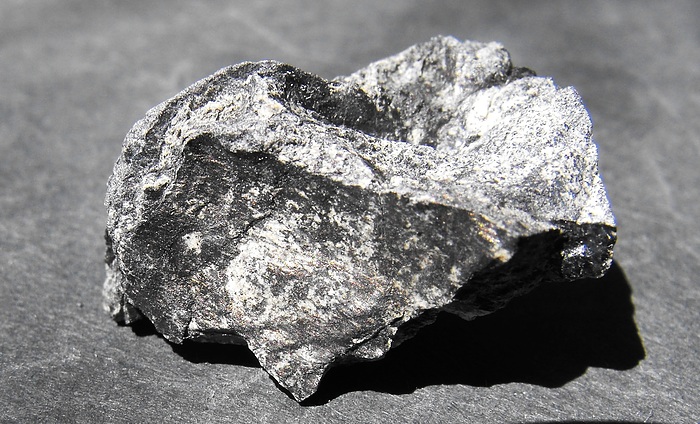
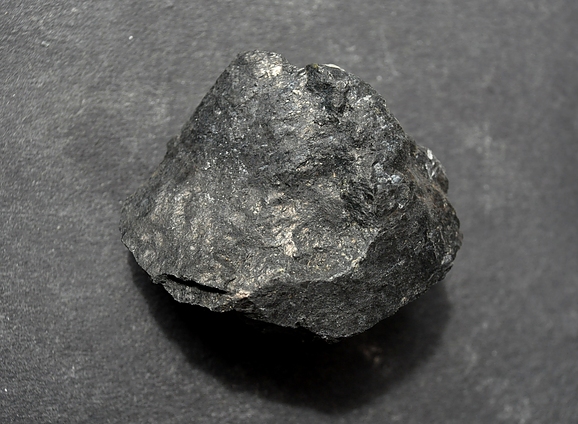
Mineralization was a porphyry copper, skarn related, deposit of disseminated chalcopyrite and pyrite with minor molybdenum, zinc, and lead minerals with some local high-grade lenses, slightly oxidized in the upper part, in a pyrometasomatic ore deposit in a structurally complex mix of Paleozoic limestone, Cretaceous clastic and volcanic rocks and Laramide quartz monzonite intrusive. Magnetite was locally quite massive in tactites, commonly associated with black or green serpentine. The orebody was 486.68 meters long, 487.68 meters wide, 60.96 meters depth to top, 243.84 meters depth to bottom and 182.88 meters thick, strikes E-W and dips about 45S.
Ore control was pre-ore brecciation and stockwork fracturing, wall rock lithologies. Sulfides preferentially replaced calc-magnesian silicates. Ore concentration was the reaction of fluids from the porphyry intrusion with altered sedimentary units. The alteration was propylitic, quartz-sericite, potassic and skarn. The host rock units are the Colima Limestone; Epitaph Formation; Scherrer Formation; Concha Limestone; all of the Naco Group; the Whitcomb Quartzite; Angelica Arkose and the Rodolfo Formation. An associated rock unit is the Ruby Star Granodiorite. The orebody was cut off at depth by the San Xavier Thrust Fault, which cuts the Helmet Fanglomerate (28-30 M.Y.). A breccia pipe was present. Molybdenum was more important in the porphyry and arkose.
Local structures include E-W striking post-mineralization faulting, jointing; and the San Xavier Thrust Fault.
Workings were an open pit operation at 1,524 meters long and 914.4 meters wide, that came into production in 1956. Produced about 104,000,000 tons of ore from 1955 through 1972. This ore averaged about 0.56% Cu and 0.06 ounces (2.27 g) Ag/T with by-product molybdenum, zinc, and lead.
Select Mineral List Type
Standard Detailed Gallery Strunz Chemical ElementsCommodity List
This is a list of exploitable or exploited mineral commodities recorded at this locality.Mineral List
20 valid minerals.
Rock Types Recorded
Note: data is currently VERY limited. Please bear with us while we work towards adding this information!
Select Rock List Type
Alphabetical List Tree DiagramDetailed Mineral List:
| ⓘ Bornite Formula: Cu5FeS4 |
| ⓘ Chalcocite Formula: Cu2S Description: A product of secondary enrichment. |
| ⓘ Chalcopyrite Formula: CuFeS2 Description: The primary ore mineral closely associated with grossular hornfels. References: |
| ⓘ Chrysocolla Formula: Cu2-xAlx(H2-xSi2O5)(OH)4 · nH2O, x < 1 |
| ⓘ Cuprite Formula: Cu2O |
| ⓘ Datolite Formula: CaB(SiO4)(OH) Description: Occurs in thin veins in diopside-garnet tactites as micro-material. |
| ⓘ Diopside Formula: CaMgSi2O6 Description: Abundant in limestone hornfels with grossular & tremolite. References: |
| ⓘ Galena Formula: PbS |
| ⓘ Grossular Formula: Ca3Al2(SiO4)3 Description: Abundant in limestone hornfels with diopside & tremolite. References: |
| ⓘ Hematite Formula: Fe2O3 |
| ⓘ Magnetite Formula: Fe2+Fe3+2O4 |
| ⓘ Malachite Formula: Cu2(CO3)(OH)2 |
| ⓘ Molybdenite Formula: MoS2 |
| ⓘ Muscovite Formula: KAl2(AlSi3O10)(OH)2 |
| ⓘ Muscovite var. Sericite Formula: KAl2(AlSi3O10)(OH)2 |
| ⓘ Native Copper Formula: Cu Description: Occurs as a secondary mineral. |
| ⓘ Pyrite Formula: FeS2 |
| ⓘ 'Serpentine Subgroup' Formula: D3[Si2O5](OH)4 |
| ⓘ Sphalerite Formula: ZnS |
| ⓘ 'Tennantite Subgroup' Formula: Cu6(Cu4C2+2)As4S12S Description: Minor primary mineral. |
| ⓘ Tenorite Formula: CuO |
| ⓘ Tremolite Formula: ◻Ca2Mg5(Si8O22)(OH)2 Description: Abundant in limestone hornfels with diopside & grossular. References: |
| ⓘ Valleriite Formula: (Fe2+,Cu)4(Mg,Al)3S4(OH,O)6 |

List of minerals arranged by Strunz 10th Edition classification
| Group 1 - Elements | |||
|---|---|---|---|
| ⓘ | Native Copper | 1.AA.05 | Cu |
| Group 2 - Sulphides and Sulfosalts | |||
| ⓘ | Chalcocite | 2.BA.05 | Cu2S |
| ⓘ | Bornite | 2.BA.15 | Cu5FeS4 |
| ⓘ | Sphalerite | 2.CB.05a | ZnS |
| ⓘ | Chalcopyrite | 2.CB.10a | CuFeS2 |
| ⓘ | Galena | 2.CD.10 | PbS |
| ⓘ | Molybdenite | 2.EA.30 | MoS2 |
| ⓘ | Pyrite | 2.EB.05a | FeS2 |
| ⓘ | Valleriite | 2.FD.30 | (Fe2+,Cu)4(Mg,Al)3S4(OH,O)6 |
| ⓘ | 'Tennantite Subgroup' | 2.GB.05 | Cu6(Cu4C2+2)As4S12S |
| Group 4 - Oxides and Hydroxides | |||
| ⓘ | Cuprite | 4.AA.10 | Cu2O |
| ⓘ | Tenorite | 4.AB.10 | CuO |
| ⓘ | Magnetite | 4.BB.05 | Fe2+Fe3+2O4 |
| ⓘ | Hematite | 4.CB.05 | Fe2O3 |
| Group 5 - Nitrates and Carbonates | |||
| ⓘ | Malachite | 5.BA.10 | Cu2(CO3)(OH)2 |
| Group 9 - Silicates | |||
| ⓘ | Grossular | 9.AD.25 | Ca3Al2(SiO4)3 |
| ⓘ | Datolite | 9.AJ.20 | CaB(SiO4)(OH) |
| ⓘ | Diopside | 9.DA.15 | CaMgSi2O6 |
| ⓘ | Tremolite | 9.DE.10 | ◻Ca2Mg5(Si8O22)(OH)2 |
| ⓘ | Muscovite | 9.EC.15 | KAl2(AlSi3O10)(OH)2 |
| ⓘ | var. Sericite | 9.EC.15 | KAl2(AlSi3O10)(OH)2 |
| ⓘ | Chrysocolla | 9.ED.20 | Cu2-xAlx(H2-xSi2O5)(OH)4 · nH2O, x < 1 |
| Unclassified | |||
| ⓘ | 'Serpentine Subgroup' | - | D3[Si2O5](OH)4 |
List of minerals for each chemical element
| H | Hydrogen | |
|---|---|---|
| H | ⓘ Chrysocolla | Cu2-xAlx(H2-xSi2O5)(OH)4 · nH2O, x < 1 |
| H | ⓘ Datolite | CaB(SiO4)(OH) |
| H | ⓘ Malachite | Cu2(CO3)(OH)2 |
| H | ⓘ Muscovite | KAl2(AlSi3O10)(OH)2 |
| H | ⓘ Tremolite | ◻Ca2Mg5(Si8O22)(OH)2 |
| H | ⓘ Valleriite | (Fe2+,Cu)4(Mg,Al)3S4(OH,O)6 |
| H | ⓘ Muscovite var. Sericite | KAl2(AlSi3O10)(OH)2 |
| H | ⓘ Serpentine Subgroup | D3[Si2O5](OH)4 |
| B | Boron | |
| B | ⓘ Datolite | CaB(SiO4)(OH) |
| C | Carbon | |
| C | ⓘ Malachite | Cu2(CO3)(OH)2 |
| O | Oxygen | |
| O | ⓘ Chrysocolla | Cu2-xAlx(H2-xSi2O5)(OH)4 · nH2O, x < 1 |
| O | ⓘ Cuprite | Cu2O |
| O | ⓘ Diopside | CaMgSi2O6 |
| O | ⓘ Datolite | CaB(SiO4)(OH) |
| O | ⓘ Grossular | Ca3Al2(SiO4)3 |
| O | ⓘ Hematite | Fe2O3 |
| O | ⓘ Magnetite | Fe2+Fe23+O4 |
| O | ⓘ Malachite | Cu2(CO3)(OH)2 |
| O | ⓘ Muscovite | KAl2(AlSi3O10)(OH)2 |
| O | ⓘ Tenorite | CuO |
| O | ⓘ Tremolite | ◻Ca2Mg5(Si8O22)(OH)2 |
| O | ⓘ Valleriite | (Fe2+,Cu)4(Mg,Al)3S4(OH,O)6 |
| O | ⓘ Muscovite var. Sericite | KAl2(AlSi3O10)(OH)2 |
| O | ⓘ Serpentine Subgroup | D3[Si2O5](OH)4 |
| Mg | Magnesium | |
| Mg | ⓘ Diopside | CaMgSi2O6 |
| Mg | ⓘ Tremolite | ◻Ca2Mg5(Si8O22)(OH)2 |
| Mg | ⓘ Valleriite | (Fe2+,Cu)4(Mg,Al)3S4(OH,O)6 |
| Al | Aluminium | |
| Al | ⓘ Chrysocolla | Cu2-xAlx(H2-xSi2O5)(OH)4 · nH2O, x < 1 |
| Al | ⓘ Grossular | Ca3Al2(SiO4)3 |
| Al | ⓘ Muscovite | KAl2(AlSi3O10)(OH)2 |
| Al | ⓘ Valleriite | (Fe2+,Cu)4(Mg,Al)3S4(OH,O)6 |
| Al | ⓘ Muscovite var. Sericite | KAl2(AlSi3O10)(OH)2 |
| Si | Silicon | |
| Si | ⓘ Chrysocolla | Cu2-xAlx(H2-xSi2O5)(OH)4 · nH2O, x < 1 |
| Si | ⓘ Diopside | CaMgSi2O6 |
| Si | ⓘ Datolite | CaB(SiO4)(OH) |
| Si | ⓘ Grossular | Ca3Al2(SiO4)3 |
| Si | ⓘ Muscovite | KAl2(AlSi3O10)(OH)2 |
| Si | ⓘ Tremolite | ◻Ca2Mg5(Si8O22)(OH)2 |
| Si | ⓘ Muscovite var. Sericite | KAl2(AlSi3O10)(OH)2 |
| Si | ⓘ Serpentine Subgroup | D3[Si2O5](OH)4 |
| S | Sulfur | |
| S | ⓘ Bornite | Cu5FeS4 |
| S | ⓘ Chalcopyrite | CuFeS2 |
| S | ⓘ Chalcocite | Cu2S |
| S | ⓘ Galena | PbS |
| S | ⓘ Molybdenite | MoS2 |
| S | ⓘ Pyrite | FeS2 |
| S | ⓘ Sphalerite | ZnS |
| S | ⓘ Tennantite Subgroup | Cu6(Cu4C22+)As4S12S |
| S | ⓘ Valleriite | (Fe2+,Cu)4(Mg,Al)3S4(OH,O)6 |
| K | Potassium | |
| K | ⓘ Muscovite | KAl2(AlSi3O10)(OH)2 |
| K | ⓘ Muscovite var. Sericite | KAl2(AlSi3O10)(OH)2 |
| Ca | Calcium | |
| Ca | ⓘ Diopside | CaMgSi2O6 |
| Ca | ⓘ Datolite | CaB(SiO4)(OH) |
| Ca | ⓘ Grossular | Ca3Al2(SiO4)3 |
| Ca | ⓘ Tremolite | ◻Ca2Mg5(Si8O22)(OH)2 |
| Fe | Iron | |
| Fe | ⓘ Bornite | Cu5FeS4 |
| Fe | ⓘ Chalcopyrite | CuFeS2 |
| Fe | ⓘ Hematite | Fe2O3 |
| Fe | ⓘ Magnetite | Fe2+Fe23+O4 |
| Fe | ⓘ Pyrite | FeS2 |
| Fe | ⓘ Valleriite | (Fe2+,Cu)4(Mg,Al)3S4(OH,O)6 |
| Cu | Copper | |
| Cu | ⓘ Bornite | Cu5FeS4 |
| Cu | ⓘ Chalcopyrite | CuFeS2 |
| Cu | ⓘ Chalcocite | Cu2S |
| Cu | ⓘ Chrysocolla | Cu2-xAlx(H2-xSi2O5)(OH)4 · nH2O, x < 1 |
| Cu | ⓘ Cuprite | Cu2O |
| Cu | ⓘ Native Copper | Cu |
| Cu | ⓘ Malachite | Cu2(CO3)(OH)2 |
| Cu | ⓘ Tennantite Subgroup | Cu6(Cu4C22+)As4S12S |
| Cu | ⓘ Tenorite | CuO |
| Cu | ⓘ Valleriite | (Fe2+,Cu)4(Mg,Al)3S4(OH,O)6 |
| Zn | Zinc | |
| Zn | ⓘ Sphalerite | ZnS |
| As | Arsenic | |
| As | ⓘ Tennantite Subgroup | Cu6(Cu4C22+)As4S12S |
| Mo | Molybdenum | |
| Mo | ⓘ Molybdenite | MoS2 |
| Pb | Lead | |
| Pb | ⓘ Galena | PbS |
Other Databases
| Link to USGS MRDS: | 10039593 |
|---|
Other Regions, Features and Areas containing this locality
Mexico
- Sierra Madre OccidentalMountain Range
North AmericaContinent
- Sonoran DesertDesert
North America PlateTectonic Plate
- Basin and Range BasinsBasin
- Mazatzal DomainDomain
- Southern Basin and RangeWide Rift
This page contains all mineral locality references listed on mindat.org. This does not claim to be a complete list. If you know of more minerals from this site, please register so you can add to our database. This locality information is for reference purposes only. You should never attempt to
visit any sites listed in mindat.org without first ensuring that you have the permission of the land and/or mineral rights holders
for access and that you are aware of all safety precautions necessary.

Pima Mine, Mission complex, San Xavier, Pima Mining District, Sierrita Mountains, Pima County, Arizona, USA