

The archive, offline Own the Wisdom of the Ages Every text in the library on a single USB drive. Read offline, cite freely, keep forever. No subscription required.
Buy USB Drive Now $127.00
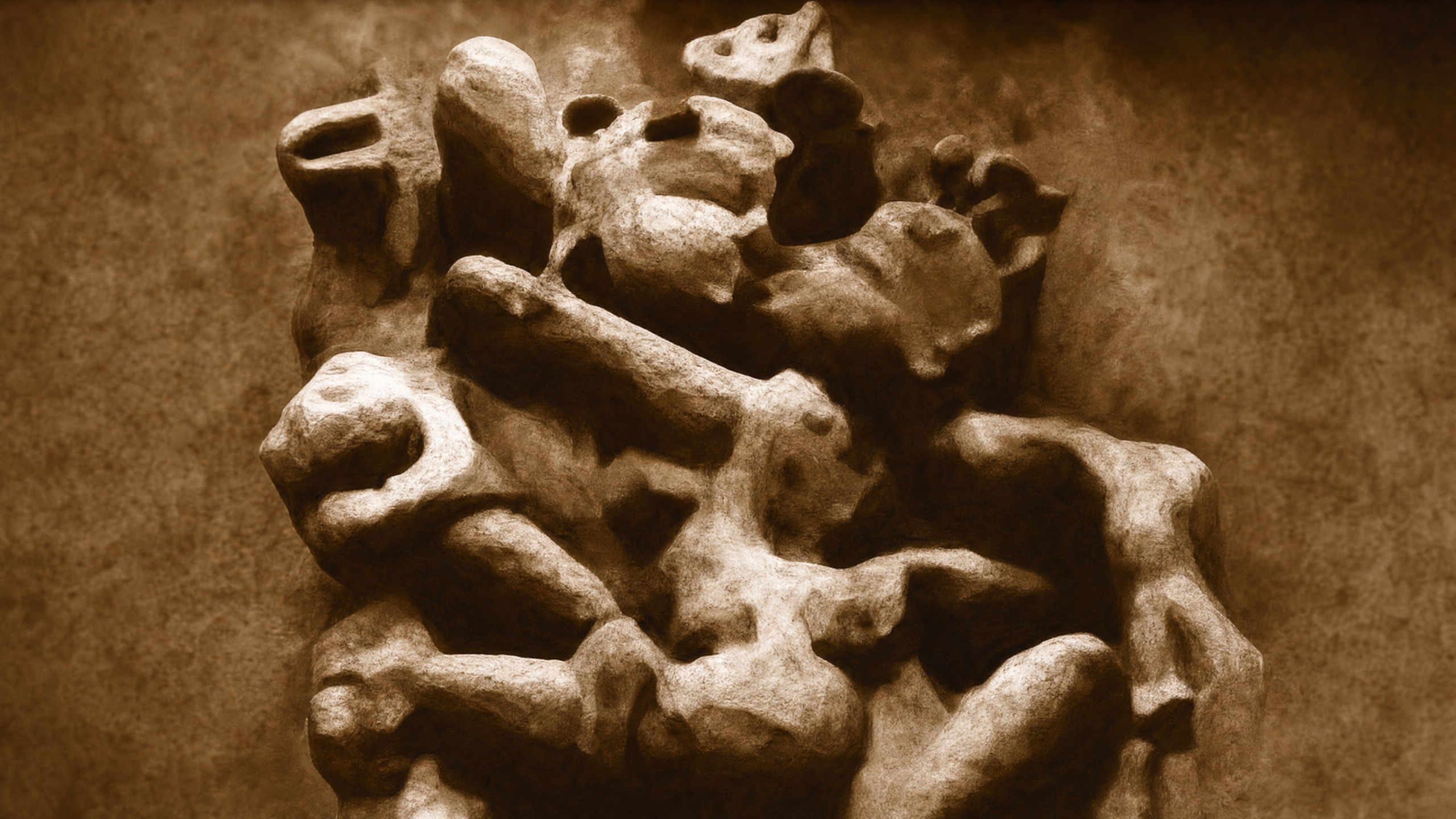
These texts describe the esoteric teachings of Tantra, a belief system which originated in India, praticed by a small number of Hindus and Buddhists. Tantra has become a synonym in the West for unbridled sexuality; however sexuality per se is only one facet of this elaborate spiritual practice, as a representation of the union of the soul with the Goddess. Rather, this attitude reflects the spiritual vacuum of mainstream Western religions when it comes to sacred sexuality. A deep study of Tantra can take a lifetime, and is not for the undisciplined or the thrill-seeker.
Tantra does not advocate an epicurian or libertine philosophy. Quite the contrary, the practices which involve behavior which is regarded by conventional Hinduism as 'sinful' (such as eating meat, drinking alcohol, and having sexual union), normally requiring expatiatory behavior, are supposed to only be engaged in by spiritually advanced practicioners in the appropriate ritual context. A set of alternative practices are recommended by Tantra for general use (substituting sweets for meat, and praying and chanting for sexual union). (It should also be noted the Hindu concept which we describe here as sin is somewhat different than the Christian version).
Taken with these caveats, the assertion of Tantra that sexual energy can be harnessed to achieve union with the divine is fairly unique among world religions. The encounter with this school of thought by western occultists had a profound impact on the development of modern Neo-paganism.


These texts describe the esoteric teachings of Tantra, a belief system which originated in India, praticed by a small number of Hindus and Buddhists. Tantra has become a synonym in the West for unbridled sexuality; however sexuality per se is only one facet of this elaborate spiritual practice, as a representation of the union of the soul with the Goddess. Rather, this attitude reflects the spiritual vacuum of mainstream Western religions when it comes to sacred sexuality. A deep study of Tantra can take a lifetime, and is not for the undisciplined or the thrill-seeker.
Tantra does not advocate an epicurian or libertine philosophy. Quite the contrary, the practices which involve behavior which is regarded by conventional Hinduism as 'sinful' (such as eating meat, drinking alcohol, and having sexual union), normally requiring expatiatory behavior, are supposed to only be engaged in by spiritually advanced practicioners in the appropriate ritual context. A set of alternative practices are recommended by Tantra for general use (substituting sweets for meat, and praying and chanting for sexual union). (It should also be noted the Hindu concept which we describe here as sin is somewhat different than the Christian version).
Taken with these caveats, the assertion of Tantra that sexual energy can be harnessed to achieve union with the divine is fairly unique among world religions. The encounter with this school of thought by western occultists had a profound impact on the development of modern Neo-paganism.
These texts describe the esoteric teachings of Tantra, a belief system which originated in India, praticed by a small number of Hindus and Buddhists. Tantra has become a synonym in the West for unbridled sexuality; however sexuality per se is only one facet of this elaborate spiritual practice, as a representation of the union of the soul with the Goddess. Rather, this attitude reflects the spiritual vacuum of mainstream Western religions when it comes to sacred sexuality. A deep study of Tantra can take a lifetime, and is not for the undisciplined or the thrill-seeker.
Tantra does not advocate an epicurian or libertine philosophy. Quite the contrary, the practices which involve behavior which is regarded by conventional Hinduism as 'sinful' (such as eating meat, drinking alcohol, and having sexual union), normally requiring expatiatory behavior, are supposed to only be engaged in by spiritually advanced practicioners in the appropriate ritual context. A set of alternative practices are recommended by Tantra for general use (substituting sweets for meat, and praying and chanting for sexual union). (It should also be noted the Hindu concept which we describe here as sin is somewhat different than the Christian version).
Taken with these caveats, the assertion of Tantra that sexual energy can be harnessed to achieve union with the divine is fairly unique among world religions. The encounter with this school of thought by western occultists had a profound impact on the development of modern Neo-paganism.
