
Home - Search - Browse - Alphabetic Index: 0- 1- 2- 3- 4- 5- 6- 7- 8- 9
A- B- C- D- E- F- G- H- I- J- K- L- M- N- O- P- Q- R- S- T- U- V- W- X- Y- Z
Mir
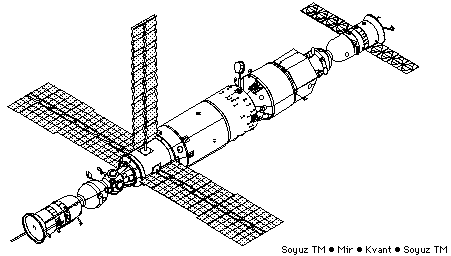
Soyuz-Mir-Kvant
Soyuz-Mir-Kvant-Soyuz Isometric
Credit: © Mark Wade
AKA: DOS 17KS-12701;DOS 7. Status: Operational 1986. First Launch: 1986-02-19. Last Launch: 1986-02-19. Number: 1 . Thrust: 5.88 kN (1,322 lbf). Gross mass: 21,000 kg (46,000 lb). Unfuelled mass: 19,800 kg (43,600 lb). Specific impulse: 305 s. Height: 13.13 m (43.07 ft). Span: 29.73 m (97.53 ft).
Early work on the design was accomplished in the early 1970's under the MKBS-1 designation prior to the 1974 cancellation of the N1 launch vehicle. The design of an improved model of the Salyut DOS-17K space station was finally authorized as part of the third generation of Soviet space systems in a 17 February 1976 decree. At that time it was planned that the two stations (DOS-7 and DOS-8) would be equipped with two docking ports at either end of the station and an additional two ports at the sides of the forward small diameter compartment. By the time of the draft project in August 1978 this had evolved to the final Mir configuration of one aft port and five ports in a spherical compartment at the forward end of the station. Up to that time it was planned that the ports would provide docking positions for 7 metric ton modules derived from the Soyuz spacecraft. These would use the Soyuz propulsion module, as in Soyuz and Progress, but would be equipped with long laboratory modules in place of the descent module and orbital module.
Following the decision to cancel Chelomei's manned Almaz military space station program, a resolution of February 1979 consolidated the programs, with the docking ports to be reinforced to accommodate 20 metric ton space station modules based on Chelomei's TKS manned ferry spacecraft. This order was unpopular with NPO Energia engineers, who felt that often-replaced lower-cost 7 metric ton modules were a better technical solution. Nevertheless NPO Energia was made responsible for the overall space station, but subcontracted the work to KB Salyut due to the press of in-house work on Energia, Salyut 7, Soyuz-T, and Progress. The subcontractor began work in the summer of 1979, with drawings being released in 1982-1983. New systems incorporated into the station included the Salyut 5B digital flight control computer and gyrodyne flywheels (taken from Almaz), and the new Kurs automatic rendezvous system, Altair satellite communications system, Elektron oxygen generators, and Vozdukh carbon dioxide scrubbers. Mir was part of the Kosmometriy scientific program, with the objective of measuring the precise distance and characteristics of the earth's surface, ocean, and atmosphere, including spectral characterization.
By early 1984 all work on Mir ground to a halt as all resources were put on getting the Buran space shuttle into flight test. This changed in the spring 1984 when Glushko was called into the office of the Central Committee's Secretary for Space and Defence and ordered to orbit Mir by the 27th Communist Party Congress in the spring of 1986. By the end of 1984 the static and dynamic test models of the station had been completed. The ground test model of the station was delivered in December 1984. The use of this full-fidelity test article, an approach taken on the Almaz program, was new to the civilian DOS project.
A major problem was that the station ended up one metric ton heavier than designed due to the final weight of the electrical cabling Even after removing most of the experimental equipment (it would have to be delivered to the station later by ferry craft) it still exceeded the performance of the Proton booster to the planned 65 degree inclination orbit. The decision was finally taken in January 1985 to use the same 51.6 degree orbit as Salyut, although this would reduce photographic coverage of the Soviet Union. Meanwhile problems with development of the new software for the Salyut 5B computer lead to the decision to launch Mir with the old analogue Argon computer from Salyut DOS-17K. The digital computer would have to be installed later in orbit.
By April 1985 it was clear that the planned processing flow could not be followed and still make the spring 1986 launch date. The decision was taken on Cosmonautics Day (April 12) to ship the flight model to Baikonur and conduct the systems testing and integration there. Mir arrived at the launch site on 6 May 1985. 1100 of 2500 cables required rework based on results of testing of the ground test model at Khrunichev. In October 1985 Mir was rolled outside of its clean room to conduct communications tests of the Altair system with the Cosmos 1700 satellite already in orbit.
The first launch attempt on 16 February 1986 at very low temperatures was scrubbed when the spacecraft communications failed. The second attempt on 20 February was successful. The political deadline had been met.
The early launch of Mir left the planners without Soyuz spacecraft or modules to launch to it. The decision was taken to launch Soyuz T-15 on a unique dual station mission. The Soyuz would first dock with Salyut 7, which was dead in space, and completely repair the station. They then would fly in their Soyuz to Mir, and put it into initial operation. This spectacular mission marked a new maturity in the Soviet space program.
Just as Mir assembly began in earnest, the Soviet Union disintegrated. The military Spektr module was cancelled and no funds were available for completion of the Priroda earth resources module. Vice President Al Gore and Prime Minister Victor Chernomyrdin signed an agreement for a two-phase International Space Station program at the US-Russian summit in Washington in September 1993. Phase One (1994-96) would involve Shuttle missions to Russia's current Mir station. NASA would pay Russia $100 million annually to keep a 'guest astronaut' on the Mir complex. The money also made it possible for Russia to launch the 'Spektr' and 'Priroda' expansion modules to Mir, with some US experiments onboard. The program was later extended by two more flights in 1998 to help pay for Russia's ISS contributions. In the end, NASA paid the Russians $472 million for nine Shuttle dockings.
Following the end of the US flights, Mir barely continued in operation into the next century. When it became impossible to keep it going by selling visits to foreign customers, it was decided to bring it down in the Pacific Ocean using a specially modified Progress tug. By then it had been in orbit for 15 years. It had been continuously added to, survived crashes with errant spacecraft and space debris, and provided astronauts from many nations with experience in extended space flight.
Spacecraft Description
The Mir base block was the backbone of the Mir space station. It was the principal space station control element and contained the main computers, communications equipment, kitchen and hygiene facilities, and primary living quarters. The module provided 90 cubic meters of habitable volume. The base block included six docking ports used as permanent attachment points for the other station modules and for temporary docking of manned and unmanned resupply ships.
Mir was equipped with its own orbital maneuvering engines. These could not be used after the arrival of Kvant (the first station module), but the base block still provided the principal propellant storage tanks and primary attitude control for the entire space station.
The base block was divided into four compartments, designated as the working, transfer, intermediate and assembly compartments. All but the assembly compartment were pressurized. A small airlock was also available for experiments or for the release of small satellites or refuse.
- Working Compartment (7.67 m long x 4.2 m diameter): The working compartment was the main habitable volume on Mir and consisted of two cylinders connected by a tapered conical section. The interior of the working compartment was divided into an operations zone and a living area. The operations zone occupied the smaller diameter section and was the control area for the entire Mir complex. Monitoring and command of the base block systems, scientific equipment and mechanisms were carried out in this area. The living area of the working compartment contained the galley, individual crew cabins, hygiene facilities and trash storage. Medical monitoring equipment and a bicycle ergometer were located in the conical portion of the working compartment. Spatial orientations of 'floor' and 'ceiling' were provided by dark green carpet on the 'floor', light green walls, and a white 'ceiling' with florescent lamps. The arrangement of equipment and the interior finish of the working compartment were designed to reinforce this orientation. The living area used the same spatial orientation concepts, but soft pastel colors were used to imply a home-like atmosphere.
- Transfer Compartment (2.2 m diameter X 2.84 m long): The spherical transfer compartment was located at the forward end of the working compartment. It provided four radial docking ports, spaced at 90 degree angles, for additional station modules. A fifth axial docking port at the front of the station was dedicated to use by visiting transport spacecraft
- Intermediate Compartment: The intermediate compartment was a 2 meter diameter pressurized tunnel that connected the working compartment to the aft docking port. The tunnel was located in the center of the non-pressurized assembly compartment. The aft docking port was used for visiting transport vehicles until permanently occupied by the Kvant module (transports thereafter docked with aft port of Kvant).
- Assembly Compartment. Main engine and fuel tanks were located in the annular non-pressurized assembly compartment. Externally, this assembly supported the station's satellite relay antenna, docking radar antennas, lights and optical sensors.
Power to the base block was initially provided by 2 x 38 sq. meter arrays providing 9 kW. A third array was added to the base block in 1987 to bring total power to 10.1 kW. Additional power from visiting Progress-M and Soyuz-TM vehicles and other station modules added to the station's total supply as it grew. The arrays charged 12 NiCd batteries. The base block was equipped with an integrated refuelable pressure-fed propulsion system consisting of 32 x 137 N attitude control thrusters and 2 x 2.9 kN thrusters for orbital maneuver. The system used N2O4/UDMH hypergolic propellants.
The life support system maintained the station's environment at 18-28 degrees. C and 20-70 percent humidity. The Vozdukh electrolytic system was used to recycle station atmosphere with a backup chemical scrubbing system. Station pointing could be controlled to within 15 arc-min.
Two primary flight control computers provide most station control functions. Star sensors, infrared Earth horizon sensors, sun sensors, magnetometers, gyros, and accelerometers were used for attitude determination. Communication with the ground was via 11-14 GHz links either directly to ground stations or through Luch geosynchronous relay satellites. Rendezvous and docking was conducted automatically by transport spacecraft through use of the Kurs system transponders located at each docking port Mir.
Equipment originally delivered with the base block included: - Splav-2 crystal growth facility - Zona zone melt facility - Kashtan electrophoresis unit - Bulgarian Rozhen photometer - Spektr-256 and MKS-M spectrometers - Pion-M multipurpose physics unit (41 kg) - Biryuza semiconductor materials unit Ruchei electrophoresis installation - Yantar metal coating equipment - Mariye magnetic spectrometer - Korund furnace (136 kg).
An extensive suite of Earth observation instruments was operational on the Mir space station. Although only a pair of devices were carried abroad Mir at its launch in 1986, sixteen major systems were deployed to the Mir core module or the Kvant 2 and Kristal auxiliary modules:
Mir Core Module:
- EFO-1 electronic photometer for studies of atmospheric aerosols and dust
- Hasselblad camera
- KATE-140 topographic camera (50-m resolution)
- MKS-M multi-band spectrometer (0.4-0.9 micrometers
- Spektr-256 multi-band spectrometer (256 channels in visible and infrared)
- Terra impulse photometer for the study of atmospheric optical emissions
Kvant 2 Module:
- AFM-2 for study of the atmosphere and pollutants
- Gamma 2 video spectropolarimeter
- ITS-7D spectrometer
- KAP-350 topographic camera
- MKF-GMA multi-spectral camera (0.5-0.9 micrometer, 10-15 m resolution)
- MKS-M2 multi-band spectrometer
- Priroda 5 multi-purpose high resolution (5 m) camera
Plans call for the launch in late 1995 of the Priroda (Nature) auxiliary module to augment substantially the Earth observation capabilities of the Mir space station.
The Mir space station was also equipped with a wide assortment of electric furnaces and other devices and with the added benefit of crew participation. One of the primary objectives of the Kristal module, attached to Mir in 1990, was to support microgravity experiments. Despite the fact that microgravity conditions were typically 10-100 times worse on a manned versus an unmanned spacecraft, man-tended experiments on Soviet-built space stations, some lasting more than a week, proved to be quite successful. The other principal drawback of materials science research on Mir was the extremely limited capability of returning samples to Earth. This was ameliorated in late November, 1990, when the Progress M recoverable capsule was successfully tested for the first time. This system was used approximately twice each year, returning up to 150 kg of cargo (including the product of materials science research) per mission.
In 1987 three electric furnaces were delivered to Mir: Korund-1M, Kristallizator, and Mirror-Beam. These were augmented or superseded in 1990 by the five new furnaces installed on the Kristal module: Krater V, Kristallizator, Optizon, Zona 2, and Zona 3. Other Mir materials science devices were used for electrophoresis (Aynur-Kristall, EFU Robot, Ruchey, and Svetlana), protein crystallization (Aynur-Mir), and miscellaneous experiments (Biostoykost, Svetoblok, and Yantar). Most materials science experiments were of Russian origin, but some were created by Ukrainian specialists.
Crew Size: 12. RCS Coarse No x Thrust: 32 x 135 N. RCS Fine No x Thrust: Gyrodyne reaction wheels. Electric System: 2.50 average kW.
More at: Mir.
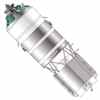 | 37K-Mir Russian manned space station. Cancelled 1983. The basic 37K design consisted of a 4.2 m diameter pressurized cylinder with a docking port at the forward end. It was not equipped with its own propulsion system. |
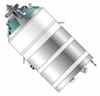 | 37KS Russian manned space station module. Cancelled 1983. Would have been launched by Proton and delivered and docked to the Mir station by a new lighter weight FGO tug. |
| Mir Modules-FGB Russian space station modules derived from the Chelomei TKS ferry. See entries for Kvant-2, Priroda, Spektr, and Kristall for details on each. |
| Mir / DOS 7 Null |
 | Soyuz T-15 First spacecraft to fly between two space stations. Epic repair mission. Crew first docked with new Mir station. After six weeks commissioning, flew to dead Salyut 7, returned it to life, recovered experiments. Returned to Mir before returning to earth. |
| Mir complex Russian manned space station. Assembled 1986 to 1996. Designation given to the entire Mir space station. |
 | Soyuz TM-2 Laveykin returned to earth aboard Soyuz TM-3 after concerns developed about his health. |
| Soyuz TM-3 Aleksandrov replaced the ailing EO-2 crew member Laveykin and remained aboard Mir with Romanenko. |
 | Soyuz TM-4 Record flight duration. Revised software installed as a result of the Soyuz TM-5 abort overloaded the TM-6 computer; first landing aborted. Backup software program used and TM-6 landed successfully. |
 | Soyuz TM-5 First successful space station flight of Bulgarian cosmonaut. Mission to swap Soyuz lifeboats docked to station. |
 | Soyuz TM-6 First Afghani astronaut. Mission to swap Soyuz lifeboats docked to station. |
| Soyuz TM-7 Mir Expedition EO-4. Mission curtailed when delays in launching the Kvant-2 and Kristall modules to Mir led to the decision to leave the station uninhabited until the add-on modules were ready. |
 | Soyuz TM-8A Planned flight to ensure continuous occupation cancelled due to budget cutbacks and delay in launching Kvant 2 and Kristall modules. |
 | Soyuz TM-8 Mir Expedition EO-5. Attached the new Kvant-2 module to the station; conducted five spacewalks; tested the Soviet UMK manned maneuvering unit. |
 | Kvant-2 Russian manned space station module. Kvant 2. Kvant-2 was a utility module launched to the Mir station. It provided an airlock, additional electric power, and additional gyrodynes for orienting the station. Built by Khrunichev for MOM > RKA, Russia. Launched 1989. |
 | Soyuz TM-9 Mir Expedition EO-6. Attached the Kristall module to the station and conducted repairs to their Soyuz TM-9 return spacecraft and Kvant-2 airlock. |
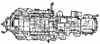 | Kristall Russian manned space station module. Kristall was a dedicated zero-gravity materials and biological science research module for the Mir space station, launched in January 1990, built by Khrunichev for MOM > RKA, Russia. Launched 1990. |
 | Soyuz TM-10 Mir Expedition EO-7. Carried out a relatively modest program of geophysical and astrophysical research, biological and biotechnological experiments, and work on space-materials science. |
 | Soyuz TM-11 Mir Expedition EO-8. crew of V M Afanasyev, M Kh Manarov was transported to the Mir orbital station by Soyuz TM-11, together with T Akiyama (Japan) for the purpose of carrying out joint work with the cosmonauts G M Manakov and G M Strekalov. The launch was funded jointly with the private Japanese company TBS. The Japanese television network ended up paying $ 28 million for the first commercial flight to Mir to put Akiyama, the first journalist in space aboard Soyuz TM-11. Akiyama returned to earth on Soyuz TM-10 with the Mir EO-7 crew after a week in space. |
 | Soyuz TM-12 Docked with Mir; Expedition EO-09. |
| Soyuz TM-13A Soyuz TM-13 and TM-14 crews were reshuffled extensively due to commercial considerations and necessity of flying a Kazakh cosmonaut. This was the original crew assignment. Kaleri and Avdeyev were replaced by Kazakh researchers in the final crew. |
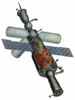 | Soyuz TM-13 Mir Expedition EO-10. Only Russian EO crewmember left after a paying British passenger was found and political necessity of flying a Kazakh cosmonaut. EO-9 crew Krikalyov stayed aboard as the other EO-10 crewmember. |
| Soyuz TM-14A Soyuz TM-13 and TM-14 crews were reshuffled extensively due to commercial seat bookings by Austria and Germany and the necessity of flying a Kazakh-born cosmonaut as part of the Baikonur rental agreement. This was the original crew assignment. The Kazakh researchers were moved to the earlier Soyuz TM-13 flight. |
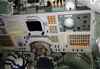 | Soyuz Buran Support Planned Soyuz flight to Mir. Main purpose was to provide spaceflight experience to Bachurin and Borodai, who had been selected as back-up crew of the first manned Buran flight (the original back-up crew of Levchenko and Shchukin both died in 1988). Cancelled in cut-backs after fall of the Soviet Union. |
| Soyuz TM-14B Soyuz TM-13 and TM-14 crews were reshuffled extensively due to commercial seat bookings by Austria and Germany and the necessity of flying a Kazakh-born cosmonaut as part of the Baikonur rental agreement. This was the second crew assignment. The Kazakh researchers were moved to the earlier Soyuz TM-13 flight and paying German researchers took their place in the final crew. |
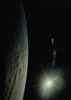 | Soyuz TM-14 Mir Expedition EO-11. |
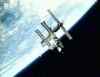 | Soyuz TM-15 Mir Expedition EO-12. In-orbit record for a Soyuz spacecraft. |
| Spektr - Original Russian military anti-satellite system. Study 1989. Chelomei designed a spacecraft bus for space based weapons based on his TKS space tug. This was an alternate / competitive design to the NPO Energia USB. |
 | Soyuz TM-16 Mir Expedition EO-13. Soyuz carried the APAS androgynous docking system instead of the usual probe system. |
 | Soyuz TM-17 Mir Expedition EO-14. |
 | Soyuz TM-18 Mir Expedition EO-15. |
 | Soyuz TM-19 Mir Expedition EO-16. Soyuz TM-19 docked at the rear port of the Kvant module (vacated by Progress M-23 on July 2) at 13:55:01 GMT on July 3. Soyuz TM-19 undocked from Mir at 07:29 GMT on November 4. The Soyuz instrument module (PAO, priborno-agregatniy otsek) fired its deorbit engine, and was jettisoned together with the orbital module (BO, bitovoy otsek) at 10:51 GMT, with entry interface for the descent module (SA, spuskaemiy apparat) at 10:54. It landed 170 km north-east of Arkalyk in Kazakhstan on 1994 November 4 at 11:18 GMT. |
 | Soyuz TM-20 Mir Expedition EO-17. During mission crew boarded Soyuz and then redocked with Mir in a test of the station's Kurs system. |
 | Buran 5 Cancelled Buran Flight 5 (3K1) would have been the first flight of the third orbiter. It would be the first manned Buran flight; the third orbiter was the first outfitted with life support systems and ejection seats. |
 | STS-63 First African-American to walk in space. First female shuttle pilot. First rendezvous of a shuttle with the Mir space station. Deployed ODERACS 2A-2E; deployed and retrieved Spartan 204. |
 | Soyuz TM-21 First American to fly aboard a Russian spacecraft. |
 | Spektr Russian manned space station module. Spektr was a module of the Mir space station. It began life as a dedicated military research unit. Built by Khrunichev for MOM > RKA, Russia. Launched 1995. |
 | STS-71 Spacelab-Mir. First docking of a US spacecraft with the Mir space station. |
 | Soyuz TM-22 First ESA astronaut on long-duration Mir crew. |
| Mir-Shuttle Docking Module Russian manned space station. A specialized SO docking module was originally designed for docking the Buran space shuttle with the Mir-2 space station. |
| STS-74 Docked with Mir space station. Delivered the Russian-built 316GK Shuttle-Mir docking module to Mir. |
 | Soyuz TM-23 Mir Expedition EO-21. Soyuz TM-23 docked with Mir at 14:20:35 on February 23. The spacecraft undocked on September 2 at 04:20 GMT, and made a small separation burn at 04:24:40 GMT. Deorbit was at 06:47:20 GMT . The three modules separated at 07:14:36 and the parachute deployed at 07:26 GMT. The landing was at 07:41:40 GMT, 100 km SW of Akmola in Kazakhstan with Yuri Onufrienko, Yuri Usachyov and Claudie Andre-Deshays. This concluded the French 'Cassiopee' mission. |
 | STS-76 Shuttle-Mir Mission 3. First American EVA on Mir space station. |
 | Priroda Russian manned space station module. Priroda was the last Mir module launched. It was originally an all-Soviet remote sensing module for combined civilian and military surveillance of the earth. Launched 1996. |
 | Soyuz TM-24 Mir Expedition EO-22. Valeriy Korzun and Aleksandr Kaleri of the Russian Space Agency (RKA) Claudie Andre-Deshays of the French space agency CNES. This launch was the first of the Soyuz-U booster with a crew aboard following two launch failures of on unmanned flights. |
 | STS-79 Carried Spacehab Double Module, containing supplies for the Mir. |
 | STS-81 Transferred 2,715 kg of equipment to and from Mir. |
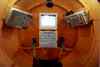 | Soyuz TM-25 Mir Expedition EO-23. Mission was an endless series of collisions, breakdowns, fires, and other emergencies. The Soyuz landing rockets failed to fire on touchdown, giving one of the roughest landings experienced by a returning Mir crew. |
| STS-84 Delivered to Mir and returned to earth 2500 kg of payload. |
| Soyuz TM-26 Soyuz docked manually. Over the next six months the crew undertook seven internal and external spacewalks to repair the crippled space station. |
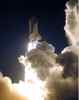 | STS-86 Docked with Mir. Flyaround focused on the damaged Spektr Module to determine the location of the puncture in its hull. |
| Inspector 1 (X-Mir-Inspector) Null |
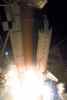 | STS-89 First Uzbek astronaut. First flight of Block IIA SSME engines. Penultimate Shuttle mission to Mir. |
 | Soyuz TM-27 Soyuz TM-27 carried the Mir EO-25 crew and French astronaut Leopold Eyharts. NASA and the Russian Space Agency had hoped Soyuz TM-27 could dock with Mir while Endeavour was still there, resulting in an on-board crew of 13, a record which would have stood for years or decades. But the French vetoed this, saying the commotion and time wasted would ruin Eyharts Pegase experimental program. |
 | STS-91 First shuttle flight with super light-weight external tank. Final shuttle-Mir mission. Recovered NASA astronaut Andy Thomas from Mir and took Russian space chief Valeri Ryumin to Mir for an inspection tour. |
 | Soyuz TM-28 As only one final Soyuz mission to Mir was planned, with two of the seats on that Soyuz pre-sold to Slovak and French experimenters, Padalka returned to earth without Avdeyev, who had to stay aboard for two extended crew missions. |
 | Soyuz TM-29 Afanasyev was the only Russian cosmonaut aboard, since two crew seats had been sold to Slovakia and France. This meant that Russian engineer Avdeyev already aboard Mir would have to accept a double-length assignment. |
| Soyuz TM-30 The crew reactivated Mir and, using Progress M1-1 and M1-2, resupplied the station and raised the orbit to 360 x 378 km. |
 | Soyuz TM-31 First ISS resident crew. |
| MIR-29 Planned EO-29 long-duration crew for Mir. Cancelled due to financial reasons following the collapse of the Soviet Union. Prime crew Sharipov and Vinogradov; Backup crew Musabayev and Baturin. |
| MIR-30 Planned EO-30 long-duration crew for Mir. Cancelled in November 2000 for financial reasons following the collapse of the Soviet Union. Prime crew Musabayev and Baturin. |
| Mir Expedition 1 Null |
| Mir Expedition 10 Null |
| Mir Expedition 11 Null |
| Mir Expedition 12 Null |
| Mir Expedition 13 Null |
| Mir Expedition 14 Null |
| Mir Expedition 15 Null |
| Mir Expedition 16 Null |
| Mir Expedition 17 Null |
| Mir Expedition 18 Null |
| Mir Expedition 19 Null |
| Mir Expedition 2 Null |
| Mir Expedition 20 Null |
| Mir Expedition 21 Null |
| Mir Expedition 22 Null |
| Mir Expedition 23 Null |
| Mir Expedition 24 Null |
| Mir Expedition 25 Null |
| Mir Expedition 26 Null |
| Mir Expedition 27 Null |
| Mir Expedition 28 Null |
| Mir Expedition 3 Null |
| Mir Expedition 4 Null |
| Mir Expedition 5 Null |
| Mir Expedition 6 Null |
| Mir Expedition 7 Null |
| Mir Expedition 8 Null |
| Mir Expedition 9 Null |
Family: Soviet Space Stations, Space station, Space station orbit. People: Chretien, Ryumin, Savinykh, Strekalov, Levchenko, Merbold, Lyakhov, Kizim, Berezovoi, Polyakov, Akiyama, Blaha, Lucid, Aleksandrov, Thagard, Serebrov, Romanenko, Shchukin, Arzamazov, Aubakirov, Gibson, Solovyov, Vladimir, Titov, Vladimir, Viktorenko, Solovyov, Ross, Volkov, Aleksandr, Haignere, Afanasyev, Dunbar, Apt, Baturin, Tognini, Wilcutt, Cameron, Chang-Diaz, Manakov, Musabayev, Manarov, Ivins, Laveykin, Akers, Faris, McArthur, Schlegel, Aleksandrov, Aleksandr, Thomas, Andrew, Readdy, Godwin, Flade, Clifford, Wetherbee, Sega, Korzun, Baker, Budarin, Balandin, Vinogradov, Habib, Baker, Mike, Poleshchuk, Masum, Tsibliyev, Reilly, Chilton, Linenger, Precourt, Walz, Mace, Timothy, Avdeyev, Harbaugh, Kaleri, Searfoss, Harris, Wolf, Artsebarsky, Halsell, Voss, Janice, Collins, Eileen, Ewald, Foale, Kondakova, Eyharts, Gorie, Andre-Deshays, Usachyov, Lazutkin, Edwards, Joe, Reiter, Padalka, Wisoff, Treshchev, Krikalyov, Jett, Grunsfeld, Clervoy, Mohmand, Bloomfield, Lawrence, Kavandi, Hadfield, Noriega, Anderson, Viehboeck, Stoyanov, Onufrienko, Parazynski, Malenchenko, Gidzenko, Zalyotin, Dezhurov, Duque, Lothaller, Sharman, Lu, Bella, Sharipov, Kikuchi. Country: Russia. Engines: KRD-79. Spacecraft: Progress, Soyuz T, Spacelab, Discovery, Atlantis, Mir, Soyuz TM, Mir complex, Kvant, Progress M, Kvant-2, Kristall, Mak, Endeavour, Znamya, Spacehab, GFZ-1, Spektr, Mir-Shuttle Docking Module, Priroda, Inspector, Progress M1. Flights: Soyuz T-15, Soyuz TM-2, Soyuz TM-2 Mir LD-1, Soyuz TM-3, Soyuz TM-3 Mir EP-1, Soyuz TM-4, Soyuz TM-4 LII-1, Soyuz TM-5, Soyuz TM-6, Soyuz TM-6 Mir LD-2, Soyuz TM-7, Soyuz TM-7 Aragatz, Soyuz TM-8A, Soyuz TM-8, Soyuz TM-9, Soyuz TM-10, Soyuz TM-11, Soyuz TM-11 Kosmoreporter, Soyuz TM-12, Soyuz TM-12 Juno, Soyuz TM-12 Mir LD-3, Soyuz TM-13A, Soyuz TM-13, Soyuz TM-13 Austromir, Soyuz TM-14A, Soyuz Buran Support, Soyuz TM-14B, Soyuz TM-14, Soyuz TM-14 Mir 92, Soyuz TM-15, Soyuz TM-15 Antares, Soyuz TM-16, Soyuz TM-17, Soyuz TM-17 Altair, Soyuz TM-18, Soyuz TM-18 Mir LD-4, Soyuz TM-19, Soyuz TM-20, Soyuz TM-20 Euromir 94, Buran 5, STS-63, Soyuz TM-21, STS-71, STS-71 Mir EO-19, Soyuz TM-22, STS-74, Soyuz TM-23, STS-76, STS-76 Mir NASA-1, Soyuz TM-24, Soyuz TM-24 Cassiopee, STS-79, STS-79 Mir NASA-2, STS-81, STS-81 Mir NASA-3, Soyuz TM-25, Soyuz TM-25 Mir 97, STS-84, STS-84 Mir NASA-4, Soyuz TM-26, STS-86, STS-86 Mir NASA-5, STS-89, STS-89 Mir NASA-6, Soyuz TM-27, Soyuz TM-27 Mir Pegase, STS-91, Soyuz TM-28, Soyuz TM-28 Mir EO-26/-27, Soyuz TM-28 Mir EP-4, Soyuz TM-29, Soyuz TM-29 Mir Stefanik, Soyuz TM-30, Soyuz TM-31. Launch Vehicles: Proton, Proton-K, Space Shuttle, Soyuz-U, Soyuz-U2. Propellants: N2O4/UDMH. Launch Sites: Cape Canaveral, Baikonur, Baikonur LC200/39. Agency: NASA, Korolev bureau, NASA Houston, DASA, MOM, UNKS, VKS. Bibliography: 182, 2, 20, 274, 3547, 3548, 3549, 3550, 3551, 3552, 3553, 453, 474, 6, 66, 67, 8, 11437, 12842.
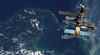
 | Mir View of Mir in space. Credit: NASA |
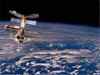
 | Mir against Space The Mir station seen against space during one of the Shuttle-Mir missions. Credit: NASA |
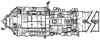
 | Mir Cutaway |
 | Mir 1997 |
 | Control Center Manned spaceflight control centre at Korolev Credit: © Mark Wade |
 | Mir Mir base block. |
 | Control Center Manned spaceflight control centre Credit: © Mark Wade |
 | Mir simulator Mir simulator at the Yuri Gagarin Cosmonaut Training Centre Credit: © Mark Wade |
 | Shuttle/Mir 1993 ISS Phase One Shuttle/Mir. The US Space Shuttle docks with Russia's "Mir" space station. Credit: NASA via Marcus Lindroos |
 | Mir Complex Cutaway Cutaway drawing of the Mir space station. |
 | Mir Phase 5 Configuration of the Mir space station in the fifth phase of assembly. Credit: © Mark Wade |
 | Orlan DM Spacesuit Orlan DM spacesuit used on Mir. Credit: Andy Salmon |
 | SPK MMU SPK Manned Manoeuvring Unit Credit: Andy Salmon |
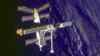
 | Mir against Horizon The Mir station seen against the horizon during one of the Shuttle-Mir missions. Credit: NASA |
 | Toru TORU control station, exhibited at the Russian Pavilion, Hannover Expo 2000. Credit: © Mark Wade |
 | Mir 1985 Mir according to 1985 Department of Defense report. Credit: NASA via Marcus Lindroos |
 | Mir Credit: Manufacturer Image |
 | Soviet Platform 85 Soviet artists concept of orbital platform incorporating the Salyut 7 station, 1985 Credit: DoD via Marcus Lindroos |
 | Mission Control TsPUK Mission Control Kaliningrad Credit: © Mark Wade |
 | Interior of Soyuz TM Credit: © Mark Wade |
 | Cutaway of Kvant Cutaway of Kvant illustrating service module that separated after docking with Mir. Credit: RKK Energia |
 | Progress capsule Progress return capsule. Diagram illustrates separation from Progress during deorbit burn and recovery sequence. Credit: © Mark Wade |
 | Interior of Soyuz TM Credit: © Mark Wade |
 | Soyuz T panel Soyuz T control panel 1 Credit: © Mark Wade |
 | Soyuz T panel Soyuz T control panel 2 Credit: © Mark Wade |
 | Soyuz T panel Soyuz T control panel Credit: © Mark Wade |
 | Soyuz T panel Soyuz T control panel 3 Credit: © Mark Wade |
 | Soyuz T panel Soyuz T control panel 4 Credit: © Mark Wade |
 | Soyuz T panel Soyuz T control panel 5 Credit: © Mark Wade |
 | Soyuz T Credit: © Mark Wade |
 | Soyuz T engine The Soyuz T introduced a new service module with unitary translation/attitude control thrusters as part of a single bipropellant system with the main pump-fed engine. Credit: © Mark Wade |
 | Soyuz TM Credit: © Mark Wade |
 | Soyuz TM Credit: RKK Energia |
 | Unknown capsule unknown capsule at Energia Museum Credit: © Mark Wade |
 | Soyuz TM Credit: © Mark Wade |
 | Kvant / SM Jettison Picture Kvant showing SM jettison 2 Credit: RKK Energia |
 | Kvant / SM Jettison Picture Kvant showing SM jettison 1 Credit: RKK Energia |
 | Progress M cutaway Cutaway of Progress T resupply craft. Credit: RKK Energia |
 | Progress View of the original Progress spacecraft, as displayed in Moscow in 1981. Credit: © Mark Wade |
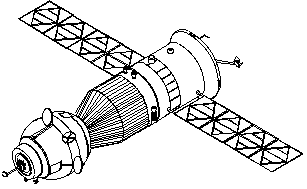 | Progress M Drawing of the advanced version of the Progress resupply spacecraft used with Mir. Credit: © Mark Wade |
 | Panel Soyuz TM Control panel of the Soyuz T/TM later version of the space station ferry vehicle.. Credit: © Mark Wade |
 | Soyuz Descent Module Credit: © Mark Wade |
 | Progress capsule View of the Progress 'Raduga' mini-capsule used for recovery of materials from the Mir station. Credit: © Mark Wade |
 | Progress M Drawing of the advanced version of the Progress resupply spacecraft used with Mir. Credit: © Mark Wade |
 | Progress Drawing of the initial version of the Progress refuelling spacecraft. Credit: © Mark Wade |
 | Mir Credit: Manufacturer Image |
 | Kvant Cutaway The Kvant module was the first addition to the Mir core. The module is divided into a pressurised laboratory compartment and a non-pressurised equipment compartment. The laboratory compartment is further divided into an instrumentation area and a living area, which are separated by an interior partition. |
 | Kristall Cutaway Kristall is the third addition to the Mir core vehicle. Kristall is divided into an instrument/cargo and instrument/docking compartment. |
 | Progress Shroud Early Progress launches used the Soyuz shroud. Although the launch escape tour was retained to maintain the proven aerodynamics, the escape motors and grid stabilizers on the side of the shroud were deleted. |
 | Kvant 2 Cutaway Kvant 2 was the second addition to the Mir core module. The module has is divided into three pressurised compartments: instrumentation/cargo, science instruments and an airlock. |
1971 May 7 - . LV Family: N1.
- MKBS-1 would have a DOS core; MKBS-2 would use the MOK N1-launched core. - .
Related Persons: Mishin.
Spacecraft: Soyuz,
MKBS,
Mir.
The planning on MKBS has progressed to the point where there will be an MKBS-1 with a DOS core (AKA DOS-A, later Mir); while MKBS-2 will use the MOK N1-launched core. At the Soviet of the State Chief Designers (17K)- About DOS number 3 and number 4 and DOS-A (MKBS-1)".
1971 May 17 - .
- MOK, MKBS, nuclear power supply reviewed. - .
Related Persons: Mishin,
Okhapkin,
Bezverby,
Melnikov.
Spacecraft: ,
MKBS,
Mir.
Bezerby VK and Melnikov MV - Materials on the experimental base for EYaRD. Okhapkin SO - About the acceleration of work on blocks R and Sr. Call Karpov AG - On specifications for MKBS-1. The development of the MOK should be conducted in full swing, but testing of individual systems should be conducted on the MKBS-1 (DOS). The main question - how long can a man live in space, and what can he do better than automatic systems? (Mishin Diaries 2-330)
1971 May 18 - .
- Bushuyev KD and Bezverbo VK: Justify the need for the MKBS-1 based in DOS. - . Related Persons: Mishin, Bushuyev, Bezverby, . Spacecraft: , MKBS, Mir.
1971 August 2 - . LV Family: N1.
- Manned military space to have priority in N1 program - . Related Persons: Mishin, Afanasyev, Sergei, . Spacecraft: Soyuz, MKBS, Mir, Soyuz 7K-S. In a follow-up call to Afanasiev, Mishin notes: "On conclusion of the expert committee on the N1-L3 (and Comrade Tsarev VPK): 7KS - MKBS-1 - MKBS-2 - Continue; Enlarge the crew to six people for short stays.".
1971 August 10 - .
- The MKBS is seen in the context of its military application and a unified program with DOS and Almaz. - . Related Persons: Mishin, Ustinov. Spacecraft: , MKBS, Almaz, Mir. "Meeting of the Central Committee Comrade DF Ustinov (The main directions of development of space weapons for 1971-80 biennium). ... DOS - Almaz - MKBS-I - MKBS-II: Philosophy: Continuity"..
1971 September 21 - . LV Family: N1.
- Crew shuttle to be used with MKBS (Soyuz, 7KS, Chelomei spaceplane, or a new high L/D spacecraft) - . Related Persons: Mishin, Chelomei, Bezverby, . Spacecraft: Soyuz, MKBS, Soyuz 7K-S, Mir, LKS. The issues of the crew shuttle to be used with MKBS (evidently choices are the existing Soyuz, 7KS, Chelomei's spaceplane, or the new high L/D spacecraft) Bezverby VK MKBS-1 on N-1 and variants of crew transport spacecraft (Mishin Diaries 2-362).
1971 October 10 - . LV Family: N1.
- A detailed list of project phases for the integrated MKBS-Lunar program are laid out. - .
Related Persons: Mishin.
Spacecraft: Soyuz,
MKBS,
Mir,
Soyuz 7K-S,
L3M.
Complex number 1
1. Improving N-1 (Increase thrust, increase reliability and survivability, operational testing).
2. Improving upper stages G, D (performance, reliability and survivability, operational testing).
3. Development of DM with operational testing.
4. Development of standardized units of Stage S (Sr, Sr-L3M et al.).
5. Development of block N.
Complex number 2
1. DOS 7KT - series production.
2. MKBS-I
3. 7KS
4. L3M - (SA, LPU, PAO)
5. SA reentry vehicle reusable. (Mishin Diaries 2-348)
1972 August 2 - . LV Family: N1.
- The leadership is not returning Mishin's calls - .
Related Persons: Mishin.
Spacecraft: Soyuz,
MKBS,
Mir,
Soyuz 7K-S.
The leadership is not returning Mishin's calls and he considers alternate approaches to accelerate the space program. For study:
1. Increase the payload for the launch vehicle for the 7KST by modernizing Block I by using the 11D58M engine.
2. OB-7KST - New arrangement with the container in front (and for scientific and military research equipment).
3. Work out our technical policy for DOS 7KT in a given situation.
- Spacecraft numbers 34, 33, 35 - maybe defer some of them to DOS-3.
- As was provided for in this case in ZEM plan for 1972
4. Utmost acceleration of 7KS.
5. N1-L3 in this situation - a general solution. All for a successful operation. (But we need to agree with MOM.)
6. Accelerate work on MOK - MKBS 1st step. (Mishin Diaries 2-370)
1974 January 2 - . LV Family: N1, R-7, N11, Molniya 8K78L.
- On the first two days of 1974, Mishin catalogues the issues and notes his supporters. - .
Related Persons: Mishin,
Ustinov,
Afanasyev, Sergei,
Almaz,
Bezverby,
.
Spacecraft: Soyuz,
MKBS,
Mir,
Soyuz 7K-S,
LK.
To do:
1. Now, when considering our long-term program and the use of near-earth space (including the Moon) for different purposes, it is necessary to clearly define the sequence of its implementation.
Especially decide - where to start? (Especially in the present situation).
- It is necessary as soon as possible to show the rationality inherent in the program guidelines.
Namely a space-based MOK.
- Optimal location for OAA systems: based on MKBS (DOS) - or visited the MPM for routine maintenance or brought near-MKBS for the same purpose.
- Reusable transport ship based on the 7M, and then a reusable transport system based on the work on the N-1 (but with a new engine system in stage 1).
02.I.1973
- Space problems solved by the OAA.
- A great resource. (even after these events)
Where to start?
? (7KS)
1. DOS 5 (6?) + 7KT + 7KTT + 7KS-OR
7KS-OR (evidently a reconnaissance version of the 7KS) - view as the embodiment of the most efficient use of the developed equipment (Zenit-Yantar)
Negotiations with DI Kozlov (What does he want?)
2. All that in the first only on the basis of the 7M, to create the MTK and MPM (talks with EV Shabarov)
What will branch NII-4 handle?
1. Operative follow-up exploration.
2. Armed struggle in outer space.
(03.I.1974)
3. The defeat of the moving targets.
4. Electronic countermeasures
5. Use of stationary orbit.
6. Use of of sun-synchronous orbits.
Means:
Filial of NII-4 GUKOS support (but only at the lower levels): 1. R-7M; 2. N-1?; 3. N-11
Support in the MO MO for the N-1 - signed by Alekseev and Tolubko.
Navy is indifferent to MOK (they do not understand the prospects)
It is necessary to establish a relationship with the customer. He is interested in this (Attract DI Kozlov!)
(4.I.1974)
- Write a detailed letter on MOK to Afanasyev (copied to the Central Committee) (With a draft work order)
- Draft a memo to the Central Committee for DF Ustinov. (Long-term planning)
- Achieve color television for the Soyuz-M (NN Detinov - CC)
- TsKBEM review of the level of work on special equipment in related organizations.
- Write a memo about the possibilities of "A" in the operational intelligence. (VK Bezverby together with TsNIIMASH).
- Deal with the radio channel on the "Yantar". Orders: VK Bezverby
- The draft memo on the need of long-term integrated planning by the state. TSKBEM work on MOK - 1st to attempt its development. (Mishin Diaries 3-167)
1974 February 28 - . LV Family: N1, R-7, N11, Molniya 8K78L.
- Mishin conducts more brainstorming on all issues. - .
Related Persons: Mishin,
Afanasyev, Sergei,
.
Spacecraft: ,
MKBS,
Almaz,
Mir.
21. Form a unit in TsKBEM for special equipment (e.g. classified military) (for some complexes).
22. Develop ideas on the feasibility of developing and creating two-stage rocket for launch into low earth orbit. (Comparison with 3-stage rocket, the advantages and disadvantages).
23. Conduct a study on the feasibility of establishing MKTS based on two-stage rocket.
24. Conduct research on performance 2-stage rocket for launch of payloads to earth orbit using different fuel components (Including solid propellant).
25. Elaborate design for a surveillance module based on MKBS-1 derived from the N-110.
26. Review a 2-stage N-1 for MKBS-II, a 3-stage for moving heavy SM modules to geostationary orbit and lunar orbits.
Questions for SA Afanasyev
1. His attitude to R-7M. Who is going to build it?
2. His attitude towards the N-11. 2-stage for moving spacecraft to sun-synchronous orbit).
3. On the sequence of launches of DOS and "Almaz".
4. On the development work on MOK.
About MOK - based on our promising developments. Basis MOK - space-based, and it should be checked already on the DOS-5 having two connecting nodes.
5. On the shuttle on the basis of R-7M. (Mishin Diaries 3-176)
1976 February 17 - .
- Energia; Buran; Mir; Luch; Potok approved; N1 formally cancelled. - .
Nation: Russia.
Spacecraft: Buran,
Gamma,
Luch,
Mir,
Mir-2,
Potok.
Central Committee of the Communist Party and Council of Soviet Ministers Decree 'On work on Energia-Buran, DOS-7K nos. 7 and 8, Gamma. Geyzer (Potok), and Altair (Luch) and cancellation of the N1' was issued. The design of an improved model of the Salyut DOS-17K space station was authorised as part of the third generation of Soviet space systems in a decree. At that time it was planned that the two stations (DOS-7 and DOS-8) would be equipped with two docking ports at either end of the station and an additional two ports at the sides of the forward small diameter compartment. Luch and Potok were elements of the second generation global command and control system (GKKRS) deployed in the first half of the 1980's. Luch satellites, analogous to the US TDRS, provided communications service to the Mir space station, Buran space shuttle, Soyuz-TM spacecraft, military satellites, and the TsUPK ground control center. They also served to provide mobile fleet communications for the Soviet Navy. Additional Details: here....
1978 August - .
- Mir draft project completed - .
Nation: Russia.
Program: Mir.
Spacecraft: Mir.
By this time Mir had evolved to the final configuration of one aft port and five ports in a spherical compartment at the forward end of the station. It was planned that the ports would provide docking positions for 7 tonne modules derived from the Soyuz spacecraft. These would use the Soyuz propulsion module, as in Soyuz and Progress, but would be equipped with long laboratory modules in place of the descent module and orbital module.
1979 February - .
- Almaz cancelled and consolidated with Mir - .
Nation: Russia.
Related Persons: Chelomei.
Spacecraft: Almaz OPS-2,
Mir,
TKS.
Following the decision to cancel Chelomei's manned Almaz military space station programme, a resolution consolidated the programs, with the Mir docking ports to be reinforced to accommodate 20 tonne space station modules based on Chelomei's TKS manned ferry spacecraft. NPO Energia was made responsible for the overall space station, but subcontracted the work to KB Salyut due to the press of in-house work on Energia, Salyut 7, Soyuz-T, and Progress. The subcontractor began work in the summer of 1979.
1981 February 11 - .
- Production of the Production of four 37KS modules for Mir approved - .
Nation: Russia.
Spacecraft Bus: Mir.
Spacecraft: 37KS.
Production of the four 37KS modules was approved following review of the draft projects. The four modules would be placed into orbit by a Proton launch vehicle. An FGO tug section, connected to the 37KS module by a light lattice structure, would rendezvous with the Mir station and dock the module to one of the radial ports of the Mir station. It would then separate and deorbit itself into the earth's atmosphere. The plan was that production of all of the modules would be completed in 1984. They would be assembled with the Mir base block in one year and have an operational lifetime of five years.
1982 During the Year - .
- Mir drawing release - .
Nation: Russia.
Spacecraft: Mir.
Drawings were released in 1982-1983. New systems incorporated into the station included the Salyut 5B digital flight control computer and gyrodyne flywheels (taken from Almaz), and the new Kurs automatic rendezvous system, Altair satellite communications system, Elektron oxygen generators, and Vozdukh carbon dioxide scrubbers.
1982 - During the year - .
- Mir drawing release - . Nation: Russia. Program: Mir. Spacecraft: Mir. Drawings for the Mir space station are released during the course of 1982 and 1983 and construction of the spacecraft and its systems are begun..
1983 November - .
- 37KS Modules for Mir cancelled, replaced by FGB modules. - .
Nation: Russia.
Spacecraft: 37KS,
Kristall,
Kvant,
Kvant-2,
Mir,
Priroda,
Spektr.
Design and fabrication reached an advanced phase when it was decided that the separate tug concept resulted in too low a net scientific payload (3 tonnes). Integrating the tug with the module was expected to increase this to 5 tonnes and provide some reserve engine capability at Mir and additional pressurised volume. Accordingly the 37KS modules for Mir were cancelled. Work on the 37KE experimental module (Kvant) and the 37KB Buran modules continued. The function of the 37KS modules was taken up by modules by KB Salyut derived from the FGB. A competing proposal from NPO Energia for a unified spacecraft that combined the 37KS module with the engine unit of Mir was rejected.
1984 Spring - .
- Glushko ordered to launch Mir by March 1986 - .
Nation: Russia.
Related Persons: Glushko.
Program: Mir.
Spacecraft: Mir.
By early 1984 work on Mir ground to a halt as all resources were put on getting the Buran space shuttle into flight test. This changed in the spring 1984 when Glushko was called into the office of the Central Committee's Secretary for Space and Defence and ordered to orbit Mir by the 27th Communist Party Congress in the spring of 1986.
1984 December - .
- Ground test articles of Mir completed - .
Nation: Russia.
Spacecraft: Mir.
By the end of 1984 the static and dynamic test models of the station had been completed. The ground test model of the station was delivered in December 1984. The use of this full-fidelity test article, an approach taken on the Almaz program, was new to the civilian DOS project.
1985 April 12 - .
- Decision to ship Mir to Baikonur - . Nation: Russia. Spacecraft: Mir. It was clear that the planned processing flow could not be followed and still make the spring 1986 launch date. The decision was taken on Cosmonautics Day to ship the flight model to Baikonur and conduct the systems testing and integration there..
1985 May 6 - .
- Mir space station delivered to Baikonur - . Nation: Russia. Program: Mir. Spacecraft: Mir. 1100 of 2500 cables required rework based on results of testing of the ground test model at Khrunichev..
1985 August 2 - . 07:15 GMT - .
- EVA Salyut 7 EO-4-1 - . Crew: Dzhanibekov, Savinykh. EVA Duration: 0.21 days. Nation: Russia. Related Persons: Dzhanibekov, Savinykh. Program: Salyut 7. Class: Manned. Type: Manned space station. Flight: Soyuz T-13 EO-4-a, Soyuz T-13 EO-4-b. Spacecraft: Mir. Installed solar array..
1985 October - .
- Mir free-air communications tests. - . Nation: Russia. Program: Mir. Spacecraft: Mir. Mir was rolled outside of its clean room to conduct communications tests of the Altair system with the Cosmos 1700 satellite already in orbit..
1986 February 16 - .
- First attempt to launch Mir. - . Nation: Russia. Program: Mir. Spacecraft: Mir. The first launch attempt at very low temperatures was scrubbed when the spacecraft communications failed..
1986 February 19 - . 21:28 GMT - . Launch Site: Baikonur. Launch Complex: Baikonur LC200/39. LV Family: Proton. Launch Vehicle: Proton-K.
- Mir - .
Payload: Mir s/n 127-01. Mass: 20,100 kg (44,300 lb). Nation: Russia.
Agency: MOM.
Program: Mir.
Class: Manned.
Type: Manned space station. Spacecraft: Mir .
Decay Date: 2001-03-23 . USAF Sat Cat: 16609 . COSPAR: 1986-017A. Apogee: 395 km (245 mi). Perigee: 387 km (240 mi). Inclination: 51.60 deg. Period: 92.40 min.
The core module of Russia's new space station was placed in an initial orbit of 172 x 301 km. It was established in its operational orbit on 6 March. It passed just 10 km from Salyut 7 on 8 March. First use of the geosynchronous Luch relay sattelite for communications with the station was on 29 March. Equipment launched with the core module included:
- Splav-2 crystal growth facility
- Zona zone melt facility
- Kashtan electrophoresis unit
- Bulgarian Rozhen photometer
- Spektr-256 and MKS-M spectrometers
- Pion-M multipurpose physics unit (41 kg)
- Biryuza semiconductor materials unit
- -Ruchei electrophoresis installation
- Yantar metal coating equipment
- Mariye magnetic spectrometer
- Korund furnace (136 kg)
Total costs of Mir from February 1986 through return of Soyuz TM-9 in April 1989 were given as 1.471 billion rubles. This sum ncluded Mir, Kvant, all Soyuz and Progress spacecraft, and 2 new modules. As of April 1989 50% of the scientific equipment was inoperable and the interior was cramped due to lack of extension modules. Electric power supply problems were first reported in April 1989 (batteries would not hold charge from panels). Mass 27,300 kg as of January 1990. Complex mass with Kvant-2 65,790 kg; with Kristall, Soyuz TM, and Progress M, 89,990 kg. Additional Details: here....
1986 March 13 - . 12:33 GMT - . Launch Site: Baikonur. Launch Complex: Baikonur LC1. LV Family: R-7. Launch Vehicle: Soyuz-U2.
- Soyuz T-15 - .
Call Sign: Mayak (Beacon ). Crew: Kizim,
Solovyov, Vladimir.
Backup Crew: Aleksandrov,
Viktorenko.
Payload: Soyuz T 11F732 s/n 21L. Mass: 7,020 kg (15,470 lb). Nation: Russia.
Agency: MOM.
Program: Mir.
Class: Manned.
Type: Manned spacecraft. Flight: Soyuz T-15.
Spacecraft Bus: Soyuz.
Spacecraft: Soyuz T.
Duration: 125.00 days. Decay Date: 1986-07-16 . USAF Sat Cat: 16643 . COSPAR: 1986-022A. Apogee: 366 km (227 mi). Perigee: 331 km (205 mi). Inclination: 51.60 deg. Period: 91.50 min.
Mir Main Expedition EO-01. Epic repair mission. The crew, consisting of ship's commander L D Kizim and flight engineer V A Solovyov first docked with the Mir orbital station to conduct scientific and technical studies and experiments. Mir then maneuvered 17 April to match Salyut 7's orbit at 4000 km separation, then again on 4 May to catch up. After six weeks aboard Mir, Soyuz T-15 undocked on 5 May, then rendezvoused and manually docked with the inoperative Salyut 7 station. This was the only flight in history by a single spacecraft between two space stations. The Salyut-7 station was found to be ice bound and without electrical power. The crew repaired the station, regaining power, heat, and environmental control. The also removed experimental results left behind by last crew. Soyuz T-15 undocked Salyut 7 on 25 June, and redocked with Mir on 26 June, delivering 400 kg of scientific material from Salyut 7, including a multichannel spectrometer. Following further work aboard Mir, the crew landed on July 16, 1986 at 12:34 GMT. No crew ever revisited Salyut 7; it made an uncontrolled reentry over Argentina.
1986 March 19 - . 10:08 GMT - . Launch Site: Baikonur. Launch Complex: Baikonur LC1. LV Family: R-7. Launch Vehicle: Soyuz-U2.
- Progress 25 - .
Payload: Progress s/n 134. Mass: 7,270 kg (16,020 lb). Nation: Russia.
Agency: MOM.
Program: Mir.
Class: Manned.
Type: Manned logistics spacecraft. Flight: Soyuz T-15.
Spacecraft Bus: Soyuz.
Spacecraft: Progress.
Duration: 32.61 days. Completed Operations Date: 1986-04-21 00:48:05 . Decay Date: 1986-04-21 00:48:05 . USAF Sat Cat: 16645 . COSPAR: 1986-023A. Apogee: 251 km (155 mi). Perigee: 183 km (113 mi). Inclination: 51.70 deg. Period: 88.80 min.
Unmanned supply vessel transporting sundry cargoes to the Mir orbital station. Docked with Mir on 21 Mar 1986 11:16:02 GMT. Undocked on 20 Apr 1986 19:24:08 GMT. Destroyed in reentry on 21 Apr 1986 00:48:30 GMT. Total free-flight time 2.27 days. Total docked time 30.34 days.
1986 April 23 - . 19:40 GMT - . Launch Site: Baikonur. Launch Complex: Baikonur LC1. LV Family: R-7. Launch Vehicle: Soyuz-U2.
- Progress 26 - .
Payload: Progress s/n 136. Mass: 7,250 kg (15,980 lb). Nation: Russia.
Agency: MOM.
Program: Mir.
Class: Manned.
Type: Manned logistics spacecraft. Flight: Soyuz T-15.
Spacecraft Bus: Soyuz.
Spacecraft: Progress.
Duration: 60.83 days. Completed Operations Date: 1986-06-23 15:40:56 . Decay Date: 1986-06-23 15:40:56 . USAF Sat Cat: 16687 . COSPAR: 1986-032A. Apogee: 257 km (159 mi). Perigee: 184 km (114 mi). Inclination: 51.60 deg. Period: 88.90 min.
Unmanned supply vessel to Mir. Rendezvoused with Mir on 25 April, but problem with Mir's radio communication system delays docking until the next day. Docked with Mir on 26 Apr 1986 21:26:06 GMT. Undocked on 22 Jun 1986 18:25:00 GMT. Destroyed in reentry on 23 Jun 1986 15:41:01 GMT. Total free-flight time 3.96 days. Total docked time 56.87 days.
1986 May 21 - . 08:21 GMT - . Launch Site: Baikonur. Launch Complex: Baikonur LC1. LV Family: R-7. Launch Vehicle: Soyuz-U2.
- Soyuz TM-1 - .
Payload: Soyuz TM s/n 51. Mass: 7,070 kg (15,580 lb). Nation: Russia.
Agency: MOM.
Program: Mir.
Class: Manned.
Type: Manned spacecraft. Flight: Soyuz T-15.
Spacecraft Bus: Soyuz.
Spacecraft: Soyuz TM.
Duration: 8.93 days. Decay Date: 1986-05-30 . USAF Sat Cat: 16722 . COSPAR: 1986-035A. Apogee: 225 km (139 mi). Perigee: 192 km (119 mi). Inclination: 51.60 deg. Period: 88.70 min.
Test of new Soyuz vehicle. Recovered May 30, 1986 6:49 GMT. Unmanned test of Soyuz TM. Docked with Mir May 23 1987. Undocked 29 May.
Officially: Comprehensive experimental testing of spacecraft in independent flight and jointly with the Mir orbital station.
1986 May 28 - . 05:43 GMT - .
- EVA Mir EO-1-1 - . Crew: Kizim, Solovyov, Vladimir. EVA Duration: 0.16 days. Nation: Russia. Related Persons: Kizim, Solovyov, Vladimir. Program: Mir. Class: Manned. Type: Manned space station. Flight: Soyuz T-15. Spacecraft: Mir. Installed truss on exterior of Salyut 7..
1986 May 31 - . 04:57 GMT - .
- EVA Mir EO-1-2 - . Crew: Kizim, Solovyov, Vladimir. EVA Duration: 0.21 days. Nation: Russia. Related Persons: Kizim, Solovyov, Vladimir. Program: Mir. Class: Manned. Type: Manned space station. Flight: Soyuz T-15. Spacecraft: Mir. Tested truss structure on exterior of Salyut 7..
1986 July 16 - .
- Landing of Soyuz T-15 - . Return Crew: Kizim, Solovyov, Vladimir. Nation: Russia. Related Persons: Kizim, Solovyov, Vladimir. Program: Mir. Flight: Soyuz T-15. Soyuz T-15 landed at 12:34 GMT, 55 km NE of Arkalyk..
1987 January 16 - . 06:06 GMT - . Launch Site: Baikonur. Launch Complex: Baikonur LC1. LV Family: R-7. Launch Vehicle: Soyuz-U2.
- Progress 27 - .
Payload: Progress s/n 135. Mass: 7,230 kg (15,930 lb). Nation: Russia.
Agency: MOM.
Program: Mir.
Class: Manned.
Type: Manned logistics spacecraft. Flight: Soyuz TM-2,
Soyuz TM-2 Mir LD-1.
Spacecraft Bus: Soyuz.
Spacecraft: Progress.
Duration: 40.42 days. Completed Operations Date: 1987-02-26 07:04:37 . Decay Date: 1987-02-26 07:04:37 . USAF Sat Cat: 17299 . COSPAR: 1987-005A. Apogee: 263 km (163 mi). Perigee: 183 km (113 mi). Inclination: 51.60 deg. Period: 89.00 min.
Unmanned supply vessel to Mir; raised Mir's orbit. Transported sundry cargoes to the Mir orbital station. Docked with Salyut 7 on 18 Jan 1987 07:26:50 GMT. Undocked on 23 Feb 1987 11:29:01 GMT. Destroyed in reentry on 25 Feb 1987 16:05:00 GMT. Total free-flight time 4.25 days. Total docked time 36.17 days.
1987 February 5 - . 21:38 GMT - . Launch Site: Baikonur. Launch Complex: Baikonur LC1. LV Family: R-7. Launch Vehicle: Soyuz-U2.
- Soyuz TM-2 - . Call Sign: Taimyr (Taimyr - Russian peninsula). Crew: Laveykin, Romanenko. Backup Crew: Serebrov, Titov, Vladimir. Payload: Soyuz TM s/n 52. Mass: 7,100 kg (15,600 lb). Nation: Russia. Agency: MOM. Program: Mir. Class: Manned. Type: Manned spacecraft. Flight: Soyuz TM-2, Soyuz TM-2 Mir LD-1. Spacecraft Bus: Soyuz. Spacecraft: Soyuz TM. Duration: 174.14 days. Decay Date: 1987-07-30 . USAF Sat Cat: 17482 . COSPAR: 1987-013A. Apogee: 365 km (226 mi). Perigee: 341 km (211 mi). Inclination: 51.60 deg. Period: 91.60 min. Mir Expedition EO-02. Docked with Mir 7 February 1987. Carried Yuri Romanenko, Aleksander Laveykin to Mir; returned Laveykin, crew of Soyuz TM-3 to Earth..
1987 March 3 - . 11:14 GMT - . Launch Site: Baikonur. Launch Complex: Baikonur LC1. LV Family: R-7. Launch Vehicle: Soyuz-U2.
- Progress 28 - .
Payload: Progress s/n 137. Mass: 7,246 kg (15,974 lb). Nation: Russia.
Agency: MOM.
Program: Mir.
Class: Manned.
Type: Manned logistics spacecraft. Flight: Soyuz TM-2,
Soyuz TM-2 Mir LD-1.
Spacecraft Bus: Soyuz.
Spacecraft: Progress.
Duration: 24.69 days. Completed Operations Date: 1987-03-28 03:48:55 . Decay Date: 1987-03-28 03:48:55 . USAF Sat Cat: 17564 . COSPAR: 1987-023A. Apogee: 254 km (157 mi). Perigee: 185 km (114 mi). Inclination: 51.60 deg. Period: 88.90 min.
Unmanned supply vessel to Mir. Orbit of station at time of rendezvous was 344 X 369 km, 51. 62 deg. Docked with Mir on 5 Mar 1987 12:42:36 GMT. Undocked on 26 Mar 1987 05:06:48 GMT. Destroyed in reentry on 28 Mar 1987 03:49:00 GMT. Total free-flight time 4.01 days. Total docked time 20.68 days.
1987 March 31 - . 00:16 GMT - . Launch Site: Baikonur. Launch Complex: Baikonur LC200/39. LV Family: Proton. Launch Vehicle: Proton-K.
- Kvant 1 - .
Payload: 37KE s/n 010 / 77KE s/n 16601. Mass: 20,000 kg (44,000 lb). Nation: Russia.
Agency: MOM.
Program: Mir.
Class: Manned.
Type: Manned space station. Flight: Soyuz TM-2,
Soyuz TM-2 Mir LD-1.
Spacecraft Bus: 37K.
Spacecraft: Kvant.
Duration: 2,586.99 days. Decay Date: 2001-03-23 . USAF Sat Cat: 17845 . COSPAR: 1987-030A. Apogee: 393 km (244 mi). Perigee: 385 km (239 mi). Inclination: 51.60 deg. Period: 92.30 min.
MIR module; high energy observatory. Docked with Mir. Rendezvous with Mir 5 April; soft dock 9 April; EVA on 11 April to remove fabric strip from docking apparatus and hard dock; jettisoned service module on 12 April at 22:18
Maneuver Summary:
168 km X 278 km orbit to 172 km X 300 km orbit. Delta V: 7 m/s
169 km X 296 km orbit to 172 km X 314 km orbit. Delta V: 5 m/s
170 km X 313 km orbit to 297 km X 345 km orbit. Delta V: 46 m/s
298 km X 344 km orbit to 345 km X 364 km orbit. Delta V: 18 m/s
Service Module only, after undocking with Mir:
345 km X 364 km orbit to 341 km X 363 km orbit. Delta V: 1 m/s
340 km X 361 km orbit to 383 km X 406 km orbit. Delta V: 24 m/s
Total Delta V: 101 m/s
Officially: Extra-atmospheric astronomic research and resolution of a number of problems with scientific and economic applications.
- FSB - . Payload: FSB No. 16601. Mass: 18,500 kg (40,700 lb). Nation: Russia. Agency: MOM. Program: Mir. Flight: Soyuz TM-2, Soyuz TM-2 Mir LD-1. Spacecraft Bus: 37K. Spacecraft: Kvant. Decay Date: 1988-08-25 . USAF Sat Cat: 17851 . COSPAR: 1987-030C. Apogee: 404 km (251 mi). Perigee: 380 km (230 mi). Inclination: 51.60 deg. Period: 92.40 min.
1987 April 11 - . 19:41 GMT - .
- EVA Mir EO-2-1 - . Crew: Laveykin, Romanenko. EVA Duration: 0.15 days. Nation: Russia. Related Persons: Laveykin, Romanenko. Program: Mir. Class: Manned. Type: Manned space station. Flight: Soyuz TM-2, Soyuz TM-2 Mir LD-1. Spacecraft: Mir. Removed bag from docking unit that interfered with Kvant docking..
1987 April 21 - . 15:14 GMT - . Launch Site: Baikonur. Launch Complex: Baikonur LC1. LV Family: R-7. Launch Vehicle: Soyuz-U2.
- Progress 29 - .
Payload: Progress s/n 127. Mass: 7,100 kg (15,600 lb). Nation: Russia.
Agency: MOM.
Program: Mir.
Class: Manned.
Type: Manned logistics spacecraft. Flight: Soyuz TM-2,
Soyuz TM-2 Mir LD-1.
Spacecraft Bus: Soyuz.
Spacecraft: Progress.
Duration: 19.72 days. Completed Operations Date: 1987-05-11 08:27:43 . Decay Date: 1987-05-11 08:27:43 . USAF Sat Cat: 17878 . COSPAR: 1987-034A. Apogee: 237 km (147 mi). Perigee: 189 km (117 mi). Inclination: 51.60 deg. Period: 88.80 min.
Unmanned supply vessel to Mir. Deorbited May 11, 1987. Docked with Mir at 343 X 363 1705 23 April at rear port of Kvant. Undocked May 11 03:10. Deorbited28 May 02:59 .
Officially: Transporting sundry cargoes to the Mir orbital station. Docked with Salyut 7 on 23 Apr 1987 17:04:51 GMT. Undocked on 11 May 1987 03:10:01 GMT. Destroyed in reentry on 11 May 1987 08:28:00 GMT. Total free-flight time 2.30 days. Total docked time 17.42 days.
1987 May 19 - . 04:02 GMT - . Launch Site: Baikonur. Launch Complex: Baikonur LC1. LV Family: R-7. Launch Vehicle: Soyuz-U2.
- Progress 30 - .
Payload: Progress s/n 128. Mass: 7,249 kg (15,981 lb). Nation: Russia.
Agency: MOM.
Program: Mir.
Class: Manned.
Type: Manned logistics spacecraft. Flight: Soyuz TM-2,
Soyuz TM-2 Mir LD-1.
Spacecraft Bus: Soyuz.
Spacecraft: Progress.
Duration: 61.07 days. Completed Operations Date: 1987-07-19 05:41:50 . Decay Date: 1987-07-19 05:41:50 . USAF Sat Cat: 17999 . COSPAR: 1987-044A. Apogee: 365 km (226 mi). Perigee: 341 km (211 mi). Inclination: 51.60 deg. Period: 91.60 min.
Unmanned supply vessel to Mir. Rendezvoused with Mir/Kvant in its orbit of 343 X 366 km, 51. 6 deg. Docked with the station on 21 May 1987 05:50:38 GMT. Undocked on 19 Jul 1987 00:19:51 GMT. Destroyed in reentry on 19 Jul 1987 05:42:00 GMT. Total free-flight time 2.30 days. Total docked time 58.77 days.
1987 June 12 - . 16:55 GMT - .
- EVA Mir EO-2-2 - . Crew: Laveykin, Romanenko. EVA Duration: 0.0792 days. Nation: Russia. Related Persons: Laveykin, Romanenko. Program: Mir. Class: Manned. Type: Manned space station. Flight: Soyuz TM-2, Soyuz TM-2 Mir LD-1. Spacecraft: Mir. Began solar array installation..
1987 June 16 - . 15:30 GMT - .
- EVA Mir EO-2-3 - . Crew: Laveykin, Romanenko. EVA Duration: 0.14 days. Nation: Russia. Related Persons: Laveykin, Romanenko. Program: Mir. Class: Manned. Type: Manned space station. Flight: Soyuz TM-2, Soyuz TM-2 Mir LD-1. Spacecraft: Mir. Continued solar array installation..
1987 July 22 - . 01:59 GMT - . Launch Site: Baikonur. Launch Complex: Baikonur LC1. LV Family: R-7. Launch Vehicle: Soyuz-U2.
- Soyuz TM-3 - .
Call Sign: Vityaz (Knight ). Crew: Aleksandrov,
Faris,
Viktorenko.
Backup Crew: Habib,
Savinykh,
Solovyov.
Payload: Soyuz TM s/n 53. Mass: 7,100 kg (15,600 lb). Nation: Russia.
Agency: MOM.
Program: Mir.
Class: Manned.
Type: Manned spacecraft. Flight: Soyuz TM-2,
Soyuz TM-2 Mir LD-1,
Soyuz TM-3,
Soyuz TM-3 Mir EP-1.
Spacecraft Bus: Soyuz.
Spacecraft: Soyuz TM.
Duration: 160.30 days. Decay Date: 1987-12-29 . USAF Sat Cat: 18222 . COSPAR: 1987-063A. Apogee: 353 km (219 mi). Perigee: 297 km (184 mi). Inclination: 51.60 deg. Period: 91.00 min.
Manned three crew. Transported to the Mir orbital space station a Soviet-Syrian crew comprising cosmonauts A S Viktorenko, A P Aleksandrov and M A Faris to conduct joint research and experiments with cosmonauts Y Romanenko and A Laveykin. Maneuvered from initial 231 X 217 km orbit to Mir's 311 X 359 km orbit. Docked with rear Mir port at 3:30 GMT 24 July. Undocked with rear port 30 July and docked to forward port.
1987 July 30 - .
- Landing of Soyuz TM-2 - . Return Crew: Faris, Laveykin, Viktorenko. Nation: Russia. Related Persons: Faris, Laveykin, Viktorenko. Program: Mir. Flight: Soyuz TM-2, Soyuz TM-2 Mir LD-1, Soyuz TM-3, Soyuz TM-3 Mir EP-1. Undocked from Mir at 8:34 GMT on 29 July. The Orbital Module was jettisoned before retrofire and left in a 308 X 356 orbit. Soyuz TM-2 landed at 01:05 GMT with the crew of Faris, Laveykin and Viktorenko aboard..
1987 August 3 - . 20:44 GMT - . Launch Site: Baikonur. Launch Complex: Baikonur LC1. LV Family: R-7. Launch Vehicle: Soyuz-U2.
- Progress 31 - .
Payload: Progress s/n 138. Mass: 7,212 kg (15,899 lb). Nation: Russia.
Agency: MOM.
Program: Mir.
Class: Manned.
Type: Manned logistics spacecraft. Flight: Soyuz TM-2 Mir LD-1,
Soyuz TM-3.
Spacecraft Bus: Soyuz.
Spacecraft: Progress.
Duration: 50.18 days. Completed Operations Date: 1987-09-24 01:01:49 . Decay Date: 1987-09-24 01:01:49 . USAF Sat Cat: 18283 . COSPAR: 1987-066A. Apogee: 250 km (150 mi). Perigee: 187 km (116 mi). Inclination: 51.60 deg. Period: 88.90 min.
Unmanned resupply vessel to Mir. Rendezvous transfer orbits 187 X 250 km, 51. 64 deg; 266 X 314 km; 309 X 360 km. Docked with Mir on 5 Aug 1987 22:27:35 GMT. Refueled Mir propellants tanks on 15/16 Sept. Undocked on 21 Sep 1987 23:57:41 GMT. Destroyed in reentry on 23 Sep 1987 01:02:00 GMT. Total free-flight time 3.12 days. Total docked time 47.06 days.
1987 September 23 - . 23:43 GMT - . Launch Site: Baikonur. Launch Complex: Baikonur LC1. LV Family: R-7. Launch Vehicle: Soyuz-U2.
- Progress 32 - .
Payload: Progress s/n 139. Mass: 7,035 kg (15,509 lb). Nation: Russia.
Agency: MOM.
Program: Mir.
Class: Manned.
Type: Manned logistics spacecraft. Flight: Soyuz TM-2 Mir LD-1,
Soyuz TM-3.
Spacecraft Bus: Soyuz.
Spacecraft: Progress.
Duration: 55.98 days. Completed Operations Date: 1987-11-19 23:19:51 . Decay Date: 1987-11-19 23:19:51 . USAF Sat Cat: 18376 . COSPAR: 1987-082A. Apogee: 355 km (220 mi). Perigee: 295 km (183 mi). Inclination: 51.60 deg. Period: 91.00 min.
Unmanned resupply vessel to Mir. Delivered 850 kg propellants, 315 kg food, 2,000 kg total. Docked with Mir on 26 Sep 1987 01:08:15 GMT. Undocked on 10 Nov 1987 04:09:10 GMT. Redocked from 2,500 m on 10 Nov 1987 05:47 GMT. Undocked again 17 Nov 1998 19:25 GMT. Destroyed in reentry on 19 Nov 1987 00:58:00 GMT. Total free-flight time 3.17 days. Total docked time 52.82 days.
1987 November 20 - . 23:47 GMT - . Launch Site: Baikonur. Launch Complex: Baikonur LC1. LV Family: R-7. Launch Vehicle: Soyuz-U2.
- Progress 33 - .
Payload: Progress s/n 140. Mass: 6,895 kg (15,200 lb). Nation: Russia.
Agency: MOM.
Program: Mir.
Class: Manned.
Type: Manned logistics spacecraft. Flight: Soyuz TM-2 Mir LD-1,
Soyuz TM-3.
Spacecraft Bus: Soyuz.
Spacecraft: Progress.
Duration: 28.58 days. Completed Operations Date: 1987-12-20 13:36:48 . Decay Date: 1987-12-20 13:36:48 . USAF Sat Cat: 18568 . COSPAR: 1987-094A. Apogee: 343 km (213 mi). Perigee: 326 km (202 mi). Inclination: 51.60 deg. Period: 91.20 min.
Unmanned resupply vessel to Mir. Space station orbit at rendezvous was 326 km x 343 km. Docked on 23 Nov 1987 01:39:13 GMT. Undocked on 19 Dec 1987 08:15:46 GMT. Destroyed in reentry on 19 Dec 1987 13:37:00 GMT. Total free-flight time 2.30 days. Total docked time 26.28 days.
1987 December 21 - . 11:18 GMT - . Launch Site: Baikonur. Launch Complex: Baikonur LC1. LV Family: R-7. Launch Vehicle: Soyuz-U2.
- Soyuz TM-4 - . Call Sign: Okean (Ocean ). Crew: Levchenko, Manarov, Titov, Vladimir. Backup Crew: Kaleri, Shchukin, Volkov, Aleksandr. Payload: Soyuz TM s/n 54. Mass: 7,070 kg (15,580 lb). Nation: Russia. Agency: MOM. Program: Mir. Class: Manned. Type: Manned spacecraft. Flight: Soyuz TM-2 Mir LD-1, Soyuz TM-3, Soyuz TM-4, Soyuz TM-4 LII-1. Spacecraft Bus: Soyuz. Spacecraft: Soyuz TM. Duration: 178.95 days. Decay Date: 1988-06-17 . USAF Sat Cat: 18699 . COSPAR: 1987-104A. Apogee: 357 km (221 mi). Perigee: 337 km (209 mi). Inclination: 51.60 deg. Period: 91.50 min. Mir Expedition EO-03. Carried Musa Manarov, Anatoly Levchenko, Vladimir Titov to Mir; returned crew of Soyuz TM-5 to Earth. Orbits 168 x 243 km, 255 x 296 km, 333 x 359 km. Docked with Mir 12:51 GMT 23 December. 30 December moved to forward port..
1987 December 29 - .
- Landing of Soyuz TM-3 - . Return Crew: Aleksandrov, Levchenko, Romanenko. Nation: Russia. Related Persons: Aleksandrov, Levchenko, Romanenko. Program: Mir. Flight: Soyuz TM-2 Mir LD-1, Soyuz TM-3, Soyuz TM-4, Soyuz TM-4 LII-1. Soyuz TM-3 undocked from Mir at 05:55 GMT and landed near Arkalyk at 09:16 GMT with the crew of Aleksandrov, Levchenko (Soyuz TM-4) and Romanenko (Soyuz TM-2) aboard..
1988 January 20 - . 22:51 GMT - . Launch Site: Baikonur. Launch Complex: Baikonur LC1. LV Family: R-7. Launch Vehicle: Soyuz-U2.
- Progress 34 - . Payload: Progress s/n 142. Mass: 7,078 kg (15,604 lb). Nation: Russia. Agency: MOM. Program: Mir. Class: Manned. Type: Manned logistics spacecraft. Flight: Soyuz TM-4. Spacecraft Bus: Soyuz. Spacecraft: Progress. Duration: 43.36 days. Completed Operations Date: 1988-03-05 07:29:36 . Decay Date: 1988-03-05 07:29:36 . USAF Sat Cat: 18795 . COSPAR: 1988-003A. Apogee: 347 km (215 mi). Perigee: 329 km (204 mi). Inclination: 51.60 deg. Period: 91.30 min. Unmanned resupply vessel to Mir. Docked on 23 Jan 1988 00:09:09 GMT. Undocked on 4 Mar 1988 03:40:09 GMT. Destroyed in reentry on 4 Mar 1988 07:29:30 GMT. Total free-flight time 2.21 days. Total docked time 41.15 days..
1988 February 26 - . 09:00 GMT - .
- EVA Mir EO-3-1 - . Crew: Manarov, Titov, Vladimir. EVA Duration: 0.18 days. Nation: Russia. Related Persons: Manarov, Titov, Vladimir. Program: Mir. Class: Manned. Type: Manned space station. Flight: Soyuz TM-4. Spacecraft: Mir. Completed solar array installation. Inspected exterior of station..
1988 March 23 - . 21:05 GMT - . Launch Site: Baikonur. Launch Complex: Baikonur LC1. LV Family: R-7. Launch Vehicle: Soyuz-U2.
- Progress 35 - . Payload: Progress s/n 143. Mass: 7,037 kg (15,513 lb). Nation: Russia. Agency: MOM. Program: Mir. Class: Manned. Type: Manned logistics spacecraft. Flight: Soyuz TM-4. Spacecraft Bus: Soyuz. Spacecraft: Progress. Duration: 42.41 days. Completed Operations Date: 1988-05-06 06:56:07 . Decay Date: 1988-05-06 06:56:07 . USAF Sat Cat: 18992 . COSPAR: 1988-024A. Apogee: 262 km (162 mi). Perigee: 185 km (114 mi). Inclination: 51.60 deg. Period: 89.00 min. Unmanned resupply vessel to Mir. Docked on 25 Mar 1988 22:21:35 GMT. Undocked on 5 May 1988 01:36:03 GMT. Destroyed in reentry on 5 May 1988 06:56:19 GMT. Total free-flight time 2.28 days. Total docked time 40.14 days..
1988 May 10 - .
- Mir News 032: Oncoming operations - .
Nation: Russia.
Program: Mir.
Flight: Soyuz TM-4.
During the last weeks of April 1988 it was obvious that there had been some changes in the time schedule for the important operations planned for the end of May and during the month June. On 22 April using the engines of the Progress-35 (then still attached to the Kvant module) the whole complex shifted to a little bit higher orbit. Thus they changed the schedule for meetings (rendezvous ) in the near future, i.e. the Progress-35 and the Soyuz-TM5.
Previously the meeting with Progress-36 had been planned for approx. 23 May and the arrival of the Soviet-Bulgarian mission by Soyuz-TM5 would originally occur towards the end of June. The preparations for the undocking and destruction of Progress-35 took place according to the original plans. During the last days of April the transfer of the last fuel from that s/c to the base block and the stowing away in Progress-35 of all which they wished to throw away or had to get rid of badly.
The report of the conclusion of those activities came from Manarov on May 4th during orbit 12693 from 1015-26 UTC. He reported the closing of the hatches and the unlocking of the safety locks against spontaneous undocking. So from this moment on ground control was free to undock the s/c and to put it on the destruction trajectory into the atmosphere. This had been done on May 5th and the Progress-36 burnt away over a silent part of one of the Oceans far outside our window.
Meanwhile other sources revealed that Progress-36 was on Baykonur ready for launch within a few days. As always the normal question: When? The launch-window for a successful flight to Mir is a small one. I did not need to try to find the answer with difficult calculations as the answer came from Manarov himself. In a conversation with TsUP on 8 May, during orbit 12757 from 1152-1202 UTC, the exact date was of the planned docking of Progress-36 with Mir was mentioned.
Manarov got orders for certain activities on 14 May and he made objections as this would be "docking day" and after the docking they possibly will be sleeping. Using the updated program for Mir predictions I found that the pass in which the docking operation will be in its final stage will be one with for us a negative elevation: orb. 12848, 0137-0141 UTC with highest elevation -1 degree. I suppose the docking will take place appr. 0149 UTC.
So the only possibility to be sure about the conclusion of the docking operation will be monitoring the next pass, during orbit 12846, from 0308-18 UTC, which I certainly will do. After the docking of Progress-36 to the docking port of Kvant they will have to do something to get that port free for the arrival of Soyuz-TM5 on June the 9th. They can try to finish operations (unloading, loading and destruction) with Progress-36 as soon as possible or put it to one of the side ports in the transition section, as the axial port of this section is still occupied by Soyuz-TM4. We will wait and hear!
So June the 7th the launch of the Soyuz-TM5 with captain Anatoliy Solovyov, the mechanic Viktor Savinykh and their Bulgarian guest Aleksandr Aleksandrov. The stand-in crew consists of: captain Vladimir Lyakhov, mechanic Andrey Zaytsev, and the Bulgarian Krasimir Stoyanov. They just started their final training in Baykonur.
There is more news: a lot of interesting events recently: problems with stinking water on board Mir and extra observations of the sand drifts from the Sahara to the north. They also spoke about the damage to the glass of portholes caused by micro meteorites for instance appr. 1 May 1988. These minuscule damages are being registered by a device with the abbreviation T.I.G.R. This makes it possible to send TV-images , photo's and halograms to the experts on Earth.
(The abbreviation stands for Television- Interference- Halographic-Registrator ) During a long conversation with -possibly- a scientific journalist in TsUP he gave a lecture about that device during the pass in orbit 12709 on May the 5th.
Greetings, and for radio amateurs, 73-s, Chris van den Berg, NL-9165/A-UK3202
1988 May 13 - .
- Mir News 033: Progress-36 launched to Mir. - .
Nation: Russia.
Program: Mir.
Flight: Soyuz TM-4.
Based on a report by TsUP to Manarov I expected the launch of Progress-36 in the early morning hours of 12 May ( UTC). This launch did not take place, as there happened to be a postponement of 24 hrs. Why they had to postpone the launch is not known yet and whether it has something to do with the problems with Kosmos-1900, I do not know either. But for sure: Progress-36 is on its way as from 13 May approx. 0030 UTC). Tomorrow, 14 May the cosmonauts have a day off and the planned docking will take place on 15 May 1988.I expect that the docking operation will be in its final phase during the window in orbit 12861 0158-0206UT, azimuth from 178 through 144 to 85 degrees, with max. elevation at 0202 UTC. Possibly the docking itself will take place outside our window at approx. 0214 UTC. During the next orbit 12863 from 0331-0341 UTC the final result of the operation can be checked.
The plans for the launch of Soyuz-TM5 with 2 Russians and 1 Bulgarian are still unchanged: June the 7th 1988.
Greetings, and radio amateurs: 73-s,
Chris van den Berg, NL-9165/ A-UK:3202.
1988 May 13 - . 00:30 GMT - . Launch Site: Baikonur. Launch Complex: Baikonur LC1. LV Family: R-7. Launch Vehicle: Soyuz-U2.
- Progress 36 - .
Payload: Progress s/n 144. Mass: 7,077 kg (15,602 lb). Nation: Russia.
Agency: MOM.
Program: Mir.
Class: Manned.
Type: Manned logistics spacecraft. Flight: Soyuz TM-4.
Spacecraft Bus: Soyuz.
Spacecraft: Progress.
Duration: 23.87 days. Completed Operations Date: 1988-06-05 21:18:15 . Decay Date: 1988-06-05 21:18:15 . USAF Sat Cat: 19117 . COSPAR: 1988-038A. Apogee: 246 km (152 mi). Perigee: 185 km (114 mi). Inclination: 51.70 deg. Period: 88.80 min.
Unmanned resupply vessel to Mir. Rendezvous transfer orbits 185x246 km, 51. 66 deg; 223x334 km; 331x357 km. Docked with Mir on 15 May 1988 02:13:26 GMT. Undocked on 5 Jun 1988 11:11:55 GMT. Destroyed in reentry on 5 Jun 1988 21:18:40 GMT. Total free-flight time 2.49 days. Total docked time 21.37 days.
1988 May 15 - .
- Mir News 034: Progress-36 docked to Mir at 1213 UTC - .
Nation: Russia.
Program: Mir.
Flight: Soyuz TM-4.
The execution of the docking operation 1 day later was very favourably for our geographical position as the "approach pass" now fully fell within our "radio window". If this operation had been performed yesterday monitoring of that essential pass would have been impossible! Now I again enjoyed the well known schedule, so the first pass of the 24 hrs sequence and after Loss of signal 7 or 8 minutes before docking. So now it was worthwhile to sacrifice a few hours sleep.
During the pass in orbit 12861 the transmitter worked (from 0154-0206 UTC) and now Titov reported the attitude changes and the fuel consumption to TsUP . For instance at 0202 UTC: Omega Ypsylon 2/10 Z 1/100 Fuel consumption 73.4, heading 06 Pitch 05. TsUP asked something about the horizon and Manarov told them 1.1. and 2.5. At 0203 UTC Titov reported that the Ypsylon gradually increased and he supposed that this meant a revolution (turning of Progress-36) TsUP confirmed this it "turned" and "returned" . As during previous dockings the Telemetry transmitter on 166.125mc did not work. After passing the horizon it Lasted another 7 minutes before the docking was completed (in my previous report I estimated this to be approx. 0214 UTC, so a nice result for this humble SWL) Again I missed the enthusiasm of their predecessors. During the flight of Romanenko the passes after dockings were joyful happenings. During the next pass they just had switched on their transmitter but did not say a word. The report about the "locks" (against spontaneous undocking) came in the pass in orbit 12863 from 0506-0516 UTC. The fact that. they received letters, papers and photographs was mentioned in a contact with a control ship from 0817--0826 UTC. During the last passes they had conversations with their relatives (with duplex TV). Gradually the windows will occur during night hours and so we will have to wait for a more active period when the first windows shift to the evening hours. That is necessary as on 7 June we wilt have to monitor launch and flight of Soyuz-TM with 3 men on board!
Greetings and radio amateurs, 73-s,
Chris van den Berg/NL-9165/A-UK3202.
1988 June 6 - .
- Mir News 035: Progress-56 undocked on June 5. - .
Nation: Russia.
Program: Mir.
Flight: Soyuz TM-4.
PROGRESS-56: This cargo ship was separated from the Mir station and destroyed. It was expected that this would happen before the launch of Soyuz-TM5, estimated for tomorrow. During the last operation there have been, deviations from schedules used before. Normally the period between the undockng of a freighter and the next launch is longer. During the radio conversation with TsUP during the pass in orbit 13202/13203 from 1849-1854 UTC they spoke about the departure of the Progress-36. Titov reported that they had been able to observe it until the attitude change of the station. Now this was difficult and they had to look for a suitable porthole. Manarov explained that they were positioned on one side. A few minutes later they saw the Progress-36. Titov said that it looked like Venus, even somewhat clearer. At 1853 UTC Manarov made a photograph of the freighter. He did this on a request of TsUP and used a computer for aiming the camera. At 195220 UTC he entered the command via the "display" and made the shot at 1853 UTC sharp. It was a pity that the sky was overcast over here during the periods that the 2 objects were passing. This must have been so the next pass just before the start of the Progress-36 engine at 2028 UTC to reduce its speed for decay in the atmosphere. which followed a few minutes later. Undoubtedly Moscow will speak about 6 June as for Moscow time it was already 6 June., for UTC still 5 June. A few days ago -probably with the use of the Progress engine- they changed altitude. (Somewhat higher, but enough to corrupt all prediction programs). A manoeuvre necessary for a good ballistic configuration for the rendezvous soon to follow.
SOYUZ-TM5: The last preparations are in progress now on Baykonur . If all goes well the take off will be on 7 June 1988 at 1405 UTC (1805Msc Time) The independent flight will last 2 days and my own calculation (so might deviate much or somewhat) tells me that the docking might take place on 9 June at 1538 UTC. While editing this story the commission did not yet appoint the crew which will fly. Yesterday they all were in good health and so probably the Soyuz will be flown by Solovyov, Savinykh and the Bulgarian Aleksandrov: if not so Lyakhov, Zaytsev and the Bulgarian will have to postpone terrestrial activities for 10 days. During the flight of Soyuz-TM5 there will be radio traffic on 121.750 Mc, (FM) so several ground services on West European airfields can expect funny sounds during there wok. During a previous occasion. Titov reacted on radio traffic of the Airport Rotterdam. (Until now they do not believe that!) After docking with Mir (Kvant port )the main channel for radio traffic will be 143.625 mc again. In Bulgaria there is a lot of enthusiasm and the Observatory of Stara Zagora will act as a sub control station.
Greetings and radio amateurs 73-s,
Chris van den Berg, NL-9165/A-UK3202.
1988 June 7 - . 14:03 GMT - . Launch Site: Baikonur. Launch Complex: Baikonur LC1. LV Family: R-7. Launch Vehicle: Soyuz-U2.
- Soyuz TM-5 - .
Call Sign: Rodnik (Spring - water spring). Crew: Aleksandrov, Aleksandr,
Savinykh,
Solovyov.
Backup Crew: Lyakhov,
Serebrov,
Stoyanov.
Payload: Soyuz TM s/n 55. Mass: 7,000 kg (15,400 lb). Nation: Russia.
Agency: MOM.
Program: Mir.
Class: Manned.
Type: Manned spacecraft. Flight: Soyuz TM-4,
Soyuz TM-5.
Spacecraft Bus: Soyuz.
Spacecraft: Soyuz TM.
Duration: 91.45 days. Decay Date: 1988-09-07 . USAF Sat Cat: 19204 . COSPAR: 1988-048A. Apogee: 216 km (134 mi). Perigee: 196 km (121 mi). Inclination: 51.60 deg. Period: 88.60 min.
Transported to the Mir orbital station a Soviet/Bulgarian crew comprising cosmonauts A Y Solovyev, V P Savinykh and A P Aleksandrov (Bulgaria) to conduct joint research and experiments with cosmonauts V G Titov and M K Manarov. Interim orbit 343 x 282 km. Maneuvered to Mir's 355 x 349 km orbit. Docked 15:57 GMT 9 June to Mir's aft port. Moved to forward port 18 June.
1988 June 17 - .
- Landing of Soyuz TM-4 - . Return Crew: Aleksandrov, Aleksandr, Savinykh, Solovyov. Nation: Russia. Related Persons: Aleksandrov, Aleksandr, Savinykh, Solovyov. Program: Mir. Flight: Soyuz TM-4, Soyuz TM-5. Undocked 06:18 GMT 17 June 88. Soyuz TM-4 landed at 10:13 GMT, 202 km from Dzehezkazgan, with the crew of Aleksandrov Aleksandr, Savinykh and Solovyov aboard..
1988 June 30 - . 05:33 GMT - .
- EVA Mir EO-3-2 - . Crew: Manarov, Titov, Vladimir. EVA Duration: 0.22 days. Nation: Russia. Related Persons: Manarov, Titov, Vladimir. Program: Mir. Class: Manned. Type: Manned space station. Flight: Soyuz TM-4. Spacecraft: Mir. Began repair of TTM telescope..
1988 July 18 - . 21:13 GMT - . Launch Site: Baikonur. Launch Complex: Baikonur LC1. LV Family: R-7. Launch Vehicle: Soyuz-U2.
- Progress 37 - .
Payload: Progress s/n 145. Mass: 7,065 kg (15,575 lb). Nation: Russia.
Agency: MOM.
Program: Mir.
Class: Manned.
Type: Manned logistics spacecraft. Flight: Soyuz TM-4.
Spacecraft Bus: Soyuz.
Spacecraft: Progress.
Duration: 24.69 days. Completed Operations Date: 1988-08-13 13:45:31 . Decay Date: 1988-08-13 13:45:31 . USAF Sat Cat: 19322 . COSPAR: 1988-061A. Apogee: 256 km (159 mi). Perigee: 189 km (117 mi). Inclination: 51.60 deg. Period: 89.00 min.
Unmanned resupply vessel to Mir. Rendezvous transfer orbits 187x256 km, 51. 62 deg; 235 x 319 km; 343 x 347 km. Docked with Mir on 20 Jul 1988 22:33:40 GMT. Refuelling operations on 7,8, and 9 August 1998. Undocked on 12 Aug 1988 08:31:54 GMT. Destroyed in reentry on 12 Aug 1988 13:45:40 GMT. Total free-flight time 2.27 days. Total docked time 22.42 days.
1988 August 29 - . 04:23 GMT - . Launch Site: Baikonur. Launch Complex: Baikonur LC1. LV Family: R-7. Launch Vehicle: Soyuz-U2.
- Soyuz TM-6 - .
Call Sign: Proton (Proton ). Crew: Lyakhov,
Mohmand,
Polyakov.
Backup Crew: Arzamazov,
Berezovoi,
Masum.
Payload: Soyuz TM s/n 56. Mass: 7,070 kg (15,580 lb). Nation: Russia.
Agency: MOM.
Program: Mir.
Class: Manned.
Type: Manned spacecraft. Flight: Soyuz TM-4,
Soyuz TM-6,
Soyuz TM-6 Mir LD-2.
Spacecraft Bus: Soyuz.
Spacecraft: Soyuz TM.
Duration: 114.23 days. Decay Date: 1988-12-21 . USAF Sat Cat: 19443 . COSPAR: 1988-075A. Apogee: 228 km (141 mi). Perigee: 195 km (121 mi). Inclination: 51.60 deg. Period: 88.70 min.
Transported to the Mir orbital station a Soviet-Afghan crew comprising the cosmonauts V A Lyakhov, V V Polyakov and A A Momand (Afghanistan) to conduct joint research and experiments with the cosmonauts V G Titov and M K Manarov. Returned Manarov, Titov (Soyuz TM-4), Chretien (Soyuz TM-7) to Earth. Initial orbit 195 X 228 km at 51. 57 deg. Maneuvered to a 235 x 259 km orbit, then docked with Mir at 05:41 GMT on 31 August at its 339 x 366 km orbit. Moved from aft to forward port 8 Sept 88.
1988 September 7 - .
- Landing of Soyuz TM-5 - .
Return Crew: Lyakhov,
Mohmand.
Nation: Russia.
Related Persons: Lyakhov,
Mohmand.
Program: Mir.
Flight: Soyuz TM-4,
Soyuz TM-6,
Soyuz TM-6 Mir LD-2.
Undocked 22:55 GMT 5 September. Jettisoned Orbital Module 23:35 GMT 5 September. Planned landing 02:15 September 6 1988 failed due to confusion of infrared horizon sensors. Repeat retrofire attempt one orbit later resulted in a partial burn only. The crew had to spend a tense 24 hours in the cramped Descent Module (the Orbital Module having already been jettisoned before the retrofire burn) before making last chance deorbit. Finally Lyakhov and Afghani cosmonaut Mohmand (Soyuz TM-6) returned safely to Earth and landed September 7, 1988 00:50 GMT, 160 km SE Dzhezkazgan.
1988 September 9 - . 23:33 GMT - . Launch Site: Baikonur. Launch Complex: Baikonur LC1. LV Family: R-7. Launch Vehicle: Soyuz-U2.
- Progress 38 - .
Payload: Progress s/n 146. Mass: 7,027 kg (15,491 lb). Nation: Russia.
Agency: MOM.
Program: Mir.
Class: Manned.
Type: Manned logistics spacecraft. Flight: Soyuz TM-4,
Soyuz TM-6 Mir LD-2.
Spacecraft Bus: Soyuz.
Spacecraft: Progress.
Duration: 74.81 days. Completed Operations Date: 1988-11-24 19:07:18 . Decay Date: 1988-11-24 19:07:18 . USAF Sat Cat: 19486 . COSPAR: 1988-083A. Apogee: 248 km (154 mi). Perigee: 187 km (116 mi). Inclination: 51.60 deg. Period: 88.90 min.
Unmanned resupply vessel to Mir. During launch first test of Buran ejection seat was made during ascent to orbit. The K-36M.11F35 seat was installed in an 'experimental droppable compartment' installed in place of the Launch Escape Tower engine on top of the shroud. Rendezvous orbits 186 X 246 km, 51. 63 deg; 234 X 332 km, 337 X 363 km. Docked with Mir on 12 Sep 1988 01:22:28 GMT. Delivered 2,000 kg supplies including 300 kg of food. Refuelled Mir. Undocked on 23 Nov 1988 12:12:46 GMT. Destroyed in reentry on 23 Nov 1988 19:06:58 GMT. Total free-flight time 2.36 days. Total docked time 72.45 days.
1988 October 20 - . 05:59 GMT - .
- EVA Mir EO-3-3 - . Crew: Manarov, Titov, Vladimir. EVA Duration: 0.18 days. Nation: Russia. Related Persons: Manarov, Titov, Vladimir. Program: Mir. Class: Manned. Type: Manned space station. Flight: Soyuz TM-4, Soyuz TM-6 Mir LD-2. Spacecraft: Mir. Completed repair of TTM telescope. Tested new spacesuit..
1988 November 26 - . 15:49 GMT - . Launch Site: Baikonur. Launch Complex: Baikonur LC1. LV Family: R-7. Launch Vehicle: Soyuz-U2.
- Soyuz TM-7 - .
Call Sign: Donbass (Donbass - River Don basin). Crew: Chretien,
Krikalyov,
Volkov, Aleksandr.
Backup Crew: Serebrov,
Tognini,
Viktorenko.
Payload: Soyuz TM s/n 57. Mass: 7,000 kg (15,400 lb). Nation: Russia.
Agency: MOM.
Program: Mir.
Class: Manned.
Type: Manned spacecraft. Flight: Soyuz TM-4,
Soyuz TM-6 Mir LD-2,
Soyuz TM-7,
Soyuz TM-7 Aragatz.
Spacecraft Bus: Soyuz.
Spacecraft: Soyuz TM.
Duration: 151.47 days. Decay Date: 1989-04-27 . USAF Sat Cat: 19660 . COSPAR: 1988-104A. Apogee: 235 km (146 mi). Perigee: 194 km (120 mi). Inclination: 51.60 deg. Period: 88.80 min.
Mir Expedition EO-04. Carried Alexander Volkov, Sergei Krikalev, Jean-Loup Chretien to Mir; returned Volkov, Krikalev to Earth. Initial Orbit: 194 X 235 km. Thereafter maneuvered to rendezvous orbit 256 X 291 km before docking with Mir in 337 X 369 km at 17:16 GMT 28 November.
1988 December 9 - . 09:57 GMT - .
- EVA Mir EO-4-1 - . Crew: Chretien, Volkov, Aleksandr. EVA Duration: 0.25 days. Nation: Russia. Related Persons: Chretien, Volkov, Aleksandr. Program: Mir. Class: Manned. Type: Manned space station. Flight: Soyuz TM-4, Soyuz TM-6 Mir LD-2, Soyuz TM-7, Soyuz TM-7 Aragatz. Spacecraft: Mir. Deployed ERA (French experiment)..
1988 December 21 - .
- Landing of Soyuz TM-6 - .
Return Crew: Chretien,
Manarov,
Titov, Vladimir.
Nation: Russia.
Related Persons: Chretien,
Manarov,
Titov, Vladimir.
Program: Mir.
Flight: Soyuz TM-4,
Soyuz TM-6 Mir LD-2,
Soyuz TM-7,
Soyuz TM-7 Aragatz.
Soyuz TM-6 landed at 09:57 GMT with the crew of Chretien, Manarov and Titov Vladimir aboard. Undocked from Mir 21 December 1989 at 03:33 GMTwith the crew of Chretien, Manarov and Titov Vladimir aboard. Revised software installed as a result of TM-5 abort overloaded computer. Landing planned for 06:48 aborted. Backup program used. Orbital Module retained through retrofire. Landed December 21, 1988 09:57 GMT, 180 km SE of Dzhezkazgan.
1988 December 25 - . 04:11 GMT - . Launch Site: Baikonur. Launch Complex: Baikonur LC1. LV Family: R-7. Launch Vehicle: Soyuz-U2.
- Progress 39 - .
Payload: Progress s/n 147. Mass: 7,015 kg (15,465 lb). Nation: Russia.
Agency: MOM.
Program: Mir.
Class: Manned.
Type: Manned logistics spacecraft. Flight: Soyuz TM-6 Mir LD-2,
Soyuz TM-7.
Spacecraft Bus: Soyuz.
Spacecraft: Progress.
Duration: 44.40 days. Completed Operations Date: 1989-02-07 13:49:23 . Decay Date: 1989-02-07 13:49:23 . USAF Sat Cat: 19728 . COSPAR: 1988-114A. Apogee: 238 km (147 mi). Perigee: 187 km (116 mi). Inclination: 51.60 deg. Period: 88.80 min.
Unmanned resupply vessel to Mir. Made second test of Buran ejection seat during ascent to orbit. The K-36M.11F35 seat was installed in an 'experimental droppable compartment' installed in place of the Launch Escape Tower engine on top of the shroud. Rendezvous orbits 187 X 237 km, 51.63 deg; 236 X 338 km; 325 X 353 km at Mir. Delivered 1,300 kg cargo. Docked with Mir on 27 Dec 1988 05:35:10 GMT. Undocked on 7 Feb 1989 06:45:34 GMT. Destroyed in reentry on 7 Feb 1989 13:49:00 GMT. Total free-flight time 2.35 days. Total docked time 42.05 days.
1989 February 10 - . 08:53 GMT - . Launch Site: Baikonur. Launch Complex: Baikonur LC1. Launch Pad: LC1 or LC31. LV Family: R-7. Launch Vehicle: Soyuz-U2.
- Progress 40 - .
Payload: Progress s/n 148. Mass: 7,022 kg (15,480 lb). Nation: Russia.
Agency: MOM.
Program: Mir.
Class: Manned.
Type: Manned logistics spacecraft. Flight: Soyuz TM-6 Mir LD-2,
Soyuz TM-7.
Spacecraft Bus: Soyuz.
Spacecraft: Progress.
Duration: 22.71 days. Completed Operations Date: 1989-03-05 01:59:08 . Decay Date: 1989-03-05 01:59:08 . USAF Sat Cat: 19783 . COSPAR: 1989-008A. Apogee: 244 km (151 mi). Perigee: 187 km (116 mi). Inclination: 51.60 deg. Period: 88.80 min.
Unmanned resupply vessel to Mir. Conducted third test of Buran ejection seat during ascent to orbit. The K-36M.11F35 seat was installed in an 'experimental droppable compartment' installed in place of the Launch Escape Tower engine on top of the shroud. Docked with Mir on 12 Feb 1989 10:29:38 GMT. Undocked on 3 Mar 1989 01:45:52 GMT. Unfurled experimental space mirror petal structure on undocking. Destroyed in reentry on 5 Mar 1989 01:59:00 GMT. Total free-flight time 4.08 days. Total docked time 18.64 days.
1989 March 16 - . 18:54 GMT - . Launch Site: Baikonur. Launch Complex: Baikonur LC1. Launch Pad: LC1 or LC31. LV Family: R-7. Launch Vehicle: Soyuz-U2.
- Progress 41 - .
Payload: Progress s/n 149. Mass: 6,995 kg (15,421 lb). Nation: Russia.
Agency: MOM.
Program: Mir.
Class: Manned.
Type: Manned logistics spacecraft. Flight: Soyuz TM-6 Mir LD-2,
Soyuz TM-7.
Spacecraft Bus: Soyuz.
Spacecraft: Progress.
Duration: 39.72 days. Completed Operations Date: 1989-04-25 12:11:45 . Decay Date: 1989-04-25 12:11:45 . USAF Sat Cat: 19895 . COSPAR: 1989-023A. Apogee: 243 km (150 mi). Perigee: 187 km (116 mi). Inclination: 51.60 deg. Period: 88.80 min.
Unmanned resupply vessel to Mir. Conducted fourth test of Buran ejection seat during ascent to orbit. The K-36M.11F35 seat was installed in an 'experimental droppable compartment' installed in place of the Launch Escape Tower engine on top of the shroud. Delivered Bulgarian Spektr 256 spectrometer, power supplies for failed equipment. Docked with Mir on 18 Mar 1989 20:50:46 GMT. Between April 9 and 17 boosted Mir into a 373 X 416 km storage orbit after the decision was made to delay remanning the station. However these maneuvers resulted in the spacecraft running out of fuel. Undocked on 21 Apr 1989 01:46:15 GMT. Destroyed in uncontrolled decay of orbit on 25 Apr 1989 12:12:00 GMT. Total free-flight time 6.52 days. Total docked time 33.21 days.
1989 April - .
- Soyuz TM-8A (cancelled) - . Crew: Afanasyev, Sevastyanov, Stankevicius. Mass: 7,150 kg (15,760 lb). Nation: Russia. Related Persons: Afanasyev, Sevastyanov, Stankevicius. Program: Mir. Flight: Soyuz TM-8A. Spacecraft Bus: Soyuz. Spacecraft: Soyuz TM. Planned flight to ensure continuous occupation cancelled due to budget cutbacks and delay in launching Kvant 2 and Kristall modules..
1989 April 27 - .
- Landing of Soyuz TM-7 - . Return Crew: Krikalyov, Polyakov, Volkov, Aleksandr. Nation: Russia. Related Persons: Krikalyov, Polyakov, Volkov, Aleksandr. Program: Mir. Flight: Soyuz TM-6 Mir LD-2, Soyuz TM-7. Soyuz TM-7 landed at 02:59 GMT with the crew of Krikalyov, Polyakov and Volkov Aleksandr aboard..
1989 August 23 - . 03:09 GMT - . Launch Site: Baikonur. Launch Complex: Baikonur LC1. LV Family: R-7. Launch Vehicle: Soyuz-U2.
- Progress M-1 - .
Payload: Progress M s/n 201. Mass: 7,270 kg (16,020 lb). Nation: Russia.
Agency: MOM.
Program: Mir.
Class: Manned.
Type: Manned logistics spacecraft. Flight: Soyuz TM-8.
Spacecraft Bus: Soyuz.
Spacecraft: Progress M.
Duration: 100.34 days. Completed Operations Date: 1989-12-01 11:21:28 . Decay Date: 1989-12-01 11:21:28 . USAF Sat Cat: 20191 . COSPAR: 1989-066A. Apogee: 217 km (134 mi). Perigee: 187 km (116 mi). Inclination: 51.60 deg. Period: 88.50 min.
Unmanned supply vehicle to Mir; first flight of new vehicle design. Tested on-board systems under different conditions and delivered expendable materials and sundry cargo to the Mir manned space station. Docked with Mir on 25 Aug 1989 05:19:02 GMT. Undocked on 1 Dec 1989 09:02:23 GMT. Destroyed in reentry on 1 Dec 1989 11:21:00 GMT. Total free-flight time 2.19 days. Total docked time 98.16 days.
1989 September 5 - . 21:38 GMT - . Launch Site: Baikonur. Launch Complex: Baikonur LC1. LV Family: R-7. Launch Vehicle: Soyuz-U2.
- Soyuz TM-8 - .
Call Sign: Vityaz (Knight ). Crew: Serebrov,
Viktorenko.
Backup Crew: Balandin,
Solovyov.
Payload: Soyuz TM s/n 58. Mass: 7,150 kg (15,760 lb). Nation: Russia.
Agency: MOM.
Program: Mir.
Class: Manned.
Type: Manned spacecraft. Flight: Soyuz TM-8.
Spacecraft Bus: Soyuz.
Spacecraft: Soyuz TM.
Duration: 166.29 days. Decay Date: 1990-02-19 . USAF Sat Cat: 20218 . COSPAR: 1989-071A. Apogee: 392 km (243 mi). Perigee: 390 km (240 mi). Inclination: 51.60 deg. Period: 92.40 min.
Manned two crew. Mir Expedition EO-05. Docked with Mir 8 September. Transported to the Mir orbital station a team consisting of A S Viktorenko, commander of the spacecraft, and A A Serebrov, on-board engineer, to carry out scientific and technological research and experiments. Flight cost 80 million rubles. Expected return 25 million rubles net profit.
1989 November 26 - . 13:01 GMT - . Launch Site: Baikonur. Launch Complex: Baikonur LC200/39. LV Family: Proton. Launch Vehicle: Proton-K.
- Kvant 2 - .
Payload: 77KSD s/n 17101. Mass: 19,565 kg (43,133 lb). Nation: Russia.
Agency: MOM.
Program: Mir.
Class: Manned.
Type: Manned space station. Flight: Soyuz TM-8.
Spacecraft Bus: Mir.
Spacecraft: Kvant-2.
Duration: 1,615.45 days. Decay Date: 2001-03-23 . USAF Sat Cat: 20335 . COSPAR: 1989-093A. Apogee: 397 km (246 mi). Perigee: 388 km (241 mi). Inclination: 51.60 deg. Period: 92.40 min.
Mir expansion module. Scheduled docking 2 December delayed due to failure of solar panel to extend and failure of automatic rendezvous system. Faults corrected by ground control and docked with Mir December 6, 1989 at 12:21 GMT. Transferred to lateral port December 8.
Officially: Delivery to the Mir orbital station of additional equipment and apparatus for the purpose of expanding the research and experiments conducted in the interests of science and the national economy.
1989 December 20 - . 03:30 GMT - . Launch Site: Baikonur. Launch Complex: Baikonur LC1. LV Family: R-7. Launch Vehicle: Soyuz-U2.
- Progress M-2 - .
Payload: Progress M s/n 202. Mass: 7,300 kg (16,000 lb). Nation: Russia.
Agency: MOM.
Program: Mir.
Class: Manned.
Type: Manned logistics spacecraft. Flight: Soyuz TM-8.
Spacecraft Bus: Soyuz.
Spacecraft: Progress M.
Duration: 51.18 days. Completed Operations Date: 1990-02-09 07:56:10 . Decay Date: 1990-02-09 07:56:10 . USAF Sat Cat: 20373 . COSPAR: 1989-099A. Apogee: 392 km (243 mi). Perigee: 390 km (240 mi). Inclination: 51.60 deg. Period: 92.40 min.
Unmanned resupply vessel to Mir; carried US microgravity payload. Delivered various cargoes to the Mir orbital station, including scientific apparatus produced in the United States of America and intended, pursuant to a commercial agreement, for the conduct of experiments on space biotechnology. Docked with Mir on 22 Dec 1989 05:41:21 GMT. Undocked on 9 Feb 1990 02:33:07 GMT. Destroyed in reentry on 9 Feb 1990 07:56:00 GMT. Total free-flight time 2.31 days. Total docked time 48.87 days.
1990 January 8 - . 20:23 GMT - .
- EVA Mir EO-5-1 - . Crew: Serebrov, Viktorenko. EVA Duration: 0.12 days. Nation: Russia. Related Persons: Serebrov, Viktorenko. Program: Mir. Class: Manned. Type: Manned space station. Flight: Soyuz TM-8. Spacecraft: Mir. Installed star tracker..
1990 January 11 - . 18:01 GMT - .
- EVA Mir EO-5-2 - . Crew: Serebrov, Viktorenko. EVA Duration: 0.12 days. Nation: Russia. Related Persons: Serebrov, Viktorenko. Program: Mir. Class: Manned. Type: Manned space station. Flight: Soyuz TM-8. Spacecraft: Mir. Retrieved and installed material samples.
1990 January 26 - . 12:09 GMT - .
- EVA Mir EO-5-3 - . Crew: Serebrov, Viktorenko. EVA Duration: 0.13 days. Nation: Russia. Related Persons: Serebrov, Viktorenko. Program: Mir. Class: Manned. Type: Manned space station. Flight: Soyuz TM-8. Spacecraft: Mir. Tested spacesuit. Examined exterior of Kvant 2..
1990 February 1 - . 08:15 GMT - .
- EVA Mir EO-5-4 - . Crew: Serebrov, Viktorenko. EVA Duration: 0.21 days. Nation: Russia. Related Persons: Serebrov, Viktorenko. Program: Mir. Class: Manned. Type: Manned space station. Flight: Soyuz TM-8. Spacecraft: Mir. Serebrov tested SPK manoeuvring unit..
1990 February 5 - . 06:08 GMT - .
- EVA Mir EO-5-5 - . Crew: Serebrov, Viktorenko. EVA Duration: 0.16 days. Nation: Russia. Related Persons: Serebrov, Viktorenko. Program: Mir. Class: Manned. Type: Manned space station. Flight: Soyuz TM-8. Spacecraft: Mir. Viktorenko tested SPK manoeuvring unit..
1990 February 11 - . 06:16 GMT - . Launch Site: Baikonur. Launch Complex: Baikonur LC1. LV Family: R-7. Launch Vehicle: Soyuz-U2.
- Soyuz TM-9 - .
Call Sign: Rodnik (Spring - water spring). Crew: Balandin,
Solovyov.
Backup Crew: Manakov,
Strekalov.
Payload: Soyuz TM s/n 60. Mass: 7,150 kg (15,760 lb). Nation: Russia.
Agency: MOM.
Program: Mir.
Class: Manned.
Type: Manned spacecraft. Flight: Soyuz TM-8,
Soyuz TM-9.
Spacecraft Bus: Soyuz.
Spacecraft: Soyuz TM.
Duration: 179.05 days. Decay Date: 1990-08-09 . USAF Sat Cat: 20494 . COSPAR: 1990-014A. Apogee: 387 km (240 mi). Perigee: 373 km (231 mi). Inclination: 51.60 deg. Period: 92.20 min.
Manned two crew. Mir Expedition EO-06. Docked with Mir. Transported to the Mir orbital station a crew comprising the cosmonauts A Y Solovyov and A N Balandin to conduct an extensive programme of geophysical and astrophysical research, experiments on biology and biotechnology and work on space materials science.
1990 February 19 - .
- Landing of Soyuz TM-8 - . Return Crew: Serebrov, Viktorenko. Nation: Russia. Related Persons: Serebrov, Viktorenko. Program: Mir. Flight: Soyuz TM-8, Soyuz TM-9. Soyuz TM-8 landed at 04:36 GMT. .
1990 February 28 - . 23:10 GMT - . Launch Site: Baikonur. Launch Complex: Baikonur LC1. LV Family: R-7. Launch Vehicle: Soyuz-U2.
- Progress M-3 - . Payload: Progress M s/n 203. Mass: 7,249 kg (15,981 lb). Nation: Russia. Agency: MOM. Program: Mir. Class: Manned. Type: Manned logistics spacecraft. Flight: Soyuz TM-9. Spacecraft Bus: Soyuz. Spacecraft: Progress M. Duration: 58.07 days. Completed Operations Date: 1990-04-29 00:52:03 . Decay Date: 1990-04-29 00:52:03 . USAF Sat Cat: 20513 . COSPAR: 1990-020A. Apogee: 218 km (135 mi). Perigee: 183 km (113 mi). Inclination: 51.60 deg. Period: 88.50 min. Unmanned resupply vessel to Mir. Docked with Mir on 3 Mar 1990 01:04:32 GMT. Undocked on 27 Apr 1990 20:24:43 GMT. Destroyed in reentry on 28 Apr 1990 00:52:00 GMT. Total free-flight time 2.26 days. Total docked time 55.81 days..
1990 May 5 - . 20:44 GMT - . Launch Site: Baikonur. Launch Complex: Baikonur LC1. LV Family: R-7. Launch Vehicle: Soyuz-U2.
- Progress 42 - .
Payload: Progress s/n 150. Mass: 7,011 kg (15,456 lb). Nation: Russia.
Agency: MOM.
Program: Mir.
Class: Manned.
Type: Manned logistics spacecraft. Flight: Soyuz TM-9.
Spacecraft Bus: Soyuz.
Spacecraft: Progress.
Duration: 21.66 days. Completed Operations Date: 1990-05-28 12:27:29 . Decay Date: 1990-05-28 12:27:29 . USAF Sat Cat: 20602 . COSPAR: 1990-041A. Apogee: 243 km (150 mi). Perigee: 188 km (116 mi). Inclination: 51.60 deg. Period: 88.80 min.
Unmanned resupply vessel to Mir; last of original design Progress spacecraft. Conducted fifth and final test of Buran ejection seat during ascent to orbit. The K-36M.11F35 seat was installed in an 'experimental droppable compartment' installed in place of the Launch Escape Tower engine on top of the shroud. Docked with Mir on 7 May 1990 22:45:03 GMT. Undocked on 27 May 1990 07:08:58 GMT. Destroyed in reentry on 27 May 1990 12:27:30 GMT. Total free-flight time 2.31 days. Total docked time 19.35 days.
1990 May 31 - . 10:33 GMT - . Launch Site: Baikonur. Launch Complex: Baikonur LC200/39. LV Family: Proton. Launch Vehicle: Proton-K.
- Kristall - .
Payload: 77KST s/n 17201. Mass: 19,640 kg (43,290 lb). Nation: Russia.
Agency: MOM.
Program: Mir.
Class: Manned.
Type: Manned space station. Flight: Soyuz TM-9.
Spacecraft Bus: Mir.
Spacecraft: Kristall.
Decay Date: 2001-03-23 . USAF Sat Cat: 20635 . COSPAR: 1990-048A. Apogee: 397 km (246 mi). Perigee: 388 km (241 mi). Inclination: 51.60 deg. Period: 92.40 min.
Mir module; materials processing laboratory. Docked with Mir. Kristall: Mass: 19,500 kg. Mass on docking 17,200 kg. Length: 11. 9 m or 13. 73 m?. Solar array span 36 m. Diameter: 4. 35 m. Payload: 7,000 kg. Two compartments. Instrument-Payload Compartment contains food containers, and industrial processing units Krater 3, Optizon 1, Zona 02, and Zona 03. 0. 8 m hatch leads to Junction-Docking compartment. This contains spherical universal docker with two APAS-89 androgynous docking units. These will be used to dock with Buran shuttle and 1,000 kg X-ray telescope to be delivered by Buran in 1991. Third opening houses earth observation cameras.
Launch originally planned for 30 March 1990. Delayed to April 18, then further delayed due to computer chip problems.
Launched 31 May 1990 12:33 GMT. Docking scheduled June 6 at 12:36 but delayed due to problem with one of Kristall's orientation engines. Docking successful 10 June at 12:47. On June 11 moved to side port. Work within module began 15 June.
Spektr: Late 1991 launch. Remote sensing work. Occupies port opposite Kvant 2. Before this occurs Kristall solar arrays will be relocated to Kvant.
Officially: Specialized module. Experimental-industrial production of semi-conducting materials; refinement of biologically active substances for the production of new medicinal preparations. Cultivation of crystals of different albumine compositions and hybridizatio n of cells. Conduct of astrophysical and technical experiments.
1990 July 17 - . 13:06 GMT - .
- EVA Mir EO-6-1 - . Crew: Balandin, Solovyov. EVA Duration: 0.30 days. Nation: Russia. Related Persons: Balandin, Solovyov. Program: Mir. Class: Manned. Type: Manned space station. Flight: Soyuz TM-9. Spacecraft: Mir. Repaired Soyuz TM-9 insulation rip..
1990 July 26 - . 11:15 GMT - .
- EVA Mir EO-6-2 - . Crew: Balandin, Solovyov. EVA Duration: 0.15 days. Nation: Russia. Related Persons: Balandin, Solovyov. Program: Mir. Class: Manned. Type: Manned space station. Flight: Soyuz TM-9. Spacecraft: Mir. Dismantled equipment. Temporarily closed damaged hatch..
1990 August 1 - . 09:32 GMT - . Launch Site: Baikonur. Launch Complex: Baikonur LC1. LV Family: R-7. Launch Vehicle: Soyuz-U2.
- Soyuz TM-10 - .
Call Sign: Vulkan (Volcano ). Crew: Manakov,
Strekalov.
Backup Crew: Afanasyev,
Manarov.
Payload: Soyuz TM s/n 61A. Mass: 7,150 kg (15,760 lb). Nation: Russia.
Agency: MOM.
Program: Mir.
Class: Manned.
Type: Manned spacecraft. Flight: Soyuz TM-10,
Soyuz TM-9.
Spacecraft Bus: Soyuz.
Spacecraft: Soyuz TM.
Duration: 130.86 days. Decay Date: 1990-12-10 . USAF Sat Cat: 20722 . COSPAR: 1990-067A. Apogee: 219 km (136 mi). Perigee: 198 km (123 mi). Inclination: 51.60 deg. Period: 88.70 min.
Manned two crew. Docked with Mir. Mir Expedition EO-07. Transported to the Mir manned orbital station the crew consisting of the cosmonauts G M Manakov and G M Strekalov for the purpose of carrying out a programme of geophysical and astrophysical research, biological and biotechnological experiments, and work on space-materials science.
1990 August 9 - .
- Landing of Soyuz TM-9 - . Return Crew: Balandin, Solovyov. Nation: Russia. Related Persons: Balandin, Solovyov. Program: Mir. Flight: Soyuz TM-10, Soyuz TM-9. Soyuz TM-9 landed at 07:35 GMT, 70 km from Arkalyk at 50 deg 51'E 67 deg 17' N..
1990 August 15 - . 04:00 GMT - . Launch Site: Baikonur. Launch Complex: Baikonur LC1. LV Family: R-7. Launch Vehicle: Soyuz-U2.
- Progress M-4 - .
Payload: Progress M s/n 204. Mass: 7,294 kg (16,080 lb). Nation: Russia.
Agency: MOM.
Program: Mir.
Class: Manned.
Type: Manned logistics spacecraft. Flight: Soyuz TM-10.
Spacecraft Bus: Soyuz.
Spacecraft: Progress M.
Duration: 36.32 days. Completed Operations Date: 1990-09-20 11:43:08 . Decay Date: 1990-09-20 11:43:08 . USAF Sat Cat: 20752 . COSPAR: 1990-072A. Apogee: 219 km (136 mi). Perigee: 184 km (114 mi). Inclination: 51.60 deg. Period: 88.50 min.
Unmanned resupply vessel to Mir. Delivered cables for rewiring operations and equipment for Soyuz TM-11 Japanese journalist flight. Docked with Mir on 17 Aug 1990 05:26:13 GMT. Undocked on 17 Sep 1990 12:42:43 GMT. Destroyed in reentry on 20 Sep 1990 11:42:49 GMT. Total free-flight time 5.02 days. Total docked time 31.30 days.
1990 September 27 - . 10:37 GMT - . Launch Site: Baikonur. Launch Complex: Baikonur LC1. LV Family: R-7. Launch Vehicle: Soyuz-U2.
- Progress M-5 - .
Payload: Progress M s/n 206. Mass: 7,320 kg (16,130 lb). Nation: Russia.
Agency: MOM.
Program: Mir.
Class: Manned.
Type: Manned logistics spacecraft. Flight: Soyuz TM-10.
Spacecraft Bus: Soyuz.
Spacecraft: Progress M.
Duration: 62.02 days. Completed Operations Date: 1990-11-28 10:59:23 . Decay Date: 1990-11-28 10:59:23 . USAF Sat Cat: 20824 . COSPAR: 1990-085A. Apogee: 229 km (142 mi). Perigee: 186 km (115 mi). Inclination: 51.60 deg. Period: 88.70 min.
Unmanned resupply vessel to Mir. Included first Progress recoverable capsule for return of 150 kg of payload to earth. Docked with Mir on 29 Sep 1990 12:26:50 GMT. Undocked on 28 Nov 1990 06:15:46 GMT. After deorbit burn, capsule separated for reentry with an expected landing in Kazakhstan at 28 Nov 1990 11:04:05 GMT. However the recoverable capsule's beacon signal was never received after reentry. All experimental data and materials in capsule lost. Total free-flight time 2.28 days. Total docked time 59.74 days.
- VBK Raduga - . Mass: 7,450 kg (16,420 lb). Nation: Russia. Agency: UNKS. Program: Mir. Flight: Soyuz TM-10. Spacecraft Bus: Soyuz. Spacecraft: Progress M. Decay Date: 1990-11-28 . USAF Sat Cat: 20824 . COSPAR: 1990-085xx. Apogee: 406 km (252 mi). Perigee: 361 km (224 mi). Inclination: 51.60 deg. Period: 92.20 min.
1990 October 30 - . 21:45 GMT - .
- EVA Mir EO-7-1 - . Crew: Manakov, Strekalov. EVA Duration: 0.11 days. Nation: Russia. Related Persons: Manakov, Strekalov. Program: Mir. Class: Manned. Type: Manned space station. Flight: Soyuz TM-10. Spacecraft: Mir. Attempt to repair Kvant 2 hatch..
1990 December 2 - . 08:13 GMT - . Launch Site: Baikonur. Launch Complex: Baikonur LC1. LV Family: R-7. Launch Vehicle: Soyuz-U2.
- Soyuz TM-11 - .
Call Sign: Derbent (Derbent - Russian city). Crew: Afanasyev,
Akiyama,
Manarov.
Backup Crew: Artsebarsky,
Kikuchi,
Krikalyov.
Payload: Soyuz TM s/n 61. Mass: 7,150 kg (15,760 lb). Nation: Russia.
Agency: MOM.
Program: Mir.
Class: Manned.
Type: Manned spacecraft. Flight: Soyuz TM-10,
Soyuz TM-11,
Soyuz TM-11 Kosmoreporter.
Spacecraft Bus: Soyuz.
Spacecraft: Soyuz TM.
Duration: 175.08 days. Decay Date: 1991-05-26 . USAF Sat Cat: 20981 . COSPAR: 1990-107A. Apogee: 400 km (240 mi). Perigee: 367 km (228 mi). Inclination: 51.60 deg. Period: 92.20 min.
Docked with Mir. Mir Expedition EO-08. Transported to the Mir manned orbital station the international crew consisting of the cosmonauts V M Afanasyev, M Kh Manarov, and T Akiyami (Japan) for the purpose of carrying out joint work with the cosmonauts G M Manakov and G M Strekalov. Launched jointly with the private Japanese company TBS. The Japanese television network ended up paying $ 28 million for the first commercial flight to Mir to put Akiyama, the first journalist in space aboard Soyuz TM-11. Akiyama made daily television broadcasts.
1990 December 10 - .
- Landing of Soyuz TM-10 - . Return Crew: Akiyama, Manakov, Strekalov. Nation: Russia. Related Persons: Akiyama, Manakov, Strekalov. Program: Mir. Flight: Soyuz TM-10, Soyuz TM-11, Soyuz TM-11 Kosmoreporter. Soyuz TM-10 landed at 06:07 GMT, 69 km NW Arkalyk, with the crew of Akiyama, Manakov and Strekalov aboard..
1991 January 7 - . 17:03 GMT - .
- EVA Mir EO-8-1 - . Crew: Afanasyev, Manarov. EVA Duration: 0.22 days. Nation: Russia. Related Persons: Afanasyev, Manarov. Program: Mir. Class: Manned. Type: Manned space station. Flight: Soyuz TM-11. Spacecraft: Mir. Completed repair of Kvant 2 hatch..
1991 January 14 - . 14:50 GMT - . Launch Site: Baikonur. Launch Complex: Baikonur LC1. LV Family: R-7. Launch Vehicle: Soyuz-U2.
- Progress M-6 - .
Payload: Progress M s/n 205. Mass: 7,125 kg (15,707 lb). Nation: Russia.
Agency: MOM.
Program: Mir.
Class: Manned.
Type: Manned logistics spacecraft. Flight: Soyuz TM-11.
Spacecraft Bus: Soyuz.
Spacecraft: Progress M.
Duration: 60.14 days. Completed Operations Date: 1991-03-15 18:06:59 . Decay Date: 1991-03-15 18:06:59 . USAF Sat Cat: 21053 . COSPAR: 1991-002A. Apogee: 205 km (127 mi). Perigee: 188 km (116 mi). Inclination: 51.60 deg. Period: 88.40 min.
Unmanned resupply vessel to Mir. Delivered new life support equipment to replace life-expired equipment aboard. Docked with Mir on 16 Jan 1991 16:35:25 GMT. Undocked on 15 Mar 1991 12:46:41 GMT. Destroyed in reentry on 15 Mar 1991 18:07:26 GMT. Total free-flight time 2.30 days. Total docked time 57.84 days.
1991 January 23 - . 10:59 GMT - .
- EVA Mir EO-8-2 - . Crew: Afanasyev, Manarov. EVA Duration: 0.23 days. Nation: Russia. Related Persons: Afanasyev, Manarov. Program: Mir. Class: Manned. Type: Manned space station. Flight: Soyuz TM-11. Spacecraft: Mir. Installed Strela boom on Mir..
1991 January 26 - . 09:00 GMT - .
- EVA Mir EO-8-3 - . Crew: Afanasyev, Manarov. EVA Duration: 0.26 days. Nation: Russia. Related Persons: Afanasyev, Manarov. Program: Mir. Class: Manned. Type: Manned space station. Flight: Soyuz TM-11. Spacecraft: Mir. Installed solar array supports..
1991 March 19 - . 13:05 GMT - . Launch Site: Baikonur. Launch Complex: Baikonur LC1. LV Family: R-7. Launch Vehicle: Soyuz-U2.
- Progress M-7 - .
Payload: Progress M s/n 208. Mass: 7,307 kg (16,109 lb). Nation: Russia.
Agency: MOM.
Program: Mir.
Class: Manned.
Type: Manned logistics spacecraft. Flight: Soyuz TM-11.
Spacecraft Bus: Soyuz.
Spacecraft: Progress M.
Duration: 49.18 days. Completed Operations Date: 1991-05-07 17:21:50 . Decay Date: 1991-05-07 17:21:50 . USAF Sat Cat: 21188 . COSPAR: 1991-020A. Apogee: 213 km (132 mi). Perigee: 186 km (115 mi). Inclination: 51.60 deg. Period: 88.50 min.
Unmanned resupply vessel to Mir. Attempted to dock with Mir on 21 March 1998 14:28 GMT, but missed the station by 500 m. Docking attempted again on 23 March but at 50 meters the docking was aborted; the Progress missed hitting the station by five meters. Thereafter it was placed in a station-keeping co-orbit with Mir while the problem was diagnosed. Finally docked with Mir on 28 Mar 1991 12:02:28 GMT. On 12 and 14 Apr 1998 two burns of the engine of Progress M-7 raised the station's orbit from a 360 x 377 km orbit to a 370 x 382 km orbit. Undocked on 6 May 1991 22:59:36 GMT. Destroyed in reentry on 7 May 1991 17:20:05 GMT. Total free-flight time 9.72 days. Total docked time 39.46 days.
- VBK Raduga - . Mass: 7,450 kg (16,420 lb). Nation: Russia. Agency: UNKS. Program: Mir. Flight: Soyuz TM-11. Spacecraft Bus: Soyuz. Spacecraft: Progress M. COSPAR: 1991-020xx.
1991 April 26 - . 20:29 GMT - .
- EVA Mir EO-8-4 - . Crew: Afanasyev, Manarov. EVA Duration: 0.15 days. Nation: Russia. Related Persons: Afanasyev, Manarov. Program: Mir. Class: Manned. Type: Manned space station. Flight: Soyuz TM-11. Spacecraft: Mir. Inspected Kurs docking system antenna..
1991 May 18 - . 12:50 GMT - . Launch Site: Baikonur. Launch Complex: Baikonur LC1. LV Family: R-7. Launch Vehicle: Soyuz-U2.
- Soyuz TM-12 - .
Call Sign: Ozon (Ozone ). Crew: Artsebarsky,
Krikalyov,
Sharman.
Backup Crew: Kaleri,
Mace, Timothy,
Volkov, Aleksandr.
Payload: Soyuz TM s/n 62. Mass: 7,150 kg (15,760 lb). Nation: Russia.
Agency: MOM.
Program: Mir.
Class: Manned.
Type: Manned spacecraft. Flight: Soyuz TM-11,
Soyuz TM-12,
Soyuz TM-12 Juno,
Soyuz TM-12 Mir LD-3.
Spacecraft Bus: Soyuz.
Spacecraft: Soyuz TM.
Duration: 144.64 days. Decay Date: 1991-10-10 . USAF Sat Cat: 21311 . COSPAR: 1991-034A. Apogee: 397 km (246 mi). Perigee: 389 km (241 mi). Inclination: 51.60 deg. Period: 92.40 min.
Docked with Mir. Mir Expedition EO-09. Carried Anatoli Artsebarski, Sergei Krikalev, Helen Sharman to Mir; returned Artsebarski, crew of Soyuz TM 8 to Earth. Second commercial flight with paying British passenger. Sponsoring British consortium was not quite able to come up with money, however. Flight continued at Soviet expense with very limited UK experiments.
1991 May 26 - .
- Landing of Soyuz TM-11 - . Return Crew: Afanasyev, Manarov, Sharman. Nation: Russia. Related Persons: Afanasyev, Manarov, Sharman. Program: Mir. Flight: Soyuz TM-11, Soyuz TM-12, Soyuz TM-12 Juno, Soyuz TM-12 Mir LD-3. Soyuz TM-11 landed at 10:03 GMT with the crew of Afanasyev, Manarov and Sharman aboard..
1991 May 30 - . 08:04 GMT - . Launch Site: Baikonur. Launch Complex: Baikonur LC1. LV Family: R-7. Launch Vehicle: Soyuz-U2.
- Progress M-8 - . Payload: Progress M s/n 207. Mass: 7,296 kg (16,084 lb). Nation: Russia. Agency: MOM. Program: Mir. Class: Manned. Type: Manned logistics spacecraft. Flight: Soyuz TM-12, Soyuz TM-12 Mir LD-3. Spacecraft Bus: Soyuz. Spacecraft: Progress M. Duration: 77.95 days. Completed Operations Date: 1991-08-16 07:02:29 . Decay Date: 1991-08-16 07:02:29 . USAF Sat Cat: 21395 . COSPAR: 1991-038A. Apogee: 396 km (246 mi). Perigee: 390 km (240 mi). Inclination: 51.60 deg. Period: 92.40 min. Unmanned resupply vessel to Mir. Docked with Mir on 1 Jun 1991 09:44:37 GMT. Undocked on 15 Aug 1991 22:16:59 GMT. Destroyed in reentry on 16 Aug 1991 06:56:32 GMT. Total free-flight time 2.43 days. Total docked time 75.52 days..
- Naduvaniy gazovoy ballon - . Payload: Balloon subsatellite. Nation: Russia. Agency: MOM. Program: Mir. Flight: Soyuz TM-12, Soyuz TM-12 Mir LD-3. Spacecraft: NGB. Decay Date: 1991-08-29 . USAF Sat Cat: 21661 . COSPAR: 1986-017FJ. Apogee: 198 km (123 mi). Perigee: 187 km (116 mi). Inclination: 51.50 deg. Period: 88.34 min. Balloon subsatellite..
1991 June 17 - . 21:50 GMT - . Launch Site: Baikonur. Launch Complex: Baikonur LC200/39. LV Family: Proton. Launch Vehicle: Proton-K.
- Mak 1 - . Payload: Mak. Nation: Russia. Agency: MOM. Program: Mir. Class: Earth. Type: Atmosphere satellite. Flight: Soyuz TM-12, Soyuz TM-12 Mir LD-3. Spacecraft: Mak. Decay Date: 1991-10-18 . USAF Sat Cat: 21425 . COSPAR: 1986-017DV. Apogee: 389 km (241 mi). Perigee: 377 km (234 mi). Inclination: 51.60 deg. Period: 92.20 min. Deployed from MIR 6/17/91. Launched from Mir airlock. Investigation of features at the Earth's atmosphere. Launched with the Mir orbital station. .
1991 June 25 - . 21:11 GMT - .
- EVA Mir EO-9-1 - . Crew: Artsebarsky, Krikalyov. EVA Duration: 0.20 days. Nation: Russia. Related Persons: Artsebarsky, Krikalyov. Program: Mir. Class: Manned. Type: Manned space station. Flight: Soyuz TM-12, Soyuz TM-12 Mir LD-3. Spacecraft: Mir. Replaced Kurs docking system antenna..
1991 June 28 - . 19:02 GMT - .
- EVA Mir EO-9-2 - . Crew: Artsebarsky, Krikalyov. EVA Duration: 0.14 days. Nation: Russia. Related Persons: Artsebarsky, Krikalyov. Program: Mir. Class: Manned. Type: Manned space station. Flight: Soyuz TM-12, Soyuz TM-12 Mir LD-3. Spacecraft: Mir. Attached TREK cosmic ray collector to exterior of station..
1991 July 15 - . 11:45 GMT - .
- EVA Mir EO-9-3 - . Crew: Artsebarsky, Krikalyov. EVA Duration: 0.24 days. Nation: Russia. Related Persons: Artsebarsky, Krikalyov. Program: Mir. Class: Manned. Type: Manned space station. Flight: Soyuz TM-12, Soyuz TM-12 Mir LD-3. Spacecraft: Mir. Began Sofora girder construction. Sofora mounting platform installed..
1991 July 19 - . 11:10 GMT - .
- EVA Mir EO-9-4 - . Crew: Artsebarsky, Krikalyov. EVA Duration: 0.23 days. Nation: Russia. Related Persons: Artsebarsky, Krikalyov. Program: Mir. Class: Manned. Type: Manned space station. Flight: Soyuz TM-12, Soyuz TM-12 Mir LD-3. Spacecraft: Mir. Began assembly of Sofora girder..
1991 July 23 - . 09:15 GMT - .
- EVA Mir EO-9-5 - . Crew: Artsebarsky, Krikalyov. EVA Duration: 0.23 days. Nation: Russia. Related Persons: Artsebarsky, Krikalyov. Program: Mir. Class: Manned. Type: Manned space station. Flight: Soyuz TM-12, Soyuz TM-12 Mir LD-3. Spacecraft: Mir. Continued assembly of Sofora girder..
1991 July 27 - . 08:44 GMT - .
- EVA Mir EO-9-6 - . Crew: Artsebarsky, Krikalyov. EVA Duration: 0.28 days. Nation: Russia. Related Persons: Artsebarsky, Krikalyov. Program: Mir. Class: Manned. Type: Manned space station. Flight: Soyuz TM-12, Soyuz TM-12 Mir LD-3. Spacecraft: Mir. Completed assembly of Sofora girder..
1991 August - .
- Soyuz TM-13A (cancelled) - . Crew: Kaleri, Viehboeck, Volkov, Aleksandr. Backup Crew: Avdeyev, Lothaller, Viktorenko. Nation: Russia. Program: Mir. Flight: Soyuz TM-13A. Spacecraft Bus: Soyuz. Spacecraft: Soyuz TM. Soyuz TM-13 and TM-14 crews were reshuffled extensively due to commercial considerations and necessity of flying a Kazakh cosmonaut. This was the original crew assignment. Kaleri and Avdeyev were replaced by Kazakh researchers in the final crew..
1991 August 20 - . 22:54 GMT - . Launch Site: Baikonur. Launch Complex: Baikonur LC1. LV Family: R-7. Launch Vehicle: Soyuz-U2.
- Progress M-9 - .
Payload: Progress M s/n 210. Mass: 7,311 kg (16,117 lb). Nation: Russia.
Agency: MOM.
Program: Mir.
Class: Manned.
Type: Manned logistics spacecraft. Flight: Soyuz TM-12,
Soyuz TM-12 Mir LD-3.
Spacecraft Bus: Soyuz.
Spacecraft: Progress M.
Duration: 40.39 days. Completed Operations Date: 1991-10-01 08:24:38 . Decay Date: 1991-10-01 08:24:38 . USAF Sat Cat: 21662 . COSPAR: 1991-057A. Apogee: 230 km (140 mi). Perigee: 186 km (115 mi). Inclination: 51.60 deg. Period: 88.70 min.
Unmanned resupply vessel to Mir; carried reentry capsule for return of 150 kg of experiment results. Docked with Mir on 23 Aug 1991 00:54:17 GMT. Undocked on 30 Sep 1991 01:53:00 GMT. 350 kg return capsule detached from the Propess' orbital module at an altitude of 110 to 130 km. The capsule underwent a ballistic descent to 15 km, followed by a parachute descent from there to surface. The capsule's beacon began transmitting at 4.5 km. Landed in Kazakhstan on 30 Sep 1991 08:16:24 GMT. Total free-flight time 2.35 days. Total docked time 38.04 days.
- VBK Raduga - . Mass: 7,450 kg (16,420 lb). Nation: Russia. Agency: UNKS. Program: Mir. Flight: Soyuz TM-12, Soyuz TM-12 Mir LD-3. Spacecraft Bus: Soyuz. Spacecraft: Progress M. COSPAR: 1991-057xx.
1991 October 2 - . 05:59 GMT - . Launch Site: Baikonur. Launch Complex: Baikonur LC1. LV Family: R-7. Launch Vehicle: Soyuz-U2.
- Soyuz TM-13 - .
Call Sign: Donbass (Donbass - River Don basin). Crew: Aubakirov,
Viehboeck,
Volkov, Aleksandr.
Backup Crew: Lothaller,
Musabayev,
Viktorenko.
Payload: Soyuz TM s/n 63. Mass: 7,150 kg (15,760 lb). Nation: Russia.
Agency: MOM.
Program: Mir.
Class: Manned.
Type: Manned spacecraft. Flight: Soyuz TM-12,
Soyuz TM-12 Mir LD-3,
Soyuz TM-13,
Soyuz TM-13 Austromir.
Spacecraft Bus: Soyuz.
Spacecraft: Soyuz TM.
Duration: 175.12 days. Decay Date: 1992-03-25 . USAF Sat Cat: 21735 . COSPAR: 1991-069A. Apogee: 232 km (144 mi). Perigee: 195 km (121 mi). Inclination: 51.70 deg. Period: 88.80 min.
Manned three crew. Docked with Mir. Mir Expedition EO-10. Transported to the Mir manned orbital station an international crew comprising the cosmonauts A Volkov (USSR), T Aubakirov (USSR) and F. Viehbock (Austria), to conduct joint scientific and technical research with the cosmonauts A. Artsebarsky and S Krikalev. Austria paid $ 7 million for mission. Kazakh cosmonaut added at last minute.
1991 October 10 - .
- Landing of Soyuz TM-12 - . Return Crew: Artsebarsky, Aubakirov, Viehboeck. Nation: Russia. Related Persons: Artsebarsky, Aubakirov, Viehboeck. Program: Mir. Flight: Soyuz TM-12, Soyuz TM-12 Mir LD-3, Soyuz TM-13 Austromir. Soyuz TM-12 landed at 04:11 GMT with the crew of Artsebarsky, Aubakirov and Viehboeck aboard..
1991 October 17 - . 00:05 GMT - . Launch Site: Baikonur. Launch Complex: Baikonur LC1. LV Family: R-7. Launch Vehicle: Soyuz-U2.
- Progress M-10 - .
Payload: Progress M s/n 211. Mass: 7,306 kg (16,106 lb). Nation: Russia.
Agency: MOM.
Program: Mir.
Class: Manned.
Type: Manned logistics spacecraft. Flight: Soyuz TM-12 Mir LD-3,
Soyuz TM-13.
Spacecraft Bus: Soyuz.
Spacecraft: Progress M.
Duration: 95.50 days. Completed Operations Date: 1992-01-20 12:03:05 . Decay Date: 1992-01-20 12:03:05 . USAF Sat Cat: 21746 . COSPAR: 1991-073A. Apogee: 217 km (134 mi). Perigee: 185 km (114 mi). Inclination: 51.70 deg. Period: 88.50 min.
Unmanned resupply vessel to Mir. First attempted to dock with Mir on 19 October 1991. The docking was automatically aborted at a distance of 150 m from the station. Successfully docked with the forward port of Mir on on 21 Oct 1991 03:40:50 GMT. Unloading began next day. Undocked on 20 Jan 1992 07:13:44 GMT. Destroyed in reentry on 20 Jan 1992 12:03:30 GMT. Total free-flight time 4.35 days. Total docked time 91.15 days.
- VBK Raduga - . Mass: 7,450 kg (16,420 lb). Nation: Russia. Agency: UNKS. Program: Mir. Flight: Soyuz TM-12 Mir LD-3, Soyuz TM-13. Spacecraft Bus: Soyuz. Spacecraft: Progress M. Decay Date: 1992-01-20 . USAF Sat Cat: 21746 . COSPAR: 1991-073xx. Apogee: 378 km (234 mi). Perigee: 376 km (233 mi). Inclination: 51.60 deg. Period: 92.10 min.
1991 End - .
- Soyuz TM-14A (cancelled) - .
Crew: Aubakirov,
Avdeyev,
Viktorenko.
Backup Crew: Musabayev,
Poleshchuk,
Solovyov.
Nation: Russia.
Program: Mir.
Flight: Soyuz TM-14A.
Spacecraft Bus: Soyuz.
Spacecraft: Soyuz TM.
Soyuz TM-13 and TM-14 crews were reshuffled extensively due to commercial seat bookings by Austria and Germany and the necessity of flying a Kazakh-born cosmonaut as part of the Baikonur rental agreement. This was the original crew assignment. The Kazakh researchers were moved to the earlier Soyuz TM-13 flight.
1991 December - .
- Soyuz Buran Support (cancelled) - . Crew: Bachurin, Ivanchenkov. Backup Crew: Balandin, Borodai. Nation: Russia. Program: Mir. Flight: Soyuz Buran Support. Spacecraft Bus: Soyuz. Spacecraft: Soyuz TM. Planned Soyuz flight to Mir. Main purpose was to provide spaceflight experience to Bachurin and Borodai, who had been selected as back-up crew of the first manned Buran flight. Cancelled in cut-backs after fall of the Soviet Union..
1991 End - .
- Soyuz TM-14B (cancelled) - .
Crew: Aleksandrov,
Aubakirov,
Korzun.
Backup Crew: Laveykin,
Musabayev,
Tsibliyev.
Nation: Russia.
Program: Mir.
Flight: Soyuz TM-14B.
Spacecraft Bus: Soyuz.
Spacecraft: Soyuz TM.
Soyuz TM-13 and TM-14 crews were reshuffled extensively due to commercial seat bookings by Austria and Germany and the necessity of flying a Kazakh-born cosmonaut as part of the Baikonur rental agreement. This was the second crew assignment. The Kazakh researchers were moved to the earlier Soyuz TM-13 flight and paying German researchers took their place in the final crew.
1991 December 5 - .
- Mir News 115: Mir solar panel damaged by space debris. - .
Nation: Russia.
Program: Mir.
Flight: Soyuz TM-12 Mir LD-3,
Soyuz TM-13.
On 4 Dec. 1991 during pass in orb. 33171 (1103 UTC) Volkov spoke with a Pyotr (might have been Klimuk) about the Ukraine. Volkov made a passing reference to the fact that the crew discovered 2 small holes In one of the solar panels of Module-D. About this damage the cosmonauts spoke during the first 3 passes on 5 Dec. 1991. They made images with a TV camera, but these were not good enough for analyses. To get better images the cosmonauts had to install a special camera in the transition section (P.Kh.O.) and therefor they had to deploy and connect a cable. In Krikalyov's opinion the only way to get a good insight in the damage a space-walk (EVA) will be necessary. On 5 Dec. they spoke about 2 great holes and 1 small hole. Krikalyov even uttered the possibility that the damage has been arisen during the period in which the American Space shuttle 44, Atlantis, had to alter course to avoid a collision with the 3rd of a Soviet rocket launched long ago. So again a substantial problem for the cosmonauts. For a long time the crew are struggling with the water regeneration system Elektron and the attitude control of the complex.
During the last days Mir almost permanently remained in sunlight and for the orientation of the sensors they used sun-vectors.
DIVERTING CAPABILITIES OF THE Mir-COMPLEX IN CASE OF 'COLLISION DANGER' :
In comparison with the American (and Soviet-) Space Shuttles the Mir-station is a 'lame duck '. Even if Norad (or its Soviet opposite side) would warn Mir and TsuP for an object on collision course a quick diverting manoeuvre cannot be executed (within a few minutes). With the engines of the freighter Progress-M and the ferry Soyuz-TM the altitude of the complex can be altered, but this process lasts too long for comfort. The present crew consist of phlegmatic and crisis proof cosmonauts and they seem not to bother about this all. During radio amateur conversations they state that all is going well.
1ST STAGE ENERGIYA ROCKET BLOWN UP DURING FIRE TEST:
This news comes from a radiologist in Omsk, N. Spinov. S., also a member of the State Committee for Ecology, reported that on 20 November 1991 near the village Krutaya Gorkia (55 KM from the Siberian town Omsk) the 1st stage of the Energiya rocket exploded due to a failure in the cooling system. In a huge orange cloud the heath of the explosion dispersed and S. demands a detailed investigation for during the last years the number op persons suffering of cancer alarmingly increased.
(The 1st stage of the Energiya consists of 4 'strap on' boosters, each of which is a modified version of the 1st stage of the Zenith (SL-16) rocket. Fuel is kerosene, oxidiser LOX).
Chris van den Berg, NL-9165/A-UK3202
1992 During the Year - .
- Work on military Spektr version cancelled - .
Nation: Russia.
Spacecraft: Mir,
Spektr,
Spektr - Original.
The original Spektr design was to be armed with Oktava interceptor rockets and equipped with sensors to identify and track ballistic missile re-entry vehicles as well as discriminate decoys. In 1992, as directed by the Soviet Union's military and political leadership, all work on such projects was discontinued. The Spektr module was mothballed, then later converted into a civilian platform, partially funded by the United States.
1992 January 19 - .
- Mir News 118: MOSCOW TIME - .
Nation: Russia.
Program: Mir.
Flight: Soyuz TM-12 Mir LD-3,
Soyuz TM-13.
For those monitoring Radio Moscow: last night Moscow time changed. The clocks have been put 1 hour forward and the new time can be considered to be an interim time. It is called: Sunlight Saving Time and will be valid until 29 March 1992. In the night from 28 to 29 March 1992 the clock will move 1 hour forward again. 50 Moscow time is now UTC+3. (TsUP, and the cosmonauts already used UTC+3 and consequently TsUP/Mir-time is now equal to Moscow time.)
ATTITUDE CONTROL FAILURE HAMPER IMPORTANT OPERATIONS.
During the last weeks preparations were going on to make the return capsule ready for a safe return to Earth. This capsule on board freighter Progress-M10 on 18 January 1992 had to separate from the then undocked Progress-MIG for a safe descent. On 16 January 1992 the cosmonauts reported failure of the Attitude Control System. On 17 January 1992 experts on TsUP were still considering what to do, but they already postponed the undocking of the Progress-M10. About the planned launch of Progress-M11 on 21 January 1992 they were not sure. Krikalyav suggested TsUP to carry out both operations and he uttered some alternatives for the attitude control. Until and inclusive 18 January 1992 Progress-M10 has not been used for an orbit correction either.
(PROGRESS-M11: The crew confirmed that Progress-M1l will not be equipped by a return-capsule. So the original plan to use such a capsule with Progress-M11 has been cancelled.
Chris van den Berg, NL-9165/A-UK3202
1992 January 25 - . 07:50 GMT - . Launch Site: Baikonur. Launch Complex: Baikonur LC1. LV Family: R-7. Launch Vehicle: Soyuz-U2.
- Progress M-11 - . Payload: Progress M s/n 212. Mass: 7,320 kg (16,130 lb). Nation: Russia. Agency: MOM. Program: Mir. Class: Manned. Type: Manned logistics spacecraft. Flight: Soyuz TM-12 Mir LD-3, Soyuz TM-13. Spacecraft Bus: Soyuz. Spacecraft: Progress M. Duration: 48.33 days. Completed Operations Date: 1992-03-13 13:13:31 . Decay Date: 1992-03-13 13:13:31 . USAF Sat Cat: 21851 . COSPAR: 1992-004A. Apogee: 227 km (141 mi). Perigee: 185 km (114 mi). Inclination: 51.60 deg. Period: 88.60 min. Unmanned resupply vessel to Mir. Docked with Mir on 27 Jan 1992 09:30:43 GMT. Undocked on 13 Mar 1992 08:43:40 GMT. Destroyed in reentry on 13 Mar 1992 15:47:00 GMT. Total free-flight time 2.36 days. Total docked time 45.97 days..
1992 February 21 - .
- Mir News 122: Mir EVA - .
Nation: Russia.
Program: Mir.
Flight: Soyuz TM-12 Mir LD-3,
Soyuz TM-13.
The EVA started on 20 Febr. 1992 at 2010 UTC and lasted until 21 Febr. 1992 at 0022 UTC. During the pass in orb. 34398, 23041 UTC, the EVA was still going on Krikalyov told TsUP that Volkov felt very well. TsUP asked for Volkov's condition for Volkov had problems with the cooling of his space-suit. The autonomous life support system in his backpack had a malfunction. He tried to cool down by hiding in the shadow, but this did not work. So he connected his spacesuit with the life-support connection near the hatch of Module-D, switched of his autonomous system and continued his work. (Press reports said that he had to go back inside the complex, but he stayed outside.) The cosmonauts removed and changed experiments with materials which had been in space for a long time. The effects of outer space on these materials, to be used for the construction of space vehicles. Krikalyov retrieved some solar cells, which had been fixed on a little experimental solar-battery. The effects of outer space on the endurance and capacity of these cells will he studied on earth. During the EVA the cosmonauts had to try to clean some windows, but they had to skip this.
During the next 3 passes (at 0037. 0213 en 0347 UTC) there was a lot of radio traffic. After his return on board Kkrikalyov was cold for a long time. He also had some skin-irritation of his hands caused by his gloves and moisture. Volkov recommended him to use a green cream. For this crew this has been the last EVA during this expedition.
RELIEF AND STAND-INN CREWS:
On February 19th, together with their German guests, these crews started their final training for the flight with Soyuz-TM14 on 17 March 1992. This final training takes place in Starcity.
Chris van den Berg, NL-9165/A-UK3202.
1992 February 21 - . 20:09 GMT - .
- EVA Mir EO-10-1 - . Crew: Krikalyov, Volkov, Aleksandr. EVA Duration: 0.18 days. Nation: Russia. Related Persons: Krikalyov, Volkov, Aleksandr. Program: Mir. Class: Manned. Type: Manned space station. Flight: Soyuz TM-12 Mir LD-3, Soyuz TM-13. Spacecraft: Mir. Dismantled equipment..
1992 February 27 - .
- Mir News 123: Russian Space Agency created - .
Nation: Russia.
Program: Mir.
Flight: Soyuz TM-12 Mir LD-3,
Soyuz TM-13.
YELSTIN SIGNED DECREE FOR THE ESTABLISHMENT OF THE R.K.A.:
R.K.A. stands for Rossiyskoe Kosmicheskoye Agentsvo, so Russian Space Agency. For a long time the Russian parliament discussed about the need to establish such an organisation. Its tasks and possibilities, but also the relation to parliament and government, are almost equal to that of the American NASA. Projects for space-operations have to be submitted to that R.K.A. The R.K.A. investigates the project and evaluates the need, necessity, costs and eventual contribution from state-funds. Projects aimed to achieve political- or chauvinistic prestige will not have any chance. After analysing a project this will be send to the parliament for consent about eventual funding. The president can put his veto on it. After consent the project will be send back to R.K.A. R.K.A. asks for offers of firms, scientific institutes, enterprises, national as well as international ones, on the basis of free enterprise and free market and selects those who will get the order(-s). After that R.K.A. has to keep control on the execution of the orders. It will take some time before such an organisation is operational and in fact it is already a little bit late.
RIDICULOUS AND EXAGGERATED INFORMATION ABOUT BAD HEALTH AND MOOD OF Mir CREW:
For a long time, more or less caused by 'glasnost' and the bad economic situation in the CIS-states, the (ex-) Soviet press critically and even with denigration reported about their national space exploration. For a few weeks that same press gradually seem to be inclined to change this policy a little bit due to a moderate positive attitude towards 'space' of Yeltsin. A lot of Russian journalists still entertain grievances about the fact, that not a Russian, but a Japanese journalist flew in a Russian space-station. Average reports about space-station Mir are still below zero and a lot these reports find their way to the West. Regretfully the spokesmen and public relations officers of space-organisations in the CIS are still very passive and miss the skill and willingness of their western colleagues to fight for their cause. Negative reports, for instance articles in Komsomolskaye Pravda, Izvestiya and others, are extra exaggerated while proceeding along western press-channels. The cosmonauts hear a lot from western news-agencies and from radio-amateurs around the world and sometimes do not believe their ears. On Febr. 17th Moscow-TV relayed a direct TV-session with Mir and the viewers could see how healthy and active the cosmonauts were. I myself know by day to day observations that the crew has a very good health and a high morale. Of course they meet problems, technical failures, even serious ones, but they always keep good hearth and in co-operation with experts on TsUP they resolve problems by repairing or replacing equipment or systems. Radio-amateurs, who have the possibility to communicate with the crew or to exchange information via Packet Radio, certainly will share my opinion. I will advise you all: take all press-reports about Mir, not with a pinch, but with some pounds of salt.
C.M. van den Berg, NL-9165/A-UK3202.
1992 March 17 - . 10:54 GMT - . Launch Site: Baikonur. Launch Complex: Baikonur LC1. LV Family: R-7. Launch Vehicle: Soyuz-U2.
- Soyuz TM-14 - . Call Sign: Vityaz (Knight ). Crew: Flade, Kaleri, Viktorenko. Backup Crew: Avdeyev, Ewald, Solovyov. Payload: Soyuz TM s/n 64. Mass: 7,150 kg (15,760 lb). Nation: Russia. Agency: MOM. Program: Mir. Class: Manned. Type: Manned spacecraft. Flight: Soyuz TM-12 Mir LD-3, Soyuz TM-13, Soyuz TM-14, Soyuz TM-14 Mir 92. Spacecraft Bus: Soyuz. Spacecraft: Soyuz TM. Duration: 145.59 days. Decay Date: 1992-08-10 . USAF Sat Cat: 21908 . COSPAR: 1992-014A. Apogee: 394 km (244 mi). Perigee: 373 km (231 mi). Inclination: 51.60 deg. Period: 92.20 min. Mir Expedition EO-11. Joint flight with Germany. Docked at the Kvant rear port at 12:33 GMT on March 19..
1992 March 25 - .
- Landing of Soyuz TM-13 - . Return Crew: Flade, Krikalyov, Volkov, Aleksandr. Nation: Russia. Related Persons: Flade, Krikalyov, Volkov, Aleksandr. Program: Mir. Flight: Soyuz TM-12 Mir LD-3, Soyuz TM-13, Soyuz TM-14, Soyuz TM-14 Mir 92. Soyuz TM-13 landed at 08:51 GMT with the crew of Flade, Krikalyov and Volkov Aleksandr aboard..
1992 April 19 - . 21:29 GMT - . Launch Site: Baikonur. Launch Complex: Baikonur LC1. LV Family: R-7. Launch Vehicle: Soyuz-U2.
- Progress M-12 - . Payload: Progress M s/n 213. Mass: 7,320 kg (16,130 lb). Nation: Russia. Agency: MOM. Program: Mir. Class: Manned. Type: Manned logistics spacecraft. Flight: Soyuz TM-14. Spacecraft Bus: Soyuz. Spacecraft: Progress M. Duration: 69.11 days. Decay Date: 1992-06-27 . USAF Sat Cat: 21946 . COSPAR: 1992-022A. Apogee: 394 km (244 mi). Perigee: 373 km (231 mi). Inclination: 51.60 deg. Period: 92.20 min. Unmanned resupply vessel to Mir. Docked with Mir on 21 Apr 1992 23:21:59 GMT. Undocked on 27 Jun 1992 21:34:44 GMT. Destroyed in reentry on 28 Jun 1992 00:02:51 GMT. Total free-flight time 2.18 days. Total docked time 66.93 days..
- VBK Raduga - . Mass: 7,450 kg (16,420 lb). Nation: Russia. Agency: UNKS. Program: Mir. Flight: Soyuz TM-14. Spacecraft Bus: Soyuz. Spacecraft: Progress M. COSPAR: 1992-022xx.
1992 May 30 - .
- Mir News 132: Experiments have priority. - .
Nation: Russia.
Program: Mir.
Flight: Soyuz TM-14.
The cosmonauts o.b. Mir have been working on experiments instead of repairing and replacing life-support equipment. They used a camera named Liva for earth-observations and mentioned the areas of which they had to make video recordings. The crew also used equipment for the Austrian experiments of Austromir. They worked on a few of those experiments in co-ordination with an expert on TsUP. Monimir (reflexes under micro-gravity) and Migmas (raster ion microscope) of which the data with the device Datamir are transmitted via Mir's telemetry Monimir (reflexes under micro-gravity) and Migmas (raster ion microscope) of which_the_data_with_the_device_Datamir_are_transmitted_via_Mir's_telemetry channels. The continuation of experiments with equipment left behind by guest cosmonauts must be of a great advantage: funds for Russian spaceflight and the fact that the Austrians have constructed the equipment not only for the short stay on board Mir of Franz Viehbock in Oct. 1991.
THE EX-TRACKING FLEET: Some of the ships of that fleet are still seaborne, but not for tracking or relay purposes. During the last weeks there have been messages that the Kosmonavt Yuriy Gagarin, the K. G. Dobrovolskiy, the K.V. Komarov and the K.P. Belyayev left their home ports. Obviously the ships made short cruises. It took some investigation work to get the following information: the Russians decided to keep the ships floating and to maintain the original shape as to make the ships 'attractive' for foreigners during cruises and business trips and eventual expeditions. Important persons involved in spaceflight, science and commerce founded some organisations to use the ships for cruises and business promotion trips. They already started one or more cruises. One of the travel agencies is leaded by the former cosmonaut Beregovoy. If they pay 350 thousand rubles cosmonauts and spaceflight employees can enjoy a cruise. A few days ago the Kosmonavt Pavel Belyayev showed up in radio contacts with the Mir station. So just as it has been before: Mir traffic in the West while Mir was still out of range of Yevpatoriya. The Belyayev visited Hamburg with the Mir station. So just as it has been before: Mir traffic in the West while Mir was still out of range of Yevpatoriya. The Belyayev visited Hamburg and the mayor of that city greeted the cosmonauts. Some experts on board kept the transceiver for Mir communications in good order and the scientist and tradesmen on board Belyayev spoke with the cosmonauts. The ship does not work for TsUP and on 30 May, during orbit 35950, 1106-1117 UTC wondered with whom the crew has been speaking. On 1 June the ship will visit London and some important passengers on board will speak with Mir during orbits 35982 (1049-1100 UTC) and 35983 (1225-1235 UTC). Some scientist and tradesmen on board will try to promote Russian products and look for partners for commercial and scientific co-operation. There will be not much propaganda for spaceflight for they do not have much material on board. They have photographs, but no TV-films. Viktorenko told the ship that he regretted this. The Belyayev will be involved in a number of events in relation to the Columbus-92 expeditions and Viktorenko promised that the Mir-crew if necessary and possible will co-operate and assist. There are rumours that an ex-tracking ship (Belyayev or Dobrovolskiy) will visit Rotterdam for 2 days around 10 June 1992.
Chris v.d. Berg, NL-9165/A-UK3202.
1992 June 27 - .
- Mir News 134: Progress-M13 - .
Nation: Russia.
Program: Mir.
Flight: Soyuz TM-14.
Launch of this freighter still on schedule for 30 June 1992. Russian spaceflight authorities now have to take in account interests and feelings of the population, about which they - under protection of the former Soviet Mil. Industrial complex- never bothered. The people living in the Novosibirsk area always feared launches from Baykonur. After launches parts of the rockets (1st stages, hatches, etc.) fall down in that area. Thus far no accidents or damages have been reported -this in contradiction to the ground track areas in Kazakhstan-, but people is always aware of space-launch hazards. To cultivate more goodwill and understanding for space-flight the Baykonur launch-site authorities invited representatives of the administration, civil defence and press of the Novosibirsk region to attend the launch of Progress-M13 on the spot.
EXTRA VEHICULAR ACTIVITY (SPACEWALK):
This EVA will take place on 8 or 10 July 1992. The work to be done by the cosmonauts during that EVA is crucial for the operational existence of the Mir complex. 4 of the 6 gyrodynes in Module-D are out of order and so the attitude control of the complex is working unsatisfactorily. For the repair work during the next EVA equipment and tools have to be delivered to Mir by Progress-M13 on 2 July 1992. In the future more work to restore the SUD (movements control system) must be done. For a provisional solution (to keep control on the roll, X- axis, of the complex)f the next crew (Solovyov and Avdeyev) will have to install the VDU (external movements control motor) in the top of the Sofora girder.
Chris van den Berg, NL-9165/A-UK3202.
1992 June 28 - .
- Mir News 135: Progress-M12 - .
Nation: Russia.
Program: Mir.
Flight: Soyuz TM-14.
OPERATIONS CONCLUDED.
To make the docking of the freighter Progress-M13 on 2 July 1992 possible, the Progress-M12 had to disappear. Progress-M12 had been docked to the forward docking port (PKhO) on 22 April and was often used to correct the orbit of the complex. This also happened a few days ago and so only Kepler elements from day 178 or younger are useable. Radio traffic in the night from 27 to 28 June 1992 revealed that the undocking operation was going on. Kaleri watched the undocking and autonomous flight of Progress-M12 from the airlock (S.Sh.O.) of Module-D and Viktorenko observed all what was happening from the base block. During the pass in orb. 36394, which began at 2129 UTC, Progress-M12 separated from Mir. This was right over our heads at 2135 UTC. Telemetry and Doppler beacon (resp. on 166, 165 and 922.755 mc) could be heard. TsUP received TV images made by Kaleri. For a long time Mir and Progress-M12 flew in formation. During the next pass (in orb. 35395, 2306- UTC) Progress-M12 still flew autonomously still more or less observed by Kaleri. At 230654 UTC the exact TCA could be determined (922.755mc passed the BFO-dip). Almost on this moment Progress-M12's rocket worked to reduce its speed and it entered the earth's atmosphere. It decayed (burnt up) at 2321 UTC on 27 June 1992, so 9 minutes after our LOS. Progress-M12 had not been equipped with a return capsule.
Chris van den Berg, NL-9165/A-UK3202.
1992 June 30 - . 16:43 GMT - . Launch Site: Baikonur. Launch Complex: Baikonur LC31. LV Family: R-7. Launch Vehicle: Soyuz-U2.
- Progress M-13 - .
Payload: Progress M s/n 214. Mass: 7,320 kg (16,130 lb). Nation: Russia.
Agency: MOM.
Program: Mir.
Class: Manned.
Type: Manned logistics spacecraft. Flight: Soyuz TM-14.
Spacecraft Bus: Soyuz.
Spacecraft: Progress M.
Duration: 23.64 days. Completed Operations Date: 1992-07-24 08:08:22 . Decay Date: 1992-07-24 08:08:22 . USAF Sat Cat: 22004 . COSPAR: 1992-035A. Apogee: 226 km (140 mi). Perigee: 185 km (114 mi). Inclination: 51.60 deg. Period: 88.60 min.
Unmanned resupply vessel to Mir. An initial docking attempt on 2 Jul 1992 was a failure. Docked with Mir on 4 Jul 1992 16:55:13 GMT. Undocked on 24 Jul 1992 04:14:00 GMT. Destroyed in reentry on 24 Jul 1992 08:03:35 GMT. Total free-flight time 4.17 days. Total docked time 19.47 days. It was docked to Mir for only a few weeks, since on 26 Jul the Soyuz TM-15 was to be launched with a replacement crew and would need to use the same docking port.
1992 July 4 - .
- Mir News 137: Progress-M13 - .
Nation: Russia.
Program: Mir.
Flight: Soyuz TM-14.
2D DOCKING ATTEMPT SUCCESSFUL ON 4 JULY 1992 AT 1707 UTC.
During the first pass here in orb. 36500, 1648-1653 UTC, Progress-M13 was still flying autonomously for she still transmitted on a frequency which has to be quiet during the final approach and after docking. Viktor (Savinykh or Afanasyev) on board of the former tracking ship Belyayev tried to get in touch with Mir, but Kaleri asked him to keep quiet for the docking operation was about to begin. Kaleri told TsUP that they did not see Progress-M13 neither visual nor on their screens. So for abt. 1.5 hour I did not know whether Progress-M13 had been docked or not. During the pass in the next orbit 36501, 1823-1841 UTC, the crew reported that the air-seal was perfect. Progress-M13 had been docked to Mir's forward port at 1707 UTC. Viktorenko told TsUP that they would open the hatch to Progress-M13 as soon as TsUP ordered them to do so. TsUP did this and the cosmonauts crept to the hatch and opened it at 1837 UTC. During the following pass Kaleri reported the good state of the Progress-M13: all was clean. Crew and TsUP exchanged congratulations and the crew thanked the specialists on TsUP for the excellent achievement and TsUP's care for the crew.
Chris van den Berg, NL-9165/A-UK3202.
1992 July 8 - . 12:38 GMT - .
- EVA Mir EO-11-1 - . Crew: Kaleri, Viktorenko. EVA Duration: 0.0854 days. Nation: Russia. Related Persons: Kaleri, Viktorenko. Program: Mir. Class: Manned. Type: Manned space station. Flight: Soyuz TM-14. Spacecraft: Mir. Inspected gyrodyne orientation flywheels..
1992 July 27 - . 06:08 GMT - . Launch Site: Baikonur. Launch Complex: Baikonur LC1. LV Family: R-7. Launch Vehicle: Soyuz-U2.
- Soyuz TM-15 - .
Call Sign: Rodnik (Spring - water spring). Crew: Avdeyev,
Solovyov,
Tognini.
Backup Crew: Haignere,
Manakov,
Poleshchuk.
Payload: Soyuz TM s/n 65. Mass: 7,150 kg (15,760 lb). Nation: Russia.
Agency: MOM.
Program: Mir.
Class: Manned.
Type: Manned spacecraft. Flight: Soyuz TM-14,
Soyuz TM-15,
Soyuz TM-15 Antares.
Spacecraft Bus: Soyuz.
Spacecraft: Soyuz TM.
Duration: 188.90 days. Decay Date: 1993-02-01 . USAF Sat Cat: 22054 . COSPAR: 1992-046A. Apogee: 216 km (134 mi). Perigee: 196 km (121 mi). Inclination: 51.60 deg. Period: 88.60 min.
Mir Expedition EO-12. Russian astronauts Solovyov and Avdeev and French astronaut Tognini were inserted into an initial 190 x 200 km orbit inclined 51.6 deg. Later on July 27 they maneuvered to a 223 x 343 km orbit, and on July 28 docked with Mir in its 405 x 410 km orbit.
1992 August 10 - .
- Landing of Soyuz TM-14 - . Return Crew: Kaleri, Tognini, Viktorenko. Nation: Russia. Related Persons: Kaleri, Tognini, Viktorenko. Program: Mir. Flight: Soyuz TM-14, Soyuz TM-15, Soyuz TM-15 Antares. The Soyuz TM-14 crew, Aleksandr Viktorenko and Aleksandr Kaleri, returned to Earth together with French astronaut Michel Tognini. The Soyuz TM-14 undocked from Mir at 21:47 GMT on August 9, and landed in Kazakhstan at 01:07 GMT on August 10..
1992 August 15 - . 22:18 GMT - . Launch Site: Baikonur. Launch Complex: Baikonur LC31. LV Family: R-7. Launch Vehicle: Soyuz-U2.
- Progress M-14 - .
Payload: Progress M s/n 209. Mass: 7,176 kg (15,820 lb). Nation: Russia.
Agency: MOM.
Program: Mir.
Class: Manned.
Type: Manned logistics spacecraft. Flight: Soyuz TM-15.
Spacecraft Bus: Soyuz.
Spacecraft: Progress M.
Duration: 67.04 days. Completed Operations Date: 1992-10-22 23:12:40 . Decay Date: 1992-10-22 23:12:40 . USAF Sat Cat: 22090 . COSPAR: 1992-055A. Apogee: 221 km (137 mi). Perigee: 187 km (116 mi). Inclination: 51.50 deg. Period: 88.60 min.
Unmanned resupply vessel to Mir. Progress M-38 was specially modified to carry the first VDU (Vynosnaya Dvigatel'naya Ustanovka, External Engine Unit) propulsion unit. The VDU was mounted externally on a special structure between the cargo module and the service module, replacing the OKD fuel section present on normal Progress vehicles. The crew spacewalked to extract the VDU from Progress and place it on the end of the Sofora boom extending from the Kvant module. The VDU was used to provide attitude control capability for the Mir station. Docked with Mir on 18 Aug 1992 00:20:48 GMT. Undocked on 21 Oct 1992 16:46:01 GMT. Destroyed in reentry on 21 Oct 1992 23:12:00 GMT. Total free-flight time 2.35 days. Total docked time 64.68 days.
- VBK Raduga - . Mass: 7,450 kg (16,420 lb). Nation: Russia. Agency: VKS. Program: Mir. Flight: Soyuz TM-15. Spacecraft Bus: Soyuz. Spacecraft: Progress M. COSPAR: 1992-055xx.
1992 September 3 - . 13:32 GMT - .
- EVA Mir EO-12-1 - . Crew: Avdeyev, Solovyov. EVA Duration: 0.16 days. Nation: Russia. Related Persons: Avdeyev, Solovyov. Program: Mir. Class: Manned. Type: Manned space station. Flight: Soyuz TM-15. Spacecraft: Mir. Began installation of VDU thruster pod on Sofora tower..
1992 September 4 - .
- Mir News 145: 1st Solovyov/Avdeyev - .
Nation: Russia.
Program: Mir.
Flight: Soyuz TM-15.
This EVA started on 3.09.92 at 1330 UTC (opening hatch airlock Module-D) and ended at 1749 UTC. This EVA is the 1st one in a series to install the VDU (External Movements Control Motor) in the Sofora girder of Kvant-1. The cosmonauts achieved the goals of this EVA. They worked on the container in which the motor was delivered by the freighter Progress-M14. The cosmonauts will continue this work on 7.09.92. It had been expected that during this EVA the cosmonauts would haul down the Soviet flag still waving in the top of the Sofora girder. They only replaced the flag, but certainly will remove it during one of the next 3 or 4 EVA's.
During the EVA's OM Peter monitored the traffic from the Altair satellite. This traffic will be analysed later.
Chris v.d. Berg, NL-9165/A-UK3202.
1992 September 7 - . 11:47 GMT - .
- EVA Mir EO-12-2 - . Crew: Avdeyev, Solovyov. EVA Duration: 0.21 days. Nation: Russia. Related Persons: Avdeyev, Solovyov. Program: Mir. Class: Manned. Type: Manned space station. Flight: Soyuz TM-15. Spacecraft: Mir. Continued installation of VDU thruster pod on Sofora tower..
1992 September 11 - . 10:06 GMT - .
- EVA Mir EO-12-3 - . Crew: Avdeyev, Solovyov. EVA Duration: 0.24 days. Nation: Russia. Related Persons: Avdeyev, Solovyov. Program: Mir. Class: Manned. Type: Manned space station. Flight: Soyuz TM-15. Spacecraft: Mir. Completed installation of VDU thruster pod on Sofora tower..
1992 September 15 - . 07:49 GMT - .
- EVA Mir EO-12-4 - . Crew: Avdeyev, Solovyov. EVA Duration: 0.15 days. Nation: Russia. Related Persons: Avdeyev, Solovyov. Program: Mir. Class: Manned. Type: Manned space station. Flight: Soyuz TM-15. Spacecraft: Mir. Installed Kurs docking system antenna on Kristall module..
1992 September 25 - .
- Mir News 147: Mir-CREW - .
Nation: Russia.
Program: Mir.
Flight: Soyuz TM-15.
After the installation of the VDU (Movements Control Motor) in the Sofora girder the cosmonauts got time to work on other matters. They produced semi-conductor materials in the ovens of the Kristall-module and executed a lot of geophysical observations. They made photo's and spectographic images of the earth surface in a number of CIS-republics. These images will help scientists to get more information about the ecological situation of agricultural areas and water basins. With the Krater-5 oven in the Kristall module they on 23.09.92 continued experiments which had been started by the French cosmonaut Tognini. Among these experiments the Superconconduction. This experiments last 130 days. Under high critical temperatures crystallisation of the materials Barium and Copper.
Movements control of the complex: About the functioning of the VDU (external movements control motor) the cosmonauts did not speak a lot. A spokesman of TsUP declared that this VDU was functioning normally. (This has been denied later on. It was impossible to use the VDU due to software problems.)
Chris v.d. Berg, NL-9165/A-UK3202
1992 October 1 - .
- Mir News 149: Problems with Mir-TsUP relays work Yevpatoriya. - .
Nation: Russia.
Program: Mir.
Flight: Soyuz TM-15.
Disagreements between Russia and the Ukraine about the Black- sea fleet, the Crimea, monetary matters and the former Soviet army on Ukraine's territory for a long time threatened the functioning of the tracking station Yevpatoriya and other radio stations. Half a year ago Yevpatoriya almost had to cease operations due to lack of money. The French government subsidised the station on request of French astronomers who feared that they would lose the input of the satellite Granat, carrying French experiments under control of Yevpatoriya. During recent EVA-s now and then communications between Mir and TsUP were interrupted. As of 21.09.92 no traffic could be heard on 143.625 mc. This traffic came back on 29.09.92. Thus far there has been no telemetry on 166 and 165 mc, so possibly the Russians now use a temporary facility on Russian territory.
YEVPATORIYA PRIVATISED:
The Ukrainian government privatised the tracking station Yevpatoriya and forced the staff to be sworn in. Russian has to pay an enormous amount of money for the continuation of Yevpatoriya's services. Russia is not inclined to do so and is trying to find alternatives. As long as the Ukraine does not receive money for the station there is no money to pay the wages of the staff. On 1.10.92 the staff went on strike. Possibly TsUP is now supported by a temporary station on Russian territory for during the passes in orbits nr. 37878, 37879 and 37880 traffic was relayed during the window of Yevpatoriya. There still has been no Telemetry on the normal channels in the 166 and 165 mc bands. Some officials in Kalingrad near Moscow uttered the suggestion to put back in operation one or more tracking ships to fill up the gap caused by the 'radio silence' of Yevpatoriya.
PROGRESS-M14: This freighter is still attached to the aft (Kvant-1) docking port of the complex. The undocking and decay of Progress-M14 has been planned for 22.10.92. The return capsule will have to make a soft landing while Progress-M14 will burn up.
PROGRESS-M15: Thus far the launch of this freighter was expected to take place on 5.10.92, but this is impossible due to the delayed departure and decay of its predecessor.
VDU (EXTERNAL MOVEMENTS CONTROL MOTOR in Sofora girder):
A spokesman of NPO-Energiya declared that this VDU is perfect in technical respects, but that it has not been used so far. Scientist are computing calculations for the oncoming functioning of the VDU.
Chris van den Berg, NL-9165/A-UK3202.
1992 October 27 - . 17:19 GMT - . Launch Site: Baikonur. Launch Complex: Baikonur LC31. LV Family: R-7. Launch Vehicle: Soyuz-U2.
- Progress M-15 - .
Payload: Progress M s/n 215. Mass: 7,250 kg (15,980 lb). Nation: Russia.
Agency: MOM.
Program: Mir.
Class: Manned.
Type: Manned logistics spacecraft. Flight: Soyuz TM-15.
Spacecraft Bus: Soyuz.
Spacecraft: Progress M.
Duration: 102.56 days. Completed Operations Date: 1993-02-07 06:54:51 . Decay Date: 1993-02-07 06:54:51 . USAF Sat Cat: 22203 . COSPAR: 1992-071A. Apogee: 205 km (127 mi). Perigee: 187 km (116 mi). Inclination: 51.60 deg. Period: 88.40 min.
Unmanned resupply vessel to Mir. Docked with Mir on 29 Oct 1992 19:05:51 GMT. Undocked on 4 Feb 1993 00:44:53 GMT. After completion of the Znamya and autonomous operation experiments, destroyed in reentry on 7 Feb 1993 06:43:20 GMT. Total free-flight time 5.32 days. Total docked time 97.24 days.
- Mak 2 - . Payload: Mak. Nation: Russia. Agency: MOM. Program: Mir. Class: Earth. Type: Atmosphere satellite. Flight: Soyuz TM-15. Spacecraft: Mak. Decay Date: 1993-04-01 . USAF Sat Cat: 22225 . COSPAR: 1986-017GX. Apogee: 398 km (247 mi). Perigee: 394 km (244 mi). Inclination: 51.60 deg. Period: 92.50 min. Deployed from MIR on 11/20/92. Launched from Mir airlock. Conduct of experiments to study physical processes in the Earth's ionosphere. Small satellite launched from the Mir station. .
- Znamya-2 - . Payload: Znamya-2. Nation: Russia. Agency: MOM. Program: Mir. Flight: Soyuz TM-15. Spacecraft: Znamya. Decay Date: 1993-02-05 . USAF Sat Cat: 22449 . COSPAR: 1992-071C. Apogee: 393 km (244 mi). Perigee: 389 km (241 mi). Inclination: 51.60 deg. Period: 92.38 min. Reflector mirror, deployed from Progress M-15 after separation from Mir space station..
1993 January 24 - . 05:58 GMT - . Launch Site: Baikonur. Launch Complex: Baikonur LC1. LV Family: R-7. Launch Vehicle: Soyuz-U2.
- Soyuz TM-16 - .
Call Sign: Vulkan (Volcano ). Crew: Manakov,
Poleshchuk.
Backup Crew: Serebrov,
Tsibliyev.
Payload: Soyuz TM s/n 101. Mass: 7,150 kg (15,760 lb). Nation: Russia.
Agency: RAKA.
Program: Mir.
Class: Manned.
Type: Manned spacecraft. Flight: Soyuz TM-15,
Soyuz TM-16.
Spacecraft Bus: Soyuz.
Spacecraft: Soyuz TM.
Duration: 179.03 days. Decay Date: 1993-07-22 . USAF Sat Cat: 22319 . COSPAR: 1993-005A. Apogee: 394 km (244 mi). Perigee: 393 km (244 mi). Inclination: 51.60 deg. Period: 92.40 min.
Manned two crew. Mir Expedition EO-13. Transported to the Mir manned orbital station a crew of the thirteenth main expedition comprising the cosmonauts G M Manakov and A F Poleschuk.The Soyuz carried the APAS androgynous docking system instead of the usual probe system.
1993 February 1 - .
- Landing of Soyuz TM-15 - .
Return Crew: Avdeyev,
Solovyov.
Nation: Russia.
Related Persons: Avdeyev,
Solovyov.
Program: Mir.
Flight: Soyuz TM-15,
Soyuz TM-16.
Aleksandr Solovyov and Sergey Avdeyev undocked from the Mir complex aboard Soyuz TM-15 on February 1 and landed the same day in Kazakhstan after six months in space at 03:47 GMT. Soyuz TM-15's flight was an in-orbit record for a Soyuz spaceship - 188 days 21 h 39 m.
1993 February 21 - . 18:32 GMT - . Launch Site: Baikonur. Launch Complex: Baikonur LC1. LV Family: R-7. Launch Vehicle: Soyuz-U2.
- Progress M-16 - .
Payload: Progress M s/n 216. Mass: 7,338 kg (16,177 lb). Nation: Russia.
Agency: MOM.
Program: Mir.
Class: Manned.
Type: Manned logistics spacecraft. Flight: Soyuz TM-16.
Spacecraft Bus: Soyuz.
Spacecraft: Progress M.
Duration: 33.65 days. Completed Operations Date: 1993-03-27 10:05:12 . Decay Date: 1993-03-27 10:05:12 . USAF Sat Cat: 22530 . COSPAR: 1993-012A. Apogee: 234 km (145 mi). Perigee: 189 km (117 mi). Inclination: 51.70 deg. Period: 88.70 min.
Unmanned resupply vessel to Mir. Docked with Mir on 23 Feb 1993 20:17:57 GMT. Undocked on 26 Mar 1993 06:50:00 GMT. Redocked with Mir on 1993-03-26 07:06:03 GMT. Final undocking on 1993-03-27 04:21:00 GMT. Destroyed in reentry on 27 Mar 1993 10:25:00 GMT. Total free-flight time 2.33 days. Total docked time 31.32 days.
1993 March 15 - .
- Mir News 165: Mir-DAILY ROUTINE - .
Nation: Russia.
Program: Mir.
Flight: Soyuz TM-16.
After the docking of freighter Progress-M16 the crew continued their reparation and replacement work on the systems of the complex. They did not much experimental work apart from geophysical observations. They needed all their working time for technical maintenance. They repaired a number of gyrodynes and Manakov was positive about the results of that 'high priority' work. I hope that I was right for Manakov is a great optimist. The VDU (the external movements control motor in the Sofora- girder) is still unserviceable due to software problems. Of great concern for crew and experts remain the complicated systems to maintain the climate in that what is like an 'iron lung'. In contradiction to the 'iron lungs' for medical use this one has to feed and regenerate itself. Wear of parts of that complicated complex results in malfunctioning, so the crew repeatedly gets warnings about hitches, but also by more noise than originally had been foreseen. Daily they speak about the BKV-3, a system to restore the condition of the air. When the crew gets permission to switch that system off (getting the command G-24), they enjoy the silence. Polishchuk did a lot of repair work on that BKV-3.
EXTRA VEHICULAR ACTIVITIES (EVA-S):
Shortly we can hear the crew speak about preparations for a series of 4 EVA-s. For the 1st one the 16th of April has been mentioned. During the first 3 EVA-s the cosmonauts will have to replace the solar panels from the Kristall module to the Kvant-1. The 4th one is for the removal of materials which for a long time had been exposed to the influences of open space. The solar panels have to be replaced to make future operations possible. To execute the planned docking operations of Buran and Space Shuttle to that Kristall module it has to be redocked to the forward axial (PKhO) docking port. A second reason to replace those solar panels is the fact that some solar panels hinder other ones. Daily the crew has to economise the power consumption of the complex. Polishchuk is responsible for that and in Manakov's opinion he is an expert in that field.
MODULES:
Possibly the plans for the launch of the Modules Priroda and Spektr have been altered. The first Module to be launched for a docking with Mir should be a technological one. So Priroda is 2d on schedule. This is a pity for Priroda is ready for launch.
RETURN CAPSULES: Progress-M16 does not carry such a capsule and the use of such a container from Progress-M17 has not been planned. The return capsules are for 100% reliable, but due to the little amount of freight to be brought back, return capsule operations are too expensive.
Chris van den Berg, NL-9165/A-UK3202.
1993 March 31 - . 03:34 GMT - . Launch Site: Baikonur. Launch Complex: Baikonur LC1. LV Family: R-7. Launch Vehicle: Soyuz-U2.
- Progress M-17 - .
Payload: Progress M s/n 217. Mass: 7,250 kg (15,980 lb). Nation: Russia.
Agency: MOM.
Program: Mir.
Class: Manned.
Type: Manned logistics spacecraft. Flight: Soyuz TM-16.
Spacecraft Bus: Soyuz.
Spacecraft: Progress M.
Duration: 337.00 days. Completed Operations Date: 1994-03-03 03:29:47 . Decay Date: 1994-03-03 03:29:47 . USAF Sat Cat: 22588 . COSPAR: 1993-019A. Apogee: 365 km (226 mi). Perigee: 362 km (224 mi). Inclination: 51.60 deg. Period: 91.80 min.
Unmanned resupply vessel to Mir. Conducted docked and undocked longevity spacecraft longevity tests. Docked with Mir on 1 Apr 1993 05:16:18 GMT. Undocked on 11 Aug 1993 15:36:42 GMT. Destroyed in reentry over the South Atlantic on 3 Mar 1994 03:28:00 GMT. Total free-flight time 204.56 days. Total docked time 132.43 days.
1993 April 19 - . 17:15 GMT - .
- EVA Mir EO-13-1 - . Crew: Manakov, Poleshchuk. EVA Duration: 0.23 days. Nation: Russia. Related Persons: Manakov, Poleshchuk. Program: Mir. Class: Manned. Type: Manned space station. Flight: Soyuz TM-16. Spacecraft: Mir. Began installation of Kvant 1 solar array drive unit..
1993 May - .
- Mir-Shuttle Docking Module proposed - .
Nation: Russia.
Spacecraft: Mir,
Mir-Shuttle Docking Module.
In discussions regarding docking the US Shuttle with the Mir space station, NASA expressed concern about the clearances between the Shuttle and Mir's solar panels when using the docking port designed for Buran on the Kristall module. The Russians thought NASA overly cautious, but NPO Energia offered a solution - a modified version of the Buran SO, to be delivered by the Shuttle. The specialised SO docking module was originally designed for docking the Buran space shuttle with the Mir-2 space station. In the 1992 concept the module would be delivered by a Progress-M tug to Mir-2 and included a lateral EVA hatch.
1993 May 19 - .
- Mir News 174: Progress-M18 - .
Nation: Russia.
Program: Mir.
Flight: Soyuz TM-16.
Launch postponed.
During checks of the Soyuz-carrier rocket, which had to launch Progress-M18 for a flight to the space station on 19 May 1993, experts discovered a technical deficiency. They decided to postpone the launch. At the earliest the launch is possible on 22 May 1993. If so, the launch will take place at abt. 0640 UTC that day.
Progress-M18's cargo is essential for the execution of the planning for this and next year. In the first place it has to deliver the replacement of the lost key (or: handle) for the operations with the crane Strela. During the next planned spacewalks the crew needs that Strela for the transfer of the solar panels from Kristall to Kvant-1. Progress-M18 also will bring new equipment and spare parts for the replacement or repairs of worn-out systems, but also equipment and experiments to be used during the French expedition 'Altair' in July this year.
Chris v.d. Berg, NL-9165/A-UK3202.
1993 May 22 - . 06:41 GMT - . Launch Site: Baikonur. Launch Complex: Baikonur LC1. LV Family: R-7. Launch Vehicle: Soyuz-U2.
- Progress M-18 - .
Payload: Progress M s/n 218. Mass: 7,348 kg (16,199 lb). Nation: Russia.
Agency: MOM.
Program: Mir.
Class: Manned.
Type: Manned logistics spacecraft. Flight: Soyuz TM-16.
Spacecraft Bus: Soyuz.
Spacecraft: Progress M.
Duration: 43.44 days. Completed Operations Date: 1993-07-04 17:14:25 . Decay Date: 1993-07-04 17:14:25 . USAF Sat Cat: 22666 . COSPAR: 1993-034A. Apogee: 240 km (140 mi). Perigee: 188 km (116 mi). Inclination: 51.60 deg. Period: 88.80 min.
Unmanned resupply vessel to Mir. Last launch using Soyuz-U2 launch vehicle. Docked with Mir's front port on 24 May 1993 08:24:44 GMT. In addition to other supplies, carried repair equipment for a spacewalk device damaged a month before. Undocked on 3 Jul 1993 15:58:16 GMT, with Soyuz TM-17 docking at the same port only minutes later at 17:45 GMT. Meanwhile, Progress M-17 remained docked to the Kvant rear port on a longevity test. Progress M-18 was destroyed in reentry on 4 Jul 1993 17:13:00 GMT. Total free-flight time 3.12 days. Total docked time 40.31 days.
- VBK Raduga - . Mass: 7,450 kg (16,420 lb). Nation: Russia. Agency: VKS. Program: Mir. Flight: Soyuz TM-16. Spacecraft Bus: Soyuz. Spacecraft: Progress M. COSPAR: 1993-034xx.
1993 June 18 - . 17:25 GMT - .
- EVA Mir EO-13-2 - . Crew: Manakov, Poleshchuk. EVA Duration: 0.19 days. Nation: Russia. Related Persons: Manakov, Poleshchuk. Program: Mir. Class: Manned. Type: Manned space station. Flight: Soyuz TM-16. Spacecraft: Mir. Completed installation of Kvant 1 solar array drive unit..
1993 July 1 - .
- Mir News 177: Soyuz-TM17 launched from Baykonur - .
Nation: Russia.
Program: Mir.
Flight: Soyuz TM-16,
Soyuz TM-17,
Soyuz TM-17 Altair.
On 1 July 1993 at 1433 UTC the transport ship Soyuz-TM17 was launched for a flight of 2 days to the Mir Space station. The first crew had been chosen and so Soyuz-TM17 was manned by Tsibliyev, Serebrov and the Frenchman Haignere. The French women cosmonaut Claudie Andre-Deshays will have to wait until 1996 for her flight on board the Mir station to conduct experiments of the French program Cassiopea. 3 Hours after launch Soyuz-TM17 came in our range (orbit 3, 1734 UTC) and strong signals of the 5 transmitters could be monitored (922.755, 165.873, 166.130, 166.140 and 121.750 mc). Tsibliyev reported that all was normal and that health and mood of the crew were excellent. They already had taken off their spacesuits and had just entered the 'life-compartment'. At 1656 UTC they had re-oriented their ship. This crew uses the call 'Ceres', so respectively Ceres-1, Ceres-2 and Ceres-3. So Haignere is 'Ceres-3'. During his return flight on 22 July 1993 he will be a member of Manakov's crew, the Vulkans, and then Haignere will use the call 'Vulkan-3'. During the pass in orbit 4, 1903 UTC, Tsibliyev reported all details about the 2nd orbit correction, which was executed during that pass. All went as scheduled. This had been also the case with the 1st orbit correction. Tsibliyev reported details about this correction as well for during that correction Soyuz-TM17 was out of range of tracking stations. Among the reported data were the times (in seconds) during which the S.K.D. (engines) worked, the gained speed in M/sec, the so called SIRT (fuel consumption in KG) and some pressures in tanks. During the pass in orb. 5 (2036 UTC) again radio traffic loud and clear. During the next pass the cosmonauts slept. At 221345 UTC Soyuz-T17 could be seen passing the TCA as a clear star in elevation 39 degrees. On 2 July 1993 Soyuz-TM17 will be flying autonomously. She will pass at abt. 30 minutes after Mir. Towards midnight Soyuz-TM17 as well as Mir can be observed visually if weather conditions are good. Docking can be expected on 3 July 1993 between 1615 and 1620 UTC, so not long after the first pass of both objects. If the Russians will stick to previous plans the freighter Progress-M17 will undock under observation of the approaching S- TM17. Soyuz-TM17 will dock to the docking port from where Progress-M17 undocked.
Chris v.d. Berg, NL-9165/A-UK3202.
1993 July 1 - . 14:32 GMT - . Launch Site: Baikonur. Launch Complex: Baikonur LC1. LV Family: R-7. Launch Vehicle: Soyuz-U2.
- Soyuz TM-17 - .
Call Sign: Sirius (Sirius ). Crew: Haignere,
Serebrov,
Tsibliyev.
Backup Crew: Afanasyev,
Andre-Deshays,
Usachyov.
Payload: Soyuz TM s/n 66. Mass: 7,150 kg (15,760 lb). Nation: Russia.
Agency: MOM.
Program: Mir.
Class: Manned.
Type: Manned spacecraft. Flight: Soyuz TM-16,
Soyuz TM-17,
Soyuz TM-17 Altair.
Spacecraft Bus: Soyuz.
Spacecraft: Soyuz TM.
Duration: 196.74 days. Decay Date: 1994-02-14 . USAF Sat Cat: 22704 . COSPAR: 1993-043A. Apogee: 397 km (246 mi). Perigee: 388 km (241 mi). Inclination: 51.60 deg. Period: 92.40 min.
Mir Expedition EO-14. Carried Vasili Tsibliyev, Alexander Serebrov, Jean-Pierre Haignere to Mir; returned Serebrov, Tsibliyev to Earth. Progress M-18 undocked from Mir's front port at around 17:25 GMT on July 3, and Soyuz TM-17 docked at the same port only 20 minutes later at 17:45 GMT.
1993 July 4 - .
- Mir News 178: Soyuz-TM17 docked to Mir space station - .
Nation: Russia.
Program: Mir.
Flight: Soyuz TM-16,
Soyuz TM-17,
Soyuz TM-17 Altair.
This ship with on board the relief crew and the Frenchman Haignere docked to Mir (forward docking port) on 3.07.93 at 1624 UTC. The docking took place in the automatic mode (Kurs-system). Before Soyuz-TM17 began her final approach the freighter Progress-M17 had to undock. So a few minutes before the final approach Progress-M17 undocked and was brought in a safe distance from Mir. This happened before Mir, Soyuz-TM17 and Progress-M17 came in our range. During the pass in orb. 42169, 1607-1612 UTC, radio traffic could be monitored on 121.750 mc and 143.625 mc. Serebrov reported that he would obey the order to go into the landing module immediately. Neither of the crews commented the final approach. There had been a long transmission via Altair, which ended a few minutes before docking. Good images of the complex (by Soyuz-TM17's cameras) and the docking port could be seen. During the pass in orb. 42170, 1742 UTC, it was obvious that all was well: the hatches had been opened and the first meeting between the 2 crews had already taken place. Mir started to transmit to TsUP the video recordings of the approach and the welcome of the new crew. All cosmonauts, also Tsibliyev, Serebrov and Haignere, could be heard via 143.625 mc. During this pass Mir also transmitted on 145.550 mc. Via the digital memory microphone Polishchuk could be heard with a greeting of P. and Manakov to a conference of radio-amateurs in (probably) St. Petersburg. During the next pass (orb. 42171, 1915 UTC, Mir transmitted on 145.550, 143.625 and 144.475 mc. After a CQ-call in Russian and English, Haignere spoke in French with the radio-amateur Francis, FC1OKN.
Altair: From 4.07 until 22.07.93 Haignere, in co-operation with his Russian colleagues, will conduct experiments in the framework of the French scientific program Altair.
Spacewalks: If all goes according to previous planning the new crew (the 14th main expedition to the Mir station) will make 3 spacewalks.
Progress-M17: This freighter still flew autonomously in the night from 3 to 4.07.93 and was visually observed by Mr. Wim Holwerda (Working group artificial satellites) during Mir's pass in orb. 42174, 2227 UTC, at abt. 8 KM behind Mir. Wim also saw the 3d stage of the rocket which gave Soyuz-TM17 the last 'push' on 1.07.93. Progress-M17 carries a return capsule. In a next Mir-report I hope to tell somewhat about the fate of Progress-M17 and that capsule.
Chris v.d. Berg, NL-9165/A-UK3202.
1993 July 15 - .
- Mir News 179: MISSION ALTAIR - .
Nation: Russia.
Program: Mir.
Flight: Soyuz TM-16,
Soyuz TM-17,
Soyuz TM-17 Altair.
This French scientific mission goes according to plan. Haignere stated that all experiments are going well. The only problem is the fact that they have a lot of work to do. On 14.07.93 due to their work a direct TV-report in which a conversation with President Mitterand had to be cancelled or did not take place due to lack of comm. channels. H. is feeling well. No space sickness, no headache or other pains, he sleeps well and has a good appetite. H. praises the good amicable sphere among the crew members, which guarantees a good co-operation. H., call F6Mir, enjoys the possibilities of radio-amateurism: as soon as France is in range he has long conversations with French radio-amateurs. On 11.07.93 in orb. 42293, 1324 UTC, he also got the opportunity to speak with his parents. He had to ask one of the amateurs to leave the frequency (144.475 mc) for he was not able to hear his mother. On this frequency also a lot of P/R traffic. H.'s presence on board Mir caused a remarkable increase of French amateur-calls on Mir's P/R.
Mir-crew: Manakov is still captain of the Mir-complex and this he shows clearly. During every pass he tightly holds the microphone. Now and then Polishchuk and Serebrov can be heard; Tsybliyev, who has to take over command one of these days, rarely speaks with TsUP.
Progress-M17: During the experiment 'Rodeo' on 3.07.93 this freighter undocked from the Mir station while Soyuz-TM17 was waiting for the docking port freed by Progress-M17. Progress-M17 undocked at 1553 UTC. Soyuz-TM17 docked to Mir at 1624 UTC. The return-capsule of Progress-M17 landed safely in Kazakhstan at 1802 UTC.
Soyuz-TM16: With this ship, now still attached to the Kristall- Module, Manakov, Polishchuk and Haignere will return to earth on 22.07.93. The landing is expected at about 0630 UTC.
Chris v.d. Berg, NL-9165/A-UK3202.
1993 July 16 - .
- Mir News 180: Movements of Progress-M's and Soyuz-TM's - .
Nation: Russia.
Program: Mir.
Flight: Soyuz TM-16,
Soyuz TM-17,
Soyuz TM-17 Altair.
Movements of Progress-M's and Soyuz-TM's in the near future:
Progress-M18: Will undock from Mir and decay in the atmosphere on 24.07.93 (so 2 days after the departure of Soyuz-TM16).
Progress-M19: Launch from Baykonur on 27.07.93.
Progress-M20: Launch from Baykonur on 12.10.93.
Soyuz-TM18 : Launch from Baykonur with crew Afanasyev and Usachov on 16.11.93.
Progress-M21: Launch from Baykonur on 30.11.93.
In May 1994 there will be a flight of a Soyuz-TM to Mir with on board Malenchenko and Strekalov. (Strekalov replaced Kaleri, because he has more experience than Kaleri.) The 3d crew member will be a physician for a long duration flight of one and a half year. For this flight 3 physicians are selected, one of them will fly, namely Polyakov, Arzamazov and Morukov.
The Russians have the intention to launch Module Spektr on 20.12.93 for a flight to Mir. This long expected extension will be welcomed by the crew of the 15th Main expedition to Mir: Afanasyev and Usachov.
Chris v.d. Berg, NL-9165/A-UK3202.
1993 July 22 - .
- Mir News 181: Soyuz-TM16 - .
Nation: Russia.
Program: Mir.
Flight: Soyuz TM-16,
Soyuz TM-17,
Soyuz TM-17 Altair.
SAFE AND SOFT LANDING AT 064200 UTC.
Soyuz-TM16 landed safely in near the city Dzhezkazgan in Kazakhstan. The ballistic section of Professor Ivanov again deserves admiration for their excellent work: the landing took place 23 seconds later than calculated. During this flight the crews of Mir and Soyuz-TM16 as well had to do somewhat extra in this field for at the moment of undocking the objects were out of range of NIP (measurement points on earth). So they had to take care for the actual attitudes during undocking and thereafter. Data for this operation they got during radio traffic with TsUP on 21.07.93. Just after the separation of the Life compartment (BO) and the Motor block from the Landing module (SA) the SA entered the dense layers of the atmosphere at 061817 UTC surrounded by the fire of the plasma. At a distance of appr. 400 KM the crew on board Mir was able to observe this through porthole nr. 9. At 062655 UTC the main parachute opened and the landing took place at 064200 UTC. So the crew of the 13th Main expedition to Mir, Manakov and Polishchuk, and the French 'spacionaute' Haignere accomplished their flights. H. was able to execute the French scientific program Altair. The last days of his flight he felt tired due to the huge amount of work, which was necessary to get a maximum profit of such an expensive flight. H. was very satisfied about his work on board but also about his activities as a radio- amateur and he was very grateful to make a lot good QSO-s with French and other amateurs.
Mir: On board Mir are now the cosmonauts Tsybliyev and Serebrov. Their official calls are not 'Ceres' as has been published earlier, but respectively Sirius-1 and 2. Their calls for radio- amateur activities are resp. R3Mir and R4Mir. Ts. en S. will work in open space 3 times in September this year to accomplish the transfer of the solar batteries from the Kristall-module to Kvant-1.
In a next Mir-report I hope to give attention to the last days of the presence of 5 cosmonauts on board Mir.
Chris v.d. Berg, NL-9165/A-UK3202.
1993 July 22 - .
- Landing of Soyuz TM-16 - . Return Crew: Haignere, Manakov, Poleshchuk. Nation: Russia. Related Persons: Haignere, Manakov, Poleshchuk. Program: Mir. Flight: Soyuz TM-16, Soyuz TM-17, Soyuz TM-17 Altair. Soyuz TM-16 landed at 06:41 GMT with the crew of Haignere, Manakov and Polishchuk aboard..
1993 July 26 - .
- Mir News 182: Ham-work during successfully accomplished Altair mission - .
Nation: Russia.
Program: Mir.
Flight: Soyuz TM-17.
Jean-Pierre, F6Mir, was an enthusiastic and skilled amateur. In this field he did not yield to Tognini during his flight in 1992. H. made all his QSO-s in the proper way and during the last day of his flight he told in a CQ-message that he had been pleased by radio-amateurism and he expressed his gratitude to all amateurs with whom he had been in contact. He was not pleased about an Italian amateur, who, using a very strong signal, often blocked the uplink too long. He limited H's possibilities to make more QSO-s with French and other amateurs.
Mir-crews: On 16.7.93 the control over the Mir-station had been transferred to the new crew: Tsibliyev took care of the attitude control and Serebrov had replaced Polishchuk as board-engineer. Manakov and Polishchuk prepared their return flight. Their main concern was to find room in Soyuz-TM16 for all what they had to bring back to earth. Thoroughly they checked the on board systems of that ship and rehearsed the procedures for the navigation during and after the undocking from Mir on 22.07.93. A physician at TsUP regularly checked the health of M. and P.
New crew: As of 22.07.93 Tsibliyev and Serebrov are working strenuously. They are busy with a lot of important repairs and replacements. Obviously they have to solve all problems with the attitude(movements-) control of the complex. (Gyrodynes and the VDU motor in the Sofora-girder). They already work on the Gyrodynes. It is a pleasure to hear the new crew: undoubtedly excellent cosmonauts. Quite normal for S.: this is his 4th flight, but the novice T. acts as if he has a long experience in space.
Progress-M18 and M19: Recently the decay of the first freighter (M18) still was on schedule for 24.07.93. This has been put back. Though still not for 100% sure the plan is to undock Progress-M18 on 8.08.93 after the launch that same day of Progress-M19. If this happens it will be a novelty: for a while 2 freighters flying autonomously in space.
Chris v.d. Berg, NL-9165/A-UK3202.
1993 August 6 - .
- Mir News 183: Exchange of freighters - .
Nation: Russia.
Program: Mir.
Flight: Soyuz TM-17.
Progress-M19: The launch date of this freighter for the Mir station has been put back for the 2d time. Now this launch from Baykonur is planned for 10.08.93 at 2216 UTC (for the Russians already on 11.08.93 at 0116 TsUP time). If all goes according to the plan Progress-M19 will dock to Mir at abt. 0000 UTC on 13.08.93. So a few minutes after the first pass of the Mir complex on (for us still) 12.08.93 2350-2356 UTC, pass in orbit 42799. Progress-M19 will dock to the forward port (transition section P.Kh.O.). This port is still occupied by the Progress-M18.
Progress-M18: This ship will separate from Mir and decay in the atmosphere if the launch of Progress-M19 is successful.
Radio-amateur traffic new crew: The new crew has not been heard with amateur traffic (packet radio or phone) on the known amateur frequencies during passes within our range. The crew asked TsUP for a computer program to clean the overloaded memory of their computer, which contains a lot of correspondence and documents of the previous crew. So possibly they will resume packet-radio after the deletion of all superfluous files. During a packet QSO with TsUP on 143.625 mc Mir used the call R0Mir.
Spacewalks (EVA-s): The 3 EVA-s planned for September 1993 have been cancelled. The present crew (14th Main expedition) will not carry out any EVA-s.
Chris v.d. Berg, NL-9165/A-UK3202
1993 August 10 - . 22:23 GMT - . Launch Site: Baikonur. Launch Complex: Baikonur LC1. LV Family: R-7. Launch Vehicle: Soyuz-U-PVB.
- Progress M-19 - . Payload: Progress M s/n 219. Mass: 7,250 kg (15,980 lb). Nation: Russia. Agency: MOM. Program: Mir. Class: Manned. Type: Manned logistics spacecraft. Flight: Soyuz TM-17. Spacecraft Bus: Soyuz. Spacecraft: Progress M. Duration: 69.08 days. Completed Operations Date: 1993-10-20 00:17:41 . Decay Date: 1993-10-20 00:17:41 . USAF Sat Cat: 22745 . COSPAR: 1993-052A. Apogee: 223 km (138 mi). Perigee: 179 km (111 mi). Inclination: 51.80 deg. Period: 88.50 min. Unmanned resupply vessel to Mir. Docked with Mir at the Kvant rear port on 13 Aug 1993 00:00:06 GMT. Undocked on 13 Oct 1993 17:59:06 GMT. Destroyed in reentry on 19 Oct 1993 00:22:14 GMT. Total free-flight time 7.33 days. Total docked time 61.75 days..
- VBK Raduga - . Mass: 7,450 kg (16,420 lb). Nation: Russia. Agency: VKS. Program: Mir. Flight: Soyuz TM-17. Spacecraft Bus: Soyuz. Spacecraft: Progress M. COSPAR: 1993-052xx.
1993 August 11 - .
- Mir News 184: Progress-M19 - .
Nation: Russia.
Program: Mir.
Flight: Soyuz TM-17.
This freighter has been launched from Baykonur on 10.08.93 at 2223 UTC (for Moscow and TsUP-time already 11.08.93) for a 2-days flight to the Mir-station. Perhaps there has been a slight delay for I expected the launch at 2216 UTC. Somewhat later than expected I monitored the transmissions of Progress-M19 on 922.755 mc and in the 166 and 165 mc bands between 0256 and 0301 UTC. To enable Progress-M19 to dock to the forward docking port of Mir (transition section P.Kh.O.) the old Progress-M still docked to that port has to disappear soon. This undocking is scheduled for 11.08.93 at 1534 UTC.
Perseid-meteorites: These meteorites coming from the comet Swift- Tuttle are visible (clouds permitting) around 12 august every year. Thus far clouds did not permit this for us this year, but the Mir-cosmonauts, not hindered by clouds or fog, were able to see the meteorites. Tsibliyev, the captain of the Mir-station, reported during the pass in orbit 42770, 11.08.93, 0452-0503 UTC, that they saw a little bit of it. He added that he had to report some 'battle wounds'. He told TsUP that the station had been hit by 4 particles obviously coming from that meteorite-rain. They caused minor damages to 2 solar batteries (on the base block and on Kristall - Module-T) and to one of the portholes. The window of that porthole showed a cavern with a diameter of 2 a 3 mm. T. nor TsUP did not show any concern. To be realistic: thus far we have to do with minor particles, but bigger particles can cause serious damages to space-ships and stations, even leakage and consequently decompression. In my opinion the recent experience of the Mir-crew fully justifies NASA's decision to put back the launch of Space shuttle Discovery until 12.08.93 due to concern for that meteorite-storm.
Chris v.d. Berg, NL-9165/A-UK3202.
1993 August 13 - .
- Mir News 185: Progress-M19 docked to Mir-space station - .
Nation: Russia.
Program: Mir.
Flight: Soyuz TM-17.
This freighter with food, water, fuel, post, spare parts, etc. docked to the forward docking port transition section -P.Kh.O.) on 13 Aug. 1993 at 0000 UTC. So 4 minutes after LOS for our position. The approach in orb. 42799, 12 Aug. 2351-2356 UTC, the cosmonauts visually observed the Progress-M19. At 2356 UTC Progress-M19 was on a distance of 25 M and the appr. speed was 0.85M/sec. The operation passed off smoothly and already during the pass in the next orb. (42800, 0129-0133 UTC) Tsibliyev reported the hermetic air-seal and the opening of the hatch to Progress-M19. In the pass during orb. 42801, 0304-0309 UTC, the cosmonauts expressed their gratitude for all what Progress-M19 delivered, but in Serebrov's opinion the Progress-M19 was 'too empty'. He said that only 66% of the cargo-volume had been utilised. Nevertheless he was satisfied about the post, the new paper (or: ribbon) for the RTTY printer and the renewed instructions for evacuation in case of emergency.
Perseid-meteorites: So the crew just had to work during 3 night shifts: 2 due to the meteorite-storm and 1 for the Progress-M19. In the night from 11 to 12 Aug. they enjoyed the sight of the meteorite-rain. They spoke about 'fireballs' and stopped counting them for it really was a rain. The night before they also observed this phenomenon, which was less spectacular then. Unfortunately they again had to report collisions with small particles and damages. S. and T. expressed their relief that all was over now and that they survived the meteorite-bombardments.
Chris v.d. Berg, NL-9165/A-UK3202.
1993 September 14 - .
- Mir News 186: SPACE-WALKS (EVA-S) - .
Nation: Russia.
Program: Mir.
Flight: Soyuz TM-17.
Some weeks ago TsUP announced that the 3 EVA-s, which had been planned for Sept. this year had been put back and that this crew (the 14th main expedition to Mir) would not make any EVA-s at all. Later on there happened to be a plan to execute an EVA on 10.09.93. This EVA has been put back also. Meanwhile it was obvious that 1 or more EVA-s are badly needed for the inspection of the outer surface of the whole complex. Experts even considered the use of the SPK (MMU) for EVA-s. Board- engineer Serebrov knows how to fly with the SPK: he was the first cosmonaut to fly with it on 1.02.90. Radio traffic during recent passes revealed that the crew is preparing an EVA. Whether they will use the SPK or not is not clear.
CONSEQUENCES OF THE PERSEID METEORITE STREAM ON 12.08.93:
After a long period of silence the Russians officially admitted that the station suffered from hits caused by minuscule particles during the Perseid-meteorite stream. One hit even caused a hole in a solar battery with the diameter of appr. 6 cm. Meanwhile messages and questions about the damages reached the Mir crew by amateur radio. Experts are evaluating the eventual influence of the damages on the power supply of the complex. The crew cannot see the whole outer surface of the station from inside and so EVA-s must be carried out to inspect it thoroughly.
RADIO-AMATEUR TRAFFIC:
For some weeks again a lot of Packet radio tfc on 145.550 mc. Sometimes there are also calls by 'phone' on that frequency. On 12 and 13.09.93 the crew used 145.500 mc to contact the Irish amateur EI3SI by speech.
Chris v.d. Berg, NL-9165/A-UK3202.
1993 September 16 - . 05:57 GMT - .
- EVA Mir EO-14-1 - . Crew: Serebrov, Tsibliyev. EVA Duration: 0.18 days. Nation: Russia. Related Persons: Serebrov, Tsibliyev. Program: Mir. Class: Manned. Type: Manned space station. Flight: Soyuz TM-17. Spacecraft: Mir. Began installation of Rapana truss..
1993 September 17 - .
- Mir News 187: First spacewalk (EVA) cosmonauts Mir - .
Nation: Russia.
Program: Mir.
Flight: Soyuz TM-17.
Tsibliyev and Serebrov executed their first EVA on 16.09.93. At 0435 UTC they crawled in their spacesuits and at 0604 UTC they opened the exit hatch. After an EVA of appr. 4 hrs 16 mins they closed that hatch behind them. And again this time a change in previous plans: so not as expected, the inspection of the outer surface of the complex or the transfer of the solar batteries from the Kristall-module to the Kvant-1. This time they prepared the installation at the base of the Sofora-mast of a truss structure, called Rapana. The Rapana uses the design for the construction of support arms, which will be used for Mir-2 or for Mir-2's integration in the international station Freedom. The Rapana has a length of several meters and a cylindrical shape. For the installation of this Rapana 3 EVA's are needed, the 2d one will be executed on 20.09.93. It is still unknown when there will be an EVA for the inspection of the outer surface of the complex or whether that inspection will be done during the 2d or 3d EVA. After the installation the Rapana will serve as a platform for experimental materials to be exposed to the influence of open space.
Another EVA on 16.09.93:
The astronauts of the space shuttle Discovery also executed an EVA this day. About this EVA the Western media brought news and images, which they did not about the Russian EVA. And that is why I did!
Chris v.d. Berg, NL-9165/A-UK3202.
1993 September 20 - .
- Mir News 188: 2d Spacewalk (EVA) Mir-Crew - .
Nation: Russia.
Program: Mir.
Flight: Soyuz TM-17.
Tsibliyev and Serebrov concluded the installation of the Rapan pillar during a relatively short EVA on 20.09.93 between 0352 and 0705 UTC, so 3 hrs and 13 mins. The Rapan is standing perpendicularly on the Kvant-1 module near the Sofora mast. The Sofora is standing under an angle of 79 degrees and inclines towards the forward side of the complex. The crew installed materials, samples and equipment on the Rapan for an exposure to open space during half a year. After this period the samples etc. have to be returned to earth for analyses.
Eventual 3d EVA:
After evaluation of today's EVA and an analysis of the TV-images made by the cosmonauts, experts will decide whether there will be needed a 3d EVA. The Russians did speak nor about the inspection of Mir's outer surface and the solar batteries neither about the transfer of solar batteries. If a 3d EVA will be made, this might be on 24.09.93.
Chris v.d. Berg, NL-9165/A-UK3202.
1993 September 20 - . 03:51 GMT - .
- EVA Mir EO-14-2 - . Crew: Serebrov, Tsibliyev. EVA Duration: 0.13 days. Nation: Russia. Related Persons: Serebrov, Tsibliyev. Program: Mir. Class: Manned. Type: Manned space station. Flight: Soyuz TM-17. Spacecraft: Mir. Completed installation of Rapana truss..
1993 September 22 - .
- Mir News 189: 3d Spacewalk (EVA) put back - .
Nation: Russia.
Program: Mir.
Flight: Soyuz TM-17.
Until 22.09.93 the cosmonauts made preparations for an EVA on 24.09.93. During that EVA they had to execute the program 'Panorama', which is an inspection of the outer surface of the station by camera's. On 22.09.93 TsUP announced that the EVA had been put back to 28.09.93. A reason for the delay has not been stated. Possibly the unstable political situation in Moscow has something to do with it, but technical reasons are also possible. On 22.09.93 the crew worked on a problem with a pressure-valve (KVD) of the airlock (Sh.S.O.) in Module-D.
Mir-station hit by a particle from outer space:
On 21.09.93 at abt. 1205 UTC, while the station was near the equator, Tsibliyev heard the clap of a particle colliding with Mir's outer surface. The impact caused a little cloud of dust and released some pieces of paint of the wall. Tsibliyev heard the impact while he was flying from Kvant-1 to the Base Block. Serebrov, who was working in Module-D, did not hear it.
Chris v.d. Berg, NL-9165/A-UK3202.
1993 September 28 - .
- Mir News 190: 3d Spacewalk (EVA) Mir crew - .
Nation: Russia.
Program: Mir.
Flight: Soyuz TM-17.
The crew of the 14th Main Expedition Mir made their 3d EVA on 28.09.93. Planned had been a long EVA (4 or 5 hrs). The crew opened the hatch of Module-D's airlock at 0057 UTC. They had to return after 1 hr 51 mins due to a malfunction in the thermoregulation of commander Tsiblieyev's spacesuit. So they closed the hatch behind them at 0248 UTC. TsUP considered to continue the EVA by Serebrov alone, but 'safety first' prevailed and both cosmonauts concluded the operation at 0248 UTC. So they could not execute the whole plan for this EVA. Main task was the experiment Panorama, an inspection of the outside elements of the station by photo- and video camera. They partly fulfilled this task. The second task was the collection of the American experiment TREK. Serebrov removed the unit in which samples and materials had been exposed to open space for a long time and brought this back on board. In the near future this experiment will be brought back to earth for analyses by the American scientists. Communications during this EVA took place via Altair and after the EVA at 0439 UTC Mir and TsUP communicated again via VHF. The cosmonauts felt well and during the passes in the orbits 43521 until 43523 they already spoke about other matters. There might be a 4th EVA, but this has not been decided so far.
Reason delay transfer solar batteries from Kristal to Kvant-1:
Several times this work has been put back. Reason for this delay at the moment is the fact that the launches of the modules Spektr and Priroda to Mir have been delayed due to financing problems. The Russians hope to get support from the west, where a lot of scientists are convinced of the scientific value of those modules.
Progress-M20: The launch of this freighter is still on schedule for 12.10.93. The crew is already involved in the loading of Progress-M19 with goods they have to get rid off and cargo for the Ballistic Return Capsule (VBK).
Chris v.d. Berg, NL-9165/A-UK3202
1993 September 28 - . 00:57 GMT - .
- EVA Mir EO-14-3 - . Crew: Serebrov, Tsibliyev. EVA Duration: 0.0778 days. Nation: Russia. Related Persons: Serebrov, Tsibliyev. Program: Mir. Class: Manned. Type: Manned space station. Flight: Soyuz TM-17. Spacecraft: Mir. Installed material samples and retrieved experiment packages. Documented external condition of Mir..
1993 October 8 - .
- Mir News 191: Progress-M17 - .
Nation: Russia.
Program: Mir.
Flight: Soyuz TM-17.
This freighter undocked from Mir after the launch of Progress-M19 on 10.08.93. (So this happened not to be the Progress-M18. Progress-M18 disappeared earlier, i.e. just after the Rodeo- experiment. (Undocking of Progress-M18 under observation of the approaching Soyuz-TM17 which had to dock to the docking- port freed by Progress-M18). While Progress-M19 was flying to Mir Progress-M17 undocked and remained in space. The autonomous flight of this freighter will have a duration of 1 or 1.5 year. This on request of the Americans, who plan to use modified Soyuz-M-ships as ACVR-s (assured crew rescue vehicle) for their space stations. They wish to know the maximum lifetime of a Soyuz-TM. Most of the systems of both vehicles are equal and so Progress-M17 is now playing the role as a test-vehicle. Progress-M17 is flying a dozen kilometres lower than Mir.
Mir-operations:
The still attached to Mir Progress-M19 corrected the orbit of the complex. Mir was lifted from ap/per 390.7/384.8 KM to ap/per 397.4/389.2 KM. So Keplers older than day 278 are invalid. The crew still has to spend a lot of time to keep the life systems of the complex operational, especially the water regeneration systems cause a lot of trouble. On 7 Oct. 1993 during their first contact with TsUP (in orb. 43660, 0535-0546 UTC) they heard that the launch of the Soyuz-TM18 with the relief crew had been put back until the 2d half of December 1993 (instead of 24.11.93), which means a prolongation of their flight. The delay is caused by a complex of reasons, one of them has something to do with the carrier-rocket for Soyuz-TM18's launch. Serebrov stated that he and Tsibliyev understand this decision and that they, though reluctantly, agreed to remain longer in space. They asked TsUP to inform Yuriy Semyonov (Head of NPO Energiya) about their consent.
PROGRESS-M19: The crew is preparing this freighter for her imminent departure. Main task is the loading and servicing of the VBK (ballistic return capsule) of Progress-M19. Progress-M19 will undock from Mir after the eventual successful launch of the freighter Progress-M20.
PROGRESS-M20: Launch still on schedule for 11.10.93, 2133 UTC (so for TsUP already on 12.10.93, 0033 Msc Winter Time) from Baykonur. Rendezvous and docking with Mir in the late evening of 13.10.93 ( UTC).
4th Spacewalk (EVA): This EVA will be carried out after the arrival of Progress-M20. The most convenient day for this EVA will probably be 28.10.93. Chris v.d. Berg, NL-9165/A-UK3202
1993 October 11 - . 21:33 GMT - . Launch Site: Baikonur. Launch Complex: Baikonur LC1. LV Family: R-7. Launch Vehicle: Soyuz-U-PVB.
- Progress M-20 - .
Payload: Progress M s/n 220. Mass: 7,250 kg (15,980 lb). Nation: Russia.
Agency: MOM.
Program: Mir.
Class: Manned.
Type: Manned logistics spacecraft. Flight: Soyuz TM-17.
Spacecraft Bus: Soyuz.
Spacecraft: Progress M.
Duration: 40.48 days. Decay Date: 1993-11-21 . USAF Sat Cat: 22867 . COSPAR: 1993-064A. Apogee: 226 km (140 mi). Perigee: 187 km (116 mi). Inclination: 51.80 deg. Period: 88.60 min.
Unmanned resupply vessel to Mir, carried a Raduga reentry capsule for return of experimental materials to earth. Docked with Mir on 13 Oct 1993 23:24:46 GMT. Undocked on 21 Nov 1993 02:38:43 GMT. Capsule landed in Kazakhstan on 21 Nov 1993 09:06:00 GMT. Total free-flight time 2.35 days. Total docked time 38.13 days.
- VBK Raduga - . Mass: 7,450 kg (16,420 lb). Nation: Russia. Agency: VKS. Program: Mir. Flight: Soyuz TM-17. Spacecraft Bus: Soyuz. Spacecraft: Progress M. COSPAR: 1993-064xx.
1993 October 12 - .
- Mir News 192: Progress-M20 - .
Nation: Russia.
Program: Mir.
Flight: Soyuz TM-17.
The launch of this freighter took place on 11.10.93 at 2133 UTC (for the Russians, using 'decree-time', already 12.10.93 0033 hrs). Progress-M20 reached the right initial orbit and the first corrections have been executed successfully. Progress-M20's transmissions in the 166, 165 and 922 bands could be monitored in the pass in the 2d orbit on 12.10.93 between 0035 and 0037 UTC. Progress-M20 has to deliver to the Mir-station spare parts, food, water, fuel and post. It contains also a package of experiments in the framework of Biokrist. These are protein-crystallisation experiments from several countries. One experiment is of Dr. Grip of the Faculty for Eye Surgery, University of Nijmegen (the Netherlands). A Biokrist container, including the same Dutch experiment, has been on board of the Mir-complex in the first 3 months of 1992. During the transport, after the skilful delivery on earth by the cosmonauts Volkov and Krikalyov, something went wrong due to extreme low temperatures and the results suffered damages. The present experiment will return to earth by the crew of this expedition in December 1993. In 2 days Progress-M20 will fly to Mir and if all goes well the freighter will dock to Mir on 13.10.93 at abt. 2316 UTC (so for the Russians already on 14.10.93, 0216 Msc decree-time).
Chris v.d. Berg, NL-9165/A-UK3202.
1993 October 14 - .
- Mir News 193: Progress-M20 DOCKED TO Mir - .
Nation: Russia.
Program: Mir.
Flight: Soyuz TM-17.
This freighter docked to Mir's aft docking port (Kvant-1) on 13.10.93 at 2325 UTC. The approach and docking took place in the automatic mode under observation of the crew. The docking took place a little bit later than expected after Mir's pass in orbit 43764 from 2309-2314 UTC. During this pass the transmitters of Progress-M20 still could be monitored on 922.755 mc and in the 166 and 165 mc bands. Mir also worked with packet radio on 145.550 mc. During the passes in orb. 43765 (14.01 0043-0050 UTC) and 43766 (0221-0227 UTC) the crew and TsUP spoke about the just arrived freighter. The crew was satisfied: the ship was clean and they got the badly needed dairy-products, which they ordered only recently. Progress-M20 has a V.B.K. (ballistic return capsule) on board. The arrival of the Progress-M20 is good news for the Dutch University in Nijmegen for she safely delivered their experiments in the Biokrist-package.
PROGRESS-M19:
To enable Progress-M20 to dock with the complex the Progress-M19 had to disappear. Nowadays the Russians undock the old freighter as soon as they are sure about the right orbit and the good functioning of the new one. So Progress-M19 separated from Mir on 12.10.1993 at 1759 UTC. Before burning up in the atmosphere Progress-M19 jettisoned the V.B.K. and this landed safely in the designated area on 13.10.93 at 0022 UTC. The crew on board Mir did not go asleep but observed the whole operation. The were enthusiastic about this interesting event. They saw how the engines of Pr-19 worked, how the V.B.K. separated from Progress-M19 and they even could see the burning up of the rest of the freighter. They made a lot of video-films and images. During the pass in 43751, on 13.10.93 at 0135 UTC they reported about these observations to TsUP. In the course of 13.10 they transmitted their films to TsUP via the geostationary satellite Altair.
Chris v.d. Berg, NL-9165/A-UK3202.
1993 October 21 - .
- Mir News 194: 4th Spacewalk (EVA) - .
Nation: Russia.
Program: Mir.
Flight: Soyuz TM-17.
This EVA has been put forward and will take place on 22.10.93. The crew will open the hatch at 1630 UTC and the EVA has to last 3 or 4 hours. During this EVA the crew will conclude the experiment Panorama. This is an inspection with camera's of the outer surface of the complex. Special attention will be given to the damages caused by particles from outer space during the Perseid meteorites storm around 12.08.93 and that of the collision with something from outer space on 21.09.93. Serebrov will execute this survey from a position in the top of the Strela crane (or: girder). The crane will be steered by Tsibliyev.
Progress-M20:
This freighter will undock from the complex on 21.11.93. After jettisoning the V.B.K. (return capsule) Progress-M20 will burn up in the atmosphere. The undocking and decay of Progress-M20 has been put forward due to one of the American (Boeing) experiments. To keep this experiment in space until the return of Soyuz-TM17 to the 2d decade of January 1994 was undesirable.
Reason for the delay of the launch of Soyuz-TM18:
This delay has been caused by the bad economical situation. Simply: there was no funding available for a launch in November 1993. Soyuz-TM18 will start on 4.01.94 with the relief crew (15th main expedition to Mir) on board. One of the crew of 3 persons will be a doctor (Polyakov or Arzamazov), who will remain on board Mir for 1.5 year. The present crew (14th main expedition) will return to earth with Soyuz-TM17 on 12.01.94, so their flight will last well over 1.5 months longer than foreseen in the original planning. Though reluctantly Tsibliyev and Serebrov agreed to this delay.
Chris v.d. Berg, NL-9165/A-UK3202
1993 October 22 - . 15:47 GMT - .
- EVA Mir EO-14-4 - . Crew: Serebrov, Tsibliyev. EVA Duration: 0.0264 days. Nation: Russia. Related Persons: Serebrov, Tsibliyev. Program: Mir. Class: Manned. Type: Manned space station. Flight: Soyuz TM-17. Spacecraft: Mir. Retrieved micrometeoroid detectors..
1993 October 23 - .
- Mir News 195: 4th Spacewalk (EVA) Mir-crew on 22.10.93 - .
Nation: Russia.
Program: Mir.
Flight: Soyuz TM-17.
This EVA started earlier than was expected. The hatch swung open at abt. 1535 UTC. During the first half hour of this EVA the cosmonauts spoke with the Russian premier-minister Chernomyrdin who visited TsUP. Regretfully this EVA ended earlier than planned due to a malfunction of a life system Serebrov's spacesuit. The EVA took place between (plus/min) 1535-1615 UTC and had a duration of only 38 minutes. The crew succeeded in installing on the outer surface of the complex a device for measurements of the micro-meteorite flux and the salvaging of materials which had been exposed to the influence of outer space. Serebrov made some images in the framework of the Panorama experiment, but for the conclusion of that experiment another EVA will be necessary. Our good friend OM Peter observed via Altair that the cosmonauts had left the airlock. After a while the transmission of images switched over to the system Orbita and only the speech could be monitored. Soon we derived from this traffic that the cosmonauts were in the airlock, that they had closed the exit hatch and were equalising the pressures between the airlock (S.Sh.O.) and the instrument- and scientific compartment (P.N.O.). For that purpose they had opened the valve K.V.D. and via the downlink the sound of streaming air could be heard. During the first pass within VHF-range (in orbit 43902, 1932- 1937 UTC) the cosmonauts reported that all was well. The possible date of the 5th EVA also was mentioned. This might be 29.10.93 depending on further analyses of the emerged problems.
Information: The English service of Radio Moscow slightly paid attention to this EVA, but did not speak about the cause of the premature return on board of the crew. For the first time in the history of spaceflight Radio Moscow spoke about the Russian crew as 'astronauts' instead of 'cosmonauts'.
Chris v.d. Berg, NL-9165/A-UK3202.
1993 October 29 - . 13:38 GMT - .
- EVA Mir EO-14-5 - . Crew: Serebrov, Tsibliyev. EVA Duration: 0.17 days. Nation: Russia. Related Persons: Serebrov, Tsibliyev. Program: Mir. Class: Manned. Type: Manned space station. Flight: Soyuz TM-17. Spacecraft: Mir. Installed equipment on exterior of Mir.
1993 October 30 - .
- Mir News 196: 5th Spacewalk (EVA) Mir-crew on 29.10.93 - .
Nation: Russia.
Program: Mir.
Flight: Soyuz TM-17.
The crew opened the hatch at 1338 UTC and closed this behind them at 1750 UTC, so the duration of this EVA was 4 hrs and 12 mins. They fully accomplished their tasks: the experiment Panorama, during which Sererbrov made video-images of the outer surface of the station, they removed samples of materials which had been exposed to open space and placed new samples and on instructions from experts on earth they carried out an inspection of objects on the outside, for instance the solar panels. They also carried out prophylactic work. Most of the radio-communications was relayed by the satellite Altair. During the first 2 passes for our position the EVA was still going on and the radio-traffic could be heard on VHF as well as on Altair. During the pass in orbit 44010, 1742-1752 UTC, the cosmonauts returned to the airlock and they told TsUP that they were ready to close the hatch on TsUP's command. So they did at 1750 UTC and they immediately started with the equalisation of the pressures between the airlock (S.Sh.O.) and the Instrument-Scientific compartment (P.N.O.). OM Peter monitored phone as well as TV-images and in co-ordination with him I was able to determine that all went well during this EVA. During the first communication session via Altair after the EVA the cosmonauts transmitted images made during the EVA to TsUP. So OM Peter could see how the crew during their EVA jettisoned an old (probably no longer usable)EVA or spacesuit. They succeeded in sending away this dummy in such a shape that it looked like someone who saluted like a soldier. After analyses of the monitored radio-traffic I hope to tell something about the crew's assessment of the damage, which had been caused by micro-meteorites around 12.08.93.
Chris v.d. Berg, NL-9165/A-UK3202.
1993 November 16 - .
- Mir News 197: Progress-M20 - .
Nation: Russia.
Program: Mir.
Flight: Soyuz TM-17.
For some time the Mir-crew is preparing the freighter Progress- M20 for its last autonomous flight. They store all what they want to throw away in the Progress-M20 herself and all experiments, films etc. in the return capsule (VBK). The Progress-M20 has to undock from Mir on 21.11.93 at abt. 0900 UTC for decay in the atmosphere. Before burning up the Progress-M20 will jettison the VBK for a safe landing in the Orenburg region, so on Russian territory. A landing in Kazakhstan means that the Russians must pay import duties to Kazakhstan!
Orbit correction: One of these days the Progress-M20 will have to correct the orbit of the complex. After this correction old Keplers will no longer be valid.
Mir-crew: The cosmonauts reported that the outside surface of the Mir-station is in a good shape. The damages caused by micro- meteorites are not that bad as previously expected. More concern they expressed about the inside systems of the station. The guaranteed lifetime is running to its end and they have to do a lot of strenuous maintenance work on the life systems. Nowadays they have problems with the provision of oxygen.
Contact between Mir and Shuttle Columbia on 26.10.93:
It was a great surprise for the Mir-crew to get a call in Russian from the Columbia on a radio-amateur channel.
Renovation work in my shack:
Due to renovation work in my shack it might be difficult to maintain my operational possibilities for a while. So there might be a period in which I will be unable to make Mir- reports. Please don't worry: when this misery is over I will be back again!
Chris v.d. Berg, NL-9165/A-UK3202
1993 November 21 - .
- Mir News 198: Progress-M20 - .
Nation: Russia.
Program: Mir.
Flight: Soyuz TM-17.
Orbit correction: On 17.11.93 during orbit 44300 the engines of Progress-M20 corrected the orbit of the Mir-complex: Ap/per now 395.3/388.2 KM.
Decay of Progress-M20 and safe landing return capsule on 21.11.93:
Undocking of Progress-M20 from Mir at 0236 UTC. Progress-M20 jettisoned the VBK (return capsule) at 0850 UTC. Progress-M20 entered dense layers of the atmosphere at 0851 UTC and decayed. The VBK safely landed not far from Orsk at 0903 UTC. Orsk is a town just north of the border with Kazakhstan. The VBK itself landed just inside Kazakhstans territory. So possibly Russia will have to pay Kazakhstan import duties for the VBK and the cargo.
VBK's cargo:
The cargo mainly consisted of 2 American containers with experiments: The first one is the experiment TREK, which had been installed outside Mir from 4.04.91. This experiment registered particles of super-heavy elements in the cosmic radiation. The 2d American experiment was the grow of biological crystals delivered by the firm Boeing. The VBK brought back to earth some Russian experiments: 2 videocassettes with images made during the survey experiment Panorama, an experiment with Ultraviolet in the earth's atmosphere, a sample of thermo-insulation material exposed to open space and a lot of negative-films.
Progress-M21: It is still unknown when this freighter will be launched for a flight to Mir. This freighter is badly needed, especially for a supply of fresh oxygen. The last days the crew is complaining about problems with the air pressure and oxygen, which cause respiration problems (dry nostrils and throat).
Chris v.d. Berg, NL-9165/A-UK3202.
1993 December 10 - .
- Mir News 199: Progress-M21 - .
Nation: Russia.
Program: Mir.
Flight: Soyuz TM-17.
For a long time we expected the launch of the freighter towards the end of November 1993. Due to economic and other problems this launch has been put back. The launch is now on schedule for 26.01.1994, so long after the relief of the present crew.
SOYUZ-TM18:
This ship will be launched for a flight to the Mir-station on 6.01.1994. If all goes according to the original planning the relief crew will consist of 3 cosmonauts. One of them is a doctor (Polyakov or Arazamov) who must remain in space for 1.5 year. Whether the crew will consist of 2 or 3 cosmonauts is not sure for 100%.
Mir-routine:
In this period Mir's passes are in the night hours. The crew is still busy in keeping the station operational. They have to pay a lot of attention to the life-support systems: air pressure- and air composition and the water regeneration systems Elektron and S.R.V.-U.
Visit of the American vice-president to TsUP:
The Russians very badly need financial support from the United States for the upgrading of the partly worn-out Mir-station. So they are very pleased that vice-president Gore will visit Kaliningrad near Moscow around 14.12.93. He will also visit the flight control centre TsUP.
Chris v.d. Berg, NL-9165/A-UK3202
1994 During the Year - .
- Mir-Shuttle Docking Module design approved. - .
Nation: Russia.
Spacecraft: Mir,
Mir-Shuttle Docking Module.
The simplified SO design deleted the lateral airlock. Qualification was relatively straightforward since the basic structure of the Soyuz BO orbital module was used, and the APDS androgynous docking port installation had already been proven on Soyuz-TM16. The draft project was completed in December 1993.
1994 January 6 - .
- Mir News 201: Soyuz-TM18 - .
Nation: Russia.
Program: Mir.
Flight: Soyuz TM-17,
Soyuz TM-18,
Soyuz TM-18 Mir LD-4.
The launch of this ship with the relief crew of 3 will take place from Baykonur on 8.01.94 at 1005 UTC. If all goes according to schedule Soyuz-TM18 will dock to Mir on 10.01.94 at abt. 1148 UTC.
Soyuz-TM17:
The present Mir-crew (Tsibliyev and Serebrov) is already involved in activities related to their oncoming relief and their return to earth on 14.01.94. On 5.01.94 they remained on board of this ship for a long time to check systems and to look for areas in which they can stow things, which have to be returned to earth.
Progress-M17:
This freighter is still flying autonomously after the separation from Mir on 11.08.93. The Russians left Progress-M17 in space to check the lifetime of the systems due to the future use by the Americans of a Soyuz-TM modification as ACVR (rescue boat) for their space station. During a manoeuvre before Christmas the station came in a lower perigee (235 KM) due to a failure in the attitude control system. TsUP lost control over the freighter and they plan to have her decayed in the end of February this year. Probably this will happen spontaneously: the present orbital elements will lead to a decay at abt 28.03.94 (+ or - 3 days).
Chris v.d. Berg, NL-9165/A-UK3202.
1994 January 8 - . 10:05 GMT - . Launch Site: Baikonur. Launch Complex: Baikonur LC1. LV Family: R-7. Launch Vehicle: Soyuz-U2.
- Soyuz TM-18 - . Call Sign: Derbent (Derbent - Russian city). Crew: Afanasyev, Polyakov, Usachyov. Backup Crew: Arzamazov, Malenchenko, Strekalov. Payload: Soyuz TM s/n 67. Mass: 7,150 kg (15,760 lb). Nation: Russia. Agency: MOM. Program: Mir. Class: Manned. Type: Manned spacecraft. Flight: Soyuz TM-17, Soyuz TM-18, Soyuz TM-18 Mir LD-4. Spacecraft Bus: Soyuz. Spacecraft: Soyuz TM. Duration: 182.02 days. Decay Date: 1994-07-09 . USAF Sat Cat: 22957 . COSPAR: 1994-001A. Apogee: 335 km (208 mi). Perigee: 244 km (151 mi). Inclination: 51.60 deg. Period: 90.10 min. Mir Expedition EO-15. Docked at the Kvant module on January 10 at 11:15 GMT. Transported to the Mir orbital station of a crew comprising the cosmonauts V M Afanasev, Y V Usachev, and V V Polyakov for the fifteenth main expedition..
1994 January 9 - .
- Mir News 202: Soyuz-TM18 blasted off for flight to Mir - .
Nation: Russia.
Program: Mir.
Flight: Soyuz TM-17,
Soyuz TM-18,
Soyuz TM-18 Mir LD-4.
Soyuz-TM18 has been launched from Baykonur on 8.01.94 at 1005 UTC. All went well and at 1014 UTC Soyuz-TM18 had reached the right orbit. For the flight the 1st crew had been selected, so: Captain V. Afanasyev, who makes his 2d flight, board engineer (rookie) Yu. Usachev (pronunciation Usachov ) and the physician Dr. V. Polaykov, making his 2d flight. He will try to remain 427 days in space. The call of the crew is Derbent, so resp. Derbent-1, 2 and 3. For radio-amateur traffic resp. U9Mir, R3Mir and U3Mir. Soyuz-TM18 came in range during orbit 3, 1307 UTC. Strong transmissions on the known frequencies (121.750, 165.874 and 922.755 mc). Afanasyev reported that all went well and he added some pressure values. After abt. 30 mins Mir (orb. 45114) could be heard here. TsUP told the Mir-crew that all on board Soyuz-TM18 was normal. In the pass in the 4th orbit (1436 UTC) Afanasyev reported that the Soyuz-TM18 executed 2 orbit corrections without significant problems. During the pass in the 5th orbit (1609- UTC) Afanasyev reported the successful performance of Soyuz-TM18 during the 3d orbit correction. Afanasyev got the order to adjust the Globus position indicator and Dr. Polyakov stated that the condition of the crew was excellent. On 10.01.94 at 1150 UTC Soyuz-TM18 has to dock to the Mir-complex. This will be abt 4 mins. after LOS of the space objects in Mir's orbit nr. 45144.
Chris v.d. Berg, NL-9165/A-UK3202.
1994 January 11 - .
- Mir News 203: Soyuz-TM18 docked with the Mir-space station. - .
Nation: Russia.
Program: Mir.
Flight: Soyuz TM-17,
Soyuz TM-18,
Soyuz TM-18 Mir LD-4.
On 10.01.94 at 1050 UTC Soyuz-TM18 docked to the Mir-station. Approach and docking took place in the automatic mode by the use of the system Kurs. During Mir's pass in orbit 45144 (1138-1147 UTC) the approach was going on. Afanasyev watched the behaviour of Soyuz-TM18 on his monitor. He had to be alert to take over manually, but this was not necessary. Soyuz-TM18 approached and docked smoothly. During the approach the transmitter of Mir and of the Soyuz-TM18 as well could be heard. During the pass in the next orbit (45145, 1315-1323 UTC) the hatch was opened and the enthusiastic welcome and greetings of both crews could be monitored. The following pass (orb. 45146, 1448-1459 UTC) Serebrov spoke a word of welcome and reported that mood and health of the newcomers were excellent. For Dr. Polyakov reason to gather blood samples from the cosmonauts to be able to confirm this scientifically.
The 5 men will work together during the next 3 days and the old crew (Mir Main expedition nr. 14) will then hand over the station to the 15th Main expedition.
On 14.01.1994 Tsibliyev and Serebrov will return to earth in the Soyuz-TM17.
The 15th Main Expedition will last until 6.07.1994, so 177 days. Then Afanasyev and Usachev will be relieved by Malenchenko, Musabayev and Strekalov. Strekalov will return with the relieved crew. Dr. Polyakov will remain on board until spring 1995 (427 days) to conduct medical experiments aimed at the long-lasting flights to Mars.
Chris v.d. Berg, NL-9165/A-UK3202
1994 January 14 - .
- Landing of Soyuz TM-17 - . Return Crew: Serebrov, Tsibliyev. Nation: Russia. Related Persons: Serebrov, Tsibliyev. Program: Mir. Flight: Soyuz TM-17, Soyuz TM-18, Soyuz TM-18 Mir LD-4. Soyuz TM-17 landed at 08:24 GMT with the EO-14 crew of Serebrov and Tsibliyev aboard..
1994 January 15 - .
- Mir News 204: Soyuz-TM17 returned to earth - .
Nation: Russia.
Program: Mir.
Flight: Soyuz TM-17,
Soyuz TM-18,
Soyuz TM-18 Mir LD-4.
On 14.01.1994 at 0819 UTC (08 hrs 18 mins 20 secs) the return capsule of the Soyuz-TM18 landed at 215 KM West of Karaganda in Kazakhstan. The cosmonauts (Tsibliyev and Serebrov) felt well after their flight of 197 days. They will be flown to Starcity near Moscow this afternoon. Again a routine-message about a routine-operation, but yet 'it has been a near thing' and nearly I had to draft a real shocking message!
Return operation:
At 0145 UTC the hatch of Soyuz-TM17 was closed behind Tsibliyev and Serebrov. At 0430 UTC the Soyuz-TM17 undocked from Mir. Tsibliyev had got orders to make a short inspection flight around the Mir-complex. They had to make images of the outer surface and they had to give special attention to the APAS89 docking system on Kristall (Module-T). In a distance of 30 Meters S- TM17 deviated from the desired course and collided with the Mir-station. Immediately radio contact with Soyuz-TM17 was lost. After 10 minutes TsUP managed to re-established radio contact with Soyuz-TM17 and the crew reported that their ship did not suffer damages and that the air-seal was still in good order. They also did not see any damages on the Mir-complex. Soyuz-TM17 made its last 2 orbits around the earth and the descent started at abt. 0715 UTC. At 0804 UTC the parachute opened and the 2-tonne heavy capsule made a safe landing at 08.18.20 UTC.
Mir:
The new crew (15th Main Expedition) immediately started observations through the portholes to try to determine eventual damages. During the passes in orbits 45206 (1100 UTC) and 45207 (1234 UTC) they transmitted to earth video-images which they made during the departure and fly-around of Soyuz-TM17. Shortly Afanasyev and Usachov will have to make a non-scheduled spacewalk to inspect the place, where Soyuz-TM17 hit the Mir- station. (probably near the APAS89 docking device on Kristall -Module-T).
Chris v.d. Berg, NL-9165/A-UK3202
1994 January 24 - .
- Mir News 205: Soyuz-TM18 flown from aft to forward docking port - .
Nation: Russia.
Program: Mir.
Flight: Soyuz TM-18,
Soyuz TM-18 Mir LD-4.
Mir-station:
This operation was on schedule for 21.01.94 but was put back to 24.01.94. Instead of a short operation (undocking, hovering until the complex turned 180 degrees and docking to the other port) TsUP decided to use the operation for an inspection of the whole complex to be sure that the collision of S- TM18 and the Kristall-module on 14.01.94 did not cause fatal damages. The whole crew went aboard the Soyuz-TM18 and undocked from the aft docking port at 0309 UTC and flew autonomously for a long time. At 0452 UTC Soyuz-TM18 docked to the forward (P.Kh.O.) docking port and remained on board of the Soyuz-TM18 until 0619 UTC. During the first pass of the complex within our range (orb. 45359, 0615 UTC) Usachov reported via 121.750 mc that Afanasyev had opened the hatch. During the long period between docking and entering the station the crew checked systems and airseal of compartments.
Damage assessment during inspection flight:
Apart from some negligible scratches in the area of the collision (on Kristall-module) no significant or fatal damages have been discovered. In a long communication session between TsUP and Mir via Altair (0855-0946 UTC) the crew extensively reported about that inspection and transmitted images to earth. Obviously it will not be necessary to insert an unscheduled spacewalk to inspect the outer surface of Kristall.
Progress-M21: This freighter will be launched from Baykonur on 28.01.94 at 0212 UTC. Docking 2 days later to Mir's aft (Kvant) docking port on 30.01.94 at abt. 0300 UTC.
Yevpatoriya: The tracking and communication facilities near Yevpatoriya and Simferopol on the Crimea are again operational for TsUP's control of the Mir-space station. On 20.01.94 (orb. 45300, 1137 UTC) the crew waited for communications via Yevpatoriya. Meanwhile this has been confirmed: the RKA and her Ukrainian counterpart have reached an agreement on the use of Ukrainian space facilities for Russian spaceflight.
Chris v.d. Berg, NL-9165/A-UK3202
1994 January 28 - . 02:12 GMT - . Launch Site: Baikonur. Launch Complex: Baikonur LC1. LV Family: R-7. Launch Vehicle: Soyuz-U-PVB.
- Progress M-21 - . Payload: Progress M s/n 221. Mass: 7,130 kg (15,710 lb). Nation: Russia. Agency: MOM. Program: Mir. Class: Manned. Type: Manned logistics spacecraft. Flight: Soyuz TM-18, Soyuz TM-18 Mir LD-4. Spacecraft Bus: Soyuz. Spacecraft: Progress M. Duration: 54.13 days. Completed Operations Date: 1994-03-21 05:24:50 . Decay Date: 1994-03-21 05:24:50 . USAF Sat Cat: 22975 . COSPAR: 1994-005A. Apogee: 236 km (146 mi). Perigee: 194 km (120 mi). Inclination: 51.60 deg. Period: 88.50 min. Unmanned resupply vessel to Mir. Docked with Mir on 30 Jan 1994 03:56:13 GMT. Undocked on 23 Mar 1994 01:20:29 GMT. Destroyed in reentry on 23 Mar 1994 05:13:00 GMT. Total free-flight time 2.23 days. Total docked time 51.89 days..
1994 January 29 - .
- Mir News 206: Progress-M21 launched - .
Nation: Russia.
Program: Mir.
Flight: Soyuz TM-18,
Soyuz TM-18 Mir LD-4.
The freighter Progress-M21 was launched from Baykonur on 28.01.94 at 0213 UTC. Already at 0514 UTC the transmissions of Progress-M21 on 166, 165 and 922.755 mc could be heard. During the rest of Progress-M21's passes within our range the transmitters worked continuously. Progress-M21 will deliver supplies, food, water, fuel, equipment, spare parts and post to the Mir-complex. Progress-M21 does not carry a VBK (ballistic return capsule). This crew (the 15th Main Expedition) will receive another 2 Progress-M-s. The first one, the Progress-M22, will start on 16 (or: 18) March 1994. Progress-M22 will not carry a VBK. Progress-M23 is on schedule for launch on 18 (or: 20) May 1994 and will have a VBK on board.
Expected docking time of Progress-M21 to Mir:
On 30.01.94 at abt. 0354 UTC Progress-M21 will dock to Mir's aft (Kvant-1) docking port. The approach and docking will be automatically with the system Kurs. Afanasyev will be standby with the TORU (tele-orientation and command regime) which might enable him to take over manually in case of a Kurs system failure.
Chris v.d. Berg, NL-9165/A-UK3202.
1994 January 31 - .
- Mir News 207: Progress-M21 docked to the Mir-space station - .
Nation: Russia.
Program: Mir.
Flight: Soyuz TM-18,
Soyuz TM-18 Mir LD-4.
On 30.01.94 at 0356 UTC (03 hrs 56 mins 14 secs) the freighter Progress-M21 docked to the aft (Kvant) docking port of the Mir-complex. Afanasyev did not have to use the TORU for the Progress-M21 approached and docked automatically with the system Kurs. During the pass in orb. 45452 (0520 UTC) checks of the airseal proved that all was in good order and Afanasyev opened the hatch to the freighter at 0524 UTC. During the next passes the crew reported their satisfaction about the state of the Progress-M21: all was clean and fresh and the people on earth had taken good care for the cargo.
Chris v.d. Berg, NL-9165/A-UK3202
1994 February 11 - .
- Mir News 208: Mir again can be montiored - .
Nation: Russia.
Program: Mir.
Flight: Soyuz TM-18,
Soyuz TM-18 Mir LD-4.
For a period of almost a fortnight Mir passed over here during the night hours and this meant radio silence on 143.625 mc. Now we again can monitor traffic during the evening hours. 145.550 mc remained active all the time, mainly with Packet radio. During the first passes this week the Mir crew spoke with their colleagues Manarov (U2Mir), Volkov (U4Mir) and Artsebarskiy (U7Mir) in Russia and Tognini in France. These contacts were in the Russian language and they used their operational call sign 'Derbenty'. The 145.550 mc was also in use on board of the space shuttle Discovery (STS-60) during the flight of the Russian 'astronaut' Krikolyov, who got permission for the temporary use of his own call sign U5Mir. The contacts between Discovery and Mir took place out of our range. On 8.02.94 they communicated via TDRS-es and the first direct contact on VHF took place on 10.02.94. During the night and early morning of 10.02.94 both objects regularly passed within our range during overlaps of their footprints.
Schedule for operations with Progress-M freighters:
Progress-M22: Launch on 16.03.94, docking with Mir on 18.03.- 94. This freighter does not carry a VBK (ballistic return capsule). Progress-M21: Separation from Mir on 17.03.94 if Progress-M22 is in the right orbit and functioning normally. Progress-M21 has no VBK on board. Progress-M23: Launch on 18.03.94, docking to Mir at 20.04.94. This freighter carries a VBK. Progress-M22: Separation from Mir on 19.05.94 if all is going well with Progress-M23. A schedule for the freighters after Progress-23 has been published, but data might be subject to changes. The transport ship Soyuz-TM19, had to be launched on 24.06.94, but this launch has been put forward to 20.06.94, docking to Mir on 22.06.94. The first crew consisted of Malenchenko, Musabayev and Strekalov. Strekalov had to return with the relieved Afanasyev and Usachov after 12 days. Possibly Strekalov will fly with Soyuz-TM21 together with Dezhurov and an American cosmonaut on 01.03.95.
American 'cosmonauts': 2 American astronauts had to arrive in Starcity near Moscow on one of these days to begin with their training for a flight as 'cosmonaut'. Due to technical reasons their departure has been postponed for 1 or 2 weeks.
Chris v.d. Berg, NL-9165/A-UK3202.
1994 March 15 - .
- Mir News 209: Launch Progress-M22 postponed - .
Nation: Russia.
Program: Mir.
Flight: Soyuz TM-18,
Soyuz TM-18 Mir LD-4.
This freighter was on schedule to be launched on 16 or 18.03. Due to very bad weather conditions (blizzards) the launch has been put back for a while. Possibly the exact date of launch will be published on 17.03.94.
Fire on Baykonur: On 7.03.94 a heavy fire broke out in a MIK (Assembly and test complex) and spread to a Maintenance Unit Headquarters. There the fire damaged a Telemetry installation. The fire caused a damage of appr. 1.7 a 1.8 million dollars. The Russians declared that space-programs will not suffer from this event.
Progress-M17: This freighter has been flying autonomously from 11.08.93 for a duration test of its systems. The Russians planned to leave the Progress-M17 in orbit for a year and a half on request by the Americans who want to use modified versions of the Soyuz-TM-ships for ACRV (assured crew return vehicle) for the space station Alpha. A test flight with a Progress-M was useful for a lot of systems of this freighter are the same as those of the Soyuz-TM. During an orbit manoeuvre in December 1993 something went wrong and the Progress-M17 came in a very low perigee from where it decayed naturally by burning up in the Earth's atmosphere on 3.03.94 at 0406 UTC
Tracking ships: The tracking ship Cosmonaut Pavel Belyayev is floating somewhere in the Atlantic for the support of spaceflight operations which have nothing to do with the Mir-station. Nevertheless the ship now and then assists TsUP for communications with the Mir-station. This took place on 13.03- .94 at 2004 UTC and on 14.03.94 at 2045 UTC, so out of our range. We can expect that within due time we can hear Mir- radio traffic relayed by the KPB or one of the other ships.
Chris v.d. Berg, NL-9165/A-UK3202
1994 March 22 - . 04:54 GMT - . Launch Site: Baikonur. Launch Complex: Baikonur LC1. LV Family: R-7. Launch Vehicle: Soyuz-U-PVB.
- Progress M-22 - .
Payload: Progress M s/n 222. Mass: 7,103 kg (15,659 lb). Nation: Russia.
Agency: MOM.
Program: Mir.
Class: Manned.
Type: Manned logistics spacecraft. Flight: Soyuz TM-18,
Soyuz TM-18 Mir LD-4.
Spacecraft Bus: Soyuz.
Spacecraft: Progress M.
Duration: 61.99 days. Completed Operations Date: 1994-05-23 04:48:12 . Decay Date: 1994-05-23 04:48:12 . USAF Sat Cat: 23035 . COSPAR: 1994-019A. Apogee: 335 km (208 mi). Perigee: 260 km (160 mi). Inclination: 51.70 deg. Period: 90.20 min.
Unmanned resupply vessel to Mir. Launched into an initial 192 x 238 x 51.6 km orbit. Docked with Mir on 24 Mar 1994 06:39:37 GMT. Fired its engine around 15 May to raise the orbit of the Mir station from 381 x 400 km to 398 x 399 km. Undocked on 23 May 1994 00:58:38 GMT. Destroyed in reentry on 23 May 1994 04:40:00 GMT. Total free-flight time 2.23 days. Total docked time 59.76 days.
1994 March 23 - .
- Mir News 210: Progress-M22 - .
Nation: Russia.
Program: Mir.
Flight: Soyuz TM-18,
Soyuz TM-18 Mir LD-4.
This freighter will be launched from Baykonur on 22.03.94 at 0454 UTC for a flight to the Mir-space station. This launch, originally planned for 16 or 18.03.94, has been postponed due to problems on Baykonur. Russians sources stated that meteorological conditions (blizzards) had forced them to put back the launch. On 7.03.94 a heavy fire broke out in the MIK (assembly- and test complex) for Progress-M-s and Soyuz-TM- s. The fire also effected a command centre. It was almost impossible to extinguish this fire due to the lack of water caused by one of those inclement blizzards.
Chris v.d. Berg, NL-9165/A-UK3202
1994 March 25 - .
- Mir News 211: Progress-M22 launched - .
Nation: Russia.
Program: Mir.
Flight: Soyuz TM-18,
Soyuz TM-18 Mir LD-4.
The freighter Progress-M22 has been launched from Baykonur on 22.03- .94 at 0454 UTC. If all goes well the Progress-M22 will dock to Mir's aft (Kvant-1) docking port on 24.03.94 at abt. 0638 UTC. During some of the passes within our range the transmitters of Progress-M22 could be heard. During the pass from 0929-0931 UTC only in the 166 and 165 mc bands, from 1059-1105 UTC also the beacon on 922.755 mc transmitted. So the transmitters did not -as usual- transmit during all passes. TsUP stated that all systems worked without problems. TsUP emphasised that the delay of the launch (originally on schedule for 16 or 18.03.94) was caused by the blizzards and that the fire in MIK and a command centre on 7.03.94 had nothing to do with the delay. The blizzards buried the cosmodrome under snow dunes up to 6 meters high.
Tracking ships: Now and then TsUP and Mir meet problems with the communications via the geostationary satellite Altair. Probably this is caused by malfunctions of the meanwhile worn out transceiver (Antares) on board Mir The tracking ship Cosmonaut Pavel Belyayev (KPB), somewhere in the Atlantic, regularly is involved in Mir-communications. On 23.03.94 from 1705-1714 UTC Mir and TsUP have a communication sched via KPB.
Chris v.d. Berg, NL-9165/A-UK3202
1994 March 26 - .
- Mir News 212: Progress-M21 separated from the Mir-space station - .
Nation: Russia.
Program: Mir.
Flight: Soyuz TM-18,
Soyuz TM-18 Mir LD-4.
As of 30.01.94 this freighter occupied the aft (Kvant-1) docking port of the complex. To enable the new freighter, Progress-M22, to dock to that port Progress-M21 had to disappear. On 23.03.94 at 0118 UTC Progress-M21 undocked and flew its last flight as an independent satellite until 0432 UTC. At 0432 UTC Progress-M21's engine gave an impulse to bring her back in the atmosphere. Consequently she burnt up and decayed over the Pacific a few minutes later. Progress-M21 had no ballistic return capsule on board.
Progress-M22 docked to the Mir-space station:
Progress-M22 docked to the aft (Kvant-1) docking port of the complex on 24.03.94 at 0639 UTC. The docking took place just after LOS of Mir and Progress-M22 for my position. During the pass before the docking Mir's radio traffic on 143.625mc and Progress-M22's beacon on 922.755mc could be heard. Afanasyev reported data about the approach: the final approach, distance 59 M, approach speed 0.3M/sec, etc. Already during the next pass (orb. 46281, 0803 UTC) the hatch to Progress-M22 had been opened. Inside Progress-M22 all was clean and the crew -as always- enjoyed the nice smell of apples. Progress-M22 delivered to the complex food, water, fuel, post, spare parts and equipment for the maintenance of Mir's systems and additional equipment to be used by Dr. Polyakov for his medical experiments. If the Russians stick to the original schedule Progress-M22 will have to leave the aft docking port on 19.05.94 to enable her successor Progress-M23 to dock on 20.05.94. Progress-M22 does not have a VBK on board; Progress-M23 will carry a VBK.
Baykonur: As of 22.03.94 Russian and Kazakhstan politicians and experts are gathered in Moscow for negotiations on a draft agreement about the right of Russia to use the cosmodrome Baykonur. Thus far it was impossible to reach consonance about the amount of money for the rent and the compensation for ecological damages caused by soviet space-activities over some decades. Russians are considering the possibility to reconstruct the base for ICBM's near Svobodnyy (East Siberiya, 51degr24min N, 128degr07min E.) into a cosmodrome to replace Baykonur. Yuriy Semyonov, Head of NPO 'Energiya', is against this idea: in his opinion Russia will loose its place as a leading space-power if Russia abandons Baykonur. Chris v.d. Berg, NL-9165/A-UK3202
1994 April - .
- Mir-Shuttle Docking Module Mock-up delivered to NASA - . Nation: Russia. Spacecraft: Mir, Mir-Shuttle Docking Module.
1994 May 10 - .
- Mir News 213: Mir-operations - .
Nation: Russia.
Program: Mir.
Flight: Soyuz TM-18,
Soyuz TM-18 Mir LD-4.
After the docking of Progress-M22 to the Mir-station the passes gradually shifted to the night hours. Meanwhile Mir passes take place again during the day hours, which means that regularly radio traffic can be heard. In this stage of the Mir- mission there is not too much to report: just routine matters and the well-known experiments: measurements of the flows of elementary charged particles by the Mariya-spectrometer and x- ray and gamma radiation by spectrometers in the Kvant-1 module. The crew shot a lot of video- and photo-images of the earth on request by geologists en ecologists. Polyakov continues his medical experiments. On 9.05.94 the crew made films of heavy fires along the frontier of Siberia and Mongolia. During passes in which Mir is in contact with TsUP often only Afanasyev is heard. Sometimes, but not as much as Afanasyev, Polyakov and Usachov communicate with TsUP. Daily routine for the crew still remains the functioning of the water regeneration systems, about the SRV-U -distillation of water from urine- they daily have discussions with TsUP.
Baykonur: After long and difficult negotiations Russia and Kazakhstan reached an agreement about the use by Russia of Baykonur and Leninsk. Russia has to pay a rent of 115 million. US-dollars a year for a period of 20 years and the option for a prolongation by another 10 years. Russia can act in Baykonur and Leninsk as if it was Russian territory. Let us hope that the agreement puts an end to the uncertainties for Russian and future users of the cosmodrome and to the vexations and confiscation of vital materials by the Kazakhstan authorities.
Soyuz-TM19: This transport ship will be launched from Baykonur on 24.06.94 with the crew for the 16th Main Expedition to Mir. The first crew consists of Musabayev and Malenchenko, both rookies. Musabayev is from Kazakhstan, but the Russians stressed that he will fly just because he is a good cosmonaut and not to please Kazakhstan. On 4.04.94 the State commission decided to exclude Strekalov from that flight. He was on schedule for the Russians use to add an experienced cosmonaut to a crew with only rookies. So for the first time in many years a Soyuz-ship will fly with only rookies on board. The reason for the exclusion of Strekalov is economical: his seat will be used for an extra amount of cargo (85 KG). Strekalov is still in the race for he will fly during the 1995 program. He will then be 'ferried' to Mir by the space shuttle Atlantis. To get the training as an 'astronaut' he will arrive in the USA one of these days.
Chris v.d. Berg, NL-9165/A-UK3202
1994 May 17 - .
- Mir News 214: Mir-operations - .
Nation: Russia.
Program: Mir.
Flight: Soyuz TM-18,
Soyuz TM-18 Mir LD-4.
On 16.05.94 the engines of the Progress-M22, still docked to the Mir-space station, corrected the orbit of the complex. The orbit on appr. 400 KM is almost fully circular now. Kepler elements earlier than 16.05.94 cannot be used any longer. Herewith the 2-line elements for day 137: 137.63180416 0.00005592 51.6463 339.1528 .0001314 282.2347 77.8458 15.56018306 47128. Progress-M23: The launch of this freighter has been put back until 22.05.94 at abt. 0425 UTC. If all will go according to plan we can for the first time monitor the transmissions of Progress-M23 that day at abt. 0725 UTC on the freq.-s 922.755, 166.140, 166.130 and 165.873 mc. Progress-M23 will have a VBK (ballistic return capsule) on board.
The docking of Progress-M23 to the Mir-complex is scheduled for 24.05.94 at abt. 0617 UTC, so 4 minutes after LOS (Loss of signal) for our position.
Chris v.d. Berg, NL-9165/A-UK3202.
1994 May 22 - . 04:30 GMT - . Launch Site: Baikonur. Launch Complex: Baikonur LC1. LV Family: R-7. Launch Vehicle: Soyuz-U2.
- Progress M-23 - .
Payload: Progress M s/n 223. Mass: 7,117 kg (15,690 lb). Nation: Russia.
Agency: MOM.
Program: Mir.
Class: Manned.
Type: Manned logistics spacecraft. Flight: Soyuz TM-18,
Soyuz TM-18 Mir LD-4.
Spacecraft Bus: Soyuz.
Spacecraft: Progress M.
Duration: 41.44 days. Decay Date: 1994-07-02 . USAF Sat Cat: 23114 . COSPAR: 1994-031A. Apogee: 399 km (247 mi). Perigee: 397 km (246 mi). Inclination: 51.60 deg. Period: 92.52 min.
Unmanned resupply vessel to Mir, with Raduga return capsule. Docked with Mir on 24 May 1994 06:18:35 GMT. Undocked on 2 Jul 1994 08:46:49 GMT. The braking engine was ignited at 14:44 GMT, and the Raduga VBK reentry capsule was ejected at 14:55:45 GMT. The Progress burnt up in the atmosphere at 14:57 GMT. The Raduga deployed its parachute after reentry and landed on 2 Jul 1994 15:09:00 GMT at 51 deg 41 min N, 59 deg 21 min E, in the Orenburg region. Total free-flight time 2.34 days. Total docked time 39.10 days.
- VBK Raduga - . Mass: 7,450 kg (16,420 lb). Nation: Russia. Agency: VKS. Program: Mir. Flight: Soyuz TM-18, Soyuz TM-18 Mir LD-4. Spacecraft Bus: Soyuz. Spacecraft: Progress M. COSPAR: 1994-031xx.
1994 May 25 - .
- Mir News 215: Progress-M23 - .
Nation: Russia.
Program: Mir.
Flight: Soyuz TM-18,
Soyuz TM-18 Mir LD-4.
This freighter has been launched from Baykonur on 22.05.94 at 0430 UTC. During the first pass for our position the transmitters of Progress-M23 did not work possibly due to the fact that Yevpatoria still does not participate in the tracking activities of TsUP. During orbit 4 the transmissions on 166, 165 and 922mc could be monitored over here. Progress-M23 carries more than 2000 KG cargo for the Mir- complex, i.e. fuel, food, water, post, equipment and experiments. In contradiction to her predecessor this Progress-M also carries a VBK (ballistic return capsule).
Progress-M22: This freighter had to free the aft (Kvant-1) docking port for the Progress-M23. After TsUP was sure about the good functioning of all systems of Progress-M23 Progress-M22 could be separated from Mir for decay in the atmosphere. The undocking took place on 23.05.94 at 0057 UTC and after some hours Progress-M22 burnt up over the Pacific.
Progress-M23 docked to the Mir-station on 24.05.94 at 0619 UTC. During the first pass, in which the approach of Progress-M23 to Mir was in its final stage, there was no radio traffic on VHF (possibly again due to the absence of the Yevpatoriya- facilities). For communications TsUP used the Ku-bands of the Altair satellite. During the 2d pass (orb. 47232, 0745-0751- UTC) Polyakov reported from Mir's central post that Afanasyev and Usachov already were near the opened hatch to the Progress-M23. They had followed the safety recommendations of TsUP (for instance the use of protection glasses). The Progress-M23 was clean and already had given the whole complex a higher pressure to 717mm. The crew enjoyed the fresh air with the smell of fruits. Afanasyev reported that all was well. Launch date Soyuz-TM19 possibly put back:
There are circulating messages about a possible change of the launch date of Soyuz-TM19, thus far on schedule for 24.06.94. These messages are not equal: there might be a delay until 20.07.94, but the Russians did not confirm this. They admitted that there are discussions about a possible delay, but if so the launch will take place not mare than 2 weeks later. The discussions are still going on.
Yevpatoriya: For a short period in the beginning of 1994 this station could be used by the Russians for TsUP- Mir communications. During the flight of the Soyuz-TM18 the station could be used due to a provisional agreement between the RKA and her Ukrainian counterpart. Regretfully this probably only worked for a short period. Tough negotiations between Russia and the Ukraine were going on about this matter and the present problems on the Crimea certainly will not make the negotiations easier. Chris v.d. Berg, NL-9165/A-UK3202
1994 June 25 - .
- Mir News 216: Soyuz-TM19 - .
Nation: Russia.
Program: Mir.
Flight: Soyuz TM-18,
Soyuz TM-18 Mir LD-4.
The launch of this ship had been put back several times due to problems with the production of the fairing for the protection of Soyuz-TM19 during the first phase of the launch. Now this launch from Baykonur is on schedule for 1.07.94 at abt. 1224 UTC. If all goes well Soyuz-TM19 will dock to the Mir- complex (aft, Kvant-2 docking port) 2 days later. This ship will ferry the relief crew, Malenchenko and Musabayev, to Mir. On 9.07.94 the present crew Afanasyev and Usachov will return to earth with the Soyuz-TM18. Dr. Polyakov will remain on board to reach a place in the Guiness Book of Records after a stay of 429 days in space.
Kazakhstan insists upon the fact that Musabayev will make his spaceflight as a representative of Kazakhstan for he is a native of that country. The Russians agreed with that, but told Kazakhstan that this means that Musabayev will fly as a foreign guest cosmonaut and that Kazakhstan has to pay for that just like western countries have to pay for their cosmonauts. Kazakhstan cannot afford this.
Progress-M23: Before Soyuz-TM19 can dock to the aft docking port the freighter Progress-M23 has to undock from there. If all goes well on board Soyuz-TM19 after launch Progress-M23 will separate from Mir on 2.07.94. The return capsule (VBK) of Progress-M23 has to make a soft landing somewhere in Kazakhstan.
Chris v.d. Berg, NL-9165/A-UK3202.
1994 July 1 - .
- Mir News 217: Soyuz-TM19 launched for flight to Mir - .
Nation: Russia.
Program: Mir.
Flight: Soyuz TM-18,
Soyuz TM-18 Mir LD-4.
Soyuz-TM19 started from Baykonur on 1.07.94 at 1224 UTC.
Soyuz-TM19 has a crew of two: Yuriy Malenchenko and Tolgat Musabayev. For a long time the status of this flight was unknown: Musabayev's native country is Kazakhstan, but he was supposed to fly as an officer of the Russian airforce. Now the flight has been announced as a Russian-Kazakh expedition. Russia paid for the preparations and Kazakhstan will pay a contribution for Musabayev's activities on board Mir. All went well during the launch and the first day of the flight. The cosmonauts use the call sign Agat-1 and Agat-2. The crew has no problems with micro-gravity and space sickness. During the 3d orbit at 1527 UTC the ship came in our range. Malenchenko reported that all was going according to plan and the results were positive. The pressure of the atmosphere on board was 803 mm. Already during the next pass (orb. 4, 1656 UTC) Malenchenko reported the first 2 orbit corrections accomplished as needed and without any problems. During the following pass (orb. 5, 1837 UTC) Malenchenko announced that the 3d orbit correction would take place at 18 hrs 47mins and 45 secs UTC. As usual during such flights: radio contact with TsUP on 121.- 750 mc and telemetry and beacons on 166, 165 and 922.755 mc.
Progress-M23: As soon as TsUP was sure that all went well with Soyuz-TM19 the undocking of Progress-M23 was possible and took place on 2.07.94 at 0841 UTC. The landing of the VBK (ballistic return capsule) had to take place on 2.07.94 at 1500 UTC at 150 KM North East of the town Orsk, within Russian territory, so no need to pay import duties.
Estimated docking day and time of Soyuz-TM19 with Mir:
3.07.94 at 1404 UTC, so just after LOS for us after the first pass of Mir and Soyuz-TM19 for our position.
Chris v.d. Berg, NL-9165/A-UK3202
1994 July 1 - . 12:24 GMT - . Launch Site: Baikonur. Launch Complex: Baikonur LC1. LV Family: R-7. Launch Vehicle: Soyuz-U2.
- Soyuz TM-19 - . Call Sign: Agat (Agate ). Crew: Malenchenko, Musabayev. Backup Crew: Dezhurov, Strekalov. Payload: Soyuz TM s/n 68. Mass: 7,150 kg (15,760 lb). Nation: Russia. Agency: MOM. Program: Mir. Class: Manned. Type: Manned spacecraft. Flight: Soyuz TM-18, Soyuz TM-18 Mir LD-4, Soyuz TM-19. Spacecraft Bus: Soyuz. Spacecraft: Soyuz TM. Duration: 125.95 days. Decay Date: 1994-11-04 . USAF Sat Cat: 23139 . COSPAR: 1994-036A. Apogee: 397 km (246 mi). Perigee: 396 km (246 mi). Inclination: 51.60 deg. Period: 92.49 min. Mir Expedition EO-16. Soyuz TM-19 docked at the rear port of the Kvant module (vacated by Progress M-23 on July 2) at 13:55:01 GMT on July 3..
1994 July 3 - .
- Mir News 218: Soyuz-TM19 docked to Mir-space station - .
Nation: Russia.
Program: Mir.
Flight: Soyuz TM-18,
Soyuz TM-18 Mir LD-4,
Soyuz TM-19.
Soyuz-TM19 docked to the aft docking port (Kvant-1) on 3.07.94 at 1355 UTC, so 9 minutes earlier than planned. Approach and docking took place in the automatic mode by the system Kurs. So during the pass in orb. 47859, 1355-1402 UTC, the docking just took place. By monitoring Altair OM Peter could determine the right docking time meanwhile confirmed by TsUP. During the 2d pass (orb. 47860, 1527 UTC) the crew for the 16th Main expedition already had joined their predecessors inside Mir itself. During radio contact with the tracking ship Kosmonavt Pavel Belyayev in the 3rd pass (orb. 47861, 1704 UTC) Talgat Musabayev told that he was very pleased to be on board and that he did not suffer from adaptation problems at all. He also stated that he does not have any problems with the status of this flight: Russian, Russian-Kazakh, CIS or international. He considers himself to be a representative of all human beings on earth. He also emphasised that nothing can hamper the good friendship between the Russian an Kazakh people (let us hope this also applies to the politicians!).
16th Main expedition to Mir:
This mission consists of the new crew together with Doctor Polyakov. Malenchenko and Musabayev will return to earth on 2.11.94. Together with the new enthusiastic cosmonauts Soyuz-TM19 delivered to Mir hard- and software for experiments during the Euromir 94 mission of Merbold in October this year. In September 1994 Mal. and Mus. have to make 4 EVA (spacewalks) aimed at the transfer of the solar panels from Kristall to Kvant-1, maintenance and inspections of the outer surface of the complex and the replacement of containers (among other things the American Trek-experiment) with experiments exposed to open space.
Soyuz-TM18: The relieved crew (Afanasyev and Usachov) will return to earth by this ship on 9.07.94.
Progress-M23: This freighter undocked from Mir on 2.07.94 at 0841 UTC and decayed in the earth's atmosphere the same day. Just before decay it jettisoned the VBK (ballistic return capsule) which made a safe landing within Russian territory 150 KM N.E. of the town Orsk at 1508 UTC.
Chris v.d. Berg, NL-9165/A-UK3202.
1994 July 9 - .
- Mir News 219: Soyuz-TM18 safely landed in Kazakhstan. - .
Nation: Russia.
Program: Mir.
Flight: Soyuz TM-18,
Soyuz TM-18 Mir LD-4,
Soyuz TM-19.
The relieved cosmonauts Afanasyev and Usachov landed with the Descent Module of the Soyuz-TM18 at 100 KM NE of Arkalyk on 9.07.- 94 at 1033 UTC. Radio traffic of Soyuz-TM18 during the descent -also the ANAN aiming beacon- could be monitored via Altair until 1020 UTC. Immediately after the landing the cosmonauts boarded an aircraft for a non-stop flight to Star City near Moscow.
Mir: 2 days ago the command of the Mir-complex was handed over by Afanasyev to Malenchenko. From this moment on the call sign of Polyakov changed from Derbent-3 to Agat-3.
Soyuz-TM19: This ship is still docked to the aft (Kvant-1) docking port of the Mir-complex. Contrary to the normal practice this ship will remain there, so no redocking from the aft to the forward docking port has been planned. One of the reasons may be the future operations with modules like Module- T (Kristall), Spektr and Priroda.
Progress-M24: Thus far the launch of this freighter is still on schedule for 13.07.94.
Tracking ships: On 8.07.94 the tracking ship Kosmonavt Pavel Belyayev moored in the port of Antwerp. A few hours later I visited the ship for a long interview with the Chief of the Expedition of KPB. I was able to follow the movements of the ship and to determine her destination by monitoring radio traffic between the ship and the Mir-station. The chief answered a lot of questions regarding the fate and future of the famous fleet of tracking ships. The KPB is now on her way to Sankt Peterburg. A ship to take over her task in the Atlantic did not show up but remained in Sankt Peterburg due to budget problems.
Chris v.d. Berg, NL-9165/A-UK3202.
1994 July 9 - .
- Landing of Soyuz TM-18 - . Return Crew: Afanasyev, Usachyov. Nation: Russia. Related Persons: Afanasyev, Usachyov. Program: Mir. Flight: Soyuz TM-18, Soyuz TM-18 Mir LD-4, Soyuz TM-19. Soyuz TM-18 landed at 10:32 GMT, 110 km north of Arkalyk in Kazakhstan, with the crew of Afanasyev and Usachyov aboard..
1994 July 17 - .
- Mir News 220: Progress-M24 - .
Nation: Russia.
Program: Mir.
Flight: Soyuz TM-18 Mir LD-4,
Soyuz TM-19.
The launch of this freighter has been put back. Originally 2 Progress-M's had to be launched in the period July/August 1994. The Russians had to give up one of the Progress-Ms for economical reasons. Now the Progress-M24 is on schedule to be launched on 24.08.94. Progress-M24 will deliver the normal cargo to the Mir-complex plus the equipment to be used by an European cosmonaut (Ulf Merbold or Pedro Duque) during the EuroMir94 mission in October 1994.
Soyuz-TM19: This ship is still docked to the aft (Kvant-1) port of the Mir-station. Contrary to the normal practice S- TM19 will not be redocked to the forward (PKhO) docking port of the complex.
EuroMir94: The Soyuz-TM20 with on board the relief crew (Viktorenko and Kondakova or the stand-in crew Gidzhenko and Avdeyev) with an ESA-cosmonaut (Ulf Merbold or Pedro Duque) is on schedule for launch on 3.10.94. The European cosmonaut will remain on board Mir for a period of 30 days. The training of the crews takes place in Starcity near Moscow as well as in the European Astronaut Centre of ESA in Cologne. In Moscow they have to study the Russian language and to get familiar with the Soyuz-TM and the Mir-space station and its modules and in Cologne the training is aimed at the European experiments, which for the greater part will cover life-sciences, i.e. monitoring the human body in microgravity conditions.
Chris v.d. Berg, NL-9165/A-UK3202
1994 July 25 - .
- Mir News 221: Russian spaceflight tracking ships. - .
Nation: Russia.
Program: Mir.
Flight: Soyuz TM-18 Mir LD-4,
Soyuz TM-19.
Until 1992 the fleet of tracking ships consisted of ten ships. These ships formed a part of the infrastructure of control centres and measurement points for soviet spaceflight operations. In this case the word 'operations' covers a wide variety for the assistance of the manned spaceflight program was only a small part of their duties. The role of the ships, as far as manned spaceflight was concerned, sharply deteriorated after the beginning of the use of geostationary satellites for communications between the Salyut-7 and the Mir-space stations. The TDRS system used by the Russians did not always work satisfactorily and so all experts involved in Russian spaceflight expected that the 'ships' would remain operational at least until 2000. Already in 1990 there circulated rumours about the a gradual withdrawal of that fleet, but nobody dared to take the responsibility. However the economical problems in the last year of the S.U. forced the Russians to withdraw most of the ships from service and as of January 1st 1992 the ships in the Atlantic apart from some modest exceptions ceased to assist during Mir-operations. Sometimes a ship was operational in the Atlantic to assist space-operations for other objects and organisations and now and then had to be stand-by during Mir-operations (launches of Progresses, Soyuzes, dockings, return operations, EVA's a.s.o.), but always on a secondary basis. For the last half year the Kosmonavt Pavel Belyayev operated from a position west of Africa and even played an important role during the almost fatal flight of Soyuz-TM17 on 14.01.94. After some bumps of the Soyuz-TM17 into the Mir-station the communications via the Altair (Cosmos-2054) ceased and this caused great concern at TsUP. KPB was the first to pick up radio traffic from the Soyuz-TM17 and thus shortened the awful uncertainty phase at TsUP by 10 minutes. In the past the ships relayed traffic between Mir and TsUP via Molniya satellites during the first part of Mir's footprint for our position. Nowadays the traffic between Mir and TsUP only begins at TCA for our position. The fate of the fleet: the ships belonged to the Soviet (now Russian) Academy of Sciences. The maritime part fell under the responsibility of the Baltic- and Black sea shipping. The ships which have home ports in the Ukraine (the Kosmonavt Yuriy Gagarin and the Akademik Sergey Korolyov) now belong to that country and so their role in spaceflight fully ceased. The ships made some trips for tourists, but that was not successful. Both ships have been used to evacuate Russian military personnel and their families from Cuba to St. Petersburg. From there they returned to their Ukrainian ports. The Ukraine does not know what to do with the ships and tried to sell them to the Russians. The Russians were not interested: they still have 4 ships for the Western Hemisphere and a 5th one is under construction. Spaceflight needs over the Pacific are covered by 2 ships of the Russian Navy, the Marshal Nedelin and the Marshal Krylov. The Odessa based Kosmonavt Vladimir Komarov already before the independence of the Ukraine was transferred to Leningrad to be refurbished for other purposes: ecological expeditions in the Baltic and the North Atlantic. Thus far this plan did not work: the attempts to use the ship for that purposes on a commercial base did not have success due to the lack of customers. So in St Petersburg we have 4 ships: the Kosmonavt Pavel Belyayev, the Kosmonavt Vladislav Volkov, the Kosmonavt Viktor Patsayev and the Kosmonavt Georgiy Dobrovolskiy. They are waiting for an assignment. Possibly one of them will be used in the Atlantic west of Africa in October and November 1994 to assist during the launch and docking of Soyuz-TM20 (resp. 3 and 5.10.94) and the return flight of the Soyuz-TM19 on 3.11.94. A new ship, the Akademik Nikolay Pilyugin, has already been launched and has to be fitted. Thus far it is not known whether this new ship will influence the fate of 1 or more ships of the 4 in St Peterburg. After the last expedition the Belyayev several times had contact with the crew of the Mir-complex. From this traffic I could derive the indication that the ship planned to visit Antwerp in Belgium. This enabled me to go on board and I had a long and interesting conversation with the chief of the expedition, Nikolay Burov and the captain Sivtsov. In spite of the enormous economical difficulties of their country their hospitality towards me was 100%.
(This Mir-report is derived from the reports in Dutch 221 and 222. So the next Mir-report in English will be MirNEWS.223)
Chris v.d. Berg, NL-9165/A-UK3202.
1994 July 30 - .
- Mir News 222: Radio-amateur information - .
Nation: Russia.
Program: Mir.
Flight: Soyuz TM-18 Mir LD-4,
Soyuz TM-19.
Info for Radio-amateurs trying to make QSO's with Mir:
On 30 July 1994 during pass in orbit nr. 48273 Musabayev asked TsUp to inform Sergey Samburov that the power unit of the transceiver for Radio-amateurism is out of order. The last time I monitored traffic on 145.550 Mc from Mir was on 27 July 1994 during the passes in orbits 48226 and 48227 when Polyakov (U3Mir) tried to make a QSO with Francis in France and with OE1AKB.
Chris v.d. Berg, NL-9165/A-UK3202.
1994 August 16 - .
- Mir News 223: Mir-operations - .
Nation: Russia.
Program: Mir.
Flight: Soyuz TM-18 Mir LD-4,
Soyuz TM-19.
These days Mir's passes for our position take place during the night-hours. During the Perseid meteorite streams no nightly radio-traffic on VHF, so obviously nothing happened. This in contradiction to the same period in 1993 when several particles collided with the Mir-station. In a few days we can expect radio traffic during the evening hours again.
PROGRESS-M24: This freighter will be launched from Baykonur on 25.08.94 at 1425 UTC. If all goes according to the plan listeners in Western-Europe can receive radio signals on the known frequencies (166.140, 166.130, 165.874 and 922.755 + or - for Doppler) 3 hours later.
Spacewalks (EVA-s): Instead of 4 only 2 EVA's will be made by Malenchenko and Musabayev. These EVA-s are scheduled for 8 and 12.09.94. Purpose: transfer of solar panels from Kristall to Kvant-1.
SPEKTR: The launch of this Module-O has been put back again. Now there is word that the launch will take place in may 1995. Undoubtedly this will also mean that the launch of Priroda (Module-E) will be put back either.
American flights to Mir: The schedule for these flights might be changed due to the delay of the launch of Spektr. No further details yet.
Chris v.d. Berg, NL-9165/A-UK3202.
1994 August 25 - .
- Mir News 224: Progress-M24 - .
Nation: Russia.
Program: Mir.
Flight: Soyuz TM-18 Mir LD-4,
Soyuz TM-19.
A Soyuz carrier with the freighter Progress-M24 blasted off from Baykonur on 25.08.94 at 1425 UTC. The Progress-M24 has to deliver to the Mir-space station food, water, fuel, post for the crew, spare parts and equipment for repairs, also for the radio-amateur installation, and experiments to be used during the Euromir94 expedition in October this year. The Progress-M24 does NOT carry a VBK (ballistic return capsule). The telemetry- and beacon transmitters in the 166, 165 and 922 Mc bands could be monitored here during the passes in the 2d, 3d and 4th orbit. The estimated docking time with Mir is on 27.08.94 at 1601 UTC, so appr. 5 minutes after LOS of Mir's pass in orbit 48715. Progress-M24 will have to dock at the forward (PKhO) docking port.
Recently the cosmonauts checked the system TORU (teleorientation and guidance) obviously to be ready to guide Progress-M24 manually from Mir during the approach and docking if necessary.
Chris v.d. Berg, NL-9165/A-UK3202.
1994 August 25 - . 14:25 GMT - . Launch Site: Baikonur. Launch Complex: Baikonur LC1. LV Family: R-7. Launch Vehicle: Soyuz-U-PVB.
- Progress M-24 - .
Payload: Progress M s/n 224. Mass: 7,250 kg (15,980 lb). Nation: Russia.
Agency: MOM.
Program: Mir.
Class: Manned.
Type: Manned logistics spacecraft. Flight: Soyuz TM-18 Mir LD-4,
Soyuz TM-19.
Spacecraft Bus: Soyuz.
Spacecraft: Progress M.
Duration: 40.35 days. Completed Operations Date: 1994-10-04 22:41:48 . Decay Date: 1994-10-04 22:41:48 . USAF Sat Cat: 23215 . COSPAR: 1994-052A. Apogee: 397 km (246 mi). Perigee: 394 km (244 mi). Inclination: 51.60 deg. Period: 92.47 min.
Unmanned resupply vessel to Mir. Failed to dock with Mir on 27 Aug 1994. A second automatic docking attempt on 30 Aug 1994 also failed and the Progress collided with the Kvant module. A third and final attempt, manually controlled by Mir commander Yuriy Malenchenko, was successful on 2 Sep 1994 13:30:28 GMT. The Mir commander and flight engineer, Yuriy Malenchenko and Talgat Musabaev, made a spacewalk on 9 Sep 1994 to inspect the damage to the Kvant module made when the Progress collided with Kvant. Undocked on 4 Oct 1994 18:55:52 GMT, leaving the rear docking port free for Soyuz TM-20. Destroyed in reentry over the Pacific at 38.4 deg S, 137.4 deg W,on 4 Oct 1994 22:43:00 GMT. Total free-flight time 8.12 days. Total docked time 32.23 days.
1994 August 27 - .
- Mir News 225: Progress-M24 - .
Nation: Russia.
Program: Mir.
Flight: Soyuz TM-18 Mir LD-4,
Soyuz TM-19.
During the preparations for the docking of this freighter to the Mir-complex something seemed to be wrong with some systems of that ship. TsUP decided to discontinue the approach-procedure and to maintain Progress-M24 in an autonomous status for the time being. A commission is investigating the causes of the problem and must to decide when a second docking attempt will be made. Probably this will last 3 or more days.
Radio traffic: The fact that there might be something wrong could be derived from TV-images received via Altair by our good friend Peter and from the radio traffic thereafter. In the period in which the 'final approach' was planned the crew changed the orientation of the Mir-complex to get better visual observations of the 'naughty' Progress-M24. The transmitters of the Progress-M24 in the 922, 166 and 165 Mc bands transmitted continuously. During the 2d pass of the Mir-station (orb. 48716, 1725-1735 UTC) Progress-M24 still flew autonomously and from the radio traffic between Mir and TsUP could be derived that the cosmonauts tried to observe Progress-M24 visually. Progress-M24 flew a few kilometres (2.7 a 1.5) ahead of Mir on the same altitude. Visual observations: In those part of the Netherlands and UK where the sky was clear Mir and Progress-M24 could be seen flying separately from each other during Mir's orb. nr. 48718, 2038- 2046 UTC. The 'small' star Progress-M24 flew 6 seconds ahead of the 'huge' star Mir. TCA Progress-M24: 204051 UTC, TCA Mir: 204057 UTC.
Chris v.d. Berg, NL-9165/A-UK3202.
1994 August 31 - .
- Mir News 226: Progress-M24 - .
Nation: Russia.
Program: Mir.
Flight: Soyuz TM-18 Mir LD-4,
Soyuz TM-19.
The 2d attempt to dock this freighter to Mir also did fail. The estimated docking time was 30.08.94 at 1450 UTC. The Progress-M24 softly hit the Mir-complex twice after which Progress-M24 immediately moved away. The Mir-crew felt the little shocks caused by the 2 contacts. They reported this during the pass in Mir's orbit 48762 at 1615 UTC. They also tried to assess eventual damages by looking through portholes. The transmitters of Progress-M24 functioned normally after the event.
TsUP: In this flight control centre specialists did (until deadline of this report) not know the causes of both failures. More docking attempts are under consideration, but the decision depends on further analyses and results of meetings of specialists today. An eventual 3d attempt will not be made today (31.08). Among the possibilities is the use of the system TORU (Tele-orientation and guidance), which enables the crew to guide Progress-M24 from inside Mir.
Consequences: These can be far-reaching for Russian manned spaceflight if further attempts to dock Progress-M24 would fail. Except from the normal cargo (food, water, fuel, repair material, post etc.) Progress-M24 had to deliver a part of the experiments for the Euromir94 mission and American equipment to enhance some systems on board Mir. The spare stock now available for life on board of the complex is enough for 1 month. So new supply before the end of September is urgently needed. Further failures can hamper the plans for the near future, i.e. the EVA-s in September, Euromir94 and the flights of American astronauts and Mir-Shuttle operation.
(Derived from an enormous amount of information available until 31.08.94 at 1130 UTC.)
Chris v.d. Berg, NL-9165/A-UK3202.
1994 September 2 - .
- Mir News 227: Progress M-24 docks to Mir. - .
Nation: Russia.
Program: Mir.
Flight: Soyuz TM-18 Mir LD-4,
Soyuz TM-19.
TO BE ALLOWED TO TRY THREE TIMES RUNNING IS BUT FAIR!!
The 3d attempt to dock the freighter Progress-M24 to Mir succeeded. This time they used the system TORU instead of Kurs. Malenchenko safely guided and docked Progress-M24 to the forward axial docking port (P.Kh.O.-transition section). The docking took place on 2.09.94 at 1330 UTC. During the last phase of the approach Malenchenko was fully responsible and in an admirable way he performed his task. Molodets!! Voice communication between Mir and TsUP via Altair was loud and clear and so I was able to monitor the actions and observations of Malenchenko. Just before docking the voice communication stopped while Progress-M24 was on a distance of 5 Meters with an approach speed of 26 cm/sec. M. had to correct Progress-M24's course due to a slight deviation to left.
Radio traffic via VHF after the docking:
During the pass in orb. 48809 (1648 UTC) M. reported that the hatch had been opened and that they already more or less had started the unloading. The ship was in good order and all was clean. The crew had to unload the container Biokrist and install it in the right place as soon as possible. (Biokrist is complex of protein crystallisation experiments) During the next pass (orb. 48810, 1824 UTC) the main subject again was the cargo and the special attention for the container Biokrist).
Chris v.d. Berg, NL-9165/A-UK3202
1994 September 6 - .
- Mir News 228: Spacewalks (EVA's) - .
Nation: Russia.
Program: Mir.
Flight: Soyuz TM-18 Mir LD-4,
Soyuz TM-19.
The delay in the arrival of the freighter Progress-M24 will not cause significant changes in the original programme for the near future. The EVA's to be made in September have been put back by only 1 day: so to 9 and 13.09.94. The EVA on 9.09 will start at abt. 1300 UTC. The schedule for 13.09 depends on the results of the 1st EVA. The main task during these EVA's will be the transfer of the solar batteries from Module-T (Kristall) to Module-E (Kvant-1).
Euromir94:
Rumours suggested a substantial delay of the beginning of that mission. This has not officially been confirmed. Officially has been stated that it might be possible that Soyuz-TM20 with the European cosmonaut on board will blast off on 4.10.94, so 1 day later.
Chris van den Berg, NL-9165/A-UK3202.
1994 September 9 - . 07:00 GMT - .
- EVA Mir EO-16-1 - . Crew: Malenchenko, Musabayev. EVA Duration: 0.21 days. Nation: Russia. Related Persons: Malenchenko, Musabayev. Program: Mir. Class: Manned. Type: Manned space station. Flight: Soyuz TM-18 Mir LD-4, Soyuz TM-19. Spacecraft: Mir. Repaired station external insulation. Checked docking port..
1994 September 13 - .
- Mir News 229: 2 Spacewalks (EVA-s) - .
Nation: Russia.
Program: Mir.
Flight: Soyuz TM-18 Mir LD-4,
Soyuz TM-19.
On 9.09.1994 Malenchenko and Musabayev worked in open space for the first time. The duration of the EVA was more than 4 hours (a reliable source even spoke about 5 hrs 2 mins.). During the pass in orb. 48915, 1200-1207 UTC, so within our VHF-range, they reported the closure of the hatch at 1202 UTC. During this EVA they inspected the outside of the whole complex, installed on outside platforms experimental materials for exposure to open space and removed other experiments of that kind for storage inside the complex. They repaired the damaged thermo-isolation layer on the transition section (P.Kh.O.) of which a piece of 30x40 cm had been torn away during the collision with Soyuz-TM17 in January 1994. The inspection made clear that the touches of the freighter Progress-M24 during its 2d approach on 30.08.94 did not cause significant damages.
On 13.09.1994 they worked in open space for the 2d time. The EVA lasted 6 hrs and 1 min between 0631 UTC (opening of the hatch) and 1232 UTC (closure of the hatch). The cosmonauts did a lot of minor repairs, replacements of bolts, screws, etc. of platforms and equipment on the outer surface of the complex. They also spoke about an old antenna. Activities of that kind must be done now and then, but have been often neglected during EVA's due to more important matters. The cosmonauts also did some preparatory work aimed at the future transfer of the solar batteries from Kristall to Kvant-1. This transfer has been put back again, now even to the beginning of 1995.
Radio communications: During EVA-s the frequency of the VHF- downlink is somewhat lower: 143.622 mc, shifting by Doppler to 143.617 mc. Listeners in Western-Europe, inclusive UK, who monitor Mir-traffic during EVA's often experience heavy interference caused by cross-modulation from an air traffic control frequency.
Chris v.d. Berg, NL-9165/A-UK3202.
1994 September 13 - . 06:30 GMT - .
- EVA Mir EO-16-2 - . Crew: Malenchenko, Musabayev. EVA Duration: 0.25 days. Nation: Russia. Related Persons: Malenchenko, Musabayev. Program: Mir. Class: Manned. Type: Manned space station. Flight: Soyuz TM-18 Mir LD-4, Soyuz TM-19. Spacecraft: Mir. Checked out equipment on exterior of Mir..
1994 September 29 - .
- Mir News 230: Soyuz-TM20 - .
Nation: Russia.
Program: Mir.
Flight: Soyuz TM-18 Mir LD-4,
Soyuz TM-19.
The preparations for the launch of this ship with the relief crew and the Euromir94 astronaut are proceeding normally. The launch from Baykonur is scheduled for 3.10.94 at 2242 UTC (so for Moscow: 4.10.94 at 0142 Msc Winter Time.) If all goes well during the 2-days flight the Soyuz-TM20 will dock to the Mir complex on 6.10.94 at 0013 UTC. Radio traffic and beacon signals from Soyuz-TM20 can be monitored in our area for the first time on 4.10.94 at abt. 0142 UTC on the known frequencies. The crews on the roll are still: Aleksandr Viktorenko (commander), Yelena Kondakova (board-engineer) and the ESA astronaut, the German Ulf Merbold. The stand-ins: Yuriy Gidzenko (comm.), Sergey Avdeyev (B.E.), and the ESA astronaut, the Spaniard Pedro Duque. If the state commission decides to appoint the main-crew for the flight the crew of Soyuz-TM20 will use the call sign Vityaz (so Vityaz-1, 2 and 3.)
Mir: The Mir-crew is preparing the station for the extension of the crew with another 3 persons. Therefore the life-support systems get special attention. The crew also modified the ASU (waste collection equipment) for the use by a lady. The crew is also busy with the loading of the freighter Progress-M24 with garbage and no things which are no longer needed. The Progress-M24 will have to leave the complex to free the docking port for the Soyuz-TM20. There have been plans to execute some test-approaches by the Progress-M24 after the undocking to try to unveil the causes of the malfunction of the Kurs system during the unsuccessful docking attempts on 26 and 30.08.94. After that operation the Progress-M24 will burn up in the atmosphere over a designated area in the Pacific ocean. Progress-M24 does not carry a VBK (ballistic return capsule).
Chris v.d. Berg, NL-9165/A-UK3202.
1994 October 3 - . 22:42 GMT - . Launch Site: Baikonur. Launch Complex: Baikonur LC1. LV Family: R-7. Launch Vehicle: Soyuz-U2.
- Soyuz TM-20 - .
Call Sign: Vityaz (Knight ). Crew: Kondakova,
Merbold,
Viktorenko.
Backup Crew: Budarin,
Reiter,
Solovyov.
Payload: Soyuz TM s/n 69. Mass: 7,150 kg (15,760 lb). Nation: Russia.
Agency: MOM.
Program: Mir.
Class: Manned.
Type: Manned spacecraft. Flight: Soyuz TM-18 Mir LD-4,
Soyuz TM-19,
Soyuz TM-20,
Soyuz TM-20 Euromir 94.
Spacecraft Bus: Soyuz.
Spacecraft: Soyuz TM.
Duration: 169.22 days. Decay Date: 1995-03-02 . USAF Sat Cat: 23288 . COSPAR: 1994-063A. Apogee: 395 km (245 mi). Perigee: 392 km (243 mi). Inclination: 51.60 deg. Period: 92.43 min.
Mir Expedition EO-17. Docked at the Mir forward port at 00:28 on 1994 October 6. The Mir crew of Viktorenko, Kondakova and Polyakov boarded Soyuz TM-20 on January 11, and undocked from Mir's front port at 09:00 GMT. The spacecraft withdrew to about two hundred metres from Mir and then redocked in a test of the automatic Kurs system, which had failed in Progress M-24's attempted docking. Redocking came at 09:25 GMT.
1994 October 4 - .
- Mir News 231: Soyuz-TM20 launched. - .
Nation: Russia.
Program: Mir.
Flight: Soyuz TM-18 Mir LD-4,
Soyuz TM-19,
Soyuz TM-20,
Soyuz TM-20 Euromir 94.
The Soyuz-TM20 with on board the Euromir94 astronaut Merbold and the cosmonauts Viktorenko and Kondakova blasted off from Baykonur exactly on schedule on 3.10.94 at 2242 UTC (Moscow time 4.10.94 at 0142 UTC). During the passes in our range during the orbits 2, 3, 4 and 5 at resp. 0143, 0312, 0445 and 0625 UTC the Soyuz-TM20 could be monitored on the known frequencies. At 0320 UTC Viktorenko, prompted by Kondakova, reported the successful first 2 orbit corrections and the additional data. It was obvious that all on board was going well. Judging by the cheerful voice of Kondakova she must be in a good condition. Kondakova wants to stay in orbit for approx. 6 months.
Estimated time of docking to Mir:
Result of calculations estimate the docking time of Soyuz-TM20 to Mir on 6.10.94 at 0013 UTC, ESA (still) sticks to 0030 UTC. Soyuz-TM20 has to dock to the forward (P.Kh.O.) axial docking port of the Mir complex.
Progress-M24: This freighter still occupies that docking port and has to get away before the arrival of Soyuz-TM20. It might be possible that after the separation the Russians will check the system Kurs of Progress-M24 during some dummy approaches as to reveal the causes of malfunctions during recent unsuccessful docking attempts. Progress-M24 does not carry a VBK (ballistic return capsule) and will burn up in the atmosphere over an area in the Pacific.
Chris v.d. Berg, NL-9165/A-UK3202.
1994 October 6 - .
- Mir News 232: Soyuz-TM20 docked at the Mir complex - .
Nation: Russia.
Program: Mir.
Flight: Soyuz TM-18 Mir LD-4,
Soyuz TM-19,
Soyuz TM-20,
Soyuz TM-20 Euromir 94.
Soyuz-TM20 docked at the Mir complex on 6.10.94 at 0028 UTC.
Soyuz-TM20 docked at the forward axial docking port (transition section) of the complex. At a distance of 130 M. from the Mir complex Viktorenko had to take over manually due to a malfunction of an on board computer. During the radio traffic in orb. 49328, 0005 UTC, V. reported the progress of the operation. The Soyuz-TM20 was in a distance of 151 M., approach speed of 3 cm/sec just before LOS at 001148 UTC. From a distance of appr. 50 M Viktorenko had started the final approach and his skill amazed the observers in the ESA/EAC facility in Cologne: very quickly, with only a few corrections, he accurately moored his ship. During the next pass in orb. 49329, 0143 UTC, the new crew already was in Mir's base block preparing a TV-session. One of the first persons to congratulate the crew, especially the Euromir94 astronaut Merbold, was the Dir. General of ESA, Luton. Everybody in Cologne was pleased with the excellent physical condition of the newcomers. During the pass in orb. 49330, 0317 UTC, the cheerful meeting of both crews could be heard. Again there was a TV-session also with Kondakova. During the next window in orb. 49331, 0449 UTC, Viktorenko reported that he did all what he had to do with his ship Soyuz-TM20. Progress-M24: This naughty freighter had to withdraw before the arrival of Soyuz-TM20. Progress-M24 separated from Mir on 5.10.-
94 at 1853 UTC. Probably she flew some orbits autonomously before burning up in the atmosphere over an area in the Pacific. There have been no reports about extra manoeuvres with Progress-M24.
Chris v.d. Berg, NL-9165/A-UK3202
1994 October 13 - .
- Mir News 233: Failure power supply on board Mir - .
Nation: Russia.
Program: Mir.
Flight: Soyuz TM-18 Mir LD-4,
Soyuz TM-19,
Soyuz TM-20,
Soyuz TM-20 Euromir 94.
In the night from 11 to 12.10.94 the voltage of the power supply sharply decreased. This failure had been caused by the insufficient charging by solar batteries. All systems in the base block discontinued functioning. From this moment on it was impossible to control the attitude of the Mir-complex. It became impossible to aim the antenna for communications via the geostationary satellite. During this night a lot of radio traffic via 143.625 mc was monitored in which the problems were reported and discussed. Opinions of Russian specialists are not unanimous: the VKS (Russian space forces) spoke of a very complicated situation. Deputy Flight controller Blagov of TsUP blamed the age of the station, which is in orbit as of the beginning of 1986, while the PRO of TsUP sounded rather optimistic. He stated that the Euromir94 expedition will remain on schedule. In the night from 12 to 13 Oct. Viktorenko and Kondakova remained on duty to be able to act if necessary. Meanwhile a lot of electric energy had been loaded and specialists hope to be able to adjust the attitude of the complex in such a way that the solar arrays will function as efficient as possible and that communications via the relay satellite will be restored. The cosmonauts did not panic at all: Viktorenko and Kondakova even joked about the fact that the exchange rate of the dollar on board Mir remained stable, which could not be said about the voltages of their power supply systems.
Chris v.d. Berg, NL-9165/A-UK3202
1994 October 31 - .
- Mir News 234: Soyuz-TM19 - .
Nation: Russia.
Program: Mir.
Flight: Soyuz TM-18 Mir LD-4,
Soyuz TM-19,
Soyuz TM-20,
Soyuz TM-20 Euromir 94.
This ship with on board the cosmonauts Malenchenko, Musabayev and Merbold will return to earth on 4.11.94. The return flight has been put back 1 day. The Russians had to extend the Euromir94 mission for an extra test flight with the Soyuz-TM19. The crew of Soyuz-TM19 will close the hatch behind them on 4.11.94 at 0450 UTC. The ship will undock from the Mir-complex at abt. 0700 UTC and if all goes according to the so called 'cyclogram' the landing in Kazakhstan will follow at 1118 UTC.
The inserted test flight of Soyuz-TM19 will take place on 2.11.94. The ship will separate from at 1100 UTC and execute some approaches to check the automatic Kurs system.
Chris v.d. Berg, NL-9165/A-UK3202
1994 November 2 - .
- Mir News 235: Soyuz-TM19 - .
Nation: Russia.
Program: Mir.
Flight: Soyuz TM-18 Mir LD-4,
Soyuz TM-19,
Soyuz TM-20,
Soyuz TM-20 Euromir 94.
On 2.11.94 from 1040-1116 UTC this ship made an autonomous flight to test the automatic approach system. The crew consisted of Malenchenko, Musabayev and Merbold. No anomalies have been reported thus far.
Euromir94: In spite of power problems in the beginning of this mission all medical-biological experiments during which Ulf Merbold, the ESA-astronaut, was the main guinea-pig have been successfully concluded. Merbold is sure that the samples did not suffer damages from the period in which the refrigerator was switched off. The material-processing experiments had to be cancelled due to the malfunction of an oven. The materials for these experiments remain on board Mir and after the repair of that oven the Russian crew will do the experiments. Spare parts for that oven will be delivered to the complex by the next Progress-M freighter.
Estimated landing time Soyuz-TM19:
The landing has been put forward a little bit and is expected to take place on 4.11.94 at 1055 UTC.
Chris v.d. Berg, NL-9165/A-UK3202.
1994 November 4 - .
- Mir News 236: Soyuz-TM19 returned to earth. - .
Nation: Russia.
Program: Mir.
Flight: Soyuz TM-18 Mir LD-4,
Soyuz TM-19,
Soyuz TM-20,
Soyuz TM-20 Euromir 94.
Soyuz-TM19 with on board the cosmonauts Malenchenko, Musabayev and Merbold landed at abt. 170 KM N.E. of Arkalyk in Kazakhstan on 4.11.94 at 1118 UTC. Soyuz-TM19 separated from Mir at 0729 UTC. For radio- and TV-communications the tracking stations Ulan-Ude, Ussuriysk, Kolpashevo and Petropavlovsk Kamchatka were used. From 1020 UTC, so 3 minutes before retrofire, Soyuz-TM-19's traffic was relayed via Mir and the geostationary Altair satellite to TsUP. Malenchenko gave information about the retrofire, the fuel consumption and the altitudes of his ship. At 1051 UTC Soyuz-TM19 jettisoned the life compartment and the service module. These compartments burnt up in the atmosphere. At 1054 UTC the descent module entered the dense layers of the atmosphere and a short period of radio silence began. The radio contact had to be resumed at about 1101 UTC, but obviously due to a failure the transmitters of Soyuz-TM19 remained silent. This caused anxiety among 'observers' and the people following the events in the centres in Moscow, Toulouse, Cologne and Noordwijk (Estec). The controllers at TsUP did not get any reaction on their calls. At 1119 UTC a representative of ESA, who was on board of a search- en rescue helicopter, reported that he saw the landed capsule. Gradually reports came in about the safe landing of the cosmonauts without any reference to their physical condition.
Chris v.d. Berg, NL-9165/A-UK3202.
1994 November 4 - .
- Landing of Soyuz TM-19 - .
Return Crew: Malenchenko,
Merbold,
Musabayev.
Nation: Russia.
Related Persons: Malenchenko,
Merbold,
Musabayev.
Program: Mir.
Flight: Soyuz TM-18 Mir LD-4,
Soyuz TM-19,
Soyuz TM-20,
Soyuz TM-20 Euromir 94.
Soyuz TM-19 undocked from Mir with the crew of Malenchenko, Merbold and Musabayev aboard at 07:29 GMT on November 4. The Soyuz instrument module (PAO, priborno-agregatniy otsek) fired its deorbit engine, and was jettisoned together with the orbital module (BO, bitovoy otsek) at 10:51 GMT, with entry interface for the descent module (SA, spuskaemiy apparat) at 10:54. It landed 170 km north-east of Arkalyk in Kazakhstan on 1994 November 4 at 11:18 GMT.
1994 November 9 - .
- Mir News 237: Progress-M25 - .
Nation: Russia.
Program: Mir.
Flight: Soyuz TM-18 Mir LD-4,
Soyuz TM-19,
Soyuz TM-20,
Soyuz TM-20 Euromir 94.
The launch of this freighter from Baykonur is on schedule for 11 November 1994 at 0721 UTC. If all goes according to plan Progress-M25 will dock to the Mir-complex in the morning of 13 November 1994.
Chris v.d. Berg, NL-9165-A-UK3202.
1994 November 11 - .
- Mir News 238: Progress-M25 launched for flight to Mir. - .
Nation: Russia.
Program: Mir.
Flight: Soyuz TM-18 Mir LD-4,
Soyuz TM-20.
The freighter Progress-M25 blasted off from Baykonur on 11.11.94 at 0721 UTC for a flight of 2 days to the Mir station. The transmitters of Progress-M25 could be heard here during the 3d and 4th orbit at resp. 1157 and 1326 UTC. If all goes according to plan Progress-M25 will arrive at Mir on 13.11.94 at abt 0902 UTC. Progress-M25 has to dock to the aft (Kvant- 1) docking port of the station. The approach system for this port has been checked during a short autonomous flight of Soyuz-TM19 on 3.11.94. No anomalies were found. If the system fails on 13.11 the cosmonauts are ready to guide Progress-M25 with the system TORU.
Chris v.d. Berg, NL-9165/A-UK3202.
1994 November 11 - . 07:21 GMT - . Launch Site: Baikonur. Launch Complex: Baikonur LC1. LV Family: R-7. Launch Vehicle: Soyuz-U-PVB.
- Progress M-25 - . Payload: Progress M s/n 225. Mass: 7,125 kg (15,707 lb). Nation: Russia. Agency: MOM. Program: Mir. Class: Manned. Type: Manned logistics spacecraft. Flight: Soyuz TM-18 Mir LD-4, Soyuz TM-20. Spacecraft Bus: Soyuz. Spacecraft: Progress M. Duration: 97.39 days. Decay Date: 1995-02-16 . USAF Sat Cat: 23348 . COSPAR: 1994-075A. Apogee: 394 km (244 mi). Perigee: 391 km (242 mi). Inclination: 51.60 deg. Period: 92.41 min. Unmanned resupply vessel to Mir. Docked with Mir on 13 Nov 1994 09:04:29 GMT. Undocked on 16 Feb 1995 13:03:00 GMT. Destroyed in reentry on 16 Feb 1995 16:45:00 GMT. Total free-flight time 2.23 days. Total docked time 95.17 days..
1994 November 13 - .
- Mir News 239: Progress-M25 docked at Mir-space station. - .
Nation: Russia.
Program: Mir.
Flight: Soyuz TM-18 Mir LD-4,
Soyuz TM-20.
The freighter P-M25 docked at Mir's aft (Kvant-1) docking port on 13.11.94 at 0904 UTC (during orb. 49926). The approach and docking took place in the automatic mode by the system Kurs. On board Soyuz-TM20 Viktorenko was standby with the system TORU, but manual interference was not necessary. The operation could be monitored via Altair between 0822 and 0904 UTC. During the next pass (orb. 49927, 1027 UTC) the gentlemen on board left the honour to give the first post-docking report to Yelena Kondakova. Enthusiastically she reported the airseal, the opening of the hatch, the fact that Progress-M25 was clean and that they enjoyed the nice smell of apples and lemons. Polyakov said that the Progress-M25 was an ideal freighter.
Progress-M25 delivered to the Mir-station new supplies of water, fuel, food, spare parts for repair (among which parts for the furnace to be used for the conclusion of the Euromir94 materials processing experiments) and post. Progress-M25 has not been equipped by a VBK (Ballistic Return Capsule).
Jubilees: In the early morning of 18.11.94 Mir -that is to say the first part, the base block, launched on 19.02.1986- will make her 50000th orbit around the Earth. From that early beginning I tried to monitor as much as possible all passes within range. If I was a robot and had been able to monitor all passes this number would be 12500. But not being a robot I needed holidays etc. Nevertheless at a rough estimation I must have been monitoring Mir's radio traffic during 10000 passes. Homage to my poor ear-drums!
Chris v.d. Berg, NL-9165/A-UK3202
1994 Late or Early 1995 - .
- Buran 5 (cancelled) - .
Crew: Tolboyev,
Volk.
Backup Crew: Sultanov,
Zabolotski.
Nation: Russia.
Program: Mir.
Flight: Buran 5.
Spacecraft: Buran.
Buran Flight 5 (3K1) would have been the first flight of the third orbiter. It would be the first manned Buran flight; the third orbiter was the first outfitted with life support systems and ejection seats. Two cosmonauts would deliver the 37KBI module to Mir, using the Buran manipulator arm to dock it to the station's Kristall module. Final crew selection had still not been made at the time the program was cancelled.
1994 December 20 - .
- Mir News 240: After Euromir94 and the docking of the freighter - .
Nation: Russia.
Program: Mir.
Flight: Soyuz TM-18 Mir LD-4,
Soyuz TM-20.
Progress-M25 there have been no important operations. During the last 10 days the passes for our position took place at night. Meanwhile these passes shifted to the early evening. There has been radio traffic during the night hours about power supply problems. This time the solar panels are not to blame, but the accumulators full of age after 8 years continuous loading and unloading, are no longer able to fulfil their task properly. Now and then they cannot deliver enough power to keep important systems in operation. Sometimes this even causes malfunctions of the gyrodynes.
Spacewalks (EVA-s): The long awaited EVA's have been put back again. The EVA in which Viktorenko and Polyakov have to replace a docking system inside the transition section obviously is no longer on schedule. The important EVA for the transfer of the solar panels of Kristall to Kvant-1 has been put back to May 1995.
Communications: The geostationary Kosmos-2054 (Altair) on 16 degr. West is still operational but seldom in use for Mir-TsUP traffic. Sometimes the channel on 10.835 GHz is in use for other 'customers'. Possibly the Russians use another channel for Mir-TsUP communications. On 16.12.94 at abt. noon a new geostationary satellite, Luch-1 has been launched from Baykonur. This Luch-1 will be used for Mir-TsUP communications over 95 dgs East. Possibly this satellite will be operational in January 1995. Long ago 95 dgs East was in use for Luch satellites (Cosmos- 1700 and 1897). For the Russians it would be very useful to place a 2d Luch on 160 dgs. West. Luch-1 on 95 dgs East will help to fill up the gaps after the loss of the tracking stations in Tblisi and Yevpatoriya. There still is a third tracking station near Russia's weak underbelly: Dzhusaly not far from Baykonur, but the status of this station is vulnerable as it is located in Kazakhstan. A lot of unpleasant events during the last years proved that this country does not always appreciate the Russian presence on its territory.
Chris v.d. Berg, NL-9165/A-UK3202
1995 January 11 - .
- Mir News 241: Autonomous test flight Soyuz-TM20 - .
Nation: Russia.
Program: Mir.
Flight: Soyuz TM-18 Mir LD-4,
Soyuz TM-20.
On 11.01.1995 between 0900 and 0925 UTC the Soyuz-TM20 flew autonomously to test the Kurs-approach and docking system at the forward transition section (P.Kh.O.) of the Mir-complex. Problems during some docking operations in Aug/Sept 1994 (Progress-M24) and on 6.10.1994 (Soyuz-TM20) made this operation necessary. Long before Soyuz-TM20 separated from the complex the whole crew was on board of that ship and thoroughly tested all systems. According to the plan the Soyuz-TM20 executed the approach and docking fully automatically by use of the Kurs system. Viktorenko, assisted by Kondakova, was ready to take over manually if something went wrong or in case of a too high fuel consumption. Soyuz-TM20 perfectly linked to the station at 09.24.57 UTC, the aberrations remained far within the limits, just before docking less than 0.5 degrees. The good functioning of the Kurs systems is indispensable for the execution of the program for this year. During the operation with the Soyuz-TM20 the radio traffic went via the geostationary Altair. During the separation Soyuz-TM20 flew within our range and the traffic could be monitored on 121.750 mc as well as via Altair.
Luch-1:
This geostationary satellite to be used for Mir-TsUP communications in the near future is standing over 95 degrees East, but is not yet operational for TDRS purposes.
Chris van den Berg, NL-9165/A-UK3202
1995 January 26 - .
- Mir News 242: Mir - .
Nation: Russia.
Program: Mir.
Flight: Soyuz TM-18 Mir LD-4,
Soyuz TM-20.
The Mir-crew is still struggling along to keep the complex habitable and operational. Recently they had to cope with technical problems with the heating, drinking-water, pressure control and with a leakage of water in the Kristall-module. With the help of advice from experts on earth they solved the problems. On 23.01.1995 during the pass in orbit 51032, 0719- UTC, TsUP gave Viktorenko attitude control data to adjust the attitude of the complex in such a way that the solar panels of the Kristall module could deliver a maximum of energy. Dr. Polyakov continued his medical checks and experiments. On request by experts on earth the crew filmed and observed the areas of Kobe in Japan and Grozny. On 21.01.1995 they transmitted these images to earth. It was not always possible to do this due to clouds and bad weather in the areas of interest. Also on 21.01.1995 Dr. Polyakov gave a lecture for Russian children, members of an organisation for young people interested in spaceflight. During a long TV-session via Altair Polyakov explained how the systems in the base block worked. Extensively he explained all about the production and delivery of oxygen for the complex and the purification of the air on board. He emphasised the necessity of the permanent survey of the life systems and a regular maintenance.
Rendezvous Discovery (STS-63) with Mir: On 2.02.1995 at 0549 UTC STS-63 will be launched for a flight in which the most important operation will be a rendezvous with the Mir-complex. Somewhat earlier, on 4.02.1995 at 1221- UTC Mir and Discovery will be able to establish radio contact. From Discovery cosmonaut Titov and the female astronauts Collins and Voss will speak with the crew of Mir. On 5.02.1995 at 1828 UTC the rendezvous operation will begin and STS-63 will approach Mir in a distance of 10 meters.
Chris v.d. Berg, NL-9165/A-UK3202.
1995 February 3 - . 05:22 GMT - . Launch Site: Cape Canaveral. Launch Complex: Cape Canaveral LC39B. Launch Platform: MLP2. LV Family: Shuttle. Launch Vehicle: Space Shuttle.
- STS-63 - .
Call Sign: Discovery. Crew: Collins, Eileen,
Foale,
Harris,
Titov, Vladimir,
Voss, Janice,
Wetherbee.
Backup Crew: Krikalyov.
Payload: Discovery F20 / Spacehab SH03 / CGP / ODERACS. Mass: 8,641 kg (19,050 lb). Nation: USA.
Agency: NASA Houston.
Program: Mir.
Class: Manned.
Type: Manned spaceplane. Flight: Soyuz TM-18 Mir LD-4,
Soyuz TM-20,
STS-63.
Spacecraft Bus: Shuttle.
Spacecraft: Discovery.
Duration: 8.27 days. Decay Date: 1995-02-11 . USAF Sat Cat: 23469 . COSPAR: 1995-004A. Apogee: 342 km (212 mi). Perigee: 275 km (170 mi). Inclination: 51.60 deg. Period: 92.30 min.
Deployed ODERACS 2A-2E; deployed and retrieved Spartan 204. Discovery rendezvoused with Russia's space station, Mir, to a distance of 11 m and performed a fly-around, but did not dock with Mir. Payloads: SPACEHAB 03, Shuttle Pointed Autonomous Research Tool for Astronomy (SPARTAN) 204, Cryo Systems Experiment (CSE)/GLO-2 Experi-ment Payload (CGP)/Orbital Debris Radar Calibration Spheres (ODERACS) 2, Solid Surface Combustion Experiment (SSCE), Air Force Maui Optical Site (AMOS), IMAX Cargo Bay Camera (ICBC)
- Spacehab SH-03 - . Mass: 5,000 kg (11,000 lb). Nation: USA. Agency: NASA. Program: Mir. Class: Manned. Type: Manned space laboratory. Spacecraft Bus: ISS. Spacecraft: Spacehab. Decay Date: 1995-02-11 . USAF Sat Cat: 23469 . COSPAR: 1995-004xx. Apogee: 390 km (240 mi). Perigee: 386 km (239 mi). Inclination: 51.60 deg. Period: 92.30 min.
- CGP/ODERACS - . Payload: HH-M. Nation: USA. Agency: NASA. Program: Mir. Spacecraft: ODERACS. Decay Date: 1995-02-11 . USAF Sat Cat: 23469 . COSPAR: 1995-004xx. Apogee: 390 km (240 mi). Perigee: 386 km (239 mi). Inclination: 51.60 deg. Period: 92.30 min.
1995 February 11 - .
- Mir News 243: Discovery-Mir - .
Nation: Russia.
Program: Mir.
Flight: Soyuz TM-18 Mir LD-4,
Soyuz TM-20,
STS-63.
The rendezvous operation got sufficient attention in the media. So I refrain from repeating the extensively published facts. I monitored as much as possible radio traffic related to the rendezvous. Here some items which might be interesting for insiders and 'real spaceflight freaks': 1. During the rendezvous TV transmissions from Mir with images of Discovery were relayed via Altair, the Russian TDRS over 17 degs. West. These transmissions reached K.S.C. and Houston and have been widely used by TV-organisations, for instance CNN. As soon as the windows for Mir-Altair traffic closed the new Luch-1 over 97 degrees East and a number of Russian tracking stations took over. 2. Co-operation and co-ordination between both FCC-s (Houston and Kaliningrad) went smoothly. 3. For direct radio contact between Mir and Discovery the VHF- channels 121.750 and 130.1625MC -in fact Mir-channels- were in use. Vladimir Titov also used a handset for communications in the ham band: 145.325 and 145.625Mc. Before and after the rendezvous operation Mir and Discovery now and then used Altair and TDRS channels for contact with each other. 4. Regularly commentators emphasised the fact that the operation was a rehearsal for the docking operation of Atlantis in June 1995. This rehearsal was a success: Discovery remained stable on the closest approach of 10 M just in a position opposite to the docking port of the Kristall-module to be used by Atlantis for the docking. Before that docking the Russians will have to move the Kristall from the side- to the axial forward docking port of the transition section.
Radio traffic during the days before the launch of Discovery and before the rendezvous: A lot of traffic was related to the preparations of the rendezvous. For the Mir-crew this meant a lot of work to install TV- and Photo camera's and training in communication procedures. Conversations about these subjects could be monitored during communication sessions via Altair. Also via Altair the Mir-crew regularly spoke with cosmonaut Titov on K.S.C. where he was waiting for the launch.
After the rendezvous: Unfortunately the passes of Mir and Discovery for our position occurred during the night hours and the cosmonauts stuck to their normal day- and night routine. This made it impossible for us to monitor direct radio traffic between Mir and Discovery being not far from each other for a long time. During all possible windows for visual observations dense clouds made these observations impossible.
Mir-routine now: Now the Russians are again among themselves. This will not often be the case in 1995 and 1996. (To be continued in the next MirNEWS).
Chris v.d. Berg, NL-9165/A-UK3202.
1995 February 11 - .
- Landing of STS-63 - . Return Crew: Collins, Eileen, Foale, Harris, Titov, Vladimir, Voss, Janice, Wetherbee. Nation: USA. Related Persons: Collins, Eileen, Foale, Harris, Titov, Vladimir, Voss, Janice, Wetherbee. Program: Mir. Flight: Soyuz TM-18 Mir LD-4, Soyuz TM-20, STS-63. STS-63 landed at 11:51 GMT. .
1995 February 12 - .
- Mir News 244: Mir-routine - .
Nation: Russia.
Program: Mir.
Flight: Soyuz TM-18 Mir LD-4,
Soyuz TM-20.
Mir's passes within our range are gradually shifting to the late evening hours. So the number of VHF- sessions will increase. During the day hours the Russians regularly, though a little bit frugally, use the Altair satellite for Mir-communications. During a long session on 8.02.95, orb. 51281, 0824-0853 UTC, Polyakov was training at the controls of Soyuz-TM20. By the use of the test possibilities without activation of the systems Soyuz-TM's can be used as link trainer. In fact steering of such a ship is not the task of the physician-cosmonaut, but useful if this unexpected might be necessary in emergency situations. Polyakov had a rough time during this exercise for towards the end everything went wrong. On the same day during orb. 51284, 1437-1500 UTC, Mir spoke with the crew of Discovery via Altair and an American TDRS. Polyakov congratulated the Discovery crew with the successful deployment of the satellite Spartan. On 11.02.95 , orb. 51327, 0829-0913 UTC, Polyakov assisted by Kondakova gave a lecture for a group of spaceflight loving children about food on board the Mir complex.
Progress-M27: The launch from Baykonur of this freighter is on schedule for 15.02.1995 at 1647 UTC. If all goes according to plan Progress-M27 can be monitored in our vicinity (Western Europa and UK) that day at about 1950 UTC. Frequencies: 922.755, 166.130, 166.140 and 165.873 MC.
Chris v.d. Berg, NL-9165/A-UK3202.
1995 February 15 - .
- Mir News 245: Progress-M26 launched - .
Nation: Russia.
Program: Mir.
Flight: Soyuz TM-18 Mir LD-4,
Soyuz TM-20.
Correction on MirNEWS.244 Read Progress-M26 instead of Progress-M27.
Progress-M26 launched:
The freighter Progress-M26 has been launched from Baykonur on 15.02-
.1995 at 164827 UTC. During the pass between 2252 and 2259 UTC the transmissions in the 166, 165 and 922 Mc band could be monitored. Progress-M26 has to deliver new supplies to the Mir station, i.e. water, fuel, oxygen, oxidisers, food, but also materials for the extension of the on board systems, repair material for the drinking water installation, post and a new board documentation, medical goods, underwear etc. and an amount of 132 KG hard- and software for the experiments of the American Thagard. The enormous cargo made it impossible to equip Progress-M26 with a VBK (ballistic return capsule). Progress-M25: This freighter will separate from Mir on 16.02.1995 at 1303 UTC and will be deorbited at 1606 UTC for decay in the atmosphere over the Pacific. In this way the aft (Kvant-1) docking port of the complex will be made available for the arrival of the Progress-M26.
Estimated docking time: Progress-M26 has to dock to the Mir station on 17.02.1995 at 1821 UTC.
Mir: On 10.02.1995 at 183542 UTC the orbit of Mir has been corrected a little bit. With an impulse of 2m/sec the period changed from 92.3 mins to 92.39 mins. New Keplers: Epoch 95043.6810782, decay rate: 0.00046585, incl 51.6467, raan 61.6530, ecc. 0.0005015, arg per 116.1404, ma 244.1203, mm 15.57626647, rev. nr. 51354.
Chris v.d. Berg, NL-9165/A-UK3202.
1995 February 15 - . 16:48 GMT - . Launch Site: Baikonur. Launch Complex: Baikonur LC1. LV Family: R-7. Launch Vehicle: Soyuz-U-PVB.
- Progress M-26 - . Payload: Progress M s/n 226. Mass: 7,139 kg (15,738 lb). Nation: Russia. Agency: MOM. Program: Mir. Class: Manned. Type: Manned logistics spacecraft. Flight: Soyuz TM-18 Mir LD-4, Soyuz TM-20. Spacecraft Bus: Soyuz. Spacecraft: Progress M. Duration: 27.56 days. Completed Operations Date: 1995-03-15 06:14:32 . Decay Date: 1995-03-15 06:14:32 . USAF Sat Cat: 23477 . COSPAR: 1995-005A. Apogee: 396 km (246 mi). Perigee: 391 km (242 mi). Inclination: 51.60 deg. Period: 92.40 min. Unmanned resupply vessel to Mir. Docked with Mir on 17 Feb 1995 18:21:34 GMT. Undocked on 15 Mar 1995 02:26:38 GMT. Destroyed in reentry over the Pacific Ocean on 15 Mar 1995 06:15:00 GMT. Total free-flight time 2.22 days. Total docked time 25.34 days..
1995 February 17 - .
- Mir News 246: Successful docking Progress-M26 at Mir - .
Nation: Russia.
Program: Mir.
Flight: Soyuz TM-18 Mir LD-4,
Soyuz TM-20.
Freighter Progress-M26 docked at the aft (Kvant-1) docking port of the Mir-complex on 17.02.1995 at 182136 UTC in orb. 51427. Approach and docking took place in the automatic mode with the system Kurs. Viktorenko was ready to take over manually (by TORU) if necessary. He reported the movements of the Progress-M26 which enabled me to monitor the operation until 'kasaniye' (touch, soft docking). For TV-transmissions and phone the Russians used the geostationary Altair. This time the docking was executed in the earth's shadow. A searchlight had been installed on the Progress-M26. During the next orbit (0912 UTC) the crew reported that the airseal was good. It lasted a long time before the crew could enter the Progress-M26 due to some obstructing goods.
Decay of Progress-M25: Progress-M25 left the aft docking port on 16.02.1995 at 1303 UTC. After two autonomous orbits the Progress-M25 got an impulse at 1606 UTC to enter the dense layers of the atmosphere. She decayed in a for that purpose designated area over the Pacific East of New-Zealand. Progress-M25 did not carry a VBK (ballistic return capsule). The Russians do not equip Progress-M ships with such a capsule if the landing has to take place in the winter.
Chris v.d. Berg, NL-9165/A-UK3202.
1995 March 14 - . 06:11 GMT - . Launch Site: Baikonur. Launch Complex: Baikonur LC1. LV Family: R-7. Launch Vehicle: Soyuz-U2.
- Soyuz TM-21 - .
Call Sign: Uragan (Hurricane ). Crew: Dezhurov,
Strekalov,
Thagard.
Backup Crew: Avdeyev,
Dunbar,
Gidzenko.
Payload: Soyuz TM s/n 70. Mass: 7,150 kg (15,760 lb). Nation: Russia.
Agency: MOM.
Program: Mir.
Class: Manned.
Type: Manned spacecraft. Flight: Soyuz TM-18 Mir LD-4,
Soyuz TM-20,
Soyuz TM-21.
Spacecraft Bus: Soyuz.
Spacecraft: Soyuz TM.
Duration: 181.03 days. Decay Date: 1995-09-11 . USAF Sat Cat: 23519 . COSPAR: 1995-010A. Apogee: 398 km (247 mi). Perigee: 392 km (243 mi). Inclination: 51.60 deg. Period: 92.50 min.
Mir Expedition EO-18. Soyuz TM-21 carried the EO-18 Mir crew and American Norman Thagard. Thagard was the first American to be launched in a Soyuz. Soyuz docked with Mir at 07:45:26 GMT on March 16 . On July 4 Soyuz TM-21 undocked and backed off to a distance of 100 m from Mir. The US space shuttle Atlantis, with the EO-18 crew aboard, then undocked and began a flyaround at a distance of 210 m, while the EO-19 crew aboard Soyuz took pictures before redocking with the station. Soyuz TM-21 again undocked with the EO-19 crew on September 11 from the Kvant rear port on Mir and landed at 50 deg 41'N 68 deg 15'E, 108 km northeast of Arkalyk in Kazakhstan, at 06:52:40 GMT .
1995 March 16 - .
- Mir News 247: Flight of Soyuz-TM21 - .
Nation: Russia.
Program: Mir.
Flight: Soyuz TM-18 Mir LD-4,
Soyuz TM-20,
Soyuz TM-21.
Launch from Baykonur on 14.03.1995 at 0611 UTC; docking to the Mir-station on 16.03.1995 at 0745 UTC. The crew consisting of the captain Dezhurov, board-engineer Strekalov and the American Norman Thagard, uses the call Uragany, so resp. Uragan-1, 2 en 3. All went well during the 2-days flight. During the 4th and 5th orbit Soyuz-TM21 had been corrected and the crew reported this on 121.750 mc during passes within our range. Telemetry- and beacon-transmitters could be monitored on the well known frequencies (166.130, 165.873 en 922.755mc.). To communicate with TsUP Soyuz-TM21 had to be within range of the ground stations in Russia and Kazakhstan. Communications via the geostationary satellites Altair and Luch-1 are only possible when an Soyuz-TM21 is within range of the Mir-station. Then Mir can act as a relay station. This can be heard during the pass within our range just before the docking. The signals from the Soyuz-TM can be received simultaneously: directly on 121.750 mc as well as via Altair. The images used by American TV-stations reached them via Mir and Altair. The TV-report from Soyuz-TM21 from CNN ceased when Mir/Soyuz-TM21 left the window for Altair. The crew of the Soyuz-TM21 seemed to have no adaptation problems, Strekalov and Thagard have a lot of experience, but newcomer Dezhurov also performed his tasks well. Mir: The crew has been very busy with preparations for the arrival of the so called 18th Main Expedition to Mir. Life support systems and other vital equipment got special attention. As usual before the oncoming return the crew had to undergo a lot of medical checks (E.C.G.-s etc.). The crew also completed the work with the freighter Progress-M26, due to leave the aft docking port of the complex for that port must be available for the docking of the Soyuz-TM21.
Progress-M26 separated from Mir on 15.03.1995 and decayed that day in a designated area East of New Zealand at abt. 0600 UTC.
Return to Earth of the 17th Main Expedition (Viktorenko, Kondakova and Dr. Polyakov) on 22.03.1995 with the Soyuz-TM20.
Chris v.d. Berg, NL-9165/A-UK3202.
1995 March 22 - .
- Mir News 248: Soyuz-TM20 returned to Earth - .
Nation: Russia.
Program: Mir.
Flight: Soyuz TM-18 Mir LD-4,
Soyuz TM-20,
Soyuz TM-21.
The Soyuz-TM20 made a safe landing at abt 50 KM from the city Arkalyk in Kazakhstan on 22.03.1995 at 0405 UTC. Soyuz-TM20 landed only 10KM from the estimated aiming point. The return operation was executed as planned: On 21.03.1995 at 2135 UTC closing of the hatches, 22.03.1995 at 0040 UTC separation from the Mir- station, 0315 UTC starting engines to reduce speed to start descent and a safe landing at 0405 UTC. In the hour before the landing (between 0306 and 0349 UTC) radio traffic of Soyuz-TM20 with TsUP via Mir and Altair could be monitored. Viktorenko and Kondakova reported the operational data, Kondakova having the lion's share. Emancipation as far as spaceflight is concerned has been successfully concluded! Separation of motor compartment and life compartment at 033955 UTC. Just before re-entry the ANAN-rescue beacon could be heard. From 0340 UTC radio silence caused by the plasma-heath.
Records:
Dr. Polyakov fulfilled 438 days in space during 1 flight, so 72 days more than Titov and Manarov (366 days at a stretch). Kondakova was 169 days in space.
Chris v.d. Berg, NL-9165/A-UK3202
1995 March 22 - .
- Landing of Soyuz TM-20 - . Return Crew: Kondakova, Polyakov, Viktorenko. Nation: Russia. Related Persons: Kondakova, Polyakov, Viktorenko. Program: Mir. Flight: Soyuz TM-18 Mir LD-4, Soyuz TM-20, Soyuz TM-21. Soyuz TM-20 landed 22 km northeast of Arkalyk in Kazakhstan at 04:04 GMT with crew of Viktorenko, Kondakova and Polyakov aboard..
1995 April 6 - .
- Mir News 249: Progress-M27 - .
Nation: Russia.
Program: Mir.
Flight: Soyuz TM-21.
On 9.04.1995 at 2133 UTC this freighter will be launched from Baykonur for a flight to the Mir-space station. If all goes according to plan the ship will dock at the for ward (P.Kh.O.) port on 11.04.1995 at abt 2058 UTC. Approach and docking will be in the automatic mode by the system Kurs. The captain of Mir is ready to take over manually by the TORU system in case of problems during the automatic approach.
ALTERATIONS:
During the Mir's pass over here during orb. 52158, on 5.04.95 TsUP informed the crew about some alterations of the recent planning: 1. Immediately after the arrival of Progress-M27 the cosmonauts will have to work on the gyrodynes. This on request by the Americans. In their opinion the complex needs 12 well functioning gyrodynes. This means that the first EVA planned for 28.04.95 will be put back to the beginning of May, possibly to 1.05.95. 2. The launch of the module Spektr on schedule for 10.05.95 has been put back to 20.05.95. One of the causes of this delay is the installation of equipment on Spektr to make the use of the system TORU by the Mir-crew possible if during the docking operation the automatic system Kurs fails. 3. Though not confirmed thus far the delay of the launch of the Spektr might also put back the launch date of the Atlantis for the docking mission by appr. 10 days.
GFZ-1: Progress-M27 also has to deliver to the Mir-complex the normal cargo (food, fuel, water, spare parts, experiments, etc.) a small satellite named GFZ-1. GFZ-1 is a spherical satellite with a mass of 20 KG and a diameter of appr. 20 CM. GFZ-1 has been constructed by the German firm Kayser-Threde (Munchen) and will be used by the Geoforschungszentrum Potzdam for geodetic experiments by laser reflectors. GFZ-1 makes it possible to deliver highly accurate measurements of the Earth's gravitation field. Shortly the Mir-crew will launch GFZ-1 for its autonomous flight of appr. 2 years.
Chris v.d. Berg, NL-9165/A-UK3202
1995 April 9 - . 19:34 GMT - . Launch Site: Baikonur. Launch Complex: Baikonur LC1. LV Family: R-7. Launch Vehicle: Soyuz-U-PVB.
- Progress M-27 - .
Payload: Progress M s/n 227. Mass: 7,170 kg (15,800 lb). Nation: Russia.
Agency: MOM.
Program: Mir.
Class: Manned.
Type: Manned logistics spacecraft. Flight: Soyuz TM-21.
Spacecraft Bus: Soyuz.
Spacecraft: Progress M.
Duration: 43.33 days. Completed Operations Date: 1995-05-23 03:27:40 . Decay Date: 1995-05-23 03:27:40 . USAF Sat Cat: 23555 . COSPAR: 1995-020A. Apogee: 399 km (247 mi). Perigee: 396 km (246 mi). Inclination: 51.60 deg. Period: 92.50 min.
Unmanned resupply vessel to Mir; carried GFZ-1 German sub-satellite to Mir. Docked with Mir on 11 Apr 1995 21:00:44 GMT. Undocked on 22 May 1995 23:42:37 GMT. Destroyed in reentry on 23 May 1995 03:27:52 GMT. Total free-flight time 2.22 days. Total docked time 41.11 days.
1995 April 12 - .
- Mir News 250: Progress-M27 - . Nation: