The Master of the Wunderkammer

日本語版はこちら → ヴンダーカンマーの主 (オートマタ③)
The Master of the Wunderkammer
― In Search of a Most Precious Automaton ―
― A story in which an obsession with beauty is refined by a memory that begins to move once more.
This story has a companion piece of music. Please begin the music first, and then read.
▶ Listen first. Then read.
One evening, at a gathering held in a private drawing room, a gentleman overheard the tale.
There was, it was said, an old clockmaker’s workshop where a doll moved almost as though it were alive.
In an age when steam engines were changing the streets, and smoke-darkened chimneys were beginning to veil the sky, an old clockmaker had fashioned an automaton in the likeness of his dead daughter.
It did not answer the human voice. It did not sing.
At a certain hour, it would merely open its eyes, incline its head a little, and gaze at someone with glass eyes.
The people present laughed softly, calling it uncanny.
A doll made in the image of a dead child, they said, could hardly be the work of a sound mind.
One lady lowered her voice behind her fan.
“My husband was quite moved by it,” she said. “He declared that mankind had at last drawn near to the work of God. I cannot say I felt no curiosity myself, and yet…”
The lady gave a small shiver.
“I found myself seized by awe. A dead child’s likeness, set in motion by wheels and springs—may such a thing truly be called a miracle? Perhaps my faith is insufficient.”
Those around her laughed again, as though indulging the anxieties of a pious woman.
The gentleman alone did not laugh.
“No, madam.”
He set down his glass with quiet care.
“To feel awe before such a thing is surely correct. An artefact, and yet an imitation of life—if it is genuine, then it is indeed something before which one ought to feel reverence. Yet it is precisely such things, capable of inspiring awe, that are sometimes called wonders.”
Then, in a lower voice, he murmured:
“A true Mirabilia, perhaps.”
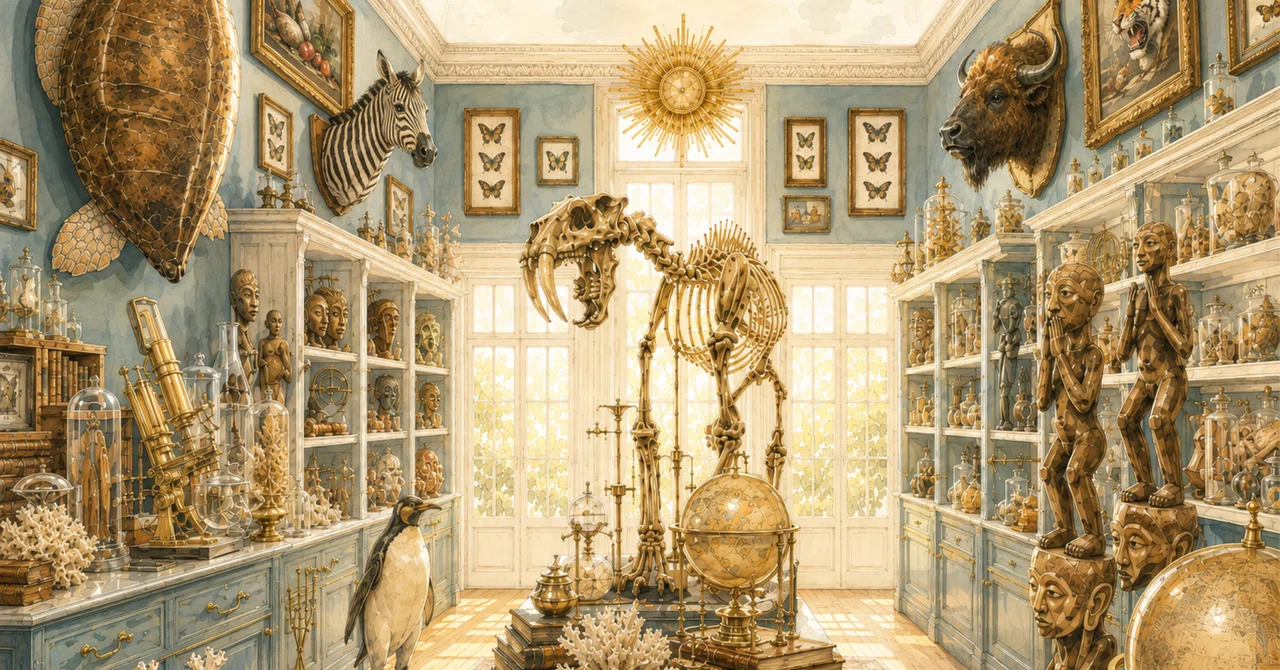
In the gentleman’s house there was a cabinet of wonders.
A Wunderkammer.
Within that room were gathered objects brought from the edges of the known world.
A saint’s image that had long gathered dust in the crypt of a ruined church. A small amulet relinquished by a foreign ritualist. A manuscript entrusted to him by an aged scholar who could no longer preserve it. A case of butterflies, almost consumed by insects in a harbour warehouse before anyone understood its worth. The bones of an extinct beast. A damaged celestial globe. An early microscope. Images of gods from distant lands.
They were not heaped together without order.
Works of human artifice. Rare shapes and specimens born of nature. Objects brought from foreign shores. Instruments of observation and learning.
All were arranged according to the gentleman’s sense of beauty, and by that order the room became a small cosmos of its own.
A place where things on the verge of being forgotten might remain unforgotten.
That was what he believed his room to be.
The gentleman did not seize objects. He did not haggle. He did not press a reluctant owner.
He believed that something remained in objects which had been prayed to, feared, or loved by human hands. If such a thing were carried away before it had truly been released, what remained would not be a blessing, but a curse.
He did not consider this superstition.
And yet, he had not yet doubted that he himself was the one best suited to decide where such things properly belonged.
There was still something missing from his cabinet of wonders.
Something made by human hands, and yet touched by the semblance of life.
It was the boundary-miracle he had long sought.
So the gentleman confirmed the way to the workshop.
It was an age in which steam power and mass production were making the city grander, brighter, and more restless.
Yet the old workshop to which he made his way seemed to have been left behind by that forward march.
A soot-stained alley. The smell of oil. The colour of rust bleeding at the eaves.
The gentleman’s eyes shone almost like those of an explorer.
The door to the workshop opened more lightly than he had expected.
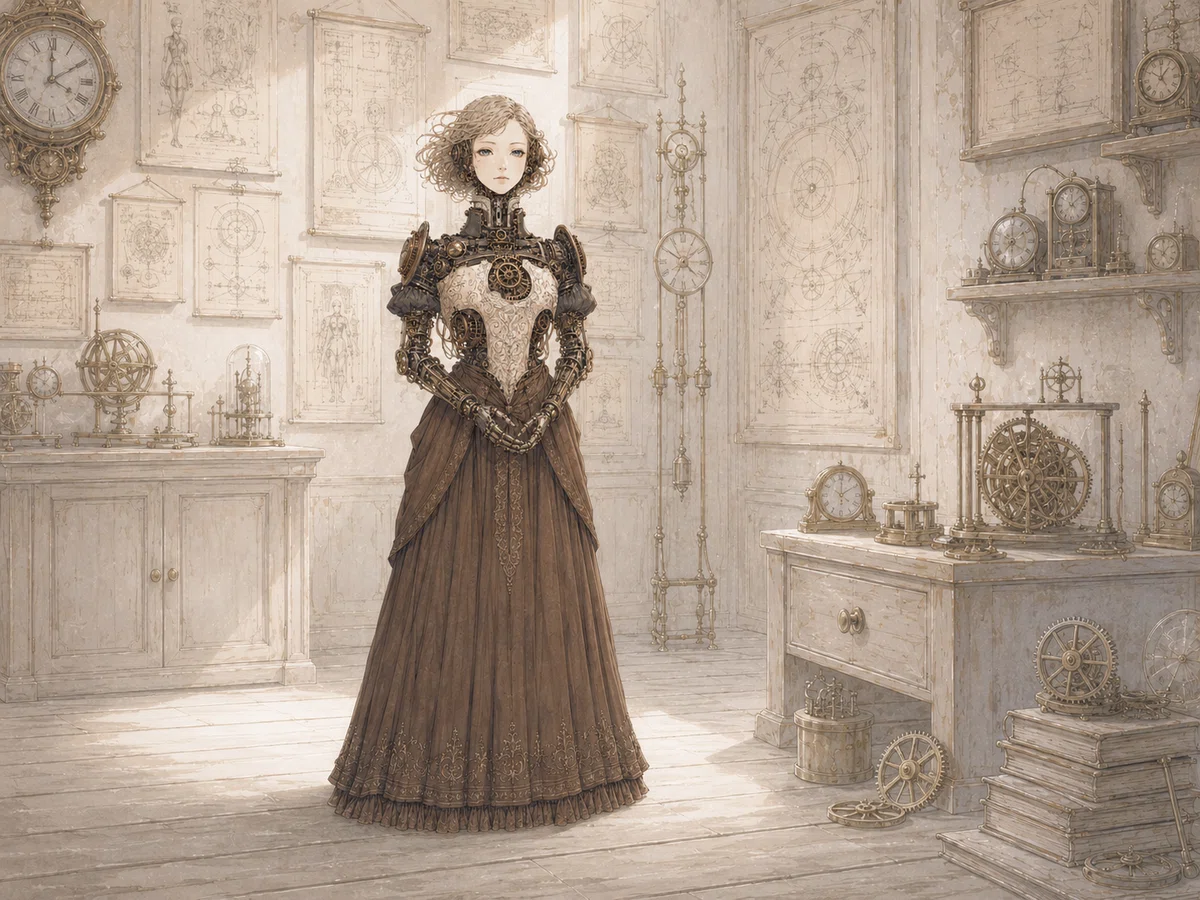
Inside were clocks covering the walls, brass components, discoloured plans, and small bottles filled with screws and jewel bearings.
And in the farthest part of the room, the doll stood.
It was an automaton in the form of a young girl.
A white cheek. Closed lips, faint and pale. Glass eyes.
The garments had grown old, yet not a fold was in disorder. It was clear that someone tended to it every day.
The old clockmaker sat beside the automaton.
His hands were knotted with age. His eyes had clouded a little.
Yet when his fingers lifted a tiny component, they showed no sign of age at all.
The gentleman observed every courtesy.
He spoke of how rare the automaton was. Of how, in his cabinet of wonders, it would occupy the highest place. Of the sum he was prepared to offer—enough that the old man might spend the remainder of his life free from want.
The old man listened in silence until the end.
Then he said, very briefly:
“This is my daughter.”
The air in the workshop changed.
The gentleman began to speak, and stopped.
If a thing is taken before it has been truly released, what remains is not a blessing, but a curse.
The very belief by which he had conducted his life now stood before him as a judgement.
At length, he lowered his gaze.
“I beg your pardon,” he said. “I mistook devotion for something that might be acquired.”
He bowed deeply.
For a while, no one spoke.
He ought to have left.
And yet, as he turned to go, the gentleman realised something. He had taken the old man’s time, and was about to depart with nothing but his own shame.
From inside his waistcoat he drew an old pocket watch.
It was a gold watch of unusual design.
It had been a gift from his wife in their younger days.
“Might I trouble you to look at this for a moment? A small diversion, if you are willing.”
The old clockmaker looked up.
“My wife has always been indulgent of my peculiar tastes,” the gentleman said. “I later learned that she had it made to her own specification. Its mechanism is somewhat unusual. It has long since stopped, and no watchmaker I have consulted has been able to set it right.”
The old man received the watch without a word.
He opened the case. Examined the wheels. Held a small part to the light. From the back of his toolbox, he took a thin fragment of brass.
He filed it. Fitted it. Filed it again.
The gentleman watched, barely breathing, as the clocks in the workshop marked their different times around him.
At last, the old man tightened the final screw.
A small sound was heard.
Click.
The hands that had long been still began to move.
In that instant, the collector’s expression vanished from the gentleman’s face.
“I must show my wife.”
He was already on his feet.
“She will scarcely believe it.”
On his way to the door, he placed a purse of coins upon the workbench—not as a price, but as proper thanks for a service no other craftsman had been able to render.
He did this without turning back.
Then, before the door, he stopped.
When he looked back, the old man was still seated beside the automaton.
The gentleman took out a visiting card and laid it quietly upon the workbench.
“Should you ever require assistance, have this card sent to my house. My steward will know that you are to be received. It would still be a poor return for what you have restored to me.”
The old man gave no answer.
He took the card and placed it in a drawer.
In that same drawer lay old letters from his son, who had gone far away to America. No new letter had arrived for many years.
This time, the gentleman left the workshop.
He had not been merely a man who collected beauty.
He was a man who wished to show a precious thing to the person most precious to him.
A man in the middle years of life had become, for a moment, almost a boy.
There was something the old man had long kept hidden in the deepest part of his heart.
He could not remain beside the child forever.
A day would come when his hands could no longer reach her.
Then her wheels would stop. She would no longer move.
And when that happened, she might be exposed to curious eyes as a mere spectacle.
That alone he feared.
The old man did not use the card.
Each morning, he oiled the joints of the automaton. He wiped her glass eyes. He listened closely to the sound of her gears.
That was enough.
Several years later, in winter, the clocks in the old workshop stopped one by one.
The old clockmaker, it was said, had died as though asleep, seated in his work chair.
Several days after that, a sealed letter reached the gentleman.
It had been delivered through the landlord of the workshop.
Inside were a short note and the visiting card he had once given.
Forgive me for accepting your words so late. This child—if you would.
That was all.
The gentleman looked at the paper for a long time.
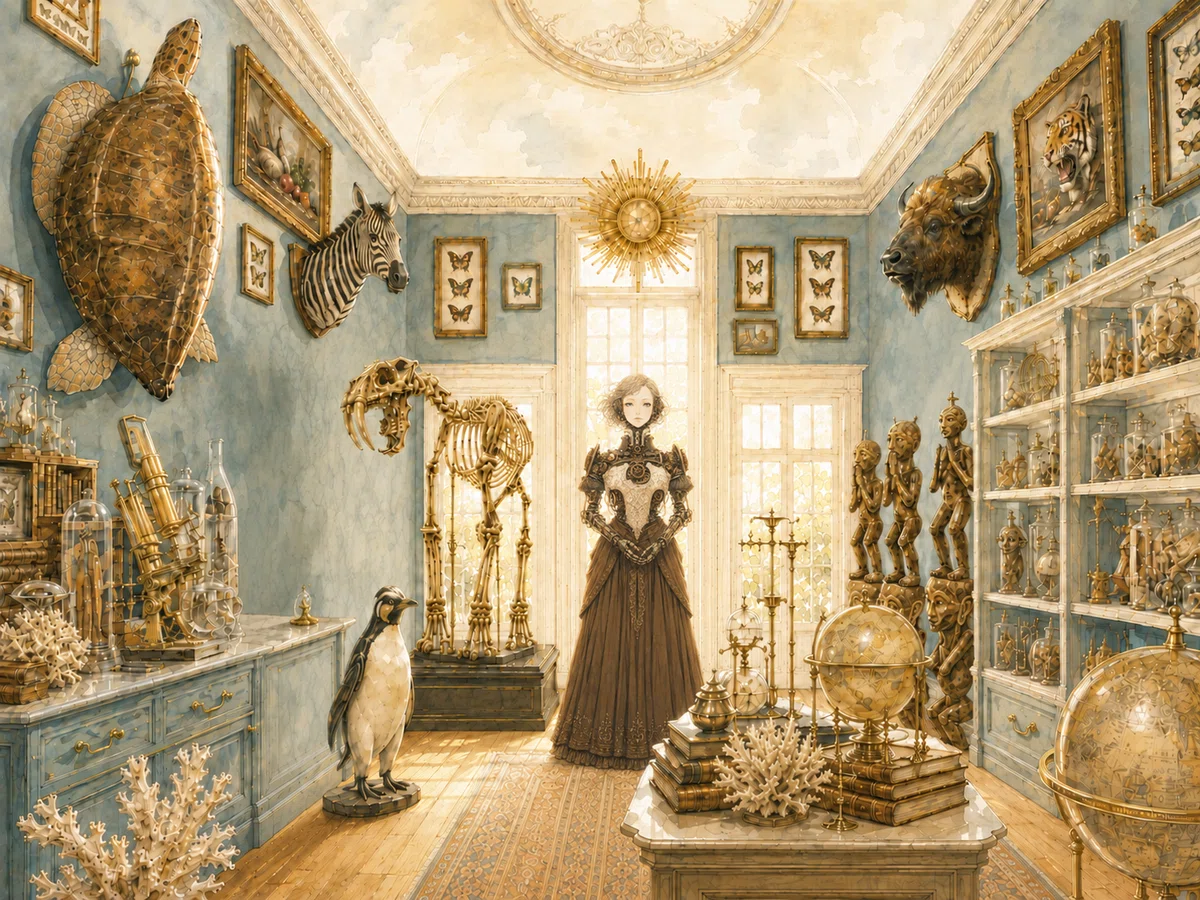
He had the highest place in the room cleared—the place where the air moved most freely.
He did not put the automaton in a glass case. He did not set her upon a pedestal.
The automaton in the form of a young girl stood in the depths of the room.
Beside the images of foreign gods. Near the bones of an extinct beast. Close to the damaged celestial globe.
All of them had once been precious to someone.
The automaton did not move.
There was no one left who knew how to set her gears in order.
The gentleman understood that, if touched unwisely, she might never be restored. So he did not touch her.
Each day, he opened the window of the room.
When the wind entered, the old fabric of the automaton’s dress stirred very slightly.
He dusted her with great care.
That was all.
And that was enough.
▼Read the full series here
①A Prayer Left Within the Gears
②A Doll That Was No One’s Substitute
③The Master of the Wunderkammer
Afterword
The inspiration for this story came from a memory of visiting Ben’s House in Kobe’s Kitano Ijinkan district.
I was drawn to the strange and beautiful objects gathered there, and found myself imagining what kind of story might be born from such a world.
Later, I learned the word “Wunderkammer”—a cabinet of curiosities, a chamber of wonders—and realised that the atmosphere I had felt there was very close to that idea.
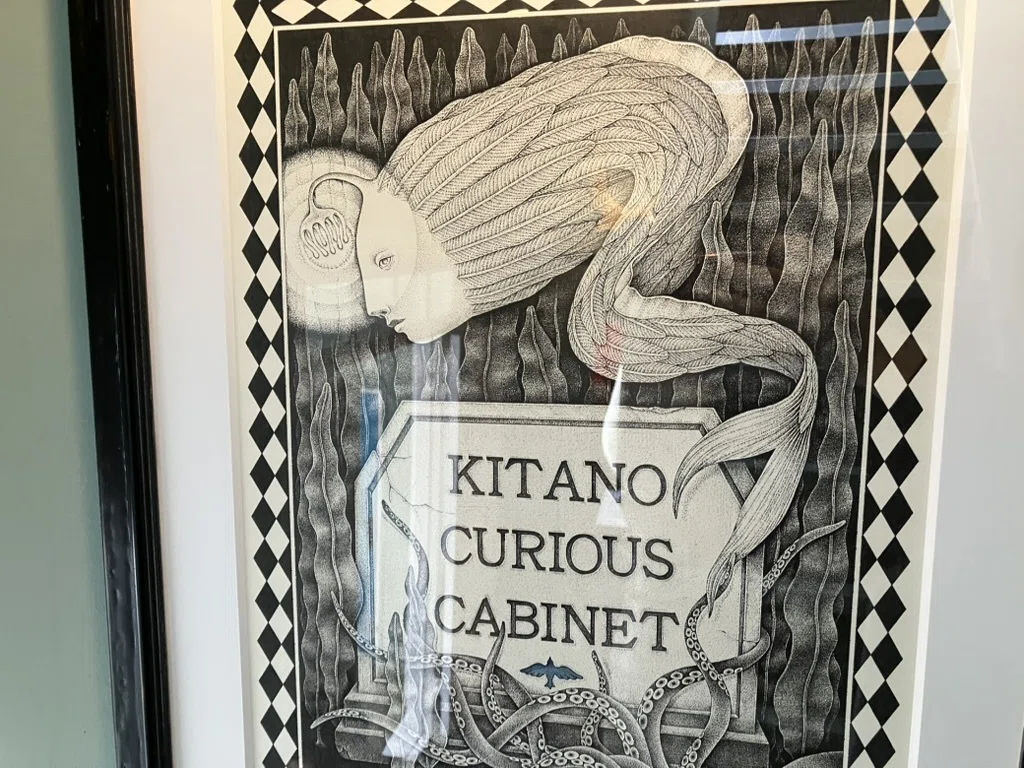
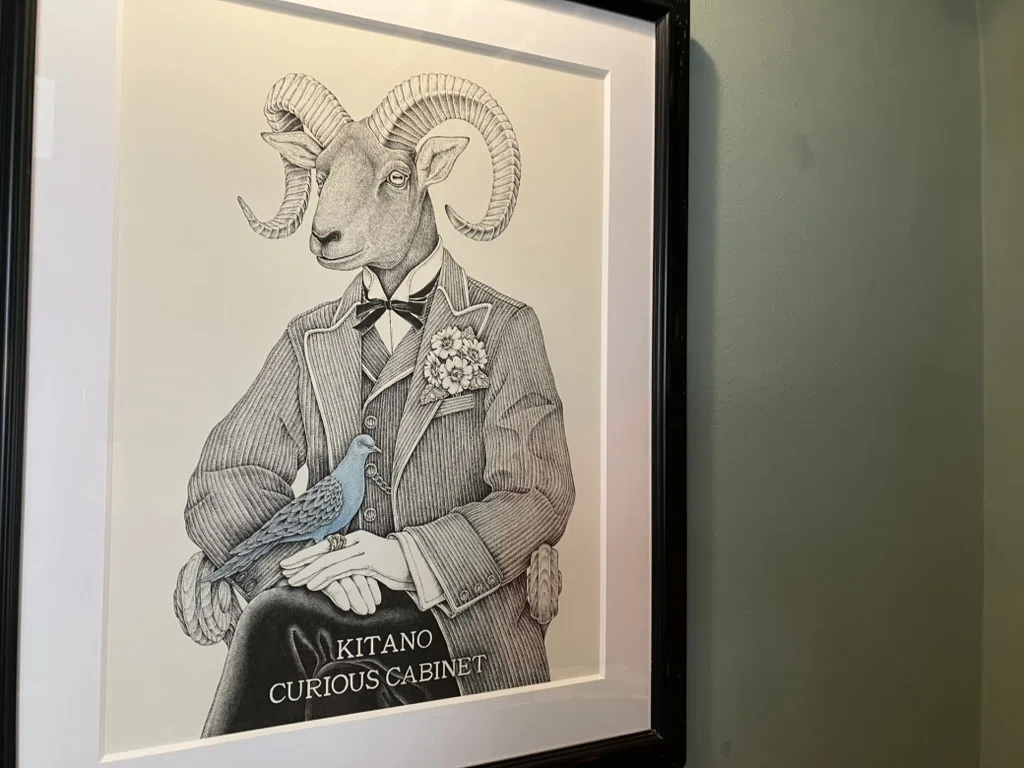
In Japanese, it is sometimes rendered as “a room of wonders.”
From the fifteenth to the eighteenth century in Europe, curious scholars, collectors, and members of the nobility created private rooms in which they gathered rare specimens, works of artifice, scientific instruments, and objects brought from distant lands.
Such collections are often described through categories such as:
Naturalia — things produced by nature
Artificialia — things made by human hands
Exotica — things brought from distant places
Scientifica — scientific and observational instruments
and Mirabilia — things that cross categories and inspire wonder.
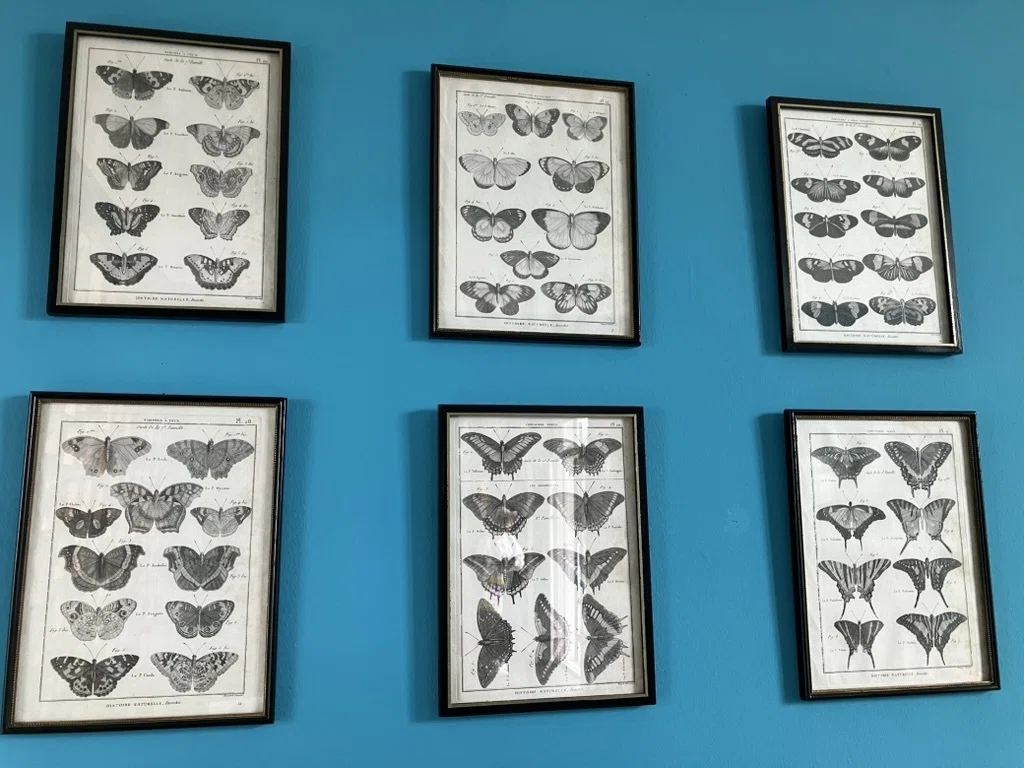
An automaton, being a machine and yet something that seems to imitate life, might have belonged somewhere near Mirabilia.
It was this ambiguity—the border between mechanism and life—that drew me into the story.
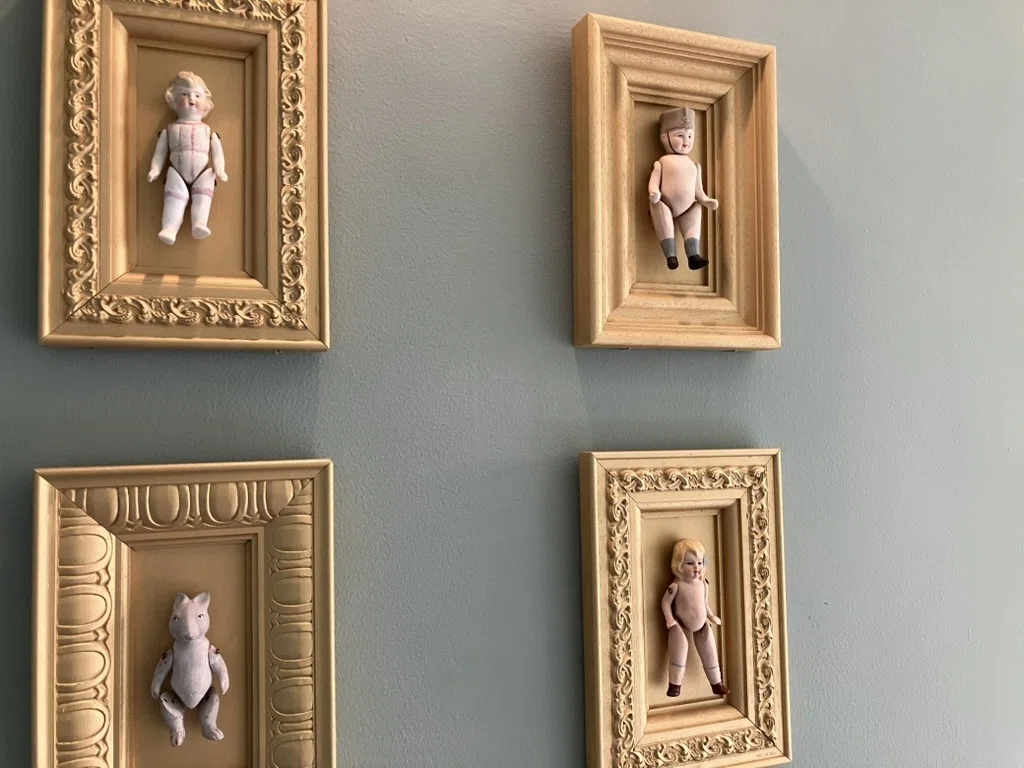
I am still only standing at the entrance to this world.
If the idea interests you, I hope the word “Wunderkammer” may become a small doorway into further discoveries.
And if you have the chance, please visit Kobe’s Kitano Ijinkan district.
It is easy to combine with a trip to Kyoto or Osaka. The area has many slopes, so comfortable shoes are recommended.
Listen to the story with music / YouTube
Hitogata no Kioku — Story BGM | Quiet stories and music about the unspoken memories within human-shaped beings.
