
Why Does “You” Remain in Your Work? — Thinking Through Kushi-zashi and Inuki

Introduction
Not long ago, I was talking with AI about some of my past articles.
At one point, it said something that surprised me:
“Yamada-san, you’ve been talking about the same thing all along.”
Really?
That was not how it felt to me at all.
Sometimes I write about economics. Sometimes about work and social systems. Sometimes about AI. And sometimes I write about what it means for a person to truly “understand” something.
The subjects seem quite different.
And yet, AI was telling me that I had been talking about the same thing.
Was that really true?
A New Restaurant That Somehow Feels Familiar
Thinking about this feeling — different, but somehow similar — reminded me of something I had experienced before.
Imagine going back to a restaurant you visited some time ago.
The sign is different.
The menu is different.
Apparently, it has become a completely different restaurant.
But then you walk inside.
The entrance door looks almost the same. The kitchen is still in the same place. Even the restroom has hardly changed.
It is a different restaurant, yet something from the old one is still there.
In Japan, there is a word often used for this kind of property: inuki.
With an inuki property, a new business takes over a space while keeping parts of the previous shop’s interior or equipment.
From the new owner’s point of view, a lot may have changed.
The sign.
The menu.
The tables.
The lighting.
Even the whole concept of the restaurant.
But someone who knew the old restaurant may notice something else.
The road from the station. The corner where you turn. The neighboring shops. The building. The entrance.
And once inside, the kitchen and restroom may still be where they were before.
The person who created the new shop and the person who remembers the old one are not necessarily looking at the same differences.
They may not even begin noticing change from the same starting point.
I began to wonder whether something similar happens with writing.
Maybe I had been creating completely different “shops,” while something from the previous ones kept remaining.
But was that really happening?
Looking at Writing Like an Excel Workbook
I started looking through some of my past articles.
They were written at different times and covered very different subjects.
If I read each article from beginning to end, each one was clearly its own work.
But I was not trying to compare the articles as a whole.
I wondered:
What would happen if I looked at only the same part of each one?
That reminded me of something we sometimes call kushi-zashi in Japanese Excel usage.
But before Excel, think about a barbecue skewer.
Meat.
Bell pepper.
Corn.
Onion.
And then, perhaps, something a little strange.
Octopus.
Kiwi.
A strawberry.
They are completely different ingredients.
Yet one skewer can pass through all of them.
Different ingredients. One skewer.
Kushi-zashi literally means putting things onto a skewer.
A similar expression is sometimes used in Japanese when working with Excel.
Imagine a workbook with three separate sheets:
Tokyo Headquarters.
Yokohama Branch.
Nagoya Branch.
Each sheet contains many different numbers.
Now suppose we look at just one matching cell on every sheet — for example, the number of orders.
We are not trying to decide which branch is better.
We are not ranking them.
We are simply looking at the same cell across different sheets.
I wondered what would happen if I did the same thing with my writing.
Each article could remain its own separate sheet.
I would not try to combine them into one story.
I would simply look at the same “cell” in each one.
This time, I chose:
the question.
Four Articles, Four Questions
The first article was about the metaverse bubble.

“The End of a Bubble Can Also Be a Beginning — What We Can See After the Metaverse Bubble”
As excitement around the metaverse cooled, it became easy to describe the boom as something that had ended.
But I was interested in what might come after that ending.
My question was:
Could the end of a bubble also be seen as the beginning of something new?
The second article was about work that is difficult to measure with KPIs.
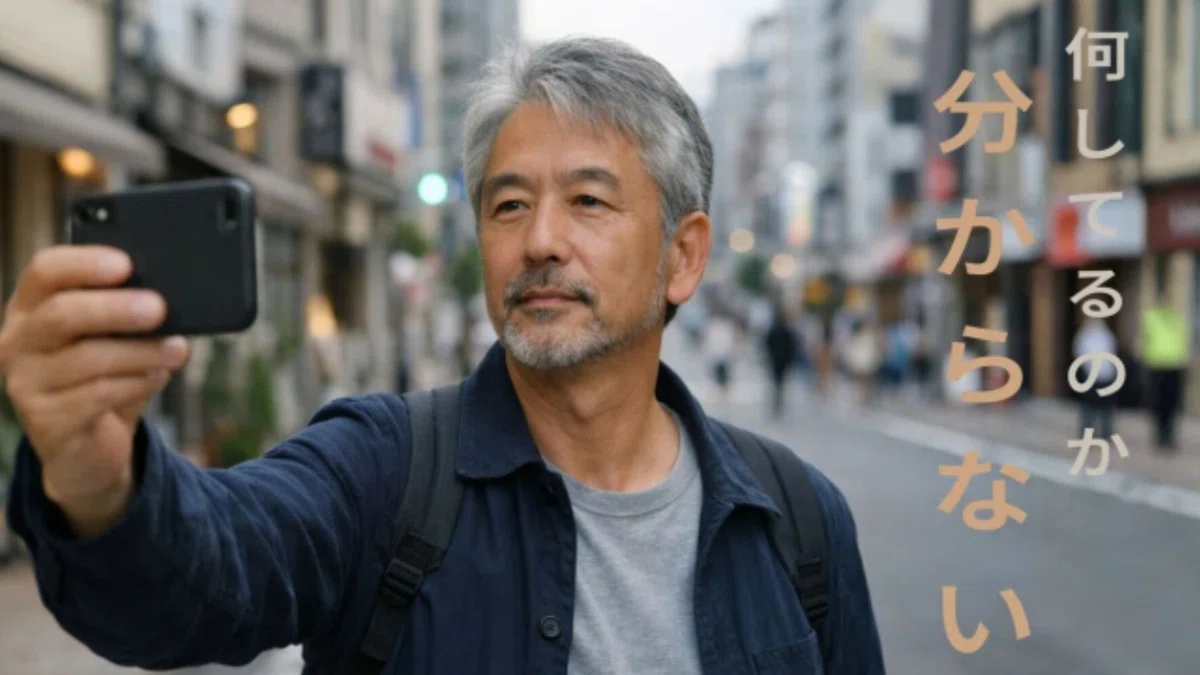
“Work That KPIs Cannot Measure Still Supports Society”
Some jobs produce visible improvements.
Other jobs help prevent things from getting worse.
Their value may lie in helping an ordinary day continue, rather than producing an obvious improvement that can easily be counted.
My question was:
How should our systems recognize work whose value lies not in “making things better,” but in keeping things from getting worse?
The third article was about a diagram showing a possible future of AI.

“Another Variable in the Future of AI”
The diagram showed AI becoming more capable and accelerating research and development.
AI was changing.
But then I wondered:
What about the people using it?
My question was:
When we imagine the future of AI, are we forgetting one variable — that humans may change too?
The fourth article asked what it means to “understand” something.
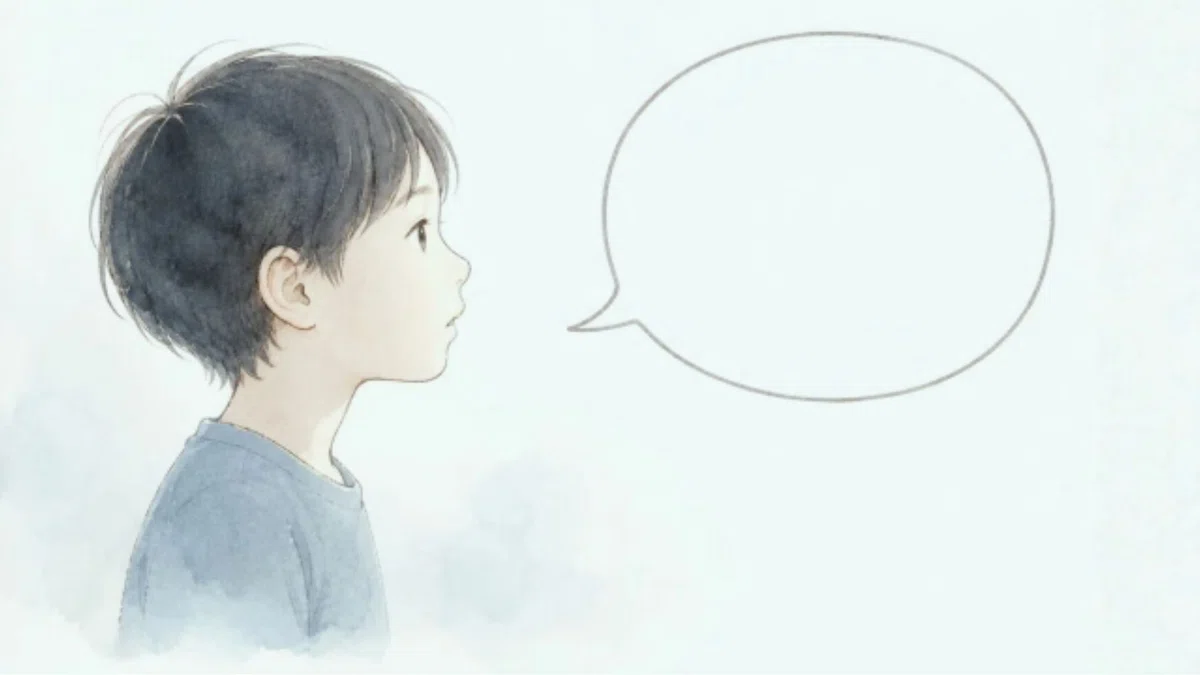
“What Do We Mean When We Say Someone ‘Understands’?”
People do not always understand things in a neat, orderly way.
We connect fragments. We try things. We make mistakes. Gradually, each of us may arrive at our own understanding.
And yet, we may be more likely to think someone understands something when they can organize it neatly and explain it well.
So I asked:
Is being able to explain something clearly really the same as having understood it?
Now I looked only at that one cell: the question.
Something that seems to have ended — and what might come after it.
Work whose value does not easily appear in numbers.
Human change missing from a picture of the future.
The space between being able to explain something clearly and actually understanding it.
The subjects are different.
The articles were written at different times.
They were not written as a series. Many completely unrelated articles appeared between them.
And yet, when I looked only at the same cell, I began to notice a similar direction.
Perhaps I often look at what is already visible — and then wonder whether something has been left just outside the picture.
I Thought I Was Building Different Shops
This was very unexpected for me.
When I wrote these articles, I thought I was building a different shop each time.
One shop was about the metaverse.
Another was about work and social systems.
Another was about the future of AI.
Another was about human understanding.
Different signs.
Different menus.
Each time, I thought I was making something different.
But later, when I placed the finished articles on separate sheets and looked at the same cell — the question — something similar was still there.
It reminded me of inuki.
I thought I had changed things.
I had not deliberately tried to keep this part.
In fact, I had never even thought about whether I should keep it or change it.
And yet, it remained.
I did not leave it there on purpose. It was simply left behind.
Perhaps part of what we call our “style” or what makes something feel like “us” appears in places like this.
Not in characteristics we decide in advance.
But in things that become visible only after we have made enough work to look back at it.
Becoming a Regular Customer at Your Own Shop
But there is a strange problem here.
Once you discover something and think,
“Maybe this is what makes my work mine,”
you may begin looking for it in everything you make next.
I might start checking each new article:
“Am I looking for something that others might be overlooking again?”
I am building a new shop, but now I am searching for traces of the old one myself.
I become a regular customer at my own shop.
There is something useful about knowing your own style.
If you are building a brand or creating a series, consistency can matter.
But something that remained without intention can change the moment we discover it.
What was once simply left behind may become something we deliberately try to preserve.
And when creating something new, we do not always have to search for traces of the previous shop.
The next shop does not need to have the same old pillar.
Finally
Different works do not need to be forced into one story.
An article about the metaverse can remain an article about the metaverse.
An article about work can remain an article about work.
They can stay on separate sheets.
And every once in a while, we can look at the same cell across them.
This time, I looked at the questions.
Sometimes, something we never consciously planned becomes visible through the works we have already made.
Finding it can be fascinating.
But when we make the next thing, perhaps we do not need to become our own regular customer.
You do not have to decide what makes you “you” before you create.
Rather than deciding who you are before you create, you can discover who you are through what you have already made.
In Other Words
Perhaps what makes our work feel like “us” is not a blueprint we prepare in advance, but something that remains — almost accidentally — when we place what we have made side by side.
The Original Articles
The four articles I looked back at in this piece were originally written in Japanese.
If you’re curious, you might try reading them with AI translation. The translation may not reproduce every nuance perfectly, but the questions at the heart of each article are summarized above.
“The End of a Bubble Can Also Be a Beginning — What We Can See After the Metaverse Bubble”
“Work That KPIs Cannot Measure Still Supports Society”
“Another Variable in the Future of AI”
“What Do We Mean When We Say Someone ‘Understands’?”
© 2026 in the pilvi | Meaning Blueprint
Please credit the source when quoting or referencing this article.
