

SUBSCRIBE TO OUR FREE NEWSLETTER
Daily news & progressive opinion—funded by the people, not the corporations—delivered straight to your inbox.
5
#000000
#FFFFFF
To donate by check, phone, or other method, see our More Ways to Give page.
Daily news & progressive opinion—funded by the people, not the corporations—delivered straight to your inbox.
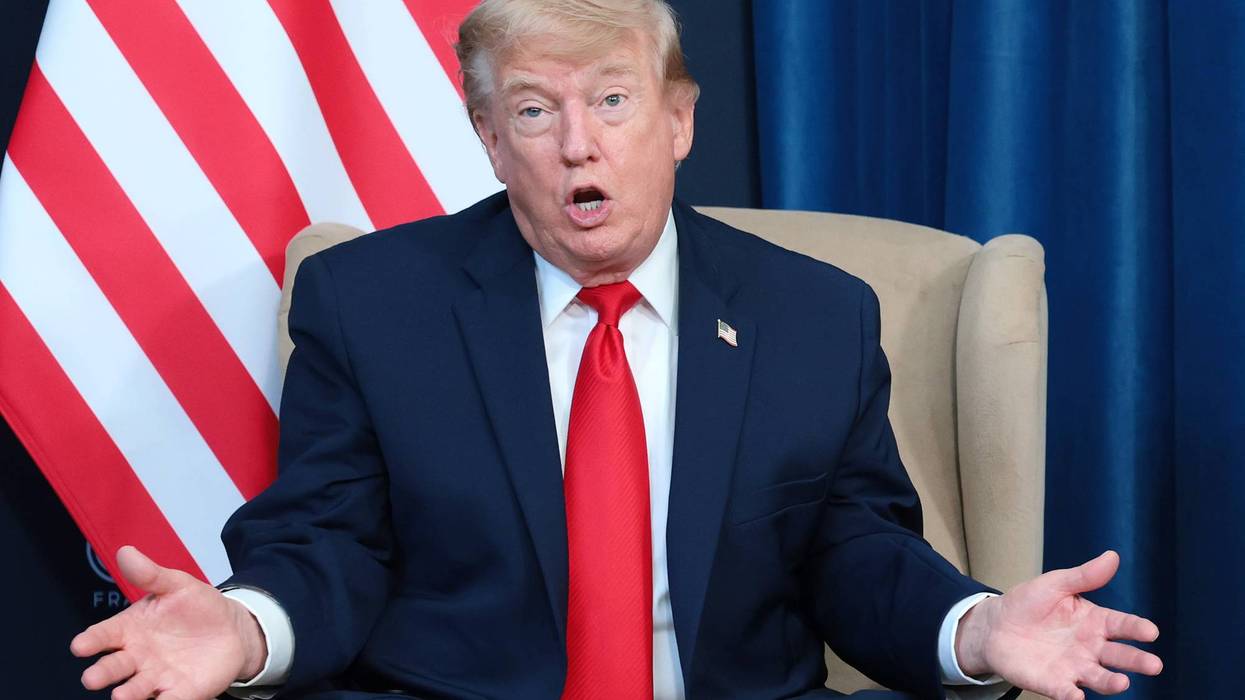
Despite the strait's closure, Trump insisted it was "open as far as we're concerned."
US President Donald Trump on Sunday twice told journalists to stop asking him about the status of the Strait of Hormuz, which Iran once again closed after the president declared an end to the ceasefire deal between the two countries.
The first instance came during an interview with NBC News' Kristen Welker, who pointed to conflicting statements from the Iranian government and US Central Command about the status of the strait, which is an essential shipping lane for global petroleum supplies.
Trump replied that "it's open, and I don't want to talk about it because I want to honor the life" of the late Sen. Lindsey Graham (R-SC), who died on Saturday from what his office described as "a brief and sudden illness."
"So I don't want to talk about it," Trump continued. "I told you that before the call."
WELKER: Iran says the Strait of Hormuz is closed. CENTCOM says it's open. Which is it?
TRUMP: It's open, and I don't want to talk about because I want to honor the life of Lindsey Graham, so I don't want to talk about it. I told you that before the call. pic.twitter.com/3ed7dN1bhK
— Aaron Rupar (@atrupar) July 12, 2026
Shortly after, during an interview with CNN's Jake Tapper, Trump was again asked whether the strait was still open.
"It's open as far as we're concerned," Trump told Tapper. "Don't talk about it. Talk about the reason you asked me to speak."
"Okay," Tapper replied. "We appreciate your time, sir."
TAPPER: Iran has declared the Strait of Hormuz closed. Is that true?
TRUMP: It's open as far as we're concerned. Don't talk about it. Talk about the reason you asked me to speak. pic.twitter.com/TwssTycQdF
— Aaron Rupar (@atrupar) July 12, 2026
Iran shut down shipping traffic in the strait after Trump launched an illegal war against the country in late February. The strait's closure resulted in spiking oil and gasoline prices, which coincided with further erosion in Trump's approval ratings.
Although traffic through the strait initially picked up in the wake of a June memorandum of understanding signed by the US and Iran, it has since slumped as the ceasefire between the two nations has fallen apart.
Ana Marie Cox, contributing editor at The New Republic, bashed both Welker and Tapper for heeding the president's requests and not pushing him to answer questions about the war he unlawfully started.
"Frankly astonished that supposed news sources agreed to terms to interview Trump and appeared to be deferential to them," Cox wrote in a social media post, "enough that they were apologetic in brining up other topics."
Cox's sentiment was echoed by Kai Ryssdal, host of NPR's Marketplace, who remarked that "the guy being interviewed doesn’t get to pick the questions."
Journalist Helen Kennedy challenged Trump's assertion that asking about the status of the Iran war was irrelevant when talking about Lindsey Graham.
"Making war with Iran was Lindsey Graham's favorite thing," Kennedy observed. "It's not like it's unrelated."
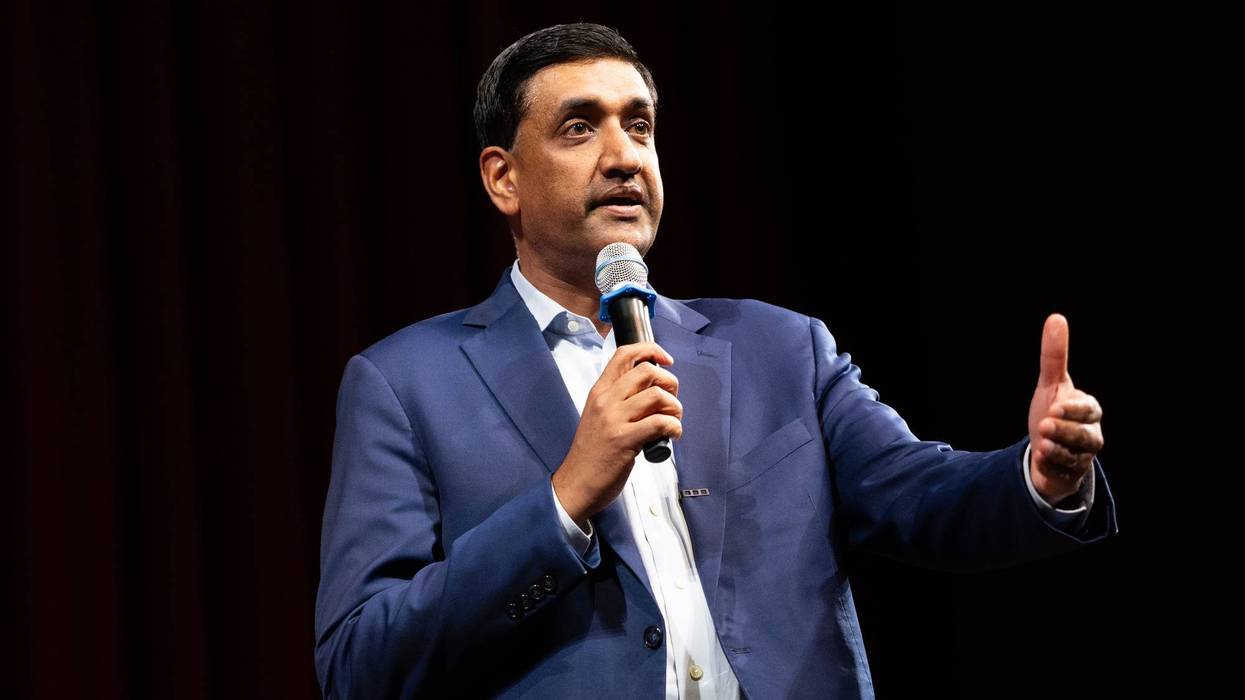
"These hoodlums come in with machine guns—M4, an American-made machine gun—and they detain us. They block off the road."
Rep. Ro Khanna this week was detained by a group of Israeli settlers whom he described as "hoodlums... with machine guns" while making a visit to a Palestinian village in the occupied West Bank.
In an interview with Reuters published on Saturday, Khanna (D-Calif.) said he and his tour group were surrounded by armed settlers as they were traveling through the West Bank on Wednesday.
"We were at a village that Israeli settlers had destroyed, they had destroyed the school, they had destroyed that village, and we were just looking at it," said Khanna. "And these hoodlums come in with machine guns—M4, an American-made machine gun—and they detain us. They block off the road."
The California Democrat said that the settlers called in members of the Israel Defense Forces (IDF) to help them deal with him and his group.
"The IDF is on their side," Khanna remarked, "not on the side of the Americans."
Cameron Kasky, an aide to Khanna, told Reuters that the group was held for over an hour before officials whom he believed to be police intervened and secured their release.
The IDF told Reuters that both military troops and police officers dispersed the settlers who had set up a roadblock near the small Palestinian village of Khirbet Zanuta.
Khanna wasn't the only American to have a run-in with Israeli settlers this week, as CNN reported that four settlers attacked groups of journalists, including CNN reporters and crew, who were traveling through an area north of the Palestinian city of Ramallah on Saturday.
As the journalists were driving, four settlers blocked off the road with their cars and began attacking the reporters' vehicles with wooden clubs and metal rods.
"The settlers then began to jump on the vehicle behind CNN's—carrying another group of journalists—and smashed the windshield of that vehicle," the network reported. "Another group of settlers tried to block a separate exit route before chasing the journalists towards the town of Sinjil."
Israeli police arrived on the scene and arrested four settlers who were allegedly responsible for the attacks, CNN reported.
"The Israel Police and the IDF view any manifestation of violence or causing damage to property very seriously," the Israeli officers said after the arrests, "especially when it concerns media personnel performing their work."
Israeli settlers for years have carried out violent attacks on Palestinians living in the West Bank, and witnesses have regularly described IDF soldiers at the scene either standing by as the attacks occur or even actively helping the attackers.
In an interview with CNN on Tuesday, Israeli Prime Minister Benjamin Netanyahu said that claims about settler violence have been "blown up beyond belief," describing attacks as being carried out by a small number of "juvenile delinquents."
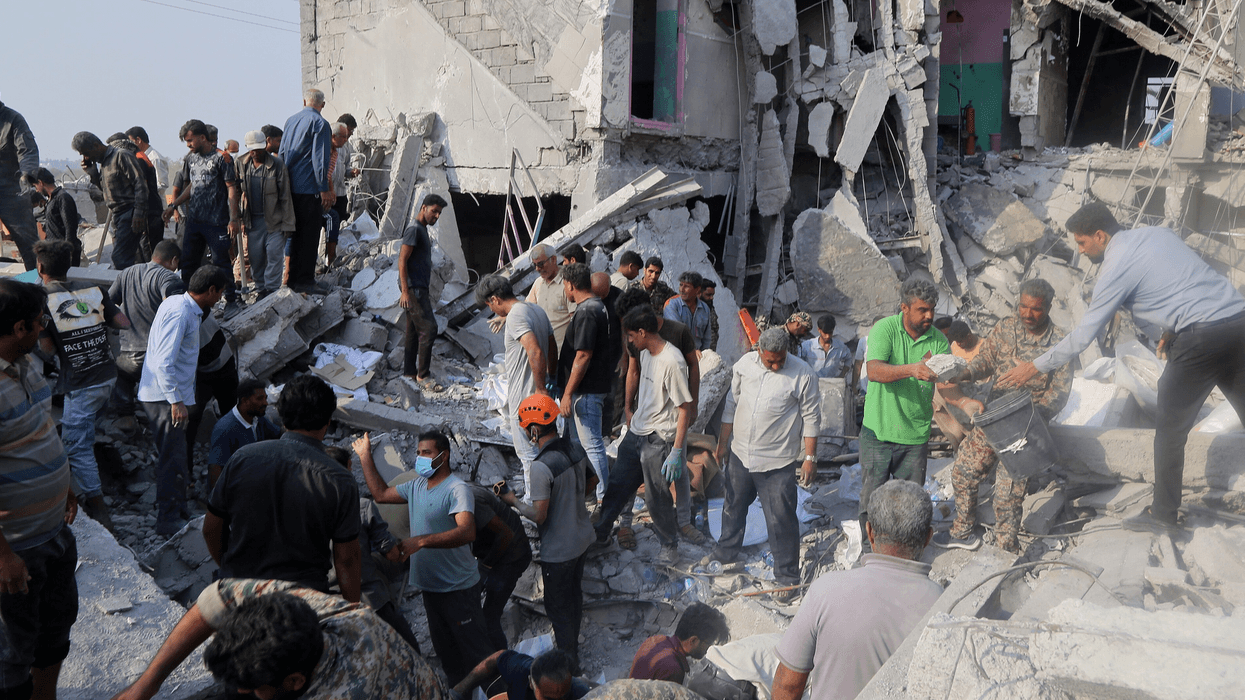
Sources told CNN that warnings were ignored due to "expediency."
US military commanders "bypassed warnings" indicating that their database of strike targets inside Iran was badly out of date shortly before launching a deadly attack on an Iranian primary school in the city of Minab, according to a Tuesday report from CNN.
Three sources told CNN that senior military officials received messages informing them that the intelligence behind the target list had been gathered years ago and "needed to be re-vetted."
Regardless, the proposed Iranian targets were added to a strike list shortly before the US launched an attack on the Shajareh Tayyebeh Elementary School, killing more than 150 schoolchildren along with over a dozen teachers.
Two of CNN's sources said senior commanders ignored the warnings out of "expediency," as they did not want to significantly delay providing target lists during the outset of the war, which Trump illegally launched in February without any authorization from the US Congress.
For months, Defense Secretary Pete Hegseth has repeatedly dodged questions about the strike on the school, insisting that he didn't want to comment on an ongoing Pentagon investigation.
However, one of CNN's sources said that US military officials "knew within days how the mistake happened," as the school was targeted based on "obviously old info."
CNN noted that old satellite images showed the school once belonged to the same compound as an Islamic Revolutionary Guard Corps facility. However, as recently as 2016, images showed "that a fence had been erected to separate the school from the rest of the base, and that a separate entrance to the school had been built."
Rutgers Law School Professor Adil Haque, noting that intelligence on many of the targets was more than a decade old, called the US decision to proceed with attacks "inexcusable."
The US Department of Defense has still not released its investigation into the bombing, drawing criticism from Palestinian-American policy analyst Yousef Munayyer, who reacted to the CNN report by describing the US military as being "quick to bomb, slow to investigate."
The slow pace of the investigation has also drawn criticism from Rep. Adam Smith (D-Wash.), the ranking member of the House Armed Services Committee.
During a May congressional hearing, Smith grilled Adm. Brad Cooper about why the US hasn't taken responsibility for the school strike despite clear evidence that it was at fault.
"In the past, when we’ve had these type of mistakes, they’ve been quickly acknowledged," Smith said, "even if a further investigation is necessary to figure out prevention methods."
Smith also criticized Hegseth for showing a "callous disregard for any sort of rules of engagement or protecting of civilian life" during his tenure as defense secretary.
Last month, President Donald Trump brushed off responsibility for the strike on the school, stating that "mistakes are made" and "war is nasty."
