

SUBSCRIBE TO OUR FREE NEWSLETTER
Daily news & progressive opinion—funded by the people, not the corporations—delivered straight to your inbox.
5
#000000
#FFFFFF
To donate by check, phone, or other method, see our More Ways to Give page.
Daily news & progressive opinion—funded by the people, not the corporations—delivered straight to your inbox.

Iran's foreign ministry called the attack, which led to the evacuation of pediatric cancer patients, a "war crime."
A doctor at Shahid Baqaei Hospital in Ahvaz in Iran's southern Khuzestan province emphasized that the children being treated at the facility when the US military attacked the area on Wednesday were suffering serious illnesses, and had to be urgently evacuated while on ventilators and receiving chemotherapy.
"There have been patients with various illnesses, cancer patients and special illnesses, who are fragile," the doctor told Al Jazeera. "People are not here by accident, they have particular illnesses. The blast wave was intense. It was so close we said they had hit the hospital, the upper floors of the hospital."
Hospital director Majid Bouadhar said 211 children had to be urgently taken to nearby facilities after, as Drop Site News reported, "multiple projectiles landed in the immediate surroundings" of the hospital.
The specialized pediatric center "sustained severe shockwaves that shattered windows, triggered intense vibrations, and sparked widespread panic," reported Drop Site.
Iranians are inspecting the damage from days of US strikes on key cities in the country’s south and west. Residents say attacks have damaged ports and at least one hospital. pic.twitter.com/LDOBmbENDd
— Al Jazeera English (@AJEnglish) July 16, 2026
Esmaeil Baqaei, a spokesperson for the Iranian Foreign Ministry, said in a statement that the "barbaric attack" was "reminiscent of Israel’s atrocities against healthcare facilities, [and] caused severe suffering and anxiety upon the hospitalized children."
"This constitutes a cowardly war crime against the most innocent of human beings—children who are bravely fighting for their lives," said Baqaei. "Those who ceaselessly preach human rights, yet deliberately turn a blind eye to the targeting of hospitals and health centers, have forfeited every shred of moral credibility."
Assal Rad of the Arab Center Washington, DC said, "Imagine the coverage in Western media if it was a children’s hospital in Israel."
The strikes came days after President Donald Trump notified Congress that he had ordered "defensive strikes" in Iran, claiming the War Powers Resolution of 1973 gave him the authority to do so. The US strikes were renewed despite a negotiated memorandum of understanding to end hostilities that was agreed to in mid-June.
The president this week also renewed his previous threat to attack civilian infrastructure unless there is a new deal by next week—a war crime under international law—as the Iranian military attacked US military assets in Kuwait and Jordan.
The attack near the hospital was just one sign that the US has already begun striking civilian infrastructure, particularly in port cities and towns across Iran's southern coast.
The war that was started by Israel and the US in late February, which Trump said would last a few weeks, is now in its fifth month as the president aims to take control of the Strait of Hormuz.
The Iranian Embassy in Kenya noted that days before the US forced the evacuation of hundreds of children in Ahvaz, Trump said the military was being "very careful with civilians."
The war has killed more than 3,400 people in Iran, including hundreds of children in attacks on schools and other civilian infrastructure.
Al Jazeera reported Thursday that the US also struck the main building of a civilian airport and a storage facility in Semnan, near Tehran. The outlet also reported on US strikes across the southern port city of Bushehr, where Iran's only civilian nuclear plant is located.
"This port is used completely for tourism and commercial business such as for oil," one man said in a video posted by the outlet. "It has nothing to do with the military."
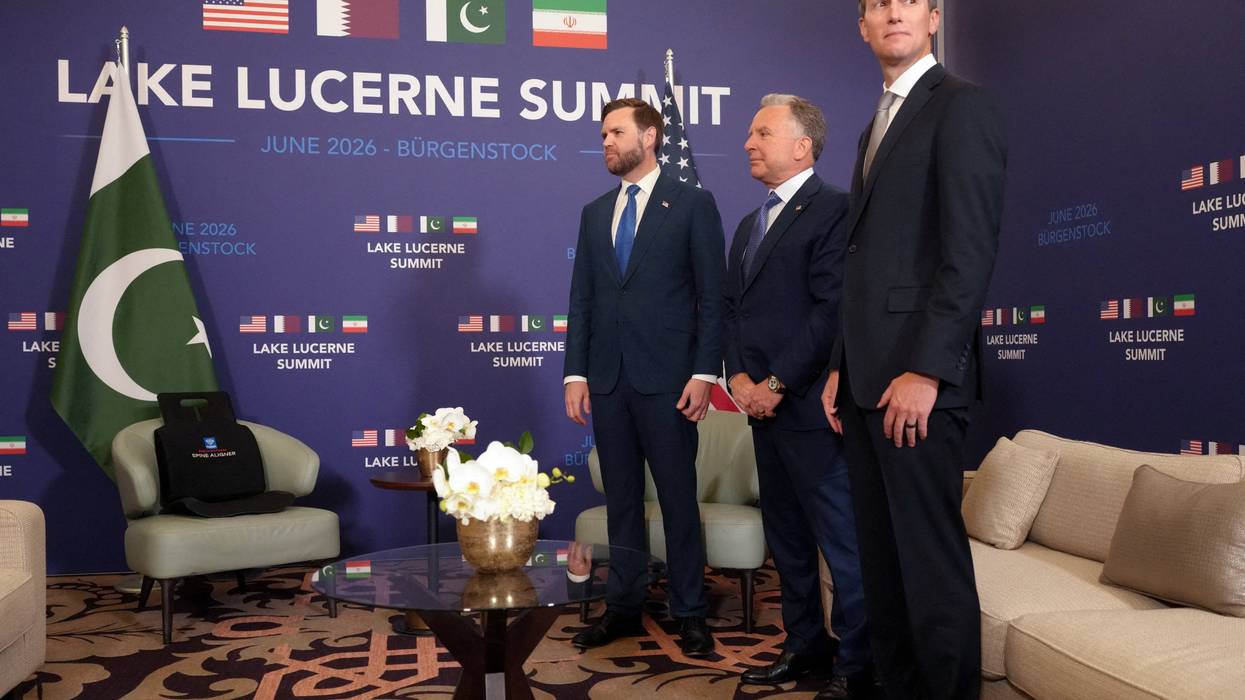
Drop Site reported that Iran warned Vice President JD Vance that "the pair were more interested in exploiting insider knowledge of the negotiations to profit in financial markets than they were in reaching a deal."
Iranian officials reportedly warned US Vice President JD Vance late last month that two officials leading the Trump administration's diplomatic efforts in the Middle East—special envoys Steve Witkoff and Jared Kushner—were trying to profit from their proximity to critical negotiations rather than working to secure a lasting peace agreement.
According to Drop Site, which cited an unnamed Iranian official, "Iran conveyed to Vance that the pair were more interested in exploiting insider knowledge of the negotiations to profit in financial markets than they were in reaching a deal." The Iranian side also "expressed concern about repeated leaks from Kushner to Israeli Prime Minister Benjamin Netanyahu."
Iranians estimated that people with inside information have raked in $9 billion in profits stemming from financial market moves related to the US-Israeli war on Iran, which sparked significant volatility in energy and equity prices.
On several occasions during the war, massive trading volumes have closely preceded major conflict-related announcements by US President Donald Trump. (Kushner is Trump's son-in-law, and Witkoff is a close personal friend of the president.)
Mohammad Bagher Ghalibaf, speaker of the Iranian Parliament and the country's top negotiator, accused the Trump administration in March of peddling "fake news" to "manipulate the financial and oil markets and escape the quagmire in which the US and Israel are trapped."
According to Drop Site, Iranians "conveyed through intermediaries" that $4.5 billion of profits allegedly accumulated through market manipulation should be "allocated to the Iranian side."
“The exchanged texts will ultimately become part of the historical record," said the unnamed Iranian official.
The Trump administration denied that Vance received messages from the Iranian side related to Kushner and Witkoff, and accused Drop Site journalists of being "so filled with hate for America and devoid of respect for themselves that they have become full-throated propagandists for the Iranian regime."
Concerns that Kushner and Witkoff's personal and familial financial interests could influence their approach to diplomatic talks are hardly new.
"The public has no reason to trust Jared Kushner’s integrity as a government official to put their interests above his financial benefit," Donald Sherman, president of Citizens for Responsibility and Ethics in Washington, said after Trump formally named Kushner a special peace envoy in February.
Less than a month later, The New York Times reported that Kushner was trying to raise at least $5 billion in funding for his private equity firm, Affinity Partners, from Middle East governments. Saudi Arabia's Public Investment Fund is the largest investor in Affinity.
Witkoff, a real estate investor, has also faced scrutiny for potentially massive conflicts of interest.
Rep. Greg Stanton (D-Ariz.) noted during a House hearing last month that Witkoff "co-founded the cryptocurrency venture firm World Liberty Financial, alongside President Trump and President Trump’s children."
Stanton continued:
Days before Trump’s second inauguration, a firm controlled by a member of the royal family of the United Arab Emirates, Sheikh Tahnoon, bought a 49% stake in the company. That was a $500 million investment. $31 million of that went straight to the Witkoff family.
Witkoff was still a financial stakeholder in World Liberty as he was simultaneously leading high-level US government negotiations in his role as special envoy. One of those negotiations was over the export of America’s most advanced AI chips to the UAE, negotiations personally attended by Sheikh Tahnoon.
Drop Site's reporting came as the Trump administration on Wednesday expanded its aerial assault on Iran, hitting targets in the northern part of the country as the prospect of a negotiated resolution appeared increasingly remote. Recent US strikes have killed more than 30 people and wounded hundreds of others, according to Iranian officials.
Iran said it retaliated with strikes on US military installations in the region, including in Kuwait and Bahrain.
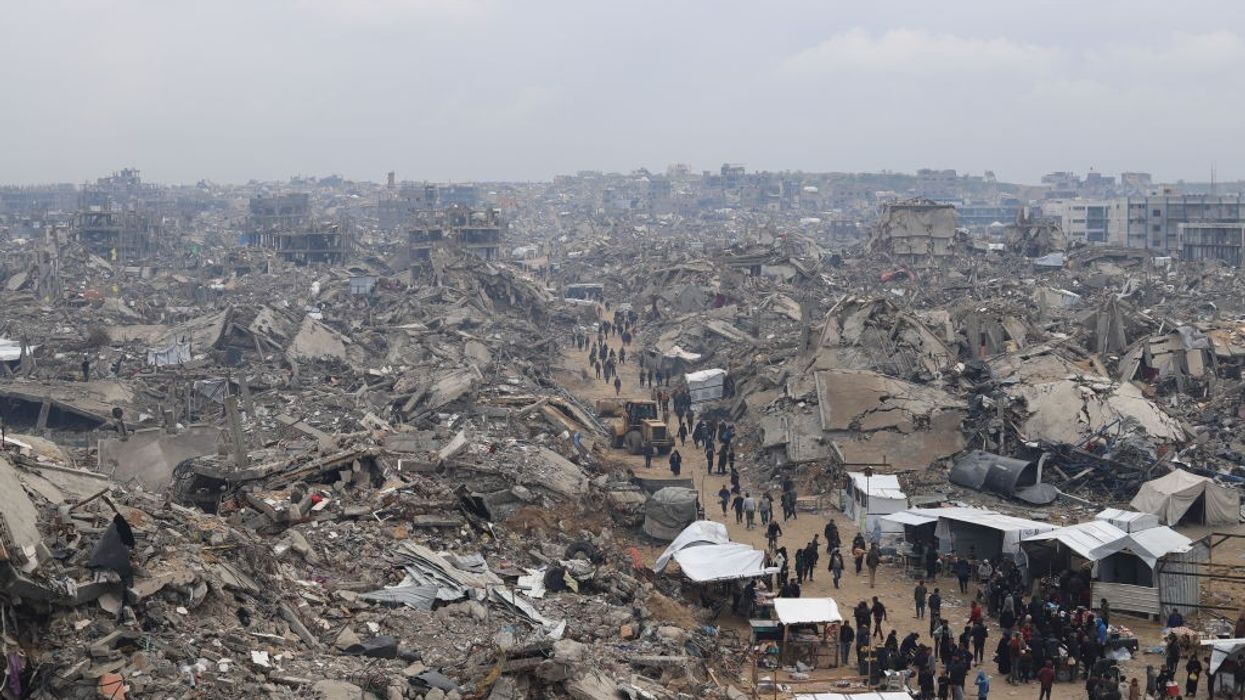
"This should be a blaring wake-up call for Democratic leaders," said one campaigner. "The political tide is clearly turning against unconditional US military support for Israel."
Nearly half of all Democrats in the House of Representatives voted Wednesday to cut off US military aid to Israel, a move that underscored a dramatic shift away from the US support the Mideast ally has enjoyed for nearly 60 years.
While House lawmakers ultimately rejected Rep. Thomas Massie's (R-Ky.) amendment to a national security spending bill that would have eliminated the $3.3 billion in annual foreign military financing provided to Israel’s military, the details of the vote were viewed as an encouraging sign by defenders of Palestine and the rule of law.
Massie and 103 Democrats voted for the measure, while 215 Republicans and 98 Democrats rejected it. The overall tally was 104 for, 314 against, and 10 "present" votes, with 9 absences.
"I cannot vote for aid to a country that committed genocide and has used tax dollars to detain Americans like me," Rep. Ro Khanna (D-Calif.) said ahead of the vote, referring to an incident in which heavily armed residents of an Israeli settler colony stopped and surrounded him last week in the illegally occupied West Bank of Palestine.
Speaking to reporters after the vote, Congressional Progressive Caucus Chair Greg Casar (D-Texas)—who had urged colleagues to support Massie's amendment—noted, "It used to be that just a small number of House Democrats would vote against sending taxpayer dollars to weapons for the Israeli military."
"Today, over 100 House Democrats voted for a measure to block billions of dollars in weapons to [Israeli Prime Minister Benjamin] Netanyahu," he continued. "That is enormous progress. That is a victory for our movement, for security, peace, and justice for all people."
The vote, Casar said, "sasends a strong message to Netanyahu that the days are over of an unaccountable blank check to his wars and his war crimes, at least from the Democratic Party."
"So this is an important moment because nothing will be the same on this issue ever again, I think, after this vote," he added.
CPC Chair @RepCasar, Deputy Chair @Ilhan Omar and @USProgressives on the historic vote by a majority of House Democrats to block $3 billion in weapons to Israel pic.twitter.com/T58q6J5LHZ
— Keane Bhatt (@KeaneBhatt) July 15, 2026
Speaking after Casar, Rep. Ilhan Omar (D-Minn.) said that she was "surprised" by many of her colleagues' votes in favor of the amendment, "and I am proud of them."
"I am proud that they have finally decided to lead with their morals, that they finally dared to stand up, and that we are all finally listening to our constituents, who have been asking us to do the right thing for many years," she added.
The high vote count in favor of Massie's amendment came after a "dear colleague" letter from House Minority Leader Hakeem Jeffries' (D-NY) expressing his opposition to the measure.
Palestine and human rights defenders hailed Wednesday's vote.
“Today’s vote reflects a seismic shift in US politics. What was once unquestioning bipartisan consensus to fund Israel’s atrocities against Palestinians is now breaking apart," Jewish Voice for Peace Action political director Beth Miller said in a statement. "While it is shameful that the House failed to pass this amendment, it is also now clear that it is impossible for Congress to ignore our voices."
"The overwhelming majority of Democratic voters are demanding that we halt US military funding to Israel, and every Democrat who ignored these calls should fear for their seat,” Miller added.
Margaret DeReus, executive director of policy projects at the Institute for Middle East Understanding (IMEU), said Wednesday's vote "reflects the popular will of Americans, and the overwhelming majority of Democratic voters who do not want to see another penny of our tax dollars fund Israel’s genocidal military."
"No more weapons to Israel is a principled demand, a legal obligation, and now a political necessity for any Democrat in office," DeReus added. "Democratic lawmakers who continue to stand with [the American Israel Public Affairs Committee's] fringe agenda of funding to Israel, and against their voters on the moral issue of our time, are inviting a primary challenge.
The United Nations' International Court of Justice is currently weighing a genocide case against Israel filed by South Africa and formally supported by nearly 20 nations. A UN panel of experts concluded last year that Israel is committing genocide in Gaza.
Meanwhile, the International Criminal Court has issued arrest warrants for Netanyahu and Yoav Gallant, his former defense minister, for alleged crimes against humanity and war crimes in Gaza, where more than 250,000 Palestinians have been killed or wounded, most of them civilians, since the Hamas-led attack of October 7, 2023, including over 9,000 people who are missing and presumed dead and buried beneath rubble.
In addition to the $3.3 billion in annual military aid the US gives Israel under a 2016 memorandum of understanding signed by then-President Barack Obama, the Biden and Trump administrations have provided billions of dollars in additional armed aid to Israel since it began waging its US-backed war on Gaza.
All told, the US has provided approximately $174 billion in direct bilateral assistance and missile defense funding—over $300 billion when adjusted for inflation—since the modern Israeli state's atrocity-laden founding in 1948. This makes Israel the largest overall beneficiary of US foreign aid since World War II.
US aid dramatically increased after the 1967 Israeli occupation of the West Bank, East Jerusalem, and Gaza, and the attack that same year by Israeli forces on the USS Liberty, which killed or wounded more than 200 Navy sailors in what numerous senior US officials believed was a deliberate attack. Last month, Massie introduced a resolution honoring the 34 Americans killed and 174 wounded in the Liberty attack.
Demand Progress senior policy adviser Cavan Kharrazian said in a statement that "congressional Democrats are finally starting to catch up to the American people, who no longer want to give Israel a blank check."
"This should be a blaring wake-up call for Democratic leaders," Kharrazian added. "The political tide is clearly turning against unconditional US military support for Israel. Leadership can no longer dismiss this position as marginal or politically untenable. Members should listen to their constituents, stop shielding Israel’s government from accountability, and support future efforts to end the flow of US weapons and military financing."
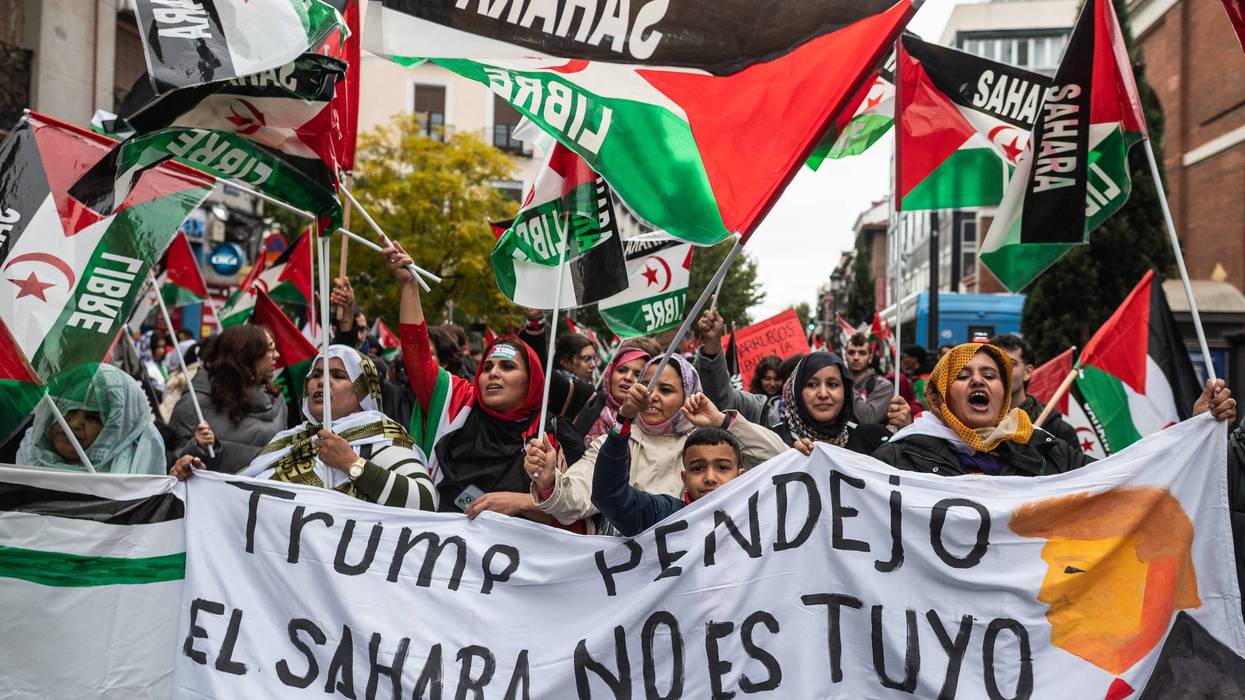
One critic noted that Sahrawis "are beaten, arbitrarily arrested, and have their equipment confiscated for trying to make their own films of life under occupation."
Sahrawi activists and filmmakers are leading renewed calls to boycott the big-screen adaptation of Homer's ancient Greek epic The Odyssey over filmmaker Christopher Nolan's decision to shoot the film in the Western Sahara, whose people have suffered Moroccan occupation for over half a century.
"It is deeply disturbing that while Sahrawi journalists are imprisoned for exposing abuses, an international film production can use our homeland as a cinematic backdrop without addressing the reality of the occupation," Sahrawi journalist and filmmaker Mamine Hachimi told Middle East Eye (MEE) in an interview published on Wednesday.
Hachimi, who co-directed the short documentary Three Stolen Cameras about the oppression of people who document human rights crimes committed by Moroccan occupiers, told MEE's Alex MacDonald that calls to boycott The Odyssey—which was filmed in the Western Saharan city of Dakhla and opens on Friday—"is not a campaign against cinema or artistic freedom, it is a call for ethical responsibility."
"Two of my colleagues, Abdallah Lhafaouni, who is serving a life sentence, and Bachir Khadda, who is serving a 20-year sentence, are political prisoners simply because they documented human rights violations in occupied Western Sahara," Hachimi said.
Another Sahrawi filmmaker, Mohamedsalem Werad, told MEE that "choosing to film in occupied Western Sahara was not a politically neutral production decision—it meant operating with the permission of the occupying power in a territory where the Sahrawi people have long been denied the opportunity to exercise their right to self-determination."
"A boycott sends a clear message that filmmakers cannot expect audiences to overlook decisions that risk legitimizing an occupation," he added.
Sarah Yerkes, a senior fellow in the Middle East Program at the Carnegie Endowment for International Peace, wrote last week that The Odyssey "has a colonialism problem."
"For Morocco, the territories that make up Western Sahara are referred to as the 'southern provinces' and are an indisputable part of the kingdom," Yerkes noted. "But... Dakhla is part of what is considered the occupied and non-self-governing Western Sahara under existing international law."
"The Sahrawi people, who are indigenous to the region and currently have no meaningful self-determination, have not consented to the film’s production—and the Moroccan government is reaping the rewards at their expense," she added.
The renewed calls to boycott The Odyssey follow last year's appeal, led by the Western Sahara International Film Festival and signed by hundreds of artists, journalists, activists, and other human rights defenders, urging Nolan, Universal Pictures, and producers of the film "to break their silence and cease to be accomplices to Morocco’s 50-year illegal occupation."
The government of the Sahrawi Arab Democratic Republic, which claims sovereignty over Western Sahara but is not recognized by the United Nations, has also condemned what it called "an attempt to film a cinematic work in occupied Dakhla, considering it a violation of international legitimacy and the ethics of cultural and artistic work."
Morocco has occupied Western Sahara since 1975, when Spanish forces withdrew from their former colony in the dying days of longtime dictator Francisco Franco's regime. Moroccan warplanes bombed Sahrawis, many of whom fled into neighboring Algeria as the government under King Hassan II orchestrated a “Green March” of hundreds of thousands of Moroccan civilians into the phosphate- and fishery-rich territory.
Western Sahara is today known among locals and human rights advocates as “Africa’s last colony.” Moroccan forces have brutally oppressed the Sahrawi people under their rule, severely restricting freedom of expression, movement, association, and the press, and utilizing arbitrary arrest and torture as tools of repression, according to human rights groups.
Moroccan occupation forces also built a 1,700-mile mostly sand wall to keep Algerian-backed Sahrawi militants led by the Polisario Front out of the territory, while denying people inside their occupied homeland a United Nations-backed referendum they’ve been awaiting for decades.
During his first term, US President Donald Trump recognized Moroccan sovereignty over Western Sahara, essentially in exchange for Morocco’s decision to normalize relations with Israel under the Abraham Accords.
