

SUBSCRIBE TO OUR FREE NEWSLETTER
Daily news & progressive opinion—funded by the people, not the corporations—delivered straight to your inbox.
5
#000000
#FFFFFF
To donate by check, phone, or other method, see our More Ways to Give page.
Daily news & progressive opinion—funded by the people, not the corporations—delivered straight to your inbox.
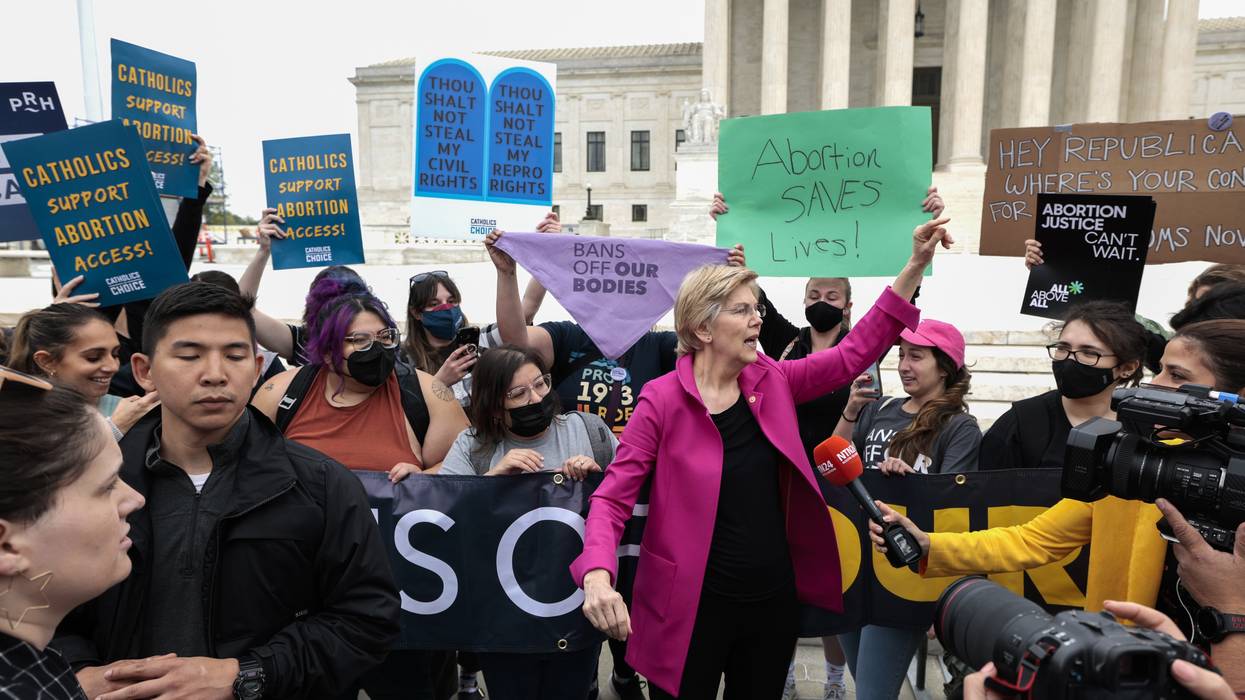
"Moms.gov is not about promoting women’s health. It is an attempt to use HHS resources to further strip women of their rights and privacy.”
Eleven members of the Senate Democratic Caucus on Wednesday urged US President Donald Trump and Health and Human Services Secretary Robert F. Kennedy Jr. to “cease using federal resources to direct people to anti-abortion crisis pregnancy centers" via a government website.
Last month, the Department of Health and Human Services (HHS) launched Moms.gov, which claims to offer "resources, information, and help for new and expecting mothers" by "addressing the needs of mothers and fathers who face difficult or unexpected pregnancies and ensuring the well-being of mothers and the health of American families."
The site has two main options: so-called "crisis pregnancy centers" (CPCs)—which present themselves as reproductive health clinics but often provide misleading information and counseling aimed at discouraging abortion—and "federally qualified health centers," which, presented alongside anti-abortion services on Moms.gov, can blur the distinction between evidence-based healthcare providers and ideologically driven groups.
"This raises profound concerns about the health, safety, and privacy of people who access this government website at a time when women’s health and reproductive rights face increasing attacks,” the 11 senators said in a letter to Trump and Kennedy and shared with HuffPost. “Instead of offering concrete resources to protect the health and safety of pregnant women and their families, the Trump administration is using this website to highlight anti-abortion CPCs."
The letter—led by Sens. Elizabeth Warren (D-Mass.), Chuck Schumer (D-NY), Mazie Hirono (D-Hawaii), and Bernie Sanders (I-Vt.) and signed by Democratic Sens. Ron Wyden (Ore.), Tammy Duckworth (Ill.), Ed Markey (Mass.), Tina Smith (Minn.), John Hickenlooper (Colo.), Cory Booker (NJ), and Michael Bennett (Colo.)—was sent on the four-year anniversary of Dobbs v. Jackson Women’s Health Organization, a ruling by the right-wing US Supreme Court that canceled half a century of abortion rights formerly enshrined in Roe v. Wade.
“Since the US Supreme Court took away the fundamental right to abortion care... 21 states have banned or severely restricted access to abortion, decimating access to care for tens of millions of people,” the senators wrote.
The lawmakers said that the direct link to Option Line, an anti-abortion hotline, "on a government website is also troubling from a data privacy perspective," as the site collects and shares user data with "affiliates, partners, vendors, or contract organizations" and has been beset by breaches.
“Moms.gov is not about promoting women’s health—it is an attempt to use HHS resources to further strip women of their rights and privacy," the letter asserts. “In order to protect the health and data privacy of millions of women, HHS should remove the pregnancy center link from Moms.gov and cease using federal resources to direct people to anti-abortion crisis pregnancy centers.”
In a Wednesday interview with HuffPost, Warren said, "It's horrific that the Trump administration is using taxpayer dollars to prop up a website that pushes pregnant women towards nonmedical anti-abortion centers."
"The Republican plan is to sneak through anti-abortion resources and backdoor abortion bans because they know Americans don’t support their extreme agenda," she added. "Democrats are fighting back.”
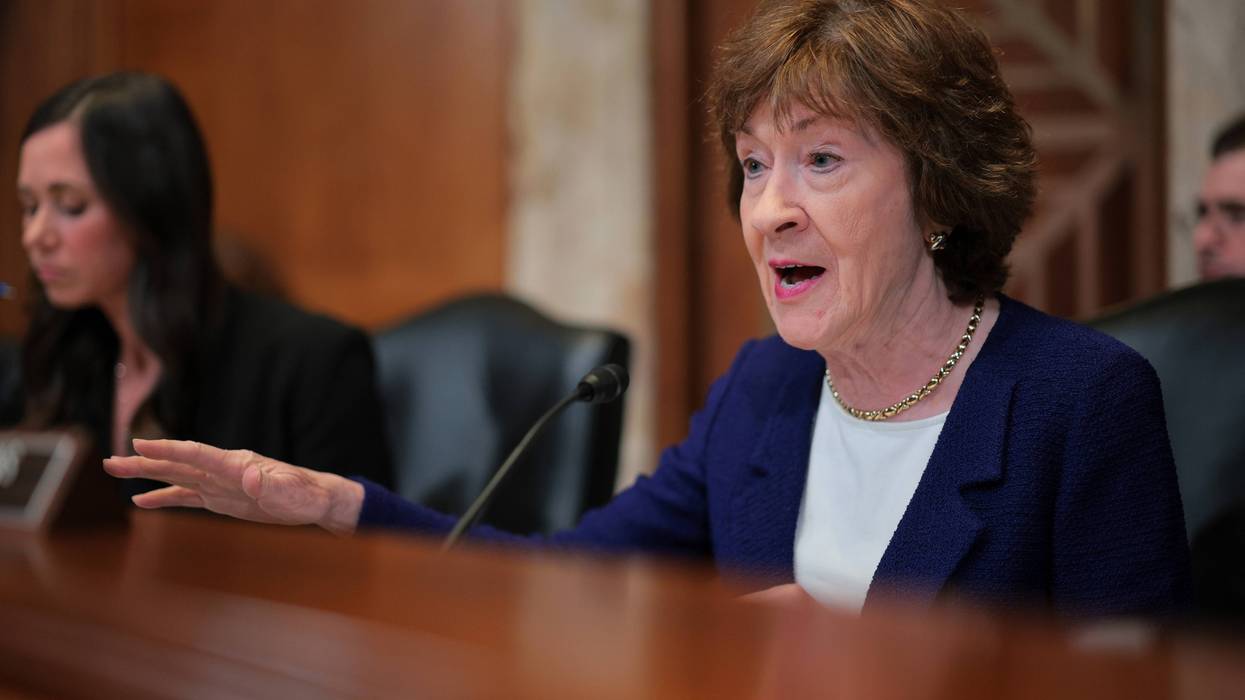
Republican Sen. Susan Collins falsely said the Supreme Court's decision to overturn Roe v. Wade was a 6-3 vote.
US Sen. Susan Collins on Monday faced backlash, including from the Democratic candidate trying to unseat her, for falsely stating that the Supreme Court ruling overturning the federal right to abortion was decided 6-3 and that Justice Brett Kavanaugh was not a pivotal vote.
In a newly aired Fox News interview, Collins (R-Maine) said she "disagreed with the Supreme Court's 6-3 decision overturning Roe v. Wade, but the fact is, whether Justice Kavanaugh were confirmed or not, Roe v. Wade would have been overturned, given the 6-3 vote." The vote to overturn Roe, ending the constitutional right to abortion, was in fact 5-4, with Kavanaugh joining the majority despite Collins' repeated insistence during the judge's Senate confirmation process that he would not support toppling critical precedents.
“Susan Collins is lying through her teeth," Graham Platner, the Republican incumbent's Democratic challenger, said in a statement. "Roe v. Wade was not overturned 6-3. That is a lie. It was 5-4. Brett Kavanaugh was the deciding vote to overturn Roe v. Wade, and Susan Collins was the deciding vote to confirm Brett Kavanaugh to a lifetime appointment on the Supreme Court."
"And let’s be very clear: Everyone knew that Brett Kavanaugh would overturn Roe," Platner continued. "She can lie and say she was misled. She can claim she’s disappointed. But the reality is, she knew exactly why Donald Trump nominated Kavanaugh—and she voted to confirm him anyway."
She's lying. Roe was overturned 5-4. Kavanaugh was the deciding vote. Susan Collins is responsible. https://t.co/kV0viaPq9t
— Demand Justice (@WeDemandJustice) June 22, 2026
Collins said last week that she doesn't regret voting to confirm Kavanaugh in 2018, despite the devastating impact of the high court's ruling in Dobbs v. Jackson Women's Health Organization. A new analysis by the National Partnership for Women & Families found that "more than 47 million women of reproductive age live in states with clinic closures" or "states that have attacked access to medication abortion" in the aftermath of Dobbs.
Earlier on Monday, the Planned Parenthood Action Fund (PPAF) endorsed Platner's campaign to deny Collins a sixth Senate term, noting that "in the four years since the Supreme Court ended the federal right to an abortion, the Trump administration and its backers in Congress and the states have repeatedly weaponized Dobbs and attacked reproductive healthcare."
“President Trump and his allies are using every lever of power at their disposal to make it harder for people to get the care they need, including by attempting to permanently ‘defund’ Planned Parenthood," said Alexis McGill Johnson, PPAF's president and CEO. "Mainers deserve a senator they can trust to have their backs at every turn. It is clear that is not Susan Collins."
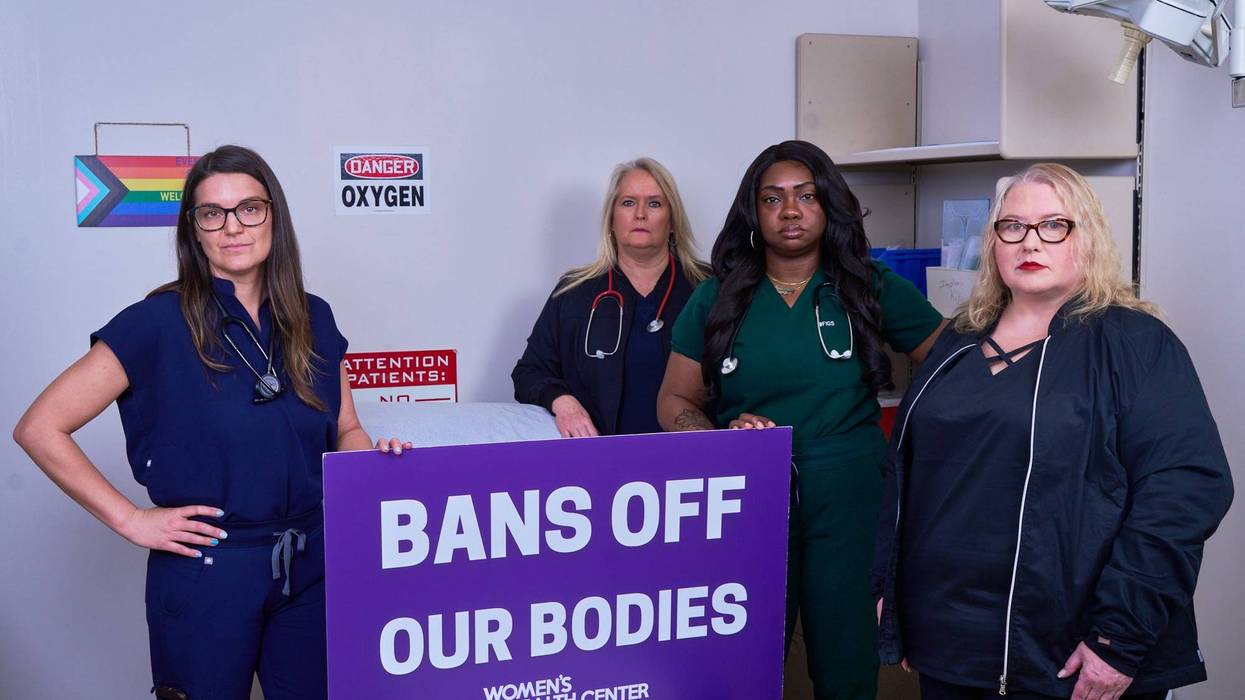
On the anniversary of both Dobbs v. Jackson Women’s Health and US v. Skrmetti, support independent clinics in hard places keeping the doors open.
We’ve been here before. When Dobbs came for abortion care in our states, we did two things: We opened clinics across state lines so our patients would still have a legal option. And we stayed. We kept our original clinics open, expanding the care we'd always offered or always wanted to offer. When Skrmetti came for gender-affirming care, we kept providing that too, because abortion care patients and transgender patients are not separate communities. The calculation patients make before they walk through the door is identical for both communities: Will I be seen? Will I be safe? Will the person across from me treat my body like a problem to be managed, or a life to be supported? June marks anniversaries of both Dobbs v. Jackson Women’s Health and US v. Skrmetti, and that conviction has never felt more urgent.
Long before Dobbs or Skrmetti, the intersection of abortion rights and trans rights was already living in our waiting rooms, in the patients who received reproductive care and gender-affirming hormone therapy (GAHT) under the same roof; in the person who drove hours across the state because we were the only provider they trusted; and in those who trust us with their whole-person care because their grandmothers, mothers, sisters, aunts, and friends have relied on our clinics for care for 50 years. Throughout that history, our organizations have been guided by a simple principle: When members of our community are targeted, excluded, or denied the care they need, we do not look away. We listen, we adapt, and we show up.
When abortion care moved across the border after Dobbs, the patients who remained still needed care they couldn’t access at home. The wall between reproductive healthcare and LGBTQIA+ healthcare that exists in policy language and funding categories has never existed in our exam rooms.
What connects every patient who walks through our doors, whether they’re coming in for an abortion or a hormone therapy appointment, is something our staff recognized long before we had language for it: the experience of arriving at a clinic while carrying the weight of a political target on your back. A clinic’s job of creating a space where people can receive care without shame or fear has always been exactly the same job regardless of why they came.
Bodily autonomy is the foundational principle of reproductive rights, and it only means something if it applies to everyone.
Marty had learned, growing up as a transgender person in rural Maryland, to brace himself before every medical appointment, because finding healthcare that was both competent and genuinely affirming had always required a fight. What he found at our clinic was a staff that met him without conditions, no justifications required, no explanations asked for. His mother has supported the Women’s Health Center (WHC) since its earliest days, and used to volunteer as a clinic escort. Watching the same clinic support her son in his gender-affirming care gave her, in her own words, a peace she hadn’t known she needed. When gaps in care left Ben, a transgender West Virginian, navigating painful dysphoric cycles and a transition that had stalled, he found his way to WHC West Virginia. Today, he says that every time he looks in the mirror, he sees more of himself looking back.
When one of our providers first interviewed to work for CHOICES, she didn't really know much about gender-affirming care. In the time she has been with CHOICES, she has cared for hundreds of gender-affirming care patients across the mid-South. "It's clear how important this care is for patients," she shared. "After patients start hormone replacement therapy, they come back as a much more energetic, vivacious person.” Since the state of Tennessee has restricted gender-affirming healthcare, including banning minors from accessing care, our patients are experiencing increased anxiety and fear about their privacy, safety, and continued access to care. CHOICES' provider shared, "Hormone replacement therapy is routine, like every other service we offer.” If something has such a profound impact on someone's life, why wouldn't we keep this care accessible?
The pattern behind Skrmetti is one reproductive rights advocates should recognize immediately, because it follows the same logic as the restrictions that led to Dobbs: They come for the most vulnerable first, in the states where the political ground is most hostile, and they build from there. Idaho passed the first transgender athlete ban in 2020, West Virginia followed with the Save Women’s Sports Act in 2021, and Tennessee’s restrictions on gender-affirming care for minors moved through the courts the same way abortion restrictions moved state by state in the years before Dobbs. Since abortion care moved across the border, thousands have received gender-affirming and LGBTQIA+ care at our clinics, even as the political, legal, and financial pressure on both organizations has intensified.
Bodily autonomy is the foundational principle of reproductive rights, and it only means something if it applies to everyone. When it becomes conditional, granted to some patients and denied to others, it stops being a principle and starts being a permission slip, and permission slips get revoked. The fights to protect abortion access and gender-affirming care are not parallel struggles that happen to share a difficult political moment. They are the same struggle, rooted in the same conviction, playing out in the same clinics with the same patients, and the forces working to end both of them have always understood that connection even when the rest of us have sometimes lost sight of it.
Between our two organizations, we’ve earned a century’s worth of experience at the practice of staying, enduring. CHOICES has kept their doors open for 52 years, and the Women’s Health Centers of West Virginia and Maryland will celebrate 50 years of care on June 24—the same day Roe v. Wade was overturned four years ago.
Support independent clinics in hard places keeping the doors open. And when the next fight comes, show up for the communities under pressure. Remember that those targeted first won’t be the last, but they will be the ones to lead the way.
