


When Nvidia unveiled DLSS 5 to the world at GTC 2026, the internet was set ablaze. It was difficult to find a positive take on the technology, with sentiment among gamers almost universally negative towards what they would call an "AI-slop filter for games."
With ray tracing and upscaling technology, it was easy for gamers to recognize the quality difference and potential performance gains, but with DLSS 5, the difference in the image extends far beyond lighting and frame-generation artifacts. Despite the fact that it's currently a glorified tech demo, DLSS 5 looks to be more icing on the cake that is pure raster. The cake-to-icing ratio is becoming a bit concerning, and I do think it's only a matter of time before this dessert is 90% icing and 10% cake. Whether that's a good thing or not will heavily depend on just how much you like icing.
What DLSS 5 actually does
It's a very powerful post-processing filter


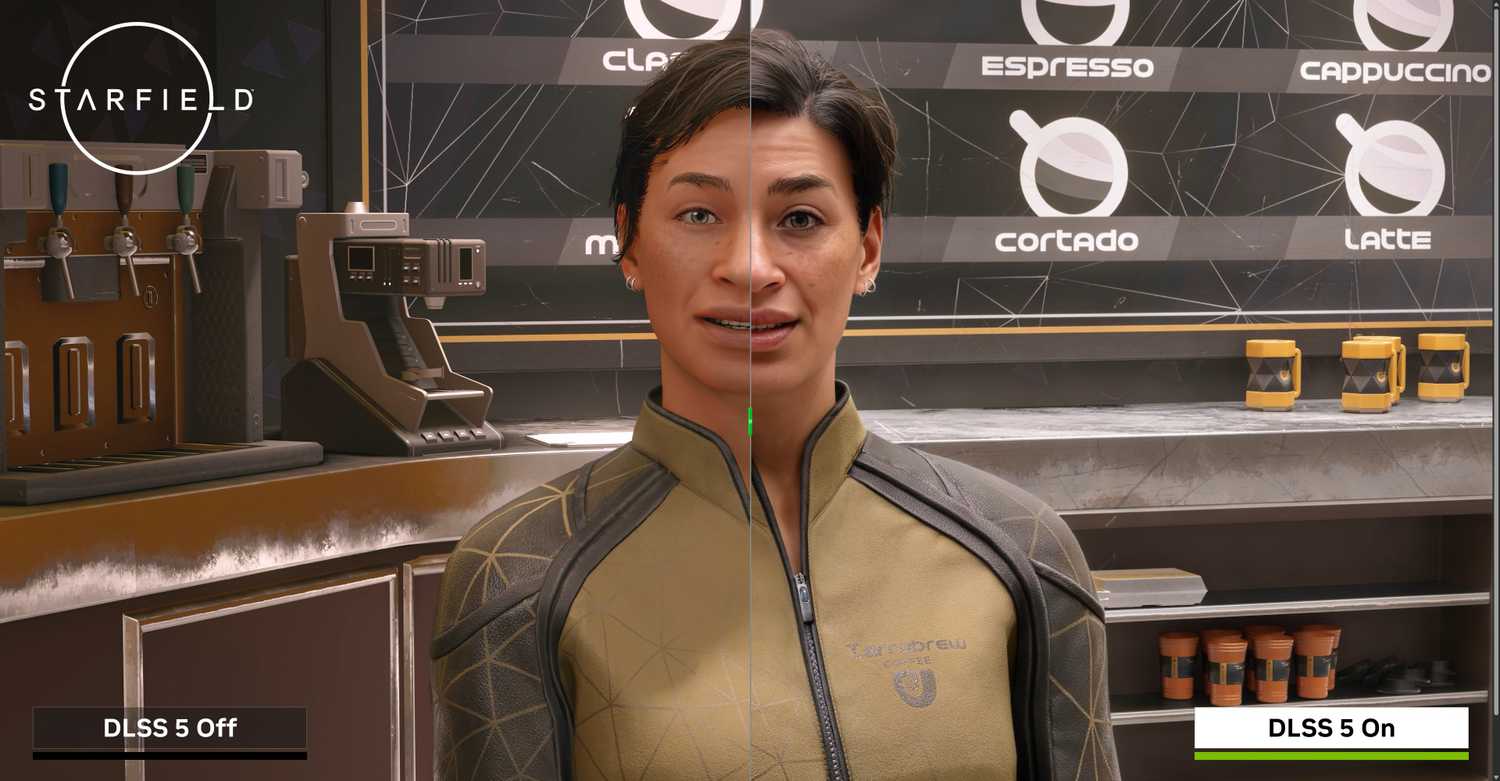

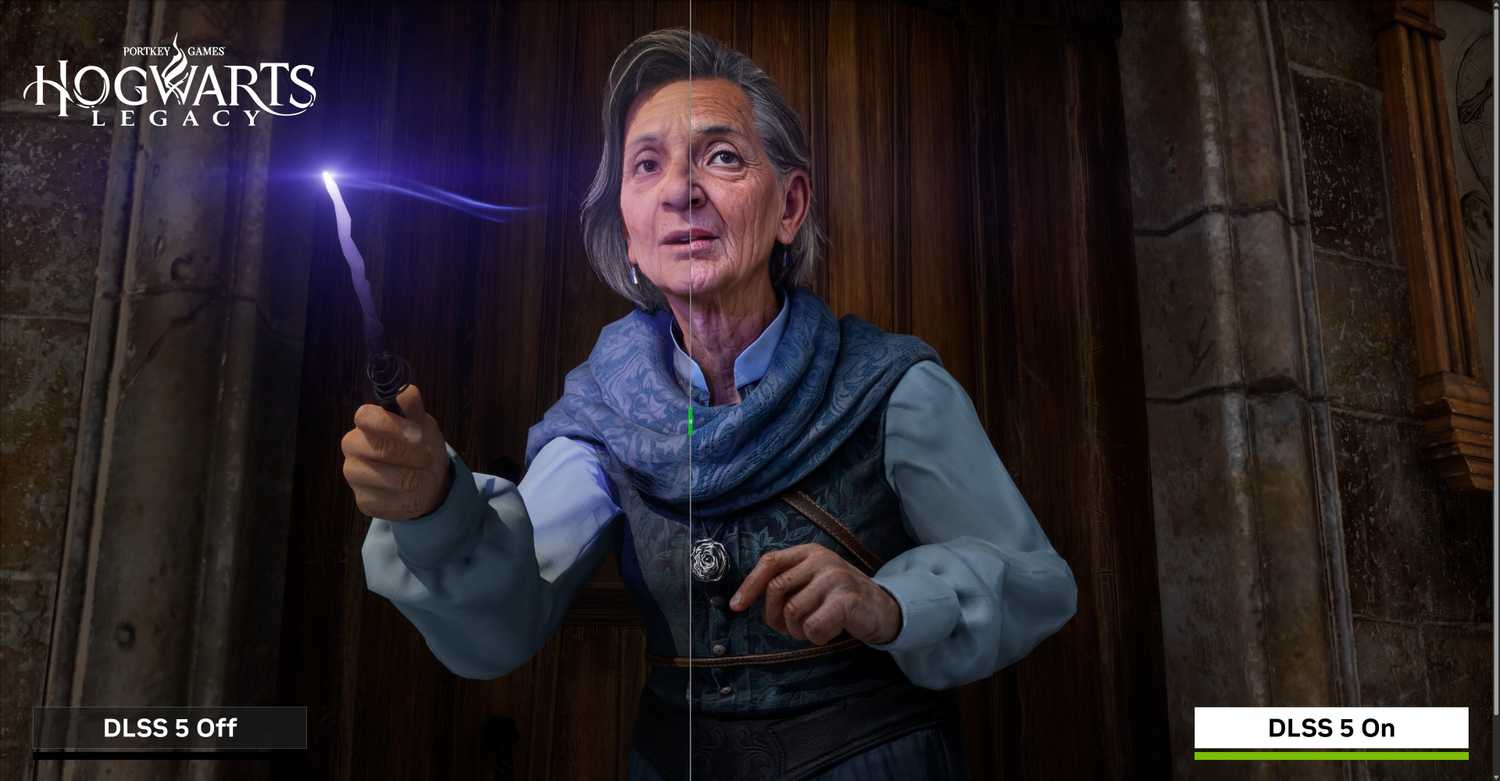


 Credit: Nvidia
 Credit: Nvidia
 Credit: Nvidia
 Credit: Nvidia
 Credit: Nvidia





There has been a lot of discussion about what DLSS 5 actually is since its unveiling, and it's important to understand what the technology is actually doing to your games. There's been a bit of a mismatch between what Nvidia CEO Jensen Huang has said and what has since been revealed about how DLSS 5 actually functions.
In its initial press release, Nvidia states that DLSS 5 "introduces a real-time neural rendering model that infuses pixels with photoreal lighting and materials." DLSS is a family of technologies under the umbrella of neural rendering, and DLSS 5 is a new model in that family that aims to give game developers a new way to control the appearance of in-game environments and characters, while leaving the underlying geometry and textures unchanged. In response to the initial wave of negativity, Jensen Huang didn't mince words, stating in a press Q&A session to Tom's Hardware that DLSS 5 was "not post-processing at the frame level," and that gamers were "completely wrong" in their initial assessment.
Since the initial reveal, Daniel Owens has gleaned additional information about how DLSS 5 actually works. In an email exchange with "GeForce Evangelist" Jacob Freeman, Owens confirmed that DLSS 5 takes a 2D frame and motion vectors as input. In basic terms, this means DLSS 5 takes a still frame, factors in your peripheral input, runs that information through its generative AI model, and then outputs the new frame to your display.
A window into a truly photorealistic gaming experience
The faces are one thing, but the in-game environments have some serious potential

While the look of in-game characters is polarizing to say the least, there's a ton of potential for DLSS 5 to truly enhance in-game environments. In the preview images for the "Zorah Tech Demo" specifically, the level of detail on the overgrowth, for example, would be very difficult to match with conventional rendering techniques.
It gives us a small window into what a photorealistic gaming experience might look like, something game developers aiming to create realistic worlds have been trying to achieve since the advent of 3D graphics. Rasterization on its own just isn't capable of environments that are this detailed.
The uncanny faces and "AI-slop look" are difficult to ignore
It really creeps me out

The elephant in the room must be addressed. When the initial images of DLSS 5 hit the internet, accusations of Nvidia putting an "AI-slop" filter onto characters rang loudly, and it's quite easy to see why if you've played with generative AI for any amount of time. Resident Evil Requiem is the best example: these are characters that players have grown up with across multiple titles, and while there's something to be said for a character's look changing with advancing technology (Lara Croft is a great example), DLSS 5 is a bridge too far for most.
The filter does make them look like completely different people, and while it might not be as stark in other games like Starfield, familiarity with the characters who are then plunged into the uncanny valley is a recipe for disaster.
It's clearly a work-in-progress
Requiring two RTX 5090s to power DLSS 5 isn't a great sign


 Credit: Source:





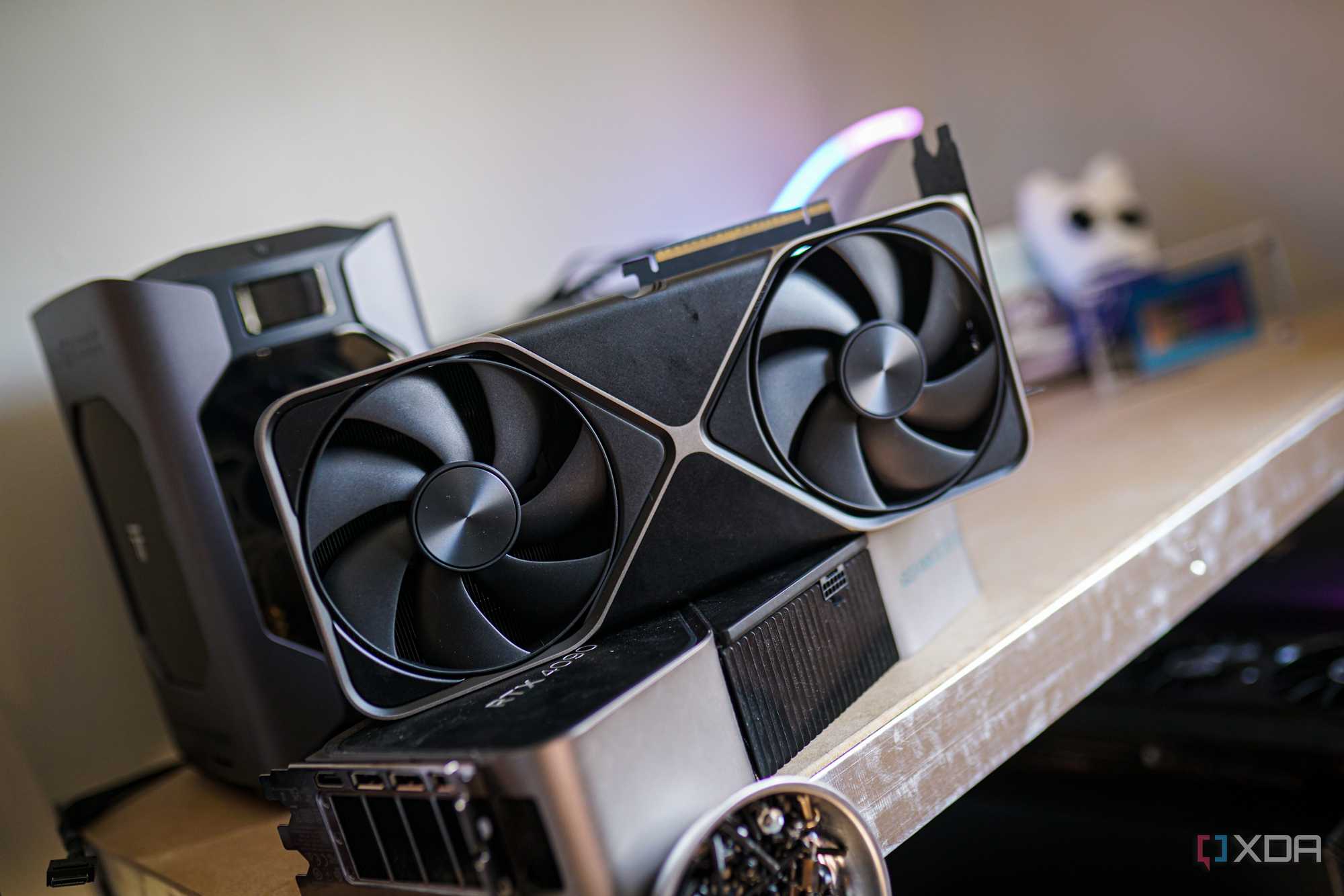
With all of that being said, it's very clearly in active development. Judging by Nvidia's reluctance to show any active gameplay, and the fact that the demos were run on two RTX 5090s, it's safe to assume the performance overhead of this tech is extreme. If the tech catches on, it's definitely possible we could see the return of SLI, or, at the very least, an "AI accelerator" card that enables these models to run locally on top of standard rasterization.
When speaking purely in terms of visual fidelity, the look of the environments is quite impressive, and in games where other human characters aren't involved, perhaps that's where DLSS 5 can stretch its legs. There's also a ton of concern about artistic integrity, as Nvidia's model is likely trained on a bunch of non-gaming data that's then used to apply a filter to carefully constructed in-game environments. If there's a way to introduce final concept art into the training for specific games, that might be the best way to preserve artistic intent while also enhancing the experience, but the jury is still very much out on the direction Nvidia wants to go.
I'm not high on DLSS 5, but DLSS 6 is going to be where the real gains are
DLSS 5 has some serious warts, and I'm not bullish on where this version is headed, but like previous iterations of their upscaler and ray-tracing implementations, I think things can only improve from here. The upscaler in DLSS 1.0 wasn't something people wanted to use, but now, DLSS 4.5 looks excellent while providing a hefty performance boost to cards that otherwise wouldn't be able to "brute-force render" certain games. DLSS 6 is sure to have some serious improvements on both the visual and performance side, and, if nothing else, I'm very curious to see how it evolves.
