
El último
Tomás Cabané, 2026
sobre / about


Datos técnicos. / Technical details.
Duración
>60'
Duration
>60'
Personajes
3
Characters
3
Actrices
2
Actresses
2
Actores
1
Actors
1
Público
Adulto
Audience
Adult
Formato
Pequeño
Format
Small
Sinopsis. / Synopsis.
La madre se llama Mayte, el hijo es Lucas y se quiere independizar, pero ambos se necesitan. Puede ser que a esta madre le dijeran que su hijo iba a ser el último Down. Y eso le concede una responsabilidad aún más grande, pero también una oportunidad para seguir protegiéndolo o hacer de él un ejemplo memorable. El último es una obra a partir de un futuro cercano donde la edición genética se ha normalizado hasta el punto de eliminar por completo la trisomía 21. ¿Qué pasaría si en un futuro se decidiera eliminar la diferencia?
The mother is Mayte, the son is Lucas. He wants to become independent, yet they both need each other. Perhaps Mayte was once told that her son would be the last person born with Down syndrome. That gives her an even greater responsibility, but also an opportunity: to keep protecting him or to turn him into a memorable example. El último is a play set in a near future where genetic editing has become so widespread that trisomy 21 has been completely eradicated. What would happen if, one day, society decided to eliminate difference itself?
Notas. / Notes on the piece.
Esta obra no pretende representar ni hablar en nombre de un colectivo, sino explorar una hipótesis de futuro en la que se decida eliminar la diferencia. Todo parte de un escenario en el que se prevé que en el 2050 ya no nazcan más personas con síndrome de Down. Pero como toda hipótesis, siempre hay margen para el error o la desviación, el lugar apropiado para crear esta ficción. El último es una metáfora para hablar de diversidad, identidad y libertad. Y sobre todo, porque me interesa poner en valor la diferencia como espacio de memoria, conflicto y resistencia. El proceso de escritura ha sido posible gracias a todas las personas que compartieron conmigo sus vivencias y saberes mediante entrevistas. Sus testimonios no solo me aportaron contenido, sino que tejieron una red de confianza para imaginar y proyectar esta historia de ficción. *La propuesta deberá incluir (inevitablemente) a un actor con síndrome de Down.
This play does not seek to represent or speak on behalf of a community, but rather to explore a possible future in which difference itself is eliminated. It begins from a scenario in which it is predicted that, by 2050, no more people with Down syndrome will be born. Yet, as with any prediction, there is always room for error or deviation—the very space where fiction can emerge. El último is a metaphor through which to explore diversity, identity and freedom. Above all, I am interested in affirming difference as a space of memory, conflict and resistance. The writing process was made possible thanks to all the people who shared their experiences and knowledge with me through a series of interviews. Their testimonies not only provided valuable insight, but also created a network of trust from which this fictional story could be imagined and projected. The production will necessarily include an actor with Down syndrome.
Otros datos. / Other information.
II Residencia de dramaturgia de Nave 10 Matadero / Teatro del Futuro
sobre / about


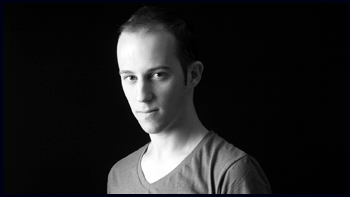

Biografía. / Biography.
Granada, 1993. Es director de escena, dramaturgo y docente. Graduado en Dirección de Escena y Dramaturgia por la Real Escuela Superior de Arte Dramático de Madrid y en Periodismo y Comunicación Audiovisual (URJC). Máster en Gestión Cultural Internacional e Innovación Social por la Universidad Complutense de Madrid. Es director artístico de la compañía Malala Producciones, un espacio de creación e investigación interdisciplinar dedicado a explorar nuevas formas de relación con el público. Su escritura indaga en personajes, cuerpos y comunidades históricamente desplazados hacia los márgenes. Entre sus obras destacan "Querido capricho" (Centro Dramático Nacional, 2020), galardonada con el Premio al Mejor Espectáculo Revelación, y "Llenad mi cuerpo de piedras" (Casa Encendida, Injuve 2023), entre otras. En los últimos años, su escritura ha sido reconocida con la publicación de "Demasiada piel", fruto del XI Laboratorio de Escritura Teatral de la Fundación SGAE. También ha sido seleccionado en el XIII Programa de Desarrollo de Dramaturgias Actuales del INAEM con "Los días estériles". Y durante la temporada 2025/26, ha conseguido la II Residencia de Dramaturgia - Teatro del Futuro en Nave 10 Matadero con su proyecto "El último".
Granada, 1993. He is a stage director, playwright and educator. He holds degrees in Stage Direction and Playwriting from the Real Escuela Superior de Arte Dramático de Madrid and in Journalism and Audiovisual Communication from the Universidad Rey Juan Carlos (URJC). He also holds a Master’s degree in International Cultural Management and Social Innovation from the Complutense University of Madrid. He is the artistic director of the company Malala Producciones, a space for interdisciplinary creation and research dedicated to exploring new forms of engagement with audiences. His writing explores characters, bodies and communities that have historically been pushed to the margins. His notable works include Querido capricho (Centro Dramático Nacional, 2020), winner of the Best Breakthrough Production Award, and Llenad mi cuerpo de piedras (Casa Encendida, Injuve 2023), among others. In recent years, his writing has received further recognition through the publication of Demasiada piel, the result of the XI Playwriting Laboratory of the Fundación SGAE. He was also selected for the XIII Programme for the Development of Contemporary Playwriting, organised by INAEM, with Los días estériles. During the 2025/26 season, he was awarded the II Playwriting Residency – Teatro del Futuro at Nave 10 Matadero for his project El último.
Escritura. / Style.
«Mi relación con la escritura comienza desde bien temprano, a los 13 años y con motivo de un concurso literario. Desde entonces, la escritura ha sido una constante, aunque nunca desligada de otra de mis grandes pasiones: la dirección de escena. La práctica escénica impregna por completo mi forma de escribir, llevándome a desarrollar una dramaturgia cada vez más visual, corporal y performativa, en la que el texto se escribe, se materializa y se despliega en el espacio. Y lejos de ofrecer certezas, es un espacio que permite la duda, la suspensión del tiempo y la interrogación constante. Me gusta pensar en la dramaturgia como un territorio en expansión que permite la investigación de nuevos formatos y nuevas estrategias para abordar la tarea de "escribir", más allá de las palabras. Mi trabajo toma como fuente de inspiración el universo de Angélica Liddell, FC Bergman, El conde de Torrefiel, Marcos Morau, Sergio Blanco y La Ribot, entre otros. Los admiro y bebo de ellxs porque siento que son creadorxs cuyas propuestas escénicas abren brechas, provocan fricciones y ensanchan el imaginario de nuestra escena.» (Tomás Cabané).
«My relationship with writing began at an early age, when I was 13, prompted by a literary competition. Since then, writing has been a constant presence in my life, although it has never been separate from another of my great passions: stage direction. My work in the performing arts completely shapes the way I write, leading me to develop an increasingly visual, physical and performative dramaturgy, in which the text is written, materialised and unfolded in space. Rather than offering certainties, this is a space that allows for doubt, the suspension of time and constant questioning. I like to think of dramaturgy as an expanding territory that enables the exploration of new formats and new strategies for approaching the task of ‘writing’ beyond words. My work draws inspiration from the worlds of Angélica Liddell, FC Bergman, El Conde de Torrefiel, Marcos Morau, Sergio Blanco and La Ribot, among others. I admire them and draw from their work because I feel they are creators whose stage proposals open up cracks, generate friction and expand the imaginary of our theatre scene.» (Tomás Cabané).
Obras. / Plays.
-
2026. EL ÚLTIMO
-
II Residencia de dramaturgia de Nave 10 Matadero / Teatro del Futuro
-
2025. LOS DÍAS ESTÉRILES
-
XIII Programa de Desarrollo de Dramaturgias Actuales, INAEM
INAEM
-
2024. DEMASIADA PIEL
-
XI Laboratorio de Escritura Teatral Fundación SGAE
XI Laboratorio de Escritura Teatral Fundación SGAE
-
2020. LAS PARACAIDISTAS
-
Proyecto seleccionado en las Ayudas a personas físicas para la creación de textos teatrales de la Comunidad de Madrid, 2020
-
2020. QUERIDO CAPRICHO
-
Teatro María Guerrero, CDN, Madrid
Autores en el centro, CDN, nº 70
-
Leyenda / Legend
-
Estreno / Premio / Beca / Publicación
Premiere / Award / Grant / Publication
INAEM
XI Laboratorio de Escritura Teatral Fundación SGAE
Autores en el centro, CDN, nº 70
Premiere / Award / Grant / Publication



