
Las paracaidistas
Tomás Cabané, 2020
sobre / about


Datos técnicos. / Technical details.
Duración
>60'
Duration
>60'
Personajes
3
Characters
3
Actrices
3
Actresses
3
Actores
0
Actors
0
Público
Adulto
Audience
Adult
Formato
Pequeño
Format
Small
Sinopsis. / Synopsis.
Tres hermanas vuelven a encontrarse en la ciudad que las vio nacer. Una chispa enciende el recuerdo de su padre y las viejas tensiones familiares. El cementerio donde estaba enterrado se ha quemado por completo, es el momento de repartir las cenizas y empezar a revisitar la historia familiar. Cada una de ellas iniciará una deriva por su ciudad natal, Bielorrusia, el lugar donde aún están prohibidas algunas profesiones para el género femenino, entre ellas, el paracaidismo.
Three sisters reunite in the city where they were born. A spark ignites the memory of their father and reignites old family tensions. The cemetery where he was buried has burned to the ground—now is the time to divide his ashes and begin to revisit their shared history. Each of them sets off on a personal journey through their hometown, Belarus—a place where certain professions are still forbidden to women, including parachuting.
Notas. / Notes on the piece.
Es una revisitación de un texto de Chéjov, pero con la perspectiva de un cuento moderno. Para ello, nos trasladamos a Bielorrusia, un país que aparentemente nos queda muy lejos, pero que nos sirve para denunciar una realidad que todavía sigue existiendo. Mujeres a las que no se les permite realizar ciertos oficios por su peligrosidad o porque habitualmente se han considerado "cosas de hombres". Se trata de un viaje de ida y vuelta en el que la muerte del padre destraba la palabra y el destino de las protagonistas. Los cimientos de esta casa patriarcal han empezado a arder y ahora debemos replantearnos cómo continuar. Estas tres hermanas son un símbolo de lucha, evolución y cambio. Son tres mujeres que deciden lanzarse a la deriva con motivo de la liquidación del recuerdo más palpable que tenían de su padre.
This is a revisiting of a Chekhov text through the lens of a modern tale. For this, we move the story to Belarus—a country that may seem distant, yet serves as a mirror to denounce a reality that still persists. Women are still forbidden from practicing certain professions, either due to their supposed danger or because they’ve traditionally been considered “men’s work.” It is a round-trip journey where the father's death unlocks both the voices and the destinies of the protagonists. The foundations of this patriarchal house have begun to burn, and now we must rethink how to move forward. These three sisters stand as symbols of resistance, transformation, and change. They are three women who choose to drift away, triggered by the need to settle the last tangible memory of their father.
Otros datos. / Other information.
Proyecto seleccionado en las Ayudas a personas físicas para la creación de textos teatrales de la Comunidad de Madrid, 2020
sobre / about


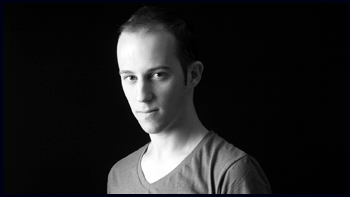

Biografía. / Biography.
Granada, 1993. Es director de escena, dramaturgo y docente. Graduado en Dirección de Escena y Dramaturgia por la Real Escuela Superior de Arte Dramático de Madrid y en Periodismo y Comunicación Audiovisual (URJC). Máster en Gestión Cultural Internacional e Innovación Social por la Universidad Complutense de Madrid. Es director artístico de la compañía Malala Producciones, un espacio de creación e investigación interdisciplinar dedicado a explorar nuevas formas de relación con el público. Su escritura indaga en personajes, cuerpos y comunidades históricamente desplazados hacia los márgenes. Entre sus obras destacan "Querido capricho" (Centro Dramático Nacional, 2020), galardonada con el Premio al Mejor Espectáculo Revelación, y "Llenad mi cuerpo de piedras" (Casa Encendida, Injuve 2023), entre otras. En los últimos años, su escritura ha sido reconocida con la publicación de "Demasiada piel", fruto del XI Laboratorio de Escritura Teatral de la Fundación SGAE. También ha sido seleccionado en el XIII Programa de Desarrollo de Dramaturgias Actuales del INAEM con "Los días estériles". Y durante la temporada 2025/26, ha conseguido la II Residencia de Dramaturgia - Teatro del Futuro en Nave 10 Matadero con su proyecto "El último".
Granada, 1993. He is a stage director, playwright and educator. He holds degrees in Stage Direction and Playwriting from the Real Escuela Superior de Arte Dramático de Madrid and in Journalism and Audiovisual Communication from the Universidad Rey Juan Carlos (URJC). He also holds a Master’s degree in International Cultural Management and Social Innovation from the Complutense University of Madrid. He is the artistic director of the company Malala Producciones, a space for interdisciplinary creation and research dedicated to exploring new forms of engagement with audiences. His writing explores characters, bodies and communities that have historically been pushed to the margins. His notable works include Querido capricho (Centro Dramático Nacional, 2020), winner of the Best Breakthrough Production Award, and Llenad mi cuerpo de piedras (Casa Encendida, Injuve 2023), among others. In recent years, his writing has received further recognition through the publication of Demasiada piel, the result of the XI Playwriting Laboratory of the Fundación SGAE. He was also selected for the XIII Programme for the Development of Contemporary Playwriting, organised by INAEM, with Los días estériles. During the 2025/26 season, he was awarded the II Playwriting Residency – Teatro del Futuro at Nave 10 Matadero for his project El último.
Escritura. / Style.
«Mi relación con la escritura comienza desde bien temprano, a los 13 años y con motivo de un concurso literario. Desde entonces, la escritura ha sido una constante, aunque nunca desligada de otra de mis grandes pasiones: la dirección de escena. La práctica escénica impregna por completo mi forma de escribir, llevándome a desarrollar una dramaturgia cada vez más visual, corporal y performativa, en la que el texto se escribe, se materializa y se despliega en el espacio. Y lejos de ofrecer certezas, es un espacio que permite la duda, la suspensión del tiempo y la interrogación constante. Me gusta pensar en la dramaturgia como un territorio en expansión que permite la investigación de nuevos formatos y nuevas estrategias para abordar la tarea de "escribir", más allá de las palabras. Mi trabajo toma como fuente de inspiración el universo de Angélica Liddell, FC Bergman, El conde de Torrefiel, Marcos Morau, Sergio Blanco y La Ribot, entre otros. Los admiro y bebo de ellxs porque siento que son creadorxs cuyas propuestas escénicas abren brechas, provocan fricciones y ensanchan el imaginario de nuestra escena.» (Tomás Cabané).
«My relationship with writing began at an early age, when I was 13, prompted by a literary competition. Since then, writing has been a constant presence in my life, although it has never been separate from another of my great passions: stage direction. My work in the performing arts completely shapes the way I write, leading me to develop an increasingly visual, physical and performative dramaturgy, in which the text is written, materialised and unfolded in space. Rather than offering certainties, this is a space that allows for doubt, the suspension of time and constant questioning. I like to think of dramaturgy as an expanding territory that enables the exploration of new formats and new strategies for approaching the task of ‘writing’ beyond words. My work draws inspiration from the worlds of Angélica Liddell, FC Bergman, El Conde de Torrefiel, Marcos Morau, Sergio Blanco and La Ribot, among others. I admire them and draw from their work because I feel they are creators whose stage proposals open up cracks, generate friction and expand the imaginary of our theatre scene.» (Tomás Cabané).
Obras. / Plays.
-
2026. EL ÚLTIMO
-
II Residencia de dramaturgia de Nave 10 Matadero / Teatro del Futuro
-
2025. LOS DÍAS ESTÉRILES
-
XIII Programa de Desarrollo de Dramaturgias Actuales, INAEM
INAEM
-
2024. DEMASIADA PIEL
-
XI Laboratorio de Escritura Teatral Fundación SGAE
XI Laboratorio de Escritura Teatral Fundación SGAE
-
2020. LAS PARACAIDISTAS
-
Proyecto seleccionado en las Ayudas a personas físicas para la creación de textos teatrales de la Comunidad de Madrid, 2020
-
2020. QUERIDO CAPRICHO
-
Teatro María Guerrero, CDN, Madrid
Autores en el centro, CDN, nº 70
-
Leyenda / Legend
-
Estreno / Premio / Beca / Publicación
Premiere / Award / Grant / Publication
INAEM
XI Laboratorio de Escritura Teatral Fundación SGAE
Autores en el centro, CDN, nº 70
Premiere / Award / Grant / Publication



