Log In


Frongoch Mine, Pontrhydygroes, Upper Llanfihangell-y-Creuddyn, Ceredigion, Wales, UKi
| Regional Level Types | |
|---|---|
| Frongoch Mine | Mine (Abandoned) |
| Pontrhydygroes | Village |
| Upper Llanfihangell-y-Creuddyn | Parish |
| Ceredigion | County |
| Wales | Country |
| UK | Country |
This page is currently not sponsored. Click here to sponsor this page.
Get Involved with mindat.org
Mindat.org has grown through countless contributions from mineral enthusiasts, collectors, researchers and experts around the world — people just like you.
Want to take part?
1
2
3
4
Contribute
Add photos, locality information and knowledge
Every contribution helps make mindat.org better for everyone.


Latitude & Longitude (WGS84):
52° 21' 7'' North , 3° 52' 35'' West
Latitude & Longitude (decimal):
UK National Grid Reference:
SN722744
Type:
Mine (Abandoned) - last checked 2019
Köppen climate type:
Nearest Settlements:
| Place | Population | Distance |
|---|---|---|
| Pontrhydfendigaid | 712 (2017) | 7.8km |
| Capel Bangor | 256 (2017) | 8.5km |
| Llanilar | 1,085 (2017) | 10.1km |
| Bow Street | 1,572 (2017) | 14.3km |
| Penparcau | 3,088 (2011) | 14.6km |
Other/historical names associated with this locality:
Fron-Goch Mine; Bron-y-Goch Mine; Llawynwnwch Mine; Dyfed; Cardiganshire
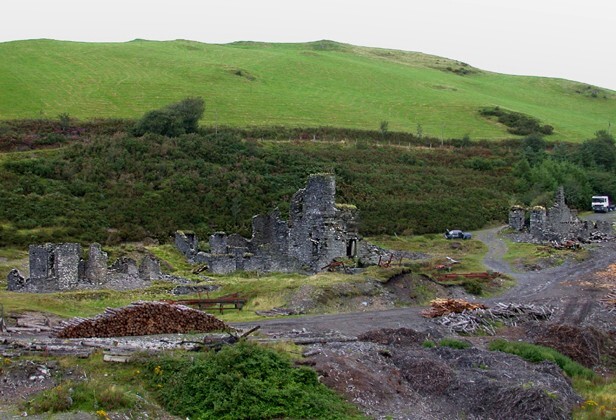
Frongoch is located 15 km ESE of Aberystwyth and was a major lead & zinc producer by nineteenth-century standards.
History:
First mentioned in the late 1750s and worked almost continuously to 1903.
In the early working of Frongoch galena was the ore mineral, while sphalerite was either left standing in the mine or thrown on the dumps, with poor grade lead ore.
When zinc ore could be sold for a profit the old lead stopes were stripped back for the sphalerite. This was done sporadically from the 1840s but mostly produced after 1878 to the end of the underground mine's life in 1903.
From the 1920s to the 1930s the dumps were reworked on a substantial scale producing about 6,000 metric tonnes of ore.
In the 1950s, a small dressing plant was used to reclaim the lead and zinc ore from the dumps. The output from these later sporadic small scale dump workings is not recorded.
Over the years the dump material has also been used for hardcore in the mid to late 1980s but because of environmental concerns, it has stopped.
Over recent years the concern of heavy metal outflow from the dumps has prompted the local council to attempt containment of the water in a holding lagoon.
For some years there has been a sawmill on the northeast of the site. The wood shavings from the mill have covered large areas of the dumps in this area. As a result of this encroachment on the dumps, in 2003 a few hundred metric tonnes of the dump material were moved 200m further south on the mine site. The sawmill has now stopped working as of 2012 and there is no further encroachment on the dumps.
Frongoch is one of the few mines in mid-Wales to use steam for working. In 1841 a 40-inch steam engine was working on the site. Not only was it used for pumping, but the water was reused to work some of the waterwheels. In the 1870s a 60-inch Cornish Beam engine was installed, pumping from a depth of 117 fathoms. The mine also used a 25-inch steam engine for winding and crushing.
Frongoch has a total estimated production of 61,000 metric tonnes of lead ore, and 50,000 metric tonnes of zinc ore. There are incomplete statistics for silver extracted from lead ore of 24,000 oz.
As of September 2018, a great deal of the 'lagoon' area has been landscaped with new ponds and only a small amount of the original site is left. An information board was installed about this work. The sawmill has been replaced by a business that appears to rebuild Land Rovers, it is a scrapyard in effect and several large excavators have been at work burying most of the tips etc. The notices on the gates make it very clear that whilst there is nothing they can do about the public footpaths across the site, you are not at all welcome.
Geology:
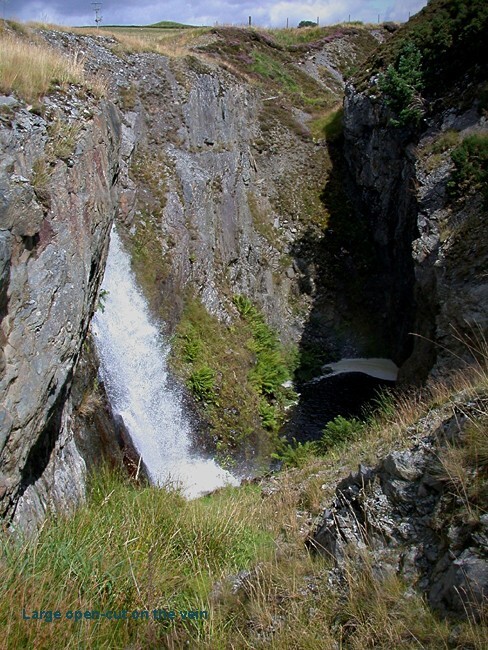
The fault vein at Frongoch has been traced for about 3 km but has been said to extend a further 2 km WSW-ENE, which is a typical trend for veins in mid-Wales. Also quite usual for fault systems in this area is their discontinuous nature, commonly splitting up into many thin strings, and reuniting. Where the veinlets coalesced there was sometimes an improvement in ore quality. The fault cuts through Silurian mudstones/shales, arenites of the Devils Bridge Formation, of Llandovery age. In the Frongoch mine, the ore appears to have occurred where the veinlets came together. There also appear to have been two discontinuous ore shoots worked. One on the south side, the other on the north side of the fault system. The main ore minerals were galena and sphalerite, which was found throughout the developed area, although there was an increase in sphalerite in depth, with a decrease in galena.
Note on the mineral list:
Rust (2019) also lists the following unidentified species as occurring here:
- "Unnamed Lead Zinc basic Sulphate" as purplish-blue crystals (SEM) overgrowing possible steverustite with creamy white susannite,
- "Unnamed basic Zinc Sulphate" as a single known specimen of very thin pale blue to colourless petal-like crystals associated with white hemimorphite crystallites.
Select Mineral List Type
Standard Detailed Gallery Strunz Chemical ElementsCommodity List
This is a list of exploitable or exploited mineral commodities recorded from this region.Mineral List
Mineral list contains entries from the region specified including sub-localities58 valid minerals. 1 (TL) - type locality of valid minerals. 1 erroneous literature entry.
Rock Types Recorded
Rock list contains entries from the region specified including sub-localities
Select Rock List Type
Alphabetical List Tree DiagramDetailed Mineral List:
| ⓘ Acanthite Formula: Ag2S Habit: arborescent spiky Colour: metallic grey-black Description: Only found twice as a post-mining/post-collecting product on cerussite and native silver |
| ⓘ Anglesite Formula: PbSO4 Habit: Prismatic, bladed, blocky, tabular, arborescent, feathery Colour: Colourless, white, tinted yellow Description: Commonly found on partly oxidized galena coated by covellite or related species in the post-mining assemblage, very rarely on in-situ vein alteration. References: |
| ⓘ Aurichalcite Formula: (Zn,Cu)5(CO3)2(OH)6 Habit: Crusts of lath-like crystals Colour: Whiteish to light blue-green Description: Crystals to 0.3mm and masses to 1cm with malachite. Note some very pale blue to white masses of intergrown lath crystals of supposed aurichalcite from this mine have been tested (XRD), and found not to be this species, although near to it. |
| ✪ Bechererite Formula: Zn7Cu(OH)13[(SiO(OH)3(SO4)] Habit: Prismatic inverted cone-like Colour: Colourless white, pale green, and blue Description: Colourless to pale blue-green cone-like crystals to 0.8mm in druse crusts to 2cms (XRD). Associated with caledonite, susannite, cerussite, hydrocerussite, hemimorphite. Examples from this mine are the first in Britain (third in mid-Wales) and probably the best in the world. |
| ⓘ Bianchite Formula: Zn(H2O)6(SO4) Description: Noted to have occurred as an effervescence in the summer of 2006 on mine waste. The paper does not state which method was used to confirm the mineral. References: |
| ⓘ Bindheimite Formula: Pb2Sb2O6O Habit: Massive, powdery Colour: Shades of yellow Description: pale yellow crusts to several cms (XRD), commonly associated with cerussite. References: |
| ⓘ Brianyoungite Formula: Zn3(CO3,SO4)(OH)4 Habit: bladed Colour: White Description: Visually indistinguishable in hand specimens from hydrozincite, brianyoungite forms white bladed crystals <0.5mm on cleavage/fractures covering areas to several centimetres on masses of sphalerite sometimes with gypsum |
| ⓘ Brochantite Formula: Cu4(SO4)(OH)6 Habit: Drusy bladed crystals, powdery Colour: Emerald green Description: Crusts of minute emerald green crystals (XRD), associated with linarite, langite, wroewolfeite, lautenthalite. |
| ✪ Caledonite Formula: Pb5Cu2(SO4)3(CO3)(OH)6 Habit: Acicular prismatic Colour: Pale sky blue to blue-green, white (rare) Description: Light blue to pale green crystals to 2mm (very good for Wales) (XRD). Associated mostly with susannite. References: |
| ⓘ Cerussite Formula: PbCO3 Habit: Various habits Colour: Colourless, white, also tinted green or blue. Description: Colourless to creamy crystals to 2cm, reticulated masses to 5cms (XRD). References: |
| ⓘ Cesàrolite Formula: PbMn4+3O6(OH)2 Habit: crusts to <2mm, botryoidal Colour: grey-black |
| ⓘ Chalcoalumite ? Formula: CuAl4(SO4)(OH)12 · 3H2O Description: Recorded without description by Camm (1993). References: |
| ⓘ Chalcocite Formula: Cu2S Description: Replacement of galena in association with oxidising primary copper species. Note that a metallic grey sulphide with conchoidal fracture has not been analytically confirmed and could be a related species such as djurleite or digenite (Rust, 2019). |
| ⓘ Chalcopyrite Formula: CuFeS2 Habit: Massive, sphenoidal crystals Colour: Dull brassy Description: Veinlets to 5mm wide, very rare part formed crystals to 2mm with a black-grey surface alteration of an undefined copper sulphide. |
| ⓘ 'Chlorite Group' |
| ⓘ Chrysocolla Formula: Cu2-xAlx(H2-xSi2O5)(OH)4 · nH2O, x < 1 Habit: Crusts Colour: Dull blue-green Description: Thin pale blue-green crusts & pseudomorphs after octahedral cuprite, massive chalcopyrite, and botryoidal malachite. References: |
| ⓘ Corkite Formula: PbFe3+3(PO4)(SO4)(OH)6 Habit: tiny, steeply acute rhombic crystals Colour: colourless to yellow-green References: |
| ⓘ 'Corkite-Hinsdalite Series' Description: This entry is necessary for unanalysed specimens of corkite/hinsdalite. |
| ⓘ Covellite Formula: CuS Habit: Thin platy Colour: Dark metallic blue Description: Replacement of galena & chalcopyrite. |
| ⓘ Cuprite Formula: Cu2O Habit: Massive, and octahedral crystals Colour: Bright to dull maroon Description: Maroon crystals to 0.3mm, associated with cerussite, chrysocolla, and malachite. References: |
| ⓘ Elyite Formula: Pb4Cu(SO4)O2(OH)4 · H2O Habit: Intergrown lath-like Colour: Pale purple Description: Minute pale purple crystals on hydrocerussite (EPMA). References: |
| ⓘ Galena Formula: PbS Localities: Description: At all the other mines I have visited within a 10 mile radius (around Cwmystwyth and Ysbyty Ystwyth area) it has been common for the galena to occur as deposits directly onto the slate, often just as thin coverings but also as larger nodules. At Wemyss however it is notable that the galena is almost always intimately associated with bright white quartz suggesting the two minerals were deposited simultaneously and the two are very common as fist size lumps or larger. |
| ⓘ Galena var. Silver-bearing Galena Formula: PbS with Ag |
| ⓘ Goethite Formula: Fe3+O(OH) Habit: botryoidal and stalactitic crusts Colour: Various shades of yellow to red-brown and black |
| ⓘ Greenockite Formula: CdS Habit: Very thin crusts Colour: Bright yellow Description: Yellow smears on sphalerite. References: |
| ⓘ Gypsum Formula: CaSO4 · 2H2O Habit: Prismatic Colour: Colourless-white Description: Crystals to 1mm. |
| ⓘ Hemimorphite Formula: Zn4Si2O7(OH)2 · H2O Habit: Drusy crusts, bladed crystals Colour: Colourless-white Description: Colourless to white crystal druses to several cms, and as divergent crystal groups to 4mm (XRD). Associated with goethite, rosasite, aurichalcite, hydrozincite. |
| ⓘ Hinsdalite Formula: PbAl3(PO4)(SO4)(OH)6 Habit: tiny, steeply acute rhombic crystals Colour: colourless to yellow-green References: |
| ⓘ Hydrocerussite Formula: Pb3(CO3)2(OH)2 Habit: Foliated, acicular prismatic, hexagonal platy. Colour: Colourless-white, creamy. Description: Colourless to white platy & prismatic crystals to 0.7mm (XRD). Associated with cerussite, susannite, caledonite, elyite. References: |
| ⓘ Hydrozincite Formula: Zn5(CO3)2(OH)6 Habit: Crusts, and balls. Colour: White Fluorescence: Pale white-blue Description: White tiny lath crystals in crusts to a few cms, associated with hemimorphite, cerussite. Some unconfirmed "hydrozincite" could turn out to be brianyoungite. References: |
| ✪ Lanarkite Formula: Pb2(SO4)O Habit: Bladed Colour: Off white Description: Slightly tinted yellowish to colourless crystal sprays to 5mm (XRD), on galena with susannite. The first occurrence of Lanarkite in Wales. |
| ⓘ Langite Formula: Cu4(SO4)(OH)6 · 2H2O Habit: Blocky Colour: Deep blue-green Description: Pseudohexagonal deep blue-green crystals to 0.5mm (XRD). Associated with malachite, schulenbergite, cuprite, copper, lautenthalite, brochantite, cerussite. References: |
| ⓘ Lautenthalite Formula: PbCu4(SO4)2(OH)6 · 3H2O Habit: Bladed Colour: Light emerald green Description: Crystals to 0.7mm with wroewolfeite, linarite, brochantite, cerussite (EPMA). |
| ⓘ Leadhillite Formula: Pb4(CO3)2(SO4)(OH)2 Description: A single specimen of Leadhillite was confirmed by XRD as a replacement of a preexisting lath-like mineral. References: |
| ⓘ 'Limonite' Habit: earthy Colour: brown |
| ✪ Linarite Formula: PbCu(SO4)(OH)2 Habit: Bladed Colour: Azure blue Description: Bladed crystals to 2mm+, some with substantial Se (EPMA). Associated with brochantite, caledonite, lautenthalite, cerussite. References: |
| ⓘ Litharge Formula: PbO Habit: Pseudomorphs after an unidentified species (possibly an Unnamed (Tetragonal Pb Oxide Hydrate)) Colour: Scarlet Description: Scarlet crystals to 0.5mm on cerussite (XRD), with cerussite. References: |
| ⓘ Malachite Formula: Cu2(CO3)(OH)2 Habit: Lath-like, botryoidal, bundles of acicular crystals Colour: Green Description: Thin botryoidal crust to 2cms, and balls to 1mm. Associated with hemimorphite, cerussite, brochantite, langite. References: |
| ⓘ 'Manganese Oxides' Habit: strings Colour: black |
| ⓘ Marcasite Formula: FeS2 |
| ⓘ Massicot ? Formula: PbO Colour: yellow Description: minute areas on litharge. |
| ⓘ Mattheddleite Formula: Pb5(SiO4)1.5(SO4)1.5(Cl,OH) Habit: Prismatic Colour: Colourless Description: Colourless prismatic crystals to 0.25mm with susannite, caledonite (XRD). References: |
| ⓘ Namuwite Formula: Zn4(SO4)(OH)6 · 4H2O Habit: Platy pseudohexagonal Colour: Pale blue-green Description: Very pale blue-green crystals to 0.5mm + (XRD), with langite, wroewolfeite, susannite, hydrocerussite. References: |
| ⓘ Native Copper Formula: Cu Habit: Prismatic, bladed Colour: Dull copper Description: Spear-like crystals to 1mm. |
| ⓘ Native Silver Formula: Ag Habit: Dendritic Description: Single 0.5mm crystal spray on cerussite. The only specimen ever found at Frongoch (1992) has now been completely replaced/encrusted by acanthite. References: |
| ⓘ Native Sulphur Formula: S8 Habit: Rounded crystals Colour: Pale yellow Description: Pale yellow crystals to 3mm (EPMA) in masses to 4cms on altered galena. |
| ⓘ Opal Formula: SiO2 · nH2O Habit: pearl-like strings Colour: colourless to white Description: associated with susannite and hydrocerussite. |
| ⓘ Pyrite Formula: FeS2 Localities: Description: One piece of slate found with a dusting of 1mm cubes with bright clean surfaces |
| ✪ Pyromorphite Formula: Pb5(PO4)3Cl Habit: Prismatic, and blocky Colour: Colourless-white, shades of light brown, yellow, slightly purple, rarely green Description: Brown crystals to 2.5cms (XRD) with cerussite. Rare green microcrystals. References: |
| ⓘ Quartz Formula: SiO2 |
| ⓘ Quartz var. Ferruginous Quartz Formula: SiO2 References: |
| ⓘ Ramsbeckite Formula: (Cu,Zn)15(SO4)4(OH)22 · 6H2O Habit: Blocky Colour: Emerald green Description: Deep emerald green rounded crystals to 0.7mm with schulenbergite (EPMA). References: |
| ✪ Redgillite Formula: Cu6(SO4)(OH)10 · H2O Habit: Lath-like, prismatic Colour: Emerald green to nickel green Description: Microcrystal (to 0.25mm) drusy coverings in areas to 1cm. Some redgillite from Frongoch mine has a high Zn content, along with most other redgillite from mid-Wales. |
| ⓘ Rosasite Formula: (Cu,Zn)2(CO3)(OH)2 Habit: Botryoidal Colour: Light blue-green Description: Pale blue-green balls to 1.5mm on hemimorphite (XRD), with aurichalcite. |
| ⓘ Schmiederite ? Formula: Pb2Cu2(Se6+O4)(Se4+O3)(OH)4 Habit: Aggregates of finely lath-like crystals Colour: Pale blue-white. Description: Some specimens of Linarite were found to contain a substantial Selenium component. References: |
| ⓘ Schulenbergite Formula: (Cu,Zn)7(SO4)2(OH)10 · 3H2O Habit: Rosettes, petal-like. Colour: Light blue-green Description: Light blue-green thin platy crystals to 0.7mm (XRD), with ramsbeckite, susannite, caledonite, langite, wroewolfeite, cuprite, cerussite. |
| ⓘ Serpierite Formula: Ca(Cu2+,Zn2+)4(S6+O4)2(OH)6 · 3H2O Habit: Lath-like; rarely relatively broad platy microcrystals forming "paddle-wheels" Colour: Pale sky blue Description: Very light blue lath-like crystals to 0.7mm (XRD), associated with cerussite, hemimorphite, langite. |
| ⓘ Smithsonite Formula: ZnCO3 Locality: Wemyss Mine, Frongoch Mine, Pontrhydygroes, Upper Llanfihangell-y-Creuddyn, Ceredigion, Wales, UK Description: Thin botryoidal crusts, white with a slight greasy sheen, associated with sphalerite but the best looking samples are on the even, flat surfaces of surrounding quartz or galena References: |
| ⓘ Sphalerite Formula: ZnS |
| ✪ Steverustite (TL) Formula: Pb2+5(OH)5[Cu+(S6+O3S2-)3](H2O)2 Type Locality: Habit: Lath-like crystals Colour: Colourless to white References: |
| ✪ Susannite Formula: Pb4(CO3)2(SO4)(OH)2 Habit: Platy-tabular pseudohexagonal, prismatic. Colour: Colourless to yellow-brown, tinted blue and green Description: Colourless to white, also tinted blue or green and brown, crystals to 2mm (very good for Wales), identified by XRD. Associated mostly with cerussite and caledonite. |
| ⓘ Ullmannite Formula: NiSbS Habit: Cubes Colour: Light metallic grey Description: Crystals to 3mm embedded in quartz. References: |
| ⓘ ' Formula: Pb, Si, O, H (?) Habit: Lath-like Colour: White Description: The mineral was incorrectly analysed as a silicate many years ago. It is steverustite. |
| ⓘ 'Unnamed (Tetragonal Pb Oxide Hydrate)' ? Formula: Pb3O2(OH)2 Colour: grey translucent Description: Visually very similar to the same species from the Milltown Quarry, Derbyshire. Crystals mostly, but not all, showing alteration to litharge and tentatively identified yellow massicot. |
| ⓘ Wroewolfeite Formula: Cu4(SO4)(OH)6 · 2H2O Habit: Prismatic, tabular Colour: Light blue-green Description: Tabular deep to light blue-green crystals to 0.5mm (XRD). Associated with hemimorphite, brochantite, linarite, lautenthalite. References: |
| ⓘ Wulfenite Formula: Pb(MoO4) Habit: pyramidal, tabular, stepped Colour: orange Description: Orange pyramidal and tabular crystals to 0.75mm with green druses of pyromorphite and micro-crystals of cerussite. |
Gallery:

List of minerals arranged by Strunz 10th Edition classification
| Group 1 - Elements | |||
|---|---|---|---|
| ⓘ | Native Copper | 1.AA.05 | Cu |
| ⓘ | Native Silver | 1.AA.05 | Ag |
| ⓘ | Native Sulphur | 1.CC.05 | S8 |
| Group 2 - Sulphides and Sulfosalts | |||
| ⓘ | Chalcocite | 2.BA.05 | Cu2S |
| ⓘ | Acanthite | 2.BA.35 | Ag2S |
| ⓘ | Covellite | 2.CA.05a | CuS |
| ⓘ | Sphalerite | 2.CB.05a | ZnS |
| ⓘ | Chalcopyrite | 2.CB.10a | CuFeS2 |
| ⓘ | Greenockite | 2.CB.45 | CdS |
| ⓘ | Galena | 2.CD.10 | PbS |
| ⓘ | var. Silver-bearing Galena | 2.CD.10 | PbS with Ag |
| ⓘ | Pyrite | 2.EB.05a | FeS2 |
| ⓘ | Marcasite | 2.EB.10a | FeS2 |
| ⓘ | Ullmannite | 2.EB.25 | NiSbS |
| Group 4 - Oxides and Hydroxides | |||
| ⓘ | Cuprite | 4.AA.10 | Cu2O |
| ⓘ | Litharge | 4.AC.20 | PbO |
| ⓘ | Massicot ? | 4.AC.25 | PbO |
| ⓘ | Quartz | 4.DA.05 | SiO2 |
| ⓘ | var. Ferruginous Quartz | 4.DA.05 | SiO2 |
| ⓘ | Opal | 4.DA.10 | SiO2 · nH2O |
| ⓘ | Bindheimite | 4.DH.20 | Pb2Sb2O6O |
| ⓘ | Goethite | 4.FD.10 | Fe3+O(OH) |
| ⓘ | Cesàrolite | 4.FG.10 | PbMn4+3O6(OH)2 |
| Group 5 - Nitrates and Carbonates | |||
| ⓘ | Smithsonite | 5.AB.05 | ZnCO3 |
| ⓘ | Cerussite | 5.AB.15 | PbCO3 |
| ⓘ | Malachite | 5.BA.10 | Cu2(CO3)(OH)2 |
| ⓘ | Rosasite | 5.BA.10 | (Cu,Zn)2(CO3)(OH)2 |
| ⓘ | Aurichalcite | 5.BA.15 | (Zn,Cu)5(CO3)2(OH)6 |
| ⓘ | Hydrozincite | 5.BA.15 | Zn5(CO3)2(OH)6 |
| ⓘ | Hydrocerussite | 5.BE.10 | Pb3(CO3)2(OH)2 |
| ⓘ | Brianyoungite | 5.BF.30 | Zn3(CO3,SO4)(OH)4 |
| ⓘ | Leadhillite | 5.BF.40 | Pb4(CO3)2(SO4)(OH)2 |
| ⓘ | Susannite | 5.BF.40 | Pb4(CO3)2(SO4)(OH)2 |
| Group 7 - Sulphates, Chromates, Molybdates and Tungstates | |||
| ⓘ | Anglesite | 7.AD.35 | PbSO4 |
| ⓘ | Brochantite | 7.BB.25 | Cu4(SO4)(OH)6 |
| ⓘ | Caledonite | 7.BC.50 | Pb5Cu2(SO4)3(CO3)(OH)6 |
| ⓘ | Linarite | 7.BC.65 | PbCu(SO4)(OH)2 |
| ⓘ | Schmiederite ? | 7.BC.65 | Pb2Cu2(Se6+O4)(Se4+O3)(OH)4 |
| ⓘ | Lanarkite | 7.BD.40 | Pb2(SO4)O |
| ⓘ | Bianchite | 7.CB.25 | Zn(H2O)6(SO4) |
| ⓘ | Gypsum | 7.CD.40 | CaSO4 · 2H2O |
| ⓘ | Langite | 7.DD.10 | Cu4(SO4)(OH)6 · 2H2O |
| ⓘ | Wroewolfeite | 7.DD.10 | Cu4(SO4)(OH)6 · 2H2O |
| ⓘ | Serpierite | 7.DD.30 | Ca(Cu2+,Zn2+)4(S6+O4)2(OH)6 · 3H2O |
| ⓘ | Namuwite | 7.DD.50 | Zn4(SO4)(OH)6 · 4H2O |
| ⓘ | Bechererite | 7.DD.55 | Zn7Cu(OH)13[(SiO(OH)3(SO4)] |
| ⓘ | Ramsbeckite | 7.DD.60 | (Cu,Zn)15(SO4)4(OH)22 · 6H2O |
| ⓘ | Redgillite | 7.DD.70 | Cu6(SO4)(OH)10 · H2O |
| ⓘ | Chalcoalumite ? | 7.DD.75 | CuAl4(SO4)(OH)12 · 3H2O |
| ⓘ | Schulenbergite | 7.DD.80 | (Cu,Zn)7(SO4)2(OH)10 · 3H2O |
| ⓘ | Elyite | 7.DF.65 | Pb4Cu(SO4)O2(OH)4 · H2O |
| ⓘ | Lautenthalite | 7.DF.70 | PbCu4(SO4)2(OH)6 · 3H2O |
| ⓘ | Wulfenite | 7.GA.05 | Pb(MoO4) |
| ⓘ | Steverustite (TL) | 7.JA.10 | Pb2+5(OH)5[Cu+(S6+O3S2-)3](H2O)2 |
| Group 8 - Phosphates, Arsenates and Vanadates | |||
| ⓘ | Corkite | 8.BL.05 | PbFe3+3(PO4)(SO4)(OH)6 |
| ⓘ | Hinsdalite | 8.BL.05 | PbAl3(PO4)(SO4)(OH)6 |
| ⓘ | Pyromorphite | 8.BN.05 | Pb5(PO4)3Cl |
| Group 9 - Silicates | |||
| ⓘ | Mattheddleite | 9.AH.25 | Pb5(SiO4)1.5(SO4)1.5(Cl,OH) |
| ⓘ | Hemimorphite | 9.BD.10 | Zn4Si2O7(OH)2 · H2O |
| ⓘ | Chrysocolla | 9.ED.20 | Cu2-xAlx(H2-xSi2O5)(OH)4 · nH2O, x < 1 |
| Unclassified | |||
| ⓘ | 'Chlorite Group' | - | |
| ⓘ | 'Limonite' | - | |
| ⓘ | 'Unnamed (Tetragonal Pb Oxide Hydrate)' ? | - | Pb3O2(OH)2 |
| ⓘ | 'Unnamed (Pb Silicate) ?' ? | - | Pb, Si, O, H (?) |
| ⓘ | 'Manganese Oxides' | - | |
| ⓘ | 'Corkite-Hinsdalite Series' | - | |
List of minerals for each chemical element
| H | Hydrogen | |
|---|---|---|
| H | ⓘ Aurichalcite | (Zn,Cu)5(CO3)2(OH)6 |
| H | ⓘ Bechererite | Zn7Cu(OH)13[(SiO(OH)3(SO4)] |
| H | ⓘ Bianchite | Zn(H2O)6(SO4) |
| H | ⓘ Brianyoungite | Zn3(CO3,SO4)(OH)4 |
| H | ⓘ Brochantite | Cu4(SO4)(OH)6 |
| H | ⓘ Caledonite | Pb5Cu2(SO4)3(CO3)(OH)6 |
| H | ⓘ Cesàrolite | PbMn34+O6(OH)2 |
| H | ⓘ Chalcoalumite | CuAl4(SO4)(OH)12 · 3H2O |
| H | ⓘ Chrysocolla | Cu2-xAlx(H2-xSi2O5)(OH)4 · nH2O, x < 1 |
| H | ⓘ Corkite | PbFe33+(PO4)(SO4)(OH)6 |
| H | ⓘ Elyite | Pb4Cu(SO4)O2(OH)4 · H2O |
| H | ⓘ Goethite | Fe3+O(OH) |
| H | ⓘ Gypsum | CaSO4 · 2H2O |
| H | ⓘ Hemimorphite | Zn4Si2O7(OH)2 · H2O |
| H | ⓘ Hinsdalite | PbAl3(PO4)(SO4)(OH)6 |
| H | ⓘ Hydrocerussite | Pb3(CO3)2(OH)2 |
| H | ⓘ Hydrozincite | Zn5(CO3)2(OH)6 |
| H | ⓘ Langite | Cu4(SO4)(OH)6 · 2H2O |
| H | ⓘ Lautenthalite | PbCu4(SO4)2(OH)6 · 3H2O |
| H | ⓘ Leadhillite | Pb4(CO3)2(SO4)(OH)2 |
| H | ⓘ Linarite | PbCu(SO4)(OH)2 |
| H | ⓘ Malachite | Cu2(CO3)(OH)2 |
| H | ⓘ Mattheddleite | Pb5(SiO4)1.5(SO4)1.5(Cl,OH) |
| H | ⓘ Namuwite | Zn4(SO4)(OH)6 · 4H2O |
| H | ⓘ Opal | SiO2 · nH2O |
| H | ⓘ Ramsbeckite | (Cu,Zn)15(SO4)4(OH)22 · 6H2O |
| H | ⓘ Rosasite | (Cu,Zn)2(CO3)(OH)2 |
| H | ⓘ Schmiederite | Pb2Cu2(Se6+O4)(Se4+O3)(OH)4 |
| H | ⓘ Schulenbergite | (Cu,Zn)7(SO4)2(OH)10 · 3H2O |
| H | ⓘ Serpierite | Ca(Cu2+,Zn2+)4(S6+O4)2(OH)6 · 3H2O |
| H | ⓘ Susannite | Pb4(CO3)2(SO4)(OH)2 |
| H | ⓘ Wroewolfeite | Cu4(SO4)(OH)6 · 2H2O |
| H | ⓘ Redgillite | Cu6(SO4)(OH)10 · H2O |
| H | ⓘ Unnamed (Tetragonal Pb Oxide Hydrate) | Pb3O2(OH)2 |
| H | ⓘ Unnamed (Pb Silicate) ? | Pb, Si, O, H (?) |
| H | ⓘ Steverustite | Pb52+(OH)5[Cu+(S6+O3S2-)3](H2O)2 |
| H | ⓘ Corkite-Hinsdalite Series | |
| C | Carbon | |
| C | ⓘ Aurichalcite | (Zn,Cu)5(CO3)2(OH)6 |
| C | ⓘ Brianyoungite | Zn3(CO3,SO4)(OH)4 |
| C | ⓘ Caledonite | Pb5Cu2(SO4)3(CO3)(OH)6 |
| C | ⓘ Cerussite | PbCO3 |
| C | ⓘ Hydrocerussite | Pb3(CO3)2(OH)2 |
| C | ⓘ Hydrozincite | Zn5(CO3)2(OH)6 |
| C | ⓘ Leadhillite | Pb4(CO3)2(SO4)(OH)2 |
| C | ⓘ Malachite | Cu2(CO3)(OH)2 |
| C | ⓘ Rosasite | (Cu,Zn)2(CO3)(OH)2 |
| C | ⓘ Smithsonite | ZnCO3 |
| C | ⓘ Susannite | Pb4(CO3)2(SO4)(OH)2 |
| O | Oxygen | |
| O | ⓘ Anglesite | PbSO4 |
| O | ⓘ Aurichalcite | (Zn,Cu)5(CO3)2(OH)6 |
| O | ⓘ Bechererite | Zn7Cu(OH)13[(SiO(OH)3(SO4)] |
| O | ⓘ Bianchite | Zn(H2O)6(SO4) |
| O | ⓘ Bindheimite | Pb2Sb2O6O |
| O | ⓘ Brianyoungite | Zn3(CO3,SO4)(OH)4 |
| O | ⓘ Brochantite | Cu4(SO4)(OH)6 |
| O | ⓘ Caledonite | Pb5Cu2(SO4)3(CO3)(OH)6 |
| O | ⓘ Cerussite | PbCO3 |
| O | ⓘ Cesàrolite | PbMn34+O6(OH)2 |
| O | ⓘ Chalcoalumite | CuAl4(SO4)(OH)12 · 3H2O |
| O | ⓘ Chrysocolla | Cu2-xAlx(H2-xSi2O5)(OH)4 · nH2O, x < 1 |
| O | ⓘ Corkite | PbFe33+(PO4)(SO4)(OH)6 |
| O | ⓘ Cuprite | Cu2O |
| O | ⓘ Elyite | Pb4Cu(SO4)O2(OH)4 · H2O |
| O | ⓘ Goethite | Fe3+O(OH) |
| O | ⓘ Gypsum | CaSO4 · 2H2O |
| O | ⓘ Hemimorphite | Zn4Si2O7(OH)2 · H2O |
| O | ⓘ Hinsdalite | PbAl3(PO4)(SO4)(OH)6 |
| O | ⓘ Hydrocerussite | Pb3(CO3)2(OH)2 |
| O | ⓘ Hydrozincite | Zn5(CO3)2(OH)6 |
| O | ⓘ Lanarkite | Pb2(SO4)O |
| O | ⓘ Langite | Cu4(SO4)(OH)6 · 2H2O |
| O | ⓘ Lautenthalite | PbCu4(SO4)2(OH)6 · 3H2O |
| O | ⓘ Leadhillite | Pb4(CO3)2(SO4)(OH)2 |
| O | ⓘ Linarite | PbCu(SO4)(OH)2 |
| O | ⓘ Litharge | PbO |
| O | ⓘ Malachite | Cu2(CO3)(OH)2 |
| O | ⓘ Massicot | PbO |
| O | ⓘ Mattheddleite | Pb5(SiO4)1.5(SO4)1.5(Cl,OH) |
| O | ⓘ Namuwite | Zn4(SO4)(OH)6 · 4H2O |
| O | ⓘ Opal | SiO2 · nH2O |
| O | ⓘ Pyromorphite | Pb5(PO4)3Cl |
| O | ⓘ Quartz | SiO2 |
| O | ⓘ Ramsbeckite | (Cu,Zn)15(SO4)4(OH)22 · 6H2O |
| O | ⓘ Rosasite | (Cu,Zn)2(CO3)(OH)2 |
| O | ⓘ Schmiederite | Pb2Cu2(Se6+O4)(Se4+O3)(OH)4 |
| O | ⓘ Schulenbergite | (Cu,Zn)7(SO4)2(OH)10 · 3H2O |
| O | ⓘ Serpierite | Ca(Cu2+,Zn2+)4(S6+O4)2(OH)6 · 3H2O |
| O | ⓘ Smithsonite | ZnCO3 |
| O | ⓘ Susannite | Pb4(CO3)2(SO4)(OH)2 |
| O | ⓘ Wroewolfeite | Cu4(SO4)(OH)6 · 2H2O |
| O | ⓘ Wulfenite | Pb(MoO4) |
| O | ⓘ Redgillite | Cu6(SO4)(OH)10 · H2O |
| O | ⓘ Unnamed (Tetragonal Pb Oxide Hydrate) | Pb3O2(OH)2 |
| O | ⓘ Unnamed (Pb Silicate) ? | Pb, Si, O, H (?) |
| O | ⓘ Quartz var. Ferruginous Quartz | SiO2 |
| O | ⓘ Steverustite | Pb52+(OH)5[Cu+(S6+O3S2-)3](H2O)2 |
| O | ⓘ Corkite-Hinsdalite Series | |
| Al | Aluminium | |
| Al | ⓘ Chalcoalumite | CuAl4(SO4)(OH)12 · 3H2O |
| Al | ⓘ Chrysocolla | Cu2-xAlx(H2-xSi2O5)(OH)4 · nH2O, x < 1 |
| Al | ⓘ Hinsdalite | PbAl3(PO4)(SO4)(OH)6 |
| Al | ⓘ Corkite-Hinsdalite Series | |
| Si | Silicon | |
| Si | ⓘ Bechererite | Zn7Cu(OH)13[(SiO(OH)3(SO4)] |
| Si | ⓘ Chrysocolla | Cu2-xAlx(H2-xSi2O5)(OH)4 · nH2O, x < 1 |
| Si | ⓘ Hemimorphite | Zn4Si2O7(OH)2 · H2O |
| Si | ⓘ Mattheddleite | Pb5(SiO4)1.5(SO4)1.5(Cl,OH) |
| Si | ⓘ Opal | SiO2 · nH2O |
| Si | ⓘ Quartz | SiO2 |
| Si | ⓘ Unnamed (Pb Silicate) ? | Pb, Si, O, H (?) |
| Si | ⓘ Quartz var. Ferruginous Quartz | SiO2 |
| P | Phosphorus | |
| P | ⓘ Corkite | PbFe33+(PO4)(SO4)(OH)6 |
| P | ⓘ Hinsdalite | PbAl3(PO4)(SO4)(OH)6 |
| P | ⓘ Pyromorphite | Pb5(PO4)3Cl |
| P | ⓘ Corkite-Hinsdalite Series | |
| S | Sulfur | |
| S | ⓘ Acanthite | Ag2S |
| S | ⓘ Anglesite | PbSO4 |
| S | ⓘ Bechererite | Zn7Cu(OH)13[(SiO(OH)3(SO4)] |
| S | ⓘ Bianchite | Zn(H2O)6(SO4) |
| S | ⓘ Brianyoungite | Zn3(CO3,SO4)(OH)4 |
| S | ⓘ Brochantite | Cu4(SO4)(OH)6 |
| S | ⓘ Caledonite | Pb5Cu2(SO4)3(CO3)(OH)6 |
| S | ⓘ Chalcopyrite | CuFeS2 |
| S | ⓘ Chalcoalumite | CuAl4(SO4)(OH)12 · 3H2O |
| S | ⓘ Chalcocite | Cu2S |
| S | ⓘ Corkite | PbFe33+(PO4)(SO4)(OH)6 |
| S | ⓘ Covellite | CuS |
| S | ⓘ Elyite | Pb4Cu(SO4)O2(OH)4 · H2O |
| S | ⓘ Galena | PbS |
| S | ⓘ Greenockite | CdS |
| S | ⓘ Gypsum | CaSO4 · 2H2O |
| S | ⓘ Hinsdalite | PbAl3(PO4)(SO4)(OH)6 |
| S | ⓘ Lanarkite | Pb2(SO4)O |
| S | ⓘ Langite | Cu4(SO4)(OH)6 · 2H2O |
| S | ⓘ Lautenthalite | PbCu4(SO4)2(OH)6 · 3H2O |
| S | ⓘ Leadhillite | Pb4(CO3)2(SO4)(OH)2 |
| S | ⓘ Linarite | PbCu(SO4)(OH)2 |
| S | ⓘ Marcasite | FeS2 |
| S | ⓘ Mattheddleite | Pb5(SiO4)1.5(SO4)1.5(Cl,OH) |
| S | ⓘ Namuwite | Zn4(SO4)(OH)6 · 4H2O |
| S | ⓘ Pyrite | FeS2 |
| S | ⓘ Ramsbeckite | (Cu,Zn)15(SO4)4(OH)22 · 6H2O |
| S | ⓘ Schulenbergite | (Cu,Zn)7(SO4)2(OH)10 · 3H2O |
| S | ⓘ Serpierite | Ca(Cu2+,Zn2+)4(S6+O4)2(OH)6 · 3H2O |
| S | ⓘ Sphalerite | ZnS |
| S | ⓘ Native Sulphur | S8 |
| S | ⓘ Susannite | Pb4(CO3)2(SO4)(OH)2 |
| S | ⓘ Ullmannite | NiSbS |
| S | ⓘ Wroewolfeite | Cu4(SO4)(OH)6 · 2H2O |
| S | ⓘ Redgillite | Cu6(SO4)(OH)10 · H2O |
| S | ⓘ Galena var. Silver-bearing Galena | PbS with Ag |
| S | ⓘ Steverustite | Pb52+(OH)5[Cu+(S6+O3S2-)3](H2O)2 |
| S | ⓘ Corkite-Hinsdalite Series | |
| Cl | Chlorine | |
| Cl | ⓘ Mattheddleite | Pb5(SiO4)1.5(SO4)1.5(Cl,OH) |
| Cl | ⓘ Pyromorphite | Pb5(PO4)3Cl |
| Ca | Calcium | |
| Ca | ⓘ Gypsum | CaSO4 · 2H2O |
| Ca | ⓘ Serpierite | Ca(Cu2+,Zn2+)4(S6+O4)2(OH)6 · 3H2O |
| Mn | Manganese | |
| Mn | ⓘ Cesàrolite | PbMn34+O6(OH)2 |
| Fe | Iron | |
| Fe | ⓘ Chalcopyrite | CuFeS2 |
| Fe | ⓘ Corkite | PbFe33+(PO4)(SO4)(OH)6 |
| Fe | ⓘ Goethite | Fe3+O(OH) |
| Fe | ⓘ Marcasite | FeS2 |
| Fe | ⓘ Pyrite | FeS2 |
| Fe | ⓘ Corkite-Hinsdalite Series | |
| Ni | Nickel | |
| Ni | ⓘ Ullmannite | NiSbS |
| Cu | Copper | |
| Cu | ⓘ Aurichalcite | (Zn,Cu)5(CO3)2(OH)6 |
| Cu | ⓘ Bechererite | Zn7Cu(OH)13[(SiO(OH)3(SO4)] |
| Cu | ⓘ Brochantite | Cu4(SO4)(OH)6 |
| Cu | ⓘ Caledonite | Pb5Cu2(SO4)3(CO3)(OH)6 |
| Cu | ⓘ Chalcopyrite | CuFeS2 |
| Cu | ⓘ Chalcoalumite | CuAl4(SO4)(OH)12 · 3H2O |
| Cu | ⓘ Chalcocite | Cu2S |
| Cu | ⓘ Chrysocolla | Cu2-xAlx(H2-xSi2O5)(OH)4 · nH2O, x < 1 |
| Cu | ⓘ Covellite | CuS |
| Cu | ⓘ Cuprite | Cu2O |
| Cu | ⓘ Native Copper | Cu |
| Cu | ⓘ Elyite | Pb4Cu(SO4)O2(OH)4 · H2O |
| Cu | ⓘ Langite | Cu4(SO4)(OH)6 · 2H2O |
| Cu | ⓘ Lautenthalite | PbCu4(SO4)2(OH)6 · 3H2O |
| Cu | ⓘ Linarite | PbCu(SO4)(OH)2 |
| Cu | ⓘ Malachite | Cu2(CO3)(OH)2 |
| Cu | ⓘ Ramsbeckite | (Cu,Zn)15(SO4)4(OH)22 · 6H2O |
| Cu | ⓘ Rosasite | (Cu,Zn)2(CO3)(OH)2 |
| Cu | ⓘ Schmiederite | Pb2Cu2(Se6+O4)(Se4+O3)(OH)4 |
| Cu | ⓘ Schulenbergite | (Cu,Zn)7(SO4)2(OH)10 · 3H2O |
| Cu | ⓘ Serpierite | Ca(Cu2+,Zn2+)4(S6+O4)2(OH)6 · 3H2O |
| Cu | ⓘ Wroewolfeite | Cu4(SO4)(OH)6 · 2H2O |
| Cu | ⓘ Redgillite | Cu6(SO4)(OH)10 · H2O |
| Cu | ⓘ Steverustite | Pb52+(OH)5[Cu+(S6+O3S2-)3](H2O)2 |
| Zn | Zinc | |
| Zn | ⓘ Aurichalcite | (Zn,Cu)5(CO3)2(OH)6 |
| Zn | ⓘ Bechererite | Zn7Cu(OH)13[(SiO(OH)3(SO4)] |
| Zn | ⓘ Bianchite | Zn(H2O)6(SO4) |
| Zn | ⓘ Brianyoungite | Zn3(CO3,SO4)(OH)4 |
| Zn | ⓘ Hemimorphite | Zn4Si2O7(OH)2 · H2O |
| Zn | ⓘ Hydrozincite | Zn5(CO3)2(OH)6 |
| Zn | ⓘ Namuwite | Zn4(SO4)(OH)6 · 4H2O |
| Zn | ⓘ Ramsbeckite | (Cu,Zn)15(SO4)4(OH)22 · 6H2O |
| Zn | ⓘ Rosasite | (Cu,Zn)2(CO3)(OH)2 |
| Zn | ⓘ Schulenbergite | (Cu,Zn)7(SO4)2(OH)10 · 3H2O |
| Zn | ⓘ Serpierite | Ca(Cu2+,Zn2+)4(S6+O4)2(OH)6 · 3H2O |
| Zn | ⓘ Smithsonite | ZnCO3 |
| Zn | ⓘ Sphalerite | ZnS |
| Se | Selenium | |
| Se | ⓘ Schmiederite | Pb2Cu2(Se6+O4)(Se4+O3)(OH)4 |
| Mo | Molybdenum | |
| Mo | ⓘ Wulfenite | Pb(MoO4) |
| Ag | Silver | |
| Ag | ⓘ Acanthite | Ag2S |
| Ag | ⓘ Native Silver | Ag |
| Ag | ⓘ Galena var. Silver-bearing Galena | PbS with Ag |
| Cd | Cadmium | |
| Cd | ⓘ Greenockite | CdS |
| Sb | Antimony | |
| Sb | ⓘ Bindheimite | Pb2Sb2O6O |
| Sb | ⓘ Ullmannite | NiSbS |
| Pb | Lead | |
| Pb | ⓘ Anglesite | PbSO4 |
| Pb | ⓘ Bindheimite | Pb2Sb2O6O |
| Pb | ⓘ Caledonite | Pb5Cu2(SO4)3(CO3)(OH)6 |
| Pb | ⓘ Cerussite | PbCO3 |
| Pb | ⓘ Cesàrolite | PbMn34+O6(OH)2 |
| Pb | ⓘ Corkite | PbFe33+(PO4)(SO4)(OH)6 |
| Pb | ⓘ Elyite | Pb4Cu(SO4)O2(OH)4 · H2O |
| Pb | ⓘ Galena | PbS |
| Pb | ⓘ Hinsdalite | PbAl3(PO4)(SO4)(OH)6 |
| Pb | ⓘ Hydrocerussite | Pb3(CO3)2(OH)2 |
| Pb | ⓘ Lanarkite | Pb2(SO4)O |
| Pb | ⓘ Lautenthalite | PbCu4(SO4)2(OH)6 · 3H2O |
| Pb | ⓘ Leadhillite | Pb4(CO3)2(SO4)(OH)2 |
| Pb | ⓘ Linarite | PbCu(SO4)(OH)2 |
| Pb | ⓘ Litharge | PbO |
| Pb | ⓘ Massicot | PbO |
| Pb | ⓘ Mattheddleite | Pb5(SiO4)1.5(SO4)1.5(Cl,OH) |
| Pb | ⓘ Pyromorphite | Pb5(PO4)3Cl |
| Pb | ⓘ Schmiederite | Pb2Cu2(Se6+O4)(Se4+O3)(OH)4 |
| Pb | ⓘ Susannite | Pb4(CO3)2(SO4)(OH)2 |
| Pb | ⓘ Wulfenite | Pb(MoO4) |
| Pb | ⓘ Unnamed (Tetragonal Pb Oxide Hydrate) | Pb3O2(OH)2 |
| Pb | ⓘ Unnamed (Pb Silicate) ? | Pb, Si, O, H (?) |
| Pb | ⓘ Galena var. Silver-bearing Galena | PbS with Ag |
| Pb | ⓘ Steverustite | Pb52+(OH)5[Cu+(S6+O3S2-)3](H2O)2 |
| Pb | ⓘ Corkite-Hinsdalite Series | |
Localities in this Region
- Wales
- Ceredigion
- Upper Llanfihangell-y-Creuddyn
- Pontrhydygroes
- Frongoch Mine
- Pontrhydygroes
- Upper Llanfihangell-y-Creuddyn
- Ceredigion
Other Regions, Features and Areas containing this locality
British and Irish IslesGroup of Islands
Eurasian PlateTectonic Plate
- AvaloniaVolcanic Arc
EuropeContinent
This page contains all mineral locality references listed on mindat.org. This does not claim to be a complete list. If you know of more minerals from this site, please register so you can add to our database. This locality information is for reference purposes only. You should never attempt to
visit any sites listed in mindat.org without first ensuring that you have the permission of the land and/or mineral rights holders
for access and that you are aware of all safety precautions necessary.
References
Cotterell, T. F. (2007) Cesàrolite from Frongoch Mine, Devil's Bridge, Ceredigion, Wales. Journal of the Russell Society, 10. 55-56
Cooper, M. A., Hawthorne, F. C., E. Moffatt (2009) Steverustite, Pb52+(OH)5[Cu+(S6+O3S2–)3](H2O)2, a new thiosulphate mineral from the Frongoch Mine Dump, Devils Bridge, Ceredigion, Wales: description and crystal structure. Mineralogical Magazine, 73 (2) 235-250 doi:10.1180/minmag.2009.073.2.235

Frongoch Mine, Pontrhydygroes, Upper Llanfihangell-y-Creuddyn, Ceredigion, Wales, UK