
The Final Step -Witness the Storm Roll!-

Alright, now for the final step. That said, if you've cleared steps 1 through 3, you're practically storm rolling already. Next, gradually shift your grip position until you can roll while maintaining the combat stance. Once you can do this, you'll have acquired a more practical skill.
1. Purpose of the Final Step
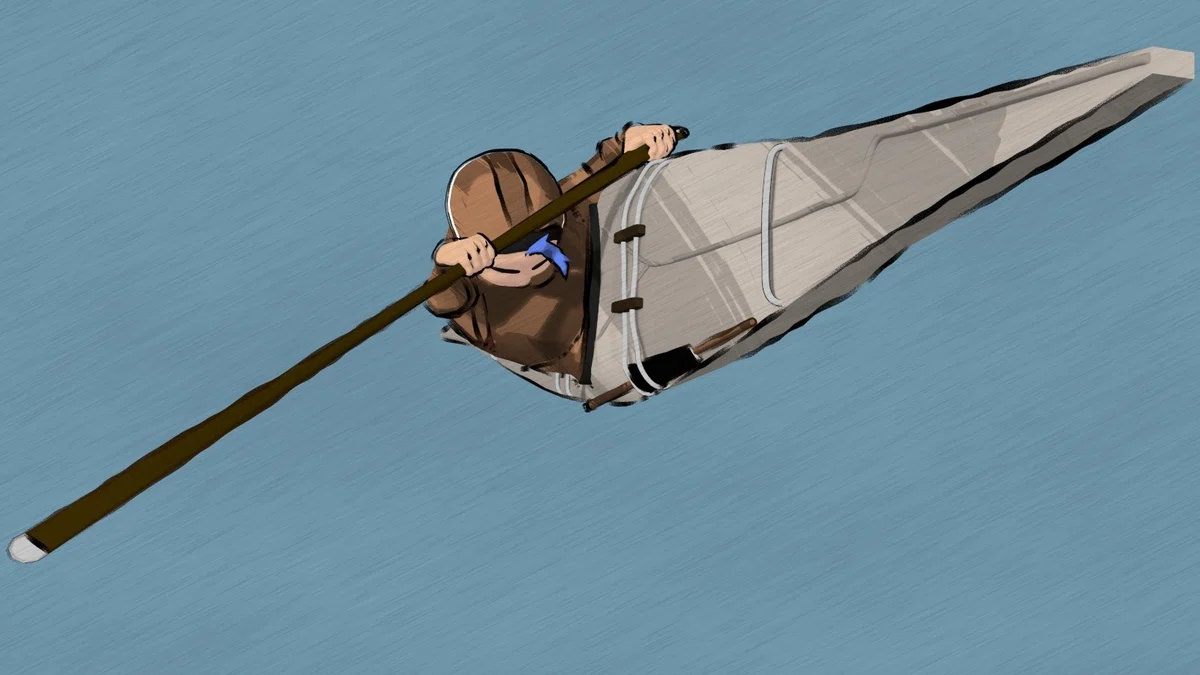
This final chapter has two main objectives.
The first is to learn the sweep finish, and the second is to be able to perform the sweep finish from the combat position.
Let’s begin with the sweep finish.
Up to this point in this note, we have focused primarily on the brace finish, a storm-roll variation that applies the mechanics of a brace. Mastering the brace finish is a necessary step before moving on to the sweep finish.
The sweep finish has two major advantages.
First, the recovery motion is faster than with the brace finish.
Second, it keeps the blade near the water surface at the end of the movement. In a brace finish, the downward pressure on the paddle often leaves the blade slightly below the surface. In contrast, the sweep finish sweeps the blade along the surface, keeping it naturally near the water and allowing for a smooth transition back into paddling.
Considering the real-world sequence—unexpected capsize → recovery → resuming paddling—having the blade near the surface is a significant advantage, making the sweep finish highly practical.
The second objective of this chapter is to ensure that you can execute this sweep finish even from the combat position. In real capsizes, you do not have the luxury of setting up beforehand. Therefore, you need the ability to reliably roll up with a sweep finish while keeping your paddle in the same grip position you use during normal paddling.
This chapter aims to help you achieve both: mastering the sweep finish itself, and making it work effectively from the combat position.
2. Practice Method

Recall Step 3. After capsizing, you moved the paddle in an arc to a position perpendicular to the kayak, then applied a brace to recover.
In the sweep finish, during this “arc” stage, you aim to generate lift with the paddle. The motion itself is not much different from the brace finish. However, by slightly bending your wrist like a “beckoning cat” while moving the paddle, downward lift is created. It’s somewhat like spreading butter on bread—smooth and controlled.
Start with imagery training on land, such as a sandy beach.
Angle your wrist and move the paddle in an arc. Repeat this movement several times. Jumping straight into the water can make it hard to use your wrist correctly due to tension or nervousness.
Next, move on to practical water training. If you fail, try to recover using Step 3’s method as much as possible, rather than relying on a safer fallback like a layback. Being consistent with this approach is important.
As your success rate improves, gradually shift your grip position toward the center of the paddle. Do this step by step—don’t move to the center all at once.
Eventually, you should be able to perform the sweep finish even from the combat position.
3. Step-by-Step Procedure

The movements are basically the same as in Step 3. The only thing you change is the grip position. After you recover, it’s a good idea to add a sweep from back to front, just to be on the safe side.
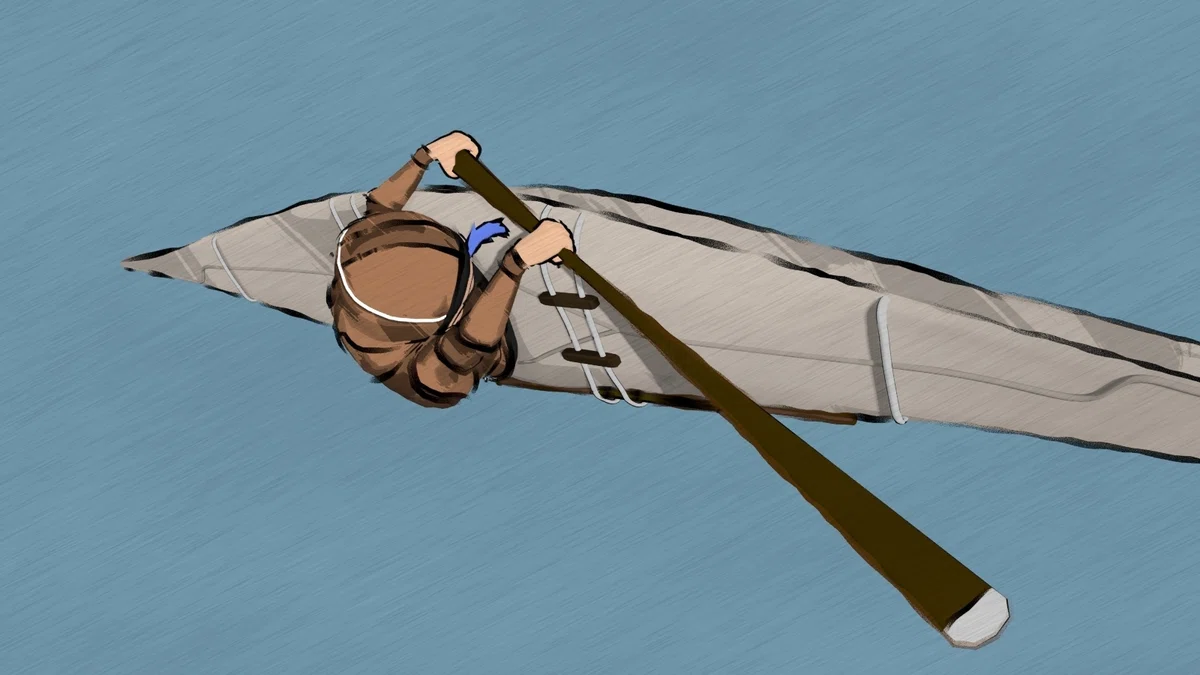
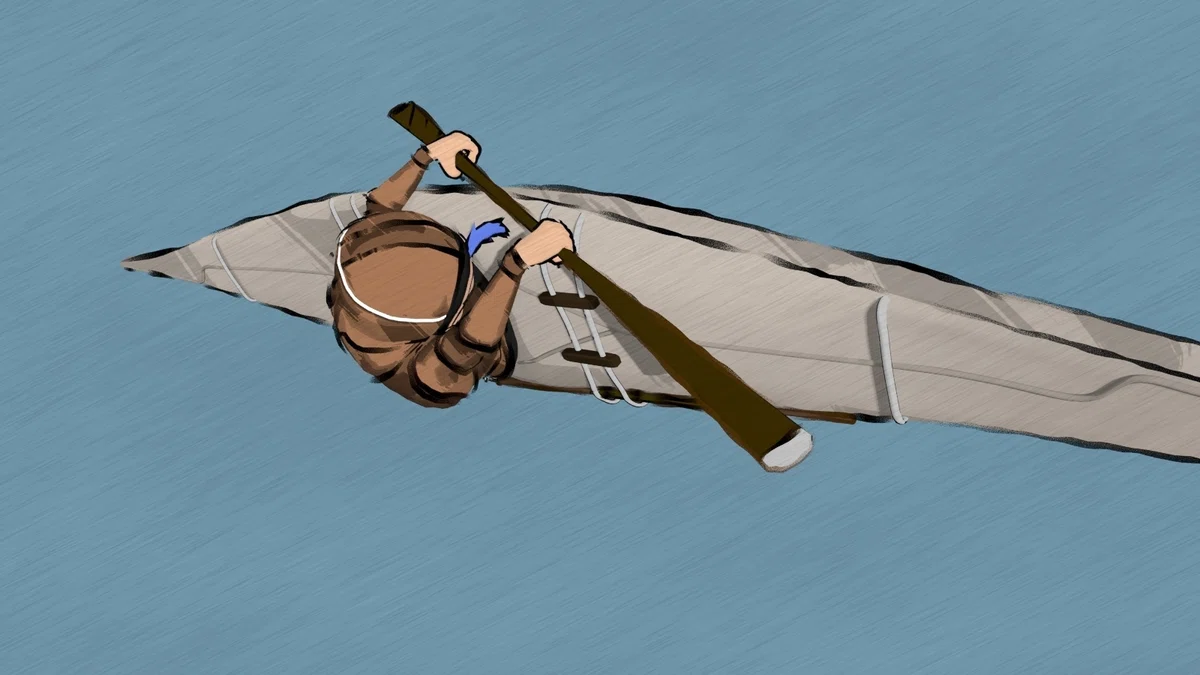
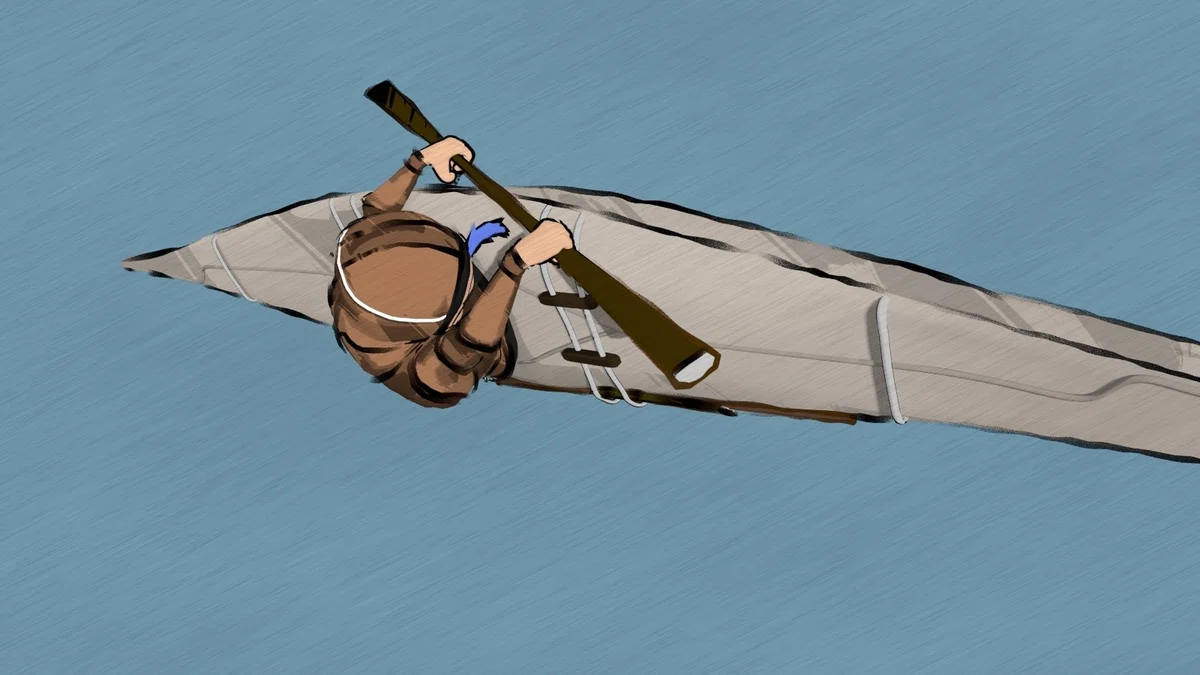
4. Common Mistakes
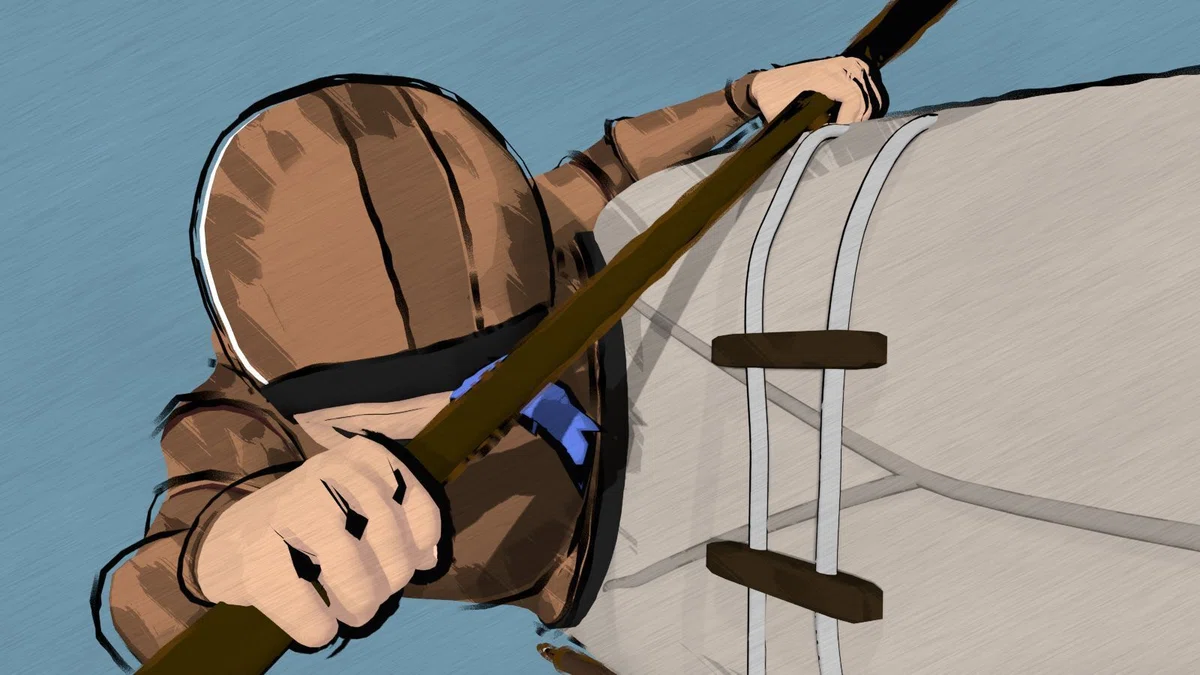
If you focus primarily on recovery, this usually isn’t a major problem. However, under competition rules, the paddle must always remain in contact with the kayak. Considering the lever principle, this is naturally the case, but it is explicitly required by the rules as well.
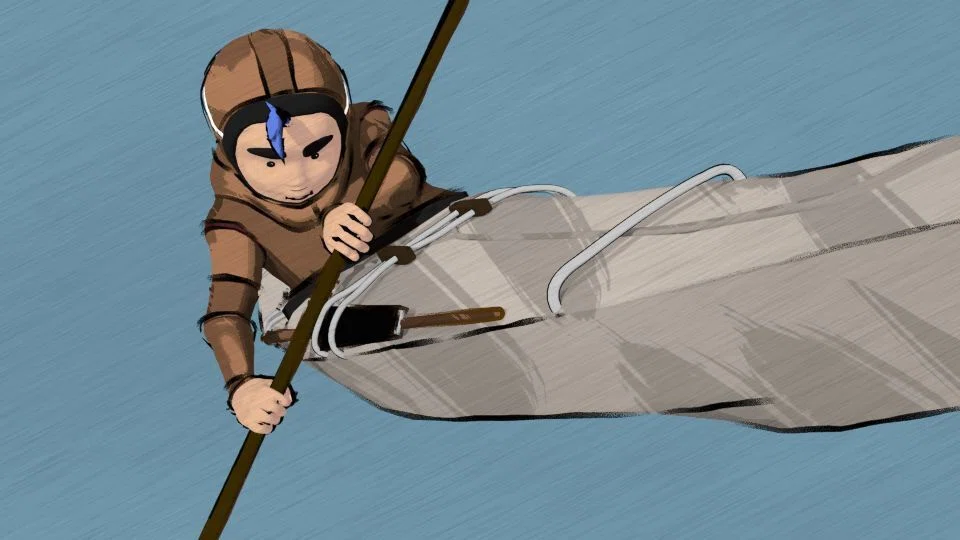
As shown in the diagram above, quite a few people allow the paddle to slide sideways. This tends to happen when Step 1 has not yet been fully mastered. Unfortunately, this movement cannot be considered a Storm Roll. Among the three-step training process (excluding the final phase), Step 1 is the most difficult. And because it is the most difficult, it is also the most important technique. Practice thoroughly until you can correctly apply the lever principle and both legs. Mastering these fundamentals is essential before moving on.
If you move on to the next step without properly mastering Step 1, incorrect habits will take root without being corrected. As a result, you may end up with a movement that looks like a “Storm Roll–like” motion, but isn’t actually a Storm Roll. In this three-step training method, the goal is not simply to move forward. If you stumble or feel something isn’t right, don’t hesitate to go back to the previous step and practice it again. This may sound like unnecessary advice, but if you truly want to improve, you need to fail—a lot. A mountain of failures is what eventually leads to real success. To repeat an important point: each step is not something you finish once and never return to.
If you practice only on weekends, revisiting and reviewing each step is especially important. Teaching your muscles to remember a movement is far from easy. It requires repetition—again and again—until the motion becomes second nature.
You might even say it takes a kind of obsession or stubborn determination to really engrain it.
For what it’s worth, just imagining the Storm Roll is enough to make my muscles twitch (^^;).
Also, at this stage, I don’t expect anyone to perform a layback at the finish (lol), but remember that the storm roll is fundamentally a forward finish. This rule should be strictly observed.
5. About QajaqJPN,
QajaqJPN is a premier club in Japan, bringing together enthusiasts of Greenland kayaking. It was founded by me in 2003. Although I stepped back for six years for personal reasons, I will return in 2026 as the club’s representative for the third time.
Over the past two decades, QajaqJPN has hosted the GUTS roll competition almost every year. Its consistency and scale have been recognized, and the club is officially affiliated with Qaannat Kattuffiat. Among foreign clubs, only three hold this official recognition worldwide: QajaqUSA (USA), QajaqCopenhagen (Denmark), and QajaqJPN.
The club’s main activities include roll lectures, organizing competitions, and building Greenland kayaks. Through these activities, it promotes the techniques and culture of Greenland kayaking to a wider audience.
If you are interested in Greenland kayaking or would like to get involved with the club’s activities, please feel free to contact us.
6. A Word of Thanks
With this, Storm Roll Basics comes to an end.
The updates were somewhat irregular, and I may have kept you waiting at times—my sincere apologies. And above all, thank you very much for staying with me through the entire series.
If you’ve read this far and practiced repeatedly but still find that things just aren’t working, please don’t hesitate to contact STORM ON. I’d be happy to work with you in person out on the water. I don’t advertise it loudly, but I do quietly run roll classes from time to time.
Thankfully, people come to take these classes not only from Japan but also from overseas. So far, participants have come from the United States, Germany, Spain, Korea, China, Hong Kong, Singapore, and Belgium. At this point, it seems that language barriers don’t matter all that much—Storm Roll is becoming a kind of universal language (lol).I hope we’ll have a chance to meet again on another occasion.
Until then, take care.


いいなと思ったら応援しよう!
 よろしければ応援お願いします。いただいたチップはロールアニメーションの製作費などに充てさせていただきます。