

SUBSCRIBE TO OUR FREE NEWSLETTER
Daily news & progressive opinion—funded by the people, not the corporations—delivered straight to your inbox.
5
#000000
#FFFFFF
To donate by check, phone, or other method, see our More Ways to Give page.
Daily news & progressive opinion—funded by the people, not the corporations—delivered straight to your inbox.
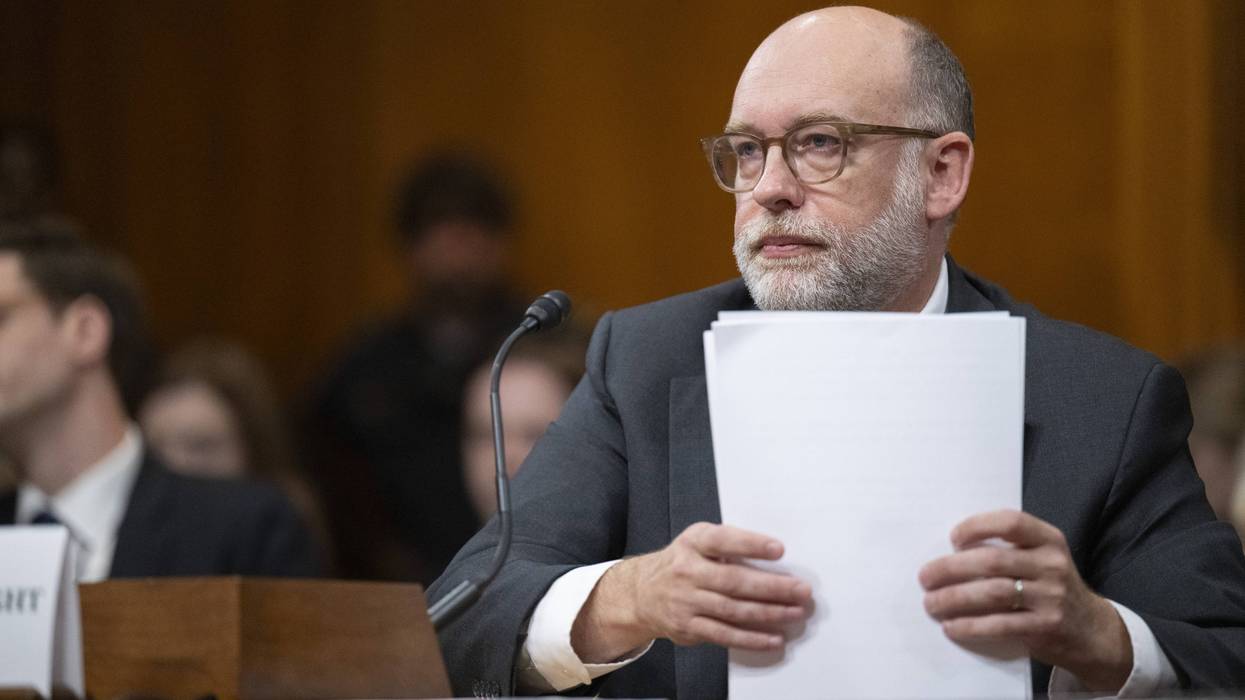
"These actions will have devastating consequences for workers, the environment, public health, and the rights of millions of Americans," warned progressive groups tracking the far-right agenda's implementation.
The right-wing Heritage Foundation boasted in a fundraising email on Tuesday that US President Donald Trump's administration has implemented more than half of the policy proposals laid out in the group's Project 2025 agenda, a sweeping conservative governance plan that Trump repeatedly claimed to know nothing about during his campaign for a second White House term.
The Heritage Foundation's email, first reported by Bloomberg, stated that 53% of Project 2025 is now federal policy, pointing to the administration's dismantling of the US Agency for International Development and broader attack on "diversity, equity, and inclusion policies" as examples. The group emphasized that its work is far from finished, declaring that "in this special 250th anniversary year, we must work to implement all of Heritage’s policy recommendations to ensure another 250 years of American greatness.”
Heritage's estimate that the Trump administration—which includes Project 2025 chief architect Russell Vought, the head of the White House budget office—has enacted 53% of Project 2025's proposals aligns precisely with a tracker maintained by the Center for Progressive Reform and Governing for Impact. The groups warned that "these actions will have devastating consequences for workers, the environment, public health, and the rights of millions of Americans."
The tracker, last updated in February, shows that the Trump White House had by that point implemented 283 of the 532 policy actions recommended by Project 2025 via executive order—from the dismantling of the Education Department to halting federal grants for environmental organizations to stripping civil service protections from federal workers.
That the Trump administration's policy actions mirror those recommended by Project 2025 should not be entirely surprising, given that the agenda broadly reflects the conservative movement's priorities. But Project 2025's creators have publicly taken credit for the White House's moves.
“This is exactly the work we set out to do,” Paul Dans, who worked in the first Trump administration and oversaw Project 2025's creation, told CNN last year as the administration's early actions mirrored the right-wing agenda. “We wanted to make sure the president was ready to hit the ground running on day one. The rapidity and the depth of what they’ve rolled out this quickly is a testament to the work done in Project 2025."
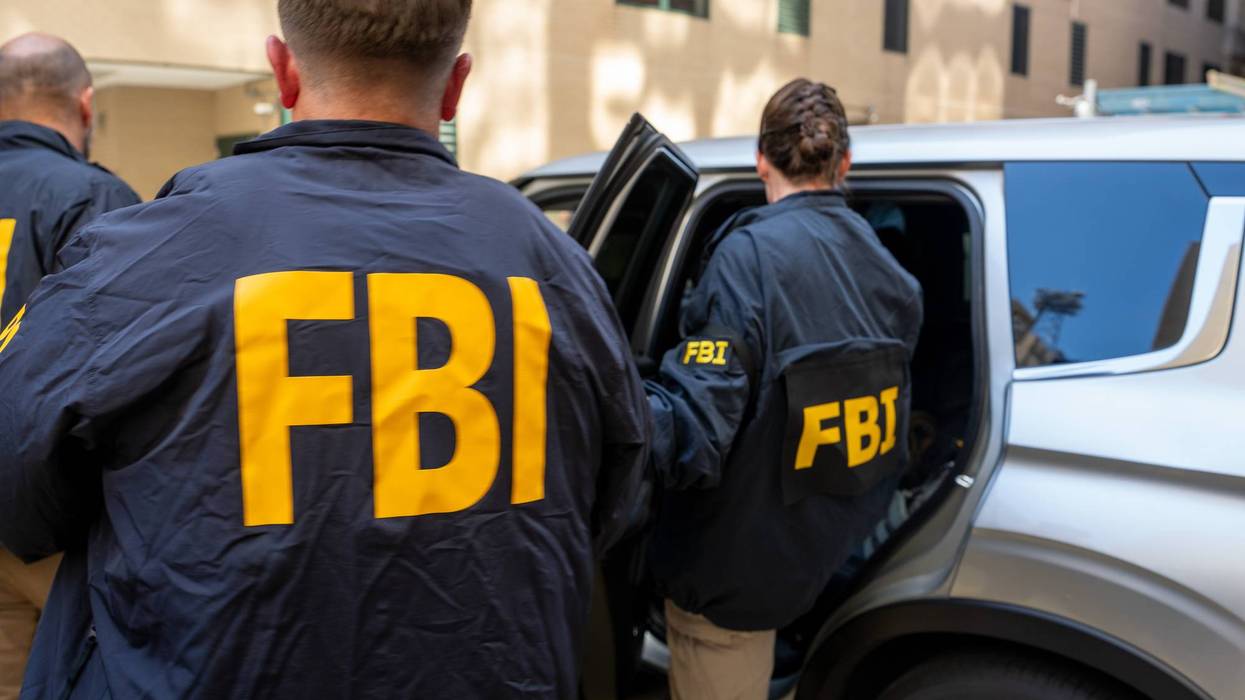
An FBI raid on the Ohio Organizing Collective is part of a strategy that aims to intimidate voters and those who would help them exercise the franchise.
The vote is the heart of democracy. Every two years, citizen organizations mobilize to register Americans and ensure they are on the rolls. That work is especially vital in poor and minority communities. The Ohio Organizing Collaborative is the leading voter registration group in the Buckeye State. In 2024, it registered 100,000 voters.
The group helped lead the fight for fair maps against an egregious gerrymander in Ohio. The Brennan Center represented it in court, where we prevailed repeatedly. When legislators simply ignored those court rulings, the activists went to Ohio voters. Together with a former chief justice of the state supreme court, Republican Maureen O’Connor, they supported a campaign to pass a state constitutional amendment to create a nonpartisan redistricting commission. They called the amendment Citizens Not Politicians. It would have benefited neither party but empowered voters. The ballot measure fell short in 2024, but it was an example of nonpartisan, cross-ideological civic activism at its best.
That’s why what happened late last week is so troubling. Indeed, so outrageous.
In a massive sweep, 100 FBI agents and other federal officers raided the Ohio Organizing Collaborative’s office and fanned out to the homes of volunteers, board members, and staff. Agents seized phones and computers, scooped up papers, and questioned startled citizens.
If citizens are afraid to register to vote, or to help others register, mission accomplished.
The rationale? According to a search warrant, the hunt for voter registration fraud.
This gives every indication of being an extraordinary abuse of power. It is part of a strategy that aims to intimidate voters and those who would help them exercise the franchise.
This is, after all, the same Justice Department that repeatedly has probed or prosecuted President Donald Trump’s critics, only to see those cases crumble before grand juries and judges. Combine that with an FBI led by Kash Patel, who wrote an election-denying children’s book about his fealty to the “king.”
This expanded strategy was mapped out in Project 2025, the Heritage Foundation’s blueprint for what became many Trump administration policies. Use the Justice Department, it urged, to go after state election officials and registration groups. Hunt the imaginary threat of widespread voter misconduct.
The Heritage Foundation for decades has been a principal purveyor of the myth that many voters are committing fraud. Now the entire federal government is in the grip of that conspiracy theory.
A reminder: The Brennan Center’s research shows that you are more likely to be struck by lightning than to commit voter fraud.
What will be produced by this massive display of prosecutorial force? Probably not much of anything but—its progenitors likely hope—dread. If citizens are afraid to register to vote, or to help others register, mission accomplished.
In fact, the strategy seems focused not on enforcing the law but fomenting fear.
We saw that in January when the FBI raided the election office in Fulton County, Georgia, seeking to “prove” that Joe Biden did not win the 2020 election there. When the affidavit that authorized the raid was released, it turned out to be a collection of long-debunked claims. The raid sent a message to election officials everywhere: If you oversee an election where we dislike the results, you might be met by a knock on the door.
We saw it last week when Trump declared that California’s primary election was “rigged,” because a Republican reality show star did not finish in the top two for the mayoral election in deeply Democratic Los Angeles.
We saw it last year when armed, masked federal border patrol agents showed up in force at a press event held by California Gov. Gavin Newsom to announce a redistricting ballot measure.
What can we do to protect voters?
We should stand up for those working to register and mobilize voters and ensure they have the best legal advice and follow the rules. We should redouble efforts to protect election officials who face torrents of abuse. We should encourage states to step up, by passing legislation to make doubly sure that Immigration and Customs Enforcement and other federal law enforcement agencies cannot wreak havoc at the polls. We should lift up the nonpartisan work of police, prosecutors, and sheriffs through the Committee for Safe and Secure Elections, which brings together election officials and law enforcement to train officials around the country. And we should unite against efforts to interfere in elections or intimidate voters.
The Brennan Center honored the Ohio Organizing Collaborative in 2024 at our annual Brennan Legacy Award Dinner, together with Chief Justice O’Connor. I told the crowd, “This is kind of a buddy movie that I want to watch.”
Molly Shack, the group’s dynamic leader, told attendees about how it approached its work. “We are organizing people in communities around education and criminal justice reform and democracy issues and an ability to have a government that works, that can actually be responsive to citizens in all of our interests.”
She continued: “I think the idea that democracy is a partisan issue is something that I think we’re all trying to fight against. A functioning democracy shouldn’t be about right versus left. It should be about right versus wrong.”
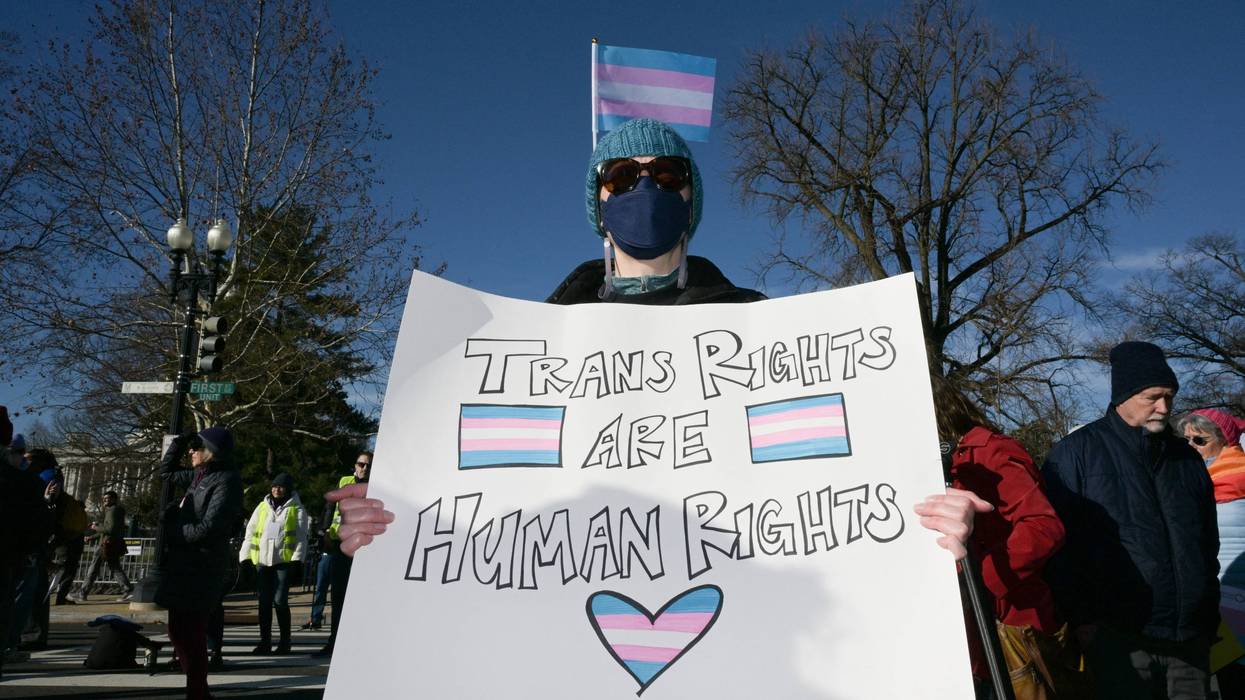
As the defense teams in Hecox and BPJ seek to police the bodies of transgender women and girls, all women and girls who don’t adhere to society’s rigid standard of femininity will feel the impact.
The power politicians have over women’s bodies is one of the oldest tools of control in American history. Throughout that history, the promise of protecting women has been the longtime excuse for excluding women from civic life and limiting our freedom. That history isn’t over.
The Supreme Court will soon decide Little v. Hecox and West Virginia v. BPJ—legal cases out of Idaho and West Virginia that will determine whether transgender athletes will be allowed to compete on women’s and girls’ school sports teams.
Idaho’s attorney general has argued that the bans ensure “women’s spaces and sports remain fair, safe, and dedicated to empowering female athletes.” Or, in other words, that we must allow politicians to pass these bans to “protect” women. Although the court’s decision is expected any day now, I have already made mine. Transgender sports bans are not and never have been about protecting women.
I have spent my career fighting to protect the bodily autonomy and legal protections of all women and girls. When people ask me, whether genuinely or in bad faith, why transgender women are unequivocally included in my organization’s work, I tell them the truth: Our fight is the same.
If you have been in the business of fighting for women’s rights and protections as long as I have, you know that women face many threats to their safety and autonomy, but not one of those threats includes transgender people.
The tactics being used to exclude transgender athletes are similar to those once used to keep women from casting a ballot, having a credit card, or getting the healthcare they need.
In 1776, a woman couldn’t own the clothes on her back, much less the home she built. Proponents of the practice said it was “intended for her protection.” One 100 years later, when women were shut out of the legal profession, the Supreme Court ruled in favor of such paternalism, even stating that “man is, or should be, woman’s protector.” And when women were later fighting for the right to abortion, we were told that our bodies are not our own.
It is no wonder, then, that the red herring of protecting women is being deployed in the Trump administration’s executive orders and in the Hecox and BPJ cases. It is the same excuse being used in a flurry of sports bans and anti-transgender bills that have been introduced and implemented around the country over the past six years. Ultimately, transgender sports bans fail to address the real threats women face in sports, like unfair pay and unequal access to training and facilities.
The great irony is that bans against transgender women in women’s sports, women’s bathrooms, and other areas of public life actually endanger all women. The Idaho law that the Hecox case is challenging, for example, requires women and girl student-athletes whose sex is disputed to undergo invasive sex testing, including physical examinations. Athletes in men’s sports are not subject to the same degradation.
For as long as women and girls have been allowed to participate in sports, their bodies have been scrutinized. From non-white women who do not conform to white beauty standards, to girls with short hair or baggy clothes, to those who are deemed too strong, women athletes who do not perform femininity as some deem correctly have been harassed, punished, and forced to face humiliating tests to prove their gender.
It is no accident that Project 2025 and its supporters are pushing both anti-transgender legislation and a rollback of women’s protections against sexual harassment and assault, their right to reproductive healthcare, and even their ability to vote. Today, as the defense teams in Hecox and BPJ seek to police the bodies of transgender women and girls, all women and girls who don’t adhere to society’s rigid standard of femininity will feel the impact.
If you have been in the business of fighting for women’s rights and protections as long as I have, you know that women face many threats to their safety and autonomy, but not one of those threats includes transgender people.
It remains to be seen if the Supreme Court’s decision in Hecox and BPJ will reaffirm what I already know to be true: We women, including transgender women, must be in the fight for liberation together.
