

“A thousand roads lead men forever to Rome”; Alain de Lille, 1175
All content © Roman Roads Research Association 2024, all rights reserved; unless otherwise stated.

a charity registered in England & Wales, no 1163854.
 JOIN US
CONTACT US


Thursday 8 October 2026 Simon Maddison (UCL); The Roman Crossing of the Wye at Chepstow
Thursday 22 October 2026 Prof. James Gerrard (Newcastle University); Travelling Britannia: a materialistic and experiential perspective
Thursday 5 November 2026 Dr. Michael J. Curtis; Roads to the Sea: Exploring the Roman Maritime Landscape
Thursday 19 November 2026 Dr. Eniko Hudak (Pre-
Thursday 10 December 2026 Dr. Al McClusky (Newcastle University); Finding the 'Hibernian Shore': Strategy and Diaspora in the Irish Sea Province during the Late and Roman Iron Age
Thursday 7 January 2027 Jnr. Prof. Dr. Catherine Teitz (Johannes Gutenberg University, Mainz); Streets and Social Life on the Frontier
Thursday 21 January 2027 Dr. David Walsh (Durham University); Sedgefield Romano-
Thursday 4 February 2027 Gail Brownrigg; Working title -
Thursday 18 February 2027 Dr. John Salvatore; Missing in Action? A possible role for Legio II Augusta at the time of the Boudican revolt.
Thursday 4 March 2027 Paddy Lambert (Oxford Archaeology); Title T.B.C.
Thursday 18 March 2027 T.B.C.
Travelling Britannia: a materialistic and experiential perspective
Streets and Social Life on the Frontier

Sedgefield Romano-
Thursday 21 January, 2027
David Walsh (Durham University)
Archaeology has long been concerned with studying the movement of past people. Our approaches have been in part governed by the movement of diagnostic objects. More recently scientific analyses, such as Ancient DNA and isotopes, have been used to answer questions about mobility.
In this lecture, James argued that both approaches have been reductive, essentially provenancing people without paying due attention to the experiences and material needs that are an integral part of mobility and movement. Using the material remains and a broader experiential perspective provides new insights into how people travelled Britannia overcoming the tyranny of distance.
Finding the 'Hibernian Shore': Strategy and Diaspora in the Irish Sea Province during the Late and Roman Iron Age
Thursday 10 December, 2026 (note: revised date -
Dr. Al McClusky (Newcastle University)
Roads to the Sea: Exploring the Roman Maritime Landscape
Thursday 5 November 2026
Dr. Michael J. Curtis
Roman roads are often celebrated as one of the greatest engineering achievements of the ancient world, but their importance extended far beyond facilitating travel across land. They formed a vital component of an integrated transport network that linked settlements, agricultural landscapes, industrial centres and military installations with the harbours and anchorages that connected the provinces of the Roman Empire.
This talk explores the concept of the Roman maritime landscape by examining how roads shaped the movement of people, goods and ideas between the hinterland and the sea. Rather than viewing roads and harbours as separate elements of the landscape, it considers how they worked together to create efficient transport and communication networks that underpinned trade, administration and imperial control. Drawing on archaeological evidence from across the Roman world the talk demonstrates how road networks influenced the location, development and success of ports and harbours. By placing roads within their wider maritime context, it offers a fresh perspective on the infrastructure that enabled the Roman Empire to flourish and highlights the enduring relationship between land and sea in the ancient Mediterranean.
Traditional scholarship on the Roman Frontier in Britain often focuses on the more visible and more easily datable Roman material, corroborated by Latin texts. Consequently, the indigenous people on the Frontiers frequently fall from view, with any agency they had in shaping the boundaries between themselves and their boundaries with Rome, absent from the debate. This thesis proposes that alternative ideas on diaspora in war from the related academic discipline of Strategic/War Studies can help resolve this issue. Using the region around the Irish Sea in the Late and Roman Iron Age as a case-
Road transport in the distribution of pottery across Roman Britain has long been considered to be a significant, but largely constraining factor. Within the neoclassical economic models for Roman Britain, and the Roman Empire, road transport has been defined as a relatively accessible but rather costly method of transport. This talk challenges this view through the distribution of Mancetter-

All roads lead to… Mancetter -
Thursday 19 November, 2026
Dr. Eniko Hudak (Pre-
We are pleased to announce another outstanding list of speakers for our seventh season. As usual, all talks are online, open to the public and free of charge, although donations towards running costs are always welcomed. Please note that this season bookings can only be made through Eventbrite, with links posted on this page as they become available. As usual, talks will be recorded and made viewable after the event on YouTube -
Missing in Action? A possible role for Legio II Augusta at the time of the Boudican revolt.
Thursday 18 February, 2027
Dr. John Pamment Salvatore
Only one of the four legions stationed in Britain at the time of the Boudican revolt of A.D. 60/61 appears, from the historical account of Tacitus, not to have engaged in direct hostilities with the rebel army. That legion was Legio II Augusta. This talk proposes that, following an examination of the relevant historical and archaeological sources, II Augusta may not have been entirely inactive during the relatively short period of the rebellion and was otherwise engaged on defensive works at civilian sites at Exeter.
Thursday 7 January, 2027
Jnr, Prof. Catherine Teitz (Johannes Gutenberg University in Mainz, Germany)
Movement and trade, encounters and performances -
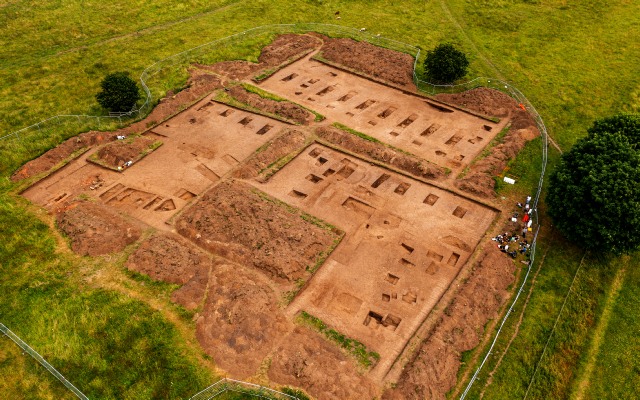
In June 2026, Durham University undertook several weeks of excavation at the Roman roadside settlement that was situated to the west of Sedgefield, County Durham. The settlement, which was occupied from the 2nd to 4th centuries, developed alongside Cade's Road, a major route that linked Brough-
The Roman Crossing of the Wye at Chepstow
Thursday 8 October, 2026
Simon Maddison (UCL)
In August 2023, the Chepstow Archaeological Society successfully excavated a timber structure at the spring low tide mark, on the line of the Ancient Crossing of the Wye about ½ mile upstream of Chepstow Castle. C14 tests on timber samples gave dates of the 1st Century AD. This clearly confirms the structure to be Roman. A further excavation took place at a super low tide event in July 2024 where more of the structure was exposed and detailed measurements made. This work forms the core of our exploration of the Roman Crossing, including very recent work on the approach roads on either side of the river.
In June 2026 the Society was awarded a RICHeS grant to carry out an extensive Sonar survey of the lower Wye, working with Southampton University's Marine Research Unit. This work will hopefully reveal more details of the crossing, both within the river and beneath the mud banks. It is currently expected to take place in October.
Simon Maddison has been leading this project for the Society and will present an up-

Thursday 4 February, 2027
Gail Brownrigg

Our 2027/8 schedule is currently in preparation. If you may be a potential future speaker, or have any suggestions for future talks and seminars, please contact us.
Working Title -


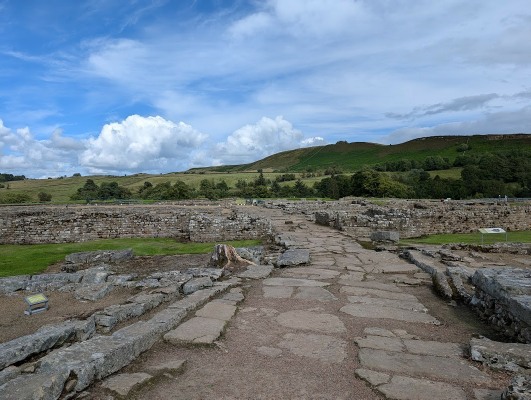
A paved street at Vindolanda.


T.B.C
Thursday 4 March, 2027
Paddy Lambert (Oxford Archaeology)
 BOOK USING

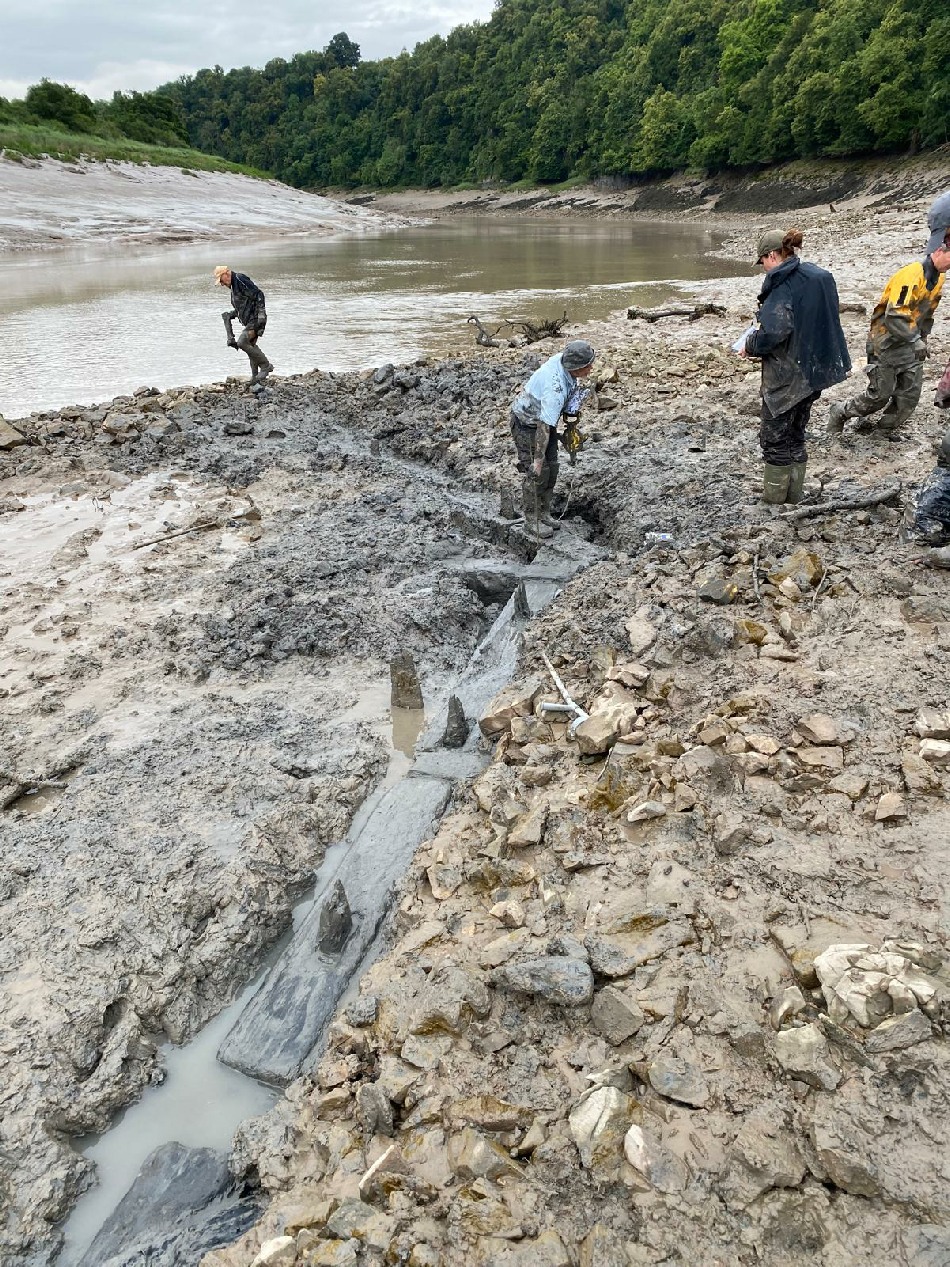
A Roman bridge pier emerges from the mud beside the River Wye

A Romancavalryman

Part of a Roman funerary monument found in Augsburg, southern Germany, in 1990. It is thought to date from about A.D. 200 -

| Lecture & Seminar Series |
| RRRA GEOPHYSICS PROJECT |
| EXCAVATIONS |
| REPORTS |
| Conferences |
| 2026-7 Lectures & Seminars |
| 2025-6 Lectures & Seminars |
| 2024-5 Lectures & Seminars |
| 2023-4 Lectures & Seminars |
| 2022-3 Lectures & Seminars |
| 2022 Lectures & Seminars |
| 2021 Lectures & Seminars |
| Roads of Roman Britain Project |
| Portsmouth Programme, Sat. 3/9/16 |
| Portsmouth Programme, Sun. 4/9/16 |
| York Programme, Sat. 12/11/16 |
| York Programme, Sun. 13/11/16 |
| A Selection of Conference Papers |
| RRRA NEWSLETTERS |
| ITINERA, the Journal of the RRRA |
| JOIN US |
| Forum |
| Roman Roads in Britain PDF |
| Roman Roads in Britain PDF |
| OS Roman Road Files (Margary) |
| OS Roman Road Files (RRX) |
| Forum Terms & Conditions |
