

SUBSCRIBE TO OUR FREE NEWSLETTER
Daily news & progressive opinion—funded by the people, not the corporations—delivered straight to your inbox.
5
#000000
#FFFFFF
To donate by check, phone, or other method, see our More Ways to Give page.
Daily news & progressive opinion—funded by the people, not the corporations—delivered straight to your inbox.
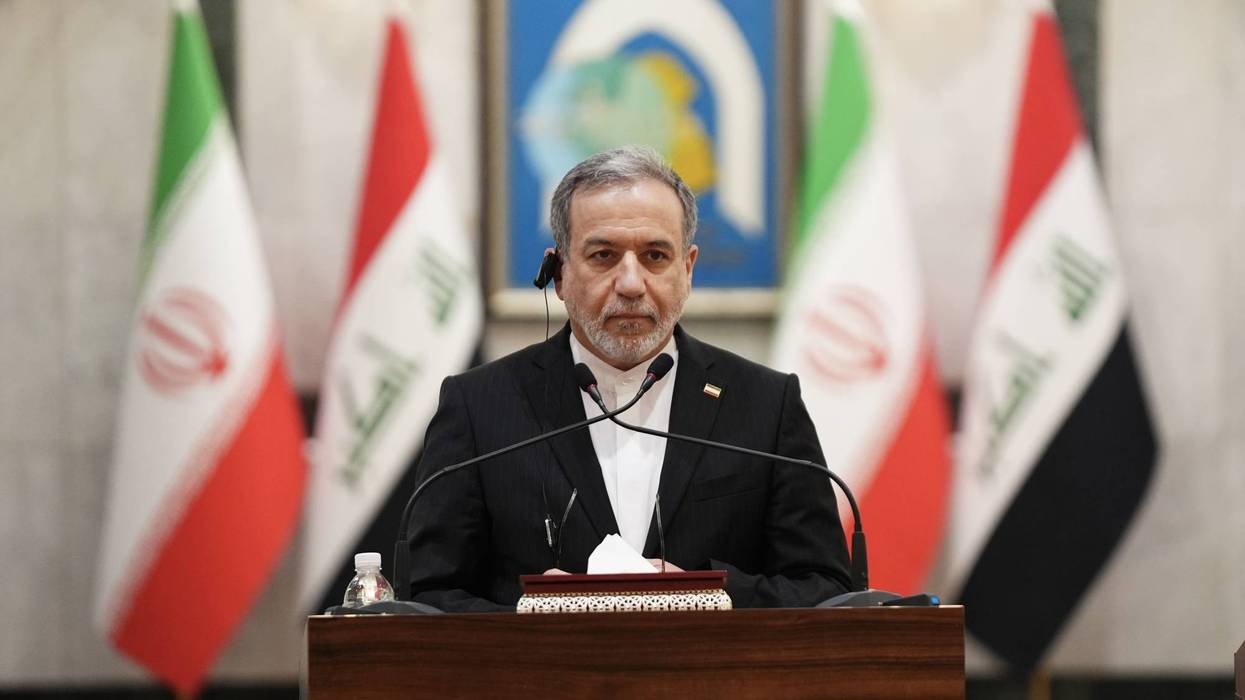
Iran's Foreign Ministry accused the Trump administration of "rendering futile all efforts made over the past several months to reduce tensions and restore stability."
The Iranian Foreign Ministry on Sunday condemned the United States' latest round of airstrikes as a "flagrant violation" of international law that threatens to permanently derail efforts to achieve a peaceful resolution to the war, which US President Donald Trump launched earlier this year in coordination with the Israeli government.
This past weekend, said Iran's Foreign Ministry, the US carried out "brutal attacks" and "acts of aggression" that pose "a serious threat to international peace and security, rendering futile all efforts made over the past several months to reduce tensions and restore stability in the West Asia region."
On Saturday and Sunday, the US military bombed dozens of targets across Iran, which retaliated with strikes on American military installations in Kuwait, Bahrain, and other Middle East nations. Iran's Foreign Ministry accused those nations of illegally serving as launch pads for US strikes.
In response to the new wave of bombings, Iran announced the closure of the Strait of Hormuz, blaming the US for causing "insecurity" in the critical waterway. Trump claimed in an interview on Sunday morning that the strait is "open" after the US "bombed the hell out of" Iran the previous night.
"The US ruling establishment continues its campaign of disinformation and the dissemination of fake news in an attempt to distort the facts and justify its unlawful actions," said the Iranian Foreign Ministry, accusing the Trump administration of undermining talks between Iran and Oman regarding commercial traffic through the Strait of Hormuz.
The Iranian statement also voiced "regret" over what it described as the head of the United Nations' "unconstructive approach" to the Trump administration's "blatant lawlessness and bullying."
"The Ministry of Foreign Affairs underscores the responsibility of the UN secretary-general and the Security Council to address violations of international peace and security," the statement reads. "It calls for the aggressor parties to be held accountable and for those who ordered and carried out the crimes committed against the Iranian nation to be brought to justice and punished."
Earlier Sunday, Stéphane Dujarric, a spokesperson for UN Secretary-General António Guterres, voiced concern over the "serious escalation and renewed military confrontations in the Gulf, including the Iranian attacks on ships in the Strait of Hormuz, the attacks by the United States on Iran, and the attacks by Iran on targets in the neighboring countries."
"These attacks must all stop," said Dujarric. "The secretary-general reiterates that a return to full-scale hostilities would have catastrophic consequences—for the peoples of the region, for international peace and security, and for the global economy. He further reaffirms the need for the restoration of full freedom of navigation in the Strait of Hormuz."
The military exchanges came less than a month after the US and Iran signed a memorandum of understanding aimed at facilitating a permanent end to the war. Last week, Trump declared the agreement "over" and said negotiations were "a waste of time," even as the US and Iran agreed to continue talks.
The National Iranian American Council (NIAC) noted Sunday that "Iran and the United States have once again entered a cycle of direct military confrontation," adding that "what was presented as an end to the war now appears to have been little more than a temporary pause."
"The continued evisceration of diplomatic agreements will make any attempt to restore peace extremely difficult," NIAC argued. "Iran, fresh off new US attacks amid the late supreme leader’s funeral ceremonies, will view any US pivot back to diplomacy with even deeper distrust. US hawks will likewise paint Iran’s actions as the predictable irrationality of radicals, even if US actions have helped trigger Iranian retaliation every step of the way."

Give him another two and a half years and who knows what this president will be able to do—but the odds are that, by at least a 6-3 margin, he might indeed be able to take the Earth down with him.
Iran, Iraq, Irate.
What a world! It couldn’t be much stranger, could it?
And by the way, what is it about the Middle East? Since the Gulf War of 1990-1991, it’s just never really ended, has it? Who cares that the region is halfway around the world from Washington, DC? Yes, the US fought Iraq there from 2003 to 2008. And recently, of course, President Donald Trump has gone after Iran. If you want to spread out just a bit more, you could toss in this country’s relatively brief war in Libya and its almost endless one this century in Afghanistan. And don’t blame me if I left something out. After all, I’m almost 82 years old and starting to forget a few things.
I mean, Iran makes particular sense, right? After all, it’s a mere 6,000-odd miles from this country. Anyway, why not shut down part of the world’s supply of fossil fuels and threaten us all with global economic disaster? And since you asked, how could anyone be surprised? After all, since World War II, my country has indeed been the definition of a (if not the) global imperial power and it’s never really stopped making war.
President Trump should really be considered the equivalent of a giant piece of green algae from that Washington pool of his, but the pool he’s actually in is the United States of America—or, perhaps even more accurately, Planet Earth.
In my youth, for instance, Washington spent almost 20 years fighting in Vietnam. Of course, who even remembers these days, given all the wars that have followed?
Still, on a planet with so many other problems, particularly heat, you might wonder why our government continues to periodically turn up the heat in the Middle East and beyond, led, of course, by a president who, once upon a time (in the wake of his first term in office) in what now seems like another age and another universe, was proud of not going to war anywhere. Oops! Except—yes again, in the Middle East—Syria. Oh, double oops, and I almost forgot to look in the direction of Africa and so include his more recent brief bombing campaign in Nigeria and the seemingly never-ending one in Somalia—yes, Somalia!
And in case you hadn’t noticed, despite all those endless wars (without a victory in sight), the US military doesn’t exactly feel at the top of its game anymore either. Otherwise, despite Donald Trump’s promise of an unparalleled future Pentagon budget of $1.5 trillion—and no, that is not a misprint!—why would one US general after another be resigning, retiring, or—thank you, Secretary of (most distinctly) War Pete Hegseth—being fired?
These days, of course, if you want to be a—if not the—major power on this planet (and I’m thinking, as I’m sure you’ve already guessed, about China), there’s distinctly something to be learned from the previous great power’s three-quarters of a century of failed wars that (yes, again!) just never seemed to end (and may soon be added to, possibly not in the Middle East or anywhere near it, but in Cuba, or perhaps Greenland, or—since it’s Donald Trump—almost anyplace you care to imagine on Planet Earth.
Honestly, just in case you hadn’t noticed, what a truly strange world we now find ourselves in. I mean, from George Washington to Barack Obama, we’ve had presidents of all sorts, temperamentally speaking, but never one faintly like Donald J. Trump. And there have, of course, been endless leaders of powers in decline on this planet, but perhaps never one who so distinctly and personally embodied decline, not at least since ancient Rome’s Caligula or Nero.
President Trump should really be considered the equivalent of a giant piece of green algae from that Washington pool of his, but the pool he’s actually in is the United States of America—or, perhaps even more accurately, Planet Earth. And it seems there’s simply no way to clean him out.
Worse yet, he wasn’t just elected mistakenly once, but purposely twice by American voters (49.8% of them the third time around), who could imagine only him (and no one else) leading this country. What they seem not to have imagined, however, is the most obvious thing of all: where he might be leading the rest of us, which is, of course, directly down the planetary toilet, algae and all. Of course, it’s no news, historically speaking, that all great powers from imperial Rome to imperial Britain to the Soviet Union do go down sooner or later, but to think of Donald Trump simply as the president of American decline on this deeply disturbed planet of ours is to sell him distinctly short.
And unlike the rest of us, he’s getting just what he’s always wanted. Any day you look at the paper (and yes, I’m old enough that I still read a paper paper), his ultimate dream—a Trumpian headline—invariably awaits him. Friday’s (as I was writing this) in The New York Times was: “Trump Cut Big Mine Deal, and Sons Stand to Gain, $1.6 billion Pact for Kazakhstan Tungsten Furthers Pattern of Self-Enrichment.” And honestly, you don’t really have to read another word of it, do you? Tungsten in Kazakhstan and his family is going to make a fortune! Well, what’s new? Not much, really.
After all, in some mad fashion, we are now distinctly on a Trumpian planet of billionaires. (Note that I almost wrote “billionaires and a trillionaire,” but of course the first trillionaire in human history, Elon Musk, only recently lost part of his shirt and is once again a mere multi-, multi-billionaire.) And Donald J. Trump would never want his sons or himself to be left out of the action.
Nor would he ever want anyone to say to him, “You’re fired”—certainly not the six conservative (or do I mean deeply reactionary) Supreme Court justices who just allowed him by the usual 6-3 margin to freely fire the leaders of independent agencies or commissions any time he pleases. Or, as Justice Sonia Sotomayor put it in her dissenting opinion, “The Court gives the President a power unknown even to the English Crown against which the Founders revolted, elevating him above his once-coequal branches by transforming a duty to take care that the laws be faithfully executed into a license to act in defiance of those very laws.”
Give him another two and a half years and who knows what this president will be able to do—but the odds are that, by at least a 6-3 margin, he might indeed be able to take this planet down with him. And in doing so, he’ll give that phrase of once-upon-a-time New York Yankees announcer Mel Allen for a batter hitting a home run—“going, going, gone!”—a distinctly new meaning.
This is a dangerous game.
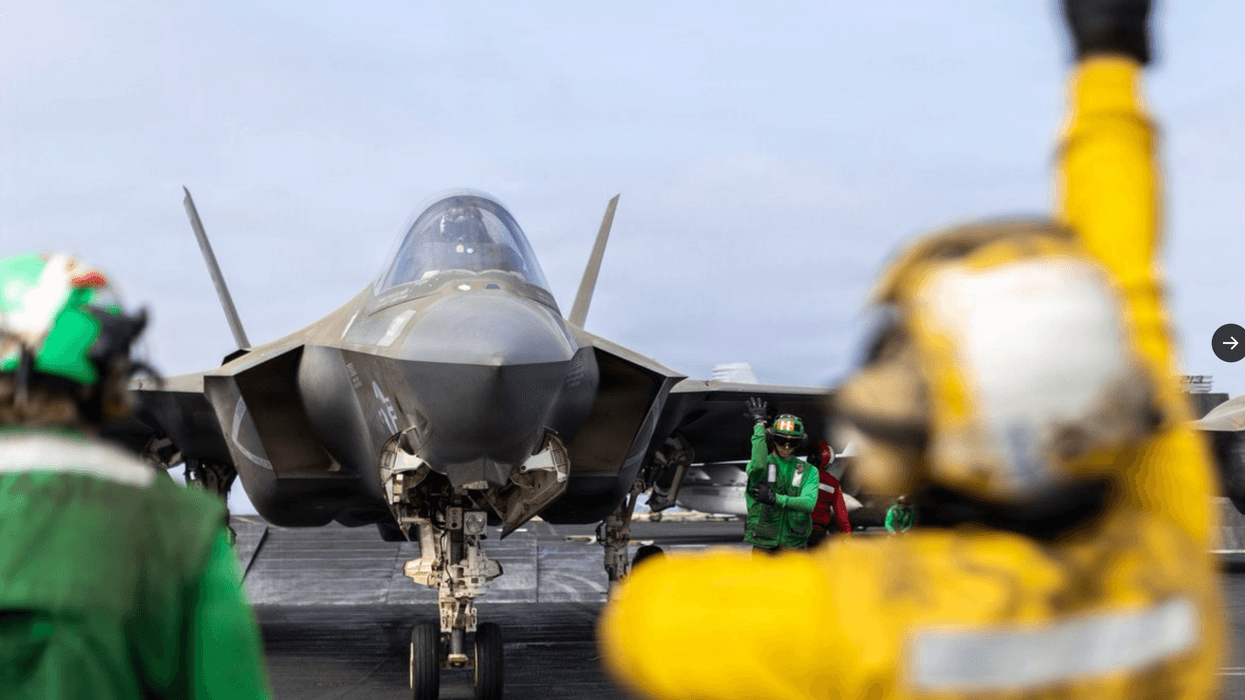
For the second time since the US-Iran Memorandum of Understanding (MOU) was signed, Washington and Tehran have slipped back into direct military confrontation. The United States struck “80 targets in Iran with precision munitions” after Iranian forces fired on several ships transiting the Strait of Hormuz without prior coordination with Tehran. The scale of the American strikes reportedly far exceeded the previous U.S.-Iran exchange, suggesting that Washington sought not merely to retaliate but to reestablish deterrence. The United States also reimposed sanctions on Iranian oil sales, reversing one of the central concessions of the MOU. The IRGC, in turn, claimed to have attacked 85 US military sites across the region, including the Fifth Fleet headquarters in Bahrain and Ali Al-Salem Air Base in Kuwait, and said eight were destroyed.
At the heart of the dispute are two competing interpretations of the MOU. Tehran's reading is that while the Strait of Hormuz is to remain open, all commercial traffic during the 60-day interim period must be coordinated with Iran as the parties negotiate a permanent maritime arrangement. Washington, by contrast, interprets an "open" Strait to mean that vessels may transit either the Iranian or Omani shipping lanes without coordinating with Iran.
For Tehran, this is not a technical disagreement but a strategic one. Iranian officials fear the United States is using the MOU to erode Iran's control over the Strait by rejecting any requirement for coordination and, in effect, establishing an alternative corridor that could remain open even if war resumes. Such an arrangement would deprive Iran of what many of its strategists regard as its single most important source of leverage in a future conflict: the credible ability to disrupt maritime traffic through Hormuz. From Tehran's perspective, commercial shipping can resume without surrendering that leverage—but only if all vessel movements continue to be coordinated with Iran, thereby reinforcing its nominal authority over the waterway.
Washington counters that the text of the MOU does not explicitly require ships to obtain Iranian authorization before transiting the Strait. Instead, it assigns Iran responsibility for ensuring the safe passage of commercial vessels, a distinction the United States argues falls short of granting Tehran operational control over all maritime traffic. Paragraph 5 of the MOU states:
Upon the signing of this MoU, the Islamic Republic of Iran will make arrangements using its best efforts for the safe passage of commercial vessels, with no charge for 60 days only, from the Persian Gulf to the Sea of Oman, and vice versa. The traffic of commercial vessels will immediately start, and considering the need for removing the technical and military obstacles, and de-mining by the Islamic Republic of Iran, will be instated within 30 days.
Following the previous round of fighting, the two sides explored a compromise under which commercial vessels would coordinate their transit with both Iran and a designated Gulf Cooperation Council state. Under such an arrangement, ships would notify Tehran while also reporting to a GCC maritime authority, balancing Iran's demand for oversight with Washington's desire to avoid granting Tehran exclusive control. The talks, however, appear never to have been finalized before they were suspended for the funeral of Ayatollah Ali Khamenei.
During that pause, several commercial vessels—with their AIS transponders switched off—attempted to transit the southern shipping corridor without notifying Tehran. Iran viewed these voyages as a direct challenge to its interpretation of the MOU and responded with force.
Both sides are clearly testing each other's red lines. If the dispute were solely about ensuring the safe passage of commercial shipping, vessels could simply transit through the Iranian shipping lane. Tehran has not prevented ships from using the northern corridor. Instead, the insistence on using the southern corridor without notifying Iran appears designed to challenge Tehran's claim that it exercises authority over the Strait—a claim the United States and most Gulf states have long rejected. Beyond questions of transit tolls or administrative fees, no country in the region is eager to legitimize Iranian control over one of the world's most strategically important waterways. The current confrontation is therefore less about navigation than about sovereignty and strategic leverage.
The compromise discussed before the talks were suspended offers a sensible way out. Requiring vessels to notify both Iran and a designated GCC maritime authority would defer the sovereignty dispute without prejudging its outcome, allowing commercial traffic to continue while negotiations over a permanent arrangement proceed. Sacrificing the entire MOU—and the far more consequential regional framework it could ultimately produce—over the question of who nominally manages the Strait for the next few weeks would be a costly and unnecessary mistake.
The question now is whether the dual-notification arrangement can still be revived after the exchange of fire over the past 12 hours, or whether this latest escalation has closed the diplomatic window altogether. The coming hours are likely to provide the answer.
One final observation: by responding with both military force and the reimposition of sanctions on Iranian oil exports, Washington appears intent on establishing escalation dominance—not merely deterring further Iranian action but demonstrating its willingness to raise the costs far more sharply than Tehran. The contrast with the first post-MOU confrontation in the Strait is striking. This time, the US response has been substantially more severe, suggesting that Washington is seeking to redefine the deterrence equation before negotiations can resume.
There is, however, a danger in Washington's decision to rescind the general license permitting the purchase of Iranian oil. The license was intended to serve as one of the MOU's principal incentives for Tehran to remain committed to the agreement. But an incentive is only as valuable as its credibility.
Even before this latest escalation, Iran had struggled to attract new buyers. Many governments and companies were reluctant to enter long-term arrangements because they feared negotiations would collapse and the license would expire without renewal. That uncertainty alone diminished the commercial value of the concession.
From Washington’s perspective, Iran’s alleged violation of the MOU is serious and warrants a response. But if the United States is seen as issuing and withdrawing the license too readily, potential buyers may conclude that access to Iranian oil is too politically volatile to justify the risk. That would weaken one of Washington’s most important sources of leverage. The less valuable the license becomes in the marketplace, the less valuable it becomes at the negotiating table—and the less the United States can demand in return for restoring it.
