

SUBSCRIBE TO OUR FREE NEWSLETTER
Daily news & progressive opinion—funded by the people, not the corporations—delivered straight to your inbox.
5
#000000
#FFFFFF
To donate by check, phone, or other method, see our More Ways to Give page.
Daily news & progressive opinion—funded by the people, not the corporations—delivered straight to your inbox.

"America is strongest when we lead with our values, not when we demand immunity from them."
Days after Secretary of State Marco Rubio vowed to "dismantle” the International Criminal Court, Rep. Ilhan Omar hit back on Wednesday with a resolution urging the US to join the international war crimes tribunal for the first time.
The Democrat from Minnesota was the first member of Congress to push back against the Trump administration's pledge that it would “systematically disable” the ICC's “ability to operate, target American servicemen or officials, or otherwise threaten American sovereignty.”
“The ICC is a crucial tool for justice in places where victims have nowhere else to turn,” Omar told The Guardian. “If we truly believe in human rights and the rule of law, we should strengthen international justice—not undermine it. The United States should lead by example and show that no one is above the law.”
The United States is not a party to the Rome Statute, which established the ICC in 1998. But during President Donald Trump's second term, his administration has waged war on the body, specifically over its investigations into Israeli officials, including Prime Minister Benjamin Netanyahu, and investigations into US personnel over alleged war crimes in Afghanistan.
It has imposed sanctions on most of the court's leadership, as well as on those who have "materially assisted" ICC investigations it opposes, including lawyers and human rights groups that have provided evidence.
The administration has also reportedly demanded that the court amend the Rome Statute to ensure that Trump and members of his administration, as well as Israeli officials, cannot be investigated or prosecuted.
Rubio's pledge to dismantle the court has drawn widespread condemnation from human rights advocates.
Agnès Callamard, the secretary general of Amnesty International, said that “in trying to discredit the court, Rubio instead highlights its very purpose: ensuring accountability when those with the power to act choose not to.”
"His arguments read like a tacit admission of wrongdoing," she said, "suggesting concerns that US officials could one day be held accountable for actions that may amount to crimes under international law, including deporting people to torture in El Salvador’s prisons or the campaign of extrajudicial killings in the Caribbean and Eastern Pacific."
She said, "The only reason he would have to fear the ICC is if US officials have committed such crimes outside the United States and the US government is unwilling to hold them genuinely accountable.”
Omar's resolution came as a pair of advocacy organizations launched a lawsuit against Trump and other top administration officials alleging that they illegally "muzzle[d] Palestine advocacy" in violation of the First Amendment when they sanctioned human rights groups that called for investigations into US and Israeli nationals over war crimes in Gaza.
While Rubio has denounced the court's very existence as a threat to “every aspect of [America’s] political and legal system," and argued that it could lead to the prosecution of US soldiers simply for serving in the military, Omar said this was "simply not true."
"The ICC is an international court of last resort, intended to prosecute only the most horrific crimes—war crimes, genocide, and crimes against humanity—when countries are unable or unwilling to do so themselves," she said. "The best way to avoid ICC scrutiny is simple: don't commit atrocity crimes, and if credible allegations arise, investigate them transparently and hold those responsible accountable."
Omar has introduced two previous resolutions calling on the US to ratify the Rome Statute and join the ICC in 2020 and 2022. Neither of them was brought to the floor for a vote, though the latter one had nine Democratic cosponsors.
Announcing plans for a new resolution on Monday, she said, "I urge my colleagues who believe in justice and human rights to join me."
She said: "America is strongest when we lead with our values, not when we demand immunity from them. If we respect human rights, uphold the rule of law, and hold ourselves to the same standards we ask of others, we have nothing to fear from the ICC.”
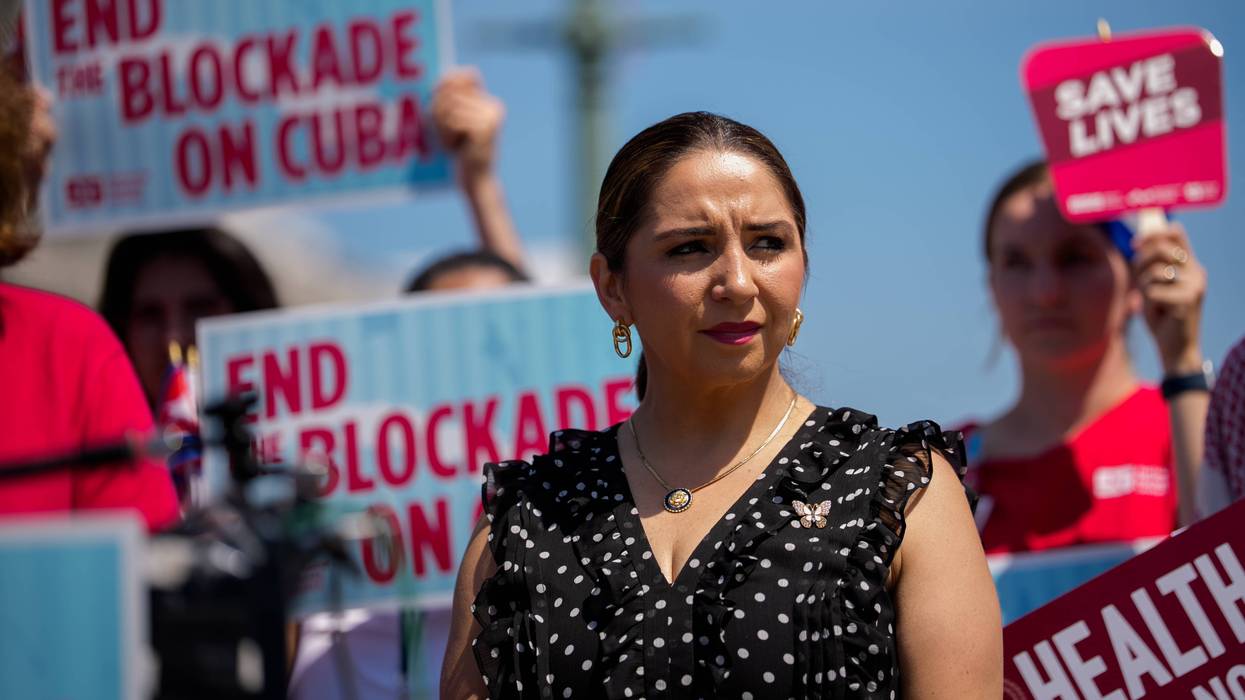
Four members of Congress returned Monday from an oversight trip to Cuba, which they described as a "silent Gaza."
As the Trump administration announced a new round of sanctions on Cuba's tourism ministry, energy companies, and other entities on Monday, four Democratic members of Congress returned from a trip to the island and described how the oil blockade the US has imposed there for nearly six months "is producing indiscriminate pain for the most vulnerable Cubans."
"As elected lawmakers tasked with oversight of US foreign policy, we traveled to Havana to meet with Cubans of all walks of life and political perspectives to hear about the hardships the Trump administration’s maximum pressure policies are creating for Cuban citizens," said Reps. Delia Ramírez (D-Ill.), Teresa Leger-Fernández (D-NM), Mark Pocan, (D-Wis.), and Maxine Dexter (D-Ore.). “In our meetings with religious leaders, entrepreneurs, civil society organizations, humanitarian groups, medical professionals, and farmers, everybody we heard from... agreed on one thing: that they are being strangled to death under the current executive orders and longstanding economic blockade."
The four Democrats traveled to Cuba last Thursday and spent several days meeting with local leaders, touring the streets of Havana, and speaking with President Miguel Díaz-Canel as the country grapples with the effects of President Donald Trump's January executive order that baselessly claimed Cuba poses an "extraordinary" threat to US national security and threatened tariffs against any country that provides oil to the communist country.
The president had already cut off Cuba's main energy supply by invading Venezuela, abducting its president and charging him with drug trafficking, and taking control of its vast oil reserves.
The lawmakers described how the energy blockade is "contributing to nationwide electrical blackouts—including one during our trip—buildups of trash on street corners; severe shortages of food, medicine, and public transportation; and widening inequality on the island."
Dexter, a physician, noted that Cuba's lauded healthcare system "is buckling under sanctions that the White House has unleashed on the Cuban people. This is creating a humanitarian catastrophe."
“Cuba created a free, universal healthcare system that millions of Cubans and others around the world have come to expect and depend on,” said Dexter. "I will be using all the tools at my disposal to remove the barriers to delivering healthcare to the Cuban people.”
As Common Dreams has reported, the blockade has left hospitals struggling to provide care, with 96,000 people, including 11,000 children, on waitlists for surgeries.
"Over 300 pediatric surgeries per week are compromised by shortages of drugs, oxygen, anesthetics, and consumables," wrote more than 8,000 Italian medical and scientific professionals in an open letter in June.
Leger-Fernández called Trump's policy in Cuba, which has intensified sanctions that have been in place for years, "a siege."
“We’re blocking medical supplies, fuel, and other essential inputs, leading its infant mortality rate to rise nearly 150% in recent years, from 4 to 9.9 per 1,000 live births," said the congresswoman. "I doubt any American wants innocent Cuban babies to die due to our policies.”
Pocan told The Associated Press that one person he spoke to in Cuba called the crisis a "silent Gaza."
“There may not be bombings, but there are certainly conditions that prevent people from going about their daily lives," said Pocan. "They can’t go to work, they can’t preserve their food, they can’t access medical supplies, or live as they did before."
Since imposing the blockade, Trump has repeatedly expressed a desire to take over the island by force and has doubled down on claims that Cuba poses a national security threat to the US.
On Sunday, United Nations Ambassador Michael Waltz claimed in a Fox News interview that China and Russia are "collecting information around our military bases in Cuba." In May, an anonymous White House official told Axios that Cubans were “discussing plans” to launch drones at the US—even as the reporting acknowledged the country was thought to be preparing defensive, not offensive, capabilities.
As the members of Congress returned to the US and reported on the suffering they witnessed in Cuba on Monday, the administration announced a new round of sanctions on the country's Ministry of Tourism, energy firms, a state-owned financial services company, a major foreign trade firm, and a maritime transportation company. Foreign banks, insurers, and companies will be exposed to potential penalties if they work with the entities under the sanctions.
The Trump administration, said Cuban Foreign Affairs Minister Bruno Rodríguez Parrilla, "continues to intensify the war against the people of Cuba, their living conditions, and their sources of livelihood."
"The announcement on July 13 of additional coercive measures is a clear manifestation of the criminal and genocidal intent with which US rulers are determined to punish the entire population of the country," he said.
The sanctions demonstrated the Trump administration's "zeal to strangle our economy," added Díaz-Canel. "They reinforce the aggression in search of greater harm to the people. We are facing a genocidal design plan."
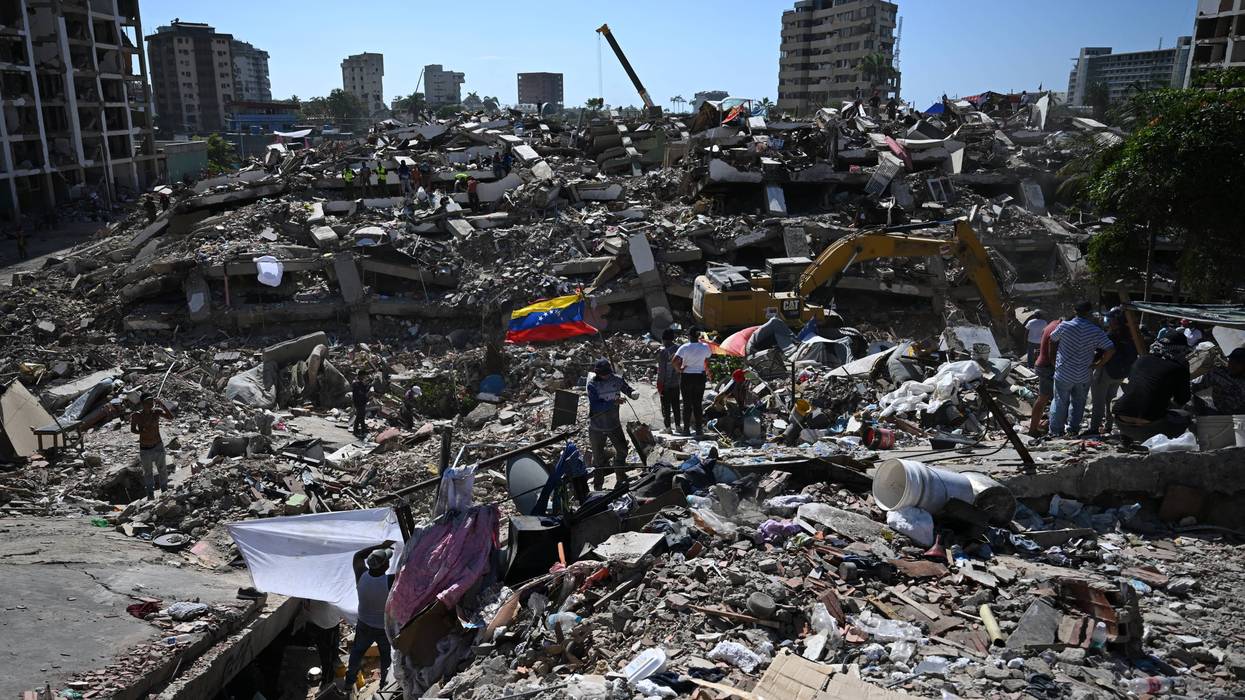
The experts laid out various policies they argued are "required to prevent avoidable deaths, stabilize a sanctioned economy, and allow Venezuelans to rebuild with dignity."
With at least 3,535 people dead, 16,740 injured, and tens of thousands still missing after a pair of major earthquakes hit Venezuela last month, over 100 economists and scholars on Tuesday jointly called for "immediate action to unfetter Venezuela's humanitarian response and reconstruction from ongoing economic and financial sanctions, asset freezes, and onerous debt burdens."
Such demands began to emerge shortly after the 7.2- and 7.5-magnitude quakes, both centered in Yaracuy, on June 24. The new letter, shared with Common Dreams by the Center for Economic and Policy Research, follows a similar message sent to President Donald Trump and Secretary of State Marco Rubio last week by CEPR, Just Foreign Policy, Latin America Working Group, Venezuelan American Community Action, Peace Action, the Quincy Institute for Responsible Statecraft, and a dozen other organizations.
The academics and economists, including several experts at CEPR as well as James Galbraith, Jayati Ghosh, Jason Hickel, Ann Pettifor, Jeffrey Sachs, Robert Wade, and Isabella Weber, highlighted that "Venezuela enters this disaster after years of unilateral coercive measures, financial sanctions, and export controls that have damaged its economy and infrastructure."
That includes decades of US sanctions. On top of those economic moves, Trump earlier this year sent troops into Venezuela to abduct President Nicolás Maduro, then took control of the South American country's nationalized oil industry. The New York Times reported earlier this week that the Trump administration has seized at least $8 billion worth of Venezuela's oil wealth this year.
In a Tuesday piece for Just Security, a pair of experts who signed the new letter—George Lopez, professor emeritus of peace studies at the University of Notre Dame, and Venezuelan economist and CEPR senior Research Fellow Francisco Rodríguez—noted that post-earthquakes, "the United States pledged $300 million to relief agencies, mobilized civilian and military teams to Venezuela that are trained on disaster relief, and issued a limited sanctions waiver for earthquake relief activities.
"But these measures are far from enough," they stressed, explaining that "the United Nations estimates the losses from the quakes stand at $37 billion," or 32% of Venezuela's gross domestic product. They suggested that "the United States should spearhead a major reconstruction effort and lift all remaining sanctions on the Venezuelan economy."
The US was eager to take control in Venezuela earlier this year.Now that the country is facing devastating loss after twin earthquakes, the US should spearhead a major reconstruction effort and lift all remaining sanctions.From Francisco Rodríguez and George A. Lopez:
[image or embed]
— Just Security (@justsecurity.org) July 7, 2026 at 9:06 AM
The broader group argued that "whatever one's position on Venezuela's internal politics, the current set of coercive economic measures directed at the country is an indiscriminate instrument. Sanctions on the central bank, public banking, oil industry, and debt transactions do not land surgically on officials; they incapacitate payment systems, raise import costs, block correspondent banking, freeze reserves, deter suppliers, and produce scarcity across an entire society. This is precisely the moment to remove any economic and financial obstacles to relief and reconstruction."
They called on the Trump administration specifically to lift all economic sanctions, "including any that may impact the Banco Central de Venezuela (BCV), government institutions, Petróleos de Venezuela, SA (PDVSA), public financial institutions, the oil and mining sectors, banking, transportation, shipping, telecommunications, travel, and all related activities," and to immediately issue "the Section 25B certification that is required to enable the BCV to receive, control, use, and transact through its accounts and assets at the Federal Reserve and US banks."
The experts also took aim at the United Kingdom and the Portuguese, calling on the governments to respectively work with "the Bank of England to ensure the immediate unfreezing of the BCV's gold reserves, worth about $5 billion and representing a third of the central bank's reported assets," as well as with Novo Banco, "to return $1.2 billion belonging to Venezuela's development bank, BANDES, and PDVSA affiliates, as set out in a 2023 court decision."
They further pressured the International Monetary Fund (IMF) to "ensure that Venezuela has full access to its approximately $5 billion in special drawing rights (SDRs) for emergency stabilization and imports," and to approve a $4 billion rapid financing instrument (RFI) disbursement immediately, using its emergency and natural disaster rationale, with no conditions."
Beyond those specific recommendations, the economists and scholars urged "a coordinated debt jubilee for Venezuela," writing that "all official bilateral creditors, multilateral creditors to the extent legally possible, and public agencies holding claims should cancel or suspend debt service, interest, penalties, and arrears, and pursue a comprehensive debt reduction consistent with a rights-based recovery and climate-resilient reconstruction."
"A new fund should be established—perhaps financed by the IMF's Resilience and Sustainability Trust (RST)—to repurchase distressed debt from the secondary market, with legal protections against holdout litigation and asset seizures," they proposed. "Money owed to creditors cannot at the same time rebuild hospitals, schools, housing, water systems, and the grid. A debt crisis in these conditions is a developmental and humanitarian crisis."
"Venezuela's people must not be made to pay twice: first through disaster, and then through sanctions, frozen reserves, and unsustainable debt servicing," they concluded. "We urge governments, international financial institutions, and creditors to act now, on the principle that lives, public health, and economic recovery take precedence over coercion and collection. Emergency liquidity, full sanctions relief, SDR access, RFI financing, and debt cancellation are not acts of charity. They are the minimum policy response required to prevent avoidable deaths, stabilize a sanctioned economy, and allow Venezuelans to rebuild with dignity."
