

SUBSCRIBE TO OUR FREE NEWSLETTER
Daily news & progressive opinion—funded by the people, not the corporations—delivered straight to your inbox.
5
#000000
#FFFFFF
To donate by check, phone, or other method, see our More Ways to Give page.
Daily news & progressive opinion—funded by the people, not the corporations—delivered straight to your inbox.
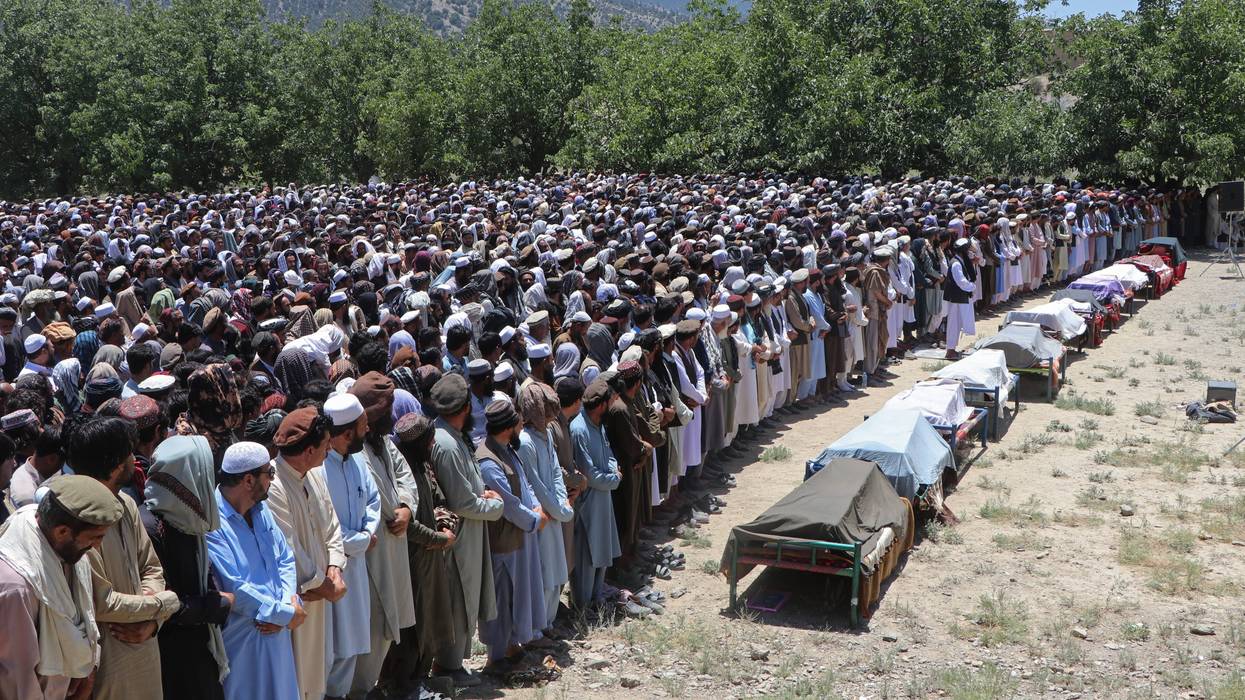
Women and children were reportedly among the at least 28 civilians killed and 49 others wounded on Sunday by airstrikes targeting Pakistani Taliban fighters in Afghanistan's Paktia, Paktika, and Kunar provinces.
United Nations Secretary-General António Guterres on Monday called for “an immediate cessation of hostilities and the protection of civilians” after Pakistani airstrikes killed and wounded scores of Afghans, including women and children.
Pakistani forces bombed targets in Afghanistan's Paktia, Paktika, and Kunar provinces and launched a ground invasion of the neighboring nation.
The attacks—which Afghanistan's Taliban government called "cowardly" and an "atrocity"—reportedly killed at least 28 civilians and wounded 49 others.
"We call on all parties to uphold their obligations under international humanitarian law and continue to stress that civilians and civilian infrastructure must be protected at all times," Guterres said in a statement read in New York by his spokesperson, Stéphane Dujarric.
Dujarric also said that the UN Assistance Mission in Afghanistan (UNAMA) “just confirmed that many civilians were killed and injured in these airstrikes carried out by Pakistan," and that “humanitarian colleagues tell us that the latest attacks have also reportedly triggered displacement, and humanitarian partners on the ground are assessing needs and preparing to provide emergency assistance.”
Paktia elder Adam Khan told Agence France-Presse that those killed in one of the strikes "were innocent civilians, including children, elderly people, and women" sleeping in a house.
Pakistani officials say the military operations are aimed at militant groups that it says operate from Afghan territory and launch attacks into Pakistan, not at Afghanistan's government. Islamabad accuses Tehreek-e-Taliban Pakistan—also known as the Pakistani Taliban—and Jamaat-ul-Ahrar of having recently attacked Pakistani security forces and civilians.
Last October, Pakistan and Afghanistan agreed to a now-imploded ceasefire after weeks of border clashes that killed dozens of civilians and wounded hundreds more.
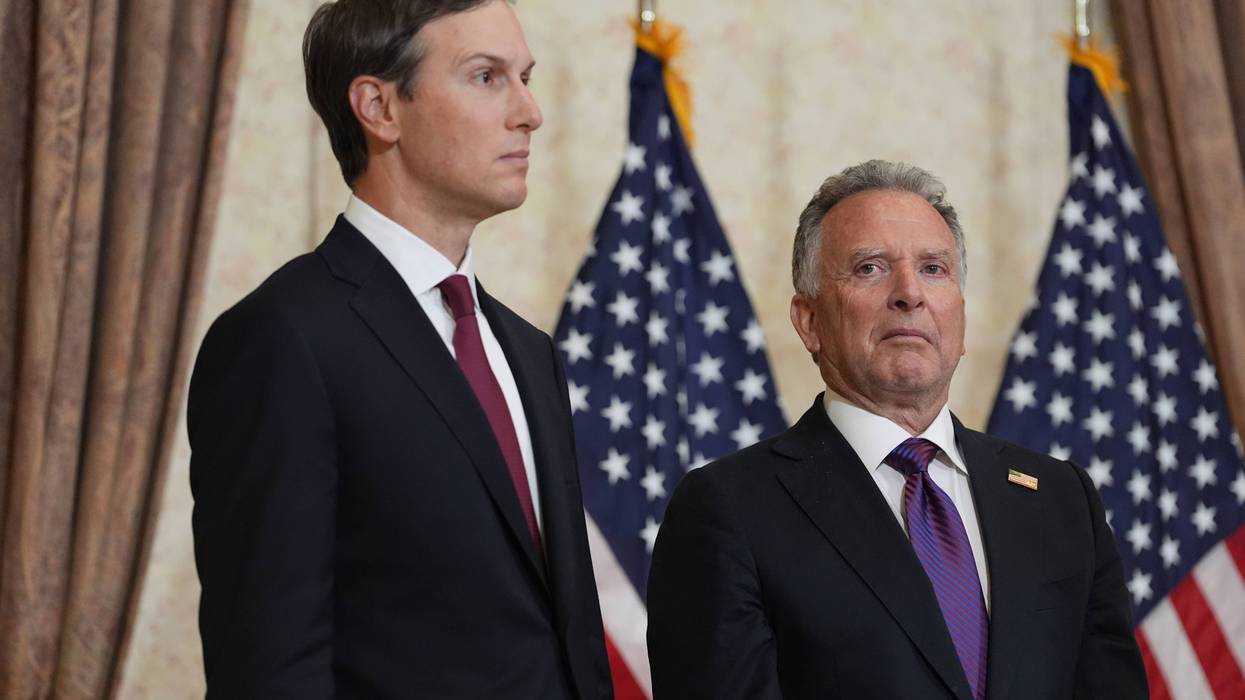
US President Donald Trump complained that his envoys' planned trip to Pakistan's capital would be "too much work."
US President Donald Trump on Saturday abruptly canceled a planned visit by two of his administration's negotiators to the Pakistani capital for diplomatic talks to end his illegal war on Iran, complaining that the trip would be "too much work."
The president announced his decision after Iranian Foreign Minister Abbas Araghchi left Islamabad on Saturday, writing in a social media post that he relayed to Pakistani officials "Iran's position concerning a workable framework to permanently end the war on Iran." Araghchi added that he has "yet to see if the US is truly serious about diplomacy."
Iranian officials said repeatedly in recent days that they had no intention of engaging in direct talks with the Trump administration this weekend as long as the US naval blockade remained in effect. Despite clear statements from Iran's leadership, the Trump White House insisted that special envoys Jared Kushner and Steve Witkoff would be holding another round of direct negotiations with Iranian officials in Islamabad after earlier talks ended without a deal.
"This has happened repeatedly: Trump claims the Iranians are begging for talks, Iran says it is false," observed Drop Site's Jeremy Scahill. "The US says Iran is lying, and then it becomes clear Iran meant what it said."
In an assessment published before Trump canceled his envoys' trip, Scahill wrote that "there is no question it is the US that is seeking direct talks right now, not Iran."
"Iran still believes it is likely the US and Israel will resume the war and has indicated it has prepared new forms of retaliatory strikes and other actions, including in the Strait of Hormuz," Scahill added. "Its military commanders have said that while the US has moved more military assets into the region during the 'ceasefire,' Tehran has also taken this period to prepare its own weapons systems for more fighting."
Trump insisted Saturday that his administration—whose deeply unpopular and deadly war of choice has sparked a global economic disaster—holds "all the cards" and that Iranian leadership is in turmoil. But Sina Toossi, a senior fellow at the Center for International Policy, wrote that "Trump can’t hide exuding desperation for a deal."
"So he invents 'fractures' in Tehran to explain being repeatedly stood up," Toossi added. "Iran’s line is unchanged: demanding the blockade be lifted and holding on to its core red lines. They’re playing hardball. He’s spinning."
Trump's cancellation of the Kushner-Witkoff trip came hours after NBC News reported that "American military bases and other equipment in the Persian Gulf region suffered extensive damage from Iranian strikes that is far worse than publicly acknowledged and is expected to cost billions of dollars to repair."
"The Iran war was a tactical and strategic disaster," said Toossi. "Despite heavy efforts to control the narrative, it’s becoming clear just how much US bases and equipment in the region were damaged or destroyed. The war backfired and inflicted far more damage than its proponents want to admit."
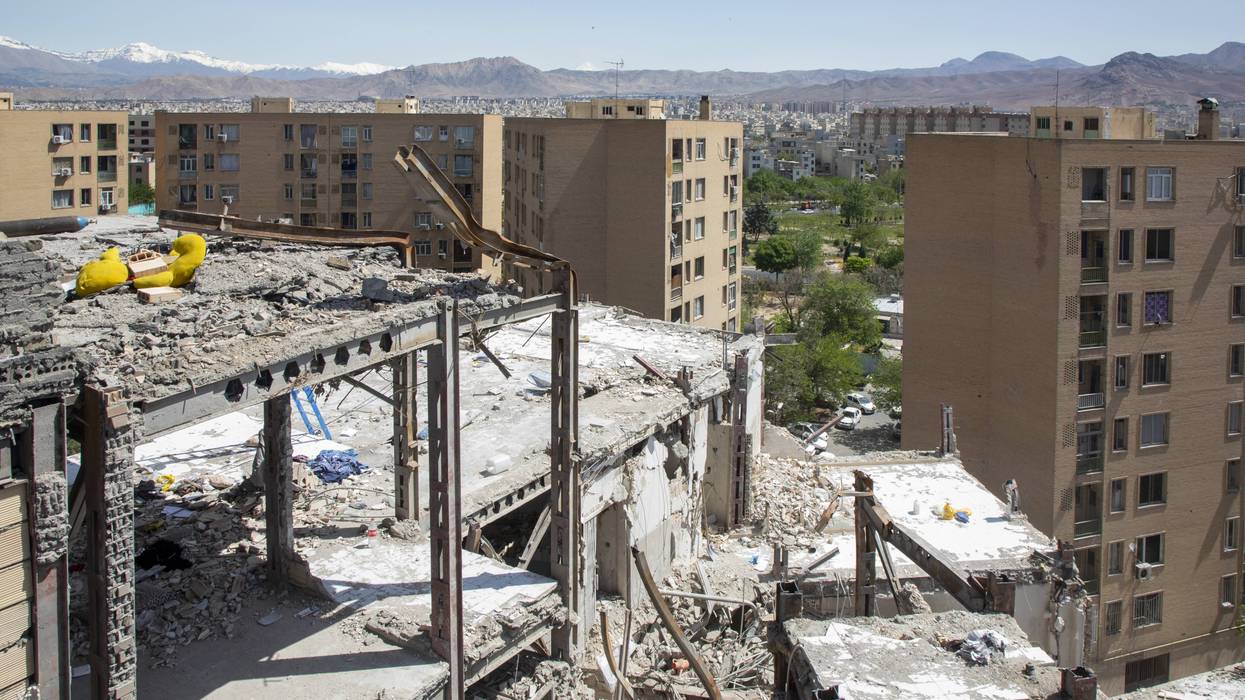
One expert stressed that "trust between the sides remains at zero."
President Donald Trump on Tuesday afternoon extended a two-week ceasefire for his and Israel's war on Iran, but the US leader also said that a naval blockade of the Mideast nation will continue, and fears of fresh attacks remain high.
Two weeks after threatening to take out the "whole civilization" of Iran just hours before the ceasefire agreement was reached, Trump took to his Truth Social platform again to announce the extension, without a clear timeline.
"Based on the fact that the Government of Iran is seriously fractured, not unexpectedly so and, upon the request of Field Marshal Asim Munir, and Prime Minister Shehbaz Sharif, of Pakistan, we have been asked to hold our Attack on the Country of Iran until such time as their leaders and representatives can come up with a unified proposal," Trump wrote. "I have therefore directed our Military to continue the Blockade and, in all other respects, remain ready and able, and will therefore extend the Ceasefire until such time as their proposal is submitted, and discussions are concluded, one way or the other."
Trump has imposed the blockade in response to Iran's closure of the Strait of Hormuz, a waterway between the Persian Gulf and the Gulf of Oman that's a key trade route, including for fossil fuels. As part of the blockade, the president said Sunday, US forces seized Touska, a nearly 900-foot Iranian-flagged cargo ship.
Trita Parsi, co-founder and executive vice president of the Quincy Institute for Responsible Statecraft, concluded Tuesday that Trump's cave "reflects the outcome I have argued is the most likely: No deal, no sanctions relief, no nuclear compromise, no return to war, while Iran continues to control the strait. Not a stable situation, but one in which Trump pockets the central thing he sought—exiting the war—while Iran is bereft of the main thing it was looking for: sanctions lifting."
While a spokesperson for United Nations Secretary-General António Guterres said that he welcomes Trump's announcement as "an important step toward de-escalation and creating critical space for diplomacy and confidence-building between Iran and the United States," and encouraged all parties "to build on this momentum," comments out of Iran suggested limited progress.
Drop Site News co-founder Jeremy Scahill reported Tuesday that "an Iranian official tells me that, as of this moment, Iran's position remains unchanged: Lifting of the naval blockade is a condition for a second round of talks."
According to Reuters chief national security reporter Phil Stewart, an adviser to Mohammad Bagher Ghalibaf, speaker of Iran's Parliament, said that Tuesday's extension means nothing and could even be a ploy to buy time for a surprise strike, plus the US continuing its blockade is the same as bombardment and must be met with military force.
Noting Stewart's reporting on social media, Center for International Policy senior fellow Sina Toossi warned that "after coming under surprise attack twice, some in Tehran are calling for Iran to take initiative and strike first, including at US vessels or tankers ready to exit Hormuz."
Toossi also stressed that "trust between the sides remains at zero and renewed war could break out at any time."
"Let's be real, Pakistan isn't deciding whether the US goes to war with Iran," he added. "They're a conduit, not a driver. More a convenient excuse and diplomatic cover than having any sort of actual influence over Trump on Iran."
Ahead of the extension, Toossi had published an op-ed in The Guardian arguing that "having fought what they see as an existential war with the US and Israel and held their ground, Iranian officials see little reason to rush into major concessions. The priority is not a sweeping deal, but reducing the risk of war while preserving core sources of power, from Hormuz to its nuclear program."
"In the short term, that may simply mean extending the ceasefire rather than reaching a substantive agreement. Beyond that, the likelier outcome is an interim arrangement, or a broad memorandum-of-understanding-style framework that defers key details, rather than a decisive breakthrough," he continued. "In this view, the conflict is not being resolved but managed—and with time, Iran believes its position will strengthen as the global fallout from energy disruption makes renewed escalation a cost no one is willing to bear."
A Tuesday report from the climate advocacy group 350.org estimates that during the first 50 days of the Iran war, consumers and businesses worldwide have paid an additional $158.6-166.9 billion due to soaring fuel costs.
Additionally, thousands of people have been killed in Iran and across the region, and at least tens of thousands of Iranian civilian infrastructure sites have been damaged since the US and Israel first launched attacks in February.
