

SUBSCRIBE TO OUR FREE NEWSLETTER
Daily news & progressive opinion—funded by the people, not the corporations—delivered straight to your inbox.
5
#000000
#FFFFFF
To donate by check, phone, or other method, see our More Ways to Give page.
Daily news & progressive opinion—funded by the people, not the corporations—delivered straight to your inbox.

“The next time your community is hit by a heatwave or flash flood, lay some blame with Big Oil. This report is yet another sign that we need to break away from this dangerous, polluting industry,” one scientist said.
A landmark report released by the National Academies of Sciences, Engineering, and Medicine on Thursday concludes that the science of linking individual extreme weather events to fossil fuel-driven climate change has advanced considerably in the past decade, findings that bolster the efforts of communities to hold oil and gas companies accountable for climate damages.
The report follows on the heels of deadly heatwaves in Europe and the US that were both deemed to be "virtually impossible" without the climate emergency.
“The new report makes clear that the science linking ever-worsening extreme weather events to climate change is rigorous and sound,” John Fleming, a senior scientist at the Center for Biological Diversity’s Climate Law Institute, said in a statement. “The next time your community is hit by a heatwave or flash flood, lay some blame with Big Oil. This report is yet another sign that we need to break away from this dangerous, polluting industry.”
The report from the National Academies, or NASEM builds on a 2016 report on the same subject and tracks the progress made since then in linking specific extreme weather events such as hurricanes or heatwaves to human-caused global warming—a field known as extreme event attribution (EEA). It found that a combination of improvements in tools, datasets, and methods had made such attributions increasingly reliable, especially for events clearly related to rising average temperatures such as heatwaves, cold spells, and heavy rainfall.
“The science is clear: The extreme heat killing thousands of people in the Northern Hemisphere this summer is neither an unpredictable event nor an accident—it is the result of corporate crime."
“Significant progress has been made over the last decade, with major advancements in methods and modeling that allow for more robust assessments of extreme events,” James Hurrell, who chaired the report committee and serves as the Scott presidential chair of Environmental Science and Engineering at Colorado State University, said in a statement.
EEA could still improve when it comes to analyzing the climate footprint on smaller-scale weather events like thunderstorms and tornadoes, as well as attributing events in parts of the Global South where climate data is less available.
Hurrell continued: "The field still faces challenges, and addressing them is necessary to fully realize the value of attribution science. We hope our recommendations will guide those efforts.”
Unaffiliated climate scientists and environmental advocates welcomed the report's findings.
"The robust conclusions that have been reached by the mainstream climate research community betray the dismissive claims that continue to be made by fossil fuel industry groups, right-wing think tanks, and Republican operatives who feel threatened by the scientific progress in this particular area," wrote climate scientist and University of Pennsylvania professor Michael Mann. "They have long understood... that Americans will increasingly demand meaningful policy action on climate as they come to understand the profound role that fossil fuel burning is playing in the worsening climate crisis."
Mann continued: "Nothing connects the dots better that the increasingly dangerous, damaging, and deadly climate change-fueled extreme weather events. As an aside, I could see and smell the hazardous wildfire smoke that blanketed the northeastern US while on vacation with my family in New Hampshire this week. Increasingly, Americans are connecting the dots between our reliance on fossil fuels and the hazards we face, whether its costly and dangerous wars of choice in far-flung lands like Iran, or the threat of increasingly extreme weather events."
Carly Phillips, a senior scientist at the Union of Concerned Scientists (UCS) who has co-authored attribution studies, said in a statement: “Attribution science confirms what billions of people around the world have experienced firsthand—deadly events like extreme heatwaves are occurring more often and tropical cyclones are more intense due to climate change. Despite efforts by the fossil fuel industry and its cronies to intimidate panelists and misrepresent the research, the academies’ report affirms the scientific consensus: Attribution science is based on rigorous peer-reviewed methods and provides critical information about how climate change is driving increases in the frequency or severity of extreme events."
The report is notable not only for its findings but for their context. It's publication comes amid the Trump administration's aggressive climate denial, including the Environmental Protection Agency's repealing of the so-called "endangerment finding" connecting carbon dioxide emissions to climate and public health harms.
At the same time, the fossil fuel industry and its right-wing political allies are scrambling to find a way out of the increasing number of lawsuits attempting to hold them accountable for the harms caused by the climate crisis. This has included pushing bills in the House of Representatives and Senate that would grant the industry immunity from any lawsuits over damages caused by the use of their products.
Both the fossil fuel industry and climate justice advocates see the NASEM report as a potential weapon in the fight over climate liability. Argus Insight, an opposition research firm co-founded by former Trump staffers that has a history of working to undermine climate lawsuits, sent at least nine records requests to public universities where NASEM report authors work, as Politico reported ahead of its release.
Andrew Dessler, a professor of atmospheric sciences at Texas A&M University, advised that journalists covering the NASEM report "not frame any story as 'Can we believe extreme event attribution research?' The actual story is: Fossil fuel interests are wetting their pants about this and will do anything to try to stop it."
Yet climate justice advocates argue that the report gives the advantage to communities over the industry.
“For decades, Big Oil knowingly poisoned our atmosphere and deceived the public about the impacts of burning fossil fuels—all the while lining executives’ pockets as communities continue to suffer from extreme heat, floods, and fires," Stephanie Brancaforte, climate accountability campaign director with Public Citizen’s Climate Program, said in a statement.
Brancaforte added: “The science is clear: The extreme heat killing thousands of people in the Northern Hemisphere this summer is neither an unpredictable event nor an accident—it is the result of corporate crime. With the backing of the National Academies, survivors of climate catastrophes now have strong evidence to pursue justice against fossil fuel polluters to pay for the devastation they have unleashed.”
Cassidy DiPaola, communications director for the Make Polluters Pay campaign, said: "The National Academies just gave courts, cities, and communities something they've long needed: the full weight of the country's most authoritative scientific body behind attribution science. It affirms what researchers and international bodies like the IPCC [Intergovernmental Panel on Climate Change] have long recognized—that we can say, with real confidence, which extreme weather events were made worse by fossil fuel pollution, and how much damage that pollution caused."
DiPaola continued: "The fossil fuel industry understands exactly what this means. That's why they've spent years trying to discredit attribution science as a field, and why they and their allies in Congress and state legislatures are racing right now to pass liability shield laws. They can't out-argue hundreds of peer-reviewed studies backed by the country's most respected scientific institution, so instead they're trying to make the law immune to the science. They know this research doesn't just describe a hotter world, but draws a line from their products to specific floods, heatwaves, and deaths, and from there to who should pay for the damage."
"Attribution science now underpins how cities plan for disaster, how insurers price risk, how public health officials prepare for heat deaths, and how courts weigh accountability," she concluded. "The only people with an interest in pretending otherwise are the ones being asked to pay for the damage they caused."
Instead of speeding the conversion to clean cheap energy, which would save households huge amounts of money, we’re instead shoveling taxpayer cash to the fossil fuel industry, and in the process overheating the Earth.
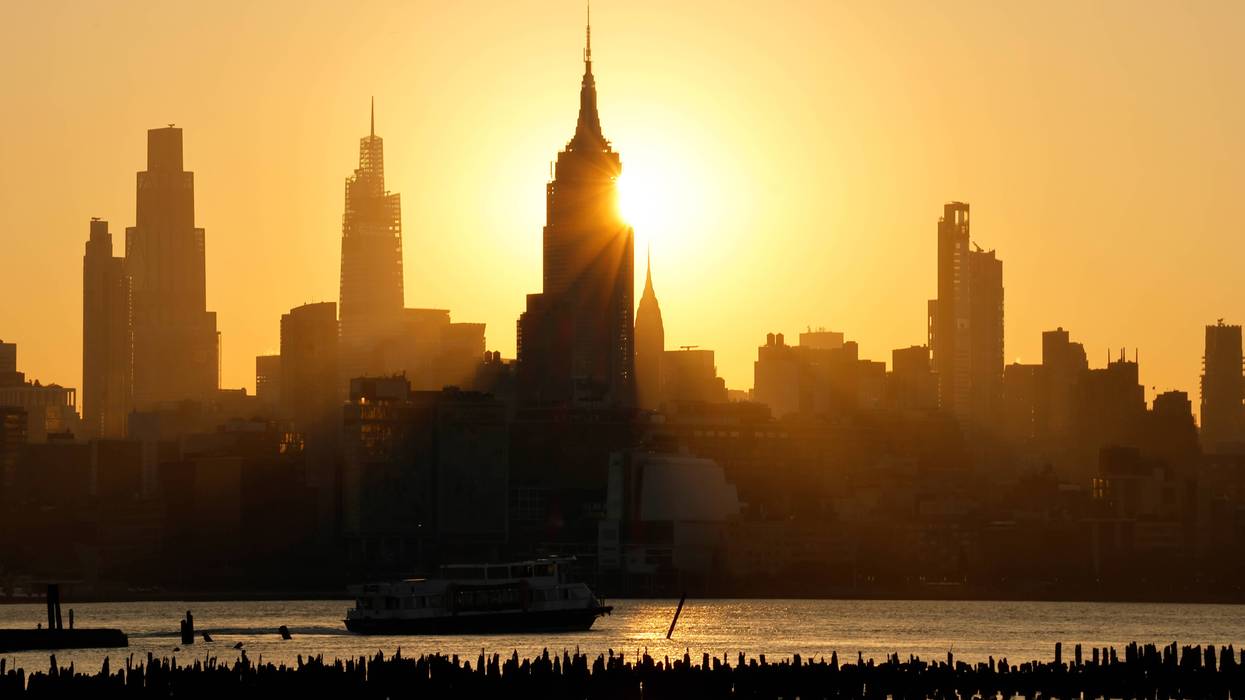
I write this under an ashy, yellow northeast sky; smoke from wildfires in Ontario and Minnesota swept across the region in the middle of the night, and I awoke at 3:00 am (as I too often do in these parlous times) with stinging eyes. But I will try to see clearly enough to discern some of the latest numbers in the climate and energy battle—numbers which prove to me the economic folly of staying on our current course.
To me, I admit, these are secondary—there’s not enough money on Earth to make me want to condemn people to a few centuries of waking up in smoke, and I know without calculation that a clear blue sky is worth almost any price. But I also know how the world works, and so I want to provide people with the ammunition they need to carry on this fight—and the last few weeks have seen that ammunition piling up in the arsenals of logic and thrift. There is at this point no doubt that the world would operate more cheaply on clean energy, which is a lucky thing, and one that needs to be hammered home till the conventional wisdom (that sun and wind and batteries are a luxury) is finally routed.
The most basic point, of course, and yet one often lost in the debate is that once you’ve installed renewable energy you no longer have to pay for fuel. IRENA, the International Renewable Energy Agency, put a number on that in its annual report at the end of last month.
In 2025, renewables helped to avoid an estimated USD 480 billion in fossil fuel costs and around 8.4 gigatonnes of carbon dioxide emissions.
If we round the number of our fellow humans off to about 8 billion, that’s $60 for every man, woman, and child on the face of the planet, even though we’re still fairly early on the adoption curve for clean power. The numbers are stark:
Since 2010, the cost of solar PV has fallen by 89%, onshore wind by 71%, and offshore wind by 63%. This highlights how renewables are now the cheapest source of new electricity in most markets. In 2025, more than 90% of newly commissioned, utility-scale capacity delivered power at a lower cost than the cheapest, newly-installed fossil-fuel-based alternative.
If you move from energy generation to energy efficiency, the numbers are just as interesting. Mark Gongloff, in a charming essay that begins by noting GOP umbrage at New York City Mayor Zohran Mamdani’s suggestion that during a heatwave 78°F would be a good setting for the AC, goes on to show how the Trump administration is gutting the ongoing federal effort to make appliances more efficient. Cost?
Higher standards available to the DOE could save the average US household $160 a year and all US businesses $15 billion a year in electricity costs between 2030 and 2050, according to the Appliance Standards Awareness Project (ASAP), a nonprofit research and advocacy group.
And what about making money? Dan McCarthy describes a new study from the “business-focused” think tank E2 that shows that the clean energy projects—at least 216 in number—cancelled since President Donald Trump took office would have supplied at least half a million good jobs:
Trump took office amid an unprecedented surge in the clean energy economy. The 2022 Inflation Reduction Act spurred the rapid construction of both renewable power projects and domestic factories intended to build solar panels, electric vehicles, batteries, and other crucial cleantech.
But the boom went bust pretty much as soon as Trump won the election in late 2024.
Just as an example, here’s a story from a few days ago about the administration stymieing four wind power projects in Minnesota that would have produced not just a gigawatt of badly needed clean electricity, enough for several hundred thousand homes, but also 1,100 construction and 4,400 “indirect jobs,” for a total economic hit of $168 million.
If you want to try to add it all up, here’s another analysis, from the people at Energy Innovation. Their model shows that, taken together, the result of the major Trump era moves on energy policy will be that
Households will pay an additional $650 billion for energy—an average of $460 per household in 2035 and $490 in 2040.
And their attacks on EVs, which mean that more Americans get to shell out at the gas pump year after year, will
inflate gasoline prices 14% in 2035 and 26% in 2040, atop near-term upward pressure from the Iran war and other market forces.
and the One Big Beautiful Bill, by removing incentives for a quick energy transition, will
cost the US economy 820,000 jobs per year on average over the next decade, in addition to the 144,000 clean energy jobs lost within the past 18 months.
And
Slowing down electrification and domestic energy manufacturing will lower GDP in all years, totaling $2.3 trillion cumulative lost GDP, with effects flowing into other economic sectors. The US economy will lose $150 billion in GDP in 2030, peaking at a $250 billion net loss in 2032, then reverting to losses of $200 billion in 2035 and $120 billion in 2040.
This all amounts to setting money on fire—almost unbelievable amounts. And real money—not notional SpaceX shares, now plummeting; not weird Kalshi bets. It’s money that families have to fork over, month after month, if they want to keep the lights on and the minivan trundling down the road.
And of course the numbers grow exponentially larger if you even try to calculate the public health and climate costs of burning ever more fossil fuel. The Energy Innovation study again:
Worsening local air pollution will raise healthcare costs by $43 billion, with annual increases of $4 billion in 2035 and $4.5 billion in 2040, contributing to rising household costs alongside rising energy prices and goods inflation.
And here’s a new report in the premier science journal Nature from Anders Levermann on the economic costs of a heating planet even before we hit the biggest and most expensive tipping points:
By definition, tipping points are reached when a series of interlinked changes amplify one another until the whole system becomes unstable and shifts uncontrollably into a different state. Loss of sea ice at the poles, for example, reduces the amount of sunlight reflected into space, further heating Earth’s surface, which then accelerates ice loss. These vicious cycles of change define a tipping point, at which the climate cannot return to its former patterns.
Before that point, the climate system becomes increasingly unstable. It fluctuates considerably—a rise in variability is a well-established property of such "non-linear dynamical systems" approaching a critical threshold. That society will face these fluctuations and that they will intensify through the tipping transition hasn’t been realized by scientists and policymakers, so far.
Earth will experience an increasingly erratic climate: more and stronger fluctuations in flows of melt water, ocean circulations, and the extent of sea ice. These changes will lead to more frequent and intense extremes in temperature, precipitation, and storms—leading not only to more heatwaves and droughts, but also to more cold spells and floods.
Modern economies are adapted to relatively stable climatic baselines. Agricultural productivity, infrastructure design, insurance pricing, and financial risk management all rely not only on expected mean conditions but also on the predictability of variability.
Farmers need to factor in lost harvests; architects and urban planners need to account for extremes of temperature, wind and rainfall; and financiers and insurers need to consider the cost and scale of damages. But once these factors are no longer predictable, all bets are off—life becomes uninsurable and the world becomes unsafe.
In case you think scientists are the only ones worrying, Richard Partington discusses new analyses from leading bankers that attempt to put some numbers on these emerging dangers: The rapidly approaching El Niño, for instance, is threatening massive “food shocks” that will stretch into at least 2028:
“El Niño puts ‘climateflation’ back on the agenda,” analysts at the Italian bank UniCredit wrote in a research note. “Europe’s recent heatwaves are a reminder that the climate baseline is already shifting. El Niño could add a new layer of pressure later this year, as it amplifies the effects of global warming.”
According to analysts at Goldman Sachs, the strength of this El Niño could cause a 15.8% surge in global food commodity prices. That would have a knock-on effect worldwide, including for consumers in Europe, where it predicted food prices could rise by 1.3% across the eurozone.
Unlike politicians, bankers actually try to do something to limit their risk. As Ishika Mookerjee reports, private equity funds are unleashing an increasing army of “heat detectives” to figure out the climate risks of their investments:
A Bloomberg Green analysis of the latest sustainability reports published by 12 of the largest alternative asset managers show overall mentions of physical climate risks and related terms nearly doubled from a year before, with Carlyle Group Inc., General Atlantic LP, KKR & Co. and Partners Group AG seeing large increases. Funds tend to identify floods and cyclones as the most immediate risks. Most are now screening their portfolios for vulnerabilities to heat and treating it as a long-term, chronic risk, especially for their combined private equity assets totaling more than $700 billion.
Given all that, the endlessly maddening question is why are we still headed down this path. Why is Gov. Kathy Hochul not listening to the private equity sleuths headquartered in her state’s financial capital and instead signing up New Yorkers for 40 years of new natural gas pipelines, and why is Hawaii flirting with liquefied natural gas? Why is the Trump administration doing everything it can to run our bill ever higher?
If you think the answer must be that there’s some competing policy formulation that comes up with different numbers, think again. Here’s the remarkable account from Jonathan Swan and Maggie Haberman of the first meeting between the oil industry and the Trump White House after the 2024 election:
At one point during the meeting, the executives began complaining about the Climate Superfund bills that had recently passed in Vermont and New York. As they spoke, Trump’s policy adviser, Stephen Miller was texting the attorney general Pam Bondi. “I’m on it,” Miller told the group. Less than two months later, the administration sued both states seeking to block enforcement of the laws.
In another instance, the ExxonMobil chief executive, Darren Woods, voiced concerns about European Union regulations that required big companies to monitor and reduce the environmental effects of their activities and develop “climate transition plans.”
Haberman and Swan report that, upon hearing this, Trump instructed Commerce Secretary Howard Lutnick to impose additional tariffs on the EU until they abandoned those regulations.
At another point in the meeting, held in the Cabinet Room on March 19, 2025, Miller asked the executives in attendance for a list of 10 projects the White House could help fast-track and requested that they “highlight how much more energy the projects would produce in the United States during the Trump presidency.”
And in one of the most fateful exchanges, the Chevron chief executive, Mike Wirth, pushed for an extension of the firm’s license to operate in Venezuela.
Less than a year later, the Trump administration had seized the country’s leader, Nicolás Maduro. Shortly after that, Chevron expanded its presence in Venezuela.
Yesterday I called Swan to discuss this reporting, and he described to me a room filled with some of the most powerful executives in the world, stunned by what they were witnessing.
“They were almost in awe,” Swan told me. “There was no semblance of a policy process, but rather the CEOs were raising their grievances, and Trump was essentially saying, ‘Make it so, it shall be done.’”
Indeed, as David Fickling reports, Big Oil has no choice but to rely on gaming political systems, because private investors have shifted most of their money to clean energy. That means that subsidies are ever more important:
The cost of these measures looks set to rise to about $1.1 trillion this year, according to a study last week by the United Nations Development Programme. If crude averages $110 a barrel over the full year, it could climb as high as $1.43 trillion. That’s almost as much as was spent on such subsidies during the year the Ukraine war started in 2022.
Whatever the final figure, the amount of government cash support pumped into the fossil fuel system this year will be running close to the amount that both public and private investors were prepared to invest in it. It’s an extraordinary situation for an industry that claims to be governed by capitalist laws of supply and demand, rather than statist central planning.
Just to reiterate: Instead of speeding the conversion to clean cheap energy, which would save households huge amounts of money, we’re instead shoveling taxpayer cash to the fossil fuel industry, and in the process overheating the Earth, which will be the most expensive thing that ever happened, by orders of magnitude. The most important thing the planet’s leaders could possibly do is flip this switch, and reverse these flows—we’ve clearly got the money, since we’re shelling out these huge sums in subsidies. Fickling again:
This support is so pervasive that in most places we don’t even notice or question it. That has to change. Governments must stop throwing sand in the gears of the energy transition. Far from reducing as the climate emergency intensifies and heatwaves claim thousands of lives, they have been doubling down on counterproductive support for polluting fuels, while loading tariffs and regulations onto clean energy.
The horrible irony here is that markets are coming much closer to getting things right than our political institutions, which are currently doing all they can to maintain the status quo. Our next real chance to disrupt that madness? November 3.

Rather than making the region safer, the pursuit of “deterrence” risks turning the Pacific into a battlefield while diverting resources away from the urgent challenges that communities are actually facing today.
June 24 marked the start of the biennial Rim of the Pacific, or RIMPAC, exercises, the world's largest international naval war games. Led by the US, the military exercises bring together 31 countries and include more than 25,000 personnel, 40 surface ships, five submarines, and 140 aircraft. The event, which will run until July 31, marks the newest escalation of US preparations for war on China, further militarizing the Pacific and normalizing the prospect of conflict through increasingly large-scale exercises and an ever-expanding web of alliances and military bases.
At the same time, the US and partner nations kicked off the 10-day Valiant Shield 2026 exercises across Guam, the Northern Mariana Islands, Japan, and surrounding seas, submerging the entire Pacific into an intensive military operation zone.
At a moment of intensifying climate disasters and growing economic insecurity, the message from Washington is clear: There is always more money for war. RIMPAC comes as Congress is attempting to approve a staggering $1.5 trillion war budget, even as communities across the world are facing deadly heatwaves, floods, and other climate-fueled disasters.
This past week, while US military vessels practiced war off their coasts, super typhoon Bavi pummeled Guam and the Northern Mariana Islands. Coming only a week into the typical typhoon season, this is already the second major typhoon to hit the islands. Many locals were still without power from the last super typhoon Sinlaku, which killed 17 people and caused over $1.5 billion in damages.
Rather than protecting local communities, militarization leaves them more vulnerable. All the while, massive military spending diverts resources away from urgent needs such as climate relief.
Climate scientist Kristina Dahl remarked, “In both of these cases we can see the fingerprint of climate change on the storms and that has really devastating consequences for the people who are repeatedly in their paths.”
These overlapping crises reveal a profound imbalance in priorities. As Pacific communities contend with increasingly severe climate disasters, the United States continues to invest staggering sums in military expansion and war preparations. The irony is especially stark given that the US military is the world's largest institutional consumer of fossil fuels and one of the largest institutional greenhouse gas emitters, while decades of US military activity have caused lasting environmental and human harm across Pacific Island communities.
Instead of pouring resources into preventing climate change and protecting people on the frontlines of the climate crisis, the US continues to pump money into its bloated war budget. In the Pacific, military expansion is justified by the increasing push toward war on China. The 2026 National Defense Strategy committed to "deterring China in the Indo-Pacific through strength” by “erect(ing) a strong denial defense along the First Island Chain” so that “Joint Force always has the ability to conduct devastating strikes and operations against targets.”
The US conception of “deterrence” is both illogical and hypocritical in nature. In the name of “protecting” the Pacific from a future imaginary threat, the United States is harming the very communities it claims to defend through military buildup, environmental degradation, and the transformation of islands into staging grounds for war. The narrative of an imminent Chinese takeover of the Pacific is often treated as a foregone conclusion despite there being no evidence that China seeks to invade or occupy Pacific nations. Rather than making the region safer, the pursuit of “deterrence” risks turning the Pacific into a battlefield while diverting resources away from the urgent challenges that communities are actually facing today.
A recent report by the Institute for Policy Studies found that the US military's economic benefits to Hawaiʻi have been significantly overstated and that local communities bear enormous hidden costs from its presence. The report estimates that military demand for housing drove Oʻahu rents up by 7.1% in 2024 alone, costing non-military renters an additional $234.8 million. It also found that cleaning up PFAS contamination at just three military installations could cost at least $493 million, with broader health and environmental damages potentially reaching into the billions. Meanwhile, the Pentagon has leased more than 46,000 acres of Hawaiian land for just $1 leases, despite the land's estimated fair market value reaching as high as $133.7 billion. Far from protecting Pacific communities, the US military buildup has contributed to housing insecurity, environmental contamination, and the dispossession of Indigenous lands.
Similarly, US militarization of Guam has severely impacted local communities. The US military controls roughly 27% of the island's land, while decades of military activity have left behind contaminated groundwater, hazardous waste, and damaged ecosystems. PFAS" forever chemicals" linked to military firefighting foam have been detected in Guam's drinking water wells, threatening the island's primary freshwater source. Military expansion has also endangered coral reefs, sensitive coastal habitats, and wildlife.
These events, which are just a few of many examples of the environmental and human costs of militarization, reveal the deep hypocrisy of the US strategy of "peace through strength." Rather than protecting local communities, militarization leaves them more vulnerable. All the while, massive military spending diverts resources away from urgent needs such as climate relief.
The proposed $1.5 trillion war budget will only deepen these harmful priorities, while large-scale military exercises like RIMPAC intensify US-China tensions, heighten the risk of dangerous encounters at sea, and increase the possibility of pulling the Pacific into a devastating war.
