

SUBSCRIBE TO OUR FREE NEWSLETTER
Daily news & progressive opinion—funded by the people, not the corporations—delivered straight to your inbox.
5
#000000
#FFFFFF
To donate by check, phone, or other method, see our More Ways to Give page.
Daily news & progressive opinion—funded by the people, not the corporations—delivered straight to your inbox.
Instead of relying on numbers that make our progress appear better on paper, New York state leaders should focus on the investments that actually protect New Yorkers from the impacts of fossil fuels.
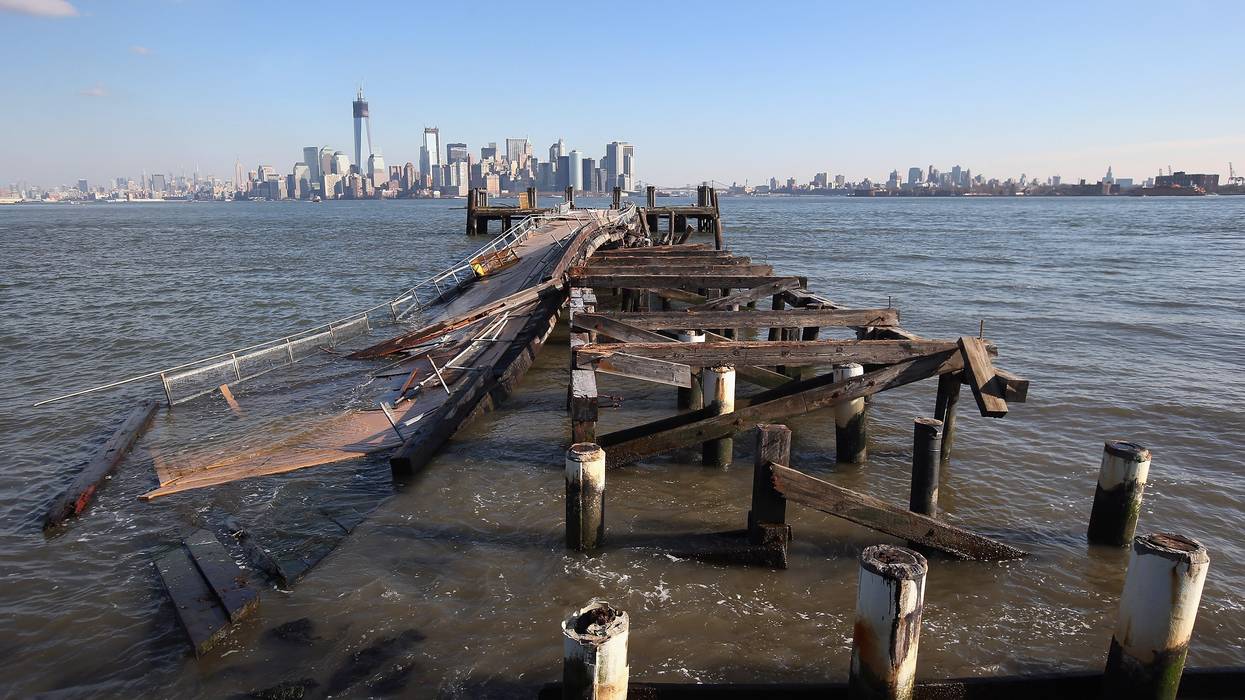
Back in 2012, over the course of two days, water, wind, and rain flooded my neighborhood.
At that time, I was living in the Baruch Houses on Manhattan's Lower East Side while working as a babysitter in Park Slope, Brooklyn. Unlike the families I was working for, my neighbors and I didn’t have the luxury of leaving our homes to seek refuge in a safe place. So we stayed.
That night I watched as a green flash cracked across the sky before everything went dark. I didn’t know it at the time, but I later came to find out the Con Edison plant just six minutes away from my building had exploded. The feeling of loss and fear that day didn’t just happen to me: Over 69,000 units were damaged and lost, thousands of New Yorkers were displaced.
Thirteen years later, these vulnerabilities revealed within our infrastructure still remain today, and with every major storm or heavy rainfall, our subways and homes continue to flood. Yet, with the new passage of the New York State Budget and the rollbacks on our climate goals, Albany has chosen to weaken key environmental commitments.
People that look like me pay for fossil fuels with our health, our safety, our democracy, and our children's right to a clean and healthy future.
While the budget still has some investments in clean energy, it also delays our committed climate benchmarks and measurements. Essentially, this budget moves us further away from the emissions goals we’ve legally bound ourselves to. Instead of focusing on meeting these goals already established under state law, Albany has chosen to move the goalposts.
Changing the ways in which we measure our emissions may make progress look better on paper, but it doesn't reduce the actual consequences of climate inaction.
For decades, communities that look like mine have felt the ramification of climate change more harshly. Oftentimes, these ramifications result in not just the physical terror like I and many experienced during Hurricane Sandy but can also manifest in poorer health outcomes.
The fossil fuel sector is literally choking us to death with no regard to how they contribute to the exacerbation of other conditions in my community. Fossil fuel consumption in New York City makes up for 70% of our local greenhouse gas emissions. It also causes around 2,400 premature deaths annually due to air pollution.
So, instead of moving the goalposts and relying on numbers that make our progress appear better on paper, Albany should focus on the investments that actually protect New Yorkers. And, even though with the recent announcement of the $100 million commitment for climate resiliency projects through the Environmental Bond Act is a step in the right direction, we still need to go even further by fully funding and accelerating the comprehensive flood protection plan. This includes the Lower Manhattan Coastal Resiliency Program aimed at strengthening flood resilience, modernizing infrastructure, and safeguarding our communities.
While we associate fossil fuel costs with our utility bills, people that look like me pay for fossil fuels with our health, our safety, our democracy, and our children's right to a clean and healthy future. We can not afford to sacrifice any longer or delay any further the commitment we made to reduce emission. As storms become stronger, and infrastructures continue to decay, the greatest impacts will be on forgotten neighborhoods like mine. And whether I’m elected to represent this district in Albany or not, I will continue to push for the funding we need to no longer live in survival mode every time a storm occurs.
I’m a climate justice organizer. Here's why I’m fighting for reproductive justice.
Earlier this year, in a horrific conversation with white supremacist podcaster Joe Rogan, Meta CEO Mark Zuckerberg, who started Facebook to rank women’s appearances in 2004, argued that the tech world needs more masculine energy.
Any serious look at the tech world and it’s clear it’s a space already overrun by the male ultra-wealthy class: 88.92% of IT CEOs alone are white men. This is the same cultural demographic and argument now overtaking our governmental systems as well. It’s an arrogance that demands control of all, from the bodies of women, trans folks, queer folks, and young people, to violent control of our environment, the plants, animals, landscapes, and non-human bodies that provide the world’s strength.
Days after serial-sexual-assaulter and white supremacist Donald Trump won the 2024 US presidential election, neo-Nazi Nick Fuentes tweeted, “Your body; my choice.” At his inauguration, Trump proclaimed (insert characteristic Trump voice), “We’re going to drill, baby, drill.”
These two statements are deeply related, echoing the same narratives of control, extraction, exploitation, and domination over our bodies, relatives, and communities.
Our movements must understand the intuitive reality that the attacks on reproductive rights, on reproductive access, and on our bodily autonomy are the same attacks as those on our environment.
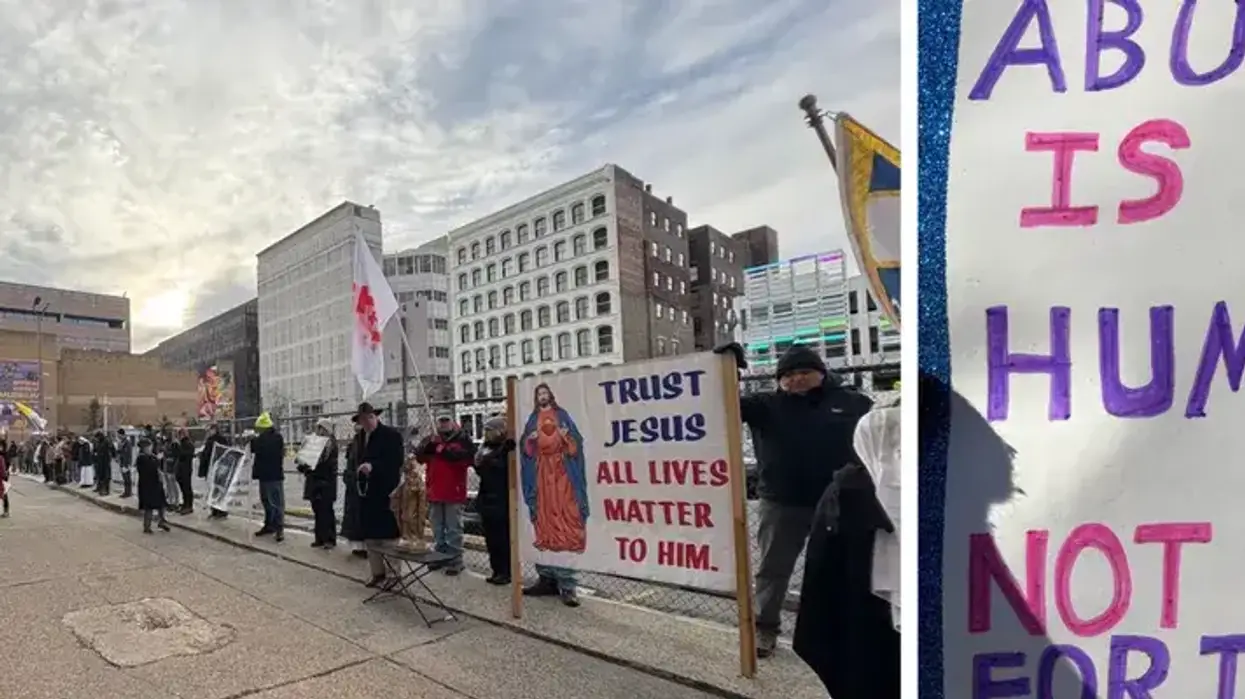
All of this is why I found myself outside the Philadelphia Women’s Center near my college on February 8. With dozens of local community members from the grassroots organization Abortion Rights Philadelphia, we chanted, “Abortion is a human right, not just for the rich and white.” Together, we sang Chappell Roan and Beyoncé, building a wall of joy between the clinic’s patients and the masses of anti-abortion protesters, by and large older white men, who had gathered with dramatized pictures of fetuses, attempting to dox and scare patients from accessing their healthcare.
Our movements must understand the intuitive reality that the attacks on reproductive rights, on reproductive access, and on our bodily autonomy are the same attacks as those on our environment. And we must understand the inverse as well.
As New York City-based Afro-Puerto Rican reproductive and climate justice activist Hennessy García points out, “Where we see environmental injustice, we see reproductive injustice as well.” They go hand in hand.
For example, breathing in polluted air increases the likelihood for pregnant people to give birth prematurely. The same is true for exposure to water pollution, toxins from superfund sites and brownfields, proximity to fossil fuel infrastructure, and the effects of extreme heat. All of these environmental hazards are, by and large, located in communities of color, especially low-income communities, across the country. This means that when Trump chants, “Drill, baby, drill” and loosens our already weak environmental protections, he’s putting pregnant people of color at risk of both climate and environmental injustices and harms.
This is also the case for women and transgender or non-binary (TGNB), intersex, and LGBTQIA+ people, independent of pregnancy, and for disabled people as well, due to societal structure, gendered roles, discrimination, and resource inequity. It is also true that sexual violence rates for women and TGNB folks increase significantly in the aftermath of climate disasters.
The clear takeaway here: Women and TGNB people’s lives and sexual and reproductive health are being threatened by Trump, fossil fuel companies, and their Democratic allies, worsening climate and environmental crises.
This is all intentional. While Trump bars the words “environmental justice,” “gender,” “female,” “women,” and “pregnancy” from federal agencies and refers to Gaza and Palestine as “demolition site[s],” he also pushes a proposal of a $5,000 cash “baby bonus” to every American mother after delivery. The Trump administration wants women, on one hand, to reproduce endlessly, and on the other hand, it condemns women in Black and brown communities to death, displacement, and genocide. Whether those be Black and brown communities overburdened by fossil fuels and extractive infrastructure, by police brutality and deportation, or whether they be like in Gaza, by incessant deadly bombardment.
Look at Elon Musk and his 14 children with four different younger women. In November, he tweeted, “Instead of teaching fear of pregnancy, we should teach fear of childlessness.” As Arwa Mahdawi of The Guardian argues, “It’s easy for Musk, who will never have to carry any of the children he’s so keen on having, to be blasé about pregnancy risks: He can outsource them all,” pointing to one of his partners, Grimes, who almost died during the pregnancy of their son X Æ A-12.
As Garcia says, “People with the ability to get pregnant are not machines.” But that’s exactly what the Trump-Musk administration wants.
It’s all, ultimately, about building logics for masculine control across every area of our lives, bodies, and world.
They want those who fit into their racialized view of “America” to reproduce endlessly, and they want those who don’t to be oppressed, to work as capital creators, and to, in many cases, die.
There’s a deep, contradictory nature to this logic. On one hand, Trump is trying to stop people of color from accessing abortion or contraceptive care, and on the other, he is trying to literally facilitate their deaths. And for white women, he’s encouraging them to give birth as much as possible, yet still not offering childcare or maternal care—instead, he scrubs the word “pregnancy” from the Department of Health and Human Services. He’s offering $5,000 to women who give birth—a measly sum compared to the $237,482 it takes to raise a child in the US—and simultaneously plans to limit childcare and eliminate Head Start. Ultimately, it’s not just about eugenic-reminiscent reproductive policy; it’s about control. It’s about strategic destabilization, whether it’s control of land—from Black, brown, and Indigenous communities to Gaza, Panama, and Greenland—or control of bodies and reproductive, life-making capacities, from Nick Fuentes’ “Your body; my choice” to the aforementioned actions of the administration. It’s also about exploitation, whether it’s mass deportations or labor exploitation, like the forms of slavery and exploitation for incarcerated individuals appearing across the country, from Louisiana to California.
Layer in the climate crisis and mass inaffordability, and this image of control becomes an even more frightening picture.
These same narratives of masculine control are what propel anti-climate, pro-fossil fuel policy in this current administration. Trump’s stated goal with his Department of Energy, now led by fracking CEO Chris Wright, is to “unleash [a] aolden era of American energy dominance.” He’s also created the National Energy Dominance Council to bolster fossil fuel exploitation of our climate, of indigenous lands, and of communities of color. The through line is that these men are trying to dominate.
We see this also in popular narratives against climate action. Professional misogynist and sex trafficker Andrew Tate wrote in a now-infamous Twitter exchange, ultimately leading to his arrest, “@GretaThunberg, please provide your email address so I can send a complete list of my car collection and their respective enormous emissions,” attaching an image of his collection of over 33 sports cars.
Writing about the exchange, author Rebecca Solnit wrote: “There’s a direct association between machismo and the refusal to recognize and respond appropriately to the climate catastrophe. It’s a result of versions of masculinity in which selfishness and indifference—individualism taken to its extremes—are defining characteristics, and therefore caring and acting for the collective good is their antithesis.”
Flaunting dominance over people and nature is deemed manly, whilst care is deemed as unmanly. And, taking action with respect to justice, the environment, or our collective future—as epitomized by Greta Thunberg—is deemed as womanly.
It’s all, ultimately, about building logics for masculine control across every area of our lives, bodies, and world.
These dynamics don’t care for separations between environment and climate or climate and reproduction—it’s all a question of exploitation and increased power and domination for the white male ultra-wealthy few. To face this, our movements for justice, too, must be just as deeply intersectional.
The SisterSong Women of Color Reproductive Justice Collective, a storied reproductive justice organization, defines “Reproductive Justice [as] the human right to maintain personal bodily autonomy, have children, not have children, and parent the children we have in safe and sustainable communities” (italics added).
There is no reproductive justice without ending fossil fuel expansion. There is no reproductive justice without a just, Indigenous, and worker-led societal transformation to renewable, community-controlled energy.
It means placing bodily autonomy at the center of our fight for climate justice, and breaking down the divides between our movements.
It’s time for us to incorporate reproductive justice just as deeply into our fight for climate justice. That means for us in the climate space to show up at our local abortion clinic to protect patients; it means connecting with and learning from local reproductive justice organizers in our area; and it means bringing in a reproductive justice platform into our climate policy. It doesn’t just mean supporting Planned Parenthood; it means listening to the Reproductive Justice movement and finding the local fights, whether legislative or practical, near you, and getting involved. It means funding local abortion funds that are always in need of donations, like those affiliated with the grassroots National Network of Abortion Funds.
It means placing bodily autonomy at the center of our fight for climate justice, and breaking down the divides between our movements. It means rejecting centrist politicians like New York Gov. Kathy Hochul, who claim leadership on reproductive rights and climate justice, while vetoing legislation to protect those seeking reproductive and gender-affirming care and fast-tracking new fossil fuel pipelines.
There is no other way to face the capitalist fossil-fueled heteropatriarchical oligarchy that has now overtaken our government and seeks to dominate us all.
Climate justice is reproductive justice.
The South’s Black communities are being disenfranchised by their state legislators and poisoned by AI data centers—a lethal combination that strips them of their political voice, while subjecting them to a slow death.
On May 7, the Republican-controlled Tennessee legislature passed new redistricting maps that dismantled the Memphis-based 9th District and split the city’s 63% Black population across three conservative, white-majority districts:
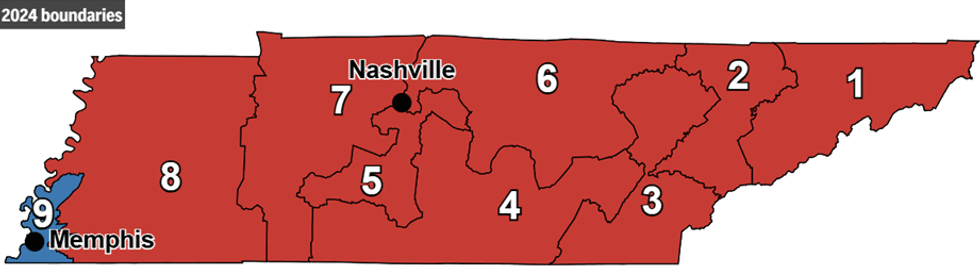
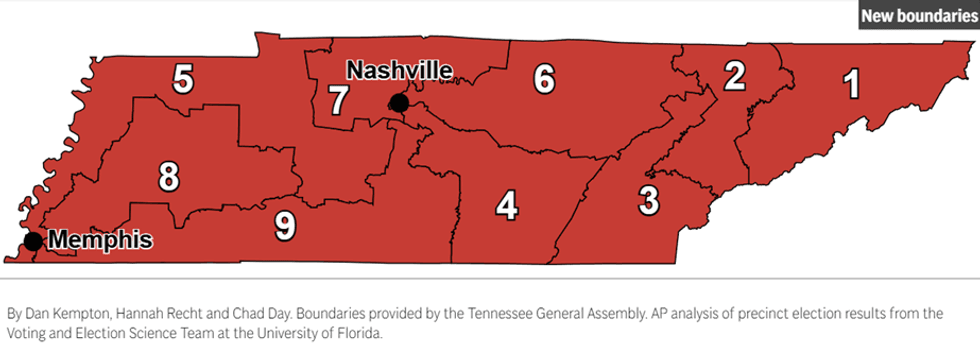
This hyper-partisan and blatantly racist gerrymander will have devastating effects for Memphians. Here, I’ll focus on one: the city’s struggles against AI data centers.
Memphis serves as the headquarters of xAI’s “Colossus” facilities. The Elon Musk-owned company brags that Colossus 1 is “the world’s biggest AI supercomputer.” It is the power source behind X-Twitter’s Grok, the deep-fake generating, misinformation superspreading chatbot.
The massive data center lies one mile away from Boxtown—a neighborhood in South Memphis founded by formerly enslaved Black people in the aftermath of the Civil War. Today, 95% of its residents are Black, the median income is less than $37,000, and the poverty rate is more than 31%. Like many Black communities in the South, Boxtown has been subject to decades of environmental racism. This refers to the disproportionate exposure of communities of colors to toxic waste, pollution, and other environmental hazards.
That is, of course, the entire point of this gerrymander: to render Memphis’ Black vote politically irrelevant; to undermine the power of Black communities to band together to fight against a common struggle.
Including Colossus 1, more than 17 polluting facilities are in or near Boxtown. This includes: an oil refinery, a steel mill, a wastewater treatment center, a gas-burning power plant (which burned coal from 1959 to 2018), and an abandoned military base designated by the Environmental Protection Agency (EPA) as a contaminated site.
This has had devastating effects on the health and well-being of Boxtown’s residents. Cancer rates are four times higher than the national advantage. Shelby county, which includes Boxtown, has an “F” rating in air quality for ground-level ozone (smog) from the American Lung Association. It also has the highest rate of children hospitalized for asthma across the entire state.
Colossus 1 worsens these problems. The Southern Environmental Law Center reports that xAI is deploying at least 35 methane gas turbines to power the data center. This is “far more than previously known and more than the company has submitted permit applications for.” These turbines emit enormous quantities of smog-forming pollutants, soot, nitrogen oxides (NOx), and formaldehyde, which are tied to increases in asthma, respiratory diseases, health problems, and various kinds of cancer.
Under Tennessee’s new congressional map, Boxtown is shoved into the state’s 5th Congressional District. This is Rep. Andrew Ogles’ (R-Tenn.) district. Ogles decries “climate tyranny” and the “woke energy elitists.” He advocates for returning “to producing and exporting American oil and natural gas, restoring the drilling and pipeline developments that [President] Biden blocked, and pursuing rational, common sense energy policies.”
Such policies include repealing the Inflation Reduction Act, the largest federal investment in clean energy and climate action, as well as dismantling the Electric Vehicle Working Group, which offers recommendations regarding the development, adoption, and integration of electric vehicles (EVs) into the country’s transportation and energy systems. He also co-sponsored a joint resolution challenging the Biden administration’s “Clean Power Plan 2.0,” which sought to significantly cut emissions from coal and gas-burning power plants.
With regards to AI and data centers, his concerns are solely about national security. Ogles remarks, “If a major data center is attacked, disrupted, or taken offline, the consequences can reach far beyond one company or one sector.” In a hearing on advanced technologies and cybersecurity, he notes that AI is “now woven into how Federal, State, and local governments operate, how intelligence is collected and analyzed, how critical infrastructure functions, and how American companies compete in a global economy.” He continues, protecting these technologies and crucial infrastructure is vital for ensuring America’s “prosperity for years to come” and “our role as the, quite frankly, sole superpower.”
Ogles’s anti-environmentalist, pro-AI politics does not represent the interests and desires of the people of Boxtown. Yet, unfortunately, he is the representative that Tennessee state legislators elected for them. To make matters worse, because of the Supreme Court, Boxtown’s situation will be far from unique.
xAI’s Colossus 2 became fully operational in 2026. This data center, which is larger than Colossus 1, is located in Whitehaven—another predominately Black and poor South Memphis neighborhood.
Like Boxtown, Whitehaven is in Shelby County. However, under the new gerrymandered map, it is part of the state’s newly reconfigured 9th District. Its current representative, Steven Cohen (D-Tenn.), is among the most consistent advocates for protecting the environment and public health. However, in light of the state’s efforts to disenfranchise Memphians, Cohen has decided not to run for reelection.
Whitehaven’s future is in serious jeopardy. Minutes after the Tennessee General Assembly approved the state’s gerrymander, Tennessee state Sen. Brent Taylor (R-31) announced his candidacy for the representative seat.
Taylor praises xAI as “a great asset for Memphis.” When asked about the environmental concerns raised by residents, he responded: Tthose “environmental concerns predate xAI’s arrival in Memphis and the efforts to address them thus far seem to be misguided.” He explains: “The way I would address the concerns is not to attempt to close xAI or browbeat them to leave Memphis, but I would engage with them and local government to enter into conversations about potential buyout of nearby homes… This would seem to be a much more constructive way to address the environmental concerns of the neighbors.”
He praises how “xAI has worked to overcome every environmental concern raised.” This includes using “water that has been trucked in” to cool its systems (which is contributing to more pollution), and “purchasing a decommissioned energy plant in nearby Mississippi to generate a portion of their own energy.”
That Mississippi site is in Southaven, 5 miles away from Whitehaven. It is currently the subject of a National Association for the Advancement of Colored People (NAACP) lawsuit alleging that xAI is violating the Clean Air Act by operating 27 gas turbines without any permits.
If Taylor replaces Cohen, it is clear he would put xAI over Memphians. Given that the new 9th District spans nearly 300 miles from southern Memphis to the suburbs of Nashville, their diluted votes would be easy to ignore. That is, of course, the entire point of this gerrymander: to render Memphis’ Black vote politically irrelevant; to undermine the power of Black communities to band together to fight against a common struggle. Importantly, Boxtown and Whitehaven—communities that are less than six miles apart—are now burdened with having to secure two congressional seats to have their voices and interests represented.
Similar redistricting efforts are being pushed by Republicans in Alabama, Louisiana, Mississippi, Georgia, and South Carolina. Like Memphis, Black and poor communities in those states are also under threat by AI data centers. This includes: the recently green-lit Project Marvel in Bessemer, Alabama; the 20 data centers being planned across southern Fulton County in Georgia; a $27 billion data center being built by Meta in Richland Parish in Louisiana; and a proposed data center complex the size of 1,200 football fields being planned for the Walterboro area in South Carolina. These are just a few of the more than 3,000 operational data centers across the US.
The South’s Black communities are being disenfranchised by their state legislators and poisoned by AI data centers—a lethal combination that strips them of their political voice, while subjecting them to a slow death.
In both instances, their rights, health, and livelihoods are jeopardized by bad faith appeals to “progress.” On the one hand, the Supreme Court justifies dismantling the Voting Right Act because of the “great strides [made] in ending entrenched racial discrimination” across the US and “particularly in the South.” Here, decades of hard-won social progress become the pretext for erasing the Black vote.
On the other hand, Elon Musk touts that, as AI and robotics develop, “Everyone will have access to medical care that is better than what the president receives right now.” Here, the promise of progress and a richer, healthier future becomes the pretext for callously exposing the most vulnerable communities to the most harmful toxins.
The path forward will be difficult, but two things are clear: We must put an end to these partisan and racist gerrymanderings. We must put a moratorium on AI data centers. Just as we cannot allow elected officials to steal our votes, we cannot permit a handful of tech companies to sacrifice our bodies for their profits. Now is the time to fight back—to defend the progress that we have made as a nation; to defend the vulnerable and give voice to those who are being silenced; and to bring about the future that we desire for ourselves.
As the Memphis-born civil rights leader Dr. Benjamin Hooks put it: “If anyone thinks that we are going to stop agitating, they had better think again. If anyone thinks that we are going to stop litigating, they had better close the courts. If anyone thinks that we are not going to demonstrate and protest, they had better roll up the sidewalks.”