

SUBSCRIBE TO OUR FREE NEWSLETTER
Daily news & progressive opinion—funded by the people, not the corporations—delivered straight to your inbox.
5
#000000
#FFFFFF
To donate by check, phone, or other method, see our More Ways to Give page.

I reviewed the appeals.
The CDE lacks authority to discipline school personnel, and the appeals I reviewed did not recommend teacher discipline. Teachers, however, have been told by their school districts to remove their keffiyehs and steer clear of stating as fact that Israel exemplifies “settler colonialism.” If an LEA or CDE finds a complaint has merit, it may order school districts to implement teacher training in antisemitism in consultation with a Jewish or Israeli organization. These orders open the door for Zionist organizations like the Anti-Defamation League and the American Jewish Committee to teach teachers that criticism of Israel is antisemitic and discriminates on the basis of national origin.
Teacher and Union del Barrio organizer Ron Gochez said the district’s edict that teachers remain silent in the face of a US-subsidized genocide was like telling teachers in Nazi Germany to take a neutral stance on the Holocaust.
The Civil Rights Act of 1964 prohibits discrimination in employment, education, and public accommodations based on someone’s birthplace or ancestry—but does not prohibit criticism of a sovereign state, which is protected speech according to the American Civil Liberties Union.
The CDE’s release of files reflects the department and school districts’ tendency to conflate anti-Zionism (opposition to Israel) with antisemitism (bigotry toward Jews for being Jewish). Under AB 715 (D-Zbur) legislation that establishes an antisemitism coordinator to police instruction and teacher training, this confusion could get a lot worse because AB 715 incorporates the US National Strategy to Counter Antisemitism, which promotes the International Holocaust Remembrance Alliance (IHRA) definition and examples that conflate criticism of Israel with antisemitism.
Teachers and their allies can, however, revolt: March on Sacramento, challenge Zionist teacher training, file their own complaints, and collectively teach Palestine across school departments and districts.
The following is a review of some of the CDE’s cases addressing allegations of antisemitism or discrimination against Jews or Israelis.
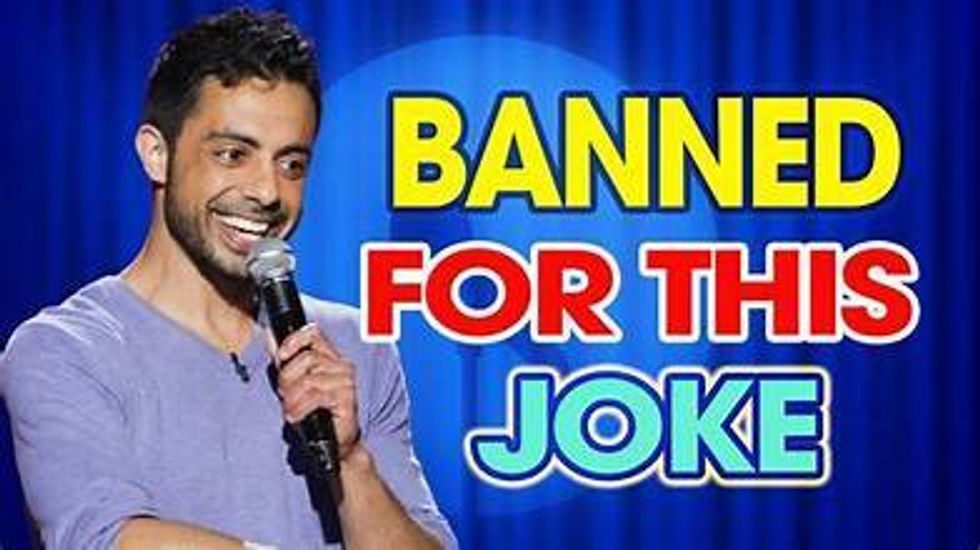
In 2025, the principal of Mountain View Los Altos High School banned popular Lebanese-Palestinian American comedian Sammy Obeid after he cracked jokes about Israel at an after-school on-campus event in 2025 hosted by the Muslim Student Association (MSA). The school investigation report (IR) read, "During the event, the comedian made antisemitic remarks: about the Israeli Prime Minister getting cancer, calling the Prime Minister a supervillain, and how Israel does not believe in abortion so it can bomb more Palestinians.”
Months earlier, on November 21, 2024, the International Criminal Court (ICC) issued arrest warrants for Israeli Prime Minister Benjamin Netanyahu and then-Israeli Defense Minister Yoav Gallant for crimes against humanity in Gaza, including “starvation as a method of warfare, murder, persecution, and other inhumane acts.”
Nevertheless, the district concluded, after berating the Muslim students for inviting Obeid—that the comedian’s performance was antisemitic. The CDE agreed and ordered the district to further revise its guest speaker policies to include strict vetting and get-off-the-stage intervention should an administrator believe the speaker’s conduct discriminated against a protected group on the basis of ethnicity, nationality, immigration status, religion, sexual orientation, gender identity, gender expression, age, and physical or mental disabilities.
P.S. For the record, abortion is legal in Israel as long as women obtain approval from the Israeli Pregnancy Termination Board.
In another example of conflation, the CDE ordered (11/24/25) San Ramon Valley High School to deliver teacher training on antisemitism to all social studies teachers after the department ruled a teacher’s class statements were proof of discriminatory bias against Jewish and Israeli students. The department’s fact finding said the teacher told students that Israel was committing genocide in Gaza. Hardly breaking news. Human Rights Watch, B’Tselem, the International Association of Genocide Scholars, Doctors without Borders, and the United Nations International Commission of Inquiry had all determined Israel was committing genocide in Gaza.
Nonetheless, the CDE said the appeal had merit because the teacher did not cite sources and present an opposing viewpoint. The Department ordered San Ramon Valley High School to provide the CDE with evidence by January 30, 2026 that the school had delivered training from someone not affiliated with the school district to ensure that classroom instruction “does not promote a discriminatory bias.”
The Institute for the Understanding of Anti-Palestinian Racism (IUAPR) defines anti-Palestinian racism as a form of racism that “silences, excludes, erases, stereotypes, defames, or dehumanizes Palestinians or their narratives.”
A CDE ruling involving New Haven Unified School District might serve as an example of erasing the human rights and worth of Palestinians. After teachers in the summer 2025 Ethnic Studies Social Justice Academy (ESSJA) presented a slide deck describing actions by Israelis against Palestinians as potentially constituting “genocide, ethnic cleansing, and settler colonialism,’ the department said instruction lacked adequate balance and historical context, and cast Israel in a negative light. The department acknowledged that the slides for students also discussed the horrific impact of the Holocaust, the ancient connection of Jews to the land also claimed by Palestinians, and how “the Israeli government is separate from innocent Israeli/Jewish people who stand for justice,” but still...
The department then ordered the school district to train ESSJA teachers and administrators in the “obligation to comply with Education Code 51500, which states that a teacher shall not deliver instruction, and a school district shall not sponsor any activity that promotes a discriminatory bias.”
Points for the MAGA team.
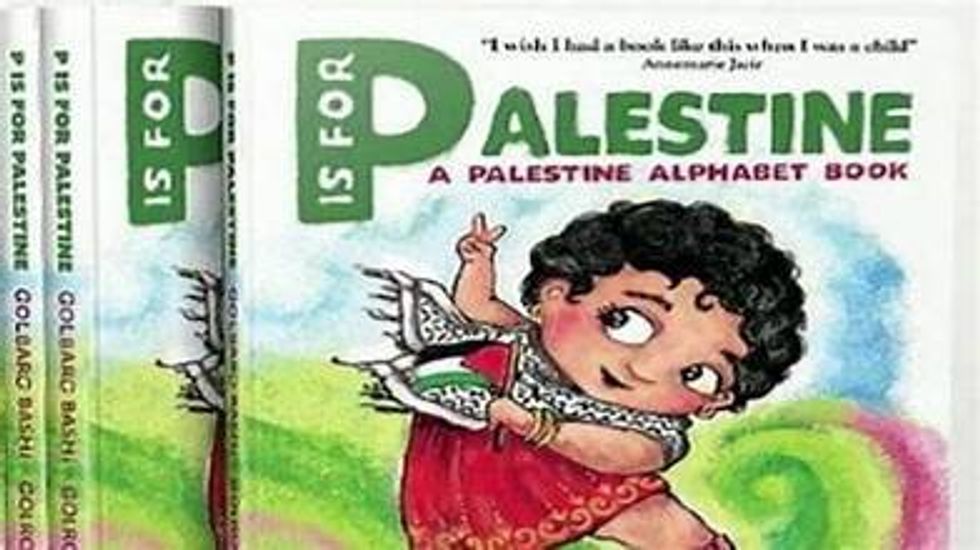
Rank and file Oakland educators circulated an Open Letter in spring 2026 calling on the district “to resist the concerted attacks by political groups who slander as 'antisemitic' anyone who criticizes Israeli apartheid and genocide or Zionism.” Yet, the Oakland Unified School District, facing a lawsuit from the CDE, still mandated teachers watch and interact with an Anti-Defamation League 20-minute video “Antisemitism: What Do Educators Need to Know,” which defines antisemitism as “marginalization and/or oppression of people who are Jewish based on the belief in stereotypes and myths about Jewish people, Judaism, and Israel.”
The ADL training stands in dramatic contrast to a teach-in rank-and-file Oakland teachers organized in December 2023, two months after October 7, as Israel dropped 2,000-pound bombs on Gaza, one of the most densely populated areas on Earth. Objecting to district resources from Zionist-funded organizations, the teachers provided workshop participants with a recommended list of books, films, and lessons.
Across the bay, in San Francisco, in the fall of 2024, a dozen teachers declined to participate in district antisemitism training with the American Jewish Committee, a Zionist organization that boasts on its website, “We stand up for Israel.” Teachers instead chose to attend professional development with PARCEO, a non-Zionist organization anchored in the belief that ending antisemitism is part of an intersectional fight for collective liberation of all people.
Down in Los Angeles, teachers and community members rallied (5/16/26) in front of the Downtown Business Magnet to protest the Los Angeles Unified School District (LAUSD) decree that ethnic studies and social studies teachers remove “Stop Genocide” posters and Palestinian and Black Lives Matter flags, as well as undergo teacher training on the use of “neutral terms” to describe sensitive topics, including Israel’s slaughter and starvation of Gaza.
Teacher and Union del Barrio organizer Ron Gochez said the district’s edict that teachers remain silent in the face of a US-subsidized genocide was like telling teachers in Nazi Germany to take a neutral stance on the Holocaust.
In another act of resistance, K-12 Legal Defense, led by attorney Liz Jackson, and San Francisco law firm Leonard Carder, LLP, filed a motion (5/11/16) to intervene in Brandeis v California on behalf of a group of 10 California families—Jewish and Palestinian parents and students enrolled in public schools.
For teachers walking a tightrope under the watchful eye of an AB 715 enforcer, there are some lessons that lend themselves to a “both sides” debate: South Africa vs. Israel at the International Court of Justice or Zionists vs. non-Zionists on school board adoption of the IHRA definition and examples of antisemitism. In many instances, however, the “both sides” approach fails to acknowledge the power imbalance between Israel and Palestine to leave students confused.
History will not look back kindly on those demanding investigations of educators who dare to teach about Palestine during a documented genocide. Nor will history applaud those who conflate criticism of Israel with antisemitism in lawsuits against states and school districts.

My house sits beside the road. Every day, I watch people approach the gate not knowing what they will find. Will it be open? Closed? Will there be a checkpoint? Will they be delayed for minutes, hours, or forced to turn back altogether?
For many families, the first question of the morning is no longer about work, school schedules, or the weather. It is simple: "Is the gate open today?"
No child should become so familiar with a barrier that it earns a permanent place in his imagination.
Entire WhatsApp groups have emerged around that question alone. Residents exchange updates throughout the day. Someone reports that traffic is moving. Another warns of delays. A third shares a photo showing the road blocked.
These groups were not created to discuss politics. They exist because people need to know whether they can get to work, attend university classes, reach medical appointments, or visit relatives.
The gate has become a permanent presence in people's minds. When it closes completely, the scene changes instantly.
The drivers park their cars along the roadside and continue on foot. Students hurry toward schools and universities. Workers walk to avoid losing a day's wages. People carrying groceries, bags, or small children cross the distance that vehicles can no longer cover.
In the evening, many return the same way—tired, frustrated, and uncertain whether they will find the road open when it is time to go home.
Sometimes people ask permission to leave their cars near our house because they do not know when they will be able to retrieve them. On more than one occasion, I have watched strangers park, shoulder their belongings, and continue their journey on foot because there was no other option.
The visible inconvenience is easy to describe. The invisible burden is harder to measure.
What does it mean to organize your life around uncertainty? What happens when a routine trip to work, school, or a medical appointment becomes a daily calculation involving alternate routes, unexpected delays, and the possibility that the road ahead may suddenly close?
Over time, uncertainty settles into people's lives. It affects productivity, family plans, social commitments, and mental well-being. Conversations become dominated by road conditions and access restrictions. Schedules remain tentative. Even celebrations, weddings, and family gatherings are planned with the possibility of disruption in mind.
The impact extends far beyond transportation. It reshapes the way people think. And perhaps nowhere is that impact more visible than in the way children absorb the world around them. My son is 8 years old. Over the past months, he has drawn the gate more than 30 times. No one asked him to do so. No teacher assigned it. Yet the yellow gate keeps appearing in his drawings. Sometimes it is closed. Sometimes cars are waiting in front of it. Sometimes people are walking around it. Occasionally, there are figures standing nearby, watching.
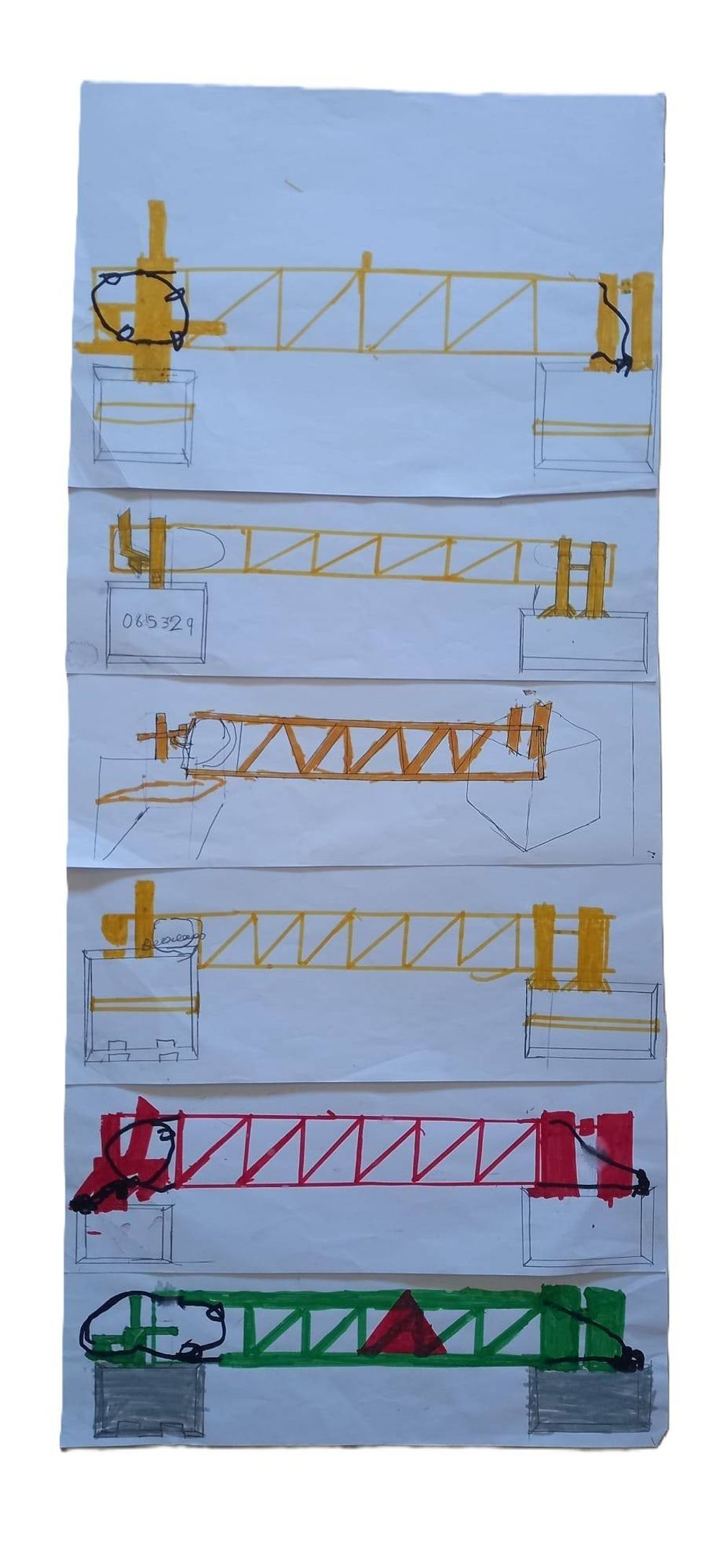
At first, I barely noticed. Children draw what they see. But as the drawings accumulated, I began to pay attention. The same image returned again and again. A gate. A road. Waiting.
Children are supposed to fill their notebooks with football fields, superheroes, animals, friends, dreams, and imaginary adventures. Yet among my son's drawings, the gate had secured a permanent place. That realization stayed with me.
The true cost of restrictions is often discussed in terms of economics, mobility, or security. Those discussions matter. But there is another cost that receives far less attention: the amount of mental space occupied by obstacles that become part of everyday life.
When adults constantly discuss whether a road is open or closed, children listen. When plans are interrupted repeatedly, children notice. When uncertainty becomes normal, children absorb it as part of their understanding of how the world works.
The gate outside my window is made of metal. Yet its influence reaches far beyond the road it controls. It enters conversations around dinner tables. It dominates community WhatsApp groups. It influences work schedules, school attendance, and family visits. And, in my son's case, it appears repeatedly on sheets of paper scattered around our home.
Recently, I gathered several of his drawings and laid them side by side. There it was again: the yellow gate. In one picture it was closed. In another it stood across the road while cars waited. In a third, people walked around it.
I found myself asking a simple question: What would my son be drawing if the gate were not there? I do not know the answer. But I do know that no child should become so familiar with a barrier that it earns a permanent place in his imagination.
That is why I am writing this.
Not simply about a gate on a road near Bethlehem, but about how uncertainty seeps into daily life, settles into communities, and quietly shapes the memories of a generation growing up in its shadow.
