Tag Archives: Inequitable Conduct

inequitable conduct, unclean hands, Therasense

Integrity Versus Repose: When Claim Preclusion Bars Fraud on the Court

by Dennis Crouch

In Hazel-Atlas Glass Co. v. Hartford-Empire Co., 322 U.S. 238 (1944), the Supreme Court set aside a years-old infringement judgment after it emerged that the patentee had ghostwritten a trade journal article, published it under the name of an ostensibly disinterested expert, and used it to prevail both at the Patent Office and on appeal. Judicial integrity, the Court held, outweighed the finality of a corrupted judgment:

The public welfare demands that the agencies of public justice be not so impotent that they must always be mute and helpless victims of deception and fraud.

That tension between exposing fraud and protecting final judgments keeps returning to patent litigation. See Dennis Crouch, Fraud on the Court: Finality and the Ghost of Hazel-Atlas, Patently-O (Jan. 26, 2025). The newest entry is Capital Security Systems, Inc. v. NCR Corp., No. 25-11532 (11th Cir. Feb. 26, 2026) (per curiam), where the court refused to let a fraud-on-the-court claim proceed, not because the alleged fraud was implausible, but because the plaintiff had already litigated the same facts and lost.


To continue reading, become a Patently-O member. Already a member? Simply log in to access the full post.

Micro-Entity Traps for Inventors Who Also Own Their Employer

by Dennis Crouch

The micro-entity discount created by Congress in the Leahy-Smith America Invents Act represents one of patent law's more generous gestures toward independent inventors. Under 35 U.S.C. § 123, applicants who qualify pay only 20% of the standard USPTO filing fees.  But the statute comes with a precise set of eligibility requirements, and inventors who miscalculate their status face stiff consequences.  A Federal Circuit decision issued today, Nesarikar v. USPTO, No. 2026-1167 (Fed. Cir. May 12, 2026) (nonprecedential), illustrates the traps.

  • An administrative trap involves a misapplication of the § 123(b) prior-employment exception to the application-filing limit.
  • A litigation trap involves what happened when the inventors tried to challenge that denial in court and discovered that the representations they made to the USPTO in support of micro-entity status had stripped them of Article III standing to sue.

The three Nesarikar inventors — Ashlesha, Anika, and Abhijit — are joint inventors on a portfolio of patent applications covering AI-based systems for autonomous vehicles. Their U.S. Patent Application No. 18/069,288, titled "Systems and Methods for Intelligent Awareness and Intent for Autonomous Vehicles" and claiming priority to a December 2021 provisional, was filed on December 21, 2022, along with seven sibling applications filed the same day.

All three inventors certified micro-entity status for the '288 application and paid the corresponding discounted fees. In April 2024, the USPTO sent a notice of payment deficiency, informing the Nesarikars that their micro-entity certification appeared to be in error, with each of the three being named on 10+ prior patent applications. The inventors responded by invoking the § 123(b) prior-employment exception, asserting that they were obligated to assign their prior applications — and the '288 application itself — to former employers. The Office found these representations unsupported and refused to accept them as sufficient. After a series of exchanges that resolved nothing, the '288 application was abandoned in February 2025. The Nesarikars then filed a pro se lawsuit in the Eastern District of Texas under the Administrative Procedure Act, which the district court dismissed for lack of standing. The Federal Circuit has now affirmed that dismissal.


To continue reading, become a Patently-O member. Already a member? Simply log in to access the full post.

Jurisdiction-If-We-Win: T-Mobile v. KAIFI and the Gunn Boundary Line

by Dennis Crouch

The Federal Circuit heard oral argument this week in T-Mobile US, Inc. v. KAIFI LLC, No. 25-1006 (Fed. Cir. argued May 5, 2026), and most of the forty minutes were spent on the question: does the Federal Circuit even have jurisdiction over this appeal? (Listen on my ScotusGate site)

The underlying dispute is a Texas-law breach-of-contract case. T-Mobile and KAIFI settled patent infringement litigation on the eve of trial in the Eastern District of Texas. The settlement called for an upfront payment plus a contingent payment if any "Asserted Claim survives the [ex parte reexamination] EPR" then pending before the Patent Office. Although the USPTO confirmed several claims as patentable without amendment, T-Mobile refused to make the contingent payment, contending that KAIFI's positions before the examiner had narrowed the claims through prosecution disclaimer and that KAIFI's failure to disclose contradictory district-court filings rendered the patent unenforceable through inequitable conduct. Judge Gilstrap rejected those arguments and entered judgment for KAIFI for breach of contract.

The jurisdictional question matters because the case landed in the wrong court twice. T-Mobile's notice of appeal designated the Federal Circuit, but a "clerical error" sent the appeal to the Fifth Circuit, which transferred it to the Fed.Cir. on T-Mobile's unopposed motion. KAIFI then moved to transfer back, arguing that the contract claim does not arise under the patent laws. The motions panel deferred the question to the merits panel.  And then KAIFI changed its position. In its merits brief, KAIFI ultimately agreed that the Federal Circuit has jurisdiction, but only if the Court adopts KAIFI's preferred reading of the contract term "survives." T-Mobile's reply brief calls this a "jurisdiction-if-we-win-but-not-if-we-lose" argument. The oral arguments got into the "trying to have it both ways" argument and Judge Taranto pressed Philip Warwick (KAIFA's counsel) on the strangeness of conditioning jurisdiction on a particular merits resolution.


To continue reading, become a Patently-O member. Already a member? Simply log in to access the full post.

Not So Sure: Federal Circuit Vacates Summary Judgment of Inequitable Conduct Despite Inventor’s ‘Smoking Gun’ Statement

by Dennis Crouch

During patent prosecution, an inventor wrote to his attorney in the margin of a draft declaration: "I am not sure it is a good idea to disclose this document." The district court called this "a rare example of direct evidence of an intent to defraud." A magistrate judge agreed. The patent was declared unenforceable for inequitable conduct on summary judgment. Case closed. Or so it seemed.

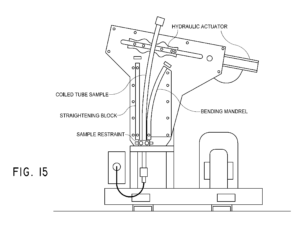
In Global Tubing LLC v. Tenaris Coiled Tubes LLC, No. 23-1882 (Fed. Cir. Feb. 26, 2026), the Federal Circuit vacated the district court's summary judgment of inequitable conduct and also vacated summary judgment on a related Walker Process antitrust claim, finding genuine disputes of material fact on both.


To continue reading, become a Patently-O member. Already a member? Simply log in to access the full post.

An Old Trick in the Patent Book: Targeted Drafting from 1876 to 2026

by Dennis Crouch

When Alexander Graham Bell filed his patent application on February 14, 1876, he titled it "Improvement in Telegraphy." Not "Telephone." Not "Apparatus for Transmitting Speech by Electricity." Just a modest tweak to the existing telegraph art. The United States government later alleged this was no accident. In United States v. American Bell Telephone Co., 128 U.S. 315 (1888), the government's bill of complaint charged that Bell "purposely framed his said application and claim in ambiguous and general terms" and "did not set forth or declare that his alleged invention had any relation to the art of transmitting articulate speech by means of electricity." The strategy worked, at least initially: the Patent Office examiner "did not understand the application to lay claim to the art of transmitting speech" and so "did not make an inquiry as to the state of that art or the patents or the printed publications concerning it." No search for the work of Reis, Meucci, or even the caveat filed that same day by Elisha Gray. Bell got his patent on March 7, 1876, three weeks after filing. The case raised serious fraud allegations that the Supreme Court addressed in a companion case, The Telephone Cases, 126 U.S. 1 (1888), but the patent survived.

Nearly 150 years later, patent attorneys are still doing the same thing, though the tools are better and the practice now has a name: targeted drafting. The basic idea is to frame an application so the USPTO routes it to a favorable art unit, where the examiner corps is more likely to allow claims. The mechanism is different from Bell's era, but the impulse is identical. A good negotiator picks a willing counterpart. A good patent prosecutor picks an art unit where the odds favor allowance. Analytics vendors have for years been marketing tools to predict art unit assignment and suggesting language changes to steer applications toward friendlier examiners.


To continue reading, become a Patently-O member. Already a member? Simply log in to access the full post.

Google v. Sonos: Federal Circuit Validates Strategic Patent Continuation Practice (With Limits)

by Dennis Crouch

The Federal Circuit has now wiped away Judge William Alsup's dramatic post-trial decision in Sonos v. Google. In a nonprecedential opinion, the court reversed the lower court's finding of prosecution laches, reiterating that laches is an equitable defense reserved for rare cases. Google LLC v. Sonos, Inc., No. 2024-1097 (Fed. Cir. Aug. 28, 2025).

Prosecution laches requires both (1) an unreasonable and unexplained delay in patent prosecution and (2) a showing of prejudice to the accused infringer in the form of intervening rights (e.g. evidence that others "invested in, worked on, or used the claimed technology during the period of delay"). Here, Google failed to present evidence that it (or others) changed their position or made investments in reliance on Sonos's delay and so laches could not apply. At times, egregious delay can trigger laches absent a specific showing of harm. Here, however, the panel emphasized that standard continuation practice, even over more than a decade, is not itself an "egregious misuse" of the system sufficient to trigger laches in the absence of specific prejudice. Prior prosecution laches cases all involved pre-1995 patents and decades of delay and this was the first time prosecution laches had been used to render a post-1995 patent unenforceable in a situation where delays in prosecution automatically delayed patent term as well. The court ultimately reversed Judge Alsup's unenforceability ruling and reinstated the jury's $32 million verdict on the Sonos "zone scenes" patents.

Although Sonos won the appeal, the decision does not provide a full green light to the continuation practice found here - particularly where claims covering competitor activity are first added to the patent family long after the original filing and publication dates. The Federal Circuit's analysis focused heavily on the fact that Sonos's 2007 patent application previously published, well before Google's alleged investments began in 2014-2015. This meant Google could not claim prejudice from incorporating into its products a feature that was already publicly disclosed in a pending patent family.


To continue reading, become a Patently-O member. Already a member? Simply log in to access the full post.

Preview: Federal Circuit Oral Argument in Google v. Sonos (July 10, 2025)

by Dennis Crouch

Judge Alsup issued his controversial unenforceability decision in Sonos v. Google back in October 2023, and the appeal has been pending since then.  The Federal Circuit recent scheduled arguments for July 10, 2025.  I wanted to offer a bit of a preview of these upcoming oral arguments.

In 2020, Sonos sued Google for infringing its “zone scenes” patents, which cover techniques for grouping networked speakers into saved scenes (including overlapping groups of speakers). U.S. Patent Nos. 10,848,885 and 10,469,966.  A jury found Google liable and awarded $30 million in damages.  N.D.Cal. Judge William Alsup then took the unusual step of throwing out the verdict. Ruling on post-trial motions, Judge Alsup found the two patents unenforceable due to prosecution laches and invalid for lack of written description support. Sonos promptly appealed, and it is that appeal that is now pending.

Judge Alsup’s Decision: In his 55-page order, Judge Alsup found that Sonos had engaged in a “daisy chain” continuation strategy to keep its patent family alive for over 13 years. Sonos filed an initial provisional application in 2006, but did not present the asserted overlapping-scene claims for examination until 2019.  By then, Google and others had already developed and sold products implementing the overlapping-zone technology.


To continue reading, become a Patently-O member. Already a member? Simply log in to access the full post.

2024 Federal Circuit Review

As we enter 2025, I wanted to pause for a moment to look at some of the Federal Circuit's 2024 development of U.S. patent law.  The court issued about 70 precedential patent cases along with a handful related to other IP doctrines (primarily trademark). 


To continue reading, become a Patently-O member. Already a member? Simply log in to access the full post.

Pending En Banc Petitions at the Federal Circuit

by Dennis Crouch

The Federal Circuit recently decided the en banc design patent case of LKQ v. GM, but the court has not issued an en banc decision in a utility patent case since 2018.  There are currently four interesting petitions pending before the court.


To continue reading, become a Patently-O member. Already a member? Simply log in to access the full post.

SCT: False Claims Act Actions Based Upon Fraudulently Obtained Patent Rights

by Dennis Crouch

This post walks through a new petition for writ of certiorari involving claims that Valeant Pharma defrauded the U.S. government by using fraudulently obtained patent rights prop up its drug prices. [Read the Petition]

The False Claims Act (FCA), originally enacted in 1863 to combat contractor fraud during the Civil War, imposes civil liability on anyone who "knowingly presents" a "fraudulent claim for payment" to the federal government. 31 U.S.C. § 3729(a)(1)(A). The Act allows private citizens, known as "relators," to bring qui tam actions on the government's behalf against those who have defrauded the government. If successful, relators can recover up to 30 percent of the damages. 31 U.S.C. §§ 3730(b)(4), (d)(2).

To prevent opportunistic lawsuits, however, Congress has sought to strike a "balance between encouraging private persons to root out fraud and stifling parasitic lawsuits"


To continue reading, become a Patently-O member. Already a member? Simply log in to access the full post.

Patentee’s Unclean Hands

by Dennis Crouch

The Federal Circuit's new decision in Luv'N'Care, Ltd. (LNC) v. Laurain and EZPZ, relies on the doctrine of unclean hands to deny relief to the patentee (Laurain and EZPZ), affirming the district court's judgment.  The appellate panel also vacated and remanded the district court's finding that LNC failed to prove the asserted patent is unenforceable due to inequitable conduct during prosecution, as well as its grant of summary judgment one of the asserted patents was invalid as obvious.  U.S. Patent No. 9,462,903. The case here involves bowls/plates attached to a mat to help avoid spills and for easy cleanup. 22-1905.OPINION.4-12-2024_2300689.

Unclean Hands: The doctrine of unclean hands is an equitable defense that bars a party from obtaining relief when they have engaged in misconduct


To continue reading, become a Patently-O member. Already a member? Simply log in to access the full post.

Burden of Proof Buffers Patent Owner Misconduct in Patent Revival Case

by Dennis Crouch

A jury in Judge Albright's W.D.Tex. court sided with Amazon - finding no infringement. On appeal, the Federal Circuit has affirmed -- particularly affirming Judge Albright rejection of Freshub's post-verdict motions. Freshub, Inc. v. Amazon.com, Inc., 22-1391 (Fed. Cir. Feb 26, 2024).  In a cross-appeal, Amazon argues that the district court should have found the patent unenforceable due to inequitable conduct. That appeal was also rejected. Freshub v Amazon.

No Reversible Error in Denying Inequitable Conduct

I want to use this blog post to focus on the finding of no inequitable conduct.


To continue reading, become a Patently-O member. Already a member? Simply log in to access the full post.

9th Circuit Revives False Claims Act Action for Fraud on the Patent Office

by Dennis Crouch

The U.S. Court of Appeals for the Ninth Circuit recently issued a pair of decisions in the qui tam case Silbersher v. Valeant Pharmaceuticals concerning the False Claims Act's (FCA) public disclosure bar.  The case sets significant precedent in linking FCA claims to patent prosecution and fraud upon the patent office.  The case can be contrasted with Silbersher v. Allergan, Inc., 21-15420, — F.4th — (9th Cir. Aug. 25, 2022) [21-15420], that Silbersher lost.


To continue reading, become a Patently-O member. Already a member? Simply log in to access the full post.

Attorney Fees on Undecided Inequitable Conduct Issues

by Dennis Crouch

United Cannabis Corp (UCANN) vs. Pure Hemp Collective, --- F.4th --- (Fed. Cir. 2023)

The UCANN vs. Pure Hemp patent case has come to a close with the Federal Circuit affirming the district court's decision to deny attorney fees to Pure Hemp. The original infringement lawsuit was filed in 2018, with UCANN suing Pure Hemp for infringing US Patent No. 9,730,911, covering various high concentration cannabis and CBD extract formulations. During the litigation, UCANN filed for bankruptcy, causing the case to be stayed, and eventually, the parties stipulated to a dismissal of the infringement claims with prejudice. However, the stipulated dismissal did not include any discussion of attorney fees -- leading to the current appeal.

Following the dismissal, Pure Hemp moved for attorney fees and sanctions, arguing that UCANN's counsel committed inequitable conduct during patent prosecution and that UCANN's litigation counsel had a conflict of interest. The district court sided with UCANN and denied attorney fees, stating (1) that Pure Hemp was not the prevailing party and (2) that Pure Hemp did not prove that the case was exceptional. The Federal Circuit has now affirmed the decision, finding that the district court did not abuse its discretion in finding the case unexceptional. Although district court the district court erred in not finding Pure Hemp to be the prevailing party, the error was harmless.


To continue reading, become a Patently-O member. Already a member? Simply log in to access the full post.