Tag Archives: Mandamus

petitions for writ of mandamus, mostly venue and discovery

18 Years of Federal Circuit Mandamus: The Rise and Fall of the Texas Venue Surge

by Dennis Crouch

In re Google LLC, No. 2026-157 (Fed. Cir. Oct. 6, 2026) (nonprecedential order)

In early October, 2026, the Federal Circuit granted Google's mandamus petition and ordered USC v. Google transferred from Judge Albright's (former) Austin docket to the Northern District of California. This was the court's first mandamus grant since In re Honeywell in January 2024. The court had denied the prior 100+ mandamus petitions.  The recent drought followed much more actions by the court in 2021 and 2022.

Two-panel black-and-white chart. Left: mandamus petitions filed each year, 2019 through Oct. 30, 2026 (26, 41, 87, 54, 46, 48, 54, 45), stacked by outcome: granted, denied, dismissed or transferred, no outcome on file, and petitions from other tribunals. Grants by year filed: 1, 5, 22, 12, 4, 0, 0, 1. Right: days from docketing to ruling, median 53 for denials, 67 for grants, 42 for dismissals.

Every mandamus grant since 2019 (45 total) came from a Texas district court case, seeking a venue ruling. For Texas venue petitions filed 2021 through 2023, the court granted about 44%. Since then it has granted only 4%: one petition, Google's. And now, with Judge Albright off the bench, everyone has calmed down a bit.

Two bar charts by year filed, 2019 to 2026. Left: Texas venue and transfer mandamus petitions, peaking at 46 in 2021 (42 from Judge Albright's court) and falling to 13, 7 and 4 in 2024 to 2026; in 2025 and 2026 Judge Gilstrap's court was the largest source. Right: petitions granted, 22 in 2021 and 12 in 2022, then none in 2024 or 2025 and 1 in 2026.


To continue reading, become a Patently-O member. Already a member? Simply log in to access the full post.

Parting Shot: Mandamus Sends USC v. Google from Judge Albright’s Austin Docket to N.D. Cal.

by Dennis Crouch

Judge Alan Albright left the bench at the end of August and is now a partner at A&O Shearman. The Federal Circuit has since granted mandamus against one of his final venue rulings, ordering USC's infringement suit against Google transferred from Austin to the Northern District of California. In re Google LLC, No. 2026-157 (Fed. Cir. Oct. 6, 2026) (nonprecedential). The per curiam order from Judges Dyk, Mayer, and Stark may be the last in a long series of transfer orders that began during Covid times. See In re Adobe Inc., 823 F. App'x 929 (Fed. Cir. 2020).

USC sued in October 2025 on two patents listing former USC professor Michael Naimark as the sole inventor. U.S. Patent Nos. 8,026,929 and 8,264,504. The claims cover posing user-uploaded 2D photographs as aligned overlays within a pre-existing 3D model, and USC accuses the display of user-contributed imagery in Google Earth, Maps, and Street View. Naimark was also on the MIT team that built the late-1970s Aspen Movie Map, an interactive videodisc map often described as a forerunner of Street View. USC is in Los Angeles, Google is in Mountain View, and Naimark lives in Northern California. USC pointed to Google's Austin offices as the Texas connection, but the reality is that the case was filed in Texas in order to appear before a more patent-friendly judge.

FIG. 4 of USC U.S. Patent No. 8,026,929, a user's photograph of a street scene posed as an overlay within a 3D city model


To continue reading, become a Patently-O member. Already a member? Simply log in to access the full post.

Four Petitions, One Question: Tesla Joins the Supreme Court’s IPR Reviewability Docket

by Dennis Crouch

Four petitions are now pending at the Supreme Court asking whether any court may test the USPTO's inter partes review (IPR) institution criteria against the statute, or whether agency discretion at the institution stage is truly unreviewable. The newest petition arrived this week: Tesla, Inc. v. Granite Vehicle Ventures LLC, No. 26-136, filed July 27 and docketed July 29, 2026. It joins Google LLC v. VirtaMove, Corp., No. 25-1230, Intel Corp. v. Squires, No. 26-73, and the Kahoot! petition filed July 24, which as of this morning still has no docket number. All four attack the same holding: that 35 U.S.C. § 314(d), which makes the determination whether to institute "final and nonappealable," insulates the agency from needing to defend its decisionmaking in court.

I have written about the Google and Kahoot! petitions. Tesla and Intel are new here. The four are not duplicates. They occupy different cells of a grid. Two challenge the Fintiv time-to-trial rule (Tesla and Intel) and two challenge the six-year settled expectations rule (Google and Kahoot!). Three arrive by mandamus from a denial of institution (Tesla, Google, Kahoot!) and one arrives from a separate suit under the Administrative Procedure Act (APA) that challenges no denial at all (Intel). Tesla's petition makes the grid explicit, telling the Court that the cases together present the question "in every relevant procedural posture," and asking for a grant alongside Google and Intel.

Case Docket Posture Rule challenged Next date
Google v. VirtaMove 25-1230 Mandamus Settled expectations SG brief due Aug. 12
Intel v. Squires 26-73 APA suit Fintiv Response due Aug. 17
Tesla v. Granite Vehicle Ventures 26-136 Mandamus Fintiv Response due Aug. 28
Kahoot! v. Interstellar None yet (25A1279) Mandamus Settled expectations Awaiting docket number

To continue reading, become a Patently-O member. Already a member? Simply log in to access the full post.

A Cleaner Test Case: Why Kahoot! Adds Fire to the Supreme Court’s Settled Expectations Docket

by Dennis Crouch

The USPTO’s “settled expectations” policy now has a second challenger at the Supreme Court. On July 24, 2026, Kahoot! AS filed a petition for certiorari (docket number pending) asking the Court to review the Federal Circuit’s order in In re Kahoot! AS, No. 2026-119, 2026 WL 519635 (Fed. Cir. Feb. 25, 2026), a two-page per curiam mandamus denial from Judges Taranto, Mayer, and Stark. The petition presents the same two questions already pending in Google LLC v. VirtaMove, Corp., No. 25-1230:

  1. Whether the agency has statutory authority to deny inter partes review institution based on a patent’s age, given that Congress set a nine-month minimum age for IPR petitions but no maximum; and
  2. Whether 35 U.S.C. § 314(d) bars judicial review, even by way of mandamus, when a denial rests on grounds contrary to the statute.

Igor Timofeyev of Paul Hastings is counsel of record, joined by Naveen Modi and Rudy Kim. Ginger Anders of Munger Tolles filed the Google petition. Kahoot! asks the Court to grant and consolidate the two cases, or alternatively to hold its petition for Google. [Kahoot – Certiorari Petition with appendix.]

I wrote about the Google petition when it was filed and again when seven amicus briefs arrived in late May. The PTO waived its response, but the Court requested a response. The Solicitor General obtained an extension to August 12, 2026, while VirtaMove went ahead and filed its brief in opposition on July 13. A call for a response is no guarantee of anything, but it means at least someone at the Court wants the government to defend the policy before the petition is resolved. The two cases also offer a key factual difference with regard to settled expectations: Google’s challenged patents had been in force for more than fourteen years, while Kahoot!’s target was less than six years old on the day the IPR petition was filed.

(more…)

The Director’s Non-Statutory Statute of Limitations

by Dennis Crouch

In Thryv, Inc. v. Click-To-Call Technologies, LP, 590 U.S. 45 (2020), Justice Gorsuch in dissent warned that an expansive reading of 35 U.S.C. § 314(d) would leave the PTO Director free to “insulat[e] his favorite firms and industries from [IPR] entirely.” Now, Google’s petition for certiorari in Google LLC v. VirtaMove, Corp., No. ___ (U.S. filed Apr. 27, 2026), argues that the warning has been realized. The petition seeks review of the Federal Circuit’s denial of mandamus in In re Google LLC, No. 2026-111 (Fed. Cir. Jan. 27, 2026), and presents two intertwined questions about administrative power and judicial review under the AIA.

The first question asks whether the PTO has statutory authority to deny IPR based on a patentee’s “settled expectations” once a patent has been in force for six years. The second asks whether Article III courts retain power to review such denials when the petitioner contends they exceed statutory authority, particularly under Loper Bright Enterprises v. Raimondo, 603 U.S. 369 (2024). (more…)

Five Petitions, Five Denials: The Federal Circuit’s Mandamus Wall Grows Higher

by Dennis Crouch

Five more mandamus petitions challenging IPR institution denials. Five more denials. In a series of nonprecedential orders issued between February 24 and 27, 2026, the Federal Circuit rejected every theory that petitioners offered for why the USPTO's discretionary denial of inter partes review should be subject to judicial oversight. The petitioners included major technology companies (Intel, Tesla), a Chinese communications firm (Kangxi Communication Technologies), an education technology company (Kahoot!), and a startup founded by the very inventors of the patents it sought to challenge (Tessell). Each presented a different factual scenario and a different legal theory. None succeeded. In re Kangxi Communication Technologies (Shanghai) Co., Ltd., No. 2026-115 (Fed. Cir. Feb. 24, 2026); In re Intel Corp., No. 2026-113 (Fed. Cir. Feb. 24, 2026); In re Tessell, Inc., No. 2026-117 (Fed. Cir. Feb. 24, 2026); In re Kahoot! AS, No. 2026-119 (Fed. Cir. Feb. 25, 2026); In re Tesla, Inc., No. 2026-116 (Fed. Cir. Feb. 27, 2026).


To continue reading, become a Patently-O member. Already a member? Simply log in to access the full post.

Patent Venue’s Method Claim Problem: How Many Steps Must Occur in the District?

by Dennis Crouch

Comcast is pushing its proper venue argument.  After being denied by the district court and a Federal Circuit panel, it has now petitioned for en banc rehearing.  In re Comcast Cable Communications, LLC, No. 26-104 (Fed. Cir. Dec. 9, 2025).

The underlying dispute presents a question the appellate court seemingly has not squarely addressed: whether the “acts of infringement” prong of 28 U.S.C. § 1400(b) requires a plaintiff to allege that the defendant performed all steps of a claimed method within the judicial district, or whether alleging the performance a subset suffices.

Patent Venue Under § 1400(b): The patent venue statute provides that a civil action for patent infringement "may be brought in the judicial district where the defendant resides, or where the defendant has committed acts of infringement and has a regular and established place of business." 28 U.S.C. § 1400(b). After TC Heartland LLC v. Kraft Foods Group Brands LLC, 581 U.S. 258 (2017), a domestic corporation "resides" only in its state of incorporation. For defendants sued outside their home state, plaintiffs must establish both "acts of infringement" and a "regular and established place of business" in the chosen forum.

Post TC Heartland (2017), I think of Section 1400(b) as being quite narrow.  But its 1897 origin was not as a restriction on patent plaintiffs but as an expansion of their options. At the time, the general venue provision limited civil suits to the district where the defendant was an “inhabitant.” Patent holders complained that this forced them to travel across the continent to sue infringers operating businesses in their own backyards. The 1897 statute responded by adding a second venue option: districts where the defendant had committed acts of infringement and maintained a regular and established place of business. This gave patentees meaningful access to forums where infringement was actually occurring.

Since then, however, the general venue statute has expanded greatly so that it now (basically) encompasses any district where the defendant is subject to personal jurisdiction.  What began as a plaintiff-friendly expansion became, through statutory drift, more of a defendant’s shelter.

Docs:

(more…)

The Unreviewable Director: How § 314(d) Shields the USPTO’s IPR Denial Regime from Judicial Oversight

by Dennis Crouch

The Federal Circuit has closed the courthouse doors on the second wave of challenges to the USPTO's restrictive new IPR institution policies. In four orders issued December 8-9, 2025, the same three-judge panel (Judges Prost, Chen, and Hughes) denied mandamus petitions from Cambridge Industries, SanDisk, Western Digital, HighLevel, and Inari Agriculture, each seeking to challenge discretionary denials of inter partes review institution. The decisions follow the court's November ruling in In re Motorola Solutions, Inc., No. 2025-134, 159 F.4th 30 (Fed. Cir. Nov. 6, 2025), and collectively establish that the "final and nonappealable" language of 35 U.S.C. § 314(d) bars virtually all judicial oversight of institution decisions, whether framed as constitutional due process claims, statutory ultra vires arguments, or Administrative Procedure Act challenges. The practical effect is stark: accused infringers now have no meaningful avenue to contest the USPTO's decision to deny IPR, even when those denials rest on criteria found nowhere in the America Invents Act.

The lead case, In re Cambridge Industries USA Inc., No. 2026-101 (Fed. Cir. Dec. 9, 2025), squarely addressed the "settled expectations" doctrine that has become the USPTO's primary tool for denying institution. The agency denied institution on two patents that had been in force for seven and nine years, finding the patent owner had "settled expectations" in those rights. The Federal Circuit refused to disturb that decision, rejecting Cambridge's arguments that the settled expectations factor exceeds statutory authority, was imposed without notice-and-comment rulemaking, and violates due process. The court emphasized that it was not deciding whether the USPTO's actions were correct or permitted by statute, but only that Cambridge had not shown a "clear and indisputable right" to mandamus relief given the limits on judicial review.


To continue reading, become a Patently-O member. Already a member? Simply log in to access the full post.

The Mythic Source of USPTO Institution Discretion?

by Dennis Crouch

We have another mandamus petition at the Federal Circuit challenging the USPTO's IPR institution denials. In re Tesla, Inc., No. 26-116 (Fed. Cir. filed Dec. 2, 2025). The case involves patents asserted by Granite Vehicle Ventures LLC against Tesla's Self-Driving technology. But the petition's significance extends well beyond this particular dispute. Tesla advances a statutory interpretation argument that, if accepted, would fundamentally constrain the USPTO's claimed authority to deny IPR institution based on factors Congress never authorized.

The core legal question is simple: Does 35 U.S.C. § 314(a) grant the Director unfettered discretion to invent new reasons to deny IPR institution? The USPTO has increasingly claimed discretionary power to justify denials based on a variety of novel explanations including "time-to-trial" concerns, "settled expectations," and other criteria that do not appear in AIA or its legislative history.  In its petition, Tesla argues the USPTO's approach transforms a provision limiting the Director's authority into an unlimited grant of power to nullify IPR entirely.


To continue reading, become a Patently-O member. Already a member? Simply log in to access the full post.

Can Money Talk? Latest IPR Mandamus Petitions Seek Workarounds to § 314(d) Bar

by Dennis Crouch

Three new mandamus petitions recently arrived at the Federal Circuit, each attempting to navigate around the court's November 6 decisions that rejected challenges to the USPTO's expanded use of discretionary denials.

The new petitions raise arguments their counsel contend are distinct from those already rejected in In re Motorola Solutions, Inc., No. 2025-134 (Fed. Cir. Nov. 6, 2025) (precedential). The petitions challenge both the "settled expectations" rule and parallel proceeding denials, while advancing novel theories designed to overcome the § 314(d) bar that has proved insurmountable for prior petitioners. Whether these distinctions carry legal weight remains to be seen, but the filings reflect a coordinated effort to keep pressure on the Federal Circuit as Director John Squires continues to deny IPR institution at a 0% rate.

Since assuming personal control of all IPR institution decisions in October 2025, Director Squires has denied every petition reaching his desk, now totaling 91 consecutive denials. These summary notices contain no reasoning or analysis, listing only IPR numbers alongside the statement institution "is denied." The practice stands in stark contrast to the PTAB's historic institution rate of approximately 67%. Meanwhile, the USPTO's proposed rulemaking (comments due December 2, 2025) would codify categorical bars to IPR institution without addressing the "settled expectations" doctrine or the practice of no-explanation denials. (Note that these  new petitions are all based upon actions by Acting Dir. Stewart, the Squires-prompted petitioners are coming next month).


To continue reading, become a Patently-O member. Already a member? Simply log in to access the full post.

Section 314(d)’s Bar Holds: Federal Circuit Rejects Constitutional and APA Challenges to IPR Institution Denials

by Dennis Crouch

In 2025, the USPTO has dramatically shifted its IPR institution practice -- resulting in an almost incredible uptick in institution denials.  One response has been a series of mandamus petitions to the Federal Circuit.  The first three of those have now been denied by a three judge panel.

These three focused on the USPTO's February 2025 rescission of Sotera stipulation guidance offered a safe harbor against discretionary denial for petitioners involved in parallel district court litigation over the patent.

The three-judge panel was almost the same of Judges Dyk, Linn (opinion author), and Cunningham (with Stoll replacing Cunningham on the Google decision) rejected constitutional and Administrative Procedure Act (APA) challenges to the policy change, holding that 35 U.S.C. § 314(d) renders institution decisions "final and nonappealable" and that mandamus is ordinarily unavailable to review such discretionary determinations.

The petitioners in all three cases argued that Acting Director Stewart violated due process and the APA by rescinding the Vidal Memorandum and applying that rescission to pending IPR petitions. Motorola Solutions faced the most dramatic procedural harm: the PTAB had initially instituted eight IPRs based on Motorola's Sotera stipulations, but the Acting Director later vacated those institution decisions after rescinding the guidance. Google and Samsung jointly challenged denials of IPR petitions despite Samsung's stipulation, while SAP similarly contested discretionary denials after it had stipulated not to pursue district court invalidity grounds. Each petitioner contended that the policy reversal after they had filed their petitions violated constitutional protections and administrative law principles. The Federal Circuit rejected these arguments across the board, finding no colorable constitutional claim and holding that most APA challenges to institution decisions fall outside the narrow exceptions to § 314(d)'s bar on judicial review.

Several other petitions are pending, but (in my opinion) none of them raise substantially more compelling claims and so are also very likely to be denied.

The decisions carry troubling implications for an even more recent development in IPR practice. In October, 2025 Director John Squires took personal control over all IPR institution decisions (reversing the longstanding practice of delegating that responsibility to PTAB panels) and began issuing summary denial of institutions without any explanation or justification (again, reversing longstanding practice that IPR institution decisions have always offered a reasoned analysis).

The Federal Circuit's treatment of the arbitrary-and-capricious challenge in Motorola suggests that the court may see complaints about summary denials equally unreviewable. In Motorola, the court held that arguments challenging the Acting Director's failure to "offer any reasons for the change" in policy are "the kinds of arguments that we have said are not reviewable in light of § 314(d)" because they ultimately challenge the Director's weighing of factors. The result is what I have called an "unexplained and unreviewable" regime where the Director can deny institution without providing any grounds and courts cannot (or will not) intervene.


To continue reading, become a Patently-O member. Already a member? Simply log in to access the full post.

Final But Not Final: Federal Circuit Rejects PornHub Litigation Request

by Dennis Crouch

The Federal Circuit on November 3, 2025 denied a mandamus petition from Aylo Holdings (Pornhub's parent company) seeking to compel the Eastern District of Texas to stay patent litigation pending completion of an ex parte reexamination (EPR). In re Aylo Holdings S.à r.l., No. 26-103 (Fed. Cir. Nov. 3, 2025). The decision is noteworthy not for breaking new ground, but for what it signals about institutional deference in an era of declining stay rates and evolving post-grant practice.  Aylo challenged Judge Gilstrap's "universal practice" of categorically disfavoring EPR stays as an abuse of discretion that substitutes rigid rules for individualized analysis. The Federal Circuit's refusal to second-guess that approach may preview how the court will respond to challenges against the USPTO's recent shift toward categorical, parametric frameworks for denying IPR institution under 35 U.S.C. § 314(a).

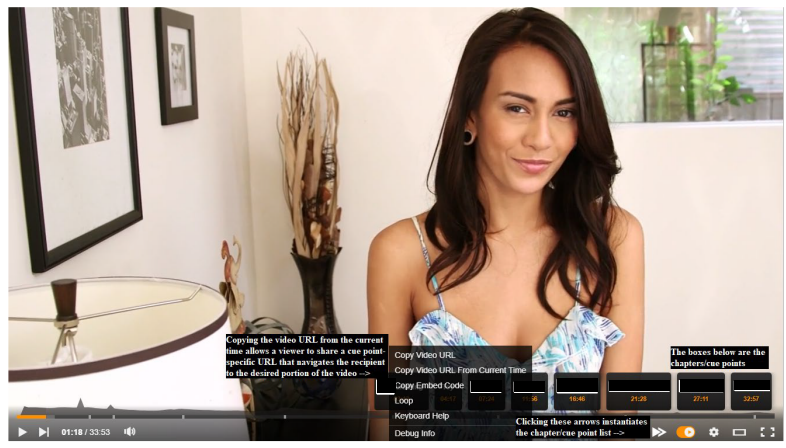
WellcomeMat LLC sued Aylo in 2023 for infringing U.S. Patent No. 8,307,286, which covers a system for applying chapters to online videos. The PTAB cancelled several of the claims via IPR.  Aylo then requested ex parte reexamination of these surviving claims. On August 22, 2025, the USPTO issued a final office action rejecting all eight remaining asserted claims. Aylo immediately moved to stay the litigation pending completion of the EPR. The district court denied the motion, and Aylo sought mandamus relief. With trial set for November 17, 2025, the Federal Circuit denied the petition, citing "the proximity to the trial date and the substantial investment of resources by the court and the parties," along with the fact that "ex parte reexamination proceedings over the claims at issue are not yet final."

As patent prosecutors know, a "final" rejection is not really final. Although reexamination has some streamlining, there is still time for a PTAB appeal or other office maneuvering.


To continue reading, become a Patently-O member. Already a member? Simply log in to access the full post.

Director Squires Denies 13 IPRs With No Explanation: A New Era of Opacity

by Dennis Crouch

On October 31, 2025, USPTO Director John Squires issued a one-page Notice of Decisions on Institution denying institution in thirteen pending inter partes review proceedings without a single word of explanation. The notice, signed solely by Squires, lists only the IPR docket numbers and concludes: "Petitions are denied, and no trial is instituted," citing 35 U.S.C. § 314(a). No panel composition, no reasoning, no indication of PTAB participation appears on the face of the order, which denied institution petitions filed by Apple, Snap, Amazon, AT&T, and others.

This marks the first wave of Director-level institution decisions since Squires’s October 17 memorandum reclaiming full control of AIA-trial institution from the Board and promising “summary notices” for routine outcomes. He has now made good on that promise. For the first time since the AIA’s enactment, an entire slate of IPR petitions was denied with no public reasoning.  This departs from traditional PTAB practice and even from Acting Director Coke Morgan Stewart’s centralized, expanded discretionary-denial process, which still produced reasoned written analyses.


To continue reading, become a Patently-O member. Already a member? Simply log in to access the full post.

Instacart Challenges USPTO’s Discretionary IPR Denials in Seventh Pending Mandamus Petition

by Dennis Crouch

In re Maplebear Inc. (d/b/a Instacart), No. 26-105 (Fed. Cir., petition filed Oct. 21, 2025), adds another voice to the chorus of technology companies asking the Federal Circuit to rein in the Patent Office's increasingly restrictive approach to IPR institution. The mandamus petition was filed a few days after the USPTO published a Notice of Proposed Rulemaking (NPRM) that further curtails access to inter partes review (IPR) proceedings, and argues that the denial of its institution was improperly based upon grounds not supported by the statutory framework.  The petition argues that Dir. Stewart's novel denial criteria were imposed without the notice-and-comment rulemaking required by the Administrative Procedure Act, exceed the Director's statutory authority under 35 U.S.C. § 314(a), and were applied retroactively to Instacart's petition in violation of due process. The petition argues that the NPRM is tacit admission of the rulemaking requirement.

The Maplebear case is the seventh mandamus on the same issue -- arguing that the USPTO's broadened discretionary denial approach is ultra vires. (SAP, Motorola , Google, Samsung, HighLevel, SanDisk, Western Digital, Cambridge Industries, and now Instacart).  These petitions are all sitting before the Federal Circuit - none have been decided yet.  The wave began after Acting Director Coke Morgan Stewart rescinded former Director Kathi Vidal's June 2022 guidance memoranda, which had provided "safe harbors" for petitioners who stipulated not to pursue the same prior art in parallel litigation (so-called Sotera stipulations).  Following that rescission, the PTAB expanded its use of discretionary denials based on expanded Fintiv factors, which balance whether to institute IPR when parallel district court litigation is pending.  But then the policy shift went well beyond Fintiv with Acting Director Stewart introducing two additional discretionary denial grounds through individual PTAB decisions rather than formal rulemaking.

  • Settled expectations: IPR petitions are denied if the challenged patent had been in force for several years (roughly seven+ years in practice), on the theory that patent owners develop stronger reliance interests as their patents age.
  • Roadmapping: IPRs were denied if any prior party (related or unrelated to the current petitioner) had previously challenged the same patent, on the theory that later petitioners would impermissibly benefit from the roadmap provided by earlier proceedings.

These two factors represented a dramatic departure prior IPR practice with the result of hundreds of IPR institution denials.


To continue reading, become a Patently-O member. Already a member? Simply log in to access the full post.

Have we Reached the Shenanigans Threshold?

by Dennis Crouch

When the Supreme Court in Cuozzo Speed Technologies v. Lee, 579 U.S. 261 (2016), barred judicial review of the USPTO's decisions to institute (or deny institution) of inter partes review, it left a small door ajar for agency "shenanigans."   This post asks whether USPTO Director John Squires recent decision in Interactive Communications International, Inc. v. Blackhawk Network Inc., IPR2024-00465 (Dir. Rev. Oct. 1, 2025), may be the case that finally gives "shenanigans" real content.

In Blackhawk, Director John Squires vacated a PTAB final written decision (FWD) that had already found all challenged claims unpatentable.  Ordinarily a director review decision would still be appealable to the Federal Circuit, but Dir. Squires took the case to the next step.  In addition to rejecting the PTAB opinion, Dir. Squires also terminated the proceeding and expressly declared that his order "does not constitute a final written decision under § 318(a)."  The maneuver left the petitioner without an appealable decision -- even though the case had already been fully litigated and decided on the merits.

This post focuses on the appealability problem raised by Blackhawk and situates it alongside the five pending mandamus petitions now before the Federal Circuit challenging the Trump Administration's expanding assertion of institutional control over IPR proceedings.  The pattern here is clear and undisputed that USPTO leadership is using the cloak of § 314(d)'s nonappealability to achieve policy ends. The question though is whether the aggressive approach crosses some yet-undefined line.  Blackhawk is in line with 2025’s broader posture: the Trump Administration has pushed presidential prerogative in many areas of national policy -  leveraging statutory gray zones that earlier administrations largely treated with self-restraint.  That new assertiveness forces Article III courts to step in and draw clearer outer bounds.


To continue reading, become a Patently-O member. Already a member? Simply log in to access the full post.

Ultra Vires or Policy Discretion? Federal Circuit Now Weighing 5x Discretionary Denial Mandamus

by Dennis Crouch

Two additional mandamus petitions have joined the Federal Circuit's growing docket challenging the USPTO's 2025 shift toward more restrictive inter partes review (IPR) institution practices under President Trump, bringing the total to five pending cases that collectively test the boundaries of appellate review under 35 U.S.C. § 314(d). The newest petitions are In re HighLevel, Inc. (No. 25-148) and In re SanDisk Technologies, Inc. (No. 25-152).  Both challenge Director Stewart expanded discretionary denial approach that rescinded the Vidal memo that petitioners had previously relied upon. HighLevel challenges the USPTO's categorical use of § 101 district court rulings to deny IPR institution for §§ 102/103 challenges, while SanDisk attacks the agency's invocation of "settled expectations" and resource management concerns to deny institution despite litigation stays and Sotera stipulations limiting claim scope overlap.  Prior Patently-O Posts:

The Federal Circuit has requested responses from both the USPTO and IPR petitioners in all five cases (including the earlier In re SAP America, Inc., In re Motorola Solutions, Inc., and In re Google LLC petitions).  This is an unusual step that the court often skips in mandamus practice and signals at least some judicial interest in the underlying legal issues.

Each petition attempts to characterize the USPTO's February 28, 2025 rescission of the Vidal Memo and subsequent policy implementations as constitutional violations or ultra vires agency action.


To continue reading, become a Patently-O member. Already a member? Simply log in to access the full post.

Still Pending: Three Mandamus Petitions Test USPTO’s Expanded Denial Powers

The Federal Circuit is still sitting on a trio of related mandamus petitions asking the  Court to step-in against the USPTO's 2025 up-ramp of discretionary denial practice.

  • In re SAP America, Inc., No. 25‑132 and 25-133 (petition filed Jun 16, 2025; briefing complete);
  • In re Motorola Solutions, Inc., No. 25‑134 (petition filed June 23, 2025; briefing complete); and
  • In re Google LLC, No. 25‑144 (petition filed August 18, 2025; briefing is ongoing).

In the early days, the USPTO granted very few discretionary denials. Those expanded  somewhat under Director Iancu (Trump-I); then retracted somewhat under Director Vidal (Biden).  Acting Director Stewart (Trump-II) has blown past Dir. Iancu in her approach, greatly expanding the use of discretionary denials.


To continue reading, become a Patently-O member. Already a member? Simply log in to access the full post.

Genetic Patents Catch-22: Can Challenging a Patent Requires Risking Infringement?

by Dennis Crouch

An interesting mandamus petition is pending from Inari Agriculture -- asking the Federal Circuit to overturn the PTAB institution denial in a PGR challenging Pioneer Hi-Bred's inbred corn patent. U.S. Patent No. 11,659,803.  In its decision, the PTAB denied Inari's obviousness challenge because it failed to sequence and analyze the genome of the deposited seed that defines the claimed plant variety. Inari argues this creates an unconstitutional "Catch-22" where challengers must risk patent infringement liability to file adequate PGR petitions, violating due process and separation of powers principles. [In re_-_ Inari Agriculture, Inc. Petition].

The '803 patent claims "seed, plant, plant part, or plant cell of inbred maize variety 1PFLQ21, representative seed of the variety having been deposited under NCMA accession number 202212046." The specification describes the variety solely through phenotypic characteristics (plant height, silk color, ear length) listed in Table 1, without providing genetic sequence data. Inari's PGR petition argued the claims were obvious based on prior art disclosing the variety's parent line PH1V5T and related varieties with similar phenotypic properties, following the approach endorsed by the Board in Ex parte C, 27 U.S.P.Q.2d 1492 (BPAI 1992), where plant utility claims were found obvious based purely on phenotypic comparison without deposit analysis.

As I noted in my 2024 post, this case is part of a larger ongoing patent dispute between these two companies and there is also a good amount of interesting strategy where Pioneer has obtained patents while keeping the parent lines secret. See, Dennis Crouch, Trade Secrets vs. Patents: Pioneer's Plant Patent Strategy Raises Thorny Issues, Patently-O (Oct. 24, 2024).


To continue reading, become a Patently-O member. Already a member? Simply log in to access the full post.

Application of Fifth Circuit’s Heightened § 1404(a) Standard in Patent Cases

by Dennis Crouch

In re VirtaMove, Corp., No. 2025-130 (Fed. Cir. Sept. 11, 2025) (Google case); In re VirtaMove, Corp., No. 2025-138 (Fed. Cir. Sept. 11, 2025) (Amazon case).

Federal Circuit has denied this pair of related mandamus actions.  In both cases, the patentee VirtaMove challenged venue transfer orders moving its patent infringement suits from the Western District of Texas to the Northern District of California. As I discuss below, the non-precedential decisions have some interesting jurisdictional tension with recent Fifth Circuit law.

VirtaMove is a small Canadian software company holding patents on secure application containerization technology. VirtaMove sued Google LLC and Amazon Web Services in the Midland/Odessa Division of WDTX, alleging infringement of patents covering methods for migrating applications into portable, secure containers. Both defendants successfully moved to transfer under § 1404(a), with the district courts (Judge Counts in the Google case, Judge Albright in the Amazon case) finding that the Northern District of California was more convenient primarily due to the concentration of defendants' engineers involved in developing the accused products in the San Francisco Bay Area. VirtaMove's central argument on mandamus was that the district courts misapplied governing law by following Federal Circuit precedent rather than more recent Fifth Circuit authority that VirtaMove claimed established heightened standards for transfer.

28 U.S.C. § 1404(a) provides that "[f]or the convenience of parties and witnesses, in the interest of justice, a district court may transfer any civil action to any other district or division where it might have been brought." I think of this as the "convenient forum rule" which is separate and distinct from the "proper" venue requirements of §§ 1391 and 1400(b). § 1404(a) allows courts to determine where the case should be tried for optimal convenience and judicial efficiency. Someone seeking to move a case from one location to another (or as here move-it-back) bears the burden of demonstrating that the proposed transferee forum is "clearly more convenient" than the current venue by analyzing private interest factors (convenience of parties and witnesses, location of evidence, costs of litigation) and public interest factors (administrative difficulties, court congestion, local interest in deciding local controversies, and familiarity with governing law). These factors are not found in the statute, but rather are derived from a variety of precedent.

The Clash Between Circuit Approaches


To continue reading, become a Patently-O member. Already a member? Simply log in to access the full post.

Fintiv Patent Case Against Apple Ends; Fintiv RICO case Against Apple Begins

by Dennis Crouch

After a second trip to the Federal Circuit and back, Fintiv, Inc. v. Apple Inc. (W.D. Tex. No. 1:21-cv-00896-ADA) has ended with a final judgment for Apple. On August 7, 2025, Judge Alan Albright granted summary judgment of noninfringement on most of the asserted claims of U.S. Patent No. 8,843,125, finding that Fintiv failed to identify any actual “widget” in Apple’s accused mobile wallet products as required by the claims.  Fintiv then voluntarily dismissed the remaining claims - indicating that it will appeal yet again.

Having lost its patent clam, Fintiv has also filed a new corporate theft and racketeering lawsuit against Apple.  This post first looks at the dismissed patent case and then moves over to the RICO claims.


To continue reading, become a Patently-O member. Already a member? Simply log in to access the full post.